Holger Voos is Full Professor in Engineering Science at the University of Luxembourg's Interdisciplinary Centre for Security, Reliability and Trust (SnT), where he leads the Automatic Control Laboratory. His research focuses on distributed networked control, autonomous robotic systems, safety-critical applications, and mechatronic system design. His recent publications demonstrate strong research emphasis on: Advanced SLAM algorithms integrating visual, inertial and wireless technologies Optimal control strategies for spacecraft formations and aerial robots Neuromorphic vision systems and sensor fusion techniques Reinforcement learning approaches for robotic manipulation Constraint-based optimization methods for robotic perception and control
Magnus Jansson is a Professor of Signal Processing at KTH Royal Institute of Technology, affiliated with the School of Electrical Engineering and Computer Science and the Division of Information Science and Engineering. He holds a Ph.D. from KTH (1997) and has held academic positions at KTH since 1998, progressing from Assistant Professor (1998-2003) to Associate Professor (2003-2013) before becoming a full Professor in 2013. His research focuses on statistical signal processing, machine learning, navigation systems, sensor array processing, and system identification, with applications in radar, communication systems, and sensor fusion. Education: M.Sc. (1992), Licentiate (1995), and Ph.D. (1997) in Electrical Engineering (Automatic Control) from KTH. Postdoctoral work at the University of Minnesota (1998-1999). Served as an editor for IEEE Signal Processing Letters, Elsevier Signal Processing, and EURASIP Journal on Advances in Signal Processing. Current roles include Associate Editor for Elsevier Signal Processing (since 2024). Research emphasizes model selection, low-rank matrix reconstruction, and Bayesian methods, with recent contributions to drone classification via CNNs, robust model selection in high-dimensional data, and navigation algorithms leveraging inertial and vision systems. His work bridges theoretical signal processing with practical applications in robotics, wireless localization, and radar systems. Teaching responsibilities include courses on estimation theory, stochastic signals, and adaptive signal processing. Active in collaborative research on positioning systems and sensor networks, with contributions to IMU-camera calibration and visual-inertial navigation. No specific grants or awards listed, but recognized for editorial roles and academic leadership.
Juho Kannala is an Associate Professor of Computer Vision at Aalto University and an Adjunct Professor at the University of Oulu. He co-founded Spectacular AI, a company focused on spatial AI and sensor fusion solutions. His primary affiliation is with the Department of Computer Science at Aalto University, where he leads research in computer vision, machine learning, and robotics. Education: PhD in Computer Science, University of Oulu (2010) Master's Thesis: 'Measuring the Shape of Sewer Pipes from Video,' Helsinki University of Technology (2004) Research Interests: Juho's work spans 3D reconstruction , visual localization , deep learning , and robotics applications . His research emphasizes practical systems like real-time visual-inertial odometry (HybVIO) and large-scale datasets (TBPos). He explores interdisciplinary areas such as medical imaging and atomic force microscopy automated analysis. Key Projects: Co-developed the ADVIO dataset for visual-inertial odometry Advanced multi-view stereo techniques with Gaussian splatting Co-founded Spectacular AI for spatial AI solutions Teaching: Responsible for the Computer Vision (CS-E4850) course at Aalto University. Advises on bachelor/master/doctoral thesis topics in computer vision and machine learning.
Bryan Convens serves as a Researcher in the Department of Applied Mechanics at Vrije Universiteit Brussel, specializing in advanced robotics control systems with emphasis on safety, real-time performance, and human-robot collaboration. His work bridges theoretical control theory with practical applications in aerial robotics, prosthetics, and industrial automation, supported by active leadership in multiple research projects. Research interests focus on developing certified-safe control frameworks where Convens pioneers reference governor methodologies for constraint satisfaction in dynamic environments. His investigations span nonlinear model predictive control, learning-based adaptation for uncertainty handling, and energy-efficient actuation systems—particularly for prosthetic devices and multi-robot swarms. Current projects address resilient control under uncertainty (FWOTM1231), robotics adoption in industry (BRGRD68), and series-parallel elastic actuation for prosthetics (FWOSB33), demonstrating consistent innovation in safety-critical domains. Scientific contributions reveal an evolving trajectory toward integrating machine learning with classical control theory to enhance data efficiency while maintaining safety guarantees. Recent publications emphasize real-time feasibility, human-robot collaboration constraints, and robust perception techniques—indicating strategic movement toward deployable solutions for industrial and medical robotics applications. Scientific Awards Best Ph.D. thesis of 2023 by the Belgian National Committee for Theoretical and Applied Mechanics (NCTAM) FWO Travel Grant for Long Research Stay Abroad (2018) Public and jury prize: 2nd place (2020) Convens directs significant research funding through competitive grants including FWOTM1231 (€ project value unstated, 2024-2027), BRGRD68 (Policy-Based project, 2022-2025), and FWOSB33 (Fundamental Research, 2017-2020), focusing on resilient aerial robotics, digital twin integration, and prosthetic energy efficiency. His grant portfolio demonstrates strong alignment with Flanders' strategic priorities in robotics and AI, with active industry partnerships through AI Flanders initiatives. Mentorship activities include supervising junior researchers in complex project environments, though formal student lists aren't documented. He operates within VUB's robotics ecosystem through the Robotics & Multibody Mechanics research group, collaborating closely with Bram Vanderborght's team on actuation systems and Kelly Merckaert on safety frameworks. Current work leverages UWB/VIO sensor fusion and particle filtering techniques within active projects targeting 2025-2027 deliverables for multi-robot coordination in unstructured environments.
Konstantinos Alexis is a Professor at the Department of Engineering Cybernetics within the Faculty of Information Technology and Electrical Engineering at the Norwegian University of Science and Technology (NTNU). He leads the Autonomous Robots Lab and serves as Principal Investigator for major international projects including the DARPA Subterranean Challenge. His research focuses on developing resilient autonomous systems capable of operating in extreme environments through resourcefulness, robustness, and redundancy. His research interests span resilient robotic autonomy with emphasis on aerial robotics , underwater robotics , robot control , path planning , robot learning , and Simultaneous Localization and Mapping (SLAM) . He takes a holistic approach across these disciplines to enable autonomous systems to navigate challenging environments including subterranean spaces, underwater operations, and extreme terrestrial conditions. Recent work demonstrates significant advances in collision-tolerant navigation, degradation-resilient state estimation, and semantic-aware inspection planning. Professor Alexis has secured substantial funding from diverse sources including US agencies (DARPA, NSF, DOE, USDA), EU Horizon programs, and the Research Council of Norway. His research portfolio includes field deployments in nuclear environments, aquaculture operations, and planetary exploration scenarios. Principal Investigator for DARPA Subterranean Challenge Major grants from NSF, DOE, USDA, and EU Horizon programs Research Council of Norway funding for multiple projects He actively supervises numerous PhD and Master's students, with recent graduates leading publications in top robotics venues. His lab maintains strong collaborations with international research groups and industry partners for real-world deployment of autonomous systems. Current initiatives include the ResiFarm project for underwater operations in fish farms and advanced exploration systems for Martian lava tube environments.
G.C.H.E. de Croon is a Senior Researcher in the Control & Simulation group at Delft University of Technology's Faculty of Aerospace Engineering . His work focuses on: Autonomous drone control systems Bioinspired robotics Visual-inertial navigation Neuromorphic computing for UAVs Tilt-rotor aircraft design Swarm robotics Recent publications highlight advancements in flapping-wing robots and neuromorphic attitude estimation. His research combines biological insights with aerospace engineering to solve complex autonomy challenges. Notable scientific recognitions include: NWO Vici Grant (2024) for drone autonomy research Autonomous Drone Racing Championship winner (2025) Multiple best paper awards (2015, 2021) He actively organizes academic events like the International Micro Air Vehicle Conference and has supervised 17 research projects. Media coverage spans AI drone racing breakthroughs (2025), swarming technology (2024), and maritime landing systems (2025 PhD thesis data).
Prof. Hans-Peter Hutter is a Professor of Computer Science at the ZHAW School of Engineering, specializing in Deep Learning-based Automatic Speech Recognition, Conversational User Interfaces, and Human-Centered Computing. He leads the Human-Centered Computing research group at InIT/ZHAW and has held this position since 2005. His work focuses on accessibility technologies, mobile usability, and inclusive design for visually impaired users. Education: Dr. sc. techn. ETH in Computer Engineering (ETH Zurich, 1996) Dipl. El.-Ing. ETH in Electrical Engineering (ETH Zurich, 1986) Research Interests: Advancing accessibility in digital systems (e.g., accessible PDFs, navigation aids for visually impaired users) Speech recognition and dialogue systems Mobile application design principles Service engineering and platform development His recent work emphasizes multimodal interaction, accessible document remediation, and SLAM systems for navigation assistance. Projects: Leading the InCrowd-VI dataset project for indoor navigation Developing MathNet for mathematical expression recognition Creating accessible tourism services in Lake Constance region Grants & Labs: Active in EU-funded and industry collaborations, leading the InIT Institute founded in 2002. Collaborates with organizations like SwissICT and ACM.
Kailai Li is a tenure-track Assistant Professor at the University of Groningen's Bernoulli Institute, where he leads the Agile Sensing and Intelligence Group (ASIG). His research develops novel methods for robotic perception, including continuous-time state estimation, sensor fusion, and visual navigation. Recent publications focus on Gaussian process representations for motion estimation and multi-robot collaboration using vision-language models. Dr. Li's lab maintains open-source projects like LiLi-OM (LiDAR-inertial odometry) and SFUISE (UWB-inertial fusion). Collaborations include Linköping University and industry partners. Current projects investigate trustworthy perception for autonomous systems under uncertainty and efficient representations for high-dimensional state estimation.
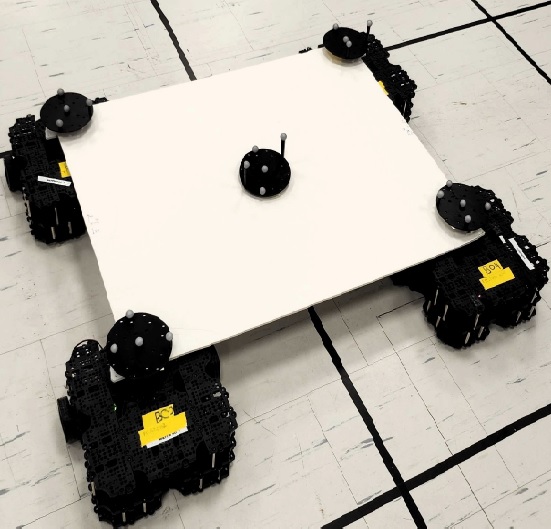
Sajad Saeedi Gharahbolagh is an Assistant Professor in the Department of Mechanical, Industrial, and Mechatronics Engineering at Toronto Metropolitan University and an Honorary Research Fellow at Imperial College London's Department of Computing. His research spans robotics, SLAM, focal-plane sensor-processor arrays (FPSP), and deep learning for autonomous systems. Education : PhD in Electrical and Computer Engineering (2014) from the University of New Brunswick. Prior Roles : Dyson Research Fellow (2018-2019) at Imperial College London; Postdoctoral Fellow at University of New Brunswick (2014); R&D Engineer at 2G Robotics (2015). His research focuses on Simultaneous Localization and Mapping (SLAM) for single/multi-robot systems Focal-plane Sensor-Processor Arrays (FPSP) for high-speed, low-power vision processing Autonomous aerial/underwater robotics Deep learning integration with traditional robotics algorithms Control systems for heterogeneous robotic platforms His work addresses challenges in computational efficiency, robustness in GPS-denied environments, and real-time multi-sensor data fusion. Recent publications highlight advancements in Distributed NeRF for collaborative mapping MR.CAP multi-robot control/planning BIT-VIO visual-inertial odometry WiFi-based geometric mapping FPSP-optimized CNNs PathBench benchmarking framework Scientific Awards : Dyson Research Fellowship (2018-2019) Best Robotics Paper (CRV 2021) Best Student Presentation (IROS 2023) Research Team : PhD Students: Christopher Kolios, Navid Zarrabi, Messiah Esfahani, Ishaan Mehta, Mahboubeh Asadi, Jack Saunders MASc Students: Georgia Jovanovic, Hussein Ali Jaafar, Austin Vuong, Roni Sherman, Matthew Lisondra, Glenn Shimoda, Ali Babaei, Robel Efrem, Messiah Ataey, Christopher Kolios, Nikolas Kourtzanidis Laboratory Facilities : Robotics and Computer Vision Lab (RCVL) with Vicon motion capture system 14 TurtleBot 3 platforms (Waffle Pi/Burger variants) Germicidal UVC-equipped G-Robots Jetbots with onboard GPU processing OpenMANIPULATOR robotic arms
Professor KHOO Boo Cheong is a faculty member in the Department of Mechanical Engineering at the National University of Singapore (NUS), affiliated with the College of Design and Engineering. He holds a BA (Hons.) from the University of Cambridge (1980), an MEng from NUS (1984), and a PhD from MIT (1989). His research focuses on Computational Fluid Dynamics (CFD) , Numerical Methods , and Fluid Mechanics , with applications to aerodynamics, turbulence, and fluid-structure interaction. Recent work emphasizes machine learning integration in CFD, bio-inspired UAV design, and icing mechanics for aerospace systems. Key research trends include advancing high-fidelity simulations for complex flows (e.g., turbulence modeling, cavitation suppression), optimizing fluid-structure systems (e.g., lightweight shells, train aerodynamics), and developing novel experimental techniques (e.g., light field PIV, wind spectra analysis). His contributions bridge theoretical CFD innovations with practical engineering challenges in transportation, renewable energy, and robotics. Professor Khoo collaborates on projects involving pressure gain combustion systems , ventilated supercavitating models , and quantum algorithms for fluid dynamics . His lab’s work often combines advanced numerical modeling with experimental validation, addressing real-world issues like wind effects on trains, ice accretion on airfoils, and autonomous navigation systems.
Viorela Ila is Senior Lecturer at University of Sydney's School of Aerospace, Mechanical and Mechatronic Engineering. Her research develops perception algorithms for robotics, specializing in visual SLAM and 3D reconstruction. She contributes to the Centre for Robotics and Intelligent Systems. Research advances robust state estimation in dynamic environments. Recent work provides convergence guarantees for visual-inertial SLAM systems. Awarded Best Paper honors and MICINN/FULBRIGHT fellowship for contributions to robotic vision.
Giorgio C. Buttazzo is a Full Professor specializing in real-time systems, embedded computing, and AI integration. His research focuses on scheduling algorithms, cyber-physical systems, and security mechanisms for time-critical applications. He has contributed significantly to the IEEE community, including the 2023 IEEE TCCPS Early-Career Award. Research Interests: Real-Time Scheduling and Resource Management Embedded Systems and Energy Efficiency AI Security and Adversarial Robustness Cyber-Physical Systems and Robotics Key Publications (2023-2024) explore topics like memory integrity for unsafe languages, adversarial attack defenses, and dataset generation for autonomous systems. His work bridges theoretical foundations with practical implementations in FPGA-based hardware and heterogeneous platforms. Awards: Recipient of the IEEE TCCPS Early-Career Award 2023 for contributions to cyber-physical systems research. Advising/Grants: Extensive collaboration on EU-funded projects and industry partnerships, though specific grants/students are not explicitly listed in the provided data.
Shengkai Zhang is an active researcher with 26 publications and 444 citations spanning engineering, computer science, and environmental disciplines. His work demonstrates strong interdisciplinary collaboration through co-authorship with researchers like Kezhong Liu and Mozi Chen across multiple high-impact venues including IEEE conferences, arXiv, and specialized journals. His research interests center on Machine Learning applications in maritime systems , with significant contributions to Large Language Model integration for ship navigation, wireless sensing for bridge officer monitoring, and sensor fusion techniques. Additional expertise spans robotics perception (visual-inertial systems, mmWave radar enhancement), environmental modeling (urban energy systems, climate studies), and biomedical applications of traditional medicine. Recent work shows increasing focus on AI foundation models and their security implications. Zhang's publication trajectory reveals consistent output with accelerating impact since 2023, featuring 15+ papers in 2024 alone. His research clusters around three core themes: Maritime AI Systems (LLM navigation, track association, watchkeeping monitoring) Advanced Sensing Technologies (mmWave radar, Wi-Fi sensing, GNSS fusion) Environmental & Biomedical Applications (urban energy modeling, gut microbiome studies) These areas demonstrate both technical depth in signal processing/computer vision and practical focus on real-world engineering challenges.
Friedrich Fraundorfer is a Professor at Graz University of Technology, specializing in 3D Computer Vision and Autonomous Systems at the Institute of Computer Graphics and Vision (ICG). He has held academic positions at institutions including ETH Zurich, University of North Carolina at Chapel Hill, and Technische Universität München, where he served as Deputy Director of the Chair of Remote Sensing Technology. Research : Focuses on Micro Aerial Vehicle (MAV) autonomy, Visual-Inertial Fusion, and Multi-View Geometry. Projects : Led EU-funded SFly (autonomous MAVs for search-and-rescue), SNF MAV (camera-only 3D mapping), and VCharge (vision-based self-driving cars). Teaching : Offers courses like 'Camera Drones' and 'Mathematical Principles in Vision.' His Pixhawk project created open-source MAV platforms adopted globally. Key Collaborations : With NVIDIA, Volkswagen AG, University of Zurich, and German Space and Aerospace Center (DLR). His students (e.g., Dominik Hirner, Rafael Weilharter) have published on lightweight CNNs for stereo vision and self-supervised 3D reconstruction.
Jesús Tordesillas Torres is an Assistant Professor in the Department of Electronics, Automation, and Communications at the School of Engineering, Comillas Pontifical University. He joined the institution in June 2024, bringing extensive experience from postdoctoral research at MIT and ETH Zurich, and prior academic training from MIT and the Polytechnic University of Madrid. Education: PhD in Aeronautics and Astronautics, Massachusetts Institute of Technology (MIT), 2022 MS in Aeronautics and Astronautics, MIT, 2019 MS in Industrial Engineering, Polytechnic University of Madrid, 2019 BS in Industrial Engineering, Polytechnic University of Madrid, 2016 His research focuses on robotics, particularly autonomous navigation, trajectory planning, and optimization under uncertainty. He integrates deep learning and control theory to develop systems capable of safe, fast, and perception-aware navigation in dynamic and unknown environments. His work spans aerial and ground robots, multiagent systems, and challenging terrains, with strong emphasis on real-world deployment and robustness. The recent publications highlight a consistent trend in trajectory optimization, perception-aware planning, and multiagent coordination. His work bridges theoretical advances in optimization and learning with practical robotic applications, especially in safety-critical and communication-constrained scenarios. Scientific Awards: Best Paper Award, IEEE ICRA 2023 1st Place, Urban Circuit, DARPA Subterranean Challenge (2020) 2nd Place, Tunnel Circuit, DARPA Subterranean Challenge (2021) Finalist, Best Paper, IEEE IROS 2019 Jesús Tordesillas Torres has been actively involved in research grants and projects, including the ADS FERRARI WP-2 Project funded by Airbus Defence and Space (2025–2025). He mentors students and collaborates with leading institutions such as MIT, ETH Zurich, and the University of Pennsylvania. He also serves as a reviewer for top-tier journals including IEEE Transactions on Robotics , International Journal of Robotics Research , and IEEE Robotics and Automation Letters , as well as major conferences like ICRA and IROS. He leads and participates in research teams focused on autonomous systems, with affiliations to the Institute for Research in Technology (IIT) at Comillas. His invited talks at ETH Robotics Summer School and University of Pennsylvania reflect his growing influence in the robotics community.