Andrew Markham is a Professor of Computer Science at the University of Oxford , affiliated with Kellogg College . He leads a research group focusing on Cyber Physical Systems (CPS) , specializing in sensors, signal processing, and machine learning to enable machines to better perceive the physical world. His work emphasizes cross-disciplinary collaboration, notably in wildlife tracking and indoor positioning systems. He has held roles as a Postdoctoral Fellow (2008-2012), Associate Professor (2013), and Full Professor (2021). Education : PhD in Electrical Engineering (University of Cape Town, 2008), BSc (Hons) in Electrical Engineering (2004). Research Interests : Tracking and localization in GPS-denied environments (e.g., underground, indoors), magneto-inductive systems, physics-informed machine learning, and data-driven approaches for noisy sensor data. His projects include wildlife monitoring via wireless sensor networks and mmWave radar for human motion capture. Key Projects : CARACAL acoustic monitoring system, mmPoint dense human tracking, and RandLA-Net for large-scale point cloud segmentation. His work spans robotics, environmental sensing, and biomedical applications. Advising & Grants : Supervises over 30 students and collaborates with industrial partners. Research teams include Cyber Physical Systems, Autonomous Ubiquitous Sensing, and Wildlife Monitoring initiatives. Labs/Teams : Leads the CPS research group, focusing on sensor networks, inertial navigation, and multimodal fusion systems. Collaborates with zoology and earth science disciplines on applied projects.
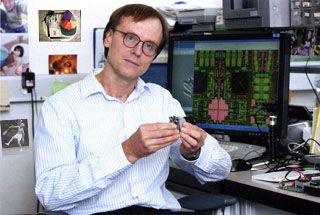
Tobi Delbruck is a titular professor of physics and electrical engineering at ETH Zurich, where he leads the Sensors Group at the Institute for Neuroinformatics (INI) in Zurich, Switzerland. He collaborates closely with Shih-Chii Liu and Giacomo Indiveri as part of the 'hardware groups' at INI. Delbruck has also served as visiting faculty at Caltech and is a Fellow of the IEEE. His work focuses on bio-inspired and neuromorphic event-based sensory processing systems. Professor Delbruck's research spans multiple areas of neuromorphic engineering, with particular emphasis on event-based vision systems and low-power analog VLSI circuits. His work has significantly advanced the field of Dynamic Vision Sensors (DVS), which mimic the human retina's response to changes in brightness rather than capturing full frames. This approach enables extremely low-latency vision processing with minimal power consumption, making it ideal for high-speed applications and robotics. His research has applications in robotics, autonomous systems, and low-power embedded vision. Delbruck is an active contributor to the neuromorphic engineering community, co-organizing the annual Telluride Workshop on Neuromorphic Engineering and serving in leadership roles with IEEE. He has authored numerous influential publications and co-authored books including "Event-Based Neuromorphic Systems" and "Analog VLSI: Circuits and Principles." His jAER (Java Address-Event Representation) project provides open-source tools for real-time event-based sensory processing. Analysis of his recent publications shows a clear trend toward integrating event-based vision with deep learning techniques and applying these systems to practical robotics problems. His scientific achievements have been recognized with multiple awards including: IEEE Fellow Winner of Best Live Demonstration award at ISCAS 2012 Honorable Mention Award from Sensory Systems Technical Committee at ISCAS 2012 Overall Best Student Paper Award and Best Paper Award from Sensory Systems Technical Committee at ISCAS 2010 Winner of the 2006 ISSCC Jan Van Vessem Outstanding European Paper Award Professor Delbruck actively mentors students and has supervised numerous PhD and Master's theses in the areas of neuromorphic engineering and event-based vision systems. His group has secured significant research funding from various sources to support their innovative work in bio-inspired sensory processing. He teaches courses on "Electronics for Physicists II (Digital)" and "Neuromorphic Engineering," helping to train the next generation of researchers in this field. The Sensors Group at INI, which Delbruck leads, operates state-of-the-art facilities for designing and testing neuromorphic vision systems. The group maintains close collaborations with researchers worldwide and has developed several important open-source resources including the jAER project and bias generator design kits. Their work continues to push the boundaries of what's possible with event-based sensory processing, with applications ranging from high-speed robotics to low-power embedded vision systems.
Habib Ullah is an Associate Professor in Data Science at the Norwegian University of Life Sciences (NMBU), Norway, where he conducts research at the intersection of computer vision and machine learning. He is affiliated with the Institute of Data Science under the Faculty of Science and Technology. He has previously held academic positions at COMSATS University Islamabad, Pakistan, and the University of Ha'il, Saudi Arabia, and served as a postdoctoral researcher at The Arctic University of Norway. Educational Background: PhD in Information and Communication Technology (Computer Vision), University of Trento, Italy (2011–2015) MSc in Electronics and Computer Engineering, Hanyang University, South Korea (2007–2009) BSc in Computer Systems Engineering, NWFP University of Engineering and Technology, Pakistan (2002–2006) Habib Ullah's research is primarily focused on computer vision and machine learning, with applications in aquaculture, agriculture, and human behavior analysis. He investigates underwater fish feeding sounds using audio classification, develops zero-shot learning models for recognizing unseen classes, and applies deep learning to detect stress in salmon via skin dot patterns. He also explores AI-driven controlled environment agriculture, leveraging sensors and automation for optimal crop growth. His work emphasizes practical AI solutions for real-world challenges in environmental and biological domains. The recent publications highlight a strong trend in leveraging deep learning for zero-shot and semi-supervised learning, particularly in computer vision tasks such as sea ice classification, crowd anomaly detection, and agricultural monitoring. His research spans remote sensing, biomedical signal processing, and human activity recognition, demonstrating interdisciplinary versatility. The keywords reflect a focus on robust feature representation, knowledge transfer, and model generalization. Scientific Awards and Funding: Industrial PhD grant 'Advancing Controlled Environment Agriculture AI' from The Research Council of Norway (Project number 354125, 2 million NOK, 2024) Team member (Coordinator-Participant) in the Battery Cell Assembly Twin (BatCAT) project funded by Horizon Europe (7 mEuro, 2023–2027) Development of an AI-Based Image Analysis System for Monitoring Plant Status (Funding: 1.8 mNOK, starting 2025) Habib Ullah actively supervises PhD projects and contributes to academic service through editorial and organizational roles. He has served as an Associate Editor for IEEE Access, Guest Editor for MDPI Remote Sensing, and Editor of the Springer book Machine Learning Techniques and Sensor Applications for Human Emotion, Activity Recognition, and Support (ML-SHEARS) . He has also been a Track Chair and Program Committee Member for several international conferences, reflecting his leadership in the academic community. His research is supported by significant grants and collaborative projects, indicating strong institutional and international engagement. He is involved in multiple research teams and projects, including the BatCAT project on battery manufacturing and AI applications in controlled environment agriculture with RIFT LABS AS. His lab work integrates deep learning, sensor fusion, and data analytics for environmental and biological monitoring systems.
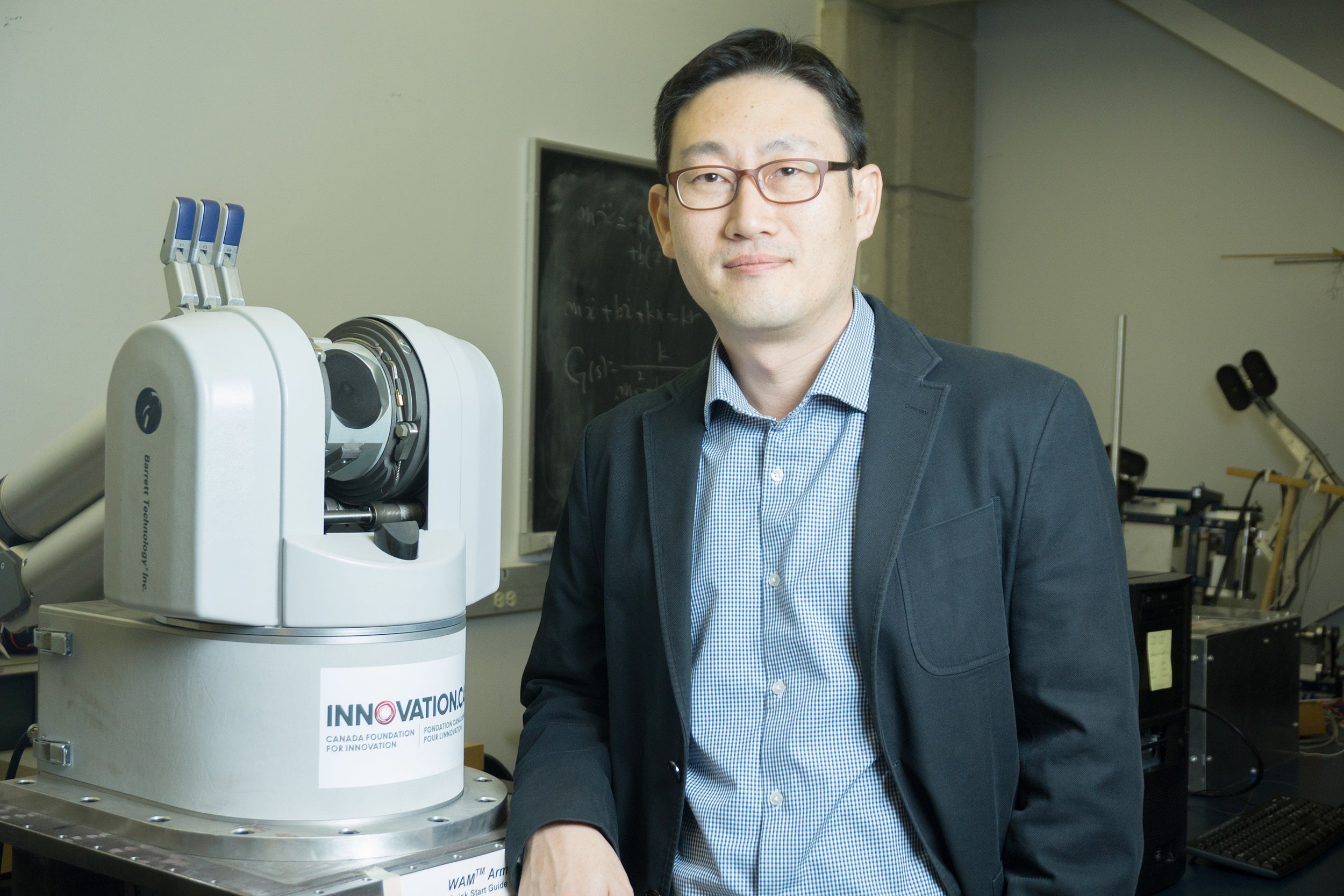
Soo Jeon is a Professor in the Department of Mechanical and Mechatronics Engineering at the University of Waterloo, part of the Faculty of Engineering. He holds a PhD from the University of California at Berkeley (2007) and prior degrees from Seoul National University. His research focuses on mechatronics, dynamic systems, and control, with applications in robotics, autonomous systems, and precision motion control. He has held roles as Assistant Professor (2009–2015), Associate Professor (2015–2024), and Full Professor (2024–present). Professor Jeon’s expertise includes intelligent sensing and control for mechatronic systems, nonlinear dynamics, and autonomous systems. He has received notable awards such as the 2022 Engineer of the Year Award (AKCSE/KOFST), 2015 NSERC Discovery Accelerator Supplement, and 2010 ASME Rudolf Kalman Best Paper Award. He serves as an Associate Editor for several journals, including the ASME Journal of Dynamic Systems and IEEE Transactions on Automation Science and Engineering. His research interests span robotics, control systems, and automation, with recent work on autonomous navigation, tactile exploration, and model predictive control. He supervises graduate students in MASc and PhD programs and teaches courses like ME 649 (Control of Machines and Processes) and ME 360 (Introduction to Control Systems). Jeon holds patents in areas like low-power magnetic locks and remote plasma source seasoning. His lab, the Waterloo Mechanical Systems & Control Laboratory (WMSCL), focuses on advanced mechatronics and robotics projects, including collaborations with international institutions such as the Korea Institute of Machinery & Materials (KIMM).
Timothy Bretl is a Professor of Aerospace Engineering at the University of Illinois at Urbana-Champaign, holding the Severns Faculty Scholar position since 2021. He also serves as Associate Head of the Aerospace Engineering department. His research focuses on robotics, control systems, rehabilitation robotics, and engineering education. Bretl earned his Ph.D. from Stanford University (2005), with prior degrees from Swarthmore College. He holds affiliate roles across multiple departments, including Neuroscience, Coordinated Science Laboratory, and Computer Science. Education: Ph.D. in Aeronautics and Astronautics, Stanford University (2005) B.A. in Mathematics and B.S. in Engineering, Swarthmore College (1999) His research spans engineering education innovations, robotic manipulation, and brain-machine interfaces. Notable awards include the NSF CAREER Award (2010), Best Manipulation Paper (2012), and multiple teaching honors like the Rose Award for Teaching Excellence (2016). Bretl’s work integrates theoretical foundations with practical applications in prosthetics, autonomous systems, and educational technology. He has advised numerous projects on robotics, control systems, and human-robot interaction. His lab explores advanced topics like elastic rod manipulation, magnetic positioning, and curriculum reform in STEM education. Collaborative projects include partnerships with industry and interdisciplinary teams at the Beckman Institute.
Zhibo Pang is an Adjunct Professor at KTH Royal Institute of Technology's Department of Intelligent Systems (EECS) and Senior Principal Scientist at ABB Corporate Research Sweden. His work focuses on digital transformation in industry and healthcare, spanning robotics, AI, control systems, and wireless communication. He leads projects in embodied intelligence, Industry 4.0, and Healthcare 4.0, with 23 granted patents and over 120 journal papers. Education: PhD in Electronic and Computer Systems (KTH, 2013), MBA in Innovation & Growth (University of Turku, 2012). Key Roles: IEEE Technical Committee Chair, Editor of 6 IEEE journals, ABB Inventor of the Year (2016, 2018, 2021). Research Interests: Robotics safety, wireless automation, federated learning, digital twins, and IoT security. Recent Projects: Cloud-fog automation frameworks, robot skin systems for healthcare, and latency-aware industrial control. His work bridges academia and industry through cross-functional collaborations.
Kostas Daniilidis is the Ruth Yalom Stone Professor at the University of Pennsylvania in the School of Engineering and Applied Science , specifically the Department of Computer and Information Science . He is also affiliated with the GRASP Laboratory and Archimedes, Athena Research Center, Greece . Education : PhD in Computer Science (1992) from the University of Karlsruhe with Hans-Hellmut Nagel Diploma in Electrical Engineering (1986) from the National Technical University of Athens Research Interests : Kostas Daniilidis is a leading researcher in Computer Vision and Robotics , with significant contributions to event-based vision , equivariant learning , 3D human pose estimation , and hand-eye calibration . His work spans neural rendering , dynamic scene modeling , and low-latency sensing systems . Article Trends : Daniilidis’s recent publications focus on event cameras for low-light and high-speed applications, Gaussian splatting for real-time 3D reconstruction, and equivariant neural architectures for robust motion estimation. His work bridges deep learning with geometric vision , emphasizing human mesh recovery and multi-agent coordination . Scientific Awards : Best Conference Paper Award at ICRA 2017 IEEE Fellow (2012) Teaching : He has taught courses such as CIS580: Machine Perception and CIS121: Data Structures , alongside advanced topics in robotics and computer vision. Lab & Collaborations : As director of the GRASP Laboratory (2008–2013), he fostered interdisciplinary research in robotics, and currently collaborates with institutions like the Athena Research Center in Greece.
Nicholas Antipa is an Assistant Professor at the University of California San Diego's Jacobs School of Engineering, in the Electrical and Computer Engineering department. His research focuses on the co-design of optical systems and algorithms to develop advanced computational imaging systems, leveraging innovations in 3D printing, sensors, machine learning, and AI. He holds a PhD in Computational Imaging from UC Berkeley and previously worked at the Lawrence Livermore National Lab on optical metrology for the National Ignition Facility. His work includes pioneering projects like the DiffuserCam and Miniscope3D, which enable high-dimensional optical signal capture and 3D microscopy. Education: PhD in Computational Imaging, UC Berkeley (2020) MS in Optics, University of Rochester Institute of Optics BS in Optical Science and Engineering, UC Davis Research Interests: Computational imaging systems, single-shot high-dimensional optical capture, lensless imaging, and applications in neuroscience and marine science. His lab explores novel optical designs, compressed sensing, and AI-driven imaging techniques to push the boundaries of conventional systems. Scientific Awards: Best Paper at ICCP 2019, 2016 Best Demo at ICCP 2017 No. 2 in Optica 15 Top-Cited Articles (2020) Affiliations: Director of the Computational Imaging Systems Lab at UCSD. Collaborates with institutions like Lawrence Livermore National Lab and the Scripps Institution of Oceanography for projects in marine sediment mapping and underwater object detection. His lab emphasizes open-source tools, such as the DiffuserCam Raspberry Pi tutorial.
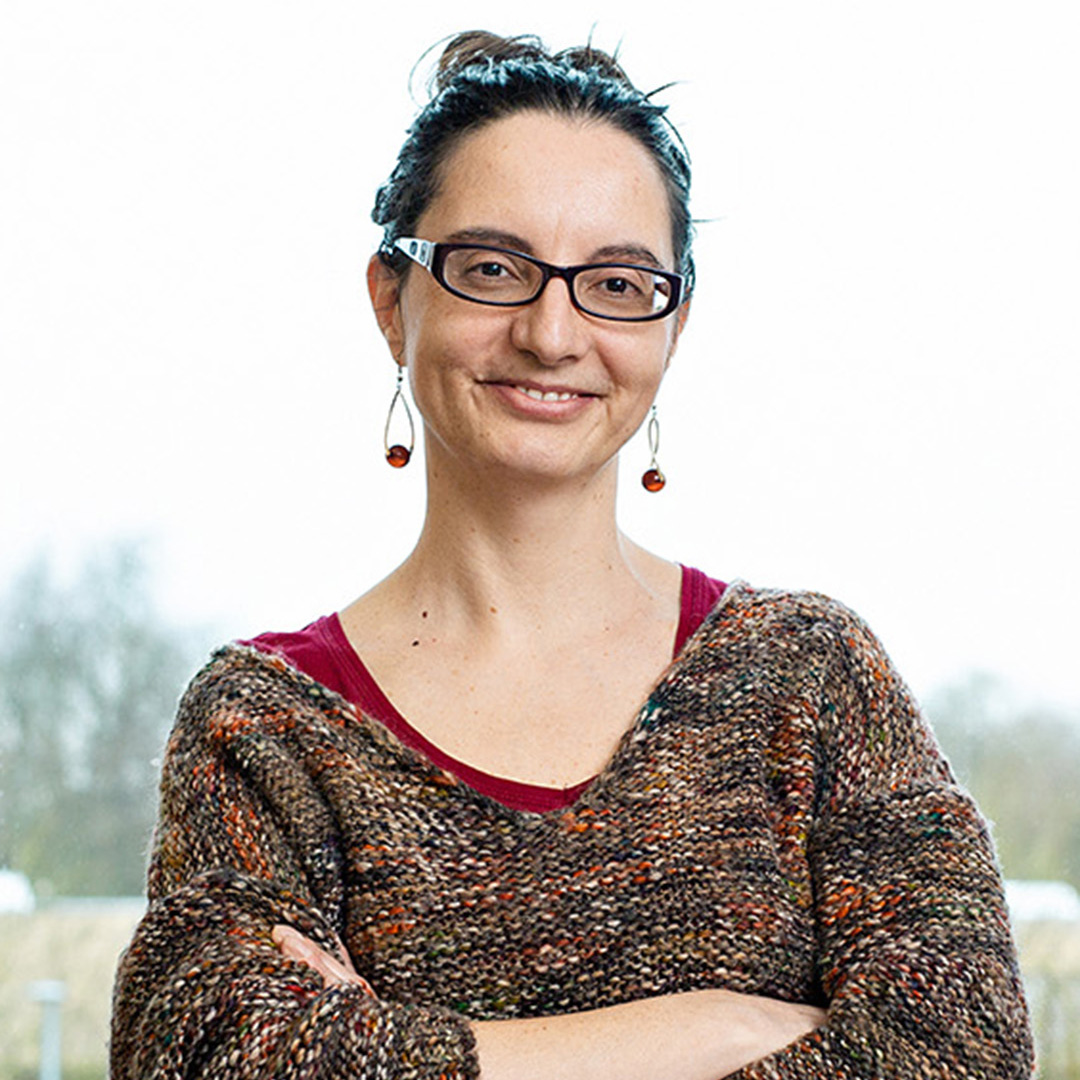
Cecilia Mascolo is a Professor of Mobile Systems at the University of Cambridge , specifically in the Department of Computer Science and Technology . She co-directs the Centre for Mobile, Wearable System and Augmented Intelligence and is a Fellow of Jesus College, Cambridge . Her research focuses on mobile systems , machine learning for mobile health , and earable technology . She has been awarded prestigious grants such as the ERC Advanced Research Grant (2019-2025) and the EPSRC Open Research Fellowship (2025-2030). Currently on sabbatical at Harvard University , her work bridges systems and machine learning for health applications. Education: PhD in Computer Science from the University of Bologna, Italy. Previous Affiliation: Faculty at University College London before 2008. Her research spans mobile and wearable systems for health and behavior monitoring, focusing on on-device machine learning , uncertainty-aware models , and audio-based diagnostics . Key areas include federated learning , edge computing , and respiratory disease progression analysis via wearables. She explores earable technology for physiological monitoring, gait analysis, and even toothbrushing tracking using in-ear sensors. Her recent publications highlight advancements in earable-based health monitoring , including heart rate estimation , respiratory rate detection , and ECG analysis using machine learning. She emphasizes longitudinal health data from consumer devices, advocating for scalable diagnostics beyond traditional clinical standards. Scientific Awards: ERC Advanced Research Grant EPSRC Open Research Fellowship Best Paper Award - IEEE Percom 10-Year Impact Award - ACM Ubicomp Computer Laboratory Ring Hall of Fame Best Paper Award Student: Andrea Ferlini - ACM SIGMOBILE Doctoral Dissertation Runner-up She leads the Mobile Systems Research Laboratory , mentoring a team of 15 researchers (postdocs and PhD students), and has graduated over 25 PhD students. Her teaching includes Mobile Health courses at the University of Cambridge, and she serves as Director of Studies for Computer Science at Jesus College.
John Nassour is a Researcher at the Technical University of Munich's School of Computation, Information and Technology, affiliated with the Chair of Cognitive Systems. He holds engineering degrees from Tishreen University (electronics), a Master's in intelligent systems from University of Cergy-Pontoise/École Nationale Supérieure de l'Électronique, and a joint PhD from University of Versailles/TUM. His interdisciplinary research focuses on computational cognitive systems applied to robotics, including wearable devices, humanoid robots, soft robotics, and robot learning for locomotion/manipulation. Before joining TUM in 2020, he was a lecturer/researcher at Chemnitz University of Technology. He teaches courses in cognitive systems, neuro-inspired engineering, and soft robotics.
Esa Rahtu is a Professor in the Department of Computer Science at Aalto University, Finland. His research focuses on computer vision, machine learning, and deep learning applications. He leads projects in image coding, neural networks, 3D reconstruction, object pose estimation, and anomaly detection. Rahtu has contributed to over 98 research outputs since 2017, with recent work emphasizing Gaussian splatting for SLAM, neural radiance fields, and hybrid video codecs for human-machine compatibility. His expertise spans visual-inertial odometry (e.g., ADVIO dataset), LiDAR-based place recognition, and manufacturing quality control systems. Key areas include: 3D scene reconstruction using Gaussian splatting techniques Deep learning models for anomaly detection in industrial processes Hybrid video codecs optimizing human perception and machine processing Multi-sensor fusion for robotic navigation and indoor mapping Notable datasets include ADVIO for visual-inertial odometry and FIORD for 3D reconstruction benchmarking. His research aligns with UN SDG 9 (Industry, Innovation & Infrastructure) and SDG 4 (Quality Education) through advancements in smart manufacturing and educational technology. Rahtu has received continuous research funding, including a grant period from April to June 2018. His work emphasizes practical applications, collaborating on real-world challenges like paper manufacturing quality control and smartphone-based 3D reconstruction.
Philippos Mordohai is Professor in the Department of Computer Science at Stevens Institute of Technology's Charles V. Schaefer, Jr. School of Engineering and Science. He earned his PhD in Electrical Engineering from the University of Southern California and conducts research in geometric computer vision, 3D reconstruction, and robotic perception. His research combines machine learning and parallel programming to develop novel approaches for depth estimation, scene understanding, and autonomous navigation. Current projects include real-time dense mapping for underwater environments and domain generalization for stereo matching algorithms. Dr. Mordohai serves as associate editor for IEEE Transactions on Pattern Analysis and Machine Intelligence and has chaired multiple international computer vision conferences. His research has been supported by NSF, DOE, and Google, with applications in robotics, mixed reality, and autonomous systems.
Dr. Jose Luis SANCHEZ LOPEZ is a Research Scientist at the Interdisciplinary Centre for Security, Reliability and Trust (SnT) of the University of Luxembourg, leading the Aerial Robotics Lab (AeRoLab) within the Automation & Robotics Research Group (ARG). He joined SnT in 2017 as a Postdoc Research Associate, promoted to Research Scientist in 2021. His research focuses on autonomous robotics, particularly aerial systems, emphasizing situational awareness, SLAM, and trajectory planning. Education: Ph.D. in Robotics (2017), M.Sc. in Automation & Robotics (2012), and Engineering degree in Industrial Engineering (2010), all from the Technical University of Madrid. Visiting Research: Arizona State University (2012), LAAS-CNRS (2014–2016). Research Interests: Multi-agent robotic systems, sensor fusion, localization/mapping, computer vision, machine learning, and trajectory control. He has authored over 56 peer-reviewed publications, with an h-index of 18. Projects: Leads projects like DEUS (PI), NEDA, ÄerdFly (PI), and RoboSAUR. Contributions span European, Luxembourg, and Spain-funded initiatives, focusing on autonomous systems, 5G integration, and construction-site robotics. Teaching: Lectured in MICS, BiCS, BING (Uni.lu) and GITI (UPM). Actively involved in academic service as a reviewer, editor, and competition participant (e.g., IMAV, IARC). Outreach: National Coordinator for Luxembourg’s Robotics European Week, promotes robotics education in schools and public events.
Professor Washington Yotto Ochieng serves as Head of the Department of Civil and Environmental Engineering and Chair Professor in Positioning and Navigation Systems at Imperial College London. He directs the Centre for Active Resilience and Security (CARS) and maintains key affiliations with the Centre for Systems Engineering and Innovation, Centre for Transport Engineering and Modelling, Institute for Molecular Science and Engineering, and Space Lab. His extensive advisory roles include the Science Museum Group Board of Trustees, Royal Institute of Navigation Presidency, and Royal Academy of Engineering Africa Steering Committee. His educational background includes a BSc (First Class) in Engineering from the University of Nairobi and MSc (Distinction) and PhD in Civil Engineering from the University of Nottingham. He received an honorary DSc from Technical University of Kenya in 2023. Ochieng's research pioneers critical infrastructure resilience, user-centric mobility, and positioning/navigation/timing (PNT) systems. He has designed satellite navigation systems (including Europe's EGNOS and GALILEO) for multi-domain applications and advanced Air Traffic Management and Intelligent Transport Systems. His work integrates geomatics, transportation engineering, and sustainable mobility to solve global urban infrastructure challenges, with recent emphasis on decarbonization and AI-driven solutions. His 2024-2025 publications reveal strong trends in sustainable transportation decarbonization, AI-optimized traffic management, and resilient urban positioning systems. Research focuses on hydrogen fuel cell trains, carbon-efficient aviation, and deep reinforcement learning applications for emission reduction, demonstrating interdisciplinary integration of engineering, environmental science, and artificial intelligence to address climate challenges. Fellow of the Royal Academy of Engineering (2013) Harold Spencer-Jones Gold Medal from Royal Institute of Navigation (2019) Doctor of Science (honoris causa) from Technical University of Kenya (2023) Elder of the Order of the Burning Spear (EBS) from Kenya (2023) Commander of the Order of the British Empire (CBE) (2024) Ochieng provides strategic guidance to UK Government bodies (Government Office for Science, Department for Transport, FCDO), European Parliament, and European Court of Auditors. His advisory work shaped the Blackett Review on Satellite-derived Time/Position, UK Space Strategy, and Future of Mobility report. He chairs the Science Museum London Advisory Board and leads FCDO's Sustainable Urban Economic Development program in Africa, with significant grant influence through UK National Physical Laboratory and Department for International Development. He directs the Centre for Active Resilience and Security (CARS) and leads Space Lab initiatives, focusing on mission-critical PNT systems and infrastructure resilience. His teams collaborate with international consortia including RTCM Special Committee 134 and US Institute of Navigation, developing next-generation navigation solutions for safety-critical applications across transport, aviation, and urban environments.
Davide Scaramuzza is a Professor and Director of the Robotics and Perception Group at the University of Zurich. He holds a Ph.D. from ETH Zurich and has conducted postdoctoral research at the University of Pennsylvania and Stanford. His research focuses on autonomous drone navigation using visual and event-based sensors, leading to breakthroughs like AI drones outperforming human pilots in racing (Nature 2023). He pioneered algorithms for Mars helicopter navigation and developed the PX4 autopilot system. Key awards include the Kiyo-Tomiyasu IEEE Technical Field Award (2024), ERC Consolidator Grant (2019), and multiple best paper awards. His entrepreneurial ventures include co-founding Zurich-Eye (later Meta Zurich) and SUIND for agricultural drones. He co-authored the textbook Introduction to Autonomous Mobile Robots , widely used in academia. Research spans event camera algorithms, visual-inertial SLAM, and reinforcement learning for agile flight. His lab's work is featured in IEEE Spectrum, The Guardian, and Forbes. He advises UN initiatives on AI for disaster response and nuclear safety. Current projects include Graph-Generating State Space Models (CVPR 2024) and event-based vision for automotive systems (Nature 2024).