Dr. Anna Puig Puig is a Professor at the University of Barcelona, affiliated with the Faculty of Mathematics and Computer Science within the Department of Mathematics and Computer Science. Her research focuses on gamification in education, 3D point cloud processing, data visualization, and biomedical applications of computer science. Key research areas include: Gamification and serious games for education 3D point cloud segmentation and analysis Machine learning applications in geospatial and biomedical domains Interactive visualization systems Virtual reality for archaeological and educational purposes Notable projects include: INDOMAIN - Pedagogical Module in Intelligent Tutoring Systems HORIZON 2020 European Cancer Image Platform GRAPES - Machine Learning for Shape Processing CLiC Research Group in Language and Computing Digital Reconstruction of Neolithic Social Life
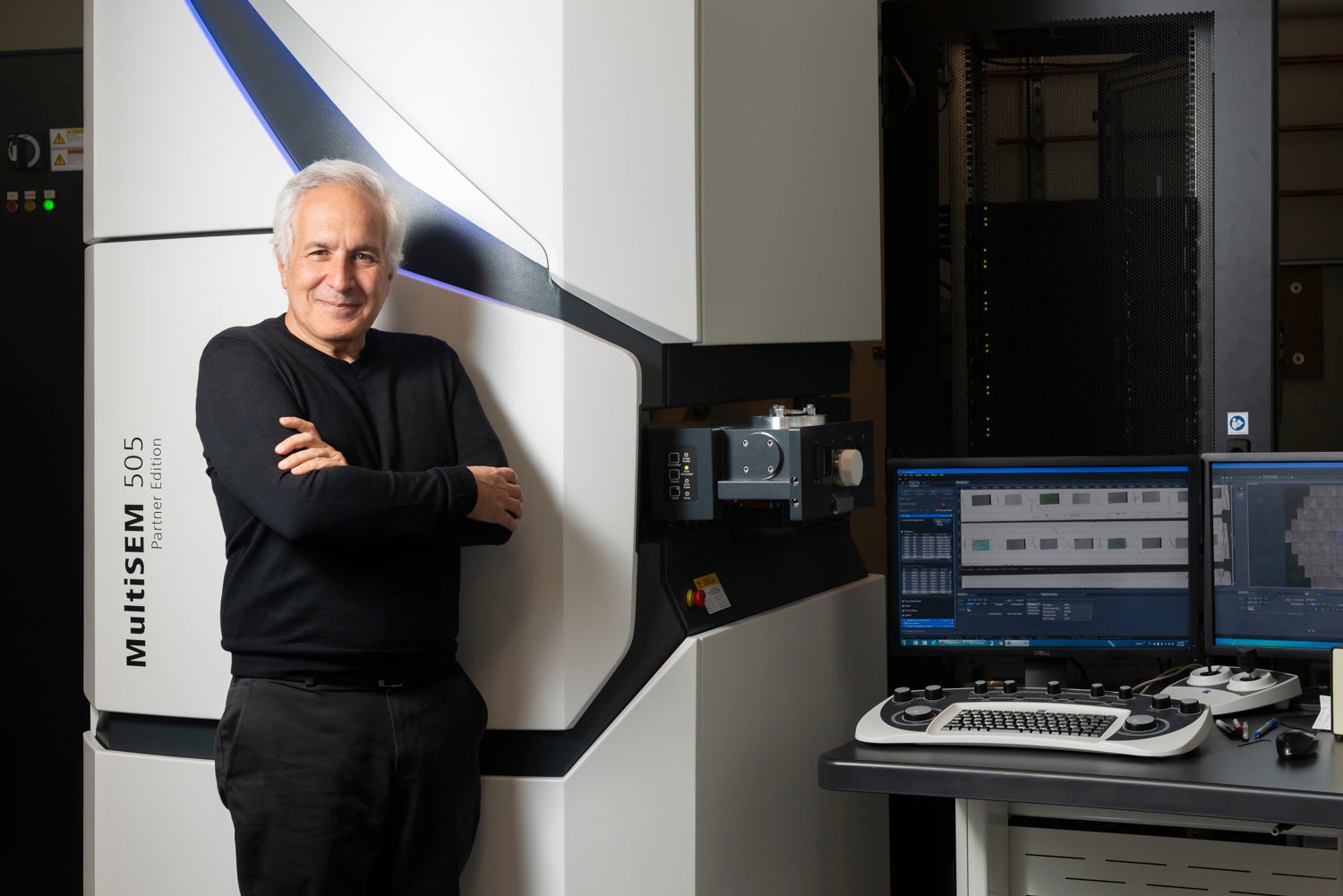
Jeff Lichtman serves as the Jeremy R. Knowles Professor of Molecular and Cellular Biology and Santiago Ramón y Cajal Professor of Arts and Sciences at Harvard University, where he leads research within the Department of Molecular and Cellular Biology in the Faculty of Arts and Sciences. His laboratory focuses on the physical basis of long-lasting memory and experience-driven neural circuit restructuring through advanced connectomic approaches. Dr. Lichtman's research program centers on connectomics and neural circuit development , utilizing transgenic Brainbow models for in vivo visualization and automated serial electron microscopy for nanometer-resolution mapping. His lab investigates synaptic competition during mammalian development, circuit rearrangement in peripheral nervous systems, and the structural underpinnings of memory formation. Key research areas include cellular and molecular neuroscience with emphasis on developmental processes, synaptic connectivity dynamics, and experience-dependent circuit refinement. Analysis of his 2021-2025 publications reveals dominant methodological innovation in machine learning-guided microscopy (e.g., SmartEM) and correlative imaging techniques , with expanding applications across model systems including zebrafish, octopus, and human tissue. Recent work increasingly addresses Alzheimer's disease pathology within connectomic frameworks while maintaining core focus on developmental circuit formation. The Lichtman Lab maintains active development of high-throughput tools for neural circuit mapping, including Fishexplorer for zebrafish circuit dissection and large-scale human cerebral cortex reconstructions, with ongoing projects examining both peripheral and central nervous system connectivity.
Dr. Simone Foti is a Research Fellow at the Department of Computing, Faculty of Engineering in Imperial College London . He holds a PhD from University College London (UCL) and has held internships at Disney Research Studios and Adobe Research. Education : PhD (2023), MRes (2019), MSc (2017), BSc (2015) His research spans Geometric Deep Learning , Computer Graphics , and Computer Vision , focusing on improving 3D generative models for applications in AR/VR, the metaverse, medical imaging, and digital human creation. Recent work explores problems in non-Euclidean domains like graphs and meshes, with trends including latent disentanglement , 3D reconstruction , and medical applications of geometric AI. Collaborations include institutions like Carnegie Mellon University, Politecnico di Milano, and UCL, with publications across top venues such as NeurIPS , CVPR , and Computer Graphics Forum . Current projects include UV-free texture generation and mesh sampling techniques .
Michiel Doorman is an Associate Professor of Mathematics Education and Academic Director at the Freudenthal Institute, Faculty of Science, Utrecht University. His research bridges mathematics education, STEM integration, and innovative pedagogical approaches, with a focus on context-based learning, mathematical modeling, and embodied design. Research interests center on: Context-based mathematics education using real-world applications to enhance conceptual understanding. Inquiry-based learning across mathematics and science disciplines. Embodied cognition in mathematical reasoning, leveraging tools like augmented reality. STEM education reform , particularly in teacher training and curriculum design. Recent publications emphasize technology-enhanced learning (e.g., augmented reality, Braille interfaces), cross-cultural studies in mathematics education, and responses to educational disruptions like COVID-19. A strong trend involves interdisciplinary work connecting mathematics with physics, sustainability, and special education. As Academic Director of the Freudenthal Institute, he leads initiatives in mathematics education research and teacher professional development. He supervises graduate students and contributes to European STEM education projects.
Dr. Chengbo Ai is an Associate Professor at the Department of Civil and Environmental Engineering , University of Massachusetts Amherst , specializing in transportation infrastructure and safety research. He holds a Ph.D. in Transportation Systems Engineering from Georgia Tech and a B.S. in Electrical Engineering from Peking University. Research Interests: Transportation Asset Management, Mobile LiDAR Applications, Roadway Safety Analytics, and Spatial Infrastructure Analysis Current Projects: Developing automated guardrail/sidewalk inventory systems, improving pedestrian infrastructure accessibility, and optimizing rail inspection methods Publications focus on integrating computer vision, machine learning, and geospatial technologies for infrastructure condition assessment. Recent work includes automated guardrail evaluation, rail gage inspection using consumer-grade devices, and pedestrian network analysis. Awards: Dwight David Eisenhower Transportation Fellowship recipients (2020-2022) Acorn Innovation Grant (2019) Best Poster Award at MassDOT Conference (2019) Students: Mentors Ph.D. researchers in pavement preservation, LiDAR processing, and transportation equity, with alumni working at FHWA, AECOM, and leading engineering firms Lab Facilities include advanced LiDAR systems (Theodore 1-3), dual-GPU workstations (Sullivan, Wazowski), and field vehicles like "Cynthia" for mobile mapping.
Aljaž Božič is a Research Scientist at Meta Reality Labs Research , focusing on neural rendering, 3D reconstruction, and AI-driven geometry modeling. He earned his Ph.D. in Computer Science from the Technical University of Munich (TUM) and holds a Master's in Computer Science from TUM and a Bachelor's in Mathematics from the University of Ljubljana . His research spans computer vision, graphics, and artificial intelligence , with a focus on neural rendering , generative AI , and 3D deformable object modeling , targeting applications in VR/AR and robotics. His work includes time-consistent dynamic scene reconstruction (SceNeRFlow), volumetric hair appearance modeling, and high-fidelity walkable VR spaces (VR-NeRF), alongside efficient NeRF distillation and calibration methods (Neural Lens Modeling). Key article trends include Transformer-based monocular reconstruction (TransformerFusion), neural parametric shape models (NPMs), and self-supervised non-rigid tracking (Neural Deformation Graphs). He has contributed to open-source projects like the TransformerFusion GitHub repository , emphasizing MIT-licensed tools for scene reconstruction. At TUM, he served as a Teaching Assistant for courses such as 3D Scanning and Spatial Learning and 3D Vision Seminar , bridging academic instruction with research innovation. His work integrates advanced neural networks with practical optimization techniques, advancing fields like RGB-D reconstruction (DeepDeform) and variational SLAM.
Dr. Wiltrud Lederle serves as a research group leader at the Institute for Experimental Molecular Imaging within the Medical Faculty of RWTH Aachen University. She earned her PhD from the University of Hohenheim following doctoral work at the German Cancer Research Center (DKFZ) in Heidelberg, and conducted postdoctoral research at DKFZ from 2003 to 2008 before joining RWTH Aachen University in 2008. She completed her habilitation at the Medical Faculty of RWTH Aachen University in 2019, establishing her qualification for a professorship in the German academic system. Dr. Lederle's research program centers on understanding tumor-microenvironment interactions through advanced imaging techniques. Her laboratory investigates: The influence of the microenvironment on tumor progression and metastasis Mechanisms of tumor angiogenesis and immune responses Stromal activation during tumor development Non-invasive imaging of stromal remodeling in tissue repair and organ inflammation Development of innovative imaging technologies for cancer research She employs multiple imaging modalities including molecular ultrasound, photoacoustic imaging, MRI, and optical techniques to visualize biological processes in real-time. Her work spans multiple disease areas including colorectal cancer, breast cancer, and various liver conditions, with particular emphasis on angiogenesis, immune responses, and stromal interactions. A significant trend in her recent publications involves developing and validating novel imaging biomarkers for monitoring therapeutic responses and investigating combination therapies targeting both tumor cells and their supportive microenvironment. Dr. Lederle leads the research group 'Tumor Progression and Metastasis' at RWTH Aachen University with continuous funding from major German research agencies including the German Research Foundation (DFG) and the Federal Ministry of Education and Research (BMBF), as well as through industrial partnerships. Her collaborative research program demonstrates strong translational potential, bridging basic science with clinical applications in cancer diagnosis and treatment monitoring.
Michela Spagnuolo is a Research Director at the Italian National Research Council’s Institute of Applied Mathematics and Information Technology (CNR-IMATI-GE) since 2001. Her work bridges Computer Graphics , Geometry Processing , and Computational Topology , with applications in 3D Shape Analysis , Cultural Heritage , and Bioinformatics . Co-supervised 6 PhD theses (plus 2 ongoing) Associate Editor for journals like The Visual Computer and Computers&Graphics Chair of conferences including Shape Modeling International and EG Workshops on 3D Object Retrieval Research Interests : Focus on geometric and semantic modeling of 3D objects , computational topology for shape analysis , and structural/similarity evaluation . Her work enables advanced 3D search engines , semantic annotation , and medical imaging applications . Article Trends : Recent publications emphasize mesh quality indicators for Virtual Element Methods in engineering simulations and semantic-driven 3D model analysis for medical diagnostics and cultural heritage . Key subtopics include topological decomposition , data processing services , and multi-scale modeling . Scientific Awards : Fellow of the Eurographics Association (2014) Notable Contributions : Led projects like IQmulus (geospatial data analytics) and MultiScaleHuman (medical shape modeling). Pioneered CIDOC CRMdig for cultural heritage documentation and developed techniques for kernel computation in polyhedra .
Dr. Jan Helge Bøhn is an Associate Professor in the Department of Mechanical Engineering at Virginia Tech's College of Engineering, specializing in rapid prototyping, additive manufacturing, geometric modeling, and international engineering education. His work bridges global collaborative engineering with innovative product development processes. Ph.D., Computer and Systems Engineering, Rensselaer Polytechnic Institute (1993) M.S., Computer and Systems Engineering, Rensselaer Polytechnic Institute (1989) B.S., Computer Science, Rensselaer Polytechnic Institute (1988) His research focuses on additive manufacturing and global engineering design , with applications in transatlantic dual degree programs, automotive PLM, and haptic accessibility solutions. He has pioneered adaptive slicing techniques for 3D printing and developed international curricula frameworks. Dr. Bøhn's publications highlight trends in collaborative engineering education , 3D printing , and human-computer interaction , particularly for low-vision users and automotive sectors. 2018 : PACE Platinum Certification 2015 : Alumni Award for Excellence in International Outreach 2013 : Virginia Tech Scholar of the Week & PACE Silver Certification He has led international initiatives, received multiple teaching excellence awards, and collaborated on global PLM educational labs. His work impacts both engineering pedagogy and industrial practices.
Patrice Koehl is a full-time Professor in the Department of Computer Science at the University of California, Davis. His research bridges computational biology, structural bioinformatics, and theoretical biophysics, focusing on geometric and physical modeling of biomolecular systems. He has made significant contributions to protein structure prediction, ion channel modeling, and development of computational methods for molecular simulations. Research interests include: Geometric modeling of biological macromolecules Optimal transport theory for shape analysis Statistical mechanics in biomolecular simulations Topological data analysis for cellular morphology Multi-scale modeling of viral structures Recent research trends show strong emphasis on: Protein conformational transitions using action minimization Persistence diagrams for morphological signatures Geometric approaches to assignment problems Computational methods for macromolecular surface analysis Interdisciplinary applications of physics to biological data
Vijaykumar is a Professor in the Elmore Family School of Electrical and Computer Engineering at Purdue University. His research focuses on computer architecture, VLSI design, and circuit optimization. He is affiliated with the Max W and Maileen Brown Family Hall at the West Lafayette campus. Education: B.E. (Hons) in Electrical and Electronics Engineering, M.Sc.(Tech) in Computer Science from Birla Institute of Technology and Science, Pilani, India (1990) M.S. in Computer Science from University of Wisconsin (1992) Ph.D. in Computer Science from University of Wisconsin (1997) His research spans machine learning acceleration, GPU computing, and hardware security. Recent work includes neural radiance field optimizations, speculative execution security, and processing-in-memory architectures. Publications demonstrate expertise in scalable verification, distributed rendering, and efficient data movement. He has contributed to GPU kernel concurrency, sparse tensor acceleration, and memory consistency verification. His email contact is vijay@ecn.purdue.edu , with office location at BHEE 320, Purdue University.
Baybora Temel is an Associate Professor at Trakya University Faculty of Fine Arts , with a PhD in Computer Science from Marmara University (2009). His research merges Artificial Intelligence and Digital Art Analysis , focusing on Art Authentication via wavelet transforms and neural networks. Specializes in Painting Style Classification and Digital Art Forensics Recipient of Nuri Iyem Painting Competition Exhibition (2015) and Australian Embassy Painting Award (2009) Active in International Art Symposia (Odessa, Patras) and National Exhibitions His 15 most recent publications span Art Authentication (2008-2022) and Digital Art Analysis , employing Machine Learning for Cubist Painting Discrimination and Figurative Art Studies . He has curated exhibitions like Art Suites 26th International Art Workshop (2018) and participated in Balkan Exhibitions IV (2023).
BOHI Amine is a researcher at CESI (School of Engineering and Digital Tools, Department of Computer Science), with a PhD in Computer Science from the University of Toulon (2017). His academic profile spans disciplines including Machine Learning, Signal and Image Processing, and Biomedical Engineering, with a focus on applications in Digital Health and Human-Robot Interaction. Education : PhD in Computer Science (University of Toulon, 2013-2017); Master 2 in Computer Science (University of Fes, Morocco, 2009-2011); Bachelor’s in Mathematical and Computer Sciences (University of Fes, 2006-2009). His research interests include: Machine Learning and Deep Learning Signal and Image Processing 3D Shape Analysis Computer Vision Digital Health Biomimetic Feature Design BOHI’s publications reflect expertise in facial emotion recognition for elderly care, cortical folding modeling, and soft tissue organ deformation analysis using MRI. He supervises diverse research internships, mentoring students from institutions like Sorbonne Paris Nord, Université de Technologie King Mongkut, and INP Grenoble. Current projects involve developing intelligent solutions for emotional interaction with elderly individuals suffering from neurodegenerative disorders, in collaboration with VyV3 Bourgogne. He also contributes to the design of multimodal datasets and wearable health monitoring systems. BOHI’s technical work includes contributions to maritime surveillance systems (PARE project) and semantic information platforms, demonstrating a capacity to bridge theoretical research with practical applications across domains.
Carlos Morales serves as Associate Professor at Purdue University's Polytechnic Institute, specializing in digital video, animation, and interactive technology for visual training solutions. His research focuses on game-based learning applications in chemistry education and innovative distance learning systems, with significant contributions to educational technology through interdisciplinary collaboration. His primary research domains include: Game-based Learning for STEM education Interactive Educational Technology development Digital Video Production for distance learning Animation Technology pipelines Mobile Learning Applications design Chemistry Education Technology integration Dr. Morales' publication record (2002-2007) demonstrates consistent innovation in chemistry video games and mobile learning solutions, featuring multiple collaborative projects with chemistry educators. His work bridges engineering design and educational theory to create validated tools that enhance student engagement through visual realism and sustained interactivity. As Principal Investigator and Co-PI, he has secured substantial research funding including: National Science Foundation: $539,999 for "Effective Distance Learning Through Sustained Interactivity and Visual Realism" (2003-2006) National Science Foundation: $200,000 for "Game-based Learning in Chemistry" (2003-2006) ITaP MIDC: $15,000 for "Development of Mobile Games for Chemistry" (2006-2007) Discovery Learning Center: $20,000 for Chemistry Video Game Development (2006-2007)
Dr. Matthew Lewis is an Honorary Senior Research Fellow at Bangor University's School of Ocean Sciences, specializing in physical oceanography with applications to blue economy industries and coastal flood risk. His research employs computer models to simulate marine processes, including wave-tide interactions, estuarine dynamics, and future changes to coastal hazards. With affiliations spanning multiple research projects and international collaborations, Dr. Lewis plays a significant role in advancing marine renewable energy and coastal resilience science. Dr. Lewis's research interests focus on numerical modeling of marine systems, with particular expertise in wave-tide interactions, estuarine flood risk, marine renewable energy resource assessment, and marine plastic pollution. His work combines physical and biological processes to better understand marine systems, with applications ranging from coastal flood risk mitigation to optimizing offshore renewable energy deployment. His research bridges the gap between fundamental oceanographic processes and practical applications for coastal communities and industries. His recent publications demonstrate a strong focus on tidal and wave energy resource assessment, coastal flooding mechanisms, and the environmental impacts of marine renewable energy. The research shows increasing emphasis on interdisciplinary approaches, combining physical oceanography with ecological and social considerations, particularly in addressing compound flooding events and marine plastic pollution. His work has evolved from fundamental process studies toward more applied research with direct policy and industry relevance. Dr. Lewis actively supervises PhD and MRes students, with current projects covering renewable energy resource assessment, microplastic dispersal, coastal flooding mitigation, and estuarine dynamics. He teaches the ocean modeling module at Bangor University and serves as an Associate Editor for Frontiers in Marine Science and Guest Editor for Elsevier's Renewable Energy journal. His research is supported by multiple grants from NERC, EPSRC, and other funding bodies. As a member of the EPSRC Associate Peer Review College and the Digital Environment Expert Network, Dr. Lewis contributes significantly to the research community beyond his own projects. He has collaborated with numerous research partners including the UK Met Office, Deltares, CSIRO Australia, and NIWA New Zealand, demonstrating strong international engagement in marine science.