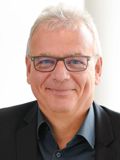
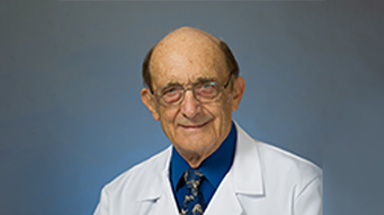
Miguel Eckstein is a Distinguished Professor at UC Santa Barbara with joint appointments in the Department of Psychological & Brain Sciences (College of Letters & Science) and the Department of Electrical and Computer Engineering (College of Engineering). He earned a Bachelor's in Physics and Psychology from UC Berkeley and a PhD in Cognitive Psychology from UCLA. His career includes prior positions at Cedars Sinai Medical Center and NASA Ames Research Center. Eckstein leads pioneering research in computational human vision, integrating behavioral psychophysics, eye tracking, EEG, fMRI, and computational modeling to study: Neural mechanisms of visual perception, attention, and learning Medical image perception for clinical diagnostics Bio-inspired computer vision systems Human-robot interaction optimization His work bridges fundamental cognitive neuroscience with applied engineering solutions. Publication analysis reveals interdisciplinary contributions spanning neuroscience, computer vision, medical imaging, and psychology. Recent work (2017-2021) emphasizes neural decoding of visual processes, 3D medical imaging limitations, human-AI perceptual comparisons, and crowd-sourced visual intelligence. Awards and honors include: Guggenheim Fellowship (2019) National Academy of Sciences Troland Award NSF CAREER Award SPIE Image Perception Cum Laude Award Optical Society of America Young Investigator Award He directs the Vision and Image Understanding Lab and co-founded the Mellichamp Initiative in Mind & Machine Intelligence, fostering cross-disciplinary AI research. Grant activities support medical imaging perception, neural computation, and human-machine collaboration projects.
Markku Kilpeläinen is a University Lecturer at the Department of Psychology, University of Helsinki, affiliated with the Faculty of Medicine. His work focuses on cognitive psychology, perception, and neuroscience, with particular emphasis on visual system research and human-computer interaction. Dr. Kilpeläinen's research explores: Cognitive abilities and their impact on computer task performance Retinal processing mechanisms in primate and human vision Sound-action and sound-space symbolic associations Comparative studies of human and AI visual recognition capabilities His publications since 2025 demonstrate active engagement in interdisciplinary research spanning psychology, neuroscience, and technology design. Recent work includes studies on parenting interventions in perinatal care and novel methods for XR device legibility testing. In collaborative projects, Dr. Kilpeläinen has contributed to: Human Optimized XR (Multisensory Signals and Meanings) International collaborations with institutions like UC Berkeley Business Finland-funded research initiatives
Prof. Dr. Olaf Kruse is a Professor at Bielefeld University in the Faculty of Biology, where he serves as Head of the Working Group on Algal Biotechnology & Bioenergy at the Center for Biotechnology (CeBiTec). He is also a Board member of CeBiTec and serves on various university committees including the Research Committee. His research focuses on harnessing microalgae as green cell factories for solar energy conversion into biomass, bioenergy, and high-value products. Dr. Kruse's work specifically targets understanding regulatory aspects of photosynthesis in microalgae and optimizing solar energy conversion into biofuels through advanced molecular biology approaches. His group employs Systems Biology strategies using omics technologies to elucidate regulatory networks of light harvesting and establish metabolic flow models for algal biofuel production pathways. Dr. Kruse's recent publications demonstrate a strong emphasis on genetic engineering of Chlamydomonas reinhardtii for enhanced production of valuable compounds including zeaxanthin, astaxanthin, and various terpenoids. His research integrates multiple approaches including CRISPR/Cas9 genome editing, metabolic pathway engineering, and development of novel cultivation techniques such as hydrogel immobilization systems. Young Scientist van't Hoff fund award of the Dutch Royal Society (2008) As an academic advisor, Dr. Kruse has mentored numerous researchers who frequently appear as co-authors on his publications, including Baier T, Jacobebbinghaus N, and Kneip J. His research has been supported through various national and international funding mechanisms including DFG Collaborative Research Centers and EU framework programs. Dr. Kruse leads the Algal Biotechnology & Bioenergy working group which operates within CeBiTec's technology platform, utilizing advanced omics technologies and bioinformatics support for their research.
Dr. Gregory Lewis is an Associate Professor in the Department of Orthopaedics and Rehabilitation at Penn State University. He leads the micro-CT core facility and serves as a Research Thrust Leader for the Penn State Center for Biodevices. His research focuses on orthopaedic biomechanics, bone quality assessment, and surgical education technology development. Primary Affiliation: Penn State University Department: Orthopaedics and Rehabilitation Labs: Micro-CT Core Facility Dr. Lewis specializes in computational modeling and experimental validation of fracture fixation constructs, with particular expertise in shoulder replacement biomechanics and patient-specific surgical planning tools. His work combines finite element analysis with clinical applications to improve postoperative outcomes. Current research trends include: Advanced fracture fixation plate design Multi-scale biomechanical simulations Integration of CT imaging with surgical planning Interactive visualization software for surgeons Biological and mechanical analysis of bone regeneration Dr. Lewis actively collaborates with orthopaedic surgeons, musculoskeletal biologists, and biomedical engineers across multiple institutions. He contributes to educational programs through curriculum development for orthopaedic residents and instruction in mechanical engineering capstone courses.
Faruk Gazı Ceranoğlu serves as a Researcher in the Department of Anatomy at the Faculty of Medicine, Nigde Omer Halisdemir University, holding this position since 2021. His academic foundation includes a Licence in Physical Therapy and Rehabilitation from Pamukkale University (2013-2018), a Master's in Anatomy from Necmettin Erbakan University (2020-2022), and ongoing Doctoral studies in Anatomy at the same institution. His educational trajectory comprises: Doctorate in Anatomy (2023-) at Necmettin Erbakan University, Institute of Health Sciences Master of Science in Anatomy (2020-2022) at Necmettin Erbakan University, Institute of Health Sciences, with thesis titled "Morphometric measurements of the calcaneus in radiological images" Licence in Physical Therapy and Rehabilitation (2013-2018) at Pamukkale University, College of Physical Therapy and Rehabilitation Ceranoğlu's research centers on anatomical morphometry with clinical applications across orthopedics, neuroanatomy, and ophthalmology. His methodology integrates radiological imaging, MRI analysis, and cadaveric studies to investigate structural parameters of bones, muscles, and nerves. Key focus areas include gender estimation from skeletal measurements, surgical technique optimization, and neurovascular relationships for clinical interventions like botulinum applications and transsphenoidal procedures. His 2023-2024 publications reveal a cohesive research program emphasizing morphometric analysis across diverse anatomical systems. Dominant trends include biomechanical characterization of tendons/ligaments (peroneus longus, ACL), neuroanatomical investigations of visual pathways and midbrain structures, and forensic applications of skeletal morphometry. This work consistently bridges fundamental anatomical science with practical clinical solutions in orthopedics, neurosurgery, and ophthalmology. Information regarding scientific awards, student advising, research grants, or laboratory teams was not documented in available materials.
Dr. Ljiljana (Lili) Paša-Tolić is a distinguished Lab Fellow and Lead Scientist for Visual Proteomics at Pacific Northwest National Laboratory (PNNL), where she works within the Environmental Molecular Sciences Division and the Environmental Molecular Sciences Laboratory (EMSL) user program. She brings world-leading expertise in native-state and top-down proteomics, mass spectrometry, and the Biomolecular Pathways Integrated Research Platform, combining these with Functional Bioimaging and Cell Signaling platforms to develop transformational capabilities for dynamic spatio-temporally resolved proteomic imaging in cells. Shipley Capturing Federal Business Course (2013) Emerging Leader Program (2012) Management Skills Development Program (2003) Postdoc, National High Magnetic Field Laboratory (1995–1997) Postdoc, PNNL (1993–1995) PhD in Chemistry, University of Zagreb (1992) MS in Theoretical and Physical-Organic Chemistry, University of Zagreb (1989) BS in Chemistry, University of Zagreb (1986) Dr. Paša-Tolić specializes in developing sophisticated analytical methods with emphasis on Fourier transform mass spectrometry and micro-separations. Her research focuses on applying these techniques to accurately quantify spatiotemporal changes in protein (metabolite) abundance, identity, and activity. Her work bridges the gap between advanced instrumentation development and biological applications, particularly in environmental systems, microbial communities, and plant-microbe interactions. She has pioneered approaches for single-cell metabolomics, top-down proteomics, and mass spectrometry imaging that have transformed how researchers study complex biological systems at unprecedented resolution. The trend in Dr. Paša-Tolić's recent publications demonstrates her leadership in advancing mass spectrometry technologies while applying them to increasingly complex biological questions. Her work spans environmental science, microbiology, plant biology, and immunology, showing how fundamental advances in analytical methodology can be leveraged across diverse research domains. Key themes include single-cell analysis, interlaboratory standardization, top-down proteomics, and the development of novel instrumentation approaches that push the boundaries of detection sensitivity and spatial resolution. The Analytical Scientist Power List (2019) Spectrometry Global Impact Award (2015) Director's Award, EMSL (2010) Systems Biology Fellows Mentor Award (2007) Outstanding Merit Award, International Immunology (2007) Key Contributor Award, PNNL (2002, 2003) Outstanding Performance Award, PNNL (1998, 1999, 2000) International Institute of Quantum Chemistry and Solid-State Theory Award (1988) As a leader in her field, Dr. Paša-Tolić has served in numerous professional capacities including Treasurer of the American Society for Mass Spectrometry (2020–2022), Editorial Board Member for the Journal of the American Society for Mass Spectrometry (2017–Present), and Member at Large on the Board of Directors for the Consortium for Top-Down Proteomics (2012–Present). She has organized and lectured at the 'Mass Spectrometry in Biology and Medicine' summer school in Dubrovnik, Croatia since 2007, demonstrating her commitment to training the next generation of scientists. Her research has been supported by multiple federal agencies including the Department of Energy, National Institutes of Health, and National Science Foundation. Dr. Paša-Tolić leads a dynamic research team at PNNL focused on visual proteomics, which combines advanced mass spectrometry with imaging techniques to study biological systems at unprecedented resolution. Her group works at the intersection of the Functional and Systems Biology group, the Biomolecular Pathways Integrated Research Platform, and the Functional Bioimaging platform, creating a synergistic environment for innovation. The team has developed novel capabilities for single-cell analysis, top-down proteomics, and mass spectrometry imaging that are being applied to diverse research areas from environmental systems to human health.
Dr. Julie A. Van Dyke serves as Senior Research Scientist and Vice President of Research and Strategic Initiatives at Haskins Laboratories, an independent research institute affiliated with Yale University and the University of Connecticut. She holds adjunct professorships at McMaster University and the City University of New York Graduate Center while maintaining affiliate status at UConn's CT Institute for Brain and Cognitive Sciences. Her NIH-funded research investigates neurocognitive mechanisms underlying language comprehension and reading disorders. Her educational background includes: Ph.D. in Cognitive Psychology from University of Pittsburgh M.Sc. in Computational Linguistics from Carnegie Mellon University Honors B.A. in Computer Science and Linguistics from University of Delaware Dr. Van Dyke's research centers on cue-based retrieval theory, examining how retrieval interference causes comprehension failures in both normative processing and clinical populations (dyslexia, ADHD, age-related decline). She pioneered the application of speed-accuracy tradeoff methodology to diagnose direct-access retrieval mechanisms and investigates individual differences in eye-movement control during reading. Her work bridges cognitive theory with clinical applications through machine learning classifiers for reading disability and fixation-related brain imaging of word-by-word processing. Analysis of her recent publications reveals consistent focus on retrieval interference mechanisms across multiple methodologies: eye-tracking studies establish individual skill factors in oculomotor control, neuroimaging work identifies neural correlates of interference resolution, and machine learning approaches develop diagnostic classifiers. Key trends include the role of predictive timing in fluency disorders and dissociation between grammatical vs. semantic interference effects. Her scientific recognition includes: NIH/NICHD Institutional Post-doctoral National Research Service Award NIH/NICHD Individual Post-doctoral National Research Service Award Dr. Van Dyke actively shapes her field through editorial roles as Associate Editor for Journal of Experimental Psychology: General and Section Editor for Language and Linguistics Compass. Her NIH-funded grants support collaborative projects with researchers including Victor Kuperman, Luca Campanelli, and Clint Johns, focusing on retrieval interference, reading disability mechanisms, and neural underpinnings of comprehension. Current initiatives integrate computational linguistics with cognitive neuroscience to model real-time processing during reading. As Vice President at Haskins Laboratories, she leads a multidisciplinary team utilizing eye-tracking, EEG, fMRI, and machine learning to investigate language processing. Her lab collaborates with the CT Institute for Brain and Cognitive Sciences and maintains strong ties with UConn's neuroscience community, with ongoing data collection for fixation-related brain imaging studies.
Dr. Marwan Suheimat is a Research Fellow at Queensland University of Technology's Faculty of Health, School of Clinical Sciences, specializing in advanced vision science research. His work focuses on ocular biometry, refractive error mechanisms, and myopia control interventions, collaborating extensively with leading researchers including Professor David Atchison. His primary research interests include Myopia Control , Accommodation Mechanisms , Peripheral Refraction Analysis , and Ocular Biomechanics . His investigations into choroidal thickness dynamics during accommodation and ciliary muscle dimension changes have provided critical insights into refractive error development. His methodological innovations in autorefractor technology and peripheral vision measurement have advanced clinical assessment protocols. Analysis of his recent publications reveals a strong emphasis on quantitative measurement techniques for studying ocular structures, with particular focus on myopia progression mechanisms and optical correction efficacy . His work bridges fundamental optical principles with clinical applications, particularly in developing improved diagnostic tools for vision science. Dr. Suheimat's research program demonstrates consistent productivity with high-impact publications in premier vision science journals including Ophthalmic and Physiological Optics , Investigative Ophthalmology & Visual Science , and Biomedical Optics Express , reflecting his significant contributions to understanding the optical and biomechanical properties of the human eye.
Dr. Allen A. Smith is a Professor of Anatomy at Barry University's School of Podiatric Medicine with over four decades of academic experience. His prior roles include Adjunct Professor of Chemistry at Broward County Community College (2001), Associate Professor of Anatomy at Barry University (1989-2000), and Associate/Assistant Professor of Biology at Widener University (1974-1989). Education: A.B. in Biology, Brown University (1961) Graduate Studies in Zoology, Syracuse University (1961-1963) Ph.D. in Anatomy, University of Oregon Medical School (1969) B.Sc. in Chemistry (summa cum laude), Widener University (1986) M.A. in Chemistry, Temple University (1991) Dr. Smith's research specializes in advancing histological methods, particularly in staining optimization for acidic mucins and antibody dilution protocols. His work bridges anatomy, chemistry, and diagnostic applications to improve tissue analysis accuracy. His publications demonstrate a consistent focus on refining histochemical techniques, with recent articles emphasizing methodological innovations in immunostaining and specialized stain formulations for enhanced tissue visualization. Honors and Awards: Johnson Prize in French (1957) Outstanding Faculty Member Award (1996) Professor of the Year (2002, 2004, 2006) Dr. Smith actively contributes to professional societies including The Histochemical Society, American Chemical Society, and Florida Academy of Sciences, where he held leadership roles such as Chair of the South Florida Section of ACS (2000).
Nanna Bjarnholt is an Associate Professor in the Department of Plant and Environmental Sciences at the University of Copenhagen's Faculty of Science, where she leads the Plant Metabolic Plasticity Group. Her research focuses on plant specialized metabolites, particularly cyanogenic glycosides and glutathione transferase enzymes, using advanced mass spectrometry imaging and metabolomics techniques. Dr. Bjarnholt earned her MSc in Environmental Chemistry (2003) and PhD in Plant Biochemistry (2007), both from the University of Copenhagen. After completing postdoctoral work at the Department of Plant Biology and Biotechnology (2008-2014), she was appointed Associate Professor in 2014 and became a Research Group Leader in 2018. Her research primarily investigates the physiological roles and catabolism of cyanogenic glycosides in plants like sorghum, Lotus japonicus, cassava, barley, and almond. A significant discovery from her work revealed that glutathione transferase enzymes (GSTs) catalyze a reductive cleavage reaction in a pathway for nitrogen recovery from cyanogenic glucosides. With funding from the VILLUM Foundation, her group focuses on uncovering additional GST functions in plant specialized metabolism. She has pioneered the application of mass spectrometry imaging to visualize metabolite distribution and enzymatic conversion in plant tissues. Analysis of her recent publications shows a consistent focus on plant specialized metabolism, particularly cyanogenic compounds and glutathione transferases. Her work spans fundamental biochemistry to crop science applications, with increasing emphasis on mass spectrometry imaging techniques. Recent research has expanded to include Cannabis sativa metabolite distribution, sorghum transformation methods, and plant-pathogen interactions. Dr. Bjarnholt has secured significant research funding, including a VILLUM Young Investigator grant (10 million DKK), a Semper Ardens grant from The Carlsberg Foundation (19 million DKK), and multiple other competitive grants totaling over 40 million DKK. Her research has resulted in 61 publications with substantial citations and international recognition. She currently supervises 4 PhD students (with 6 completed) and 1 postdoc (with 2 past), teaching B.Sc. level courses in biochemistry, metabolomics, and Mass Spectrometry Imaging. Her international collaborations include researchers from Newcastle University, University of Illinois, University of Queensland, University of Lausanne, and others. Dr. Bjarnholt serves on the Copenhagen Plant Science Center scientific committee and the departmental research committee, demonstrating her leadership within the academic community.