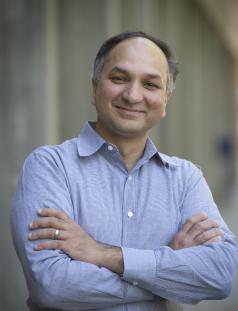
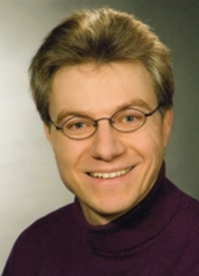
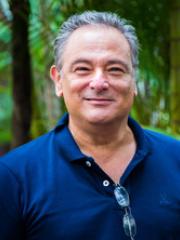
Tanja Blascheck is a PostDoc Researcher and Margarete von Wrangell Fellow at the Institute for Visualization and Interactive Systems (VIS) at the University of Stuttgart. Her work focuses on visual analytics , eye tracking , and microvisualizations for smartwatches and other wearable devices.
Dr. Heidi Baseler is a Senior Lecturer in Imaging Sciences at the Hull York Medical School and the Department of Psychology , University of York . She serves as INSPIRE Programme Lead for undergraduate research and contributes to research governance and public/patient involvement in research through committees like the York Neuroimaging Centre Research Governance Committee and Involvement@York . Education : AB in Biology/Psychology from Dartmouth College (1986), PhD in Vision Science from University of California, Berkeley (1995) Career : Research Fellow at Stanford, Smith-Kettlewell Eye Research Institute, and University of York; Lecturer in Imaging Sciences at Hull York Medical School (2012-2021) Her research focuses on neural mechanisms for central/peripheral vision processing, cortical responses to sensory loss (e.g., AMD, deafness), and neuroprotective strategies like photobiomodulation. Techniques include structural and functional MRI , magnetic resonance spectroscopy , multifocal EEG , and electroretinography . Key findings include cortical reorganization in macular degeneration and superior visual performance in deaf adults. Recent article trends highlight: Neuroimaging biomarkers for AMD progression Cross-modal plasticity in deaf individuals Long-term effects of sensory deprivation on brain structure Photobiomodulation for neurodegeneration Functional connectivity in face-selective regions Contrast perception dynamics across aging Scientific awards include: Exceptional Contribution to Student Experience Finalist , Hull York Medical School (2024) Pursuing Excellence Award , Hull York Medical School (2023) Vice-Chancellor's Teaching Award , University of York (2020) Multiple Teacher of Excellence Finalist recognitions (2016-2018) She teaches undergraduate medical students in Foundations of Medicine and Neurological Diseases , and supervises MSc Cognitive Neuroscience projects. Collaborations span institutions like University of Hull , University of Lille , and University of Regensburg . Current students include Sharyfah Alasiri (PhD, Biomedical Sciences) and Erin English (PhD, Psychology) at the University of York.
Manish N. Raizada is a Professor in the Department of Plant Agriculture at the University of Guelph's Ontario Agricultural College, serving as International Relations Officer. His research spans fundamental and applied studies in crop probiotics and sustainable agriculture for small-scale farmers. His research focuses on three core projects: (1) Plant Microbiome Inheritance, where his lab discovered seed-borne microbiomes and pollen microbiome selection; (2) Evolving Bacteria for Farmers, developing nodule-crushing techniques for legume inoculation; and (3) Empowering Small Scale Farmers through Sustainable Agriculture Kits (SAKs) impacting 272,000 people. His work integrates microbial ecology with practical farming solutions, emphasizing indigenous knowledge systems and democratization of agricultural technologies. Raizada's publications reveal strong trends in plant-microbe interactions (particularly maize and legumes), sustainable intensification for smallholders, and microbiome engineering for pathogen resistance. His work spans agricultural science, microbiology, and development studies with emphasis on real-world implementation in Nepal, Haiti, and Africa. He actively mentors graduate students and postdocs, with alumni securing faculty positions globally. His lab has developed practical resources including Farmpedia (an online encyclopedia for small-scale farmers in 108 languages) and SAKBooks (picture-based agricultural lessons). Raizada collaborates extensively with international organizations including UN FAO (where he's delivered keynote addresses), IFA, and CGIAR. His work has been featured in BBC World Service, CBC Radio, and Canadian Geographic, demonstrating significant policy and public impact.
Denny Yu is an Associate Professor at the Edwardson School of Industrial Engineering, Purdue University. His work bridges human factors, neuroergonomics, and healthcare safety through advanced sensor systems and AI. Primary Affiliation : Edwardson School of Industrial Engineering, Purdue University Research Themes : Surgical ergonomics, autonomous vehicle human factors, cognitive workload assessment, multimodal physiological sensing Dr. Yu's research focuses on neuroergonomics and human-robot interaction , particularly in surgical and transportation contexts. His team develops sensor-based systems for workload monitoring, including: EEG-eye tracking fusion for situation awareness Wearable exoskeletons for surgical posture support Computer vision tools for lifting task risk analysis Smart infusion pump usability frameworks AI-driven surgical coaching systems Recent publications emphasize deep learning applications in soft tissue deformation estimation and real-time adaptive systems for robotic surgery augmentation. His work spans both occupational health (veterinary surgeons, airport workers) and medical device innovation domains.
Prof. Dr. Kai Essig is a Professor of Human Factors and Interactive Systems at the Faculty of Communication and Environment, Rhine-Waal University of Applied Sciences, Kamp-Lintfort, Germany. He has a strong interdisciplinary background combining computer science, cognitive science, and human-computer interaction, with a focus on eye tracking, visual perception, and assistive technologies. Master of Science in Computer Science and Chemistry, Bielefeld University (1998) Ph.D. in Computer Science, Bielefeld University (2007) His research centers on eye tracking, human-computer interaction, usability engineering, visual attention, and cognitive interaction technology . He investigates how movement expertise influences visual perception and how multimodal software can support real-time human actions. His work integrates computer vision, machine learning, and neuroscience to develop intelligent systems that adapt to user behavior. The 15 most recent publications reflect a consistent trend in eye movement analysis, mental representations, brain-machine interfaces, and assistive technologies . These works span domains such as sports psychology, robotics, augmented reality, and cognitive neuroscience, demonstrating a strong interdisciplinary approach. Key themes include gaze-based interaction, automated annotation of visual behavior, and the implementation of smart systems for daily living assistance. Scientific recognition includes: Landmark in the Land of Ideas (2018) – for the ADAMAAS project, awarded by 'Land of Ideas', a joint initiative of the German government and the Federation of German Industries Prof. Essig has been actively involved in research projects such as ADAMAAS (Adaptive and Mobile Action Assistance in Daily Living Activities), which received national recognition. He has collaborated extensively with the Neurocognition and Action-Biomechanics Research Group at Bielefeld University and the Excellence Cluster CITEC. While no formal advising of students is listed, his publications suggest mentorship and collaboration with junior researchers. His lab work is centered on eye-tracking systems, multimodal interaction, and cognitive modeling , particularly within applied environments like smart glasses and assistive technologies.
Ildikó Király is a Professor at the Institute of Psychology, Eötvös Loránd University, Budapest, currently serving as Head of the Department of Cognitive Psychology and lecturer. Her research focuses on developmental psychology, particularly social cognition, imitation behavior, and theory of mind in early childhood. Key areas: Social Cognition , Developmental Neuroscience , and Cognitive Development Recent work examines preschoolers' exploration tendencies, joint action observation effects, and linguistic group membership's role in perspective taking. She leads the Social Minds Research Group , investigating how cultural knowledge transmission shapes cognitive development. Her 2021-2025 publications reveal trends in: Imitative behavior's sensitivity to social norms and group identity Memory flexibility in adapting to changing contexts Interactions between semantic processing and mentalization in social situations Comparative studies on human and non-human primate cognition
Belen Masia is a tenured Associate Professor in the Computer Science Department at Universidad de Zaragoza , Spain. She is affiliated with the Graphics & Imaging Lab (part of the I3A Institute ) and the Vision, Image and Neurodevelopment Group (within the IIS Aragon Institute ). Her research bridges computational imaging , applied perception , and virtual reality , focusing on modeling human visual behavior and improving graphics/vision algorithms through perceptual insights. Education : Ph.D. in Computer Science (Eurographics PhD Award 2015), postdoctoral work at Max Planck Institute for Informatics . Research Highlights : Virtual Reality : Studying user behavior, saliency prediction, multimodal perception, and cinematography in VR. Appearance Modeling : Developing intuitive material representations and metrics for editing. Applied Perception : Leveraging human vision insights to diagnose defects in non-verbal patients. Computational Displays : Exploring HDR imaging and display optimization. Scientific Awards : Eurographics Young Researcher Award 2017 Eurographics PhD Award 2015 MIT Technology Review Top Ten Innovators Below 35 in Spain 2014 NVIDIA Graduate Fellowship 2012 Leonardo Fellowship from BBVA Foundation 2020 Leadership & Editorial Roles : Co-chair of Full Papers track at Eurographics 2026 Associate Editor for ACM Transactions on Graphics, Computers and Graphics, and ACM Transactions on Applied Perception Co-founder of DIVE Medical , a startup for automated visual function diagnosis PhD Students : Dario Lanza (2025, Modeling, Perception and Editing of Volumetric Materials ) Daniel Martin (2024, Computational Models of Visual Attention in VR , Best PhD Thesis Award EGSE) Julia Guerrero-Viu (2023, WiGRAPH Rising Star) Sandra Malpica (2023, VR Gaze Behavior ) Manuel Lagunas (2021, BBVA/SCIE Young Researcher Award) Ana Serrano (2019, Eurographics PhD Award & Unizar Outstanding Thesis) Collaborations & Grants : Involved in the EU-funded PRIME Innovative Training Network (predictive rendering and appearance reproduction) and leading projects on deep learning for pediatric visual diagnosis.
Kakarla Chalam, MD, PhD, MBA, FACS holds multiple academic and leadership positions at Loma Linda University School of Medicine, where he serves as Professor of Ophthalmology, Professor in the Regenerative Medicine Division of Medicine, and Professor in the Pharmacology Division of Basic Sciences. His institutional roles include Vice Chair of Academic Affairs for Ophthalmology, Director of Medical Student Education in Ophthalmology, Director of the Retina Program, and Program Director for the Retina Fellowship. Dr. Chalam's research spans multiple areas of ophthalmology with a primary focus on retinal diseases and surgical interventions. His work encompasses diabetic retinopathy imaging and treatment, macular hole repair techniques, vitrectomy innovations including "dropless" approaches, and the application of artificial intelligence to ophthalmic imaging. He has pioneered research in optical coherence tomography applications, ultrawidefield angiography, and novel surgical techniques for complex retinal conditions. His publication record demonstrates consistent scholarly output with 227 research contributions from 1985 through 2025, showing particularly robust activity in recent years with publications spanning clinical trials, surgical innovations, imaging technology advancements, and case reports of complex ocular conditions. His research shows a clear trajectory toward integrating advanced imaging technologies with artificial intelligence applications for improved diagnosis and treatment of retinal diseases. Dr. Chalam has participated in significant multicenter clinical trials including the DRCR Retina Network studies and the Ischemic Optic Neuropathy Decompression Trial. His work has appeared in high-impact journals including JAMA, Ophthalmology, and JAMA Ophthalmology, reflecting the significance of his contributions to the field. As Program Director for the Retina Fellowship and Director of Medical Student Education in Ophthalmology, he plays a key role in training the next generation of ophthalmologists. His leadership positions indicate recognition of his expertise by the institution across both clinical and academic domains.
Eric Mandelbaum is a Professor of Philosophy at Baruch College, City University of New York (CUNY), where he holds the Ruth Printz O'Hara '52 Professorship. He also maintains an appointment at the CUNY Graduate Center Department of Philosophy. His scholarly work bridges philosophy and cognitive science, with a particular focus on the nature of belief, mental representation, and cognitive architecture. Professor Mandelbaum's primary research interests include Philosophy of Cognitive Science and Philosophy of Mind, with significant contributions to understanding belief systems. His work has developed the influential Spinozan model of belief fixation, which posits that merely contemplating a proposition entails believing it, with rejection requiring a separate, effortful process. He has also advanced a fragmented model of belief storage, challenging the traditional unified web of belief in favor of multiple, context-sensitive belief stores. His research extends to language of thought hypothesis, implicit bias, and the psychological immune system that governs belief change. Analysis of Mandelbaum's publication record reveals a consistent trajectory of integrating philosophical analysis with empirical findings from psychology and cognitive science. His recent work demonstrates an increasingly interdisciplinary approach, connecting belief science to mental health applications, language processing, and social cognition. A distinctive feature of his scholarship is the development of mechanistic explanations for seemingly incompatible aspects of belief, showing how belief can simultaneously be discerning, credulous, rational, and irrational. Ruth Printz O'Hara '52 Professorship While specific details about Professor Mandelbaum's advising activities are not explicitly documented in the available information, his extensive publication record featuring numerous collaborations suggests active mentorship and research leadership. His work appears to be supported by institutional resources at CUNY, and likely external research grants given the scope and interdisciplinary nature of his investigations into belief systems and cognitive architecture. His frequent co-authorship with researchers across multiple institutions indicates participation in collaborative research networks. Professor Mandelbaum's research is conducted through collaborative networks spanning philosophy, psychology, and cognitive science disciplines. His frequent co-authorship with scholars like Nicolas Porot, Jake Quilty-Dunn, and others suggests leadership in research teams focused on belief systems, language of thought, and implicit cognition. These collaborations demonstrate his commitment to interdisciplinary approaches that bridge philosophical analysis with empirical cognitive science.
Jakob Kibsgaard is a Surface Physics and Catalysis Professor and Section Leader at the Department of Physics, Technical University of Denmark (DTU). He leads research in the VISION – Center for Visualizing Catalytic Processes and maintains an active research program focused on electrocatalysis, ammonia synthesis, and energy conversion technologies. His research interests span catalysis, electrocatalysis, ammonia synthesis, hydrogen production, CO2 conversion, and nanomaterials. Kibsgaard's work primarily addresses sustainable energy solutions through advanced catalyst design and characterization. His research group investigates fundamental processes at atomic and molecular levels to develop efficient catalysts for energy conversion reactions, with particular emphasis on electrochemical ammonia synthesis and CO2 hydrogenation. Analysis of his recent publications reveals a strong focus on dual and triple atom electrocatalysts, advanced imaging techniques for catalyst characterization, and innovative approaches to ammonia synthesis. His work spans multiple energy conversion reactions including CO2 reduction, nitrogen reduction, oxygen reduction, oxygen evolution, and hydrogen evolution. The research combines experimental approaches with theoretical insights to develop next-generation catalysts for sustainable energy applications. Kibsgaard actively supervises multiple PhD students including Thorlacius-Ussing, Tokman, Wu, Griffin, Kazaz, and Pedersen, with projects spanning controlled synthesis of catalysts, exploration of electrocatalysts at atomic scale, and discovery of new dual and triple atom electrocatalysts. His research is supported by various projects with both active and completed funding. His laboratory work centers around the Surface Physics and Catalysis section at DTU Physics, where he utilizes advanced characterization techniques including transmission electron microscopy, X-ray photoelectron spectroscopy, and custom-designed electrochemical cells to study catalytic processes at fundamental levels.
Philipp Müller is a Researcher at the German Research Center for Artificial Intelligence (DFKI) in the Cognitive Assistive Systems department. His work focuses on interdisciplinary research at the intersection of computational linguistics, clinical psychology, and multimodal interaction. Institution: German Research Center for Artificial Intelligence (DFKI) Department: Cognitive Assistive Systems His research explores the application of large language models for psychological conflict recognition, multi-modal context modeling in motivational interviews, and EEG-based visual attention analysis in realistic environments. Publications span conferences like CLPsych, LREC-COLING, and ICMI. Recent collaborative work includes: 2025: AutoPsyC - Psychological assessment using LLMs 2024: M3TCM - Multimodal dialogue systems 2024: EEG fixation classification - Cognitive neuroscience applications
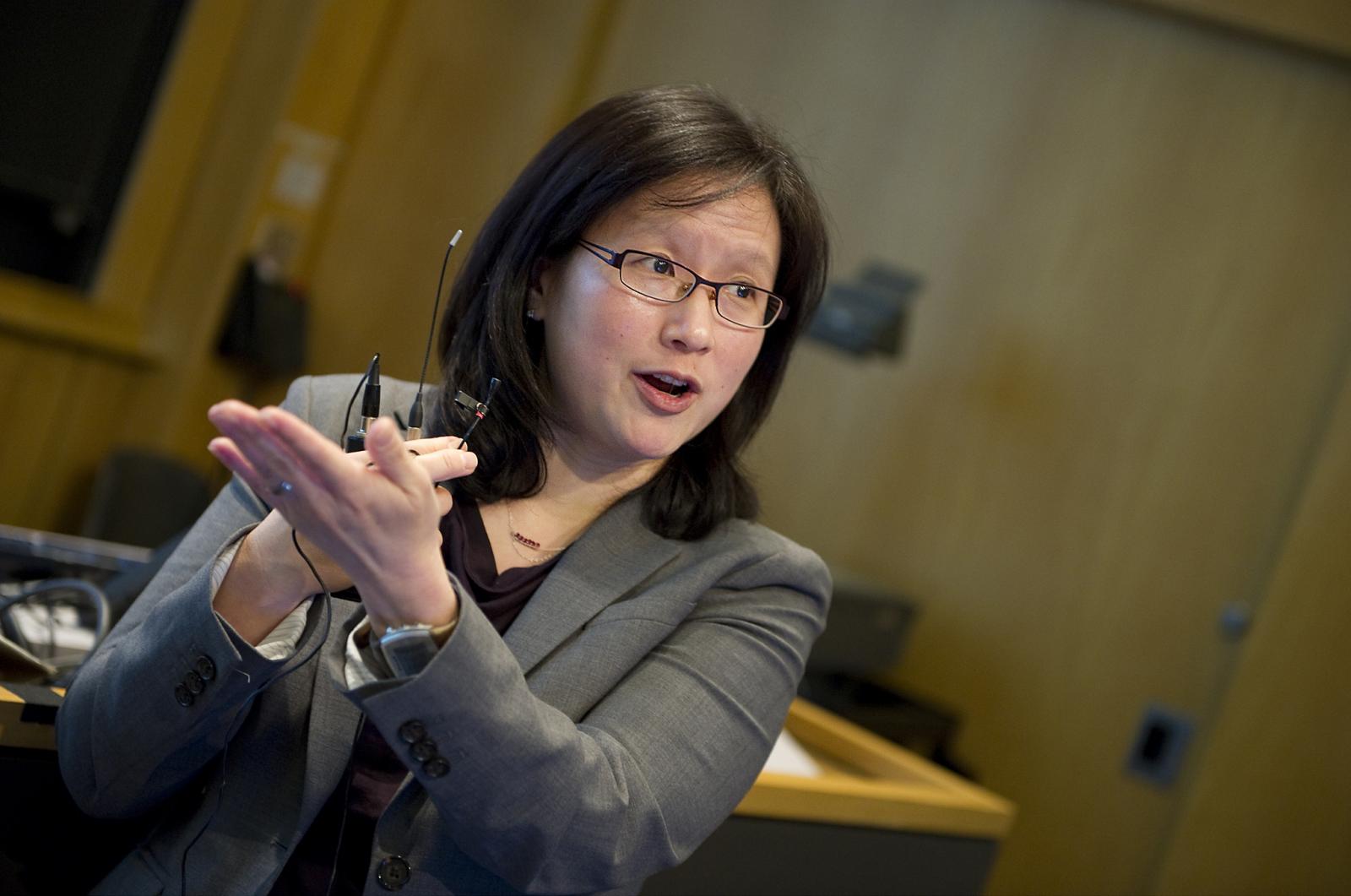
Maria Yang is a Professor and the William E. Leonhard Professor/Interim Dean of the School of Engineering at the Massachusetts Institute of Technology (MIT), affiliated with the Department of Mechanical Engineering. Her research focuses on early stage design processes , design methods , and system-level engineering design , with applications spanning consumer products, complex systems, and sustainable technologies. Educational Background: B.Sc., MIT (1991) M.Sc., Stanford University (1994) Ph.D., Stanford University (2000) Yang's research explores the theoretical foundations of design , emphasizing sketching , prototyping , and design cognition . Her work addresses global challenges in sustainability , emerging markets , and human-computer interaction , as demonstrated by collaborations with NASA, IBM, and Ferrari. Recent publications highlight trends in design-by-analogy , 3D printing of transparent glass , and information flow in complex systems . Her research bridges mechanical engineering , bioengineering , and computational design . Scientific Awards: 2024 ASME Design Theory and Methodology Award 2024 ASME Design Theory and Methodology Best Paper Award 2017 MacVicar Faculty Fellow 2016 Bose Excellence in Teaching Award 2014 ASEE Fred Merryfield Design Award 2013 ASME Fellow Yang mentors students through courses like 2.00B Toy Product Design and 2.009 Product Engineering Processes , and leads the MIT Ideation Laboratory , which investigates transformational design strategies for global competitiveness and sustainability.
Jonathan A Winawer is a Professor of Psychology and Neural Science at New York University, affiliated with the College of Arts & Science. He holds a PhD from MIT (2007), M.S. from City College of CUNY (2005), and A.B. from Columbia University (1995). His research focuses on the neural basis of visual perception, integrating computational models with neuroimaging (MRI, EEG, ECoG) and psychophysics to understand how visual stimuli are encoded and processed. His work explores cortical mechanisms enabling perception, perceptual memory effects on cognition, and the impact of neural pathways on vision. Winawer's lab collaborates with NYU Neuroscience Institute and Stanford University, emphasizing interdisciplinary approaches to visual neuroscience. Recent research trends highlight studies on visual cortex memory, cortical crowding dynamics, spatial frequency tuning, and neural oscillations. Collaborations span EEG-MEG modeling, neuroimaging validation, and developmental neuroscience. Advising encompasses PhD students in cognitive science and neuroscience, with grants supporting neuroimaging and computational projects. The Winawer Lab is a hub for visual perception studies, affiliated with multiple NYU centers including the Center for Neural Science and the Neuroscience Institute.
Associate Professor Alan Pegna is a neuropsychologist at the School of Psychology, University of Queensland, where he has been faculty since 2015. His research focuses on cognitive neuroscience and clinical neuropsychology, with particular expertise in visual and emotional processing using EEG methodologies. Dr. Pegna received his Masters in Psychology from the University of Geneva (Switzerland) followed by a second Masters in Human Physiology from University College London (UK). He completed his PhD at the University of Geneva, where he used brain imaging techniques to study spatial processing in both healthy controls and brain-damaged patients. His research interests center on the neural mechanisms underlying emotional face processing, particularly examining how the brain responds to different facial expressions and variations in perceived approachability and trustworthiness. He has extensive experience working with brain-damaged individuals to investigate the role of specific brain regions in visual and emotional processing. His work frequently employs EEG to measure early neural responses to emotional stimuli under various attentional conditions. Analysis of his recent publications reveals a consistent focus on emotional face processing using EEG methodologies. His work examines how spatial attention, visual awareness, and task relevance modulate neural responses to emotional faces. Key themes include the role of the amygdala in emotional processing, perspective taking in social cognition, blindsight phenomena, and the neural correlates of trustworthiness and dominance perceptions. Dr. Pegna has maintained an active research program since joining UQ in 2015, with over 150 journal articles and 30 conference papers to his name. His work demonstrates strong international collaboration, particularly with researchers in Switzerland and other European institutions. His laboratory specializes in EEG research on visual and emotional processing, with particular expertise in studying both healthy participants and individuals with neurological conditions. Current research focuses on how the brain processes emotional facial expressions under varying conditions of attention and awareness, with implications for understanding social cognition disorders.
Jonathan D. Victor is a Professor at Weill Cornell Medicine’s Graduate School of Medical Sciences, affiliated with the Department of Neurology and the Feil Family Brain & Mind Research Institute. His research focuses on understanding neural computations, sensory processing, and brain dynamics in health and disease, particularly in vision, olfaction, and disorders of consciousness. He employs interdisciplinary approaches, integrating mathematical modeling, computational techniques, and experimental neuroscience. Victor earned an undergraduate degree in Mathematics from Harvard College in 1973 and completed an MD-PhD program at Rockefeller University and Cornell University, specializing in visual neuroscience. He completed a neurology residency at The New York Hospital and has been at Weill Cornell since 1986. His research spans sensory systems (vision, gustation, olfaction), neural circuits, and sensorimotor integration. Key projects include analyzing perceptual spaces, image statistics in natural and medical contexts, active vision and olfaction, and large-scale brain dynamics in disorders of consciousness. He collaborates with Mary Conte (visual psychophysics), Keith Purpura (neurophysiology), and Nicholas Schiff (neurology and brain injury). Recent publications highlight his work on visuomotor integration, statistical properties of natural scenes, locomotor dynamics in Drosophila, spectral analysis in medical imaging, and cortical synchronization mechanisms. His lab develops methods like spike train metrics and binless embedding to analyze neural data. Scientific awards include the McKnight Scholars Award, NINCDS Teacher-Investigator Award, Klingenstein Fellowship in Neuroscience, and the Cornell Discovery Award. Victor also serves as co-Editor-in-Chief for the Journal of Computational Neuroscience and Vision Research .