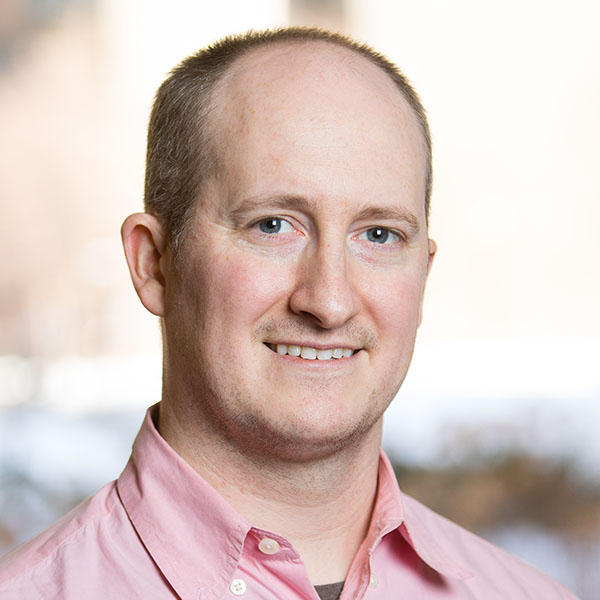
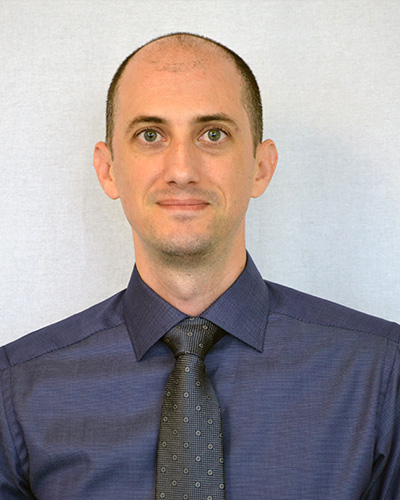
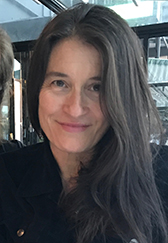
Eric F. Lock is an Associate Professor in the Division of Biostatistics & Health Data Science at the University of Minnesota's School of Public Health. He is also a Member of the Masonic Cancer Center (MCC) and has been at the University of Minnesota since 2014, after completing his PhD in Statistics from the University of North Carolina in 2012 and a postdoctoral fellowship in Statistical Genomics at Duke University in 2014. Lock's research focuses on developing methods for the analysis of multi-faceted high-dimensional data, particularly in "omics" fields such as genomics, metabolomics, and proteomics. His work emphasizes the integrated analysis of data from multiple sources (e.g., gene expression, metabolomics, imaging) or measured in multiple dimensions (e.g., multiple tissue types or body regions). He also specializes in exploratory factorization and clustering methods, and Bayesian nonparametric inference. His recent publications demonstrate significant contributions to tensor data imputation (BAMITA), matrix decomposition (EV-BIDIFAC), and methods for handling complex genomic data. His work bridges statistical theory with practical applications in molecular biology, addressing challenges in data integration across multiple biological measurement platforms. Delta Omega, Honorary Society in Public Health (2019) As an active researcher and educator, Lock serves on dissertation committees, including for Mykhaylo M. Malakhov who recently defended his PhD at the University of Minnesota School of Public Health. He is involved in organizing and participating in major conferences such as STATGEN 2025, demonstrating his leadership in the biostatistics community.
Ellen Marie Krefting is a Professor in the Department of Philosophy, Classics, History of Art and Ideas (IFIKK) at the University of Oslo's Faculty of Humanities. Specializing in early modern intellectual history, she focuses on European and Denmark-Norway contexts with particular expertise in the history of knowledge, genres and communication forms, periodicals, and the emergence of public debate and freedom of speech concepts. Professor Krefting's research spans multiple interconnected fields including early modern intellectual history, history of knowledge, public sphere development, gender studies, historiography, and cultural history of the ocean. She has particular expertise in 17th-18th century French philosophy and literature, Denmark-Norway intellectual history, and book history. Her work examines how knowledge was formatted and communicated through various media including periodicals, catechisms, and ship logs, with attention to how these formats shaped intellectual discourse and public opinion during the Enlightenment. Her recent publications demonstrate a consistent focus on Scandinavian and European Enlightenment periodicals, political literature, and the development of public debate. Krefting has produced significant scholarship on La Spectatrice danoise , Den patriotiske Tilskuer , and other "spectator"-type journals, examining how these publications navigated censorship while promoting Enlightenment ideals. Her 2024 work with Paulsen on nautical charts as knowledge formats extends her research into maritime modernities. Professor Krefting leads the research project "Maritime Modernities: Formats of Oceanic Knowledge" (NFR-funded 2021-2025) and serves as the roving head of the master's program in European Culture. She has been an editorial member of Arr - Idéhistorisk tidsskrift since 1996 and has served on the Institute Board at IFIKK from 2017-2025. Her teaching includes courses IDE1105, IDE2001, EKUL4000-4002, and specialized courses on the public sphere and freedom of press around 1814.
Crystal Bae is an Assistant Professor of Geographic Information Science at the University of Chicago’s Center for Spatial Data Science since 2021. She earned her Ph.D. in Geography from the University of California, Santa Barbara, and completed a postdoctoral fellowship under Somayeh Dodge in the MOVE Lab, focusing on geographic visualization and spatial cognition. Research Interests: spatial cognition, wayfinding, geovisualization, travel behavior, and urban built environments. Teaching Roles: Courses include Spatial Cognition, Introduction to GIS, Cartographic Design, and Social Science Inquiry at UChicago; Urban Geography and Human Geography at UCSB. Scientific Awards: Certificate in College and University Teaching (CCUT), UCSB Excellence in Teaching Award, and recognition for innovative GIS lab design in ArcUser. Her work examines how individuals and groups cognitively process spatial environments through static and animated visualizations, collaborative navigation, and urban neighborhood boundaries. She has contributed to NSF-funded projects on movement ecology and spatial cognition, with publications in Movement Ecology, COSIT, and Built Environment. Crystal also co-hosts a jazz radio show, maintains a travel blog, and engages in bicycling adventures, reflecting her interdisciplinary approach to geography and personal connection to spatial experiences.
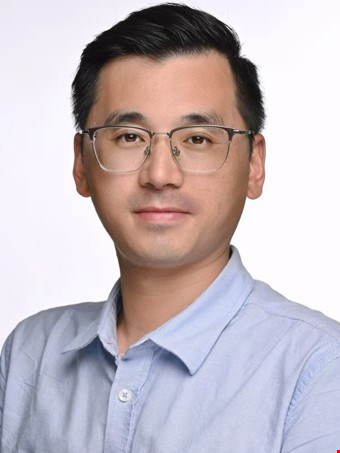
Professor Xinyan Wang is a leading academic at Brunel University London, affiliated with the College of Engineering, Design and Physical Sciences and the Department of Mechanical and Aerospace Engineering. He serves as a Principal Editor for Fuel (Elsevier) , editorial board member for multiple journals, and committee member for Hydrogen Europe Research and UK Chinese Society of Automotive Engineering. PhD, Power Machinery and Engineering, Tianjin University MSc, Power Machinery and Engineering, Tianjin University BEng, Thermal Energy and Power Engineering, Jiangsu University His research focuses on low-carbon fuel technologies for internal combustion engines, including hydrogen/ammonia combustion, biofuels, and nanobubble applications. He develops advanced hybrid electric systems and specializes in engine design optimization for alternative fuels. His work spans experimental investigations, computational modeling (CFD/MD/Chemkin), and optical diagnostics of combustion processes. Recent publications (2024-2025) highlight trends in hydrogen combustion analysis, nanofluid applications, dual-fuel strategies, and 2-stroke engine optimization. Key themes include emission reduction, ignition process decoupling, and integration of machine learning with molecular simulations for fuel characterization. UKRI Future Leaders Fellowship (2020) Editorial roles at Fuel , Highlights of Vehicles , and MDPI journals BSI committee member for fine bubble technology He supervises research on topics including zero-carbon fuel combustion, numerical simulations (chemical kinetics, CFD), and optical diagnostics for spray/combustion analysis. His teaching includes vehicle propulsion systems and major engineering projects at undergraduate/graduate levels.
Michal Bočák is an Associate Professor in the Department of Communication and Media Studies at the Faculty of Arts, University of Prešov in Prešov, Slovakia. He also serves as a visiting lecturer in gender and queer studies at the Department of Journalism, Palacký University in Olomouc, Czech Republic. His academic career includes serving as Vice-Dean for Educational Affairs (2021-2023) and previously as chair of the Department of Communication and Media Studies (2012-2021). Bočák earned his PhD in general linguistics from the University of Prešov in 2008, followed by a habilitation procedure in general linguistics in 2020. His educational background includes an MA in phonetics & media studies from the University of Prešov (2005). His research primarily focuses on media representations of identities, particularly gender and sexuality, discourse theory, and methods of discourse analysis. He has conducted extensive analysis of culinary magazines and television news formats, examining how they construct representations of food, tradition, and national identity. His work bridges semiotics, cultural studies, and media theory, with particular attention to queer theory applications in media analysis. Bočák's publications demonstrate a consistent focus on discourse analysis frameworks, with significant contributions to understanding how media texts construct meaning through intertextuality, representation, and discursive positioning. His work spans traditional media formats like television news to digital spaces including web pornography. As an editorial board member for Media Studies: Journal for Critical Media Inquiry and Jazyk a kultúra [Language and Culture], Bočák actively contributes to scholarly discourse in his field. He is also a member of the Center for Cultural, Media and Communication Studies in Olomouc, Czech Republic. His academic leadership includes serving as Vice-Dean for Educational Affairs and previously as department chair, demonstrating his commitment to academic administration alongside his research and teaching responsibilities. His work editing conference proceedings and academic collections shows his engagement with the broader scholarly community.
Marlena A. Chu is a Clinical Associate Professor at the School of Optometry, University of California, Berkeley. She serves as Chief of Low Vision Services and Chief Mentor for the Ian L. Bailey Low Vision and Ocular Disease Residency Education program. Her work integrates clinical practice, education, and research in optometry. Doctor of Optometry (OD), University of California, Berkeley (2008) Residency in Low Vision and Contact Lens, University of California, Berkeley (2009) Dr. Chu’s research focuses on low vision rehabilitation, particularly addressing functional vision challenges in visually impaired populations. Her studies emphasize contrast sensitivity, visual acuity assessment, and the development of diagnostic tools tailored for severe visual impairment. She also contributes to educational resources on low vision aids and adaptations. Her recent publications (2010–2018) explore trends in low vision testing methodologies, rehabilitation strategies, and case-based applications of magnification and perimetry. These works span interdisciplinary keywords including optometry, neuroscience, and assistive technology, with sub-fields like ocular pathology, accessibility, and vision metrics. Fellow of the American Academy of Optometry (FAAO) Diplomate of the American Academy of Optometry - Low Vision Dr. Chu actively mentors residents in low vision and ocular disease, contributing to clinical education and advancing patient care frameworks. Her collaborations with leading optometrists, including her role in developing the Berkeley Rudimentary Vision Test, highlight her commitment to improving clinical tools for severe visual impairment.
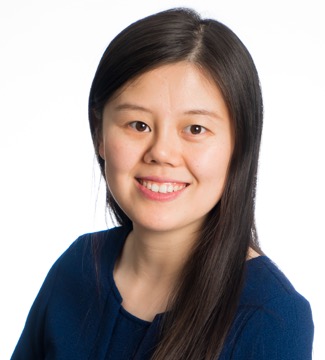
Weina Li Chen serves as a Clinical Assistant Professor within the Education Division of Pepperdine University's Graduate School of Education and Psychology, teaching courses in the Master of Arts in Teaching English to Speakers of Other Languages (MA TESOL) and Master of Science in Leadership programs. With approximately ten years of teaching experience across diverse educational settings, she brings practitioner expertise to her academic role while maintaining active engagement in professional development and program design. Her academic credentials include: Ph.D. from Pepperdine University M.A. from Pepperdine University M.A. from University of York, England B.A. from Heilongjiang University, China Dr. Chen's research focuses on educational technologies and innovative learning design , with specialized expertise in online/hybrid learning environments, world language acquisition (particularly English as a Second Language), and teacher leadership development. She investigates how digital tools can enhance student engagement, social presence, and language proficiency through practical applications. Her work bridges academic research with classroom implementation, frequently resulting in practitioner workshops and conference presentations that translate theoretical concepts into actionable teaching strategies for language educators. Analysis of her 14 publications (2019-2023) reveals consistent emphasis on technology-mediated language learning. She explores platforms like Flip, Canva, and WeChat to create interactive communities and support speaking practice, with recurring themes including social-emotional learning integration and digital storytelling. Her research demonstrates a practitioner-scholar approach, targeting both pre-service and in-service teachers through workshops that address real-world classroom challenges in language education. As an educational leader, Dr. Chen founded and served as president of CABE Mandarin, an organization promoting Mandarin language education. She has designed multiple language programs for schools and universities, demonstrating commitment to expanding language learning opportunities. While specific grant funding details and student advisee names are not documented in available materials, her conference presentations and program development initiatives indicate active community engagement and professional contribution to the fields of TESOL and educational technology.
Leila De Floriani is a Professor at the University of Maryland, with appointments in the Department of Geographical Sciences and the University of Maryland Institute for Advanced Computer Studies (UMIACS). She previously served as a professor at the University of Genova (Italy) since 1990, where she developed Italy's first undergraduate and graduate curricula in computer graphics and directed the Ph.D. program in Computer Science for eight years. Her professional activities include serving as the 2020 President of the IEEE Computer Society and currently as IEEE Division VIII Director for 2023-24. Professor De Floriani's research spans geometric modeling, data visualization, spatial data representation and processing, computer graphics, shape analysis, and topological data analysis. Her work focuses on developing mathematical models and algorithms for representing, analyzing, and visualizing complex spatial data, particularly through hierarchical models, mesh-based representations, and topology-based approaches. Her research group, the GeoVis group, investigates applications in terrain modeling, environmental data analysis, and forest structure mapping using LiDAR technology. Analysis of her recent publications reveals a strong focus on terrain representation and processing, with increasing emphasis on topological data analysis, machine learning integration, and efficient algorithms for large-scale spatial data. Her work bridges theoretical foundations in computational topology with practical applications in geospatial sciences, demonstrating consistent innovation in data structures and visualization techniques. Scientific Awards & Recognitions Fellow of IEEE (2016) for contributions to geometric modeling and scientific visualization Fellow of International Association for Pattern Recognition (IAPR) (1998) for contributions to geometric modeling and image analysis Fellow of Eurographics Association (2020) for outstanding contributions to computer graphics and visualization Pioneer of Solid Modeling Association (2017) for seminal work in solid and feature-based modeling Inducted Member of IEEE Visualization Academy (2020) IEEE Computer Society Golden Medal Award (2018) Inducted Member of IEEE Honor Society Eta Kappa Nu (2019) Multiple best paper awards at major conferences including Shape Modeling International (2015), IEEE/EG Symposium on Volume and Point-Based Graphics (2008), and ACM SIGSPATIAL (2008) Professor De Floriani has successfully advised numerous PhD students including Xin Xu, Yunting Song, and Noel Dyer, whose recent dissertations focused on topology-based individual tree mapping, efficient terrain analysis, and bathymetric data visualization respectively. Her research has been funded by prestigious agencies including the National Science Foundation, NASA, and the European Commission. As the leader of the UMD GeoVis group, she oversees a research program that develops open-source tools for spatial data analysis available on GitHub, with current projects focusing on forest point cloud processing and topology-based geospatial data visualization. The GeoVis group, affiliated with the Department of Geographical Sciences, UMIACS, and the Center for Geospatial Information Sciences, maintains a strong collaborative environment with ongoing projects in geometric modeling, spatial data structures, topology-based machine learning, and mesh-based terrain modeling. The group has received recent funding from NASA's HPOSS program for developing an open-source library for forest point cloud processing based on topological data analysis.
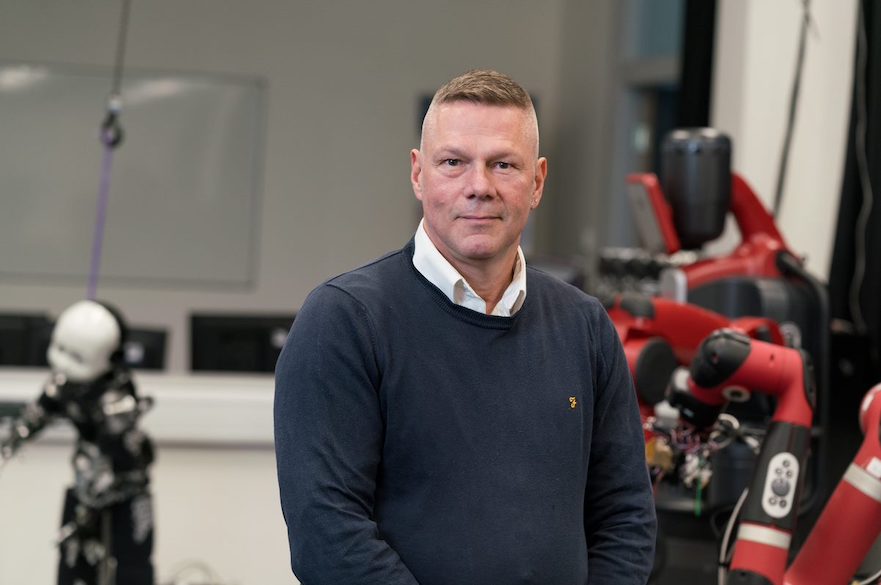
David Brown is a Professor in Interactive Systems for Social Inclusion at Nottingham Trent University's School of Science & Technology, Department of Computer Science. He serves as Director of the Computing and Informatics Research Centre (CIRC) and Research Group Leader for the Interactive Systems Research Group (ISRG). Director, Computing and Informatics Research Centre Research Group Leader, Interactive Systems Research Group Governor, Oak Field School for students with severe learning disabilities Conference Chair, International Conference on Disability, Virtual Reality and Associated Technology (ICDVRAT21) Associate Editor, Frontiers: Virtual Reality in Medicine Professor Brown's research focuses on developing inclusive technologies for people with disabilities. His work spans accessibility for students with learning, physical and sensory impairments; virtual reality applications for rehabilitation; multimodal affect recognition systems; social robotics for education; accessible visual programming toolkits; and serious games for developing physical and cognitive skills. His research is characterized by strong interdisciplinary collaboration and practical application in educational and healthcare settings. His recent publications demonstrate a consistent focus on applying emerging technologies like virtual reality, machine learning, and social robotics to address real-world challenges in accessibility and inclusion. The research shows a clear trajectory toward increasingly sophisticated multimodal systems that can detect user states and adapt accordingly, with applications ranging from autism support to mental health interventions. Extensive EU-funded research projects including Horizon 2020, Erasmus+, and EPSRC grants Notable projects: DIVERSIA, MaTHiSiS, Pathway, AI-TOP, EDUROB, No One Left Behind, Real Life, RISE Professor Brown has supervised numerous PhD students and collaborates extensively with international partners across Europe and Asia. His work bridges computer science, psychology, education, and healthcare to create technologies that promote social inclusion and improve quality of life for people with disabilities.
Fernando Campos serves as an Assistant Professor in the Department of Anthropology at The University of Texas at San Antonio (UTSA), College of Liberal and Fine Arts. His research investigates evolutionary responses of nonhuman primates to environmental change, with direct applications for conservation amid the global primate extinction crisis driven by anthropogenic pressures. His academic credentials include: PhD in Anthropology, University of Calgary (2014) MA in Anthropology, University of Calgary (2008) BSc in Biology, California Institute of Technology (2002) Dr. Campos' research integrates behavioral ecology , biodemography , and conservation science to study primate life histories, aging, and responses to global change. Using a biodemographic approach, he examines links between environmental variability, health outcomes, and life trajectories in wild populations through long-term field studies of white-faced capuchins in Costa Rica and baboons in East Africa. Analysis of his recent publications reveals a methodological emphasis on non-invasive biomarkers (fecal proteomics, DNA methylation) to quantify physiological impacts of stress and aging. This work demonstrates how social structures and ecological conditions interact to shape survival and reproductive success, providing critical data for evidence-based primate conservation strategies. He directs the Campos Lab , which maintains active field sites in Costa Rica and Kenya, and contributes to cross-species primate life history databases for comparative analyses of demographic processes.
Emily Oh Navarro is a Continuing Lecturer in the Department of Informatics at the Donald Bren School of Information and Computer Sciences, University of California, Irvine. She has been actively involved in software engineering education, focusing on innovative teaching methods and simulation-based learning environments. Dr. Navarro earned her Ph.D. in Information and Computer Sciences from UC Irvine in 2006, with her dissertation titled "SimSE: A Software Engineering Simulation Environment for Software Process Education." She also holds an M.S. in Information and Computer Sciences and a B.S. in Biological Sciences, both from UC Irvine. Dr. Navarro's research primarily focuses on software engineering education, particularly using simulation and game-based approaches to teach software processes. Her work centers around SimSE, an educational software engineering simulation environment designed to help students learn and practice software engineering processes in an interactive, graphical setting. She has extensively explored how learning theories can be applied to improve software engineering education, investigating various educational approaches and their effectiveness. Her research demonstrates how simulation environments can overcome the limitations of traditional lectures and small-scale class projects by allowing students to experience complex software engineering processes that would be infeasible to practice in real-world academic settings. Dr. Navarro's publications reveal a consistent focus on simulation-based learning tools for software engineering education. Her work spans from theoretical explorations of learning theories to practical implementations of educational tools like SimSE and Problems and Programmers. She has conducted multi-site evaluations of her educational tools, demonstrating their effectiveness across different institutions and student populations. Her research shows progression from conceptual frameworks to practical implementations and rigorous evaluations, establishing her as a significant contributor to the field of software engineering education. Dr. Navarro teaches numerous courses in software engineering and design, including: Informatics 43: Introduction to Software Engineering Informatics 113: Requirements Analysis and Engineering Informatics 117: Project in Software System Design Informatics 121: Software Design I Informatics 122: Software Design II Informatics 191: Senior Design Project ICS 45J: Programming in Java ICS 139W: Critical Writing on Information Technology SWE 241P: Applied Data Structures and Algorithms SWE 245P: GUI Programming SWE 246P: Mobile Programming SWE 272P: Project Management Her teaching methodology reflects her research interests, emphasizing practical experience with software engineering processes through simulation-based learning. While specific information about her advising and grants is limited in available materials, her extensive research on educational methods suggests involvement in educational research projects and likely mentorship of students in software engineering projects. Dr. Navarro's primary research contribution is the SimSE project, which has evolved through multiple iterations and evaluations. This simulation environment represents a significant innovation in software engineering education, addressing the critical gap between theoretical knowledge and practical application in software process management. Her work continues to influence how software engineering is taught at UC Irvine and potentially at other institutions through her multi-site evaluations.
Katherine Romanak is a Research Professor at the Bureau of Economic Geology, The University of Texas at Austin, specializing in geochemistry and carbon capture/storage (CCS) technologies. She pioneered the process-based soil gas monitoring approach for detecting CO2 leakage, which has become a global standard. Her work bridges scientific research and policy, with contributions to UNFCCC COPs and U.S. Class VI CCS regulations. Ph.D. in Geology (1997), UT Austin M.S. in Geology (1988), UT Arlington B.S. in Geology (1984), Southern Methodist University Her research focuses on: Geochemistry of carbon cycling in vadose zones and aquifers Development of environmental monitoring protocols for CCS sites CO2 leakage attribution and stakeholder engagement Integration of machine learning with field monitoring techniques Recent publications emphasize simplifying monitoring complexity, offshore CCS applications, and machine learning for anomaly detection. She holds two U.S. patents and collaborates globally on projects in Japan, Australia, Canada, and the U.S. Gulf Coast. Scientific awards include: 2015 BEG publication award 2017 U.S. patents for CO2 leakage detection Her team seeks partnerships with vadose zone modelers and microbiologists to advance industrial-scale monitoring systems. Romanak also co-developed UT Austin’s online CCS certification program and provides technical training for petroleum professionals transitioning to CCS roles.
Dr Jonna Nyman is a Senior Lecturer in International Relations at the University of Sheffield, affiliated with the Department of Politics and International Relations within the School of Sociological Studies, Politics and International Relations. Her academic career is centered on critical approaches to security studies with particular expertise in Chinese security politics and energy security. Her research interests span multiple dimensions of security politics, with two primary focuses: Chinese security and foreign policy (particularly examining changes since Xi Jinping took office), and energy security with climate politics. Dr Nyman adopts critical theoretical approaches to examine how security is conceptualized, practiced, and experienced in different contexts. Her publication record demonstrates significant scholarly contributions, including the monograph The Energy Security Paradox (Oxford University Press, 2018) and co-editing Ethical Security Studies: A New Research Agenda (Routledge, 2016). Her recent work explores global security concepts through Chinese perspectives and methodological innovations in security research. Leverhulme Trust Early Career Fellowship for 'Securing China: Understanding security politics beyond the West' Academy of Finland research funding Economic and Social Research Council support Dr Nyman has held prestigious research positions including Associate-in-Research at Harvard University's Fairbank Center for Chinese Studies and visiting fellowships at the University of Copenhagen and Swedish Institute for International Affairs. Her teaching philosophy emphasizes active learning, critical thinking, and creating space for questioning assumptions in international relations.
Christina Kiaer is a Lecturer at Northwestern University , specializing in twentieth-century Russian and Soviet art, the politics of realism and the avant-garde, and feminist theory and art. She holds a Ph.D. from the University of California, Berkeley. Ph.D., University of California, Berkeley Her research focuses on Soviet art, Constructivism, and Socialist Realism, with a particular interest in feminist theory and curatorial practices. She has published extensively on topics such as Soviet-American cultural exchange, Soviet sports representation, and the works of Aleksandr Deineka. Notable publications include her book Imagine No Possessions: The Socialist Objects of Russian Constructivism (2005) and co-edited Everyday Life in Early Soviet Russia: Taking the Revolution Inside (2005). Her curatorial work includes the 2009 Tate Modern and 2011 Juan March exhibitions. Scientific Awards : Honorable Mention, Wayne S. Vucinich Prize (2005) Grants from the American Philosophical Society, Social Science Research Council, IREX, Harriman Institute, and the J. Paul Getty Foundation. She also served as field editor for caa.reviews (2010–present) and was on leave as a Member at the Institute for Advanced Study, Princeton (2011–2012).
Diego Contreras, MD, PhD, is a Professor of Neuroscience at the Perelman School of Medicine, University of Pennsylvania, with dual affiliations in the Neuroscience and Bioengineering Graduate Groups. Education: M.D., University Autonoma of Madrid, Spain (1988) Ph.D., Laval University, Quebec, Canada (1996) His research centers on thalamocortical networks and epilepsy mechanisms , investigating inhibitory circuits in thalamus and visual cortex, thalamocortical synapse dynamics, and intrinsic electrophysiological properties using in vivo intracellular and optical recordings. His lab studies seizure initiation/propagation in neocortex and thalamocortical systems, bridging cellular mechanisms with network-level phenomena in sensory processing and epileptic disorders. Recent publications (2016-2018) demonstrate expertise in neural coding during gamma oscillations, spatiotemporal evolution of epileptiform activity, and thalamocortical communication. His work employs voltage-sensitive dye imaging and laminar recordings across rodent/cat models to address fundamental questions in visual processing and seizure dynamics, with significant contributions to understanding OFF-subregion inhibition and millisecond-precision temporal encoding. Dr. Contreras leads a laboratory focused on thalamocortical physiology, utilizing advanced electrophysiological techniques and collaborating with neuroengineers to translate basic findings into clinical epilepsy applications.