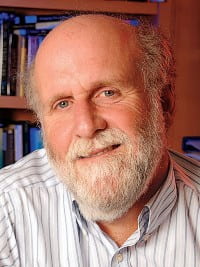
Hans Vernooij is a Lecturer in Farm Animal Health at the Faculty of Veterinary Medicine, Utrecht University. He specializes in statistical methods and data science applications in veterinary epidemiology and animal health. His areas of expertise include: Statistical methods for veterinary research Applied Data Science in Life Sciences Epidemiological modeling Machine learning applications in animal health Vernooij has extensive experience in developing statistical models for animal health applications. His research focuses on applying advanced statistical techniques and data science methods to solve problems in veterinary epidemiology and farm animal health. He has particular expertise in Random Forest models, as demonstrated during his sabbatical at the Human Sciences Research Council in Pretoria where he developed a model for HIV status prediction based on demographic information and knowledge of HIV prevention from large-scale survey data. His publication record shows consistent contributions across veterinary epidemiology, with recent work emphasizing machine learning applications and big data analytics in animal health surveillance. The research demonstrates a clear trajectory from traditional statistical methods toward more advanced data science approaches. Vernooij is actively involved in teaching and mentoring: Teaches statistics to Bachelor students at the veterinary faculty Supports PhD candidates and Master students during data analysis phases of their research Provides statistics education for the Master of Epidemiology program at the Julius Centre of University Medical Centre
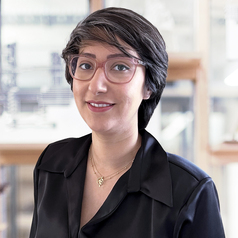
Anahita Sal Moslehian is a Postdoctoral Research Fellow with the HOME Strategic Research & Innovation Centre at Deakin University's School of Architecture & Built Environment. With a PhD in Architecture from Deakin University (2022), her work focuses on the intersection of architectural design and human wellbeing, specializing in evidence-based approaches to creating health-promoting environments. Her educational background includes: PhD in Architecture, Deakin University (2022) Dr. Moslehian's research spans healthcare architecture, particularly hospital design evolution and innovation, while also exploring social and affordable housing, family-friendly apartment design, and biophilic design principles. She employs mixed methods approaches, including grounded theory, to understand how the built environment affects human health, behavior, and social outcomes across diverse populations and contexts. Her work often examines the socio-political dimensions that shape architectural design and its real-world impacts. Analysis of her publication record reveals strong thematic consistency with recurring emphasis on health-promoting environments, design innovation in healthcare facilities, and innovative housing solutions for vulnerable populations. Her research combines architectural theory with practical applications, particularly in the Australian context, demonstrating how spatial design affects specific activities (like cooking and dining) and how innovative housing models can address homelessness through well-designed transitional solutions. Dr. Moslehian is an EDAC-certified researcher (Evidence-Based Design Accreditation and Certification), reflecting her commitment to rigorous, evidence-based approaches in architectural design. Her collaborative projects with the Biophilia Lab on mental health facilities and community housing providers on transitional housing models demonstrate her dedication to practical, impactful research that addresses pressing social issues through thoughtful architectural design. Her current work with the HOME Research Centre includes evaluating compact modular units for homeless men and applying biophilic design frameworks in mental health facilities, representing a careful integration of housing-first and treatment-first approaches to create supportive transitional environments that promote independence, safety, and community connectedness.
Dr. Mark Peterson is a Professor of Marketing and Sustainable Business Practices at the University of Wyoming's College of Business, Department of Management & Marketing. With a Ph.D. in marketing from Georgia Institute of Technology (1994) and over 60 refereed journal publications, he specializes in sustainability integration into business decisions and consumer behavior. Affiliation: University of Wyoming since Fall 2007 Previous: University of Texas at Arlington International experience: Germany, South Korea, Turkey, France, Canada Research Interests focus on environmental-social business integration, international marketing dynamics, and macromarketing frameworks. His work bridges academic theory with practical applications for sustainable enterprise. Notable Publications include Sustainable Marketing: A Holistic Approach (2021) and editorship of the Journal of Macromarketing (2016-2019). Articles span sustainability theories, consumer vulnerability analysis, and global prosperity modeling. Scientific Awards : Alpha Kappa Psi Award (1995) Charles C. Slater Award for Lebanon market analysis (2024) Advising & Grants : Mentors Ph.D. students in sustainability research and consumer behavior. Secured funding for macromarketing studies and international projects.
Dr. Leslie G. Biesecker serves as Director & NIH Distinguished Investigator leading the Center for Precision Health Research at the National Human Genome Research Institute (NHGRI), part of the National Institutes of Health. His work bridges clinical practice and genomic research with focus on elucidating genetic mechanisms of rare developmental disorders. Educational background includes: B.S. from University of California, Riverside M.D. from University of Illinois College of Medicine Pediatrics training at University of Wisconsin Clinical and molecular genetics training at University of Michigan His research program centers on precision genomics with dual foci: (1) rare disorders of development and overgrowth including Proteus syndrome, PIK3CA-related overgrowth, and Pallister-Hall syndrome; and (2) hypothesis-generating clinical genomics through the ClinSeq ® program. The laboratory employs integrated clinical-molecular approaches, massively parallel sequencing, and animal models to investigate genotype-phenotype correlations while developing therapeutic strategies targeting the AKT/PIK3CA pathway. Recent work expands into pharmacogenetics and cancer susceptibility gene evaluation. Key publication trends reveal consistent leadership in rare disease gene discovery (2000-2012), methodological innovation in genomic analysis (2009-2013), and translational implementation of genomic medicine (2013-2016). Research spans molecular genetics, clinical diagnostics, and therapeutic development with strong emphasis on somatic mosaicism and pathway-targeted treatments. Major recognitions include: Election to National Academy of Medicine Presidency of American Society of Human Genetics (2019) NIH Distinguished Investigator appointment Dr. Biesecker co-directs a CLIA-certified molecular diagnostic laboratory and serves on editorial boards for four biomedical journals. His advisory roles include Illumina Corporation consultation and World Trade Center victim identification efforts. The Precision Genomics Section maintains active recruitment for clinical protocols studying rare disorders through the NIH Clinical Center, with recent expansion into therapeutic interventions for overgrowth disorders. Current lab structure includes staff scientists (Jennifer Johnston), genetic counselors (Julie Sapp), research scientists (Marjorie Lindhurst), and postdoctoral fellows working on genomic analysis and clinical protocols.
Daniel L. Schacter is the William R. Kenan, Jr. Professor of Psychology at Harvard University, where he has served since 1991 and chaired the Psychology Department from 1995–2005. He leads the Schacter Memory Lab, pioneering research on human memory's cognitive and neural foundations through behavioral experiments and neuroimaging. His educational trajectory includes a B.A. from the University of North Carolina at Chapel Hill (1974) and a Ph.D. from the University of Toronto (1981), followed by a professorship at the University of Arizona (1987–1991) before joining Harvard. Dr. Schacter's work centers on memory's constructive nature—exploring why memory is inherently fallible and how distortions reveal fundamental mechanisms. His seminal contributions include the theory of episodic simulation (memory's role in imagining future events), links between memory and creativity, aging effects on cognition, and the neural basis of memory errors. He integrates fMRI, cognitive paradigms, and neuropsychological approaches to dissect these processes. Recent publications (2023–2025) emphasize clinical applications in mental health (e.g., suicidal adolescents), AI-creativity interactions, and aging-related memory changes, consistently highlighting the adaptive value of memory distortions across diverse contexts. Major accolades include: Warren Medal from the Society of Experimental Psychologists American Psychological Association's Award for Distinguished Scientific Contributions Election to the American Academy of Arts and Sciences and National Academy of Sciences William James Book Awards for Searching for Memory (1996) and The Seven Sins of Memory (2001) His lab secures substantial grant funding to investigate memory's role in future thinking and creativity, producing over 400 publications. Mentoring spans generations of cognitive neuroscientists, though specific advisees aren't listed in source materials. The Schacter Memory Lab maintains a collaborative environment focused on memory's adaptive functions using cutting-edge neuroimaging and behavioral methods.
Dr. Katharina Dobs is a faculty-level researcher at Justus Liebig University Giessen, based in the Department of Psychology and Sports Science and soon moving to the Department of Mathematics & Computer Science. She leads the Visual Cognition & Computational Neuroscience (VCCN) Lab, where she integrates state-of-the-art machine-learning models with human behavioural and neural data to decipher the computations underlying rapid visual scene and face perception. Education & Career: While explicit degree details are not provided, Dr. Dobs currently holds a prestigious LOEWE Start-Professorship and an ERC Starting Grant (DEEPFUNC), underscoring her leading role in computational vision research. Research Interests: Computational principles of human visual perception Functional organisation of the visual cortex Deep neural network models of object and face recognition Integration of facial form and motion cues Temporal dynamics of face perception using MEG and fMRI Across her recent publications, a clear trend emerges toward leveraging deep convolutional networks to explain category-selective responses in the human brain, particularly for faces. Her work repeatedly demonstrates how artificial networks trained on ecologically relevant tasks spontaneously develop brain-like functional specialisation, providing computational evidence against domain-specific expertise hypotheses. Scientific Awards & Funding: ERC Starting Grant “DEEPFUNC” LOEWE Start-Professorship Supervision & Collaboration: Dr. Dobs currently supervises PhD students Elaheh Akbarifathkouhi and Hilal Nizamoglu. She co-leads multiple SFB (Collaborative Research Centre) projects, including Project S “Deep Learning: Unleashing the Potential” with Prof. Roland Fleming and Project C9 “Factors influencing categorical face processing” with Dr. Benjamin de Haas. The VCCN Lab is additionally affiliated with the CRC Cardinal Mechanisms of Perception, the research cluster The Adaptive Mind, the Center for Mind, Brain and Behavior, and the Center for Applied Computer Science and Data Science (ZAD).
Dr. Kevin Mwenda is an Associate Professor of Population Studies (Research) at Brown University's Population Studies and Training Center (PSTC) and serves as Director of the Spatial Structures in the Social Sciences (S4). He maintains faculty affiliate positions at the Data Science Institute (DSI), Institute at Brown for Environment and Society (IBES), and the Sociology Department, demonstrating his interdisciplinary approach bridging geography, demography, and public health through spatial analysis methodologies. Dr. Mwenda's educational background includes: PhD in Geography (Geographic Information Science & Cartography), University of California, Santa Barbara (2018) MA in Geography, University of California, Santa Barbara (2014) BA, Dartmouth College (2010) His research program investigates spatial disparities in health outcomes among vulnerable populations globally, with particular attention to environmental, climatic, and socioeconomic determinants. Dr. Mwenda develops innovative mixed methods for exploring, analyzing, and visualizing spatial data patterns to better understand human-environment dynamics at various scales. His methodological expertise in GIS and spatial statistics enables sophisticated analysis of complex health-environment relationships across diverse geographic contexts. Dr. Mwenda's publication trajectory reveals a consistent focus on applying spatial methodologies to pressing global health challenges, with significant contributions in environmental health impacts across Africa, healthcare accessibility in conflict zones like Syria, pandemic mobility patterns, and frameworks for monitoring land degradation. His work demonstrates methodological rigor while addressing real-world problems affecting vulnerable populations in diverse settings including Africa, China, and the United States. His scholarly contributions have been recognized with several prestigious honors: Dean's Award for Excellence in Teaching (2023, Brown University) OVPR Research Seed Award (2023, Brown University) Excellence in Teaching Award (2017, Department of Geography, UCSB) Appointment as Associate Editor of Populations Journal (2025) As Director of S4, Dr. Mwenda leads a thriving research initiative that advances spatial methodologies across social science disciplines at Brown. His teaching portfolio includes undergraduate and graduate courses in GIS and spatial analysis within the Sociology Department, for which he received Brown's highest teaching honor in 2023. Dr. Mwenda maintains extensive collaborative networks spanning Epidemiology, Health Services, Environmental Science, and Data Science departments, reflecting the interdisciplinary nature of his work and institutional impact.
Sadie Creese is Professor of Cybersecurity in the Department of Computer Science at the University of Oxford. She serves as Director of the Global Cyber Security Capacity Centre at the Oxford Martin School and Director of the Oxford Martin Programme on AI Threat Detection. Additionally, she is a Governing Body Fellow at Worcester College and Chair of Examiners for the MSc in Computer Science. Professor of Cybersecurity, Department of Computer Science, University of Oxford Director, Global Cyber Security Capacity Centre, Oxford Martin School Director, Oxford Martin Programme on AI Threat Detection Governing Body Fellow, Worcester College Chair of Examiners for MSc in Computer Science Sadie Creese holds a DPhil in Computer Science from the University of Oxford, an MSc in Computation, and a BSc (Hons) in Mathematics and Philosophy. Her academic background bridges theoretical computer science with practical applications in security. Her research spans multiple domains of cybersecurity including cyber situational awareness, visual analytics for cybersecurity, predicting organizational cyber-value-at-risk, agent-based simulations for malware propagation, threat modeling and detection, network defense, and cyber-resilience strategies. She also studies national cybersecurity capacity, working with countries and international organizations worldwide. Her interdisciplinary approach integrates insights from computer science, social sciences, and policy studies to address complex security challenges in an interconnected digital world. Analysis of her recent publications reveals a consistent focus on practical cybersecurity applications with strong emphasis on human factors in security systems. Her work bridges technical security mechanisms with organizational and human elements, particularly in areas like insider threat detection, risk communication, and security operations. The research demonstrates a trajectory toward more integrated security frameworks that consider both technical vulnerabilities and human behaviors within complex systems. Sadie Creese has been recognized as one of The 50 most influential women in cyber-security UK . Her work with the Global Cyber Security Capacity Centre has influenced national cybersecurity strategies worldwide, and she actively contributes to policy discussions through platforms like the World Economic Forum's AI Governance Alliance. The 50 most influential women in cyber-security UK Professor Creese has supervised numerous PhD and Master's students including Mary Bispham, Rodrigo Carvalho, Elizabeth Phillips, Marcel Stolz, and Meredydd Williams. Her research has been supported by significant grants including AXIS-sponsored projects on cyber-risk modeling, World Economic Forum collaborations on cybersecurity futures, and Lloyds Register Foundation funding for cyber security research related to the Industrial Internet of Things. She leads major interdisciplinary projects that bridge technical security research with policy implications. Principal Investigator on AXIS-sponsored project 'Analysing Cyber-Value-at-Risk, Residual Risk and models for Systemic Cyber-Risk' Collaboration with World Economic Forum's Shaping the Future of Cybersecurity Platform Co-Chair of Lloyds Register Foundation sponsored Foresight review of cyber security for the Industrial Internet of Things Professor Creese founded and directs the Global Cyber Security Capacity Centre (GCSCC) at the Oxford Martin School, which conducts research into national cybersecurity capacity. She was also the founding Director of Oxford's Cybersecurity Network (now CyberSecurity@Oxford), established in 2008. Her team includes senior researchers like Ioannis Agrafiotis, Louise Axon, and Michael Goldsmith, who collaborate on projects spanning cyber analytics, security protocols, and identity management. The GCSCC works with governments and international organizations to build cybersecurity capacity globally, while the Oxford Martin Programme on AI Threat Detection focuses on emerging security challenges posed by artificial intelligence technologies.
Benoît Lemaire is a permanent Lecturer at the University of Grenoble Alpes, affiliated with the Laboratoire de Psychologie et NeuroCognition (LPNC) and the CoMMet team (Consciousness, Memory and MetaCognition). His academic career spans computational cognitive modeling, with a focus on working memory, eye movement research, and educational technology applications. PhD in Computer Science/AI, Université Paris-Sud (1989-1992) Postdoctoral Research: University of Pittsburgh (1993), Swedish Institute of Computer Science (1994) Academic Roles: Maître de conférences (1996-), transitioning through Laboratoire des Sciences de l'Éducation (1994-1996), Laboratoire Leibniz (2004-2006), TIMC (2006-2010), and LPNC (2010-). Lemaire’s research integrates computational modeling with empirical studies across multiple domains: Working Memory : Time-based decay, interference effects, semantic compression, and attentional refreshing mechanisms. Eye Movements : Information search in texts, reading strategies, and visual-semantic integration. Educational Applications : Text assessment, metaphor comprehension, and adaptive learning systems. Inductive Learning : MDL-based models for concept learning and lexical knowledge acquisition. His recent publications (2021–2025) emphasize computational models of mental arithmetic, semantic knowledge impacts on memory, and similarity-based compression techniques. All work aligns with cognitive science and AI methodologies. Current affiliations include: Laboratoire de Psychologie et NeuroCognition (LPNC) – 2010- CoMMet team (Consciousness, Memory and MetaCognition) University of Grenoble Alpes – Permanent Lecturer
Edouard Gentaz is a Professor in the Psychology Section of the Faculty of Psychology and Educational Sciences at the University of Geneva (UNIGE). He leads the Sensory-Motor, Affective and Social Development Laboratory (SMAS), where he conducts research on child development with particular focus on sensory-motor, emotional, and social aspects across typical and atypical developmental trajectories. His research interests span multiple domains of developmental psychology, with emphasis on emotion comprehension in children , tactile exploration skills , social-emotional development , and intervention strategies for children with developmental challenges including autism spectrum disorders, preterm infants, and children with intellectual disabilities. His methodological approach frequently employs eye-tracking technology to assess socio-emotional capabilities in populations with communication limitations. Gentaz's publication record shows consistent productivity with 78 publications spanning two decades, with recent work focusing on screen time effects on young children, emotion training interventions, and sensory processing in neurodevelopmental conditions. His collaborative approach is evident in publications addressing practical applications in educational settings and healthcare contexts. His scientific contributions include research on: Early social-emotional abilities in infants and toddlers Development of emotion discrimination across childhood Interventions for preterm children's emotional and executive competences Multisensory perception in neurodevelopmental disorders Impact of digital media on young children's development Gentaz has supervised 120 academic works, indicating significant mentorship activity. His research demonstrates strong translational potential with applications in educational settings, clinical interventions, and parenting guidance, particularly regarding screen exposure for very young children.
Robert N. Jamison is a Professor at Harvard Medical School holding joint appointments in the Departments of Anesthesiology, Psychiatry, and Physical Medicine and Rehabilitation. As a clinical psychologist primarily assigned to the Pain Management Center at Brigham and Women's Hospital, he directs research at the intersection of behavioral medicine and pain management with significant institutional affiliations across Harvard's medical ecosystem. His research program systematically addresses three critical domains: psychological predictors of chronic pain outcomes, objective assessment of opioid misuse risk, and technological innovation in pain monitoring. This work produced clinically adopted instruments including the SOAPP-R and COMM for identifying patients requiring enhanced opioid monitoring, alongside foundational evidence on neuropsychological impacts of long-term opioid therapy that directly informs current pain management controversies. Publication analysis reveals an evolutionary trajectory from psychometric validation of pain measurement tools (1990s) through opioid risk assessment frameworks (2000s) to contemporary digital health applications. His most influential works demonstrate how electronic diaries achieve near-perfect compliance through interactive features, establishing new standards for pain clinical trials while addressing the urgent need for objective opioid safety metrics. Dr. Jamison's leadership includes principal investigator roles on multiple NIH-funded projects and editorial board positions for five prominent pain journals. His research team, currently comprising Limeng Wan as Research Assistant, operates within Brigham and Women's Hospital's Pain Management Center infrastructure, maintaining active collaborations with national pain organizations. The interdisciplinary Pain Management Center research group integrates anesthesiology, psychiatry, and rehabilitation medicine perspectives while pioneering smartphone-based monitoring systems. Recent work focuses on identifying patient subgroups most likely to benefit from digital interventions, positioning the team at the vanguard of personalized pain management technology implementation.
Sarah Attfield is a Senior Lecturer at the University of Technology Sydney , affiliated with the School of Communication under the Faculty of Arts and Social Sciences . Her academic and creative work intertwines themes of working-class identity , social justice , and cultural representation across poetry , media , and literature . Her research critically examines how working-class experiences are portrayed in global cinema , television , popular music , and literature , challenging dominant narratives that render these groups invisible or stereotypical. She advocates for authentic representation and ethical storytelling , particularly in her analyses of Australian Indigenous literature and underground music scenes like UK grime and Australian hip hop . Her recent publications highlight trends in interdisciplinary collaborations (e.g., The WoW Project ), media pedagogy , and cultural politics . She co-founded The Journal of Working-Class Studies and contributes to Working-Class Perspectives blog , emphasizing public engagement and social advocacy . Scientific Awards: Copyright Agency Cultural Fund 'New Writers' Residency (2018–2021) As an educator, she supervises Masters Research and PhD students , teaching creative writing and communication . Her projects often involve partnerships with design students and industry collaborators, merging poetry with visual communication to ignite conversations about equity and social justice .
Malgorzata Zboinska is an Associate Professor at Chalmers University of Technology within the Department of Architecture and Civil Engineering . She is a licensed architect and member of the Swedish Association of Architects and National Chamber of Architects of Poland . Hybrid architecture-technology-art research Focus on bio-based materials , digital fabrication , and creative robotics Development Leader of Chalmers' Robotic Fabrication Laboratory Editorial board member of TAD | Technology, Architecture + Design journal Research Themes bridge architecture , digital technology , and art , with expertise in: Sustainable and circular architectural practices 3D printing and robotic construction Material bioinnovation and upcycling Interactive and kinetic architectural solutions Her publications demonstrate strong output in digital fabrication , bio-material applications , and environmental architecture , with international exhibitions at Tempe Center for the Arts (USA) , Dutch Design Week (NL) , and Färgfabriken (Sweden) .
Curtis Baker is a Senior Scientist at the Research Institute of the McGill University Health Centre (RI-MUHC), Montreal General Hospital site, and a Professor in the Department of Ophthalmology and Visual Sciences at McGill University. His research focuses on understanding human visual perception , particularly low-level neural mechanisms that underpin everyday visual processing of figure-ground and local depth relationships through cues like contrast, texture, and motion . Institutional Affiliation: RI-MUHC, McGill University Academic Rank: Professor His lab employs human psychophysics , electrophysiology , optical imaging , and computational modeling to study how early visual processing detects and utilizes complex cues. Key research areas include receptive field dynamics , second-order boundary perception , and machine learning applications in visual neuroscience. Recent publications highlight his work on convolutional neural networks for receptive field estimation, Y-like neuronal responses in human vision, and texture regularity models using wavelet analysis. Collaborations span computational neuroscience , optical imaging , and depth perception mechanisms. Students and researchers in his lab include graduate students in Integrated Program in Neuroscience , Physiology , and Biomedical Engineering , alongside alumni contributing to neurophysiology and computational biology projects.
Diane Ebert-May is a University Distinguished Professor in the Department of Plant Biology at Michigan State University, affiliated with the College of Natural Science. She leads research in biology education, focusing on learner-centered pedagogy, faculty professional development, and curriculum transformation. Education: Ph.D. from the University of Colorado Her research examines how professional development programs like FIRST IV sustain learner-centered teaching in early-career faculty, impacts of reformed introductory biology curricula on student performance, and model-based pedagogy for complex biological systems. She also investigates pedagogical content knowledge (PCK) in instructors and graduate teaching assistant (TA) professional development models. Recent publications track longitudinal impacts of teaching reforms, climate change effects on alpine ecosystems, and assessment protocols for three-dimensional STEM learning. Her work emphasizes institutional alignment with faculty values and organizational structures supporting educational innovation. She teaches a seminar for postdoctoral fellows and graduate students titled Pathways to Scientific Teaching , and her lab collaborates on NSF-funded projects, including DUE 1623834 and CCLI Phase III (DUE 0817224). Current studies analyze teaching practices across diverse institution types and their effects on student learning outcomes.