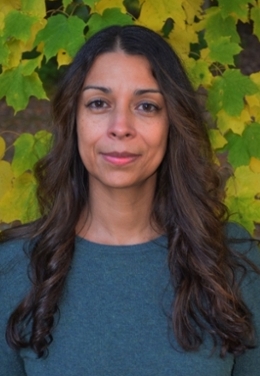
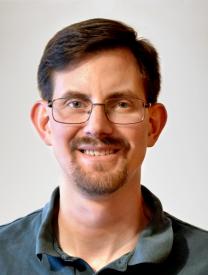
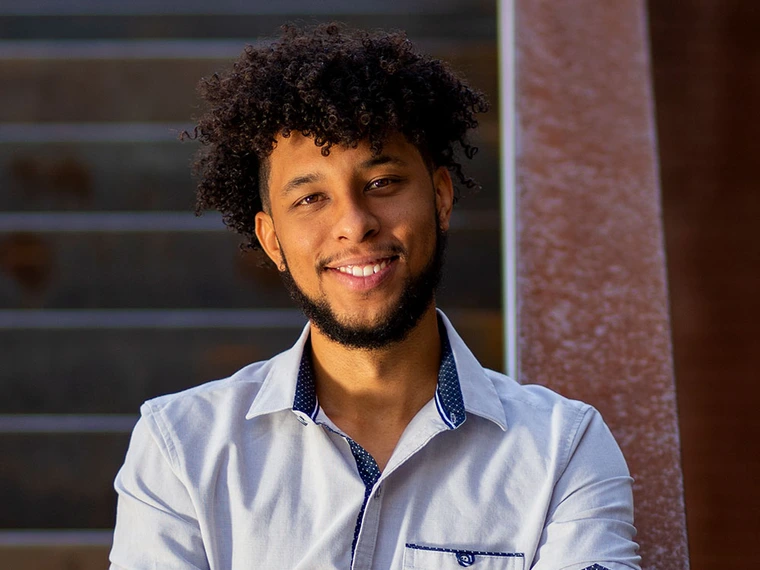
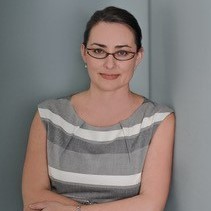
Floria Mora-Kepfer Uy is an Assistant Professor in the Department of Biology at the University of Rochester, within the School of Arts & Sciences. Her research focuses on the evolution of social behavior, particularly in insects, using integrative approaches that combine field and lab experiments with molecular and neural techniques. She investigates how relatedness, social interactions, environmental factors, and parasitic relationships influence cooperation, group formation, and neurobiological adaptations. Key research interests include the evolution of sociality, neuroethology, host-parasite interactions, behavioral ecology, and conservation. Her work employs model systems such as wasps (e.g., Mischocyttarus mexicanus, Polistes spp.) and explores topics like brain plasticity, sensory system adaptation, and genomic responses to environmental pressures. Dr. Uy’s research group actively accepts PhD students and utilizes a variety of methodologies, including neurogenomic analyses and behavioral experiments. While no specific grants or awards are listed, her publications highlight contributions to understanding social behavior mechanisms in insects.
James E. Aguirre is an Associate Professor in the Department of Physics and Astronomy at the University of Pennsylvania. His research focuses on understanding galaxy formation, cosmology, and large-scale structure through advanced instrumentation and observational techniques. He leads projects such as HERA (Hydrogen Epoch of Reionization Array) and TIM (Terahertz Intensity Mapper), dedicated to studying the early universe and distant star-forming galaxies. Aguirre’s work involves cutting-edge millimeter-wave and radio instrumentation design, including Z-Spec, PAPER, and MUSTANG. He has contributed to significant discoveries, such as detecting massive water reservoirs around quasars and determining distances to gravitationally lensed galaxies. Supported by NSF grants, his research bridges observational astronomy with cosmological theory. Education: Ph.D. in Astrophysics (thesis work on TopHat balloon-borne telescope). Teaching: ASTR011 Introduction to Astrophysics I. Current Projects: HERA, TIM, Simons Observatory, and PAPER. Grants: NSF Grant No. 0807990 and others. His research group collaborates on instrumentation like the Bolocam Galactic Plane Survey and explores techniques for mitigating calibration errors and improving signal analysis in radio interferometry. Aguirre’s efforts advance both observational methods and our understanding of cosmic evolution from the epoch of reionization to present-day galaxy formation.
Eamonn O'Neill is a Professor and Head of the Department of Computer Science at the University of Bath. His research focuses on innovative human-technology interaction, including mixed/augmented/virtual reality, and interaction with intelligent systems. His work emphasizes applied science, deriving design principles grounded in theory and empirical testing. He leads the UKRI CDT in Accountable, Responsible and Transparent AI and is affiliated with multiple centers, including the Centre for the Analysis of Motion, Entertainment Research & Applications (CAMERA) and the REal and Virtual Environments Augmentation Labs (REVEAL). His projects span EU-funded initiatives such as EMIL and UNREST, addressing topics like embodied interaction, AI regulation, and social cohesion. Recent research explores emotion recognition in VR exergaming, EEG-based brain-computer interfaces, and regulatory frameworks for AI. His work contributes to UN Sustainable Development Goals related to innovation and infrastructure. Collaborations include academic institutions and industry partners across Europe.
Felix Sperling is a Professor in the Biological Sciences Department at the University of Alberta's Faculty of Science. His research focuses on insect systematics, evolution, and biodiversity, with a particular emphasis on Lepidoptera (butterflies and moths) and Coleoptera (beetles). He leads the Sperling Lab, which integrates molecular genetics, morphological analysis, and computational tools to study speciation, phylogenetics, and conservation. Current projects include investigating mountain pine beetles, spruce budworms, and swallowtail butterflies, with applications to pest management and biodiversity preservation. Courses taught include BIOL 335 (Principles of Systematics), ENT 327 (Terrestrial Arthropod Diversity), and ENT 527 (Advanced Terrestrial Arthropod Diversity). His lab trains students in taxonomy and genomics, with recent alumni including Leah Jackson (MSc 2024), Oksana Vernygora (PhD 2020), and Victor Shegelski (PhD 2020). The lab’s work frequently involves collaborations with museums and conservation agencies, leveraging natural history collections and genomic data to address ecological and evolutionary questions. Notable achievements include groundbreaking studies on species delimitation in butterflies and beetles, as well as the development of interactive tools for taxonomic analysis. The lab has also contributed to understanding the genetic basis of dispersal in forest pests like the mountain pine beetle.
David Wishart is a Distinguished University Professor at the University of Alberta, holding dual appointments in the Faculty of Science (Biological Sciences) and the Faculty of Medicine & Dentistry (Department of Laboratory Medicine & Pathology) . He specializes in bioinformatics, metabolomics, and computational biology, with a focus on developing tools and databases such as PathBank, DrugBank, and MetaboAnalyst. His research interests include biomarker discovery for diseases like cancer and neurological disorders, metabolomics-driven precision medicine, and the development of standardized analytical protocols for NMR-based metabolomics. He teaches advanced courses in bioinformatics (BIOIN 301/401 and BIOL 501) and collaborates across disciplines, including computing science and veterinary medicine. Recent work emphasizes clinical validation of metabolite markers for early cancer detection, metabolomic analysis of animal health, and integration of metabolomic data with digital health systems. His contributions to open-source bioinformatics tools have been pivotal in advancing metabolomics research globally.
Jennifer Stamp is a University Teaching Fellow at Dalhousie University's Department of Psychology and Neuroscience, Faculty of Science. She holds a BSc in Neuroscience from Dalhousie, PhD in Anatomy from Cambridge, and two Postdoctoral Fellowships in Pharmacology and Anatomy from Dalhousie. Her research focuses on educational strategies promoting student engagement and accessibility, including visual curriculum components and student feedback integration. She also investigates neuroendocrinology, neuroanatomy, and steroid hormone impacts on stress, sleep, and addiction. Stamp has been recognized with multiple teaching awards, including the 2022 Professor of the Year (Dalhousie Undergraduate Neuroscience) and three Excellence Awards for Medical Sciences Teaching (2022, 2021, 2020). She also received the 2020 Dalhousie Alumni Association Teaching Excellence Award. She teaches core courses like Introduction to Psychology & Neuroscience (PSYO 1012), Methods in Experimental Psychology & Neuroscience (PSYO/NESC 2000), and Hormones & Behaviour (PSYO/NESC 3170). Her teaching philosophy emphasizes engagement and fostering independence through innovative pedagogy.
Goong Chen is a Professor at Texas A&M University (TAMU) within the College of Arts & Sciences. His research focuses on Control Theory, Applied Mathematics, and interdisciplinary applications in computational mechanics, fluid dynamics, and quantum systems. He holds a Ph.D. from the University of Wisconsin (1977) and a B.S. from National Tsing-Hua University (1972). His research interests span computational biomechanics, forensic modeling, nanofluidics, and mathematical physics. Recent work includes modal analysis of animal motion, crash mechanics of aircraft, and forensic reconstruction of disasters. He has contributed to theoretical advancements in PDEs, nonlinear dynamics, and quantum computing. Chen’s articles address cutting-edge topics like thermoelastic plates, Volterra equations, and DFIM systems. He has pioneered numerical methods for complex systems using OpenFOAM and finite element techniques. His computational models have been applied to real-world scenarios such as submarine implosions and chemical warfare forensics. No academic awards are explicitly listed, but his extensive publication record reflects significant contributions to applied mathematics and engineering. He leads research teams focused on interdisciplinary challenges in computational science and engineering.
Rita Coelho do Vale is an Associate Professor of Marketing at CATÓLICA-LISBON School of Business and Economics, Universidade Católica Portuguesa, where she serves as Dean for Undergraduate Programs and Director of the Behavioral Insights Unit. She holds a Ph.D. in Marketing from Tilburg University, an MBA from Faculdade de Economia-UNL, and a Licenciatura in Economics from Universidade Nova de Lisboa. Her research centers on consumer behavior, with a focus on decision-making, self-regulation, impulsive buying, and sustainable consumption. Rita has published extensively in leading journals such as the Journal of Consumer Research , Journal of Business Ethics , and Journal of Product & Brand Management . Her work explores how consumers regulate behavior, respond to ethical claims, and are influenced by packaging and brand strategies, particularly in private label and fair trade contexts. The trend in her recent publications shows a strong emphasis on behavioral insights, integrating psychology with marketing to understand subtle influences on consumer choices, including package size deception, copycat branding, and moral licensing. Her research often employs experimental and cross-cultural methods. Scientific Roles and Leadership: Dean for Undergraduate Programs, CATÓLICA-LISBON Director, Behavioral Insights Unit Oversees LERNE (Laboratory of Experimental Research in Economics and Management), PEO (Online Research Panel), and OSP (Observatory of the Portuguese Society) Teaching: She teaches Consumer Behavior, Services Marketing, and Research Methodologies across undergraduate, master’s, and executive education programs, including customized corporate programs. Grants and Research Leadership: As Director of the Behavioral Insights Unit, she leads a multidisciplinary team conducting experimental and applied research in consumer and economic behavior. She has contributed to national and international research initiatives, though specific grants are not listed in the source text. Labs and Teams: She leads the Behavioral Insights Unit, which integrates experimental, online, and societal observation platforms to advance behavioral research in marketing and economics.
Cristian Román-Palacios is an Assistant Professor in the Department of Ecology and Evolutionary Biology at the University of Arizona, where he also serves as Coordinator and Advisor for the Master of Science in Data Science (MSDS) and Master of Science in Information Systems (MSIS) programs. He is a core faculty member in Artificial Intelligence and Machine Learning, Data Management, Analysis and Visualization, and Environmental, Health and Biological Sciences. Education: PhD in Ecology and Evolutionary Biology, University of Arizona (2020) BS in Biology, Universidad del Valle, Colombia (2015) His research lies at the intersection of phylogenetics, biodiversity modeling, and machine learning, focusing on large-scale biodiversity patterns, the impacts of climate change on species survival, and the development of statistical tools for paleoclimatic reconstructions. He employs computational and data-intensive methods to explore evolutionary and ecological questions across diverse taxa. His recent publications (2024–2025) demonstrate a strong trend toward interdisciplinary research, combining computational biology, geochemistry, climate science, and open-source software development. Key themes include biodiversity informatics (e.g., Animal Culture Database), paleoclimatic modeling (e.g., clumped isotope thermometry), reproducibility in science, and tools for collaborative research (e.g., LabOps, SSARP). His work increasingly integrates data science with biological and environmental applications. Scientific Contributions: Published over 25 peer-reviewed papers, many as first author Research featured in Science News, Popular Science, CNN, USA Today Developed open-source tools: phruta , treedata.table , SSARP , LabOps Cristian advises graduate students through the infosci-msadvise@arizona.edu email and Calendly appointments. He was previously a staff researcher at UCLA’s Tripati Lab. He leads initiatives such as the Southwest Center on Resilience for Climate Change and Health and promotes inclusive, collaborative science through online toolkits and leadership ecosystems aimed at addressing climate and social inequities. His lab, the Román-Palacios Lab, and involvement with the Data Diversity Lab reflect his commitment to open, reproducible, and equitable research practices in data-intensive biology.
Professor Karen Dobkins is a Professor of Psychology at the University of California, San Diego (UCSD), specializing in Cognitive Behavioral Neuroscience and Developmental Psychology. Her affiliations include the Human Experience and Awareness Lab (HeaLab), where she explores interventions to enhance mental well-being, and her teaching responsibilities include courses like 'Learning Sustainable Well-Being' and 'Science of Mindfulness'. Her research spans mindfulness interventions, developmental neuroscience, autism spectrum disorders, sensory processing in infants, and cross-cultural relationship dynamics. Notable areas of focus include meditation's effects on well-being, interoception's role in social connection, and the neurodevelopmental underpinnings of autism. She has also investigated visual processing in infants and deaf populations, contributing to our understanding of brain plasticity. Her applied work emphasizes practical solutions to mental health challenges, such as reducing loneliness and anxiety through workshops, and she has pioneered studies on inner speech, hugging’s psychological benefits, and cultural differences in love preferences. Her interdisciplinary approach integrates psychology, neuroscience, and education. Professor Dobkins has collaborated on over 100 publications, including seminal works on autism biomarkers, visual perception in infants, and mindfulness efficacy. She advises graduate and undergraduate students and has received grants supporting research on developmental disorders and mental health interventions. Her lab, HeaLab, bridges applied and theoretical research, addressing societal issues like rising loneliness and anxiety. Current projects explore interventions to reduce body shame, the impact of cultural ideals on love scripts, and the effects of mindfulness on university students' well-being.
Jennifer Steeves is a Full Professor in the Department of Psychology, Faculty of Health at York University, where she also serves as Associate Vice President Research. She holds the York Research Chair in Non-invasive Visual Brain Stimulation and leads the Perceptual Neuroscience Laboratory. She is an active supervisor in the Biology Graduate Program and affiliated with multiple research institutes, including the Centre for Vision Research, Vision: Science to Applications (VISTA), and the SickKids Research Institute. She also holds adjunct professorships at the University of Toronto and the University of Waterloo. Her research focuses on how the brain adapts to sensory loss, particularly in individuals who have lost one eye early in life. She investigates neural plasticity using fMRI, TMS, psychophysics, and eye-tracking. Her work reveals structural and functional reorganization in the visual and auditory cortices, enhanced auditory localization, and reduced susceptibility to audiovisual illusions like the McGurk effect in monocular individuals. Her recent publications highlight the use of rTMS for treating visual hallucinations, cortical reorganization after sensory deprivation, and multisensory integration. These studies span clinical applications and fundamental neuroscience, showing trends in brain stimulation, neurochemical changes (GABA/glutamate), and cross-modal plasticity. York Research Chair in Non-invasive Visual Brain Stimulation Dr. Steeves has supervised numerous PhD, Master’s, and undergraduate students, many of whom have continued in neuroscience research. Her lab receives funding for studies on visual snow, Charles Bonnet Syndrome, and brain stimulation. She collaborates across disciplines and institutions, contributing to national networks like CAPnet. She actively mentors the next generation of scientists and leads major research initiatives at York University. The Perceptual Neuroscience Laboratory, located in the Sherman Health Science Research Centre at York University, brings together psychologists, neuroscientists, and clinicians. The lab utilizes fMRI, TMS, MR spectroscopy, and psychophysics to study both healthy and clinical populations, including those with retinoblastoma, prosopagnosia, and post-stroke visual impairments.
Prof. Kathrin Greiff is a University Professor at the Chair of Anthropogenic Material Cycles and Institute of Processing, Coking, and Briquetting at RWTH Aachen University's Faculty of Georesources and Materials Engineering. Her work focuses on advancing circular economy principles through innovative recycling technologies, sensor-based material flow analysis, and sustainability assessments. She leads research initiatives like the DACE Academy and the Material Assessment Lab, which explore sensor integration, waste valorization, and decarbonization strategies in industrial processes. Her research interests include optimizing mechanical recycling processes for plastics and construction materials, developing machine learning-driven sorting systems, and evaluating environmental impacts across material lifecycles. Recent projects highlight applications in lightweight packaging waste, steel forging decarbonization, and polystyrene insulation recycling. She collaborates closely with industry to translate research into scalable solutions for sustainable material management. Prof. Greiff’s publications emphasize technical feasibility studies, life cycle assessments, and cross-disciplinary approaches to circular economy challenges. Her work contributes to policy frameworks for sustainable resource use and eco-design principles in manufacturing.
Dana Vaux is an Associate Professor in the Department of Industrial Technology at the University of Nebraska at Kearney, within the College of Business & Technology. She specializes in Interior and Product Design, with a strong emphasis on interdisciplinary research connecting people and environments. Education: Ph.D., Interdisciplinary: Architecture, Design, Environmental History – Washington State University M.A., Interior Design – Washington State University B.A., Interior Design – Washington State University Her research focuses on the intersection of culture, history, and the built environment. Key areas include place theory , design pedagogy , and the cultural-historical meanings of interior spaces . Dr. Vaux explores how interiors shape human experience and identity, integrating environmental history and ethical considerations into design practice. The 15 most recent publications reflect a consistent trajectory in interdisciplinary design research , spanning ethics, pedagogy, sustainability, and cultural identity. Her work bridges architecture, interior design, and environmental psychology, often emphasizing qualitative and historical methodologies. Themes of human well-being , historical continuity , and educational innovation recur across her scholarship. Scientific Awards: 2022 Midwest Regional Best of Award for Scholarship of Teaching and Learning-Pedagogy (IDEC) 2021 Midwest Regional Best of Award for Scholarship of Design Research-History and Theory (IDEC) 2019 Best Paper in Family Studies/Human Development (AAFCS) 2021-2022 College of Business & Technology Outstanding Faculty Award: Scholarship Dr. Vaux is an active researcher and educator, contributing significantly to design scholarship and pedagogy. She has co-authored influential books used in classrooms and published in top journals. While specific grant details are not listed, her sustained output and recognition suggest successful funding and institutional support. She mentors future designers through curriculum development and research integration in teaching, emphasizing the importance of research for ethical and effective design. Though no formal lab or research team name is mentioned, her interdisciplinary approach suggests collaboration across departments, particularly in architecture, environmental studies, and family sciences. Her work continues to influence both academic and professional practices in interior design.
Giuseppe PAGNONI is an Associate Professor at the Department of Biomedical, Metabolic and Neurosciences of Università di Modena e Reggio Emilia . His research spans neuroscience , computational modeling , meditation , and brain network analysis . He teaches courses such as Neural Systems Modeling for Bioengineering students and Human Physiology and Pathophysiology in Medicine programs, with a focus on predictive coding , default mode network , and emotional valence processing . Pagnoni has contributed to ENIGMA-Meditation , a global initiative exploring meditation's neuroscientific basis, and developed sparse Bayesian models for analyzing brain network individual differences. His work on Alzheimer's disease investigates anosognosia mechanisms through resting-state fMRI, while other studies examine ghrelin's role in obesity-related reward processing and oxytocin's effects on social anxiety . He employs dynamic causal modeling and predictive processing frameworks to study cognitive effort, mind wandering, and neuromorphic learning. His methodological expertise includes functional MRI , independent component analysis , and computational simulations .
Professor Asif Gill is Head of Discipline for Software Engineering at the School of Computer Science, University of Technology Sydney (UTS), where he was promoted to Professor of Computer Science in January 2024. He also serves as Director of the DigiSAS Research and Innovation Lab and is actively involved in the Global Big Data Technologies Centre at UTS. As a founder of both the DigiSAS Lab and the Future Generation Enterprise Architecture Community of Practice (FGEA CoP), he has established integrated teaching-research-engagement frameworks that translate academic research into practical applications while enhancing graduate employment opportunities. Professor Gill's research interests span Adaptive Enterprise Architecture , Agile Software Development , and Design Science Research & Innovation , with a particular focus on architecting large-scale data-intensive enterprise software systems. His work addresses challenges across academia, industry, government, and society, with significant contributions to AI systems architecture, digital identity management, and enterprise knowledge graphs. His applied research has resulted in numerous collaborations with organizations including the Reserve Bank of Australia, Revenue NSW, Capsifi, Data Zoo, and the NSW Department of Planning, Industry and Environment. His publication record includes 3 books and over 190 articles in major academic journals such as IEEE Transactions on Professional Communication, Information and Management, and Information Systems. His recent work demonstrates a consistent focus on cutting-edge topics in enterprise architecture, AI systems, and digital identity, with multiple publications appearing in 2024-2025. His research trajectory shows a clear evolution from foundational work in agile software development toward more sophisticated integration of AI, enterprise architecture, and data governance. Fellow of the Australian Computer Society (ACS) Fellow of DSE (ESCP Center for Design Science in Entrepreneurship) Senior Member IEEE Associate Editor, IEEE Transactions on Technology & Society Associate Editor, Springer Nature Discover Data journals Member, Data Sharing Committee, IFIP Technical Committee 8.1 Member, Standards Australia Software and Systems Engineering Committee IT-015 Professor Gill has successfully secured numerous research grants from 2019-2026, totaling significant funding for projects related to digital identity, enterprise architecture, and AI systems. His approach emphasizes industry-academia collaboration, with many projects involving direct partnerships with government agencies and industry organizations. He has supervised multiple PhD and Master's students through industry-sponsored scholarships and maintains active collaborations with researchers across multiple institutions. Leading the DigiSAS Research and Innovation Lab, Professor Gill has created an environment that bridges theoretical research with practical implementation. The lab focuses on developing frameworks and tools for adaptive enterprise architecture, with particular emphasis on AI-enabled systems, data governance, and digital identity solutions. His work on the Data Satellite Architecture represents a significant contribution to combating data pollution in federated digital ecosystems.