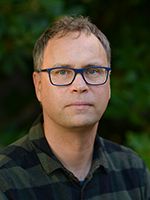
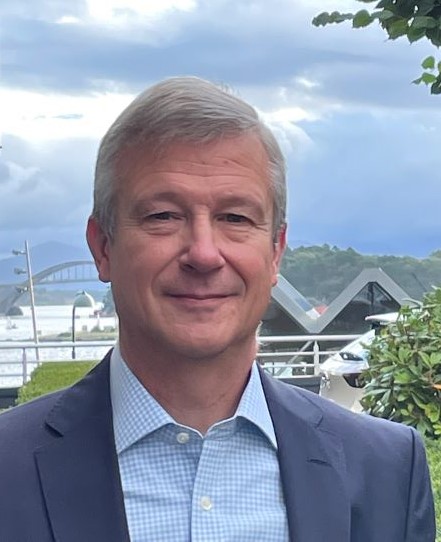
Frode Eika Sandnes is a Professor at the Department of Information Technology , Faculty of Technology, Art and Design , Oslo Metropolitan University , focusing on Human-Computer Interaction and Universal Design of ICT . His research spans innovative interaction techniques, skill reuse, pattern recognition, image analysis, and intelligent systems. Current research trends include accessibility in digital education, lightweight deep learning models, and physical interface usability Recent publications analyze color picker efficiency, 3D-printed prosthetics, and authentication technologies His work integrates interdisciplinary approaches to enhance usability and inclusivity in technology. Notable projects involve automated readability assessments and AI applications in diverse domains like aquaculture and medical diagnostics.
Kjetil Rødje is a faculty member at the University of Oslo, affiliated with the Department of Media and Communication. He holds the academic rank of Professor and has served as Head of Studies since January 2020. His current research focuses on film, visual culture, affect theory, and media theory, with additional interests in media aesthetics, media use, and racialization studies. Education: PhD (2011) from Simon Fraser University, Canada; Cand.Polit. (2002) from the University of Oslo. His work explores intersections between media, culture, and affect, including analyses of film technology, horror cinema, and societal impacts of media representation. Recent publications address topics like intra-diegetic cameras in found footage horror and racialization in Nordic contexts. Key Themes: Cinematic perception, affective media, healthcare communication, racialization, and technology discourse. Work Experience: Lecturer (2015-2017), Postdoctoral Fellow (2013-2015), and External Lecturer (2012) at the University of Copenhagen; Researcher roles in health institutions (2002-2005).
Idelfonso Nogueira is an Associate Professor at the Department of Chemical Process Technology, Norwegian University of Science and Technology (NTNU). His research focuses on integrating artificial intelligence, advanced control, and system optimization to address challenges in Industry 4.0/5.0. Key research areas include AI-driven product/process development, interpretable machine learning for process systems, multi-scale system integration, and adaptive digital twins. He collaborates extensively with global universities, institutes, and industries to advance sustainable industrial solutions. His work emphasizes digitalization, hybrid modeling, and optimization frameworks, as seen in publications on pressure swing adsorption, fragrance engineering, and CO2 capture systems. He also promotes innovative teaching methods, including augmented reality for chemical engineering education. Recent publications highlight advancements in digital twin frameworks, machine learning for crystallization processes, and optimal control strategies. His research bridges theoretical models with practical applications, ensuring robustness and reliability in industrial contexts.
Konstantinos Christakos is a researcher at the Norwegian Meteorological Institute and an adjunct researcher at the Department of Marine Technology, Norwegian University of Science and Technology (NTNU). His work focuses on metocean statistics, numerical wave modeling, and marine renewable energy applications. Doctoral dissertation: Wind-Generated Waves in Fjords and Coastal Areas (University of Bergen, 2021) Master’s thesis: Characterization of the coastal marine atmospheric boundary layer (MABL) for wind energy applications (University of Bergen, 2013) Christakos specializes in wave modeling for coastal and fjord environments, with a focus on wind-wave interactions, inhomogeneous wave dynamics, and open-source software development. He has contributed to tools like metocean-api , DNORA , and metocean-stats for metocean data analysis and visualization. His recent publications and conference presentations address Arctic wave energy resource assessment, downscaled wave hydrodynamics, and fjord-specific modeling challenges. He actively collaborates with institutions like SFI BLUES, SINTEF, and NOAA, and lectures on marine dynamics and stochastic methods at NTNU. Konstantinos participates in interdisciplinary teams and workshops, emphasizing computational modeling, machine learning integration, and environmental engineering for marine structures.
Rolf Steier serves as Professor at Oslo Metropolitan University within the Faculty of Education and International Studies, Department of Primary and Secondary Teacher Education, holding the position of Head of Studies for Area of Responsibility 5. His office is located at Pilestredet 52, 0167 Oslo (B534), with contact details including mobile +47 906 92 626, office +47 672 36 014, and email rolf.steier@oslomet.no. He actively contributes to the Digital Learning Arenas research group, focusing on technology-enhanced educational environments. Steier's research centers on computer-supported collaborative learning (CSCL) and virtual reality applications in education, with specific expertise in embodied cognition, science education, museum learning, and narrative structures in STEM. His work examines how learners co-construct knowledge through digital interactions, particularly investigating the role of physical embodiment in virtual environments and the integration of narrative techniques to facilitate engagement in informal learning contexts. Recent projects explore immersive VR experiences for collaborative meaning-making and the adaptation of interaction analysis methodologies for technology-mediated educational research. Analysis of Steier's 2021-2025 publications reveals a clear trajectory toward increasingly sophisticated integration of virtual reality in educational research, with growing emphasis on interdisciplinary applications in science education. Key thematic developments include the refinement of interaction analysis frameworks for digital contexts, the exploration of perspective-taking across blended realities, and the strategic use of narrative to enhance STEM engagement in informal settings. His work consistently bridges theoretical learning science with practical educational technology implementation. The Digital Learning Arenas research group serves as the primary platform for Steier's collaborative work, functioning as an interdisciplinary hub for developing and studying innovative digital learning solutions. This group facilitates partnerships across educational sectors to transform teaching practices through emerging technologies, with recent focus on VR-based collaborative learning environments and cross-contextual knowledge transfer.
Anne Birgitta Nilsen is a full Professor at Oslo Metropolitan University's Faculty of Teacher Education and International Studies, Department of International Studies and Interpreting Education. Her work bridges discourse analysis , interpreting studies , and extremism research , focusing on hate speech , multimodal communication , and public sector translation . She leads interdisciplinary research projects including "Touching and being touched: Communication and interaction in physiotherapy practice" and has participated in major initiatives like the DARE (Dialogue on Radicalization and Equality) project. Her research interests span: Discourse Analysis (power, hate rhetoric, intercultural communication) Translation Studies (public sector interpreting, children's communication, text-to-speech interpretation) Extremism Research (right-wing extremism, Islamist extremism, social media radicalization) Language Technology (big data analysis, multimodal discourse) Recent publications examine: Combating hate speech through critical linguistic awareness Comparative analysis of far-right and Islamist extremism on Twitter Communication dynamics in physiotherapy practices Challenges in interpreter-mediated healthcare for children Visual rhetoric in Islamic State supporters' social media She contributes to both academic and public discourse, addressing topics from gestalt therapy communication to classroom language use . Her work emphasizes practical applications of linguistics in social justice and professional contexts.
Danyal Farsani is an Associate Professor at the Department of Teacher Education , Norwegian University of Science and Technology (NTNU), specializing in mathematics education through the lens of embodied cognition and cultural responsiveness . His work bridges teacher training , gesture-based learning , and cross-linguistic analysis in educational contexts. Key Research Themes: Embodied mathematical concepts, cognitive load in arithmetic, cultural/ethnomathematical practices, and multimodal communication in classrooms. Recent Collaborations: Focus on global North-South educational dynamics, robotics integration in teacher training, and metaphorical processing in language learning. Methodological Focus: Empirical studies using mental arithmetic tasks, gesture analysis, and cross-cultural curriculum evaluations. Publication Trends (2022–2025): Analysis of 15 recent articles reveals recurring emphasis on embodied cognition , mathematical metaphors , visual attention mechanisms , and culturally adaptive teaching tools like the Ethiopian Gebeta game. Subfields span gesture studies , cross-linguistic pedagogy , and innovative teacher education frameworks . No scientific awards or student advisories are explicitly mentioned in the provided data.
Dr. Ngoc Nha Vi Tran is an Associate Professor of Computer Science at UiT The Arctic University of Norway. She holds a PhD from UiT and was a visiting scholar at Rutgers University, USA. Her research focuses on high-performance and energy-efficient computing, machine learning, and bioinformatics. She is a member of the NORA.startup Steering Group and leads the Arctic Green Computing Group. Education: PhD in Computer Science (UiT), M.Sc. in Software Engineering via Erasmus Mundus (Blekinge Institute of Technology, Sweden & Technical University of Kaiserslautern, Germany). Research interests include energy-efficient algorithms, bioinformatics tools (e.g., vCOMBAT), and applications of machine learning in healthcare and robotics. She teaches courses such as INF-2200 Computer Architecture, INF-2900 Software Engineering, and INF-2202 Concurrent Programming. Her work spans computational models for antibiotic target-binding, runtime energy optimization (REOH framework), and power models for embedded systems (RTHpower/ICE). She contributed to the EXCESS project on energy-efficient computing systems. Labs/Teams: Arctic Green Computing Group, EXCESS consortium.
Susanne Mohr is a Professor of English Sociolinguistics at NTNU's Department of Language and Literature since 2020. She holds a German Habilitation (postdoctoral degree) from the University of Bonn and a PhD from the University of Cologne. Her research focuses on sociolinguistic aspects of tourism, multilingualism, and multimodal communication in Africa and the Nordic region, with funding from institutions like the Humboldt Foundation and NTNU Oceans. Her research interests include sociolinguistics of tourism discourse, semiotic landscapes, sign languages (e.g., Irish Sign Language), and African English varieties. She leads the 'Open Landscapes' forum and participates in interdisciplinary projects on topics like sustainability in cruise tourism and space-making in East Africa. She is affiliated with networks such as the 'Africa in the Indian Ocean' research group and the Irish Deaf Research Network. Key awards include a 2024 senior fellowship from the Erich Auerbach Institute and multiple Humboldt Foundation grants. She teaches sociolinguistics at BA/MA levels and supervises PhD/MA students in topics like code-switching and accent attitudes. Recent publications include monographs on African English pluralization and edited volumes on informal language learning and communicative action in Africa.
Nikolas Olson Aksamit is an Associate Professor in the Department of Mathematics and Statistics at UiT The Arctic University of Norway, where he conducts interdisciplinary research at the intersection of applied mathematics and environmental science. His work focuses on understanding coherent structures in fluid flows relevant to the coupling between the cryosphere, atmosphere, and hydrosphere. His research interests include applied mathematics, nonlinear dynamical systems, fluid dynamics, Lagrangian coherent structures, snow science, and climate dynamics. He develops mathematical tools to analyze complex environmental systems, particularly in polar and alpine regions, with applications to sea ice, blowing snow, and ocean turbulence. His work bridges theoretical modeling with field observations and data analysis. The recent articles reflect a strong trend in using Lagrangian methods and nonlinear dynamics to study geophysical flows. Key themes include the detection of coherent structures in turbulent flows, sea ice dynamics, climate modeling, and the application of machine learning to oceanographic data. His publications span high-impact journals in fluid mechanics, geophysics, and environmental science, often in collaboration with leading experts in dynamical systems and climate science. He is a member of the research group Changing Arctic and contributes to the project Development of nonlinear dynamics-based techniques for sea ice diagnosis . While no formal students or awards are listed, his active publication record indicates a vibrant research program. His work has implications for climate prediction, polar monitoring, and environmental engineering.
Lars Ingvar Bergkvist is a Professor of Marketing at the Norwegian School of Hotel Management (NHS), Institute for Leadership and Service Development, within the Faculty of Social Sciences at the University of Stavanger, Norway. He has held academic positions internationally at Zayed University (UAE), Universiti Teknologi Brunei, University of Nottingham Ningbo (China), Stockholm University, UNSW Asia (Singapore), University of Wollongong (Australia), and the Stockholm School of Economics. He has also been a Visiting Professor at Yonsei Graduate School of Management (South Korea) and CEIBS (China). His research focuses on advertising, consumer behavior, brand management, and research methodology. He has published in leading journals including the Journal of Marketing Research , Journal of Advertising , and International Journal of Advertising , where he serves as Associate Editor. His recent work explores the dynamic nature of marketing constructs, replication in advertising research, sportswashing, and cultural codes in international marketing. The most recent publications highlight a strong methodological focus, particularly on replication, measurement validity, and construct clarity in advertising. There is also a growing interest in ethical and geopolitical dimensions of marketing, such as sportswashing and human rights in experience design. His work bridges theoretical rigor with practical implications for branding and communication strategy. Associate Editor, International Journal of Advertising Lars Bergkvist has advised emerging scholars such as Heidi Victoria Skeiseid and Freya De Keyzer, as evidenced by co-authored publications. While no specific grants are mentioned, his consistent publication output and international speaking engagements suggest active research funding and collaborative projects. He has delivered invited presentations on measurement, replication, and cultural marketing at academic and industry events. He is involved in research collaborations across Europe and Asia, particularly in advertising and international marketing. His presentations and publications suggest active participation in a global research network focused on methodological integrity and cross-cultural marketing communication.
Martin Wulf Gerdes is an Associate Professor at the Department of Information and Communication Technology, University of Agder, Norway. With a Ph.D. in eHealth and over two decades of experience in telecommunications and healthcare technology research, he focuses on developing user-friendly, interoperable eHealth solutions using ICT and IoT. His career spans roles at Ericsson Eurolab and academic leadership in Norway. Education: M.Sc. equivalent in General Electrical Engineering (1998) from RWTH Aachen, emphasizing ICT. Ph.D.: Information and Communication Technologies with eHealth specialization (2019) from University of Agder. Research Interests: Gerdes explores AI-driven decision support systems, distributed eHealth infrastructure, telemedicine, and assistive technologies for chronic disease management. His work bridges IoT, data privacy, and user-centered design in healthcare robotics. Teaching: Since 2014, he has taught at bachelor's and master's levels, currently leading courses in Communication & Cooperation, Technology Understanding, and seminar projects in eHealth. Scientific Publications: His 15 most recent articles (2020-2024) span AI in dental radiology, blood glucose prediction, digital twins, and ethical considerations in healthcare algorithms. Topics include IoT integration, data privacy, and pandemic analytics.
Astrid Gynnild is a Professor at the Department of Information and Media Studies, Faculty of Social Sciences, University of Bergen, Norway. She is also the Principal Investigator of the ViSmedia project and Head of the Journalism Program. Her work bridges journalism innovation, pedagogy, and ethical technology use in media. Education & Background: PhD in Journalism and Media Studies (2006), University of Bergen, with a grounded theory on creative exchange in journalism. Extensive professional experience at Adresseavisen, including news work, editorial management, and organizational development. Visiting researcher at the University of California, Berkeley. Research Interests: Gynnild’s research is organized into three core tracks: (1) AI and technological innovation in journalism, especially drone and mobile journalism; (2) student-active learning and workshop-based pedagogy in higher education; and (3) surveillance, privacy, and responsible innovation in visual media. She emphasizes ethical frameworks like Responsible Research and Innovation (RRI) and grounded theory methodology. Publication Trends: Her recent work reflects a strong focus on emerging technologies in journalism, particularly drones and immersive storytelling. Articles consistently explore ethical implications, professional adaptation, and pedagogical integration. There is a clear trajectory toward interdisciplinary, socially responsible research with real-world impact in media practice and policy. Scientific Awards: Fellow of the Grounded Theory Institute Meritorious Lecturer, Faculty of Social Sciences, University of Bergen (2019) Advising and Grants: Gynnild has supervised students at bachelor's, master's, and PhD levels. She led the ViSmedia project (2015–2021), funded by the Research Council of Norway (NFR), and contributed to multiple collaborative initiatives such as INJECT, Visual Journalism in the Newsroom, and Communicative Effects of Climate Messaging. She has developed curricula including the master’s program in investigative journalism and promotes open-access, co-creative dissemination. Labs and Research Groups: She leads the Journalism Research Group at UiB and was central to the ViSmedia project, which created a digital archive of conferences, student experiments, and publications on visual surveillance in media. The project website ( https://www.uib.no/en/vismedia ) serves as a hub for interdisciplinary dialogue and innovation.
Hugo Lewi Hammer er professor ved Oslo Metropolitan University, tilhørende Faculty of Technology, Art and Design og Department of Information Technology – Mathematical Modeling . Hans forskning fokuserer på forbedring av pålitelighet og transparens i maskinlæring, forsterkende læring og dyb læringsmodeller gjennom metodikk innen modelltolkning, usikkerhetskvantifisering, robust statistikk og kausal inferens. Hans nylige arbeid inkluderer: AI-drevet optimering i assistert reproduksjonsteknologi (embryoutvalg og sædcelleanalyse) Medisinsk bildebehandling (polypdeteksjon, meibomkertutgang) Neural nettverkstolkning og usikkerhetsmodellering i EEG-analyse Biomekanisk prediksjon av muskelutmatting Hans publikasjoner viser mangfoldige anvendelser av AI i medisin og teknologi, med spesialvekt på: Explainable AI (XAI) i diagnostikk og behandling Usikkerhetskvantifisering i dyb læring Automatisering av medisinske prosedyrer (ICSI, embryoanalyse) Stokastisk simulering og kausal inferens Hammer er engasjert i forskningsgruppene Applied Artificial Intelligence og Mathematical Modeling og har publisert over 130 vitenskapelige artikler og 7 forskningsrapporter.
Idelfonso Nogueira is an Associate Professor in the Department of Chemical Engineering at NTNU. His research focuses on integrating artificial intelligence, advanced control systems, and digitalization to address industrial challenges, particularly in chemical processes and product development. He leads the AiP²S² framework, emphasizing synergies between AI and traditional engineering methods. Education: PhD in Chemical and Biological Engineering (University of Porto, 2018), Visiting Researcher at Tampere University of Technology (2016–2018), and multiple master’s degrees from Brazilian and Portuguese institutions. Research Interests: Process optimization using AI, hybrid modeling, digital twins, and Industry 4.0/5.0 applications. Collaborations span universities, institutes, and industries globally. Teaching focuses on preparing engineers for modern industrial demands. Publications: Over 60 manuscripts, with 70% in Q1 journals (e.g., Chemical Engineering Science , Computers and Chemical Engineering ). Key areas include pressure swing adsorption, machine learning for process control, and fragrance molecule design. Grants/Advising: Active in parameter estimation, process modeling, and renewable energy projects. No explicit student advising list provided. Labs/Teams: Engages in AI-driven process systems engineering, digital twin development, and sustainable technology initiatives.