Erin Finneran is a Senior Lecturer in the Department of English at Washington University in St. Louis, with over 20 years of teaching experience. She specializes in Irish and British Literary Modernism, focusing on authors such as Samuel Beckett, Virginia Woolf, and Oscar Wilde. Her teaching spans courses like Ampersand: Literary Culture of Modern Ireland and Argumentation , emphasizing close reading and liberal arts education. Finneran holds a Ph.D. from Washington University, an M.A. from University College Dublin, and a B.A. from Kenyon College. Her academic career includes roles at both Washington University and University College Dublin. Research interests center on modernist literature, with a particular emphasis on parody in Beckett’s early works and the intersection of gender, identity, and narrative form. She has developed courses exploring themes like alienation in modern literature and the evolution of literary culture in Ireland. Finneran’s pedagogical approach prioritizes student engagement across diverse backgrounds. Publications listed reflect interdisciplinary collaboration in public health and behavioral science, though these appear unrelated to her primary literary focus. These include studies on HIV care interventions, intimate partner violence among sexual minority men, and HPV education. While the connection to her literary expertise is unclear, the listed articles suggest possible parallel research streams or potential data overlap. No formal grants or awards are mentioned in the provided materials. Her professional activities focus on undergraduate education and curriculum development in modernist literature.
Dr. Katherine Mickley Steinmetz is a Professor in the Department of Psychology at Wofford College, where she directs the Neuroscience of Cognition and Emotion Lab. Her office is located in the R. Milliken Science Center 231D, and she can be reached at (864) 597-4643 or steinmetzkr@wofford.edu. She has established herself as a prominent researcher in emotional memory and cognition through her extensive publication record and laboratory work. Dr. Steinmetz earned her undergraduate degree in Psychology and Neuroscience from Allegheny College, where she participated in the Neuroscience in the Humanities program and completed a thesis on electrophysiological changes caused by learning words in emotional contexts. She then pursued graduate studies at Boston College under Dr. Elizabeth Kensinger, using neuroimaging (fMRI), eye-tracking, electrophysiological, and behavioral techniques to investigate neural mechanisms influencing memory for emotional events. Following this, she completed a post-doctoral fellowship focusing on stress and sleep effects on memory at Boston College and Notre Dame. Her research program focuses on understanding the neuroscience behind how emotional processing influences attention and memory. Dr. Steinmetz combines behavioral testing, event-related potential (ERP) recordings, and salivary hormonal assays to examine both cognitive and neural processes guiding attention toward and memory for emotional information. She is particularly interested in how factors like stress and anxiety modulate these processes. Her work spans multiple domains including emotional memory enhancement, cross-cultural differences in memory, physiological correlates of emotional processing, and the interaction between sleep, stress hormones, and memory consolidation. Analysis of Dr. Steinmetz's publication history reveals consistent focus on emotional memory mechanisms across various contexts. Her research demonstrates how emotional content differentially affects item versus background memory, how stress hormones like cortisol modulate memory processes, and how attentional mechanisms interact with emotional processing. Her methodological approach integrates multiple techniques including ERP, eye-tracking, physiological monitoring, and behavioral paradigms to provide comprehensive insights into emotion-cognition interactions. Dr. Steinmetz has authored numerous peer-reviewed publications in prominent journals including Journal of American College Health, Frontiers in Physiology, Cognition and Emotion, Memory, and Affective Science. She has also contributed book chapters and co-authored the book "How Does Emotion Affect Attention & Memory?" (2010) with Elizabeth A. Kensinger, which reviews behavioral and neuroimaging evidence on emotion's effects on memory and attention in individuals with and without PTSD. As an educator, Dr. Steinmetz has focused on developing effective undergraduate research experiences in cognitive neuroscience. Her work in this area addresses the challenges of preparing students for careers in this interdisciplinary field while maintaining sustainable faculty development. She appears to be actively involved in mentoring undergraduate researchers through her laboratory work at Wofford College. Dr. Steinmetz's Neuroscience of Cognition and Emotion Lab serves as the primary research hub for her investigations. The lab employs multiple methodological approaches to study emotion-cognition interactions, providing students with hands-on research experience in cognitive neuroscience techniques. Her research program demonstrates continuity from her graduate and postdoctoral training while developing its own distinct focus on the interplay between emotional processing, attention, and memory.
University of California, Los AngelesUnited States
Kathleen L. Komar is a Distinguished Professor in the Department of Comparative Literature at the University of California, Los Angeles (UCLA), part of the UCLA College. She holds a Ph.D. in Comparative Literature from Princeton University (1977). Her primary language expertise includes German, reflecting her focus on German literary traditions. Professor Komar’s research spans feminist theory, modernist literature, and post-symbolist poetry, with significant contributions to the study of Rainer Maria Rilke, Hermann Broch, and Robert Musil. She has authored and edited works analyzing mythological reinterpretation, gender dynamics in literature, and the intersection of digital humanities with traditional literary studies. Her academic career includes leadership roles such as serving as ACLA President, where she championed interdisciplinary approaches and the evolution of comparative literature as a discipline. Komar’s scholarship bridges historical analysis and contemporary critical theory, addressing themes like utopianism, postcommunism, and the role of silence in postwar discourses. She has also explored pedagogical innovations in teaching world literature and the application of predictive analytics in educational technology. Notable research areas include: Reinterpretation of classical myths (e.g., Klytemnestra) Modernist aesthetic theory in German literature Electronic poetry and digital textuality Feminist explorations of literary space Comparative studies of European and American literary traditions Her publications reflect a commitment to interdisciplinary dialogue, spanning edited companions, critical essays, and theoretical interventions in both print and digital formats. Komar’s work frequently emphasizes the transformative potential of literature to interrogate cultural, political, and gendered structures.
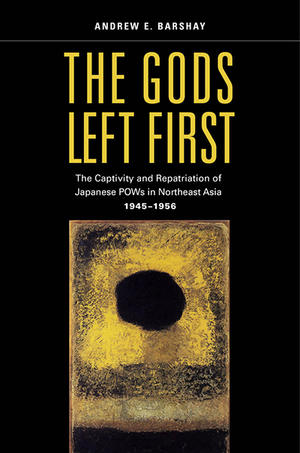
Andrew E. Barshay is a Professor at the University of California, Berkeley, holding the Dr. C. F. Koo & Cecilia Koo Chair in East Asian Studies. His research focuses on Japanese intellectual history, postwar social theory, and intersections between ethics, art, and historical trauma. Books: The Gods Left First (2013), The Social Sciences in Modern Japan (2004), and State and Intellectual in Imperial Japan (1988). Contact: Office in 3123 Dwinelle Hall; abars@berkeley.edu . His publications explore figures like Maruyama Masao, the legacy of Japanese POWs in Siberia, and the evolution of social sciences in Japan. Recent works analyze comparative religious thought and the dynamics of inclusion in humanities.
Robyn Jensen serves as an Assistant Teaching Professor at the University of California, Berkeley, specializing in 19th and 20th-century Russian literature, Nabokov, Chekhov, the short story, prison literature in Russia and America, and women in Soviet cinema. Her academic credentials include: Ph.D. in Slavic Languages and Literatures from Columbia University M.Phil in Slavic Languages and Literatures (with minor in Film Studies) from Columbia University M.A. in Slavic Languages and Literatures from Columbia University B.A. in Slavic Languages and Literatures from Barnard College Dr. Jensen's research centers on Russian literary and cultural studies with deep expertise in Vladimir Nabokov and Anton Chekhov . Her work critically examines Moscow Conceptualism , self-narratives , photography theory , interart aesthetics , theatrical performance , and carceral systems . Her current book project Nabokov’s Camera Eye investigates visual media's role in literary construction. Her recent publications reveal a consistent scholarly trajectory exploring intersections between Russian literature and visual culture, particularly through Nabokov's works. She analyzes photographic representation in autobiography, pedagogical approaches to complex texts, and intermedial relationships between painting and narrative, demonstrating how visual frameworks shape literary meaning. Scientific Awards: No awards documented in available sources. Advising and Grants: Public records indicate no formal PhD/Master's advisees or grant funding disclosures. Her public writing in Los Angeles Review of Books suggests engagement with broader academic discourse beyond traditional advising structures.
University of California, Los AngelesUnited States
Zirwat Chowdhury serves as Assistant Professor in the Department of Art History at the University of California, Los Angeles, where she researches the interconnected histories and historiographies of art and visual culture across Britain, France, South Asia, and the Atlantic world during the 18th and 19th centuries. Her scholarship bridges imperial history with contemporary critical theory, examining how artistic forms reflected and shaped global power dynamics during the colonial era. Dr. Chowdhury earned her Ph.D. in Art History from Northwestern University in 2012. Her academic journey includes teaching positions at Reed College and Bennington College before joining UCLA, along with service as Journal 18's Notes & Queries Editor from 2019-2021. Her research interests center on transnational art histories, with particular focus on how British painting was transformed by imperial social relations despite many artists never traveling beyond Britain. She examines how painterly compositions became sites for discerning global social relations, connecting aesthetic philosophy with imperial geography. Her work consistently interrogates the visual representation of power, cultural exchange, and the material consequences of empire across diverse geographical contexts. Analysis of her publication record reveals a consistent trajectory examining the intersections of art, empire, and representation across multiple geographical contexts. Her articles demonstrate methodological innovation in connecting 18th-century visual culture with contemporary critical frameworks, particularly regarding race, gender, and postcolonial theory. The publications show increasing engagement with digital humanities approaches and collaborative scholarship, particularly evident in her work on Black presence in historical Europe. Hellman Society of Fellows at UCLA Getty Research Institute (NEH Postdoctoral Fellowship) William Andrews Clark Memorial Library/Center for 17th– and 18th-Century Studies at UCLA (Ahmanson-Getty Postdoctoral Fellowship) Institute of Historical Research (Mellon Dissertation Fellowship) Huntington Library (Andrew W. Mellon Fellowship) Paul Mellon Center for Studies in British Art Yale Center for British Art Attingham Summer School ('13) Royal Collection Studies ('18) Dr. Chowdhury's research has been consistently supported by major funding bodies across her career, from dissertation fellowships through postdoctoral awards. Her current book project, Enlightened Relations: 18th-Century British Art and the Indies , represents the culmination of these research trajectories. While specific graduate students aren't listed in the provided materials, her position as Assistant Professor indicates ongoing mentorship of MA and PhD candidates in art history.
Dr. Masato Kikuchi is an Associate Professor of Japanese in the School of Modern Languages at Georgia Tech. He holds a PhD from the University of Pittsburgh (1995), an M.S. in Intercultural Communication (1982), and a B.A. from International Christian University (1979). His research focuses on instructional technologies for language acquisition, particularly leveraging virtual worlds like Second Life for immersive Japanese learning. He has developed platforms such as the 'Sky Platform at EduNation III,' exploring 3D visualization for grammar concepts and comparative studies on 3D vs. 2D language learning tools. Dr. Kikuchi teaches advanced and intermediate Japanese courses, specializing in CALL (Computer-Assisted Language Learning), technical translation, and intercultural communication. His work emphasizes integrating technology into language education, including courseware design for online and hybrid learning environments. Recent projects include software for virtual world-based communicative practice and research on NMT (Neural Machine Translation) as a pedagogical tool. His publications span conference proceedings, courseware development, and software tools like the 'Understanding Written Japanese' CD-ROM series. He actively presents on topics such as virtual world design, information gap exercises, and Japanese course design. His research aligns with Georgia Tech’s focus on STEM-integrated language education and international collaborations.
Bo Feng is a Professor and Chair in the Department of Communication at the University of California, Davis. He holds affiliations with the East Asian Studies Program, the Center for Healthcare Policy and Research, and the Center for Design in the Public Interest. His research focuses on supportive communication across cultural, technological, and professional contexts, emphasizing the effectiveness of advice and empathy in interpersonal interactions. Educated with a Ph.D. in Communication from Purdue University, he has been funded by NIH, NIMH, and CDC for projects addressing health communication and online support dynamics. His awards include the Chancellor's Fellow (2016–2021) and multiple Top Paper Awards from the International Communication Association. Feng's research explores how support seekers and providers interact in face-to-face, online, and clinical settings, with a particular interest in cultural differences and technological mediation. His work analyzes responses to crises, physician-patient communication, and the impact of digital tools on reciprocity across generations. Key contributions include studies on narrative-based patient education and the role of online user profiles in shaping support quality. Grants & Funding : NIH, NIMH, CDC-funded projects on health communication and crisis support. Awards : Includes top academic honors for mentorship, research excellence, and contributions to communication theory. Teaching : Courses like CMN101 (Communication Theory) and CMN230 (Social Interaction Theory) reflect his expertise in theoretical and applied communication. Labs/Teams : Collaborates with interdisciplinary teams in healthcare policy and public design centers to apply communication research in real-world contexts.
Seth Frey is an Associate Professor in the Department of Communication at the University of California, Davis. His research focuses on computational social science, exploring governance institutions and complex human decision-making through computational methods, large datasets, and web-based experiments. He examines online communities as models of governance, with expertise in computational approaches to institutional design and strategic behavior analysis. Education: Ph.D. in Cognitive Science and Informatics, Indiana University, 2013 B.A. in Cognitive Science, UC Berkeley, 2004 Research Interests: Frey's work integrates data science, lab experiments, and computational modeling to study human organizations and communication. Key areas include governance technology, cognitive mechanisms of social outcomes, and institutional evolution. His projects span online games, sports, and open-source software communities, emphasizing topics like collective action, self-governance, and cooperative behavior. Publications & Funding: His work appears in journals like PNAS and Nature Scientific Reports, and has been funded by NSF, NASA, and the Ford Foundation. He contributes to the Ostrom Workshop at Indiana University and directs the Computational Communication Lab at UC Davis. Teaching: Frey teaches courses on data visualization, simulation methods, and online data analysis in the social sciences.
Caitlin Frances Bruce is an Associate Professor of Communication at the University of Pittsburgh, specializing in the intersections of public art, urban spaces, and social politics. She holds a PhD in Communication Studies from Northwestern University and has been affiliated with institutions like the Paris Program in Critical Theory. Her work investigates how public art fosters cross-social encounters, navigates institutional constraints, and builds feminist social infrastructure across global contexts. Her research spans transnational graffiti scenes, youth-driven art movements, and the impact of institutional frameworks on creative practices. Key contributions include the award-winning book Painting Publics (2019) and Voices in Aerosol (2024), both analyzing graffiti's role in shaping democratic spaces and institutional dynamics. She co-founded the Hemispheric Conversations Urban Art Project (HCUAP), bridging academic research with community-driven public art initiatives. Dr. Bruce’s teaching focuses on rhetorical studies of space, affect theory, and visual culture. Her awards include the Jane Jacobs Book Award and recognition from the National Communication Association. She actively mentors PhD students exploring themes of transnationalism, affective labor, and infrastructural feminism. Her current projects include a forthcoming book on creative cities and tourism (with Ricardo Klein) and research on feminist solidarity networks in the Americas, supported by grants from the Gerda Henkel Foundation. She maintains an active public presence through HCUAP and her website caitlinfrancesbruce.com .
Lu Liu is an Assistant Professor at the School of Modern Languages, Georgia Institute of Technology. Her research examines intersections of literary, visual, and media cultures with transnational biological, hygienic, and environmental knowledge in modern China. She is completing a book manuscript, *Trans-species Revolution: Pests and the Unwanted Nature in Modern China, 1900s–1970s*, analyzing pests as agents in political and ecological struggles. Her work appears in journals like *British Journal for the History of Science* and *China Perspectives*, and edited volumes such as *Socializing Medicine* and *Global Humanities Approach to the UN SDGs*. Education: Ph.D. (University of Wisconsin-Madison), M.A. and B.A. (Peking University, China). Teaching focuses on Chinese literature, cinema, foodways, revolutionary art, and sustainability. Research interests span Chinese history of technology, literary studies, media studies, and science/technology studies, with a geographic focus on East Asia. Courses taught include Chinese language, culture, and special topics like food culture and health rhetoric. Publications highlight themes of scientific narratives in socialist China, environmental imagery in literature, and medical innovation. Advising and grants are not explicitly detailed in the text. She is affiliated with no specific lab or team mentioned.
Hanchao Lu is a full-time Professor and Interim School Chair in the School of History and Sociology at the Georgia Institute of Technology. Specializing in modern East Asian history, his work focuses on global cities, urban society, and the interplay between science, technology, and nationalism. He holds an honorary Senior Research Professor title at the Shanghai Academy of Social Sciences. Since joining Georgia Tech in 1994, Lu has pioneered Asian history curricula and co-founded the China Research Center with support from the Henry Luce Foundation and Carter Center, establishing its journal China Currents at Georgia Tech’s Ivan Allen College. His research explores everyday life in revolutionary China, urban dynamics, and cultural history, exemplified by award-winning works like Shanghai Tai Chi and Beyond the Neon Lights . As editor-in-chief of the Chinese Historical Review and series editor of The Culture and Customs of Asia , he has significantly contributed to academic publishing. Lu’s visiting positions include Harvard University’s Radcliffe Institute, Humboldt University, and Tsinghua University. Leveraging ethnographic and photographic sources, his studies bridge historical narratives with grassroots experiences, emphasizing marginalized voices and material culture. His interdisciplinary approach spans sociology, technology studies, and political culture, reflecting his commitment to understanding Asia’s socio-political transformations through lived realities.
Shelley Rice is an Arts Professor at New York University's Tisch School of the Arts, Department of Art History, and the Institute of Fine Arts. Her academic background includes a BA from SUNY Stony Brook, an MA from NYU, and Ph.D. work at Princeton University. An internationally recognized critic and historian, she has lectured globally on photography and multi-media art. Her research focuses on feminist art practices, postcolonial visual culture, and the intersection of photography with cultural history. Key roles include curating exhibitions like Inverted Odysseys (1999, winner of the International Art Critics’ Award) and The View from Left Field (2013). She has held visiting professorships at Zurich University and the Ecole Normale Supérieure in Paris. Currently, she hosts the radiophonic talk show The Meeting Point for the Jeu de Paume Museum in Paris. Rice's awards include a Guggenheim Fellowship (1992), Fulbright Fellowships (1988, 1999), and the French Chevalier des Arts et des Lettres (2010). Her publications span monographs like Xing Danwen (2015) and essays in Art in America , Aperture , and Tate Papers . Her work bridges art criticism, curatorial practice, and academic scholarship, emphasizing marginalized voices in art history. She has advised numerous exhibitions and co-authored catalogues on artists such as Vik Muniz and Candida Höfer. Recent grants include a Rockefeller Foundation residency and NEA/NEH funding for projects on global photographic practices.
Ella Shohat is a Professor of Cultural Studies at New York University, specializing in the Culture & Representation track. She holds both an M.A. and Ph.D. from NYU. Her work critically examines issues of cultural representation, postcolonialism, diaspora studies, and Middle Eastern studies. Shohat has held fellowships from institutions like Rockefeller and the Society for the Humanities at Cornell University, and has taught at prestigious programs like The School of Criticism and Theory. She has authored/co-authored seminal works challenging Eurocentrism and exploring Arab-Jewish memory, Palestinian representation, and transnational cultural politics. Her research interests include Arab-Jewish memory, Palestinian/Israeli representation dynamics, Mizrahi literature/cinema, and transnational media studies. Shohat’s publications span books, edited volumes, and special journal issues on topics like Edward Said’s legacy, Iraq’s cultural narratives, and post-9/11 cultural crises. She has been recognized with the Katherine Kovacs Singer Best Film Book Award and an Arab American Book Award Honorable Mention. Shohat’s academic contributions extend to editorial roles for journals such as Social Text and Middle East Critique. She has collaborated extensively with scholars like Robert Stam and Sinan Antoon on projects addressing cultural intersections between the Middle East and Latin America. Her work bridges theoretical rigor with activist engagement in global cultural studies.
Ori Tavor is Senior Lecturer in Chinese Studies and Director of the Master of Arts Program in the Department of East Asian Languages and Civilizations at the University of Pennsylvania's School of Arts & Sciences. His research explores early Chinese religion and thought, with emphasis on ritual practices, ancestor worship, and the relationship between religion and medicine in ancient Chinese society. Research Focus Examines cultural trauma responses through ritual and music, the role of the body in religious contexts, and Confucian utopian visions. His work integrates textual analysis with anthropological approaches to understand therapeutic dimensions of religious practices. Academic Service Serves on the steering committee of the Confucian Traditions Unit at the American Academy of Religion and editorial board of the Journal of the American Academy of Religion.