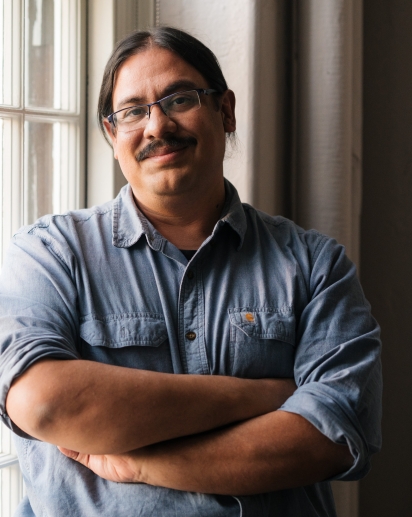
Rolando Coto Solano is an Assistant Professor of Linguistics at Dartmouth College , with an Adjunct Assistant Professor appointment in Computer Science and an Affiliate Professor role in the Quantitative Social Science Program (QSS) . He focuses on creating computational tools to document and revitalize Indigenous languages like Cook Islands Māori and Bribri. Education : PhD and MA in Linguistics from the University of Arizona; BA in Computer Science from the University of Costa Rica. Research Interests include: Natural Language Processing for Indigenous and Under-Resourced Languages Tonal Phonetics and Phonology, with a focus on tonal reduction Sociophonetics, particularly interisland variation in Cook Islands Māori Publication Trends show expertise in automatic speech recognition (ASR) for Indigenous languages, computational sociophonetics, tonal priming, and metadata standards in academic publishing. He collaborates on tools like Universal Dependencies treebanks and the ELPIS pipeline . Scientific Awards : Fulbright Foreign Student Program (Master’s Degree) National Science Foundation (NSF) Consultant Royal Society of New Zealand Marsden Fund Ship for World Youth Program (Office of the Prime Minister of Japan)
Professor Scott Palmer is a distinguished academic at the University of Leeds, serving as Professor of Light and Performance within the School of Performance and Cultural Industries (Faculty of Arts, Humanities and Cultures). With over 30 years of teaching and management experience in Higher Education, he was a founder member of the School in 2001 and has held numerous senior management roles including Interim Head of School, Director of Student Education (2019-2022), Director of Enterprise and Knowledge Transfer, and Programme Manager for BA (Hons) Performance Design for over a decade. In 2017-18, he was appointed to an Excellence and Innovation Fellowship at the Leeds Institute for Teaching Excellence & Innovation. PhD (Leeds) - Light, Scenography and the Choreography of Space Cert. Education (Manchester) BA Hons. Drama (Wales) Professor Palmer is a leading international advocate for scenography as an intellectual discipline. His research focuses on light, darkness and atmosphere in performance, designing for audience experience, and since 2017, the field of XR (Extended Reality). His influential monograph Light: Readings in Theatre Practice (Palgrave Macmillan, 2013) significantly contributed to establishing scenography as a scholarly field, exploring how light has influenced staging practices throughout history. He has co-edited major works including Scenography Expanded (Bloomsbury 2017) and the groundbreaking Contemporary Performance Lighting (2023), the first critical anthology focused specifically on performance lighting. His recent publications reveal evolving research trends from historical analyses of light in theatre to contemporary explorations of XR, immersive environments, and audience experience. Keywords across his work consistently emphasize scenography, audience experience, light design, and the integration of digital technologies in performance. His sub-field specializations span historical lighting techniques, immersive theatre practices, site-specific performance, 360-degree environments, and the theoretical frameworks connecting technological innovation with theatrical expression. Excellence and Innovation Fellowship at the Leeds Institute for Teaching Excellence & Innovation (2017-18) Research impact highlighted by AHRC as an exemplar case study Contributions to BBC Radio 3's Illuminating the Stage (broadcast December 25, 2017) Professor Palmer has supervised numerous PhD candidates and led collaborative student projects resulting in public performances including Pandora's Box (2009), Dream/Play (2010), Just Before Dawn (2011), Into the Dark (2012), Blood Wedding (2013), The Dreaming (2015), The Waiting Room (2017), and Within This House (2018). His research has been supported by significant grants including the AHRC-funded Projecting Performance (2006-08), UKRI-funded Surround Stories (XR Stories), and AHRC-funded Bridging the Gaps exploring Mixed Reality Performance of Chinese Opera. He plays an active role in international scholarly communities as co-convenor of the IFTR Scenography Working Group (2013-16), inaugural member of the TaPRA Scenography Working Group, and contributor to OISTAT Education and History and Theory Commissions. Professor Palmer is a member of the PLACE, Practice as Research, and Participation Research Groups at Leeds, and was co-instigator of the Leeds-based Performing Light Network. His SignalSpace web resource, developed with colleague Maria Kapsali, explores digital creativity and mobile phone applications in performance contexts. He regularly presents research outcomes at international conferences including IFTR, TaPRA, ICIDS, and ZipScene, demonstrating his commitment to advancing both theoretical understanding and practical applications of performance design.
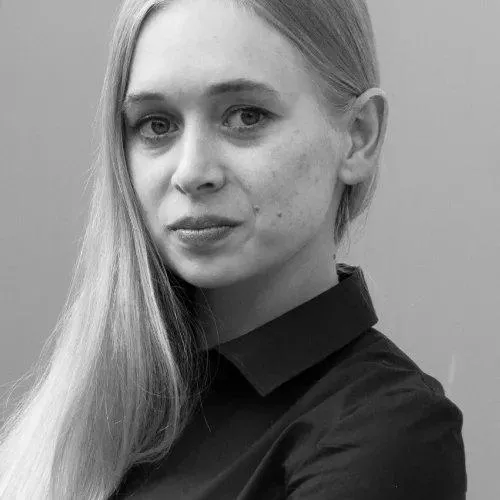
Dr. Kinga Blaschke is a Polish art and design historian, sociologist, and academic at SWPS University of Social Sciences and Humanities , where she serves as the Representative for International Affairs in the Interdisciplinary Faculty in Krakow. She is affiliated with the Department of Design Research and Art Theory and actively contributes to research on art historiography, sociology, and graphic design. Research Interests : History and theory of art and graphic design, propaganda in art during the communist era, myths in art history, and sociology of art and design. Her work explores how social issues manifest in visual arts and critiques ideological narratives in historical scholarship. Teaching : Courses at SWPS University include art history, sociology of art and design, and history of graphic design. Scientific Awards & Scholarships : Rev. Szczęsny Dettloff Award (2012) for outstanding art historical research Ministry of Science and Higher Education Scholarship (2005–2007) Robert Anderson Research Charitable Trust Scholarship (2011) Creative Scholarship from the Minister of Culture and National Heritage (2016) Notable Publications span medieval art, sacred architecture, and political ideologies in art history. Her 2024 works focus on typographic theory and cross-disciplinary historiography.
Fiona Bell, a literary translator and scholar from St. Petersburg, Florida, specializes in 19th-century Russian literature and gender studies. With formal education from Princeton, Oxford, and Middlebury, she integrates physical theater practices into her scholarship and teaching. Her work explores intersections of translation theory, cultural criticism, and creative reinterpretation. Education: M.A. in Russian, Middlebury Language Schools (2022) MSt in Modern Languages, Oxford University (2019) B.A. in Slavic Languages and Literatures, Princeton University (2018) Her research interests span Russian imperial histories of racialization, gender dynamics in literary translation, and physical theater pedagogy. Articles demonstrate her focus on radical translation practices, gendered narratives in Russian texts, and cross-cultural reinterpretations of canonical works. Her translations of Nataliya Meshchaninova and Avdotya Panaeva have garnered significant recognition. Scientific Awards: North American Dostoevsky Society Graduate Essay Competition Winner (2022) ASEEES Internship Program Grant (2022) PEN/Heim Translation Fund Grant (2020) English Teaching Assistantship Award, Russian Federation (2019-20) ALTA Emerging Translator Mentorship (2018-2019) As a reviews editor at Full Stop , she contributes to literary discourse through critical analysis of grief literature, postcolonial narratives, and contemporary translations. Her creative work merges Russian literary themes with humor, including satirical pieces on skincare and gendered absurdities in The Belladonna Comedy .
Elisabeth Dutton is a Full Professor at the University of Fribourg, affiliated with the Faculty of Letters and Human Sciences and the Department of English. Her work focuses on medieval literature, religious drama, and performance studies. University of Fribourg Faculty of Letters and Human Sciences Department of English Dutton's research explores the intersection of medieval visionary texts, multilingualism, and theatrical practices. She has published extensively on devotional compilations, manuscript studies, and the staging of religious drama in convents and academic institutions. Recent publications address creative translation in Swiss adaptations of Shakespeare, allegory in medieval drama, and feminist interpretations of historical plays. Her editorial collaborations include works on the N-Town plays, John Redford’s Wit and Science, and the influence of Augustine Baker on Julian of Norwich's manuscripts. Elisabeth Dutton has taught courses on medieval literature and drama, contributed to academic discourse through reviews in journals like Notes and Queries and Medium Aevum , and participated in podcasts discussing medieval convent drama and the N-Town plays. She is an active member of the academic community, co-editing special issues and conference proceedings.
Dr. Tullis Rennie is a Senior Lecturer in Music at City, University of London, where he teaches in the Department of Music. An accomplished composer, improvising trombonist, electronic musician, and field recordist, his work spans sound installation, community-engaged projects, multi-channel concert works, video, mixed media, and live performances. Dr. Rennie's academic background includes: PhD in Composition from Queen's University Belfast (2016) MusM in Electroacoustic Music Composition from the University of Manchester (2006) MusB (Hons) in Music from the University of Manchester (2005), where he received the Peter J Leonard prize for composition His research focuses on the intersection of sound art and ethnographic practice, exploring how musical composition can serve as a threshold between documentation and artistic expression. Dr. Rennie's work particularly examines: Ethnography in sound Music and Identity Narratives of Field Recording Sampling cultures Participative approaches to Sound Art Dr. Rennie's extensive publication record demonstrates a consistent exploration of the relationship between sound, community, and identity. His recent works increasingly focus on collaborative, community-engaged projects that challenge traditional hierarchies in sound art creation and consumption. His compositions and academic writings reveal a deep commitment to ethical considerations in field recording and a growing emphasis on distributed authorship in socially engaged sound practices. His notable achievements include: Receiving the Peter J Leonard prize for composition during his undergraduate studies Co-founding Insectotròpics, an award-winning audio-visual collective based in Barcelona Completing two residencies at the UFRJ in Rio de Janeiro (2013-14) As an educator and mentor, Dr. Rennie supervises research students including Jonathan Higgins and Gunseli Naz Ferel Ucar. His teaching and research are closely intertwined with his professional activities as a performer, having appeared with notable ensembles such as Anton Hunter's Article XI, Cath Roberts' Favourite Animals, and QUBe at prestigious venues including Café Oto, IKLECTIK, and Hundred Years Gallery. Dr. Rennie co-founded Walls On Walls with visual artist Laurie Nouchka, an ongoing collaborative research project creating participatory site-specific audiovisual installations with communities across London. He is also a founder member of Insectotròpics, an award-winning audio-visual collective based in Barcelona. These projects exemplify his commitment to community engagement and interdisciplinary collaboration.
Karen Jaime is an Associate Professor at Cornell University within the College of Arts and Sciences, jointly appointed in Performing and Media Arts and Latina/o Studies. An interdisciplinary scholar, her work bridges performance studies, queer studies, and Latinx studies to analyze racialized sexualities and aesthetics in Loisaida (Lower East Side) communities. Education: Ph.D., Performance Studies, New York University M.A., Performance Studies, New York University B.A., History and Spanish Literature, Cornell University Karen's research interrogates queer nightlife cultures, minoritarian aesthetics, and spoken word poetry as political acts. She explores how marginalized communities use performance to challenge norms and preserve cultural memory, particularly in Latinx and Afro-Caribbean contexts. Her award-winning monograph The Queer Nuyorican reclaims the Nuyorican Poets Cafe as a historically queer space. Other publications in journals like TSQ: Transgender Studies Quarterly and anthologies such as Flicker and Spark further expand these themes. Scientific Awards: 2023-2024 Schomburg Center Fellowship 2023 Cornell Faculty Champion Award 2022 Victor Villaseñor Best Latino Focused Nonfiction Book Award 2019-2020 Career Enhancement Fellowships Karen also curates courses like Nightlife and Performance Studies: Theories and Methods , emphasizing intersectional pedagogy. As a spoken word artist and co-editor of Memorias de Miguel , she actively bridges academia and community engagement.
Professor Alan Penn is a leading academic at University College London's The Bartlett School of Architecture , where he holds the title of Professor in Architectural and Urban Computing. He previously served as Dean of the Bartlett Faculty of the Built Environment from 2009 to 2019 and has been instrumental in establishing Space Syntax Ltd , a UCL knowledge transfer spin-out company. His affiliations include membership in the Space Syntax Laboratory, board membership of UCL Consultants Ltd, and trustee status at Shakespeare North Trust. Education: BSc (1978), Dip Arch (1980), MSc (1983) - all from University College London Alan Penn’s research investigates how spatial design influences social and economic behaviors through innovative space syntax methodologies . Key areas include: Agent-based simulations of human behavior Spatio-temporal representations of built environments Urban spatial network analysis Urban sustainability across multiple dimensions Cognitive markers in architectural design Historical urban growth modeling His recent publications demonstrate a strong focus on computational urbanism, evolutionary city patterns, and behavioral architecture. Research trends show interdisciplinary approaches combining architectural theory with: Machine learning applications Network science analysis Behavioral psychology insights Historical GIS techniques Complex systems modeling Public health considerations Scientific recognition includes: HEFCE Business Fellowship (2001-2005) KTP SE Region Award (2010) Multiple UCL Enterprise awards ‘Spirit of Enterprise’ Award (2008) As Principal Investigator he leads the £5m EPSRC-funded Urban Dynamics Lab , demonstrating sustained research excellence. His work extends to public engagement through: Shakespeare North Trust educational theatre development Media appearances (New Scientist, Slashdot) Public policy contributions
Brook Kennedy IDSA, NAI is a Professor in the School of Design at Virginia Polytechnic Institute and State University (Virginia Tech), specializing in Industrial Design. His research spans circular design, human health, alternative technology, biogenic materials, and biomimetic processes. As a 2025 National Academy of Inventors Senior Fellow, Kennedy has established cross-disciplinary relationships with biogenic material science faculty at the Technical University of Munich through a 2024 Global Visiting Professorship. His research interests focus on sustainable design solutions addressing global challenges. Kennedy explores how abandoned technologies can inform contemporary sustainability efforts, as evidenced by his 2023 Routledge publication Reimagining Alternative Technology for Design in the 21st Century . His work in fog harvesting materials has produced top-cited articles for Wiley-VCH and Elsevier, while his Lisbon Chair project develops biobased degradable polymers for furniture. The Fog Harp project, inspired by redwood tree needles, offers 10x greater water yield than existing fog collectors. 2025 National Academy of Inventors Senior Fellow Inductee Multiple international design awards including Red Dot Best of the Best, IDEA Gold, and European Product Design Awards Author of 176-page Routledge publication on alternative technology (2023) Co-inventor of 23+ US and foreign patents Widely covered in media including BBC, PBS Newshour, New York Times, and Smithsonian Kennedy maintains active industry collaborations, advising startups, NGOs, and companies like SC Johnson, OXO, and Nokero Solar. His Fog Harp project has been featured in the documentary Finite Water and exhibited at the Smithsonian. He teaches courses including Applied BioDesign, ID LAB, and Professional Practice, while leading Virginia Tech's BioDesign Research Group. His Macronaut smartphone loupe tool bridges design inspiration and tele-health applications, demonstrating his commitment to practical, human-centered solutions.
Katy Birch is a Lecturer in Nineteenth-Century Literature at the Department of English & Creative Writing, Aberystwyth University. Her research specializes in Victorian women's writing, particularly poetry, and editorial practices in periodicals like Punch magazine. PhD thesis examined feminist poets' use of Darwinian evolutionary imagery Currently developing a monograph on female contributors to Punch magazine Teaches undergraduate modules on Romantic and Victorian literature including The Mark of the Beast , Nineteenth-Century Literature , and Creative Practice Research Focus: Victorian women's writing, feminist poetry, Punch magazine contributions, and evolutionary theory intersections with literature. Her work contributes to understanding gender representation in historical periodicals and stereotype subversion. Publications: Recent works analyze New Woman writers' strategies in Punch , interspecies hierarchies in May Kendall's poetry, and deconstruct 'ugly suffragette' stereotypes. All publications demonstrate her expertise in combining literary analysis with feminist theory. Academic Engagement: Active in organizing periodical studies events and serving on the Research Society for Victorian Periodicals' digital committee.
Abigail Webster is a Lecturer at the Institute for Creative and Cultural Entrepreneurship (ICCE) at Goldsmiths, University of London. She teaches on the BA Arts Management programme, convening modules on cultural theory and audience studies. PhD in Visual & Material Cultures (viva pending, 2025), Northumbria University MA in Arts, Festival & Cultural Management, Queen Margaret University (2021) BA(Hons) in Painting, Edinburgh College of Art, University of Edinburgh (2015) Her research focuses on how administrative infrastructures in cultural organizations mediate power relations, particularly examining financial health metrics, equality and diversity mandates, and the gendered dynamics of cultural labor. She draws on Marxian feminist theory, critiques of neoliberal auditing, and historical analysis of colonial administration. Recent publications explore the impact of funding closures on freelance cultural labor and critical reflections on equality policies in the UK cultural sector. Her doctoral thesis, 'Politics of Administrative Infrastructures: Contemporary Art Organisations and the State in Scotland,' analyzes the role of the state in shaping cultural governance. Affiliations include the ICCE and its Creative Entrepreneurship Cluster, with active participation in academic symposia such as the BSA 'Work, Employment and Society' conference and the 'Social Production of Art' symposium at the University of Leeds.
Henry Kang is an Associate Professor in the Department of Computer Science at the University of Missouri–St. Louis, College of Arts and Sciences. His expertise spans computer graphics, data visualization, and computational art, with extensive experience in full-stack web development and programming frameworks. Education: Ph.D. in Computer Science, Korea Advanced Institute of Science and Technology (2002) Research Interests: Kang's work focuses on computer graphics, non-photorealistic rendering, and data visualization. Key projects include coherence-enhancing filtering, stereoscopic 3D line drawing, and emotion-driven image recoloring. He integrates machine learning and GPU computing for real-time scene navigation and artistic effects. Publication Trends: His research emphasizes texture filtering, computational art, and perceptual modeling. Recent work includes Gaussian image binarization (2021) and coherence-enhancing GPU filtering (2018), while earlier contributions explore stereoscopic depth perception (2013) and directional stippling (2011). Contact: Email: kangh@umsl.edu Phone: (314) 516-5841 Office: 318 ESH
Benjamin Lindquist is a Mellon Postdoctoral Fellow in the Department of History at Northwestern University , part of the Weinberg College of Arts & Sciences . He holds a Ph.D. from Princeton University (2023). His research bridges art history and the history of computing, examining how artistic concepts shaped early computer simulations of creativity and intelligence. Education: BFA, School of the Art Institute of Chicago MFA, Yale University School of Art PhD, Princeton University His research interests include the history of computing , history of science and technology , and 20th-century American history . He explores intersections between art, technology, and media through projects like analyzing speech synthesis technologies and visual culture. Affiliations: Science in Human Culture program at Northwestern. No explicit awards listed but actively publishes in top journals like Critical Inquiry . His work often critiques how technical systems reflect cultural values, as seen in his analysis of 19th-century media and religious iconography.
Lisa Bulawsky is a Professor of Art and Director of Island Press at Washington University in St. Louis, affiliated with the Sam Fox School of Design & Visual Arts. Her work focuses on print media, installation, and public art, exploring personal and collective histories. She has exhibited globally, including at the Yerba Buena Center for the Arts and the Corcoran Gallery of Art. Bulawsky earned a BA from UC Santa Cruz and an MFA from the University of Kansas. Her research interests include printmaking techniques, public art, and the intersection of art with cultural memory. Notable works include Portable Memories in Rising Seas (2018) and The Doubt of Being (unscathed) (2022). She has received grants such as the Washington University Transdisciplinary Incubator (2022) and the Sam Fox School Creative Activity Research Grant (2018). Awards: MacDowell Fellowship, Emerson Teaching Award, Founder’s Day Award Grants: Collaborations include projects with Ila Sheren and the Fifty-Fifty Art Collective Bulawsky has directed Island Press and contributed to academic programs like the MFA and BFA in Visual Art. Her work emphasizes transdisciplinary collaboration, as seen in her 2022 project Moving Stories .
Morag Morrison-Helme is an Associate Professor in Arts Education at the University of Cambridge, Faculty of Education. She serves as a Fellow and Director of Studies at St John's College and is a Tutor there. Morag also acts as a Trustee for the Eastern Learning Alliance in the UK. Her research focuses on experiential and embodied learning, applied theatre, conflict management, and transformative practices in education. She has conducted studies in England, Kazakhstan, Sweden, and China, emphasizing drama pedagogy's role in second language acquisition, peer teaching, and democratic education. Education: B.A. (Griffith University, Australia), Grad Dip Teach (Mt Gravatt CAE, Australia), M.A. (University of Sussex, UK), PhD (Griffith University, Australia) Morag’s publications and projects span drama education, healthcare training, and cross-cultural pedagogy, including leadership in the DRACON international research initiative. Her work bridges arts, teacher development, and social justice, with a focus on disaffected learners and gender equity. She has supervised doctoral students in topics ranging from moral education in China to ethical challenges in Alabaman schools and radiography training in Sweden. Her teaching includes courses on drama and creativity, PGCE Secondary, and MEd/PhD programs. Scientific Awards: Award from Sigma Theta Tau (2012) for contributions to Nursing Education in Sweden