Prof. Dirk Junker is a Professor at the Osnabrück University of Applied Sciences , Faculty of Agricultural Sciences and Landscape Architecture. He serves as Academic Coordinator for International Study Projects and Head of the Eye-Tracking Laboratory. Urban & Open Space Planning European City Morphology Perception-Based Design Research Focus: His work explores the intersection of urban design and public space through the lenses of European city patterns, modernist ideals, and sensory perception. Key themes include: City-body human spatial behavior Phenomenology of streets Intuitive planning methods Domestication of urban spaces Publications address topics like urban light rituals, post-war city transformations, and experimental housing models. He investigates the dual relationship between landscape and city, emphasizing the courtyard as a foundational urban element. Engagements: Co-founder of the Council for European Urbanism (Germany), Vice-Chair of the Friends of the Dominikanerkirche Art Hall, and advocate for alternative housing models through DAKSBAU cooperative in Dessau.
Prof. Helmut Grabner is a Professor at the Zurich University of Applied Sciences (ZHAW), leading the Visual Intelligence and Applications Group and the Entrepreneurship initiatives within the School of Engineering. His work bridges computer science, medical technology, and visual communication, with a focus on Extended Reality (XR), surgical training simulations, and AI-driven decision making. Education: PhD in Computer Science (Graz University of Technology, 2008), Master's in Computer Science (2008), and a Certificate of Advanced Studies in Higher Education (ZHAW, 2021). Prior to academia, he held roles including CTO at Logitech and co-founder of upicto, applying computer vision in industry and startups. Research spans augmented reality medical training tools, NMR spectrum analysis via deep learning, and understanding visual engagement in advertising. Awards include the prestigious Koenderink Prize (2018) for contributions to computer vision. Projects include Immersive Education frameworks, bias-mitigation in venture capital algorithms, and surgical proficiency measurement systems. Teaching includes courses on Visual Computing, Machine Learning, and Deep Learning. His work integrates academic research with practical applications in healthcare, education, and entrepreneurship.
Dr. Chris Chesher is a Senior Lecturer in Digital Cultures within the Discipline of Media and Communications at the University of Sydney's Faculty of Arts and Social Sciences. He co-founded both the Digital Cultures program and the Master of Digital Communication and Culture at the University. Previously, he served as a senior lecturer in the School of Media and Communications at the University of New South Wales. His academic career spans interdisciplinary research at the intersection of digital media, cultural studies, and technology. Dr. Chesher's educational background includes: PhD from Macquarie University Master of Arts (Interdisciplinary Studies) from the University of New South Wales Bachelor of Arts (Media and Communications) from Mitchell CAE (now Charles Sturt University) Dr. Chesher's research adopts a transdisciplinary approach connecting digital cultures, media studies, and cultural studies with philosophy of technology, science and technology studies, games studies, internet studies, sociology of technology, human-computer interaction, social robotics, cultural robotics, and digital humanities. His work challenges conventional understandings of human-machine relations and explores the cultural implications of emerging technologies through projects on robotics beyond anthropomorphism, invocational media theory, and smart urban environments. His recent publications reveal a strong thematic focus on robotics, AI, and digital media theory, with particular attention to non-anthropomorphic approaches to social robotics, invocational media theory, and smart urban environments. The publications demonstrate his consistent engagement with how digital technologies reshape human experience, social relations, and spatial understanding across multiple domains including banking, restaurants, street furniture, and home environments, reflecting both theoretical depth and practical relevance. Dr. Chesher has received recognition for his teaching excellence: 2023 - University of Sydney Faculty of Arts and Social Sciences Teaching Innovation Award As an academic supervisor, Dr. Chesher has guided multiple PhD candidates to completion across diverse topics including digital gambling, game items in digital environments, user regulation on Facebook, and climate change visualizations. His grant history demonstrates sustained research funding, including the Australia-Korea Partnership on Mobile Robot Development in Public Space (2019), Public Forum on Urban Robots and the Future City (2018), and Everyday Social Media Network (2014), highlighting his leadership in collaborative, interdisciplinary research initiatives. Dr. Chesher is actively involved in collaborative research through the Sydney Institute for Robotics and Intelligent Systems (SIRIS) at the University of Sydney, where he contributes to projects examining the cultural dimensions of robotics and AI beyond anthropomorphic frameworks, bridging technical innovation with critical cultural analysis.
Mario Dancso is an academic and artist specializing in jazz guitar and music education, currently serving as lecturer at JAM MUSIC LAB Private University for Jazz and Popular Music since 2017, and concurrently teaching at the Friedrich Gulda School of Music. He holds an artistic diploma from the Vienna Conservatory (2004) and completed additional teaching roles at the Prayner Conservatory (2016-2020), focusing on Jazz/Pop Guitar instruction and songwriting. His pedagogical focus includes arrangement techniques and home recording methodologies. His artistic work spans theater direction, documentary filmmaking, and musical composition. Notable projects include the 2004 theater production Das Leben des Francois Villon and documentaries like Spuren im Sand (2005) and Feuchtwanger lebt! (2008). His filmography demonstrates expertise in cultural documentation across diverse topics like African cultural history and luxury industry narratives. Professional compositions have been commissioned by major brands including Gebrüder Weiss, Emirates, and Vier Pfoten. His creative output reflects a multidisciplinary approach blending music, theater, and visual media.
Timo Fleischer is an Associate Professor in the Chemistry Didactics Working Group at the University of Salzburg, affiliated with both the Faculty of Natural and Life Sciences and the School of Education. He leads key educational innovation projects including EXBOX-Digital, ChemGerLab-VR, and RECC Salzburg, and plays a significant role in digital science education development. Education: Bachelor of Science in Geography and Chemistry, University of Kiel (2011) Master of Education in Geography and Chemistry, University of Kiel (2013) PhD in Science Education, TUM School of Education (2017) Habilitation in Chemistry Didactics, University of Salzburg (2024) His research focuses on the effectiveness of digital media in teacher education and chemistry classrooms, the development of digital teaching and learning materials, and the integration of experimentation and modeling in science education. He is particularly interested in how digital tools support the learning of chemical language and representations. His work bridges educational theory and practical classroom innovation. His recent publications demonstrate a strong emphasis on digital scaffolding, augmented and virtual reality in chemistry labs, eye-tracking during experiments, and the use of fiction as an anchor in science teaching. These works reflect a trend toward immersive, technology-enhanced, and student-centered learning environments in science education. Scientific Awards: Ehrenurkunde Polytechnik-Preis 2022 – Projekt EXBOX-Digital Kulturfondspreis 2020 für das Projekt MINT:labs Science City Itzling Comenius-EduMedia-Siegel für EXBOX-Digital (2020) Qualitätslabel „Regional Educational Competence Centre“ (RECC) (2018–2021) Junior-Fellowship, Kolleg Didaktik:digital (2016–2017) Timo Fleischer has supervised various research projects and collaborated with numerous colleagues and students, though specific advisees are not listed. He has secured recognition and funding for initiatives such as EXBOX-Digital and MINT:labs, indicating successful grant acquisition. He is actively involved in teacher training, curriculum development, and science communication. He leads several innovative labs and teams, including ChemGerLab-VR (a virtual reality chemistry lab), EdTechAll, and the development of MINT:labs Science City Itzling. These initiatives focus on creating digital, hands-on, and inclusive science learning environments for both students and teachers.
Concepción Saiz García is an Associate Professor in the Department of Civil Law at the Faculty of Law, University of Valencia. She is actively engaged in research within the INTERBIDE Biolaw: Interdisciplinary Research Group and the GIPI Group for R+D in Intellectual Property. Her academic profile reflects a strong commitment to intellectual property law, civil law, and the legal challenges posed by emerging technologies. Her research interests lie at the intersection of law, technology, and digital innovation, with a particular focus on intellectual property , copyright , artificial intelligence , 3D printing , moral rights , and the European digital single market . She explores how legal frameworks adapt to new forms of creation and dissemination, especially in educational, artistic, and scientific contexts. The analysis of her recent publications (2021–2024) reveals a consistent engagement with contemporary legal challenges, particularly the impact of AI on authorship, the regulation of digital content access, and the protection of creators' rights in evolving media landscapes. Her work combines doctrinal analysis with practical implications for creators, educators, and policymakers. Her scientific contributions include numerous articles and co-edited volumes, but no formal scientific awards are mentioned in the provided text. She has supervised doctoral research, including co-directing a 2019 volume on intellectual property and the European digital single market, indicating her role in academic mentorship. While no specific grants are listed, her sustained research output suggests active participation in funded projects. She is a key member of two research groups: INTERBIDE, focusing on biolaw, and GIPI, dedicated to intellectual property innovation.
James Wright is a Professor in the School for Studies in Art and Culture at Carleton University’s Faculty of Arts and Social Sciences. He holds a Ph.D. from McGill University and is a distinguished scholar and composer with a focus on music philosophy, aesthetics, film music, 20th-century music, and post-tonal theory. His research and creative work bridge academic and artistic domains, with international recognition for both scholarly publications and musical compositions. Ph.D., McGill University Dr. Wright’s research interests include music philosophy and aesthetics, music perception, film music, 20th-century music history, post-tonal analysis, dance and music, and the history of music theory. His interdisciplinary approach connects music with philosophy, literature, visual art, and cultural studies. He has published extensively on Schoenberg, Wittgenstein, and Canadian composers like Eldon Rathburn, exploring the intersections of music, identity, and modernity. His recent creative and scholarly works span books, edited volumes, and compositions. Notably, his 2022 co-edited volume Monstrosity, Identity, and Music examines music in horror and speculative media, while his 2023 string quartet Ellen at Scattergood received the 2022 Petrichor Prize. His compositions have been performed globally and recorded by ensembles such as the Gryphon Trio and Quatuor Andara. He has also composed choral works, art songs, and pieces inspired by Canadian art and social themes. Governor-General’s Gold Medal, McGill University Lewis Lockwood Award, American Musicological Society 2022 Petrichor Prize for Composition University of Toronto Louis Applebaum Distinguished Visiting Professor in Composition (2019) James Wright has hosted major academic events, including the international conference “Music and Antifascism,” and his works have been featured in CBC Music, Fanfare Magazine, and international performances. He teaches courses in Western music history and mentors emerging musicians. He is also active in community music initiatives, including collaborations with youth choirs and educational programs. Dr. Wright leads creative projects that integrate music with dance, visual art, and social commentary. His work A Gallery of Song was choreographed and performed at the National Gallery and National Arts Centre, reflecting his commitment to interdisciplinary collaboration. He continues to compose and publish, with upcoming works such as What Angels See (2025) for cello and piano.
Andrew Russell is a Lecturer at the School of Film, Media and Creative Technologies, University of Portsmouth. His research focuses on cross-cultural representation in global cinema, particularly examining Western portrayals of Southeast Asia and the evolution of transnational film genres. PhD in Film Studies (University of Portsmouth, 2021) Research Interests include: Postcolonial media analysis Japanese cinema and Takashi Miike's filmography Representation of Thailand in Hollywood Critical race theory in entertainment media Slow cinema movement Recent publications analyze: Exoticization patterns in contemporary screen media Racial stereotyping in WWE's entertainment model Intercultural dynamics in transnational filmmaking Temporal aesthetics in global cinema trends Active in academic service through journal peer-reviewing for Transnational Screens and conference participation in film genre studies. His doctoral thesis explored the duality of Thailand's cinematic representation in both Western and local film traditions.
Angela Viora is a Lecturer in European Languages at Monash University, Faculty of Arts, within the School of Languages, Literatures, Cultures and Linguistics. She specializes in Italian Studies, integrating language education with interdisciplinary research in performance, migration, and art. Her teaching spans Italian language, culture, and European studies, and she actively contributes to curriculum innovation, particularly in decolonizing language education. She is based in Melbourne, Australia, and holds a PhD from Monash University in Theatre and Performance. PhD in Theatre and Performance, Monash University (2019) MA in Visual and Performing Arts, Accademia Albertina di Belle Arti di Torino (2012) Academic Diploma (Hons) in Fine Arts and Art History, Accademia Albertina di Belle Arti di Torino (2007) Her research centers on performance studies, migration, embodiment, and space, with a strong emphasis on practice-as-research. She explores identity, belonging, and the socio-political dimensions of art through site-specific and socially engaged performances. Her creative work often addresses the Italian diaspora, domestic space during lockdowns, and the body as a political and emotional site. Her recent publications and artistic outputs show a consistent focus on interdisciplinary performance, pedagogical innovation, and migration narratives. The 2025 monograph The Ecology of the Performance Art Process synthesizes years of practice-led inquiry into fragmentation, union, and reconfiguration in art. Other works like The P.R.omised Land and B.O.D.Y. The Bureau of Domestic Yearning reflect on migration and domesticity through embodied performance. ACIS Publishing Grants Scheme Award (2024) Decolonising and Indigenising European Languages at Monash University: Professional Development of Educators (2024) LLCL Education Funding - Recruiting and retaining students in European Languages (2024) Angela Viora supervises PhD students and is an active researcher in multiple collaborative projects, including the PhotoVOICE initiative with Monash and the University of Padua. She is a member of the Brimbank Arts Advisory Committee and participates in working groups focused on student engagement and decolonizing curricula. Her artistic projects often involve community collaboration and public engagement, reflecting her commitment to socially responsive scholarship.
Cecilio Angulo Bahón is a full Professor at the Polytechnic University of Catalonia (UPC), affiliated with the Barcelona School of Industrial Engineering (ETSEIB) and the Department of Systems, Automatics and Industrial Informatics Engineering . He leads research in Artificial Intelligence and Robotics , with significant contributions to healthcare data analytics, digital twins, and human-robot collaboration. His research spans machine learning for medical data harmonization, generative adversarial networks in health informatics, and evolutionary algorithms for control systems. Recent publications focus on synthetic healthcare data generation, climate-resilient agriculture , and UMAP-based data analysis . His work bridges AI theory with practical applications in industrial and healthcare domains. Scientific awards include the Sant Jordi 2023 Digital Polytechnic Initiative Award . He has supervised doctoral candidates like Carlos Flores-Vázquez and N. Raya, with key collaborations at the IDEAI-UPC Intelligent Data Science and AI Research Group and the Institute of Robotics and Industrial Informatics (CSIC-UPC).
Joanne Morra is Professor of Art and Culture at University of the Arts London , specifically Central Saint Martins. She has dedicated 25 years to teaching fine art students and pioneering research at the intersection of art, psychoanalysis, and feminist theory . Her editorial work includes founding the Journal of Visual Culture and co-founding Parallax . PhD, University of Leeds MA, University of Leeds MA, University of Toronto BA Hons, University of Toronto Joanne’s research explores psycho-social dimensions of art , focusing on: Psychoanalytic practices in contemporary art Site-responsive and autobiographical art Art’s role in mental health and political discourse Transdisciplinary collaborations between art and therapy Her recent publications and conferences (2017-2021) examine: Intimacy, trauma, and transference in art Memory reconstruction and institutional critique Psychoanalytic techniques like potential space and afterwardsness Auto-theoretical/-historical/-fictional methodologies Research funding includes grants from Leverhulme Trust, Arts Council England, and SSHRC Canada . She supervises PhD candidates in topics ranging from feminist horror art to participatory intimacy. Her collaborative projects include Intimacy Unguarded and Creative Practices and Wellbeing networks.
Mara Scanlon is a Professor of English at the University of Mary Washington , with a focus on poetry, literature of the First World War, ethics and literature, women's studies, digital humanities, and modern poetry . Her academic journey began with a B.A. from the University of Virginia and continued with M.A. and Ph.D. from the University of Wisconsin-Madison . Education: B.A., University of Virginia M.A., Ph.D., University of Wisconsin-Madison Scanlon’s research explores dialogic poetry, ethical engagement in literature, and the intersection of digital humanities with literary tourism . Her published works analyze topics such as gender identity in Rebecca West’s The Return of the Soldier , Bakhtinian theory in H.D. and Walcott , and postcolonial identity in Sara Suleri’s Meatless Days . Recent publications include an investigation into Walt Whitman’s influence on digital age tourism and a reevaluation of beauty in Mary Borden’s World War I poetry . Her scholarship has appeared in The Journal of Modern Literature, College Literature, and World Literature Today , among others. Scientific Awards and Grants: Scanlon has received the Donald Glover Award for Excellence in Teaching in English (2021-2023) and the Grellet C. Simpson Award for Excellence in Undergraduate Teaching (2014) . She co-edited a National Endowment for the Humanities (NEH) grant for the Looking for Whitman digital humanities project.
Dr. George Fitzmaurice is a Research Fellow at Autodesk, leading the Human Computer Interaction and Visualization Research group. With over 120 publications and 95 patents, his work spans 25 years of innovation in interactive systems, focusing on technology-assisted learning , 3D visualization , and novel input techniques . His notable contributions include the Maya 1.0 UI and SketchBook Pro design, as well as pioneering Graspable UIs and Spatially-Aware Displays . Education : MIT (B.Sc. Math/CS), Brown (M.Sc. CS), Toronto (Ph.D. CS) His research explores immersive visualization and generative AI applications in design workflows, with recent work focusing on VR/AR tools like TimeTunnel for motion editing and WhatIF for AI-assisted narrative design. Current projects examine the intersection of large language models , 3D design systems , and collaborative environments . Key article themes include: Generative AI integration (3DALL-E, WorldSmith) Immersive motion analysis (AvatAR, VideoPoseVR) Creative workflow optimization (MoodCubes, Immersive Sampling) Privacy-aware VR systems (Vice VRsa) Scientific Recognition: 2019 - Inducted into ACM CHI Academy 2024 - Awarded ACM Fellow for computing contributions He has developed foundational interaction techniques like ViewCube™ and SteeringWheels™ , and his work continues to shape modern 3D UI paradigms and spatial computing approaches through projects like DreamSketch and Tesseract.
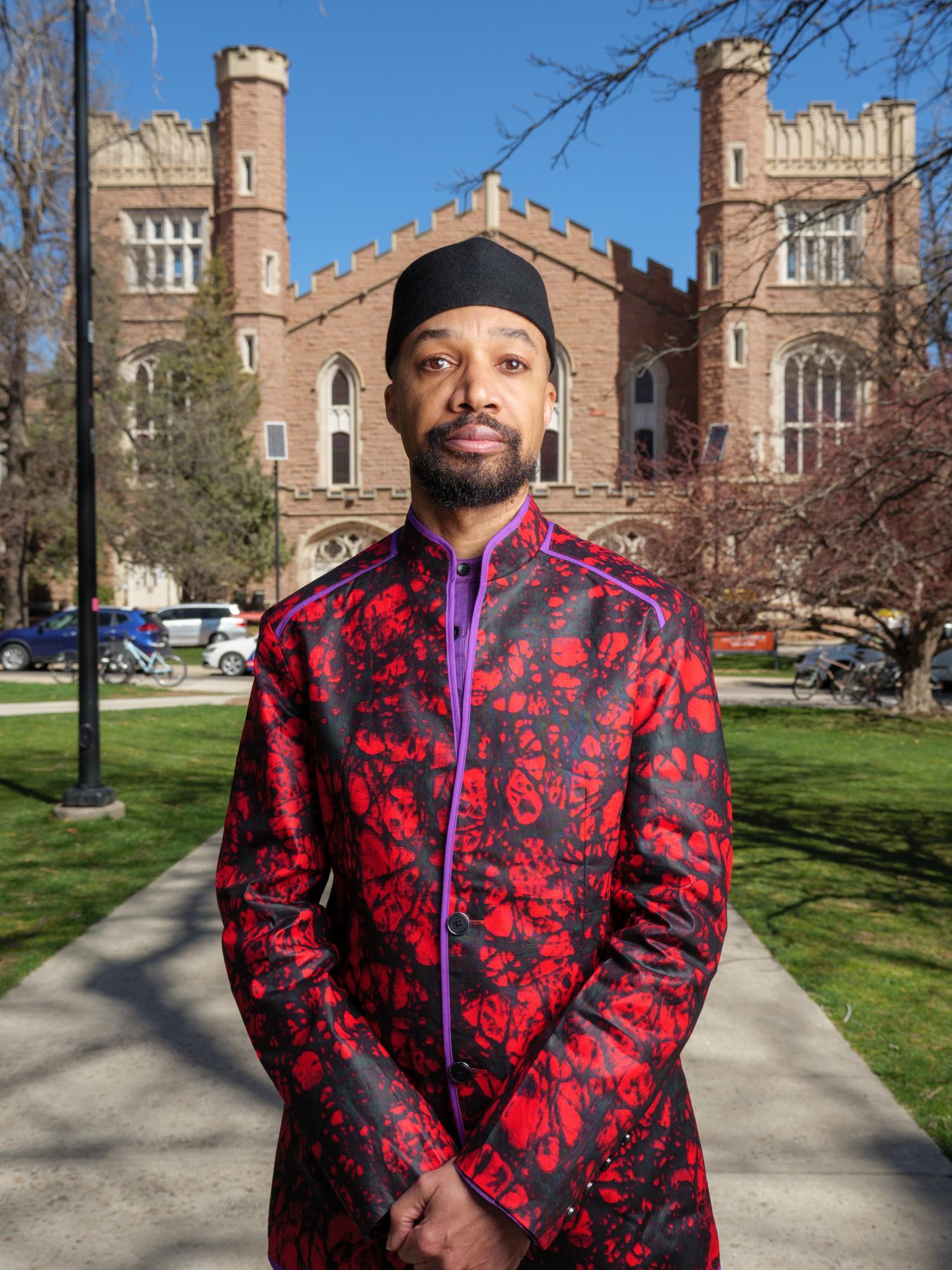
Reiland Rabaka serves as Professor of African, African American, and Caribbean Studies in the Department of Ethnic Studies at the University of Colorado Boulder's College of Arts and Sciences. He is Founder and Director of the Center for African & African American Studies and holds a Research Fellowship at the University of South Africa (UNISA). His academic leadership spans critical race scholarship, Africana studies, and decolonial theory. Rabaka's research focuses on African and African American history, politics, and social movements , with specialized expertise in Black feminist theory, Black sexuality studies, and Black popular music . His work bridges critical race theory with decolonial frameworks, examining cultural production as resistance across eras from the Civil Rights Movement to contemporary hip hop. Key contributions include reconstructing Du Bois's intersectional sociology and analyzing music as liberation praxis. His 19 books and 100+ publications reveal consistent engagement with W.E.B. Du Bois's theoretical legacy Black radical traditions Music as political expression Decolonial epistemologies Recent works like The Funk Movement (2025) demonstrate evolving focus on gendered cultural production within liberation movements. Scientific recognition includes: National Endowment for Humanities/Arts/Science funding Eugene M. Kayden Book Award Cheikh Anta Diop Book Award National Council for Black Studies’ Distinguished Career Award Rabaka's media presence spans NPR, BBC, CNN, and The New York Times , translating scholarship into public discourse. His community engagement includes distinguished teaching awards and service citations, while his creative work as poet and musician informs his interdisciplinary approach to Black cultural studies.
Monika Milewska is an Adjunct Professor at the Division of Polish Ethnology and Anthropology of History within the Faculty of History, University of Gdańsk. A scholar of history and anthropology, her work bridges academic rigor with literary creativity, focusing on traumatic historical experiences, political myths, and ideological constructions. University of Warsaw (PhD in History, 2000) School of Social Sciences, Polish Academy of Sciences (2000) École des Hautes Études en Sciences Sociales, Paris (1996-1997) Her research interrogates the anthropology of history , particularly the French Revolution and Napoleonic era , through lenses of totalitarian ideology , personality cults , and political mythology . Recent publications explore symbolic representations of power, state-controlled narratives, and the cultural underpinnings of historical trauma. Milewska's scholarly output intersects with her literary achievements. Her radio play Podróż na Księżyc received Sopot Festival's Grand Prix (2015), while the novel Latawiec z betonu won the Pomeranian Literary Award 'Wiatr od morza' (2019). She has held prestigious scholarships from the Mellon Foundation, French government, and the Polish Ministry of Culture. Fellow, American Academy in Rome POLITYKA scholarship recipient Nike Literary Award nominee Over twenty poetry/drama competition laureate Milewska operates at the intersection of historical anthropology and literary historiography , producing works that simultaneously analyze and embody the cultural mechanisms she studies.