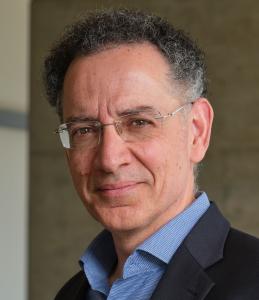
Professor Dimitris Drikakis serves as Vice President for Global Partnerships at the University of Nicosia, Cyprus, and holds a joint professorship in the School of Sciences and Engineering. His academic career spans over 24 years, including roles as Executive Dean and Head of Department at UK universities. His research focuses on fluid dynamics, acoustics, computational science, and nanotechnology, emphasizing uncertainty reduction and physics-based modeling. He has co-authored two books, published over 400 papers, and graduated 45 PhD students globally. Research interests include super-resolution fluid flow analysis, machine learning applications in turbulence simulation, and computational methods for aerodynamics and heat transfer. His work on indoor aerosol transmission and epidemiological modeling has addressed pandemic-related challenges. He serves on editorial boards for journals like Computers and Fluids and Physics of Fluids . Recent articles highlight advancements in deep learning for fluid-structure interaction, shock-wave predictions, and AI-driven thermal optimization. His contributions bridge computational science with real-world engineering and public health applications.
Ioanna Vekiri is an Assistant Professor at the Department of Education Sciences, European University Cyprus, focusing on STEAM Education and Educational Technology. She holds a PhD in Education from the University of Michigan and has been affiliated with institutions like the Hellenic Open University and University of Thessaly. Her research emphasizes gender equity in technology use, transversal competences in education, and inclusive pedagogies for deaf students. She has contributed to projects like FemSTEAM Mysteries (a game-based approach for gender equality) and ImTech4Ed (immersive technologies in education). Education: PhD in Education (Educational Technology), University of Michigan (2001) M.A. in Educational Communications and Technology, New York University (1995) B.A. in Elementary Education, Aristotle University of Thessaloniki (1992) Research Interests: Her work spans STEAM pedagogy , gender equity in STEM , ICT integration in education , and inclusive learning strategies for deaf students . She designs evidence-based interventions to bridge socioeconomic and gender gaps in technology access and literacy. Awards: Rackham One-Term Dissertation Fellowship (2001) Fulbright Scholarship (1993) School of Education Academic Merit Scholarship, NYU (1993–1994) Grants & Projects: ImTech4Ed: Immersive Technologies for Education (Erasmus+, 2021–2023) FemSTEAM Mysteries (Erasmus+, 2020–2022) Deaf literacy interventions (University of Thessaly, 2003–2008) Her contributions include advisory roles at journals like Computers & Education and involvement in international conferences like CSEDU. Labs/Teams: Active in the design of digital game-based learning tools (e.g., FemSTEAM Mysteries) and immersive educational technologies through collaborative projects with EU initiatives.
Dr. George Gregoriou serves as Associate Professor at the Department of Engineering, School of Sciences and Engineering, University of Nicosia, where he also holds the position of Academic Vice President for Regulatory Affairs at the Rectorate and is a Member of the Senate. His educational background includes a BSc (Summa Cum Laude) in Electrical Engineering from the University of South Alabama (1986), and MSc and PhD degrees in Electrical Engineering from Drexel University (1992). His early career included positions as Research Assistant Professor at Drexel University (1992-1993) and Post-doctoral Research Associate at the University of North Carolina at Chapel Hill (1993-1995). Dr. Gregoriou's research spans multiple domains in engineering and healthcare technology, with recent focus on RFID systems for healthcare applications. His work bridges signal processing, medical imaging, and educational technology, demonstrating strong interdisciplinary capabilities. He has published extensively in IEEE journals and conferences, particularly in nuclear medicine imaging and wireless healthcare systems. His research publications show a clear evolution from foundational work in medical imaging and signal processing toward applied healthcare technology solutions, particularly RFID systems for hospital environments. Recent publications demonstrate practical implementations of wireless technologies in real healthcare settings with emphasis on system design, installation, and evaluation metrics. Senior Member, IEEE Senior Member, IEEE Computer Society Senior Member, IEEE Signal Processing Society Senior Member, IEEE Communication Society Senior Member, IEEE Engineering in Medicine and Biology Society Dr. Gregoriou has secured significant research funding as co-investigator on five research grants totaling over €5 million from the National Institutes of Health and Cyprus Research Promotion Foundation. He served as national delegate for COST B21 action on Physiological Modeling of MR Image Formation and has reviewed for prestigious IEEE conferences including the International Conference on Electronics, Circuits, and Systems. His work contributes to Sustainable Development Goal 3 (Good Health and Well-being) through healthcare technology innovations.
Professor Ioanna Dionysiou is a faculty member at the University of Nicosia, serving as a Professor of Computer Science in the School of Sciences and Engineering and holding the Associate Head of Department title. She is also a Member of the Senate and co-directs the Informatics Security Laboratory (ISL). PhD in Dynamic and Composable Trust (Washington State University, 2006) MSc and BSc in Computer Science (Washington State University, 2000 and 1997) Diploma in Computer Science (Higher Technical Institute, 1994) Her research focuses on trust modeling in collaborative environments, data privacy, active defense mechanisms, and cybercrime mitigation. Current projects include privacyTracker (data traceability), HoneyCY (honeypot systems), and BeWiser (wireless security frameworks). She has contributed to the Bologna Process re-engineering through ReProTool and MapQFTool. Recent publications explore blockchain-IoT integration for big data, neural network comparisons for location-based security analysis, and cloud computing risk frameworks. ISL research emphasizes intuitive cyberattack visualization, ISO 27001 standards, and multi-disciplinary security practices. Scientific leadership roles include: Vice-president of ACM Cyprus chapter Cyprus ECSC Advisory Board member Active participant in European Cyber Security Challenge Conference organizer and program committee member She has supervised multiple MSc and undergraduate students in security-related research while maintaining active collaborations in local and European projects.
Dr. Ahmet İLHAN serves as a full-time Lecturer in the Department of Computer Engineering at Near East University, where he has maintained continuous academic affiliation since completing his bachelor's degree in 2014. His educational trajectory includes: Primary Education: Yakın Doğu Elementary School (2003) Secondary/High School: Yakın Doğu College (2010) Bachelor's: Computer Engineering, Near East University (2014) Master's: Computer Engineering with Image Processing thesis (2016) Doctorate: Completed 2022 Specializing in visual computing domains, Dr. İLHAN's research centers on Image Processing and Computer Vision techniques. His doctoral work generated 15 scientific publications advancing digital image analysis methodologies, reflecting a sustained focus from his master's thesis through PhD completion. This specialization bridges theoretical computer engineering with practical applications in visual data interpretation systems. Since 2014, he has progressed from research assistant to full-time lecturer within Near East University's Computer Engineering department, demonstrating institutional continuity through all academic milestones without external appointments or part-time engagements.
Dr. Lilia Psalta is an Assistant Professor in Psychology and Course Leader of the MSc Forensic Psychology program at UCLan Cyprus. She holds a PhD in Cognitive Neuroscience from the University of York (2013) and is currently a PhD candidate in Clinical Psychology at the University of Cyprus. Her research focuses on cognitive neuroscience mechanisms of visual perception and forensic applications including cybercrime, offender neurobiology, and therapeutic interventions. Education: PhD Cognitive Neuroscience, University of York (2013) MSc Cognitive Neuroscience, University of York (2011) B.A Psychology, Spalding University (2003) Research emphasizes: Brain mechanisms of face/body perception Risk assessment methodologies Cyber-offending behaviors (revenge-porn, online harassment) Therapeutic effectiveness in offender treatment Her work has contributed to understanding neural processes in visual perception through fMRI studies and has addressed occupational stress in firefighters. Administrative roles include Senate membership and Erasmus coordination at UCLan Cyprus.
Chrysanthou Yiorgos is a Professor in the Department of Computer Science at the University of Cyprus. He holds a B.Sc. in Computer Science and Statistics (1990) and a Ph.D. in Computer Science (1996) from Queen Mary and Westfield College, University of London, UK. His professional experience includes roles as a Research Fellow (1996–1998) and Lecturer (1998–2001) at University College London. Research interests focus on Computer Graphics, encompassing real-time rendering techniques, visibility optimization, crowd simulation, and applications of virtual/augmented reality to cultural heritage preservation. He has served as Program Committee Co-Chair for VAST 2004 and ACM VRST 2005. No scientific awards or grants are explicitly listed in the provided text. His academic contributions are centered on advancing interactive graphics and heritage visualization.
Dr. Timotheos Papadopoulos is a Professor of Psychology at the University of Cyprus and founding member of the Center for Applied Neuroscience. He holds a PhD in Educational Psychology from the University of Alberta, Canada, and has held visiting professorships at universities in Norway, Canada, the UK, Finland, China, and elsewhere. His research focuses on neurodevelopmental disorders, particularly specific learning disabilities and attention deficit disorders, with an emphasis on cognitive intervention through digital media. He has secured over €10.5M in research funding, including leading the €4M EU MSCA ITN Neo-PRISM-C program (2019–2023). Key roles include Vice President (2012–2014) and President (2014–2016) of the University of Cyprus Psychology Department, and Member of the University Senate. Research Interests: Neurodevelopmental disorders, cognitive intervention programs, executive functions in ADHD, neurocognitive development, and cross-linguistic reading studies. His work spans EEG/eye-tracking studies, machine learning applications in neuroscience, and policy-driven educational interventions. Publications & Awards: Over 120 articles/chapters, including high-impact journals like Development and Psychopathology and Clinical Neurophysiology . Notable awards include the Cyprus 'Distinguished Researcher' (2019) and IARLD Fellow (2024). His research bridges cognitive science, education, and clinical practice, with international collaborations in Europe, North America, and Asia. Grants & Collaboration: Principal investigator in projects funded by EU Horizon 2020, Canadian SSHRC, and Cypriot agencies. Collaborations include the Hungarian Academy of Sciences Brain Imaging Center and the Multilingual Eye-Movement Corpus (MECO) initiative. Active in policy advising through roles like Cyprus National Representative for COST Action MultiplEYE. Labs & Teams: Heads the Center for Applied Neuroscience at UCY, leading multidisciplinary teams in neuroimaging, computational modeling, and educational technology. Current projects focus on AI-driven cognitive interventions and neurodevelopmental disorder diagnostics.
Demetris Zeinalipour is a Professor of Computer Science at the University of Cyprus, where he founded and directs the Data Management Systems Laboratory (DMSL). He holds a Ph.D. (2005) and M.Sc. (2003) in Computer Science and Engineering from the University of California - Riverside, CA, USA and a B.Sc. in Computer Science from the University of Cyprus (2000). His career includes research positions at Akamai Technologies, University of Athens (as a Marie-Curie Fellow), University of Pittsburgh, and the Max Planck Institute for Informatics (as a Humboldt Fellow). He is an ACM Distinguished Speaker (2017-2020), a Senior Member of ACM and IEEE, and serves on the editorial boards of ACM Transactions on Spatial Algorithms and Systems and Distributed and Parallel Databases. His primary research spans Data Management in Computer Systems and Networks, with expertise in Mobile, Sensor and Spatio-Temporal Data Management; Big Data Management in Parallel and Distributed Architectures; Network, Blockchain and Telco Data Management; Crowd, Web 2.0 and Indoor Data Management; Data Privacy Management; Data Management for Sustainability; and AI and Data Management. His work bridges theoretical foundations with practical applications, resulting in numerous systems including Anyplace Indoor Information Service, ChatUCY, GreenCap, EcoCharge, and Triabase. His research has evolved from early work in sensor networks to current focus on sustainable computing applications addressing climate change challenges. Professor Zeinalipour's publication record shows a strong trajectory toward sustainability-focused data management, with recent work on energy management for smart homes, electric vehicle charging, and solar self-consumption. His research integrates multiple disciplines including spatial databases, mobile computing, IoT systems, and blockchain technologies, with increasing emphasis on addressing real-world environmental challenges through computing solutions. Scientific Recognition IEEE ICDE'24 Outstanding Reviewer Award IEEE MDM'21 Best App Paper Award IEEE MDM'18 Best of MDM Award and Best Demo Award Humboldt Fellow (2016) ACM Distinguished Speaker (2017-2020) ACM and IEEE Senior Member status He has advised numerous PhD students and postdocs, many of whom have established successful careers in both academia and industry. His laboratory maintains strong industry connections and contributes to open-source development. Professor Zeinalipour is deeply committed to addressing real-world challenges through computing research, with recent work focusing on climate change mitigation and sustainable energy management solutions.
Daniel Cohen-Or is a Professor at the Department of Computer Science, Tel Aviv University, and an Adjunct Professor at Simon Fraser University since 2016. He holds the Isaias Nizri Chair in Visual Computing . His academic background includes a B.Sc. and M.Sc. from Ben-Gurion University (1985-1986) and a Ph.D. from SUNY Stony Brook (1991). Research Interests: Focused on Computer Graphics, Visual Computing, and Geometric Modeling , with a current emphasis on generative models and their applications in 3D shape manipulation, image editing, and diffusion-based techniques. Scientific Awards: Eurographics Outstanding Technical Contributions Award (2005) ACM SIGGRAPH Computer Graphics Achievement Award (2018) Thomson Reuters Highly Cited Researcher (2015) Kadar Family Award (2019) Eurographics Distinguished Career Award (2020) People’s Republic of China Friendship Award (2012) Notable Contributions: Co-edited A Sampler of Useful Computational Tools for Applied Geometry, Computer Graphics, and Image Processing . His work spans 3D reconstruction, texture synthesis, shape modeling, and semantic image editing, with a focus on leveraging deep learning frameworks like StyleGAN and NeRF. Advising: Mentoring numerous students and postdocs, including Or Patashnik, Yuval Alaluf, and Ron Mokady, with a strong presence in both current and former advisees .
Anastasis Stephanou is a Professor in Cell Biology & Genetics at the School of Medicine, European University Cyprus since 2013. Previously, he served as Reader/Associate Professor (2005-2013) and Lecturer (2002-2005) at University College London's Institute of Child Health. He holds a PhD (1992) and MSc (1990) from Charing Cross & Westminster Medical School and Birkbeck College respectively, and a BSc in Immunology/Biochemistry from North East London Polytechnic. Research Interests Molecular mechanisms of apoptosis in cardiac injury STAT1-p53 signaling interactions Cardiac tissue engineering approaches Cardioprotective pharmacological agents Bioelectrospraying technologies Autophagy regulation in myocardium Grants & Projects British Heart Foundation New Horizons grant (2012-2015) Multiple BHF project grants (2009-2012, 2008-2011, 2005-2008, 2004-2008)
Dr. Argyro Fella is an Assistant Professor at the School of Education, Department of Education, University of Cyprus. She holds a PhD in Psychology and has been actively contributing to research in reading development and difficulties since 2012. Her work employs advanced methodologies like eye-tracking and EEG, particularly focusing on neurocognitive disorders and specific learning disabilities. She has been an External Lecturer at the Cyprus Pedagogical Institute since 2018 and previously served as a Part-Time Lecturer at Neapolis University Pafos (2018-2019). Education: PhD in Psychology Master's in Education Bachelor's in Education Research Interests center on reading development, eye-tracking methodologies, EEG studies of cognitive processing, and neurocognitive disorders. Her work examines phonological awareness, orthographic processing, and reading fluency in both typical and clinical populations, with a focus on dyslexia and learning disabilities. She also explores educational robotics applications for literacy instruction and investigates multilingual reading patterns through the Multilingual Eye-Movement Corpus (MECO). Recent Projects include the PIVOT initiative promoting inclusive instruction, the Multilingual Eye-movement Corpus development, and studies on pandemic impacts for students with disabilities. She has contributed to open-access research on accessibility tools like OpenDyslexic fonts and educational robotics integration. Publications demonstrate expertise in eye-tracking analysis, phonological processing, educational technology, and inclusive pedagogies. Her work spans cognitive neuroscience, educational innovation, and cross-linguistic studies, with particular emphasis on Greek language research and accessibility solutions for learners with dyslexia. Professional Contributions include developing diagnostic tools, designing inclusive educational frameworks, and creating technological solutions for reading disorders. She actively participates in international collaborations and contributes to sustainability goals through educational accessibility innovations.
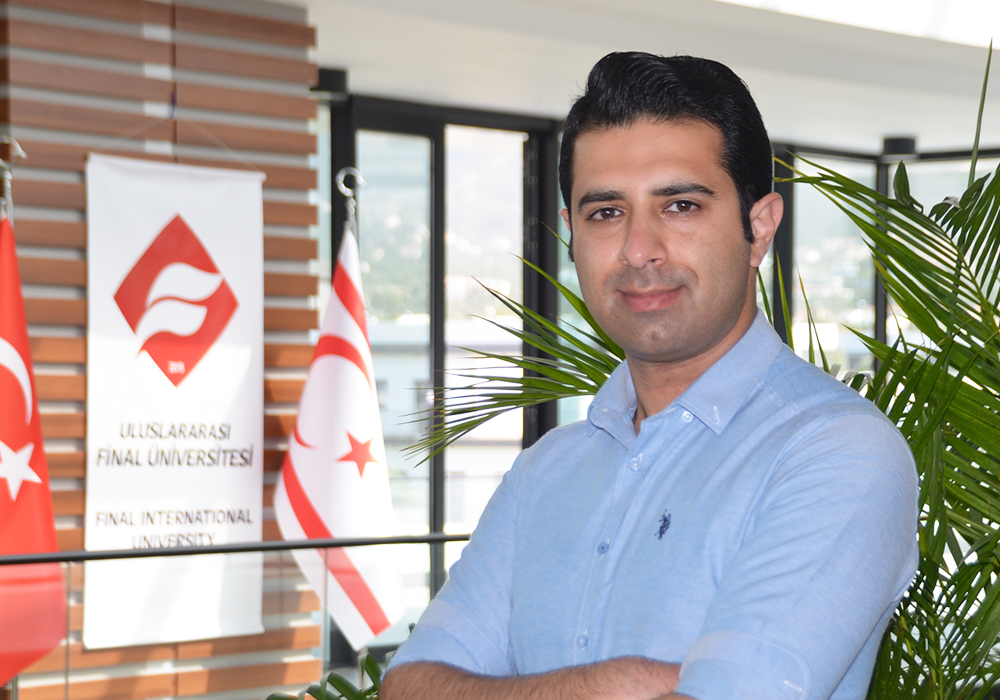
Pooya Lotfabadi is an Assistant Professor at the Faculty of Architecture and Fine Arts of Final University of Northern Cyprus . His academic journey includes a Doctoral Degree (2020) , Master's Degree (2014) , and Bachelor's Degree (2011) in Architecture, all from Eastern Mediterranean University or Khayyam University. Research Interests: Sustainable Lighting Design Artificial Intelligence in Architectural Pedagogy Thermal and Visual Comfort Optimization Ecological Building Strategies Urban Movement Patterns and Cultural Identity Publications highlight his work on daylight optimization, climate-responsive design, AI integration in education, and socio-spatial analysis of immigrant communities. His methodological focus includes parametric modeling, analytic hierarchy process, and GIS applications.
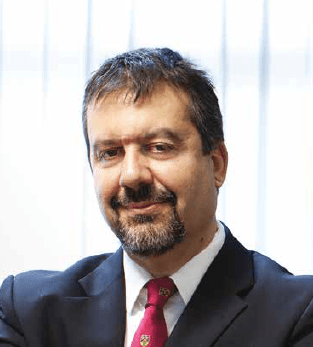
Professor Philippos Pouyioutas is a faculty member at the University of Nicosia, affiliated with the School of Sciences and Engineering and the Department of Computer Science. He serves as the Rector of the university and has held various leadership roles, including Director of Academic Affairs and Chairperson of the Research Committee at Intercollege (1996-2007). His research focuses on 5G Networks, Relational and Object-Oriented Databases, and Quality Assurance in Higher Education and E-Learning. PhD in Object-Oriented Databases (University of London, 1996) CertEd in Teaching/Learning in Higher Education (University of North London, 1993) His recent work involves projects like LIFE TWO, SHIFT, UN4DRR, EGEA, and SPHERA, funded by ERASMUS+ and other international initiatives. Key collaborations include the TESLA Adaptive Trust-based e-assessment System and evaluations for Piraeus University of Applied Sciences. Scientific contributions span over 100 publications, with a focus on Network Optimization, Educational Technology, and Database Systems. Awards include PhD scholarships from the University of London, ORS, and the Leventis Foundation. Coordinated applications for the Diploma Supplement Label and ECTS Label Supervised PhD students in Database Systems and E-Learning Quality Assurance
Professor Duygu Çelik Ertuğrul is a faculty member in the Computer Engineering Department at the Eastern Mediterranean University (EMU), Faculty of Engineering, located in Famagusta, North Cyprus. She has been affiliated with EMU since her undergraduate studies and has steadily advanced through the academic ranks, achieving Professor status in 2022 after serving as Associate Professor since 2017 and Assistant Professor since 2010. Her educational background includes a comprehensive foundation in both technical and healthcare domains. She earned her Ph.D. (2005-2010), MS (2003-2005), and BS (1999-2003) all in Computer Engineering from Eastern Mediterranean University. Notably, she also holds a BS in Healthcare Services from Kocaeli University (1994-1998), which has significantly informed her interdisciplinary research approach. Professor Ertuğrul's research spans the intersection of semantic web technologies, artificial intelligence, and healthcare applications. Her work focuses on developing intelligent systems that leverage semantic technologies for practical applications in e-health, m-health, and personalized recommendation systems. She has pioneered research in semantic web services composition, ontology-based decision support systems, and AI-powered healthcare solutions. Her recent publications demonstrate a clear trajectory toward increasingly sophisticated applications of AI and semantic technologies, particularly in job recommendation systems, healthcare diagnostics, and accessibility solutions for diverse user groups. Her publication record shows consistent productivity with multiple EMU Research Incentive Awards (2020-2022). The most recent works reveal a strategic expansion into LLM-powered recommendation systems, specialized applications for underserved communities, and broader examinations of AI's societal impact across various sectors. EMU Research Incentive Award (2022) EMU Research Incentive Award (2021) EMU Research Incentive Award (2020) Professor Ertuğrul has supervised an extensive number of graduate students, currently guiding three PhD candidates while having successfully supervised numerous MS theses. Her students' work consistently aligns with her research interests, focusing on medical AI applications, semantic web technologies, and recommendation systems. She has also served as project coordinator for capstone projects in software engineering, demonstrating her commitment to practical, hands-on education. Her research has been supported by university, government, and industrial funding sources, enabling the development of various healthcare knowledge systems and semantic web applications.