
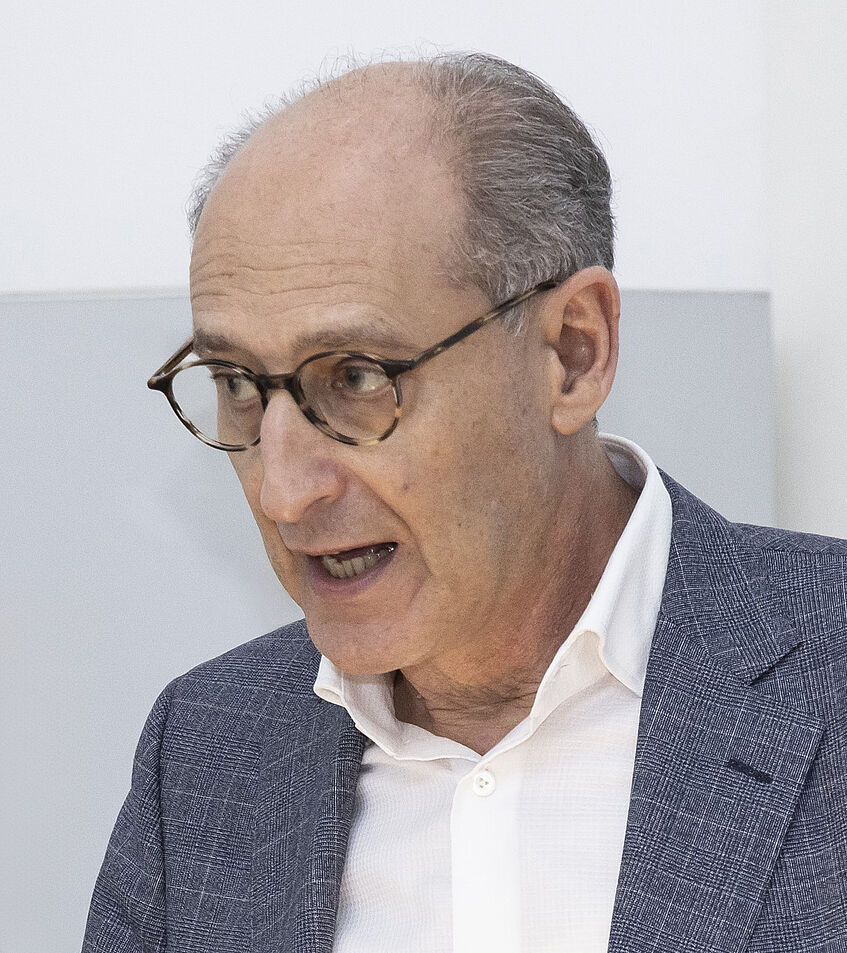
Raphael RosenbergView profile
Professor
Raphael Rosenberg serves as Professor and Deputy Head of the Department of Art History at the University of Vienna within the Faculty of Historical and Cultural Studies. His academic profile demonstrates a unique blend of traditional art historical expertise with cutting-edge interdisciplinary approaches, particularly in applying cognitive science methodologies to the study of art perception. Rosenberg maintains an active teaching schedule covering core art history methodology, thesis supervision, and specialized courses on avant-garde movements and art networks. Rosenberg's research interests focus on the intersection of art history with cognitive science and digital humanities. He has pioneered the application of eye-tracking technology to investigate how viewers engage with artworks, challenging traditional assumptions about visual perception in art. His work spans from Renaissance studies (particularly Michelangelo) to early 20th century avant-garde movements, with a special emphasis on the role of exhibitions as platforms for artistic innovation. The Database of Modern Exhibitions (DoME) project represents a significant contribution to documenting European painting and drawing exhibitions between 1905-1915. Analysis of Rosenberg's recent publications reveals a clear trajectory toward increasingly interdisciplinary research that bridges art historical scholarship with empirical methods from cognitive science. His work consistently demonstrates how digital tools and empirical methodologies can enhance traditional art historical inquiry, particularly in understanding viewer engagement with artworks. The recurring themes across his publications include the cognitive processes involved in art perception, the historical development of exhibition practices, and methodological innovations in art historical research. Rosenberg maintains an extensive collaborative network across disciplines, frequently working with psychologists, computer scientists, and other art historians. His research group appears to focus on empirical approaches to art history, particularly through the use of eye-tracking technology in museum settings. The Database of Modern Exhibitions project represents a major collaborative effort to document exhibition practices during a crucial period of artistic innovation in the early 20th century.