Christian Jandl is a Researcher and Head of the Digital Technologies Research Group at the Institute of Creative Media/Technologies, University of Applied Sciences St. Pölten. He holds a Master's in Media Technology (specializing in Mobile Internet) from FH St. Pölten (2010–2016) and has been a researcher there since 2016. His work focuses on IoT, Industry 4.0, digital healthcare, and usability. Research & Projects: Leading 20+ projects including DPP4Food (digital supply chain), SensiTrack (privacy-aware IoT tracking), and IoT4LAC (community IoT solutions) Explores tracking systems in manufacturing, healthcare usability, and industrial asset management Develops privacy-by-design frameworks for industrial IoT applications Publications & Impact: Over 15 peer-reviewed articles on topics like privacy in tracking systems, industrial quality control, and AR in production Key contributions to Bluetooth-based asset tracking (BlueDAT framework) and auditory process monitoring Labs & Collaboration: Immersive Media Lab for VR/AR applications Focus on Industry 4.0 initiatives and enterprise asset tracking solutions
Peter Jellitsch is a Lecturer at the Academy of Fine Arts Vienna, affiliated with the Department of Fine Arts. He is actively involved in teaching courses focused on the technical aspects of sculpture and spatial representation techniques in the Summer Semester 2025. His research and teaching interests lie at the intersection of traditional sculptural practices and digital representation tools. Key areas include: Technical foundations of wood-based sculpture Computer-Aided Design (CAD) in artistic spatial modeling Methods of visual and structural representation in art The available data does not include any recent publications; therefore, no article trend analysis can be performed. However, his instructional focus suggests a strong applied and technical orientation within fine arts education. He has not been mentioned as receiving any scientific awards. Peter Jellitsch is actively contributing to academic instruction, particularly in foundational and technical courses. There is no information available regarding graduate student supervision or external research grants. He is associated with teaching activities within the core curriculum of the Department of Fine Arts, particularly in technical training modules for sculptural practice.
Dr. Thomas Hartmann is a Senior Scientist at the Centre for Cognitive Neuroscience (CCNS), Department of Psychology, Faculty of Natural and Life Sciences, University of Salzburg. His research focuses on cognitive neuroscience, auditory perception, and electrophysiological methods (M/EEG), particularly in the context of tinnitus and cochlear implants. He leads the Salzburg Brain Dynamics Lab and is a key contributor to open-source neuroscience software development. PhD in Psychology, University of Konstanz (2006–2012) Diploma in Psychology, University of Konstanz (2001–2006) His primary research interests include auditory perception, neural oscillations, neurofeedback, cognitive neuroscience, and psychophysics . He investigates how the brain processes sound, especially under conditions of hearing impairment, and develops computational tools to improve experimental rigor and reproducibility. Dr. Hartmann’s recent publications demonstrate a strong trend in multisensory integration, neural speech tracking, attention modulation, and open-source methodological development . His work often combines EEG/MEG with behavioral paradigms to uncover the neural mechanisms of perception and attention. A major contribution is the Objective Psychophysics Toolbox (o_ptb), which enhances experimental design in MATLAB by abstracting hardware complexity. Active contributor to open-source neuroscience tools Focus on reproducible and robust experimental paradigms Collaborative research with leading institutions in Europe He has co-authored numerous peer-reviewed studies in journals such as Frontiers in Psychology , NeuroImage , and Cortex , and has been involved in research on tinnitus, cochlear implants, and neural correlates of attention. Although no direct students are listed, his role as a senior scientist and publication mentor suggests advisory responsibilities. He is affiliated with the Salzburg Brain Dynamics Lab, where his team conducts cutting-edge research on brain dynamics using advanced electrophysiological techniques and computational modeling.
Thomas Hofer is an Associate Professor in the Department of General, Inorganic and Theoretical Chemistry at the University of Innsbruck, affiliated with the Faculty of Chemistry and Pharmacy. He leads the Hofer Lab, focusing on theoretical and computational chemistry, materials science, and molecular dynamics simulations. His academic journey includes a Habilitation in Theoretical and Computational Chemistry (2011), a Doctorate (2006), and earlier roles as an Assistant Professor (2008-2011) and Erwin Schrödinger Fellow (2008-2010). Research Interests: Hofer specializes in quantum mechanical methods, molecular dynamics, and computational modeling of materials, with applications in energy storage, catalysis, and environmental chemistry. His work bridges theoretical approaches with experimental validation, addressing challenges in nanostructured materials and reactive systems. Awards: He has received prestigious honors such as the Young Scientist Excellence Award (2006), Georg und Christine Sosnovsky Award (2007), and IUPAC Award (2012). His teaching spans advanced courses in simulation methods, computer-based materials science, and data-driven discovery for PhD students. Labs/Teams: The Hofer Lab collaborates with other groups (e.g., Liedl Lab) and contributes to facilities like the Center for Chemistry and Biomedicine. His research impacts areas like battery materials, environmental pollutant interactions, and renewable energy systems.
Daniel Cornel is a researcher affiliated with TU Wien's Department of Engineering Hydrology, part of the E222-02 research group. He holds a Dipl.-Ing. (engineering diploma) and a Dr.techn. (technical doctorate). His work focuses on integrating computational methods with environmental hydrology, emphasizing flood modeling, high-performance computing, and geospatial visualization. Cornel collaborates extensively with experts like Prof. Günter Blöschl and Prof. Jürgen Waser on projects such as the HORA 3.0 flood risk zoning initiative. His research interests span GPU-accelerated flood simulations, hydrodynamic modeling at regional scales, and decision-support systems for disaster management. Notable contributions include developing interactive visualization tools for real-time flood data and VR-based training modules for emergency response. Cornel also explores algorithm optimization for terrain modeling and subsurface network visualization. Key projects include the 'Integrated Simulation and Visualization for Flood Management' framework and the 'Master of Disaster' VR training system. His work bridges computational science with environmental engineering, addressing both technical challenges and practical applications in flood risk mitigation.
Andreas Buttinger-Kreuzhuber is affiliated with the Department of Engineering Hydrology at TU Wien. His research focuses on advanced hydrodynamic modeling, GPU-accelerated flood simulations, and integrating geospatial data for flood risk assessment. He contributed to projects like HORA 3.0, a national flood risk mapping initiative, and developed frameworks for high-resolution simulations of urban and rural flash floods. His work bridges computational science and environmental engineering, emphasizing real-world applications in disaster management and urban planning. Education: Dipl.-Ing. (FH) in Civil Engineering, Dr.techn. (PhD) in Technical Sciences, and BSc in a related field. Notable research themes include shallow-water schemes optimization, interactive visualization tools for flood management, and nanopore fluid dynamics. His interdisciplinary approach combines hydraulic modeling with geomatics and computational fluid dynamics. Collaborations include work with Prof. Günter Blöschl and the Network Lab at TU Wien. Recent efforts focus on accelerating hydrodynamic simulations using GPU technology and improving regional-scale flood modeling accuracy.
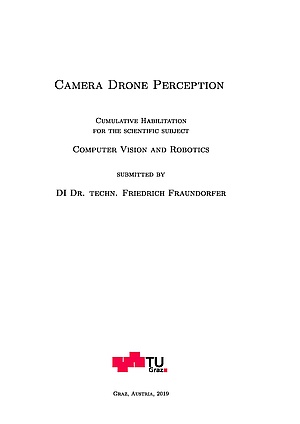
Friedrich Fraundorfer is a Professor at Graz University of Technology, specializing in 3D Computer Vision and Autonomous Systems at the Institute of Computer Graphics and Vision (ICG). He has held academic positions at institutions including ETH Zurich, University of North Carolina at Chapel Hill, and Technische Universität München, where he served as Deputy Director of the Chair of Remote Sensing Technology. Research : Focuses on Micro Aerial Vehicle (MAV) autonomy, Visual-Inertial Fusion, and Multi-View Geometry. Projects : Led EU-funded SFly (autonomous MAVs for search-and-rescue), SNF MAV (camera-only 3D mapping), and VCharge (vision-based self-driving cars). Teaching : Offers courses like 'Camera Drones' and 'Mathematical Principles in Vision.' His Pixhawk project created open-source MAV platforms adopted globally. Key Collaborations : With NVIDIA, Volkswagen AG, University of Zurich, and German Space and Aerospace Center (DLR). His students (e.g., Dominik Hirner, Rafael Weilharter) have published on lightweight CNNs for stereo vision and self-supervised 3D reconstruction.
Andreas Uhl is a University Professor in Artificial Intelligence and Human Interfaces at the Department of Computer Science, University of Salzburg. With a prolific research career spanning from 1996 to present, he has authored or co-authored 534 publications and led or participated in 59 research projects. His work demonstrates sustained academic productivity with recent publications and projects extending through 2025. Professor Uhl's research interests span multiple domains at the intersection of artificial intelligence and practical applications. His primary focus areas include computer vision, biometrics, biomedical imaging, and digital forensics, with significant contributions to pattern recognition and image analysis. His work bridges theoretical computer science with practical applications in cultural heritage preservation, medical diagnostics, and security systems, demonstrating a versatile research portfolio that addresses both fundamental challenges and real-world problems. His recent publications reveal a strong emphasis on temporal image forensics, biomedical image analysis, and biometric security. The research shows a clear trajectory toward increasingly sophisticated applications of AI in specialized domains, with particular attention to validation methodologies and limitations of current approaches. His work on cultural heritage applications demonstrates an innovative application of computer vision techniques to historical artifacts. Best paper award @ 25th ACM Symposium on Applied Computing (Applications Track), 2010 Best Paper award @ 2nd European Workshop on Visual Information Processing (EUVIP'10), 2010 IEEE Biometrics Council Best Paper Award (TBIOM), 2022 Kurt Zopf Preis, 2023 Professor Uhl actively leads multiple significant research initiatives, including the CDL-POSA project on People and Object Surface Authentication (2025-2032), Artificial Intelligence driven Biomedical Imaging Innovation (2025-2029), and the AIBIA Research and Transfer Junior Lab (2023-2025). His research group maintains active collaborations with institutions like Carnegie Mellon University, as evidenced by his recent research stay there in September 2024. The scope and duration of his current projects indicate substantial grant funding and institutional support for his research agenda. His laboratory activities focus on AI applications in biomedical imaging, border security through vehicle-integrated technologies (AutoBorder project), and cultural heritage analysis. The research environment appears to integrate academic inquiry with practical transfer through initiatives like the FFG Student Internships program, suggesting a strong commitment to both fundamental research and real-world implementation.
Martin Knoll is a Professor of European Regional History and currently serves as Dean of the Faculty of Social Sciences at the University of Salzburg. He is a prominent scholar in environmental history, regional studies, and historical geography, with a particular focus on Alpine regions, tourism history, and early modern European history. Knoll holds significant leadership positions including Chairman of the Environmental History Cluster Austria/Environmental History Network Austria (EHCA) since September 2017 and previously served as Regional Representative for the German Speaking Countries and Board Member of the European Society for Environmental History (ESEH) from July 2015 to August 2023. His research interests span environmental history, European regional history, urban history, tourism history, social ecology, cultural history, Alpine history, historical geography, and early modern history. Knoll's work consistently explores the intersection of natural environments and human societies, examining how landscapes shape and are shaped by cultural, economic, and political forces over time, particularly in Alpine regions. Knoll has published extensively with over 120 publications to his name. His recent work shows a strong focus on tourism history, regional identity formation, environmental history, and the historical development of Alpine regions. He has increasingly engaged with contemporary issues such as sustainability, crisis management in tourism, and the application of digital humanities methods to historical research. Druckkostenzuschuss der Oestreich-Stiftung for his habilitation thesis Kulturpreis der E.ON Ostbayern for his dissertation Promotionsstipendium des Freistaats Bayern Schwenkscher Umweltförderpreis der Stadt Ebersberg Carson Fellowship at the Rachel Carson Center for Environment and Society Knoll is actively involved in numerous research projects including CIVIS2 (A European Civic University), Alpine geo- and biodiversity during environmental changes (AlpsChange), Forschung SMARTT, and ENLIVEN (improved learning and teaching in international virtual environments). He has organized and participated in over 196 academic activities including 92 talks and 31 guest lectures. He is engaged in third mission activities through Scientists4Future Salzburg, adult education via the 'History and Culture' working group of the Salzburg Educational Association, and coordination of the steering group between the University of Salzburg and the Salzburg Museum Association for developing joint projects.
Alan van Beek is a researcher at the University of Salzburg within the Department of German Studies. Their work bridges medieval literature analysis with modern digital humanities tools and game studies frameworks. Active in computational analysis of Middle High German texts Key contributor to the MHDBDB database development Interdisciplinary focus on medieval reception in digital media Expert in data literacy and interface design Research interests span three major domains: Medieval Literature: Focusing on giants, stones, and sword names in medieval texts, analyzing cyclical narrative structures and material culture representation Digital Humanities: Specializing in database development, digital sustainability, and user-centered design for linguistic research Game Studies: Investigating medievalism in modern games and institutional requirements for establishing game science Recent publications show a clear trend toward: Interdisciplinary methodologies combining literary analysis with data science Digital infrastructure development for medieval studies Critical examination of medieval themes in contemporary gaming contexts Exploration of material symbolism in both historical texts and modern media Advancing queer studies through medieval literature analysis Promoting digital literacy in humanities research Their projects include: Users First: Optimization of user interface and crowdsourcing for medieval databases MHDBDB goes AI: Preparing data for AI applications in literary analysis MHDBDB Relaunch: Ensuring digital sustainability of the Middle High German term database Current activities demonstrate extensive engagement with: Scientific website maintenance for digital humanities projects Conference presentations on medieval themes in games Editorial work for PLUS Salzburg's digital humanities initiatives Collaborative research with institutions like Zenodo
Manuel Eibinger is a researcher at the Institute of Biotechnology and Bioprocess Engineering within Graz University of Technology , Austria. With expertise in biotechnology and bioprocess engineering, his work focuses on enzymatic degradation of cellulose, multienzyme cascades, and nanoscale biomolecular interactions. Research Focus: Cellulose breakdown mechanisms, enzyme synergy, and bio-based product development Techniques: Atomic Force Microscopy (AFM), single-molecule imaging, and computational modeling Applications: Biomass conversion, food science, and nanobiotechnology His publications (2011–2025) explore cellulose-degrading nanomachines, protein extraction from brewer's spent grain, and tunable bioemulsions. Collaborations include researchers like Kracher D., Haltrich D., and Nidetzky B.
David Meyer is a Professor at the University of Applied Sciences Technikum Wien. Since 2017, he has served as Program Director for the Bachelor in Business Informatics program, and since 2020, also for the Master Data Science program. He is a Senior Lecturer and a member of the University Council. Education Habilitation in Business Informatics PhD in Business Informatics from Vienna University of Business Administration Undergraduate studies in Business Informatics at Vienna University of Technology and University of Vienna Lycée Français de Vienne Research Interests Meyer's work spans Data Science , including core areas like Data Engineering, Data Visualization, and Machine Learning. His focus extends to Statistical Computing , programming language R , ERP Systems , and Business Intelligence/Data Warehousing . He has held leadership roles in academic governance, including membership of the University Council since 2018 and board membership of the Doctoral College 'Resilient Embedded Systems' from 2018–2024. Professional Experience 2010–present: Professor and Lecturer at UAS Technikum Wien 2004–2010: Assistant Professor at WU Wien (Institute for Business Informatics) 2000–2004: Research Assistant at TU Wien (Institute for Statistics and Probability Theory) 1998–2000: Consultant at Arthur Anderson and as a freelancer 1995–1998: IT Project Manager for ERP systems 1990–1995: Software Engineer for medical ERP systems Contact Email: david.meyer@technikum-wien.at
Linus Franke is a postdoctoral researcher at Inria Sophia Antipolis in France, affiliated with the GraphDeco research group under George Drettakis. He previously completed his PhD at the Chair of Visual Computing , Friedrich-Alexander-Universität Erlangen-Nürnberg (FAU) in Germany under Marc Stamminger. His research focuses on Computer graphics Perceptual rendering Computer vision Machine learning Neural rendering Novel view synthesis Key trends in his recent publications include neural rendering , 3D Gaussian splatting , radiance fields , and real-time rendering with applications in virtual reality and light field displays. His work often integrates point clouds , differentiable rendering , and GPU optimization techniques. His personal website at lfranke.github.io highlights projects like VET (Visual Error Tomography) and TRIPS (Trilinear Point Splatting for Real-Time Rendering).
Sonja Windhager is a researcher at the Department of Evolutionary Anthropology , Faculty of Life Sciences, University of Vienna. Her work focuses on face neuroscience, gender identity psychology, and measurement invariance in global datasets. Specializes in facial trait analysis and social perception Active in cross-cultural psychological scale validation Contributes to open-access publications in PeerJ and PLoS ONE Recent research examines cortisol's role in body fat perception, digit ratio symmetry in human evolution, and WEIRD (Western, Educated, Industrialized, Rich, Democratic) facial recognition patterns. Collaborations span 65 nations with 40+ languages. Notable activities include presentations on male facial cues to stature and aggressiveness at international conferences (2024). Media appearances discuss facial symmetry (2022) and age-gap relationships (2022).
Simon Kranzer is a Senior Lecturer and Head of Research Group at the Department of Information Technologies and Digitalisation, FH Salzburg. His work bridges academic research and practical application in digital transformation. Location: Campus Urstein, Room 425 Contact: simon.kranzer@fh-salzburg.ac.at | +43-50-2211-1316 Research Focus: Digital Twins for industrial systems Collaborative Robotics (Co-Bots) in retail Knowledge Transfer between academia and industry Operational Technology (OT) Security Data Acquisition and Visualization Programming Language Applications in industrial contexts Research Trends: Recent publications show expertise in retail automation (service robots, customer behavior analysis), industrial digital twins, and OT security. Earlier work spans GIS-SCADA integration, medical software implementation, and 3D microstructure analysis. Collaborative Projects: Active in interdisciplinary living labs, smart factory bootcamps, and 5G-based robotics exploration.