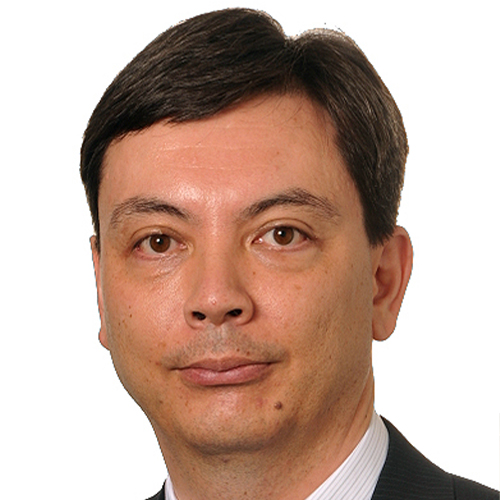
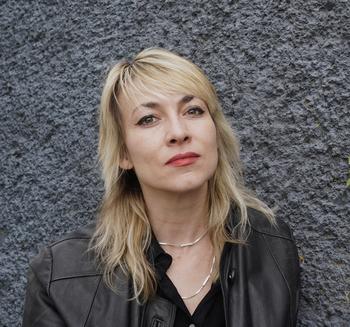
Prof. Rolf Eusterschulte serves as a Professor in the Department of Design and Media (F3DM) within the Faculty of Media, Information and Design at Hannover University of Applied Sciences and Arts. His role centers on interdisciplinary education and research bridging creative design practices with media technologies. His scholarly focus spans Design and Media Studies , with specialized expertise in: Visual Communication Digital Media Interactive Design Media Theory User Experience Design Creative Technologies These areas reflect the department's integration of aesthetic, technical, and theoretical approaches to contemporary media production. No scientific awards or fellowships were documented in the source material. Regarding academic mentorship and funding, the available information does not specify student supervision activities or research grant acquisitions.
Peg Rawes is Professor of Architecture and Philosophy at University College London's Bartlett School of Architecture , where she directs research and leads the MA Architectural History program. Her work bridges architectural theory with philosophy, focusing on relational architectural ecologies through three intersecting areas: human/nonhuman life practices, planetary poetics, and housing ecologies. Director of Research, UCL Bartlett School of Architecture (2023-present) REF2029 Lead for Bartlett School EDICPI for EU TACK project (2020) BAUHOW5 PI for European architecture schools partnership (2016-20) Research explores biophilic design , decolonial architecture , and feminist spatial practices across three streams: Architectural ecologies : Human/nonhuman relations in 'Bioprotopia' (2023), vulnerability visualization (2021) Planetary poetics : Climate emergency dialogues (2021), Irigarayan aesthetics (2020) Housing biopolitics : Care frameworks (2017), Spinozist ethical ratios (2015) Key funded collaborations include EU TACK's Communities of Tacit Knowledge (2020) and AHRC's Equal by Design (2016). She contributes to architectural peer review for journals and international research councils while maintaining global partnerships with institutions like Cornell , ETH Zurich , and University of Minnesota .
Christopher G. Healey is the Goodnight Distinguished Professor of Analytics in the Institute for Advanced Analytics and a Professor in the Department of Computer Science at North Carolina State University. His research spans visualization, data analytics, text analytics, sentiment analysis, machine learning, cognitive psychology, computer graphics, and social media analytics. He has graduated 15 Ph.D. and 26 master's students and secured over $6 million in research funding from agencies including the National Science Foundation, Department of Defense, National Security Agency, Army Research Office, and various industry partners. He has published over 100 peer-reviewed articles and is a senior member of both IEEE and ACM, as well as a member of the NC State Academy of Outstanding Teachers. His research focuses on developing visualization techniques that leverage visual perception to support rapid, accurate, and effective analysis of large, complex datasets. More recently, he has been investigating machine learning for natural language processing and text analytics. His work includes projects on visualizing election results, sentiment estimation for social media, and wildfire narratives using large-scale social media data. His publications demonstrate a strong trend toward integrating machine learning with visualization, particularly for text analytics and social media analysis. He has made significant contributions to visualizing deep neural networks, cyber situation awareness, and pandemic response analytics, showing how visualization can enhance understanding of complex systems and large datasets across multiple domains. IBM Faculty Award (2007, 2008, 2010, 2011, 2012) Senior member, Association of Computing Machinery (ACM) (2007) Senior member, Institute of Electrical and Electronics Engineers (IEEE) (2007) NC State Academy of Outstanding Teachers inductee (2003) National Science Foundation Faculty Early CAREER Award (2001) He has successfully mentored numerous graduate students and secured significant research funding across multiple projects. His work with the Laboratory for Analytic Sciences, National Science Foundation, and Department of Defense demonstrates strong industry and government partnerships. His recent projects focus on visualizing social media narratives, deep neural networks for text understanding, and predictive analytics for large document collections. He leads research groups focused on visualization and analytics, working with teams to develop innovative approaches for data exploration and analysis. His current work continues to push the boundaries of how visualization can be used to enhance understanding of complex data across domains including public health, cybersecurity, and social media analysis.
Duncan Wilson is a Professor of Connected Environments at the Bartlett Centre for Advanced Spatial Analysis (CASA) at University College London. His work bridges academia and industry, focusing on IoT, AI, and spatial analysis to enhance understanding of built and natural environments. Current role: Professor of Connected Environments at UCL Education: PhD in Artificial Intelligence and Machine Vision (UCL, 1997), BEng (Hons) in Electrical Engineering (Loughborough University, 1993) Research interests include: Cognitive computing at the network edge Extraordinary sensory systems for data capture Spatial reasoning and digital twins IoT for healthcare and biodiversity Edge AI and TinyML Recent articles span digital twin development , IoT for biodiversity monitoring , and smart healthcare infrastructure . He has received recognition for collaborative R&D approaches during his directorship at Intel's Sustainable Connected Cities institute. Teaching: Leads MSc Connected Environments and modules on IoT ethics, AI on microcontrollers, and sensor network deployment Projects: IoT Living Lab at UCL, Project Hercules for eye clinic analytics, and Shazam for Bats environmental monitoring Professional activities: Former Director of Intel Collaborative Research Institute (2012-2018), ex-member of Smart London Board (2017-2022)
Eliese-Sophia Lincke is a Junior Professor at the Department of History and Cultural Studies, Freie Universität Berlin, since May 2022. Her work bridges computational methods with Egyptology, focusing on digital tools for studying ancient texts. Bachelor's and Master's in Egyptology, Humboldt-Universität zu Berlin (2007) PhD in "The Conception of Spaces in Language" (TOPOI Cluster, 2012) Research interests include: Digital Humanities : Developing machine learning models for Hieroglyphic, Demotic, and Coptic text processing Linguistic Typology : Analyzing classifier systems in Ancient Egyptian and Sign Languages Spatial Linguistics : Investigating prepositions and spatial adverbs in Egyptian-Coptic Recent publications focus on Neural Lemmatization , OCR for Coptic , and Classifier Semantics , demonstrating her commitment to computational Egyptology. Scientific awards include the Humboldt-Preis 2008 for best Master's thesis and the Prize for Good Teaching 2014 . She has co-organized workshops like "Wege zum Ägyptischen" and served as Co-Editor for Lingua Aegyptia . Her teaching contributes to the Digital Studies of Ancient Texts Master's program.
Dr. Stephanie Roberta Graf is a Research Fellow at the Institute for Religious Studies (Department of History and Cultural Studies) at the Free University of Berlin since 2025. She previously worked as a Universitätsassistentin at the University of Innsbruck (2021-2025) and participated in the FWF-funded project 'Membership Metaphors as Doorkeepers'. Her research bridges philosophy, critical theory, and religious studies, with a focus on the Frankfurt School's theology and metaphorology. Diploma in International Development (University of Vienna & UNAM, 2005-2011) Master in Latin American Studies (UNAM, 2013-2015) Doctorate in Political and Moral Philosophy (UAM-I & Hebrew University, 2015-2019) Her research explores the theology and metaphysics of the Frankfurt School , German-Jewish thought, coloniality in diaspora religions, and political theology. She has published on topics ranging from Walter Benjamin's natural history concepts to critical analyses of capitalism as religion and heretical mysticism. Her recent work examines ecological crises, cultural appropriation, and interdisciplinary approaches to social critique. Selected publications reveal trends in Frankfurt School philosophy , Jewish mysticism , coloniality , and Benjaminian metaphorology , with subfields including divine violence, nonidentity theory, diaspora cultures, and interdisciplinary hermeneutics. She has presented at international conferences in Argentina, Chile, Peru, Austria, and Israel. She contributes to the academic community through her involvement in projects like the Metaphorology Lecture Series at the University of Innsbruck and the International Colloquium on Heretic Argumentation in Argentina. Her work intersects philosophy, religious studies, and socio-political critique.
Ayşe Hilal Uğurlu is an Associate Professor in the Department of Architecture at MEF University's Faculty of Arts, Design and Architecture. She completed her PhD in the History of Architecture program at Istanbul Technical University in 2012 with a dissertation titled 'Selim III's Istanbul: Building Activities In The Light Of Political and Military Transformations.' Uğurlu has held prestigious fellowships including a senior fellowship from ANAMED at Koç University (2014), a Barakat Trust Post-Doctoral Fellowship at Oxford University (2017-18), and Barakat Trust Major Awards (2018-19). Her research focuses on the social, political, and architectural history of the Ottoman Empire, with particular attention to the 18th-19th centuries. Uğurlu has co-edited three significant books: 'Ottoman Architectural Culture' (2016), 'Sacred Spaces + Urban Networks' (2019), and 'The Friday Mosque in the City: Liminality, Ritual, and Politics' (2020). She is currently leading a research project with Dr. Deniz Türker exploring the roles of Ottoman royal women during the 18th-19th centuries, funded by MEF University Scientific Research Projects (2023-2025) and scheduled for publication by Cambridge University Press in 2025. Uğurlu's scholarly work reveals a consistent focus on the intersection of architecture, politics, and religious practice in Ottoman Istanbul. Her publications demonstrate particular expertise in imperial mosques, sacred spaces, and the transformation of religious practices during the 19th century. Her research often examines how architectural spaces functioned as political tools and social nuclei within Ottoman urban environments. Senior fellowship from ANAMED (Research Center for Anatolian Civilizations) at Koç University (2014) Barakat Trust Post-Doctoral Fellowship at the Khalili Research Centre, Oxford University (2017-18) Barakat Trust Major Awards (2018-19) Uğurlu actively contributes to academic discourse through numerous publications and conference presentations. Her current research project on Ottoman royal women represents a significant contribution to understanding women's roles in imperial power structures. While specific information about her advising activities isn't detailed in the source material, her extensive publication record and ongoing research projects indicate active engagement with academic scholarship and likely mentorship of students.
Daniel Sage is a Lecturer and Scientific Advisor at École polytechnique fédérale de Lausanne (EPFL) , affiliated with the Biomedical Imaging Laboratory (LIB) under the College of Engineering (STI) and School of Life Sciences (SV) . He specializes in bioimage informatics , structured-illumination microscopy , and deep learning applications for biomedical imaging. His work spans algorithm development for single-molecule localization microscopy (SMLM) , fluorescence imaging , and 3D reconstruction . His research group has developed open-source tools like FlexSIM for light inhomogeneity correction, DeepImageJ for integrating deep learning in ImageJ, and Steer'n'Detect for orientation-accurate template detection. His publications focus on correcting multiple-blinking artifacts in PALM, optimal transport metrics for SMLM evaluation, and contextual feature analysis for xenograft cell classification. He mentors PhD students and contributes to interdisciplinary education through courses such as Bioimage Informatics and Fundamentals of Image Analysis , emphasizing practical software solutions and Java programming for bioimage processing. His collaborations include institutions like Howard Hughes Medical Institute and Centre National de la Recherche Scientifique (CNRS) .
Professor Barry Porter is a faculty member at Lancaster University in the School of Computing and Communications . His research focuses on emergent software platforms that address software complexity through component models , meta-software platforms , and machine learning . Key areas include distributed systems, cloud integration with sensor nodes, green computing, and real-time visualization. Research Interests : Runtime adaptation in complex systems Self-assembling software architectures Machine learning for code optimization Distributed emergent systems at scale Green computing for multi-core environments Edge-cloud continuum integration Recent Publication Trends : His 2025 work explores genetic improvement for software using speciation algorithms , program geometry projection , and multi-agent decision frameworks . Earlier studies (2022-2024) investigate edge-cloud systems , neural transfer learning , and ecosystem curation in emergent software. Supervision & Projects : He supervises PhD student Ben Craine and leads projects like B-EGI (Bio-Enhanced Genetic Improvement) and BBC Prosperity Partnership for media delivery. Collaborations span environmental IoT, multi-agent learning, and fog computing. Labs & Groups : Affiliated with the Lancaster Intelligent, Robotic and Autonomous Systems Centre , Centre of Excellence in Environmental Data Science , and the Distributed Systems group.
Johan Eriksson is an Associate Professor and Senior Lecturer at Uppsala University's Department of Art History, serving as Head of Department and Program Manager for the Master's Program in Digital Art Studies. His work integrates traditional art historical scholarship with cutting-edge digital methodologies, focusing on cultural heritage reconstruction and virtual museum development. His research spans digital art history , visual communication , and Renaissance studies , with specialized expertise in Italian and Japanese art traditions. Eriksson pioneers digital pedagogy through projects like The Digital Seminar 2.0 , examining how virtual reconstructions of historical sites (e.g., Royal Palace Stockholm) transform art historical methodology and public engagement with cultural heritage. His scholarship reveals strong interdisciplinary connections between art history, computer science, and urban studies. Eriksson's publication trends demonstrate consistent focus on virtual museum development as both research tool and preservation strategy, with growing emphasis on cross-cultural exchange (particularly Sweden-Japan collaborations) and sustainable heritage tourism. His work bridges technical innovation with deep art historical analysis, notably in reconstructing historical display contexts and examining visual rhetoric in Renaissance courts. No scientific awards are documented in the provided materials. As Program Manager for the Master's Program in Digital Art Studies and Chair of JSPS SAC, Eriksson actively mentors graduate students while securing research funding for major projects including The Virtual Museum and Visual Communication in Early Modern Japan . His grant portfolio reflects strong institutional support for digital humanities initiatives at Uppsala University. Through leadership of JSPS SAC and project teams like Renaissance Rooms , Eriksson coordinates international research networks focused on digital reconstruction methodologies. His current initiatives emphasize collaborative development of virtual environments that integrate art historical research with immersive technologies for both scholarly and public applications.
Hasti Seifi is an Affiliated Associate Professor at the Department of Computer Science (DIKU), University of Copenhagen, specializing in Human-Centred Computing. Her research focuses on haptics, augmented reality, and human-robot interaction. Institution: University of Copenhagen Department: Department of Computer Science Section: Human-Centred Computing Research interests include: Designing innovative haptic feedback systems Exploring tactile experiences in augmented reality Developing human-robot interaction frameworks Creating generative models for haptic design Investigating social touch technologies Advancing mid-air and ultrasound haptic interfaces Recent publications demonstrate a strong focus on: Generative haptic modeling for AR/XR systems Human-robot interaction dynamics Text input in extended reality environments Visual-haptic multisensory integration Ultrasound mid-air haptic design tools Social touch technologies
Yu Lan is a Research Fellow at the Yale School of Public Health , specializing in spatial epidemiology and health geography . Her work integrates genomic data (e.g., WGS) with geographic information systems (GIS) to analyze transmission patterns of infectious diseases like COVID-19 and tuberculosis . Education: PhD in Geography, University of North Carolina at Charlotte MA in Geography, University of North Carolina at Charlotte Research Interests focus on space-time disease modeling , infectious disease transmission , and data-driven public health tools . She develops web-based systems for real-time disease surveillance and environmental risk assessment, including tools for private well contamination and urban neighborhood dynamics . Scientific Awards include the SISMID Scholarship (2024) , Student Honors Paper Competition Finalist (2023) , and David Woodward Digital Map Award (2021) . Collaborations include work with the Ted Cohen Lab and researchers like Joshua Warren and Eric Delmelle . Her publications emphasize genomic-spatial integration and cluster detection algorithms for diseases such as tuberculosis and SARS-CoV-2.
Jennifer Ryan is a Professor of Numerical Analysis and Division Head of Numerical Analysis, Optimization, and Systems Theory at the Department of Mathematics, KTH Royal Institute of Technology. Her research focuses on designing and developing numerical schemes to extract accuracy from simulations, particularly through superconvergence properties and computational efficiency improvements. She applies these techniques to applications such as imaging, fluid visualization, and plasma dynamics. Education: PhD in Applied Mathematics, Brown University; MS in Mathematics, Courant Institute; BA in Applied Mathematics, Rutgers University. Professional Activities: Member of editorial boards for BIT Numerical Mathematics, ESAIM:M2AN, and Communications on Applied Mathematics and Computation; Steering committee member of AWM's Women in Numerical Analysis and Scientific Computing (WINASc). Her publications emphasize discontinuous Galerkin methods, SIAC filtering, and applications in fluid dynamics. She has served on multiple grant review panels and received awards for diversity and inclusion initiatives. Grants: Principal Investigator for projects funded by the Swedish Research Council, NSF, and US Air Force Office of Scientific Research. Awards: Fellow of UK Higher Education Academy, DAAD Fellowship, and Householder Fellowship.
Professor Jill Atkins is a Professor of Accounting at Cardiff Business School, Cardiff University, with a distinguished career spanning accounting and finance. She also serves as a Visiting Professor at the University of the Witwatersrand in South Africa. As a leading academic in sustainable accounting, she has published over 50 journal articles and several influential books, establishing herself as a thought leader in the field of extinction accounting and biodiversity finance. Professor Atkins holds a BA Hons (First Class) in European Economics with a Licence ès Sciences Economiques from the University of Nantes, an MSc in Corporate and International Finance from the University of Durham, and a PhD in Finance from the University of Manchester. She is Series Editor for the de Gruyter Studies in Corporate Governance and has authored the leading international textbook "Corporate Governance and Accountability," now in its 5th edition. Professor Atkins' research focuses on three interconnected areas that have significantly contributed to sustainability accounting literature. Her work on private social and environmental reporting (SER) has evolved into "private integrated reporting," where institutional investor engagement processes increasingly integrate social, environmental, and financial issues. She has pioneered the development of "extinction accounting," creating a framework that has inspired extensive international academic research and influenced investment institutions' pollinator engagement strategies. Her third major contribution involves exploring the historical roots of environmental and ecological accounting, connecting accounting history with sustainability research across various historical periods from Victorian water pollution accounting to 18th century nature diaries. Analysis of Professor Atkins' recent publications reveals a clear trajectory toward increasingly specialized and urgent environmental accounting. Her work has evolved from general sustainability reporting to highly focused extinction accounting frameworks, with growing attention to historical precedents and cross-cultural applications. The publications demonstrate a sophisticated integration of critical accounting theory with practical applications in biodiversity conservation, showing how accounting mechanisms can serve as tools for species protection and environmental preservation. Her research increasingly incorporates interdisciplinary perspectives, drawing from ecology, history, art, and philosophy to develop comprehensive approaches to extinction governance. Professor Atkins has received significant recognition within the ESG investment industry and governance circles as a thought leader, regularly invited to give keynotes at international practitioner and academic events. She has led influential projects including a Nuffield Foundation-funded study on private SER and has developed innovative frameworks such as the extinction governance model that brings together accounting practices with governance mechanisms aimed at preventing species extinctions. Professor Atkins supervises doctoral candidates in extinction accounting, extinction governance, ESG investment, accounting for biodiversity, and corporate governance (qualitative research). She has established collaborative networks with leading practitioners in responsible investment, sustainability ratings, financial analysis, and reporting framework providers, including the Capitals Coalition, Moody's, Vigeo Eiris, AXA, and the WWF.
Prof. Dr. Johanna Rahner serves as Professor of Dogmatics, History of Dogma and Ecumenical Theology at the Catholic Theological Faculty of the Eberhard Karls University of Tübingen since 2014. She also holds the position of Director of the Institute for Ecumenical and Interreligious Research at the same institution. Her research interests span a wide range of theological topics including: Biblical Hermeneutics for Systematic Theology (especially Christology), Ecumenical theology and its ecclesiological problem areas, the relationship between religion, culture, educational processes, politics and society, interaction of contemporary culture with worship and theology of the sacraments, theoretical foundations of dialogue between world religions in a globalized world, relationship between reason and faith, theology and philosophy, theology and natural sciences, patchwork religiosity and subjective religious pluralism, and religiosity of children and adolescents with special consideration of youth and cult literature and pop music. Prof. Rahner's publications demonstrate a consistent focus on contemporary challenges facing the Catholic Church, ecumenical dialogue, and the intersection of theology with modern culture. Her work frequently addresses the Second Vatican Council's implications for contemporary theology, the relationship between science and faith, and the practical application of theological concepts in interreligious contexts. She has made significant contributions to understanding eschatology, ecclesiology, and the practical application of theological concepts in interreligious contexts. Wissenschaftlicher Beirat des Kuratoriums zur Vorbereitung des Reformationsjubiläums 2017 Ökumenischer Arbeitskreis evangelischer und katholischer Theologen Editorial-Board der Ökumenischen Rundschau Wissenschaftlicher Beirat der Europäischen Melanchthonakademie, Bretten Societas oecumenica AG der deutschsprachigen katholischen Dogmatiker und Fundamentaltheologen Europäische Gesellschaft für Katholische Theologie. Deutsche Sektion e.V. AGENDA – Forum katholischer Theologinnen e.V. Prof. Rahner has been involved in several significant research projects including Moralische Urteilsfindung im säkularen Diskurs als Herausforderung für die christlichen Konfessionen, Intergenerationelle LehrerInnen-Ausbildung, Theorie und Praxis des interreligiösen Lernens, Kirche und Bildungsregime in Lateinamerika, Reformationsgedenken und Ökumene, and Grundfragen theologischer Anthropologie in Auseinandersetzung mit aktuellen naturwissenschaftlichen Modellen. She leads the Institute for Ecumenical and Interreligious Research, which serves as a hub for scholarly research on contemporary challenges in interfaith relations and ecumenical theology.