Dan Edelstein is the William H. Bonsall Professor of French at Stanford University, with courtesy appointments in History and Political Science. He serves as Faculty Director of Stanford Introductory Studies and as a University Fellow in Undergraduate Education. Department of French and Italian Stanford Introductory Studies Humanities + Design Research Lab Center for Spatial and Textual Analysis (CESTA) His research spans eighteenth-century French literature, political thought, and digital humanities, focusing on natural rights, revolutions, and Enlightenment ideologies. He has led groundbreaking projects like Mapping the Republic of Letters and Writing Rights , leveraging tools like Palladio and Data Pen for network analysis. Scientific awards include the 2009 Oscar Kenshur Book Prize, the Walter J. Gores Award (2006), and the Dean's Distinguished Teaching Award (2011). He has directed the Stanford Summer Humanities Institute and co-directs the Humanities Core program.
Lorraine van Blerk is a Professor of Human Geography at the University of Dundee's School of Humanities, Social Sciences and Law. She serves as Chair of Human Geography and leads the Research Centre for Transformative Change: Educational & Life Transitions (TCELT) in Education and Society. Her work focuses on street children/youth, refugees, and global inequalities. Academy of Social Sciences Fellow (2021) Stephen Fry Awards - Public Engagement Project of the Year (2017) Market Research Society President’s Medal (2015) Research interests include: Street youth resilience mapping Intergenerational partnerships Transitions to adulthood in crises Policy development for marginalized groups Coastal socio-ecological systems Cultural geographies of homelessness Recent publications address global street youth resilience frameworks (2REST project) and cinema's role for Harare street youth. Key collaborations include universities in Pretoria, Cape Town, Makerere, and Ryerson University. Scientific contributions recognized through: 6 major research prizes 16 funded projects 149+ research outputs International visiting appointments (Toronto Metropolitan University, National University of Singapore)
Raymond J. Mooney is a Professor in the Department of Computer Science at the University of Texas at Austin, where he has been a faculty member since 1987. He is the Director of the UT Artificial Intelligence Laboratory and affiliated with multiple research groups including the Machine Learning Research Group, UT Computational Linguistics Lab, and the UT Center for Computational Biology and Bioinformatics. He holds a B.S., M.S., and Ph.D. in Computer Science from the University of Illinois at Urbana-Champaign, where his thesis was supervised by Gerald DeJong. His research spans diverse areas in artificial intelligence, machine learning, and natural language processing: Natural Language Learning Connecting Language and Perception Statistical Relational Learning Information Extraction Transfer and Active Learning Abductive Reasoning Text Mining and Clustering Recommender Systems Knowledge-Base Refinement Recent publications highlight trends in grounded language processing, human-robot interaction, and multimodal reasoning. He has been recognized with prestigious fellowships including ACL (2014), ACM (2010), and AAAI (2005). Scientific awards: Fellow of the Association for Computational Linguistics (2014) Fellow of the Association for Computing Machinery (2010) Fellow of the American Association for Artificial Intelligence (2005) Classic Paper Award (2019) Best Paper Awards (2007, 2004, 1996) He teaches graduate courses like CS 371R: Information Retrieval and Web Search (Fall 2025) and CS 395T: Grounded Natural Language Processing (Spring 2025). His research labs include: UT Artificial Intelligence Laboratory Machine Learning Research Group UT Computational Linguistics Lab UT Center for Computational Biology and Bioinformatics
Sara Green is an Associate Professor at the Department of Science Education, University of Copenhagen, specializing in the Section for History and Philosophy of Science . Her work bridges philosophy, biology, and biomedical ethics, focusing on the epistemic and social implications of datafication in healthcare and the ethical challenges of precision medicine and consumer health technologies. Green holds a PhD in Science Studies from Aarhus University and was a postdoctoral fellow at the University of Pittsburgh’s Center for Philosophy of Science. She leads the PROMISE and COPE projects and contributes to EU-funded initiatives like DataSpace , TRANSCEND , and REDESIGN . Research Themes: Philosophy of precision medicine and data-driven healthcare Ethics of patient-derived organoids and organ-on-chip technologies Epistemic standards in consumer medicine Interdisciplinary integration in systems biology Article Trends: Recent publications explore organoid ethics , datafication in medicine , and philosophical frameworks for emerging health technologies . Key sub-fields include biobanking, cross-border data governance, and temporal dimensions of personalized medicine. Scientific Recognition: DFF Research Project 1 (2020) Semper Ardens Accellerate Grant (2023) Silver Medal, Royal Danish Society of Science and Letters (2024) Werner Callebaut Prize (2015) EU SwafS-Horizon stipend (2020) Teaching & Supervision: She teaches philosophy of science to students in biology, chemistry, and sports science, supervising projects on philosophy of biology and medicine and co-supervising science communication research. Collaborative Networks: Green collaborates across Denmark, the EU, and the U.S., particularly on cross-border health data infrastructure and reduction of animal models through organoid technologies.
Katherine Swancutt is Reader in Social Anthropology at King's College London, where she serves as Director of the Religious and Ethnic Diversity in China and Asia Research Unit (REDCARU) and Project Lead for the ERC Synergy Grant 'Cosmological Visionaries: Shamans, Scientists, and Climate Change at the Ethnic Borderlands of China and Russia' (2020-2026). She has conducted anthropological fieldwork for over two decades across Asia, focusing on Southwest China (among the Nuosu), Mongolia, Inner Mongolia, and Buryat regions of Russia. Her research centers on the anthropology of religion, with particular emphasis on shamanism, animism, dreams, and the relationship between cosmology and the environment. Her fieldwork explores how religious innovations are used to manage conflict and shape everyday life among diverse ethnic communities. She has established herself as a leading scholar in indigenous knowledge systems and their relevance to contemporary environmental challenges. Dr. Swancutt's extensive publication record reveals consistent thematic focus on ritual practices, divination systems, and cosmological frameworks, particularly among the Nuosu people of Southwest China. Her recent work examines how spiritual practices intersect with environmental change, social renewal, and cultural memory, bridging anthropology, religious studies, and environmental humanities to create innovative frameworks for understanding indigenous cosmologies in the context of climate change. ERC Synergy Grant 'Cosmological Visionaries' (£6m project connecting shamans, scientists, and rural communities) Author of four major publications including 'Fortune and the Cursed' (2012) and 'Crafting Chinese Memories' (2021) Founder of REDCARU, now an international network with branches in Chinese universities Recipient of significant research funding including ERC Synergy Grant As an educator, Dr. Swancutt teaches anthropology of religion at all levels and supervises PhD students focusing on long-term ethnographic fieldwork among ethnic minorities in China, Mongolia, or Russia. She actively engages with public audiences through exhibitions like 'Vital Signs: Another World is Possible' at the Science Gallery London, which showcases indigenous visions of climate change.
Professor Jürgen Richter-Gebert is a full professor of Geometry and Visualization at the Technical University of Munich (TUM), working within the TUM School of Computation, Information and Technology. Born in 1963, he has been at TUM since 2001, following positions at ETH Zurich (1997-2001) and TU Berlin (1994-1997). His educational background includes studies at TU Darmstadt (1983-1988) and dual PhDs from TU Darmstadt and KTH Stockholm (1991-1992). Richter-Gebert's research spans combinatorial and computer-oriented geometry, with particular expertise in polytope theory and mathematical visualization software. He develops processes for the automatic generation of geometric problem solutions and is actively involved in raising the public profile of mathematics. Richter-Gebert's publications and research focus on the intersection of mathematics and computer science, with particular emphasis on projective geometry, dynamic geometry, polytope theory, and combinatorial geometry. His work demonstrates how mathematical structures can be made accessible through computerized interactive visualizations. His most notable publications include "Perspectives on Projective Geometry" (2011) and "Geometriekalküle" (2009), along with numerous papers on dynamic geometry systems. Ars Legendi Prize for excellent university teaching (2011) Karl Max von Bauernfeind Medal of the TUM (2010) MedidaPrix - media didactic university prize (2008) EASA - European Academic Software Award (2000) Communicator Preis for science communication (2021) As founder and director of the ix-quadrat mathematics exhibition at the Garching Campus, Richter-Gebert has made significant contributions to mathematics education and outreach. He has developed influential mathematical visualization tools including Cinderella, CindyJS, and iOrnament, which have received multiple awards for educational software excellence. His research group focuses on mathematical foundations, authoring systems, and mathematical visualizations with applications in education and public scenarios.
Zaheer Baber is a Professor at the University of Toronto Mississauga in the Department of Sociology . His research bridges social theory , science and technology studies , and comparative/historical sociology , with a focus on race and racial projects , visual sociology , and environmental sociology . He is affiliated with the Institute of Communication, Culture and Information Technology , Munk School of Global Affairs and Public Policy , and Centre for South Asian Civilizations . University of Toronto Mississauga : 2023–present National University of Singapore : 1994–2001 University of Tokyo : 1996 (Japan Society for the Promotion of Science Fellow) University of Saskatchewan : 2001–05 (Canada Research Chair) University of Victoria : 1993 His work critically examines the intersections of science , colonialism , and environmental crisis , exemplified by his SSHRC-funded project on botanical gardens and colonial botany . Recent publications analyze climate politics , racialization in Japan , and neoliberal urbanism , often through interdisciplinary and transnational lenses. He contributes to public sociology via essays in Nature , Times Literary Supplement , and Economic and Political Weekly , blending visual media with critical theory . His methodological approach spans historical analysis , ethnography , and photo-essays . Scientific Awards Canada Research Chair (2001–05) Japan Society for the Promotion of Science Fellow (1997) As an active supervisor, Baber mentors graduate students in critical sociology , science studies , and transnational social theory . His research emphasizes decolonizing knowledge and environmental justice across South Asian and global contexts.
Nathaly Carolina Pinto Torres is a Doctoral Researcher at Aalto University's Department of Design, working on critical design interventions for marginalized communities. Since 2020, she has led the "Emergencia de Educación en la Amazonía Ecuatoriana" project, collaborating with indigenous students and Confeniae to develop pictographic communication systems challenging social exclusion. Her research spans: Participatory design with indigenous communities Gender justice in education during crises Epistemic justice in plurinational contexts Visual resistance strategies in Amazonian regions Postcolonial educational frameworks Design for socio-environmental transformation Publication trends show focus on: Visual communication systems for marginalized groups Crisis-driven educational design Decolonial methodologies Intersectional analysis of exclusion Epistemic justice in academia Collective resilience building Scientific recognition includes: Best Demo Award (2021) SENESCYT International Graduate Scholarship (2019) Netherlands Fellowship Programmes (NFP) (2010)
Toni Rantanen is a Doctoral Researcher at Aalto University in the College of Built Environment. His work focuses on integrating geospatial data with game engine technologies for advanced 3D visualization and analysis of urban environments. Specializes in digital twin applications Active in urban sustainability research Collaborates with the MeMo research group Research Interests Geospatial Data Integration : Developing frameworks for open data standards in urban digital twins 3D Visualization : Creating immersive virtual environments for watershed analysis and lighting simulations Environmental Analysis : Using game engines for change detection and urban park evaluation Interactive Mapping : Designing user-friendly geospatial tools Reality Modeling : Capturing built environment changes through multitemporal data Recent publications demonstrate expertise in urban digital twin development , 3D geovisualization , and game engine applications for environmental research. Collaborative work spans multiple disciplines including urban planning , GIS technology , and virtual reality evaluation .
Claudia Lehmann is a University Professor of Film Art & Visual Communication at the Institute for Open Arts, Department of Scenography at Mozarteum University Salzburg. She has been a professor at Mozarteum University since 2019 and previously served as a visiting professor at the Berlin Weissensee Art Academy. As a faculty member, she contributes to the Institute management, teaches as a Teacher, and serves on the Curricular Commission. Dr. Lehmann holds a doctorate in physics (Dr. rer. nat.) with her dissertation "GAUGE COVARIANT MULTISCALE ANALYSIS OF COMPLEX SYSTEMS" published through DESY-Publications in 2004. Her academic journey reflects a unique interdisciplinary trajectory from scientific research to artistic practice. Claudia Lehmann's research interests center around the intersection of art and science, with particular focus on perception, reality, and systemic phenomena. Her work spans documentaries, feature films, music videos, art videos, installations, and performances, constantly searching for new forms and formats. She develops visual concepts, video stage sets, and unique live video performances, often in collaboration with Nicolas Stemann. Through her work, she explores diverse possibilities for new structures, especially in the form of artistic collaboration. Her recent artistic output shows a consistent trend toward interdisciplinary work that blends theater, film, and digital media. Lehmann frequently collaborates with Nicolas Stemann and Konrad Hempel, creating innovative performances that integrate video technology with traditional stagecraft. Her work often addresses social and political themes while experimenting with form and presentation. The Institute for Experimental Affairs (IXA), which she co-founded with Konrad Hempel, serves as a platform for exploring the interfaces between science and art through various projects and research initiatives. Dr. Lehmann has received several prestigious awards for her work: Samsung Smartfilm Award 2013 Shocking Shorts Award 2007 Nomination for German Documentary Film Music Prize 2013 Nomination for Studio Hamburg Young Talent Prize for Best Screenplay As an educator and researcher, Lehmann has developed numerous collaborative projects and performances that have been featured at major international festivals including the Berlin International Film Festival, Leipzig Documentary Film Festival, and various theater festivals. Her work with IXA represents a significant research initiative at the intersection of science and art. Lehmann co-founded the Institute for Experimental Affairs (IXA) with visual artist and composer Konrad Hempel. Through IXA, she conducts research and realizes projects at the interfaces between science and art. Her collaborative work spans theater productions, film projects, and interactive installations that have been presented at venues including the Schauspielhaus Zürich, Münchner Kammerspiele, Opéra Comique Paris, and various international festivals.
Xun Liu is an Associate Professor of History at Rutgers University , specializing in the history of Daoism in Late Imperial and Modern China . Affiliated with the School of Arts and Sciences , Liu's research explores the interplay between Daoist temples, local society, and state modernization efforts in Nanyang, central China, from the 17th century to the present. Research Focus: Liu's work bridges Chinese history , religious studies , and urban sociology . Key themes include: Daoist temples as cultural and social institutions Neidan (inner alchemy) practices in urban settings State-religion dynamics during modernization Material culture and female piety in Daoism Recent Publications: His scholarship analyzes Daoism's adaptation to Republican-era Shanghai print culture, Qing military collaborations in Nanyang, and 20th-century spiritual travel narratives. Articles appear in Harvard Journal of Asiatic Studies , T’oung Pao , and Late Imperial China . Awards: Recognized with grants from the Chiang Ching-Kuo Foundation , ACLS , and CNRS , Liu has held prestigious fellowships at Harvard University and UC Berkeley.
Amy Tobin is a Lecturer in the History of Art at the University of Cambridge and Curator of Exhibitions, Events, and Research at Kettle's Yard. She co-edits publications and organizes interdisciplinary projects like Group Work: Art and Feminism . Education: PhD in History of Art (University of York, 2017) Research Interests: Amy explores intersections between feminism, queer theory, post-colonialism, and critical race theory in modern and contemporary art. Her work examines collaborative practices, experimental cinema, and the politics of figuration in visual culture. Key Publications: She has contributed to journals like Tate Papers and MIRAJ , co-edited collections such as London Art Worlds , and authored exhibition texts. Current projects include a monograph on feminism, art, and sisterhood. Scientific Awards: Terra Foundation Pre-Doctoral Researcher, Paul Mellon Centre Grant, Henry Moore Foundation Grant Grants & Teaching: Amy has secured post-doctoral grants and taught at multiple institutions, including York, Birmingham, Goldsmiths, and West Dean College.
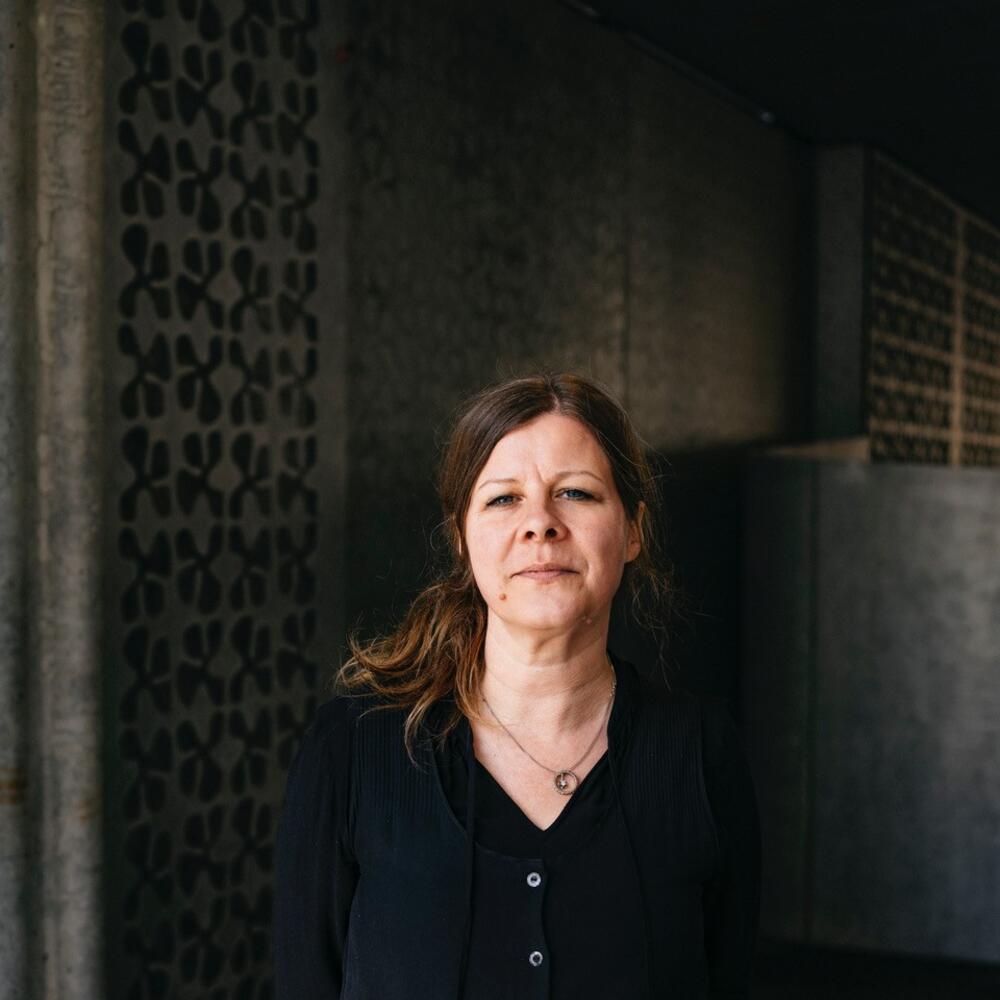
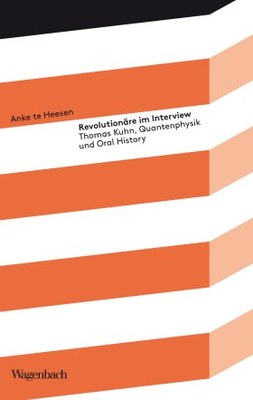
Professor Anke te Heesen is Chair of the History of Science with a focus on the history of education and the organization of knowledge in the 19th and 20th centuries at Humboldt-Universität zu Berlin. She has held this position since 2011 and is also the spokesperson (since 2024) of the DFG Center for Advanced Studies 'Applied Humanities – Politics and Genealogy,' alongside Professor Viktoria Tkaczyk. Previously, she served as Professor for Empirical Cultural Studies at the University of Tübingen (2008-2011) and founding director of the Museum of the University of Tübingen (2006-2008). Her academic career includes research positions at the Max Planck Institute for the History of Science in Berlin (1999-2006), the German Hygiene Museum Dresden (1998-1999), and the Research Center for the European Enlightenment (1996-1997). Professor te Heesen's research spans multiple interconnected fields including the history of humanities, natural history in the early modern period, museum and exhibition history, organization and notation methods of sciences, and the relationship between science and art. She has a particular interest in how knowledge is formed, organized, and presented through various material and institutional practices. Her work often examines the intersection of academic knowledge production with material culture, focusing on objects, collections, and exhibition practices as sites of knowledge formation. Her recent publications reveal a strong focus on the history of interviews as research methodology, the development of exhibition catalogs as scholarly monographs, and the material history of knowledge practices. The analysis of her 15 most recent articles shows consistent engagement with themes of materiality, the organization of knowledge, and the historical development of scholarly practices, particularly in the humanities. Her work frequently bridges historical analysis with contemporary scholarly concerns about knowledge production and dissemination. Spokesperson of the DFG Centre for Advanced Studies 'Applied Humanities: Genealogy and Politics' (since 2024) Senior Fellow, Collegium Helveticum, Zurich (WS 2023/24) Visiting Scholar, Max Planck Institute for History of Science (since 2021) Dibner Research Fellowship, Huntington Library (2020) Senior Research Fellowship, Lichtenberg Kolleg (2020) Professor te Heesen has held significant leadership roles including Ombudsperson of Humboldt University of Berlin (since April 2024) and Head of the Commission for Studies and Teaching at the Institute of History (since April 2024). She serves on multiple advisory boards including the Scientific Advisory Board of the project 'Serious Donations' at the Museum of Natural History in Berlin (since 2020), the DFG Review Board for History (2020-2024), and the Robert K. Merton Center for Science Studies at Humboldt University (since 2019). She is also a member of the editorial boards of several scholarly journals including Reports on the History of Science and History of Science and Humanities. Her work extends to museum practice and curation, with significant contributions to understanding how universities can leverage their collections to create meaningful educational experiences that connect historical context with contemporary research. She has initiated important publication series including 'Sonderdruck' (since 2016) and 'Minima Literatur- und Wissensgeschichte kleiner Formen' (since 2020).
Dr. Gaoheng Zhang is an Associate Professor of Italian Studies at the University of British Columbia's Faculty of Arts. His research analyzes cultural mobilities within Italy's and Western Europe's global networks with Asia, America, and Africa, focusing on transculturality and dialogism through multilingual and multisited methodologies. Key Focus Areas: Migration/Postcolonial Studies, Gender and Masculinity, Film/Communication Studies, Italian-Chinese Relations Teaching: Italian Food/Fashion Cultures, Mafia Movies, Pandemic Literature, (Post-)Colonial Cultures His scholarship includes pioneering works on China-Italy cultural exchanges through Mobility, Architecture, Chronotopes (2023), and the upcoming monographs Italian Dumplings and Chinese Pizzas (2025) and Fashion Communications Between Italy and China (2025). He is co-editing The Handbook on Modern China-Italy Relations (2026-2027) with Valentina Pedone. Dr. Zhang's research has received prestigious recognition including: SSHRC Insight Grant (2025-2029) UBC Killam Faculty Research Fellowship (2022-2023) Jean Monnet Fellowship (2022-2023) SSHRC Insight Development Grant (2018-2020) Provost’s Postdoctoral Scholarship at USC (2012-2014) He serves on the executive committee of UBC's Centre for Migration Studies and advisory board of Green College, while maintaining affiliations with the Centre for European Studies and Asian Canadian/Asian Migration Studies program.
Trevor Goodyear is an Assistant Professor at the University of British Columbia (UBC) Faculty of Applied Science, School of Nursing. His research explores substance use, mental health, and health equity among marginalized populations, particularly 2S/LGBTQ+ youth and people who inject drugs. Education: MSN, MPH, PhD Research Interests: Harm reduction, LGBTQ+ health, mental health, public health, health equity, social determinants of health His recent work examines harm reduction strategies, structural vulnerabilities, and health narratives in urban drug scenes. Publications analyze cannabis use, overdose prevention, conversion practices, and the intersection of gender identity with substance use. His research employs qualitative methods like photovoice and narrative analysis to center marginalized voices. Key trends in his articles include the role of stigma in healthcare, policy implications of substance use research, and the impact of the COVID-19 pandemic on mental health disparities. He advocates for evidence-informed policies and community-driven interventions to address systemic inequities.