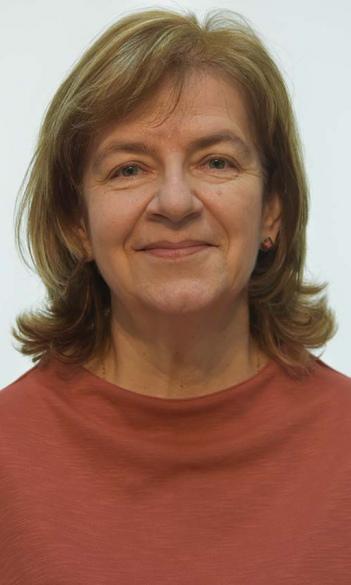
Klára Trencsényi is a Visiting Professor of Practice at the Undergraduate Program of Central European University (CEU), appointed since 2020. A prominent figure in documentary filmmaking, she holds a qualification in Directing Photography from the Hungarian Film Academy, Budapest, and a degree in Spanish Philology from Eötvös Loránd University. Her work focuses on social and creative documentaries, blending artistic vision with socio-cultural critique. Member of faculty at CEU’s Undergraduate Program Lecturer at Budapest’s Metropolitan University (since 2017) Her documentaries, including Train to Adulthood and Corvin Variations , have screened globally at festivals like IDFA Amsterdam, Margaret Mead Festival (NY), and Sarajevo Film Festival. She has received grants from the European Union’s Creative Media Program, Visegrad Fund, and Nipkow Fellowship Programme, as well as participation in prestigious workshops like DocsBarcelona and Berlinale Talent Campus. As an educator, she teaches documentary writing, directing, and film presentation at CEU, Budapest Technical University, and Anderson Art Lab. She co-founded the DunaDOCK Creative Documentary Development Forum to support emerging filmmakers. Awards: Recognized for Train to Adulthood (unspecified honors) Grants: European Union Creative Media Program, Visegrad Fund, Nipkow Fellowship
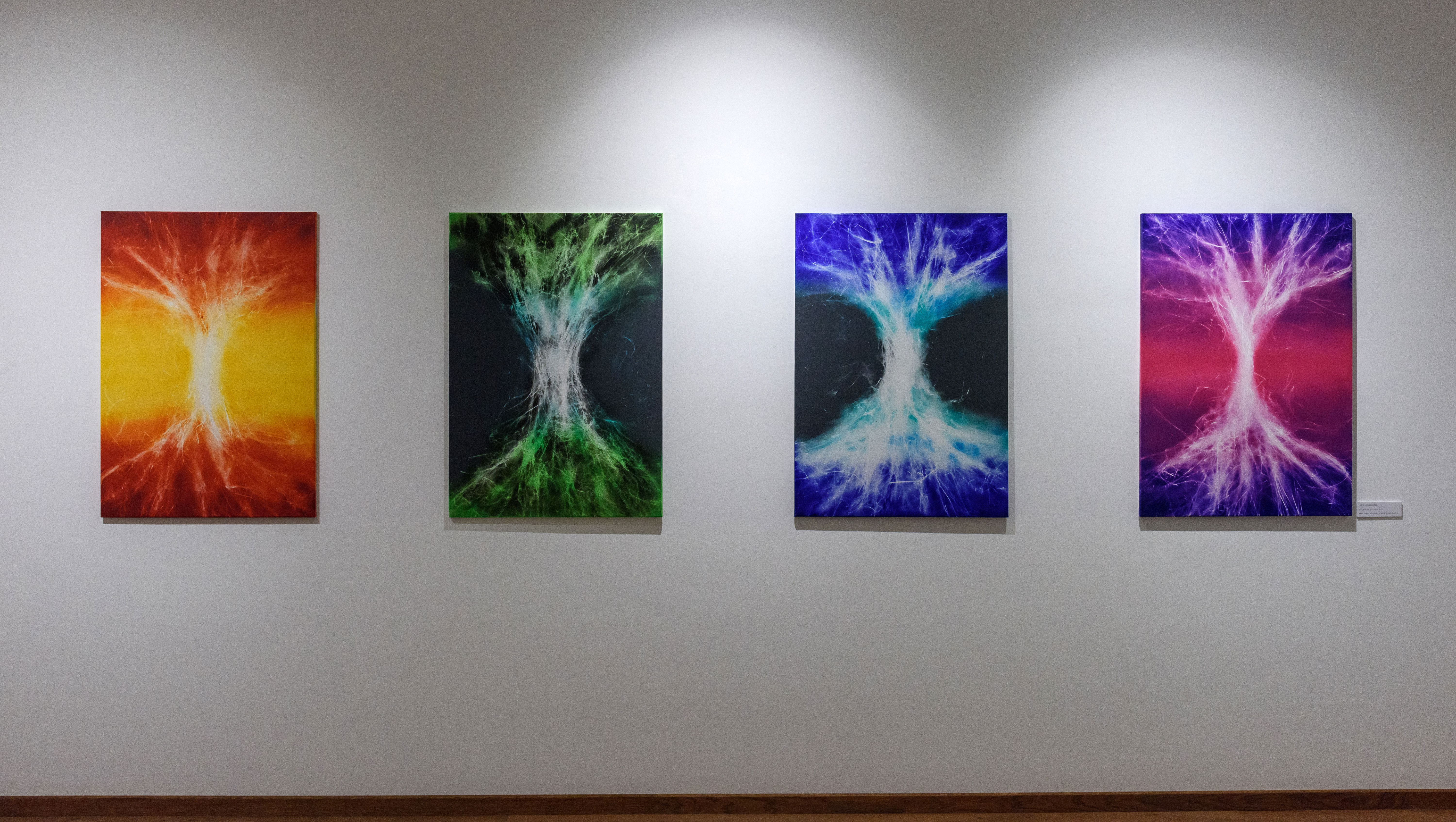
Zsigmond Lucza (born 1978 in Budapest) is a Hungarian contemporary artist and university assistant professor at the Hungarian University of Fine Arts, Department of Visual Art since 2022. He holds a DLA (Doctor of Liberal Arts) degree from the University of Pécs Faculty of Arts (2011-2014) and has extensive international experience including studies at the University of Lapland in Finland (2012-2013). Lucza's educational background includes dual Master's degrees from the Hungarian University of Fine Arts (2002-2007) in both Painting and Visual Art Teacher programs, along with foundational training at the Buda Drawing School (2000-2002). His academic career includes teaching positions at Jelky András Applied Arts Vocational High School (2014-2018), Modell Fashion School (2008-2012), and Kolumbusz Humanities High School (2005-2007). Lucza's artistic practice spans contemporary painting, transmedia art, and mixed media works, with significant focus on digital integration in traditional art forms. His research interests center on transmedia tendencies in contemporary Hungarian painting, visual communication, and the evolving relationship between digital and physical art spaces. His work often explores identity, perception, and the integration of technology in artistic expression, creating pieces that bridge traditional painting techniques with contemporary digital aesthetics. His artistic output shows a consistent evolution from figurative works toward more experimental transmedia approaches, with recent projects focusing on environmental reflection, digital portraiture, and collaborative installations. Lucza's work demonstrates a sophisticated understanding of both traditional painting techniques and contemporary digital media, creating a distinctive visual language that addresses current artistic concerns while maintaining strong technical foundations. Lucza has received multiple awards including an Erasmus scholarship for study at the University of Lapland, a scholarship from the Budapest Gallery and Kunststiftung Baden-Württemberg, and first prizes in national competitions. His professional affiliations include membership in the Hungarian Artists' Association (MAOE) since 2007, the MAMŰ Society since 2015, and non-academic membership in the Hungarian Academy of Arts (MMA) since 2022. As an educator, Lucza has conducted numerous workshops internationally including the Experimental Drawing Course at the Latvian Academy of Arts and Transmedia Workshops at the University of Pécs. His curatorial work includes the 'Medium Summoners' exhibition at MAMŰ Gallery in Budapest (2017). Lucza maintains an active exhibition schedule with solo shows across Hungary, Finland, and Slovenia, alongside participation in numerous international artist colonies and collaborative projects.
Julia Sachseder holds dual roles at Central European University (CEU) as a Senior Research Fellow in the Department of International Relations and a Visiting Professor in the Department of Gender Studies. Her interdisciplinary research bridges gender, political economy, violence, and environmental justice, utilizing feminist, postcolonial, and decolonial frameworks. Dr.phil in Political Science, University of Vienna Research Master in Political Science, Universitat Pompeu Fabra Bachelor of Arts in European Studies, Maastricht University Her work critically examines extractivist economies, sexual violence in conflict zones, EU border security, and climate crisis responses. Current projects include the FWF-funded "Risky Borders" and OEAW-funded "Climates of Peace," analyzing intersectional power dynamics and decolonial justice. Julia’s 15 most recent publications focus on the gendered and racialized politics of EU border security, environmental justice in conflict and post-conflict contexts, and feminist/postcolonial critiques of security institutions like Frontex. Key themes include epistemic violence, militarized peace, and transnational capital’s gendered impacts.
Éva Péteri is an Associate Professor at the School of English and American Studies , Department of English Studies , Eötvös Loránd University, Budapest. Her academic work bridges literature, art history, and cultural studies, with a focus on Victorian visual culture and its intersections with Hungarian artistic traditions. Academic Rank: Associate Professor Institution: Eötvös Loránd University Contact: peteri.eva@btk.elte.hu Her research explores Pre-Raphaelite art, Shakespearean visual adaptations, and the cultural memory of British literature in Hungary. She has extensively analyzed Victorian religious imagery, interlibrary cooperation systems, and the socio-political dimensions of 19th-century British painting. Key article trends include: Victorian art's symbolic and moral dimensions Intermedial adaptations of literary works Cultural exchange between British and Hungarian art Documentation of urban and historical narratives in painting Periodical monitoring systems for academic resources Her publications also address library science challenges, including interlibrary loans and digital resource management (2008-2018), though no formal scientific awards are listed. She has not provided student advisement records in available texts.
János Kertész is a Professor at the Department of Network and Data Science at Central European University (CEU) since 2012, and previously held the position of Professor at the Budapest University of Technology and Economics (1992–2018). He obtained his PhD in Physics from Eötvös University (1980) and DSc from the Hungarian Academy of Sciences (1989). His research spans statistical physics applications, complex networks, and financial analysis. He has authored over 280 papers and served on editorial boards of journals like Journal of Physics A and Physical Review E . His research focuses on interdisciplinary topics including social network dynamics, systemic risk in economic systems, and algorithmic bias in digital environments. Notable awards include the Széchenyi Prize (Hungary’s highest scientific honor) and the Finland Distinguished Professorship. He has led projects such as SAI (Socially Explainable AI) and HUMANE-AI-NET, addressing algorithmic bias and AI ethics. His work bridges physics-based modeling with real-world social and economic systems, emphasizing computational approaches to corruption, opinion formation, and innovation diffusion. Key contributions include modeling cascading failures in interdependent networks and analyzing attention dynamics on platforms like Sina Weibo during the pandemic. He advises on systemic risk mitigation strategies and collaborates internationally, with visiting roles in Germany, the U.S., France, Italy, and Finland.
Ildikó Király is a Professor at the Institute of Psychology, Eötvös Loránd University, Budapest, currently serving as Head of the Department of Cognitive Psychology and lecturer. Her research focuses on developmental psychology, particularly social cognition, imitation behavior, and theory of mind in early childhood. Key areas: Social Cognition , Developmental Neuroscience , and Cognitive Development Recent work examines preschoolers' exploration tendencies, joint action observation effects, and linguistic group membership's role in perspective taking. She leads the Social Minds Research Group , investigating how cultural knowledge transmission shapes cognitive development. Her 2021-2025 publications reveal trends in: Imitative behavior's sensitivity to social norms and group identity Memory flexibility in adapting to changing contexts Interactions between semantic processing and mentalization in social situations Comparative studies on human and non-human primate cognition
Petra Bozsoki is a Lecturer at the Institute of Hungarian Literature and Cultural Studies , Eötvös Loránd University, Budapest. She serves as an editor for the Verso Journal of Literary History and contributes to academic discourse on 19th-century Hungarian women's literature and intellectual history. Her research focuses on women's history-writing , gender roles , and feminist theory , particularly analyzing the works of Emília Kánya, Hungary's first female journal editor. Her publications explore the intersection of gender , national identity , and market strategies in 19th-century Hungarian periodicals. Key trends in her 2023–2013 publications include: methodological innovations in women's history gendered editorial strategies cultural memory of feminist pioneers analysis of patriotic women's roles critique of gender narratives in literature
Andrea Dúll is a Professor at the Faculty of Education and Psychology of Eötvös Loránd University (ELTE), serving as Vice Dean and Director of the Institute of People–Environment Transaction . She leads the Environmental Psychology Lab and actively participates in academic governance through roles on the Faculty Council, Awards Committee, and Quality Management Committee. Her academic background includes a Doctor of Science (DSc) degree. Research focuses on environmental psychology, place identity, urban environmental behavior, and the psychological aspects of human-environment interaction. Key areas include pro-environmental behavior, climate change psychology, workplace design, and sustainable education. Notable methodologies include mental mapping, longitudinal studies, and questionnaire development for assessing eco-anxiety and ecological grief. Publications span over 30 years, addressing topics like urban safety perception, pandemic-related digital behavior changes, and the transformation of office spaces. She has conducted large-scale surveys on youth environmentalism and contributed to theoretical frameworks linking nature connectedness to ecological actions. Current activities include directing the Institute, maintaining an active presence on professional platforms , and advising on spatial policy through committees. Her work emphasizes interdisciplinary approaches bridging environmental studies, psychology, and urban planning.
Dr. Gergely Kocsis serves as an Associate Professor at the University of Debrecen's Faculty of Informatics, Department of Informatics Systems and Networks. His office is located in the Faculty of Informatics building at 4028 Debrecen, Kassai út 26, ground floor, IF13 (Lecturers' room), with contact email kocsis.gergely@inf.unideb.hu and central telephone +36 52 512 900 75013. Dr. Kocsis's research program focuses on: Information spreading phenomena Agent-based and individual-based simulations Cellular automata applications Network structure and dynamics His scholarly output reveals a sophisticated research trajectory evolving from foundational work on cellular automata modeling of social dynamics (2007-2014) to contemporary investigations of transportation networks, VANETs, and AI applications. The 2023-2025 publications demonstrate particular expertise in network extraction methodologies, containerized computing environments, and the application of generative AI to productivity challenges. His work consistently applies computational modeling approaches to understand complex spreading phenomena across diverse network structures. Dr. Kocsis maintains comprehensive scientific profiles across major academic platforms including Google Scholar, ResearchGate, ORCID, Scopus, and Web of Science, demonstrating active participation in the international research community. His departmental colleagues work in complementary areas such as complex networks, embedded systems, and neural networks, suggesting rich collaborative opportunities within the Faculty of Informatics.
Károli Gáspár University of the Reformed ChurchHungary
Dr. Adam Bence Bethlenfalvy is an Associate Professor at the Faculty of Humanities and Social Sciences, Károli Gáspár University of the Reformed Church in Hungary. Born in Delhi, India in 1977, he holds a PhD in Drama Pedagogy (Education) from Birmingham City University (2017) and MA degrees in English Language and Literature from ELTE (2004). He serves as Research Group Leader of the Theatre Pedagogy and Theatre Sociology Research Group and has directed numerous theatre productions while maintaining an active research profile. Bethlenfalvy earned his doctoral degree in 2017 from Birmingham City University with a dissertation titled "Living through extremes: an exploration of integrating a Bondian approach to theatre into 'living through' drama." His educational background includes dual MA degrees from ELTE Budapest in 2004 - one in English Language and Literature and another as an English Language and Literature Teacher. He also obtained professional qualification in drama direction from the Hungarian Drama Pedagogical Society in 1996. His language proficiency includes English (C2), French (A2), and Hindi (A2). Dr. Bethlenfalvy's research focuses on drama pedagogy, theatre education, and Edward Bond's theatre. His work explores the integration of Bondian approaches into living through drama, reflective practice in educational settings, and creative partnerships in theatre education. He has made significant contributions to understanding how fictional contexts can liberate educational and artistic processes, particularly through process drama methodologies. His research also addresses contemporary challenges such as digital media usage, online learning during the pandemic, and code-switching in multilingual drama classrooms. His extensive publication record shows a clear focus on mapping and analyzing educational theatre programs in Hungary and Europe. Recent work examines methodology for national mapping of educational theatre, the big picture of objectives and strategies in Hungarian educational theatre programs, and trends in educational theatre practices. His scholarship consistently connects theory with practical applications in drama education while exploring the intersections between Edward Bond's theatrical approaches and educational drama methodologies. Dr. Bethlenfalvy has supervised doctoral students including Melinda Gemza (University of Debrecen) and Dear Kristina (Babeș–Bolyai University). He has served as an opponent at numerous doctoral defenses, including for Ramona Gecse (2021), Antal Klaudia (2022), Vera Prontvai (2022), Kata Pető (2022), and Prezsmer Boglárka Laura (2023). He leads research projects including "Theatre and society – theatre pedagogy and theatre sociology in Hungary" (2022-2024) and participates in "Victim Roles" and "Code-switching in the arts" projects. As an active practitioner, Bethlenfalvy has directed numerous theatre productions, including "OnLife" at Csokonai National Theatre (2025), "Dragon's Eye" (2024), and several Edward Bond adaptations. He has organized significant conferences such as the Democracy through Drama Summer School (2019) and The GAP conference (2016). His professional activities also include membership in academic societies like IDEA Europe, Hungarian Drama and Theatre in Education Association, and National Association for the Teaching of Drama.
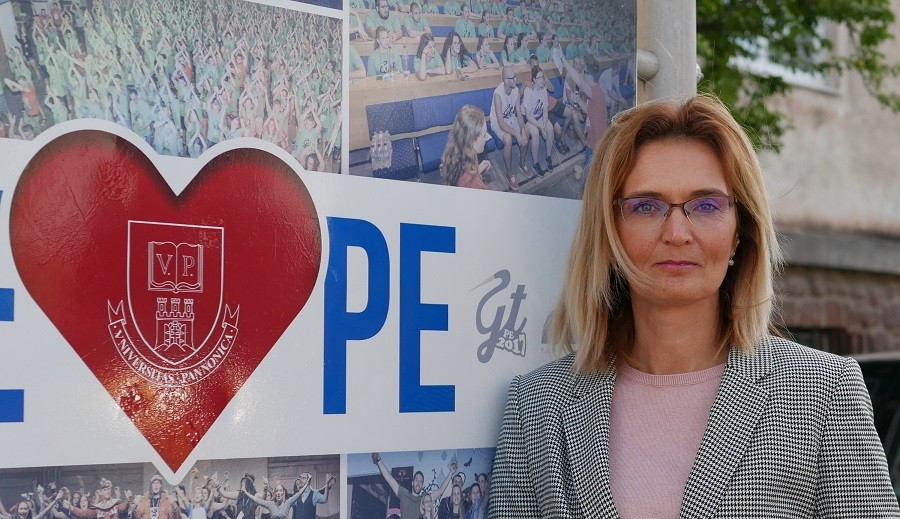
Dr. Andrea SZABÓ is an Associate Professor and Institute Director at the English and American Studies Institute, University of Pannonia. Her research explores literary criticism through lenses of gender, space, and cultural identity, with extensive work on Canadian authors like Alice Munro and Cormac McCarthy. She investigates Gothic paradigms, transnational narratives, and media representations of societal structures. Her publications predominantly analyze literature through feminist and spatial theories, focusing on: Deconstruction of gendered identities in domestic and public spaces Transcultural adaptation of popular fiction Subversion of traditional genres like Westerns and Gothic tales Discursive construction of femininity in contemporary narratives Article trends (2011-2024) reveal concentrated scholarship on Alice Munro’s fiction, Canadian Gothic subversions, and media-military relations, employing interdisciplinary approaches from psychoanalysis to discourse studies.
Susan Carin Zimmermann is a University Professor at Central European University, jointly appointed in the Department of Historical Studies and the Department of Gender Studies. She is based in Vienna and plays a leading role in interdisciplinary research on gender, labor, and social history, particularly in Central and Eastern Europe. Her current ERC Advanced Grant project ZARAH (2020–2026) explores transnational women’s labor activism from the age of empires to the late 20th century. Ph.D., Universität Wien (1993) Habilitation, Eötvös Loránd University Budapest (1999) Habilitation, Johannes Kepler Universität Linz (2000) Her research critically examines the intersections of gender, class, and global inequalities in modern history, with a focus on working women, trade unionism, and international labor policy. She investigates how women trade unionists navigated masculinist structures in state-socialist Hungary and engaged with international organizations like the ILO. Her work promotes inclusive, transnational, and gender-sensitive labor historiography. Her recent publications include a major monograph in German (2021) and co-edited volumes such as Through the Prism of Gender and Work (2024) and Women, Work, and Activism (2022). The 15 most recent articles reflect a consistent engagement with gendered labor policies, women’s activism, international labor standards, and the historiography of labor in socialist and imperial contexts, spanning from the Habsburg Empire to post-socialism. Her scientific awards include: ERC Advanced Grant (2020–2025) Käthe Leichter Award (2000) Pro Cultura Hungarica Memorial Award (2005) Fellowships at Wissenschaftskolleg zu Berlin (2002–2003) and re:work, Humboldt-Universität (2016–2017) She has supervised over 20 doctoral students, many of whom have completed dissertations on gender, labor, and social history in Eastern Europe. She holds editorial roles in major journals such as Labor: Studies in Working-Class History and Labour History , and serves on the academic advisory boards of the Leibniz Institute for East and Southeast European Studies and the International Conference of Labour and Social History (ITH), where she was President from 2014 to 2022. She co-edits the CEU Press book series 'Work and Labor: Transdisciplinary Studies for the 21st Century'. Zimmermann leads the ZARAH research project team, which includes scholars across Europe, and collaborates with international research centers such as re:work in Berlin. Her work is embedded in a transnational network of labor and gender historians, and she actively contributes to shaping the future of inclusive labor history through collaborative research, publications, and mentorship.
Szandra Ésik is a Lecturer at the Department of Chinese Studies, Faculty of Humanities, Eötvös Loránd University. She teaches Chinese language and political discourse analysis while contributing to Hungarian-Chinese lexicography projects. Institute of East Asian Studies Department of Chinese Studies Research Interests: Chinese political rhetoric and discourse analysis Second language teaching methodologies for Chinese Translation studies and bilingual dictionary development Silk Road cultural/economic history Environmental policy in Chinese Communist Party congresses Her recent publications focus on comparative analysis of political speeches (2017-2020), character teaching strategies, and collaborative dictionary projects with scholars like Huba Bartos and Imre Hamar. She has contributed to institutional research at ELTE's Chinese Studies department. Contact: esik.szandra@btk.elte.hu
Dr. Kerekes Amália is a habilitated Associate Professor at the Institute of Germanic Studies within the Faculty of Humanities at Eötvös Loránd University (ELTE) , Budapest. Her academic work bridges German literature, cultural studies, and migration narratives , with a focus on Austro-Hungarian historical intersections and intercultural discourse . Research Themes : Cultural topographies, media theory, 20th-century emigration, narrative strategies, and gendered histories. Publications : Analyze Hungarian-German literary exchanges, including autobiographical works, post-war emigration representations, and media’s role in shaping collective memory. Teaching : Integrates press fiction and film into German language pedagogy. Her recent articles examine the 1956 revolution's literary legacy and interwar cultural mobilization . While no scientific awards are explicitly listed, her habilitation underscores scholarly expertise. Contact: kerekes.amalia@btk.elte.hu .
Károli Gáspár University of the Reformed ChurchHungary
Dr. Johanna Domokos is an Associate Professor at the Department of Theatre Studies, Faculty of Humanities and Social Sciences, Károli Gáspár University of the Reformed Church in Hungary. With a distinguished academic career spanning several institutions including University of Bielefeld and UCLA, she has established herself as a leading scholar in multilingualism, Sámi literature, and Finno-Ugric studies. Her educational background includes a PhD in Comparative Literary Studies (1999) from József Attila University with a dissertation on Translation-semiotic analysis of Lapp poetry , multiple MA degrees in Finno-Ugric Studies, Hungarian Language and Literature, and English Language and Literature (1994, 2000), and the prestigious Dr. Habil degree from Eötvös Loránd University (2011). Domokos's research focuses on multilingualism in the arts , particularly examining literature, theatre, and visual arts in Northern and Central Europe, with special emphasis on Finland, Estonia, Sámi/Lapland, and the Carpathian Basin. Her work explores artistic rituality, mystical poetry, and interlingual and intersemiotic translation. She has led numerous research projects including the 'International Mediation of Sámi Literature' (2016-2019) and 'Rituality, Theater, Literature' (2018-2020). Her recent scholarly output reveals a strong trend toward Anthropocene studies and code-switching research , with publications examining multilingual creativity, Sámi literature, and the intersection of theatre with ecological concerns. Her work demonstrates growing interdisciplinary connections between literary studies, environmental humanities, and performance theory. Scientific Awards: Faludy-Díj (1992) Karriert Támogató Díj and Kutatói Díj from UCLA (2005, 2007) Kulturális Szervezői Kitüntetés from Los Angeles Hungarian Embassy (2008) Inger Sjöberg Prize from Scandinavian Society, USA (2022) Dr. Habil degree from Eötvös Loránd University (2011) Domokos has supervised doctoral students including Molnár Attila (on multimedia in contemporary art), Miklós Krisztina (on multilingualism and corporeality in Tompa Andrea and Sofi Oksanen's novels), and Bilibok Apollónia (on streamed theatre performances during the pandemic). She has served on numerous doctoral committees, most recently examining Balázs Renáta's work on contemporary Hungarian and Finnish national literary history constructions (2025). Her research has been supported by prestigious Humboldt Scholarships at Bielefeld University (2010-2011, 2018). She leads the Translation Workshop at Károli Gáspár University and has been instrumental in establishing the university's translation laboratory. Her international research group 'Kódváltás a kortárs művészetben' (Code-Switching in Contemporary Art) continues to produce significant scholarly work bridging linguistic and artistic disciplines.