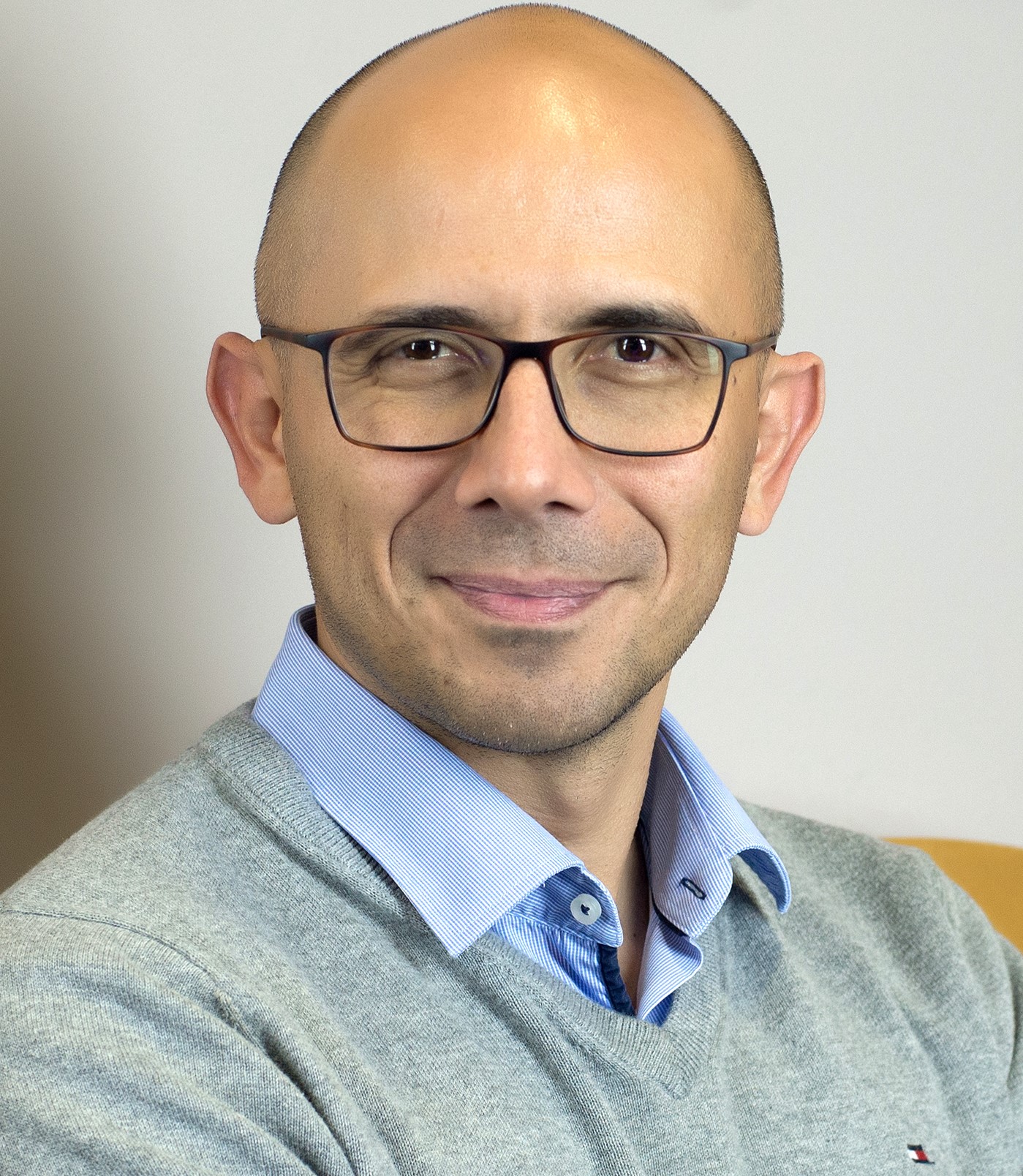
Lordan Kondić is a Lecturer at Algebra Bernays University with over 27 years of professional experience in marketing, sales, and management. He specializes in brand management, customer relationship management (CRM), and digital marketing strategies, bridging practical expertise with academic teaching. University: Algebra Bernays University Academic Rank: Lecturer His research focuses on social media engagement , user interaction with brands , and digital marketing trends . Recent publications explore brand engagement models, minimalistic design in marketing communications, and the impact of social media on brand equity. His work emphasizes practical applications in B2B/B2C environments. He holds an MBA from the Faculty of Economics in Zagreb and is currently a PhD candidate there. His academic journey aligns with his consultancy work in media, telecommunications, and tourism sectors, where he applies innovative marketing strategies and rebranding frameworks.
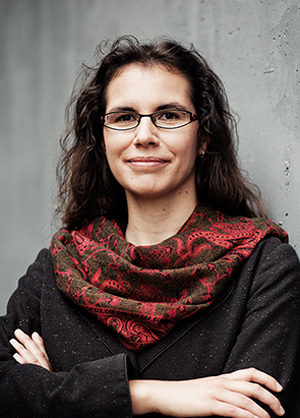
Prof. Dr. Andrea Dreyer is a full-time Professor of Art and its Didactics at the Bauhaus University Weimar , where she has served since 2013. She is Vice Dean for Strategic Development within the Faculty of Art and Design and actively participates in academic governance, including roles in graduation committees, teacher training advisory boards, and curriculum commissions. Her research focuses on teacher professionalization, architectural pedagogy, and digital art education, emphasizing interdisciplinary approaches and qualitative social research methodologies. First and Second State Examination for Teaching at Grammar Schools in Art Education and Social Studies (1994–2000, 2004–2006) Andrea Dreyer’s publications span topics such as Bauhaus-inspired pedagogy, urban-rural spatial education, and digital integration in art teaching. She has led initiatives like DigiProSMK and Denkraum.Bauhaus , and her work often bridges art, architecture, and societal transformation. She has served as Dean of Studies and Vice-Rector for Studies and Teaching at Bauhaus University, advocating for phase-transcendent teacher networks and reflective professional practices. Her recent articles address participatory architectural psychology, interdisciplinary curriculum design, and digitalization in art education. Despite extensive committee involvement and editorial contributions, no specific scientific awards are highlighted in the provided texts. She mentors students and collaborators within the kunst:pädagogik | netz:werk platform and maintains active partnerships with institutions like the Thuringian Ministry of Education and Friedrich-Schiller University Jena.
Sylvie Delacroix is the Inaugural Jeff Price Chair in Digital Law and Director of the Centre for Data Futures at King's College London. She is also a Visiting Professor at Tohoku University, focusing on bridging theory and practice in ethics and public policy initiatives. Her research spans Data & machine ethics Ethical agency and habit Social sustainability of data ecosystems Participatory infrastructure for AI systems Uncertainty communication in LLMs Legal theory and digital law Recent publications address LLM interfaces as transitional spaces for democratic revival and sustainable data rivers in generative AI. Her work has attracted significant grant funding from the Patrick J. McGovern Foundation, Wellcome Trust, and Omidyar Network. Scientific awards include the Leverhulme Prize Peter Birks 2d Prize for Outstanding Legal Scholarship Montgomery Fellowship at Dartmouth College She supervises PhD research on large language models and uncertainty communication, as well as habit in ethical lives. Her policy contributions include advising the Law Society of England and Wales on algorithmic justice systems.
Dr. John McGowan is a Lecturer at the School of Computing Engineering and the Built Environment , Edinburgh Napier University. His work bridges Music Therapy , Interaction Design , and Assistive Technologies for autistic individuals. Research Focus: Development of the CymaSense application—a real-time 3D audio-visual tool for augmenting music therapy sessions. This research explores how interactive cymatics (sound visualization) can improve communication and social interaction for people on the autism spectrum. Research Trends: His publications emphasize multi-sensory environments , therapeutic software systems , and user-centered design for neurodiverse populations. Recent work addresses stress triggers in autistic adults using augmented reality and mobile technologies . Supervision: Co-supervised PhD projects on topics including auditory selective attention in mixed reality and adaptive sound design for video games . Grants: Secured funding from Edinburgh Napier University and Arts & Humanities Research Council ( Audio Mostly 2023 conference ). £5,000 grant (AHRC) for embodied music interaction research Labs: Affiliated with the Centre for Interaction Design , contributing to interdisciplinary projects in health technology and creative arts .
Festo Kayima is an Associate Professor in Chemistry Didactics at the Department of Teacher Education, Faculty of Social and Educational Sciences, Norwegian University of Science and Technology (NTNU). His research focuses on science teacher education, classroom knowledge, and pedagogical strategies in chemistry. Doctorate in Chemistry Education (2018, University of Bergen) Master’s in Science Education (2020, NTNU) Kayima’s research projects include developing science teacher trainees’ professional knowledge through reflective practice, enhancing scientific literacy, and integrating sustainability into chemistry education. He leads the Erasmus+ project STEMkey (2020–2023), emphasizing graduate attributes and key skills for educators. His recent publications (2025) with Springer explore pedagogical themes like chemical knowledge, outdoor teaching, and technology integration. These works align with broad keywords such as Science Education, Curriculum Development, and Experiential Learning, with subfields spanning digital tools, sustainability, and misconceptions in chemistry. Co-supervised Kristine Fjelldal Sunde’s thesis on teacher questioning in labs He contributes to research groups Naturfaglig Literacy i Skole og Lærerutdanning and ScienceHumanities , bridging interdisciplinary approaches in education. His teaching includes courses like Science as a School Subject (MGLU4211) and Teacher Education: Teaching Chemistry (PPU4626).
Leah Macfadyen is an Associate Professor of Teaching in the Department of Language & Literacy Education at the University of British Columbia (UBC), Faculty of Education. She serves as Coordinator for Curriculum & Instruction in the Master of Educational Technology (MET) program. With interdisciplinary training in experimental sciences and humanities, she bridges analytical rigor with cultural theory in her research on digital education and learning analytics. Her research spans learning analytics , digital literacies , and critical intercultural communication . Key projects include developing UBC’s Introduction to Global Citizenship online course (2005) and co-authoring MET program courses like ETEC 542. She explores ethical dimensions of ‘big data’ in education and data literacy challenges. Recent publications (2020–2023) focus on institutional learning analytics frameworks, curriculum NLP analysis, and ethical codes for practitioners. Collaborative work with Shane Dawson and others has been published in journals like Journal of Learning Analytics , Computers & Education , and Journal of Genetic Counselling . Key Themes : Intercultural communication in digital spaces, systems thinking for educational analytics, ethical implications of data-driven learning Courses Developed : ETEC 500, 520, 542, 543, 581, and 590
Jonathan Boreyko serves as an Associate Professor and John R. Jones III Faculty Fellow in Virginia Tech's College of Engineering, Department of Mechanical Engineering. His research integrates fluid dynamics, heat transfer, and biomimetic engineering to develop sustainable solutions for water and energy harvesting through innovations like Fog Harps and synthetic trees. Dr. Boreyko earned his Ph.D. in Mechanical Engineering from Duke University (2012), following an M.S. and B.S. in Mechanical Engineering and Physics from Trinity College (2007). His academic journey includes postdoctoral research at Oak Ridge National Laboratory and faculty appointments in Biomedical Engineering and Mechanics at Virginia Tech before transitioning to Mechanical Engineering. His research program centers on interfacial phenomena in micro/nano-structured materials, with core expertise in droplet dynamics, phase-change heat transfer (condensation, evaporation, boiling), and biomimetic water harvesting systems. The Nature-Inspired Fluids and Interfaces Lab examines how natural designs—from plant transpiration to insect surfaces—can inform engineered solutions for atmospheric water collection, anti-icing, and thermal management. Analysis of his 15 most recent publications reveals three dominant research thrusts: (1) biomimetic water harvesting systems (Fog Harps for atmospheric water collection), (2) thermal diodes leveraging droplet bridging for directional heat transfer, and (3) anti-clogging/anti-tangling mechanisms in fog harvesting meshes. These works consistently bridge fundamental fluid mechanics with practical sustainability applications. His scientific achievements include: John R. Jones III Faculty Fellow (2020) NSF CAREER Award for Thermal Transport Processes (2017) AFOSR Young Investigator Program Award (2016) 3M Non-Tenured Faculty Award (2016) Multiple best poster awards at APS, Gordon Research Conferences, and MRS meetings Dr. Boreyko has advised graduate students including Weiwei (Ph.D., 2020) and Viverjita (M.S., 2020), with research funded by NSF, AFOSR, and 3M. His lab maintains active collaborations with industry partners and national laboratories for technology translation. The Nature-Inspired Fluids and Interfaces Lab combines experimental fluid dynamics, materials characterization, and computational modeling to develop deployable systems. Current projects include scaling Fog Harps for real-world water harvesting, optimizing synthetic trees for passive desalination, and exploring jumping-droplet phenomena for thermal management in electronics.
Dr. Benjamin de Haas is a vision scientist and faculty member at Justus Liebig University Giessen , Germany, within the Department of Psychology and Sports Science . He currently leads the ERC-funded Indivisual project and co-leads project C9 Factors influencing categorical face processing within the Collaborative Research Centre CRC/TRR 135. He is also a principal investigator in the NeurOscientific Workflow Assistance (NOWA) infrastructure project, dedicated to open, reproducible neuroscience. Research Focus Dr. de Haas pursues two intertwined questions: How do early and late stages of visual processing interact—from the initial registration of slanted edges to the recognition of faces? How and why do our perceptions differ from one person to the next? To answer these questions his group combines psychophysics, high-resolution eye-tracking, functional and quantitative MRI, and computational modelling, with a strong emphasis on face perception, individual differences, and naturalistic viewing conditions. Publications Overview Across more than 20 publications since 2016, Dr. de Haas has advanced understanding of individual differences in face processing, gaze control, and visual salience. His work repeatedly appears in Journal of Vision , Nature Communications , PNAS , and NeuroImage , highlighting a sustained focus on eye-movement behaviour, cortical representations of faces and scenes, and methodological best practices in neuroimaging. Current Supervision & Team Dr. de Haas currently supervises two PhD students: Elaheh Akbarifathkouhi Hilal Nizamoglu Together with Dr. Katharina Dobs (co-project leader) and affiliated post-docs and research technicians, the group forms the Indivisual laboratory at Giessen. Contact & Resources Email: Benjamin.de-Haas@psychol.uni-giessen.de Department of Psychology and Sports Science Otto-Behaghel-Str. 10F, 35394 Gießen, Germany
Erik Kwakkel is a Professor at the University of British Columbia, School of Information , specializing in the History of the Book , Codicology , and Digital Humanities . His research examines premodern communication systems, focusing on manuscript design, marginalia, and knowledge dissemination before print culture. Director, UBC iSchool (2020–present) Member, Comité International de Paléographie Latine (CIPL) Active in digitization projects and outreach through medievalbooks.nl blog and social media His research bridges material culture with digital innovation, analyzing medieval parchment reuse, manuscript fragments in early-modern bindings, and collaborative book production networks in Paris. He pioneered framed fragment storage at UBC for safer pedagogical use of delicate materials. Selected Publications include Books Before Print (2018), Medicine at Monte Cassino (2019), and The European Book in the Twelfth Century (2018). His media impact spans BBC World Service , CNN , and Smithsonian Magazine . Awards & Recognition : International expert on medieval manuscripts Buzzfeed's '8 Book Historians Killing It Online' (2014) CIPL Membership
Sophie Isaksson Hallstedt is a Full Professor at Chalmers University of Technology, conducting research in Sustainable Product Development (SPD) with a focus on strategic sustainability integration in product innovation. She holds appointments at both Chalmers and Blekinge Institute of Technology, and serves on international Design Society committees. Key Research Areas: Strategic socio-ecological sustainability, digital decision support tools, circular value chains, and sustainability in emerging technologies. Notable Projects: SUSTAIN (aerospace sustainability), Circular Design Nexus (user behavior analysis), and Digital Materials Ecosystems. Awards & Recognition: Featured in Royal Swedish Academy of Engineering Sciences (IVA) 100-list (2020, 2023). Publications: Over 80 peer-reviewed works demonstrating methods for sustainability maturity assessment, impact evaluation, and progress visualization. Teaching & Education: Developed master's programs and PhD courses in sustainability-driven product development. Collaborates extensively with industry partners like GKN Aerospace and VINNOVA. Current work examines predictive models for user behavior and sustainability implications of additive manufacturing.
Jonathan Gratch is a Research Professor at the University of Southern California (USC) with joint appointments in Computer Science , Psychology , and Media Arts and Practice . He serves as Director for Virtual Human Research at USC's Institute for Creative Technologies and leads the USC Affective Computing Group . His work focuses on computational models of human cognitive and social processes, particularly emotions, and their applications to virtual environments. Education: Ph.D. in Computer Science from the University of Illinois at Urbana-Champaign (1995) Gratch's research spans Affective Computing , Cognitive Modeling , and Human-Computer Interaction , with a focus on creating emotionally intelligent virtual agents. His projects include the development of computational emotion models (e.g., EMA) and virtual human systems for training, healthcare, and social interaction studies. Key applications include the Mission Rehearsal Exercise and Stability and Support Operations prototypes. Recent publications (2023) highlight his exploration of LLM-based emotion modeling , social influence dynamics in human-agent interactions, and ethical implications of AI assistants . Earlier work (2014-2015) established foundational frameworks for automated negotiation and rapport-building virtual agents . His methodological contributions include parasocial consensus sampling and appraisal theory-based emotion architectures. Scientific honors include Fellowships from AAAI, AAAC, and the Cognitive Science Society, the SIGART Autonomous Agents Award , and Senior Membership in IEEE . As founding Editor-in-Chief of IEEE Transactions on Affective Computing , he has significantly shaped the field's academic discourse. Gratch's virtual humans leverage immersive audio-visual environments (8'x30' screens, 10.2-channel audio) to study socio-emotional dynamics. His team's work demonstrates that anthropomorphism in machines can enhance interaction but may produce unintended consequences, informing design principles for effective human-machine collaboration.
Katy Ilonka Gero is a Lecturer at the University of Sydney's School of Computer Science, with a PhD in Computer Science from Columbia University (2022). She holds a BSc in Mechanical Engineering from MIT, where she received the Carl G. Sontheimer Prize for Excellence in Innovation and Creativity. Education : BSc (MIT), PhD (Columbia) Her research focuses on Human-Computer Interaction , Creative Writing , and AI Ethics , particularly examining how language models impact writing processes, ownership, and agency. She advocates for community-driven language models trained on consensual data and explores technical innovations for personalized AI tools. Recent publications span language model ethics (Nature Machine Intelligence 2023), generative AI (CHI 2025 Best Paper), and creative collaboration (CHI 2023). Key trends include user-centered AI design , creative ownership , and data ethics . Scientific Awards : NSF Graduate Research Fellowship, Brown Institute for Media Innovation, Amazon Research Award, CHI Best Paper (2025), CHI Honorable Mention (2024) As co-founder of Ensemble Park and former taper editor, she bridges computational poetry and traditional literary practices. Her work at startups Rest Devices and Soofa demonstrates technical innovation in consumer and urban tech.
Matthew Turk is an Assistant Professor at the University of Illinois' School of Information Sciences and holds a Research Assistant Professor appointment in the Department of Astronomy. His work bridges computational astrophysics and data science, focusing on data analysis tools, human-computer interaction, and the social structures of scientific software communities. PhD in Physics from Stanford University (2009) Postdoctoral work at University of California, San Diego NSF Fellowship in Transformative Computational Science at Columbia University Turk's research centers on data visualization , reproducibility in scientific workflows , and computational infrastructure for astrophysics . He has developed tools like yt, a widely-used astrophysical simulation analysis toolkit, and explores how researchers interact with data through software and visualization techniques. His recent publications highlight trends in scientific software sustainability , machine learning applications in cosmology , and interdisciplinary data sonification . Turk's work demonstrates a consistent focus on integrating computational methods with human-centric approaches to scientific discovery. NSF Fellowship in Transformative Computational Science Turk contributes to scientific education through courses like Data Visualization (IS445ACG) and Independent Study (IS589MJT). His involvement in grants and collaborative projects, including the yt toolkit development and the Data Storytelling Toolkit for Libraries (DSTL), showcases his commitment to expanding computational literacy across domains.
Sylvain Lefebvre is a permanent researcher at INRIA (Institut National de Recherche en Informatique et en Automatique) in France, where he leads the MFX research team since 2018. Previously, he was part of the ALICE group at INRIA Nancy (2009-2018) and the REVES team in Sophia Antipolis (2006-2009). His career includes a postdoctoral position at Microsoft Research Seattle (2005) following his PhD at INRIA Rhones-Alpes under Fabrice Neyret. His educational background includes a PhD in Computer Graphics from Université Joseph Fourier (Grenoble) in 2005, preceded by a Master in Computer Graphics from INP Grenoble in 2001. His habilitation thesis focused on Runtime Texture Synthesis. Lefebvre's research centers on simplifying content creation for highly detailed patterns, structures, and shapes with applications spanning Computer Graphics to additive manufacturing. He develops fast, controllable by-example synthesis approaches that generate content while enforcing user-specified constraints. His work addresses computational challenges through novel data structures and algorithms optimized for GPUs and FPGAs, including his Silice programming language. The ERC-funded ShapeForge project (2012-2017) advanced shape generation for 3D printing, leading to the IceSL software for digital modeling and fabrication. Analysis of his 15 most recent publications reveals a strong focus on additive manufacturing optimization, with recurring themes in structural integrity, material efficiency, and geometric algorithms. His work bridges computer graphics theory with practical fabrication constraints, particularly in microstructure design, slicing techniques, and mechanical metamaterials. The interdisciplinary nature spans computer science, materials engineering, and robotics. EUROGRAPHICS Young Researcher Award (2010) ERC Starting Grant for ShapeForge project (2012) Lefebvre has advised over 25 PhD students and interns including Marco Freire, Thibault Tricard, and Jimmy Etienne. His ShapeForge project received significant ERC funding, supporting research in computational fabrication. He serves on numerous program committees including SIGGRAPH, Eurographics, and SIGGRAPH Asia, reflecting his leadership in the computer graphics community. As leader of the MFX team since 2018, Lefebvre directs research in computational fabrication, focusing on IceSL software development for 3D printing workflows. The team integrates computer graphics techniques with manufacturing constraints, developing tools that simplify complex object design and fabrication while addressing real-world challenges in material usage and structural integrity.
Irving Chan Johnson is an Associate Professor in Southeast Asian Studies at the National University of Singapore. A graduate of the Southeast Asian Studies Programme (now Department) in 1996, he earned his PhD from Harvard University in 2004. His academic journey has focused on cultural dynamics of borderland communities, particularly Thai Buddhist communities in Malaysia's Kelantan state, examining how they navigate identity at the intersection of Buddhist and Muslim traditions. Dr. Johnson's research spans social anthropology, visual arts, and cultural studies with particular focus on: Social anthropology of Southeast Asia Visual arts and traditional performance Buddhist communities in borderland regions Cultural identity and marginality Traditional dance and mask traditions in Bali Thai mural painting traditions His scholarly work reveals a consistent thread examining how cultural communities maintain identity through artistic expression, religious practice, and historical narrative. Early publications focused on Malaysian-Thai borderlands, while recent work has expanded to Balinese performance traditions, particularly mask-related arts. His 2013 book The Buddha on Mecca's Verandah represents a significant contribution to understanding cultural identity formation in border regions. As an active cultural practitioner, Dr. Johnson founded Eka Suwara Santhi, Singapore's only Balinese dance group, and volunteers painting Buddhist murals at Wat Uttamayanmuni, a Thai temple in Singapore. His teaching philosophy emphasizes experiential learning, incorporating field trips to Thailand and Bali where students engage directly with cultural contexts through his specialist classes on Thai traditional art (SE3224) and traditional dance in Southeast Asia (SE2224).