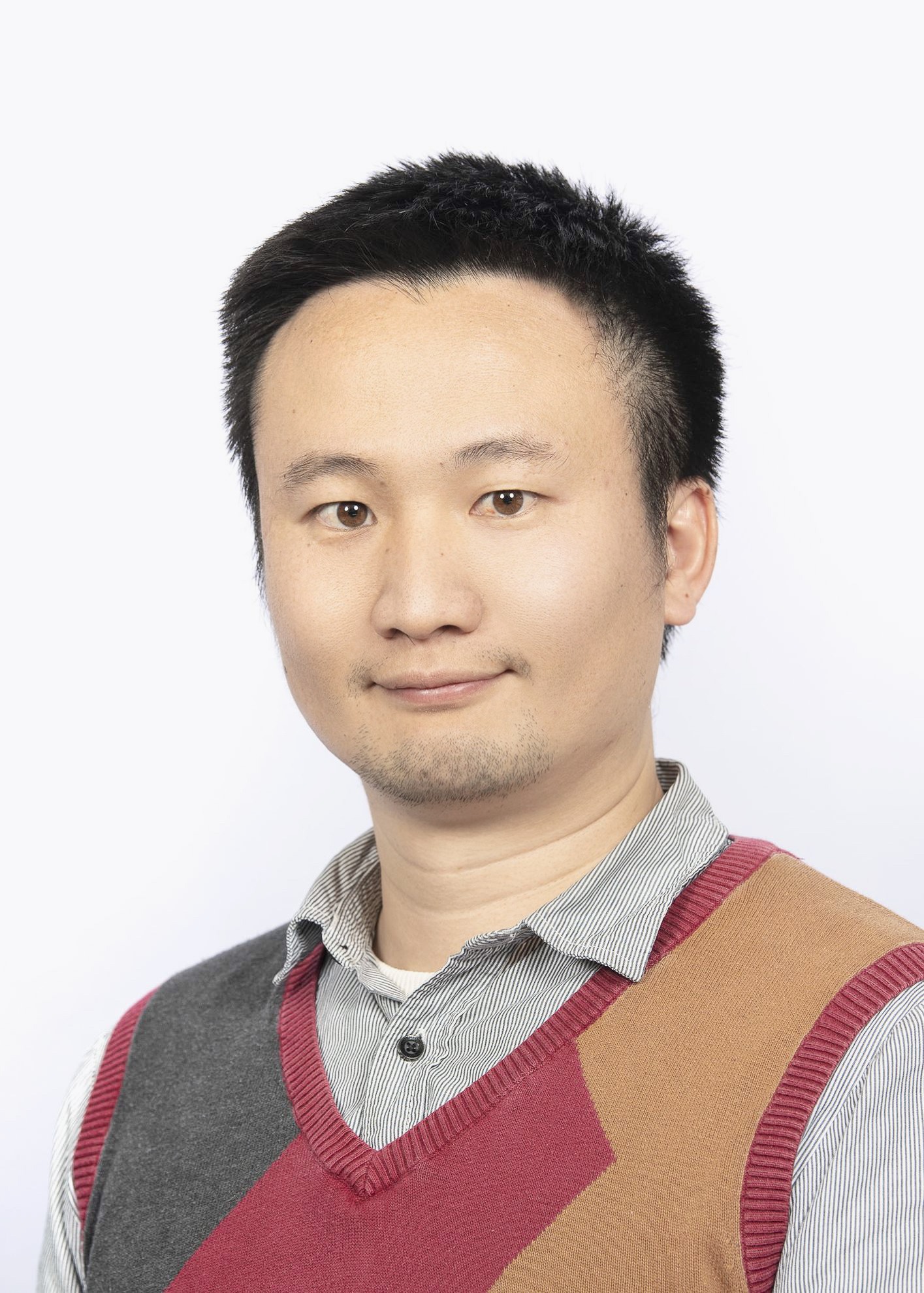
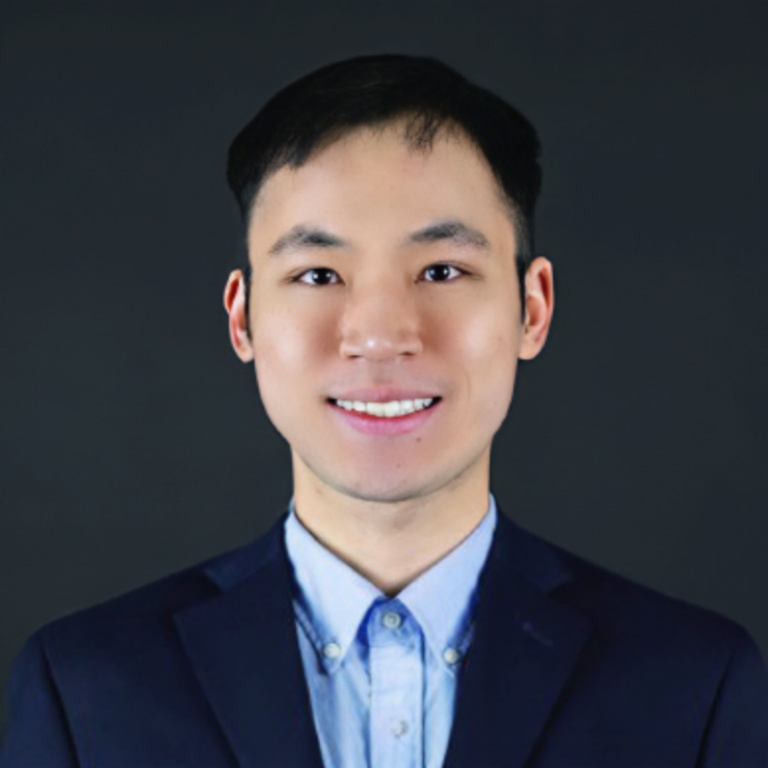
Dr. H.V. Jagadish is a Professor in the Computer Science and Engineering department, focusing on database systems, data science, and ethical AI. He emphasizes mentorship and independence in research, guiding students to become colleagues through collaborative growth. Research Focus His work spans Data integration and fairness in machine learning Query processing and knowledge graph analysis Reproducibility and ethical data management Advising and Research Dr. Jagadish encourages open communication, frequent feedback, and proactive student-driven research. He supports internships and conference attendance, prioritizing SIGMOD and VLDB for presentations.
Prof. Willemijn van Dolen is a Professor in the Section of Marketing at the Faculty of Economics and Business, University of Amsterdam. Her research focuses on consumer behavior, marketing strategies in digital environments, and the psychological impacts of communication in service encounters. She has extensively studied topics such as visual influence in consumer decisions, corporate greenwashing detection, and the role of humor in service interactions. Her academic career includes notable contributions to understanding online consumer behavior through multimodal datasets and AI frameworks. She has published widely on social media analytics, CSR communication, and child helpline effectiveness, bridging psychological insights with practical marketing applications. Prof. van Dolen’s work emphasizes empirical investigations into customer engagement, ethical consumption, and the interplay between digital platforms and human decision-making. Her research demonstrates a consistent focus on real-world applications, from optimizing brand posts on Instagram to analyzing CEO communication during global crises. Her studies often employ interdisciplinary methods, combining marketing theory with data science and behavioral economics. Despite her prolific output (over 50+ publications), no specific scientific awards are highlighted in the provided texts.
Sarah Ita Levitan is an Assistant Professor in the Department of Computer Science at Hunter College, CUNY, and a member of the doctoral faculty in both Computer Science and Linguistics PhD programs at the CUNY Graduate Center. She previously served as a Postdoctoral Research Scientist at Columbia University, where she completed her PhD in Computer Science in 2019 under Dr. Julia Hirschberg. Research Focus: Spoken Language Processing Natural Language Processing Paralinguistic Analysis Trustworthiness and Deception Detection Acoustic-Procedic and Lexical Feature Extraction Online Radicalization and Misinformation Recent Publications demonstrate expertise in analyzing speech and text for trust cues, deception detection, and mental health prediction. Her awards include grants from NSF, Google, and Columbia University fellowships. She leads the Hunter Speech Lab , mentoring PhD, MS, and undergraduate students in computational linguistics research. Scientific Awards and Grants: NSF EAGER Grant (2023) Google Cyber NYC Grant (2023) NSF AI Institute Grant (2023) Air Force Office of Scientific Research Grant (2020) Brown Institute Seed Grant (2020) Knight News Innovation Fellowship (2018) Teaching: Courses include Natural Language Processing (undergraduate/graduate), Computational Linguistics, Computer Theory, and advanced topics in spoken language processing at both Hunter College and Columbia University.
Vicki L. Plano Clark is a Professor in the Research Methods area of the School of Education at the University of Cincinnati, where she advises students in the Quantitative and Mixed Methods Research Methodologies (QMRM) concentration of the Educational Studies doctoral program and the Applied Research Methods (ARM) track of the Educational Studies master's program. She joined the University of Cincinnati in 2012 after serving as the director of the Office of Qualitative and Mixed Methods Research at the University of Nebraska-Lincoln. Dr. Plano Clark earned her Ph.D. in Quantitative and Qualitative Methods in Education from the University of Nebraska-Lincoln (2005), M.S. in Physics from Michigan State University (1993), and B.A. in Physics from Kalamazoo College (1990). Her academic journey transitioned from physics education to research methodology, bringing a unique interdisciplinary perspective to her work. As a leading methodologist specializing in mixed methods research, Dr. Plano Clark's scholarship focuses on delineating useful designs for conducting mixed methods research, examining procedural issues associated with these designs, and exploring the contexts for the adoption and use of mixed methods. Her research spans diverse application areas including cancer pain management, STEM graduate student identity development, teacher professional development, and the well-being of rural low-income families. Her work demonstrates how mixed methods approaches can effectively address complex research questions across multiple disciplines. Dr. Plano Clark has made significant contributions to the field through her editorial leadership and publications. She was the founding Managing Editor for the Journal of Mixed Methods Research and currently serves as an Associate Editor. In 2011, she co-led the development of Best Practices for Mixed Methods in the Health Sciences for NIH's Office of Behavioral and Social Sciences Research. In 2012, she became a founding co-editor of the Mixed Methods Research Series with Sage Publications. She has authored numerous influential books including 'Designing and Conducting Mixed Methods Research' (now in its 3rd edition) and 'Mixed Methods Research: A Guide to the Field.' Founding Managing Editor for the Journal of Mixed Methods Research Co-developer of NIH's Best Practices for Mixed Methods in the Health Sciences (2011) Founding co-editor of the Mixed Methods Research Series with Sage Publications (2012) Chair of the Mixed Methods Research Special Interest Group of AERA As an active researcher, Dr. Plano Clark has secured multiple grants including a Department of Education grant evaluating Ohio Network of Education Transformation (ONET) Schools (as Principal Investigator) and a UC University Research Council grant on reducing mass incarceration by improving public defense (as Collaborator). Her recent publications continue to advance methodological understanding in mixed methods research, with a focus on integration techniques, terminology challenges, and applications across health sciences and education. Dr. Plano Clark maintains an active role in the research community through invited presentations and workshops worldwide, helping to train the next generation of researchers in mixed methods approaches and contributing to the ongoing development of methodological standards and practices.
Guillaume Lajoie is an Associate Professor in the Department of Mathematics and Statistics at Université de Montréal and a Core Academic Member of Mila – Quebec Artificial Intelligence Institute. He holds a Canada CIFAR AI Research Chair and a Canada Research Chair in Neural Computation and Interfacing. His research focuses on the intersection of AI and neuroscience, particularly in understanding neural network dynamics and developing brain-machine interfaces for clinical and scientific applications. He is affiliated with the Centre de recherches mathématiques (CRM), the Interdisciplinary Center for Research on the Brain and Learning (CIRCA), and the UNIQUE initiative. Education: PhD in Applied Mathematics from the University of Washington (Seattle), postdoctoral fellowships at the Max Planck Institute for Dynamics and the University of Washington Institute for Neuroengineering. Awards include the FRQS Scholar designation and leadership roles in strategic research initiatives like UNIQUE and CIRCA. Research interests include neural computations, recurrent neural networks, neurotechnology, and responsible AI development. Supervised students include François Paugam (PhD), Giancarlo Kerg (PhD), and others. Key grants include projects on adaptive neuroprosthetics, neural decoding, and Canada Research Chairs funding.
Zaiqiao Meng is a Lecturer (Assistant Professor) at the University of Glasgow's School of Computing Science, affiliated with the Information Retrieval Group and IDA section. He also holds an Affiliated Lecturer position at the University of Cambridge's Language Technology Lab. His research focuses on the intersection of machine learning, knowledge graphs, and NLP, particularly in biomedical applications. Key areas include AI agents, large language models, and healthcare informatics. Current roles include co-leading the Glasgow AI4BioMed Lab, which develops AI solutions for biomedical knowledge extraction. He has extensive postdoctoral and visiting research experience, including at KAUST's MINE lab. Meng has published widely in top conferences like ACL and EMNLP, with over 40 publications since 2019. His work spans topics such as drug-target interaction prediction, clinical summarization, and knowledge graph construction. Teaching includes courses on Recommender Systems and Data Science at both undergraduate and graduate levels. He advises multiple PhD students on projects involving LLMs, biomedical entity representation, and conversational agents.
Dr. Tani Barlow is the George & Nancy Rupp Professor of Humanities and Professor of History at Rice University, affiliated with the Chao Center for Asian Studies and the Center for the Study of Women, Gender, and Sexuality. A leading scholar in Modern Chinese intellectual history, her work bridges gender studies, media culture, and transnational feminism. She co-founded the Chinese Commercial Advertising Archive and edits the acclaimed journal positions: asia critique . Her research examines late 19th to early 20th century China through lenses of consumer culture, feminist theory, and cultural ephemera. Notable books include In the Event of Women (2018) and The Question of Women in Chinese Feminism (2004). Barlow holds visiting professorships at Tsinghua University, Hitotsubashi University, and the University of Bologna. She has directed major projects like the Rockefeller Foundation's Critical Asian Studies initiative and the Luce Foundation’s Ephemera Project. Her articles span journals like Boundary 2 and differences , analyzing topics from advertising art to Marxist sociology. Her recent work explores digital humanities applications in historical research and the intersections of capitalism with gendered identities in China. Barlow mentors advanced graduate students specializing in modern Chinese history with technical skills in data analysis and cultural theory. Her interdisciplinary approach integrates visual studies, political economy, and feminist critique to reframe understandings of China’s modernization processes.
Frederick A. A. Kingdom is a Professor in the Department of Ophthalmology at McGill University's Faculty of Medicine, focusing on Perception, Cognition and Cognitive Neuroscience . His research explores the interplay between early visual feature detection (edges, bars) and intermediate stages forming contours, textures, and surfaces through spatial vision, color vision, stereopsis, texture perception, brightness/lightness perception, and transparency studies . Email: fred.kingdom@mcgill.ca Key research domains include: Perceptual Mechanisms : Lateral inhibition, contrast normalization, spatial bandpass filters, and their role in brightness/lightness perception and illusions like simultaneous brightness contrast. Color Vision : Red-green vs blue-yellow system distribution, chromatic contrast requirements for stereopsis, color-based depth processing limitations, and color-shading effects that parse surfaces vs illumination. Texture Analysis : Detection thresholds for orientation/frequency/contrast modulated textures, co-circularity in texture perception, and texture statistical sensitivity (e.g., kurtosis importance). Shape Processing : Shape-frequency/shape-amplitude aftereffects, global vs local shape coding, and contour inflection adaptation. His work combines psychophysics , fMRI , image processing , and computational modeling to dissect visual system architecture, particularly how color and luminance signals are integrated/separated in early cortical processing.
Dr. Sheryl Staub-French is a Professor and Head (Pro Tem) in the Department of Civil Engineering at the University of British Columbia (UBC), Faculty of Applied Science. She directs the BIM TOPiCS Lab, focusing on digital delivery methods for sustainable construction using BIM. Her research spans over 100 publications in BIM, VDC, and collaboration frameworks. She previously served as Associate Dean of Equity, Diversity, and Inclusion (EDI), advancing inclusive practices in engineering education. She holds a BS from Santa Clara University and MS/PhD from Stanford University. Her research interests include BIM implementation challenges, design coordination, 4D visualization, and sustainable construction innovation. She teaches courses like CIVL 300 (Construction Engineering), CIVL 426 (Virtual Design and Construction), and advanced BIM topics. Her lab collaborates with industry/government to develop BIM guidelines and tools. Notable projects include UBC’s Brock Commons Tall Wood Building and studies on IPD adoption barriers in Canada. Her work bridges academia and industry, emphasizing digital transformation and EDI. She has pioneered BIM-based methods for facility management and energy modeling, addressing gaps in information quality and handover processes. Her contributions span policy development, tool innovation, and educational reforms to enhance construction sector efficiency and inclusivity.
Ed Petkus is an Adjunct Professor at the Anisfield School of Business (ASB), Ramapo College of New Jersey, where he has been teaching since 2006. He holds a Ph.D. in Marketing from the University of Tennessee, an M.B.A. in Marketing from Virginia Tech, and a B.S. in Biochemistry & Nutrition from Virginia Tech. Education Ph.D., Marketing, University of Tennessee M.B.A., Marketing, Virginia Tech B.S., Biochemistry & Nutrition, Virginia Tech Research Interests Dr. Petkus focuses on Marketing Education , Marketing History , Non-Profit Marketing , and Sustainability Issues . His work explores innovative pedagogical approaches, cross-cultural learning dynamics, and the integration of sustainability and aesthetics into marketing practices. Publications & Contributions His recent publications examine the role of natural environments in teaching, cross-cultural learning styles, historical marketing case studies, and the application of holistic marketing in nonprofit contexts. He has presented research at international conferences including the Academy of Marketing Science and Global Business Development Institute.
Muchao Ye is an Assistant Professor in the Department of Computer Science at the University of Iowa. He earned his Ph.D. from Pennsylvania State University's College of Information Sciences and Technology in 2024 and a Bachelor of Engineering in Information Engineering from South China University of Technology. Ph.D., Information Sciences and Technology, Pennsylvania State University (2024) B.Eng., Information Engineering, South China University of Technology His research focuses on the intersection of Artificial Intelligence, Machine Learning, and AI Safety, particularly adversarial robustness in language models and vision-language models. He designs methods to enhance the security and reliability of deep learning systems for safety-critical applications like video surveillance and healthcare. Recent publications highlight adversarial robustness frameworks (e.g., UniT , PAT ), vision-language models for explainable video anomaly detection ( VERA ), and healthcare risk prediction techniques ( MedPath , MedRetriever ). His work appears in top venues such as NeurIPS, KDD, AAAI, ACL, and CVPR. Professional experience includes Applied Scientist internships at Amazon (2022–2023) and teaching roles at the University of Iowa and Pennsylvania State University. He serves as a reviewer for conferences like NeurIPS, ICML, and journals including IEEE TPAMI.
Dr. Jia Zhang is the Inaugural Robert H. Dedman Jr. Endowed Department Chair and Professor of Computer Science at Southern Methodist University (SMU Lyle School of Engineering). She holds the Cruse C. and Marjorie F. Calahan Centennial Chair in Engineering and has a courtesy appointment in the Department of Operations Research and Engineering Management. Her research focuses on applying machine learning, natural language processing, and information retrieval to data science infrastructure, particularly scientific workflows, provenance mining, software discovery, knowledge graphs, cloud computing, immune AI, and applications in earth science and healthcare. Education: Ph.D. in Computer Science, University of Illinois at Chicago M.S. in Computer Science, Nanjing University B.S. in Computer Science, Nanjing University Dr. Zhang's work emphasizes data science infrastructure and machine learning for scientific workflows and knowledge graphs. Her recent publications highlight deep learning , graph neural networks , and optimization algorithms in cloud computing, cybersecurity, and environmental applications. Key trends include spatiotemporal modeling , hybrid neural architectures , and AI-driven service ecosystems . Scientific Awards: Best Paper Awards IEEE SCC (2011, 2017) Best Student Paper Awards IEEE ICWS (2014, 2018), IEEE ICCC (2018) Distinguished Paper Award ICSOC (2023) First Outstanding Service Award IEEE Technical Committee on Services Computing (2016) She has secured over $5 million in federal grants (as PI) and $11 million as PI/Co-PI from NSF, NASA, NIH, UTSW, Ericsson, SAP, and Google. Her lab (Caruth Hall 308) actively recruits research assistants. She previously served as a faculty member at Carnegie Mellon University, Northern Illinois University, and Nanjing University, and worked in industry as a software architect.
Olivia Khoo is Professor of Film and Screen Studies and Head of Film, Screen and Culture in the Faculty of Arts at Monash University. She is a leading scholar in Asian Australian and Asian cinema studies, with extensive contributions to media diversity, gender and sexuality in media, and streaming technologies. She is actively involved in national research leadership, including roles in the Australian Research Council College of Experts and the Screen Diversity and Inclusion Network. PhD in Cultural Studies – University of Melbourne LL.B. (Hons) – University of New South Wales B.A. (Hons) in English Literature – University of Western Australia Graduate Certificate in Higher Education – Monash University Her research centers on screen media diversity, streaming platforms, and transnational Asian and Asian Australian cinema. She explores how gender, sexuality, and race intersect in media representation, with a strong focus on diasporic identities and cultural citizenship. Her work bridges cultural studies, legal frameworks, and media industry practices to advocate for inclusive screen ecosystems. The recent publications reflect a sustained engagement with streaming technologies, racial representation, leadership in Asian Australian communities, and policy development for media diversity. Her work spans academic monographs, journal articles, and influential policy reports, demonstrating both theoretical depth and real-world impact in shaping equitable media landscapes. Special Commendation for the Dean’s Award for Postgraduate Research Supervision (2022) Three-time nominee, Monash Graduate Association Supervisor of the Year Award Founding Series Editor, Gender, Sexualities and Cultures in Asia (Springer) Founding Associate Editor, Studies in World Cinema: A Critical Journal (Brill) Olivia has supervised 18 PhD and MA students to completion and has led major research projects, including two ARC Discovery Projects. She is currently leading interdisciplinary collaborations across Law, Business, and Arts at Monash, particularly on the Incentivising Australian Screen Diversity report. She also co-founded the Asian Australian Studies Research Network and has held fellowships at the Asia Research Institute (NUS) and the University of California Humanities Research Institute. She leads the Film, Screen and Culture program at Monash and is central to initiatives like the Streaming Industries & Genres Network. Her collaborative projects involve national and international institutions, focusing on media flows between Australia and East Asia, and the transformation of cultural identity through digital platforms.
Rebecca Hains is a Professor of Media and Communication at Salem State University. Her research focuses on children's media culture, gender representation, and marketing to children through critical/cultural studies. Ph.D. in Mass Media and Communication from Temple University (2007) Graduate Certificate in Women's Studies from Temple University (2007) M.S. in Mass Communication from Boston University (2000) B.A. in English/Communication Arts from Emmanuel College (1998) Her work has been featured in major news outlets like BBC, The New York Times, and NPR. She has authored two monographs: The Princess Problem (2014) and Growing Up with Girl Power (2012), and co-edited three collections on children's media and toys. Recent publications analyze: Barbie's body politics and diversity marketing Gendered marketing in LEGO toys Intersectional analysis of media's impact on children Critical perspectives on youth media consumption She actively engages in public scholarship through RebeccaHains.com , social media, and media commentary. Key research trends show: Continuity in examining gendered consumer culture Evolution from girl power narratives to contemporary princess culture Increasing focus on intersectional analyses of race, gender, and class Interdisciplinary approach combining media studies, sociology, and gender studies Her teaching includes courses like: MCO 222 How Advertising Works MCO 303 Media and Race MCO 475 Critical Analysis of Media and Culture MCO 330 UX Research in Digital Media
Gavan J. Fitzsimons is the Edward S. & Rose K. Donnell Distinguished Professor of Marketing and Psychology at Duke University's Fuqua School of Business , with a secondary appointment in the Department of Psychology & Neuroscience. He is a Faculty Network Member of the Duke Institute for Brain Sciences . His research bridges consumer psychology, behavioral decision-making, and social cognition, focusing on nonconscious influences on consumption patterns. Education: Ph.D., Columbia University (1995) Key research themes include subconscious consumer behavior , brand relationships , health-related consumption , and social dynamics in purchasing decisions . Recent work examines financial stress effects on purchase satisfaction, secret consumer behaviors in relationships, and pandemic-related decision-making. Notable trends in his 2023-2025 publications involve Marketing's subconscious influence (2025: Quality-Quantity Tradeoffs) Brand teasing as relationship-building (2025: Humor in Branding) Financial constraint effects on consumer happiness (2024: Opportunity Cost Analysis) Crisis behavior during pandemics (2024: Prosociality Across 39 Countries) Health behavior spillovers in families (2024: Parental Food Choices) Scientific Contributions include Foundational work on nonconscious consumer psychology (2008 JCP editorial) Methodological innovations in moderated regression analysis (2013 JMR ) Behavioral economics of brand sincerity effects (2015 JCR )