Tony Lindeberg is a Professor of Computer Science—Computational Vision at KTH Royal Institute of Technology, affiliated with the Division of Computational Science and Technology. He teaches the course Image Analysis and Computer Vision (DD2423). His research focuses on scale-space theory, early vision, and computational modeling of biological and auditory vision systems. Key contributions include theories on receptive fields, time-causal spatio-temporal models, and feature detection algorithms. Research interests span computational neuroscience, medical image analysis, and spatio-temporal recognition. Lindeberg has pioneered work on scale-invariant image features, affine transformations, and Galilean diagonalization for motion analysis. He is the author of the foundational book Scale-Space Theory in Computer Vision (1993). His work bridges computer vision and biological vision systems, with applications in gesture recognition, dynamic texture analysis, and neural networks. He leads the Vision Lab and Computational Brain Science Lab at KTH, emphasizing theoretical rigor and practical algorithms for visual perception tasks.
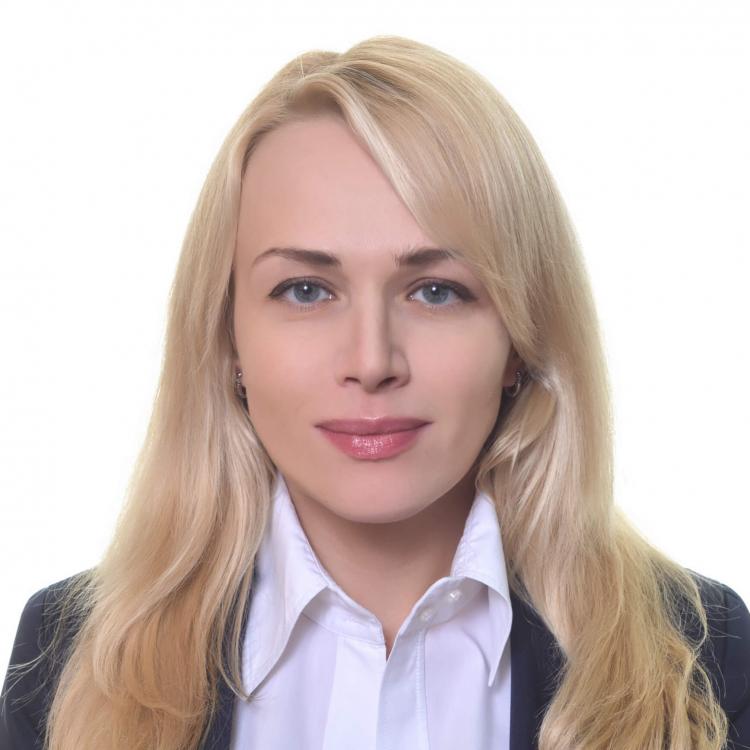
Dr. Natalia Efremova is a Senior Lecturer in Digital Economy at Queen Mary University of London (QMUL), School of Business and Management. She joined QMUL in November 2021 and is a member of the Centre for Globalisation Research (CGR) and a fellow of the Digital Environment Research Institute (DERI). Her research focuses on applying machine learning and deep neural networks to address sustainability challenges such as climate change, sustainable agriculture, and environmental monitoring. She holds a Ph.D. in Computer Science (Neural Networks for Computer Vision) from Kyoto University and an MBA from the University of Oxford, where she also worked as a Teradata Research Fellow at the Said Business School. Education: Ph.D. in Computer Science, Kyoto University, Japan (2012) MBA, University of Oxford, Said Business School (2021) Previous Roles: Associate Professor, Plekhanov University of Economics, Russia (2012–2016) Teradata Research Fellow, University of Oxford (2016–2021) Research Interests: Dr. Efremova’s work emphasizes developing transparent ML models for sustainable land-use and climate-related applications, as well as ethical AI frameworks for sustainable development goals. Her projects involve satellite data analysis (e.g., Sentinel imagery) for precision agriculture, soil moisture estimation, and crop monitoring. Teaching & Supervision: She teaches courses in Business Analytics (e.g., Group Projects in Business Analytics) and supervises PhD students in AI applications for sustainability. She is currently co-director of the MSc in Environmental Analytics program (2023). Key Themes in Publications: Her articles focus on AI-driven solutions for environmental challenges, including crop mapping, soil carbon estimation, and regenerative grazing monitoring. Methodologies include deep learning (e.g., Transformers, GANs) and remote sensing data fusion. Affiliations: Member of CGR and fellow of DERI, contributing to interdisciplinary research on globalization and environmental AI.
Jens Benjamin C is an Associate Professor of Practice at the University of Arizona. He holds a Ph.D. in Slavic Languages and Literature from the University of Wisconsin-Madison. His research focuses on 19th-century Russian literature (particularly Fyodor Dostoevsky), the interplay between literature and Eastern Orthodoxy, Eastern European cinema, science fiction, and cultural connections between the Western Balkans and Russia. He directs the Arizona in Russia study abroad program in Moscow. He teaches courses such as RSSS 275 – Eastern Europe & the Balkans , RSSS 280 – Sports and Empire , and specialized topics like RSSS 315 – Werewolves and Vampires: Slavic Folklore . Current offerings include RSSS 335 – Healthy Places, Toxic Spaces and RSSS 360 – Utopian Visions: East European Visual Culture . His publications include analyses of Dostoevsky’s Brothers Karamazov and pedagogical approaches to Russian language instruction. His work bridges literary studies, cultural history, and educational innovation.
Carla Rice is a Professor in the Department of Family Relations & Applied Nutrition at the University of Guelph, and holds a Tier 1 Canada Research Chair in Feminist Studies and Social Practice. Her work bridges critical psychology, equity education, and disability studies, focusing on embodiment, social justice, and arts-based methodologies. She leads Re•Vision: The Centre for Art and Social Justice and the Revisioning Differences Media Arts Laboratory (REDLAB), leveraging digital storytelling and participatory research to challenge marginalization. Rice earned a Ph.D. in Women's Studies from York University (2004) and an M.Ed. in Applied Psychology from OISE (1993). Her research addresses topics like early puberty, body-based harassment, and the sexualization of girls, while centering intersectional and decolonial frameworks. Recent projects include Bodies in Translation (disability arts and technology) and Into the Light (countering eugenic legacies in education). Her awards include the SSHRC Tier 1 CRC, Royal Society of Canada membership, and the Lieutenant Governor’s Ontario Heritage Award. Rice’s work emphasizes community-engaged scholarship, training students in transformative methodologies and fostering inclusive policies in health care, education, and the arts. Key initiatives include Relaxed Performance (accessible theater), Re•Storying Autism (autistic narratives), and Stretching Our Stories (digital storytelling for marginalized groups). She currently supervises graduate students pursuing critical theories and arts-informed research.
Sotirios K. Goudos is a Professor at the Department of Physics, Aristotle University of Thessaloniki (AUTH), Greece, and Director of the ELEDIA@AUTH lab within the ELEDIA Research Center Network. His research focuses on antenna design, evolutionary algorithms, wireless communications, machine learning, and IoT applications. He holds a B.Sc. in Physics (1991), M.Sc. in Electronics (1994), Ph.D. in Physics (2001), and additional qualifications in Information Systems and Electrical Engineering. Prof. Goudos is a Senior Member of IEEE and serves as Editor-in-Chief of the Telecom open access journal (MDPI) and Associate Editor for IEEE Transactions on Antennas and Propagation, IEEE Access, and IEEE Open Journal of the Communication Society. He has organized multiple special issues in journals like EURASIP Journal on Wireless Communications and Networking and has authored/edited books on antennas and AI in networks. His awards include multiple IEEE Access Outstanding Associate Editor recognitions (2019–2023) and inclusion in Stanford University's top 2% scientists list (2020–2024). He teaches courses on telecommunications, Java programming, and microwave systems, and has supervised over two dozen master's students since 2009. His work spans antenna optimization, AI-driven communications, and IoT security, with contributions to 5G/6G, RIS systems, and smart agriculture. Prof. Goudos actively contributes to IEEE Greece Section leadership roles, including Secretary (2022) and Vice-Chair (2023–2024). His labs and teams focus on ELEDIA's research in electromagnetics, optimization, and AI applications.
Stan Sclaroff is a Professor of Computer Science and Dean of the College of Arts & Sciences at Boston University. He holds affiliated faculty status in the Department of Electrical and Computer Engineering. His research focuses on computer vision, pattern recognition, and machine learning, with expertise in tracking, human motion analysis, and multimedia retrieval systems. He co-leads the Image and Video Computing research group and has contributed pioneering work like the ImageRover content-based image retrieval system. Education: PhD in Media Arts & Sciences from MIT (1995), SM from MIT (1991), and BS in Computer Science and English from Tufts University (1984). Research Interests: Human motion tracking, sign language analysis, deformable shape matching, and multimedia indexing. Notable contributions include early work on content-based image retrieval and foundational techniques in video analysis. Honors: IEEE & IAPR Fellowships, NSF CAREER Award (1996), ONR Young Investigator Award (1996), and BU's Mentor of the Year (2018). Over 40+ students advised, many now in academia and industry leadership roles. Key roles: Chair of BU Computer Science (2007–2013), Associate Dean for Mathematical & Computational Sciences (2015–2018), Interim Dean (2018–2019), and current Dean since 2019.
Dr. Chris Chesher is a Senior Lecturer in Digital Cultures within the Discipline of Media and Communications at the University of Sydney's Faculty of Arts and Social Sciences. He co-founded both the Digital Cultures program and the Master of Digital Communication and Culture at the University. Previously, he served as a senior lecturer in the School of Media and Communications at the University of New South Wales. His academic career spans interdisciplinary research at the intersection of digital media, cultural studies, and technology. Dr. Chesher's educational background includes: PhD from Macquarie University Master of Arts (Interdisciplinary Studies) from the University of New South Wales Bachelor of Arts (Media and Communications) from Mitchell CAE (now Charles Sturt University) Dr. Chesher's research adopts a transdisciplinary approach connecting digital cultures, media studies, and cultural studies with philosophy of technology, science and technology studies, games studies, internet studies, sociology of technology, human-computer interaction, social robotics, cultural robotics, and digital humanities. His work challenges conventional understandings of human-machine relations and explores the cultural implications of emerging technologies through projects on robotics beyond anthropomorphism, invocational media theory, and smart urban environments. His recent publications reveal a strong thematic focus on robotics, AI, and digital media theory, with particular attention to non-anthropomorphic approaches to social robotics, invocational media theory, and smart urban environments. The publications demonstrate his consistent engagement with how digital technologies reshape human experience, social relations, and spatial understanding across multiple domains including banking, restaurants, street furniture, and home environments, reflecting both theoretical depth and practical relevance. Dr. Chesher has received recognition for his teaching excellence: 2023 - University of Sydney Faculty of Arts and Social Sciences Teaching Innovation Award As an academic supervisor, Dr. Chesher has guided multiple PhD candidates to completion across diverse topics including digital gambling, game items in digital environments, user regulation on Facebook, and climate change visualizations. His grant history demonstrates sustained research funding, including the Australia-Korea Partnership on Mobile Robot Development in Public Space (2019), Public Forum on Urban Robots and the Future City (2018), and Everyday Social Media Network (2014), highlighting his leadership in collaborative, interdisciplinary research initiatives. Dr. Chesher is actively involved in collaborative research through the Sydney Institute for Robotics and Intelligent Systems (SIRIS) at the University of Sydney, where he contributes to projects examining the cultural dimensions of robotics and AI beyond anthropomorphic frameworks, bridging technical innovation with critical cultural analysis.
Dobrawa Lisak-Gębala is an Assistant Professor at the Institute of Polish Philology, University of Wrocław. She specializes in contemporary Polish literature, intermedial studies, sound studies, memory studies, and the theory of the essay. Her research explores the intersections between literature, visual art, and auditory experience, particularly in 20th and 21st-century Polish cultural production. Her research interests include: Intermediality in literary texts Sound and audio-spheres in literature Memory and trauma in post-war Polish writing The essay as a literary and cognitive form Visual culture and ekphrasis Gender and autobiography in contemporary prose Her recent publications analyze the essayistic reception of Chopin, the rhetoric of travel, kitsch in Polish culture, and photo-literary collaborations. The articles reflect a strong interdisciplinary trend, combining literary analysis with cultural theory, philosophy, and sensory studies. She frequently examines how literature engages with other art forms, especially painting, photography, and music. She has been recognized with a scholarship for young eminent researchers by the Minister of Science and Higher Education (2018–2021). She has also led the research project 'Poetical thanatosonics – on the grounds of Polish literature (1939–1945)', funded by the National Centre of Science, and collaborated on the 'New regionalism in literary research' project. She has contributed to various academic volumes and journals such as Poznańskie Studia Polonistyczne , Przestrzenie Teorii , Pamiętnik Literacki , and Zagadnienia Rodzajów Literackich . Her monographs Ultraliterature (2014) and Visual Springboards: Contemporary Polish Essays on Paintings and Photographs (2016) are key contributions to the field.
Janarthanan Rajendran is an Assistant Professor and the Sexton Chair in Reinforcement Learning at the Faculty of Computer Science, Dalhousie University, in Halifax, Nova Scotia, Canada. He is actively involved in research, teaching, and mentoring, with a focus on deep reinforcement learning and its applications in complex, dynamic environments. Education: Postdoctoral Fellow, Mila Quebec AI Institute and University of Montreal, Canada (2023) PhD in Computer Science and Engineering (AI stream), University of Michigan, Ann Arbor, USA (2021) MTech and BTech in Electrical Engineering, Indian Institute of Technology Madras, India (2016) His research focuses on enabling machines to learn through interaction, with core interests in deep reinforcement learning, model-based RL, multi-agent systems, transfer learning, and applications in materials science and economics. He also explores the integration of large language models and foundation models into reinforcement learning frameworks. His work emphasizes adaptivity, lifelong learning, and societal implications of AI. The most recent publications show a strong trend in advancing cooperative multi-agent systems, developing adaptive and memory-efficient RL methods, and applying RL to real-world challenges such as crystal design and dynamic pricing. His research bridges theoretical innovation with practical application, often in interdisciplinary contexts. Scientific Awards: Sexton Chair in Reinforcement Learning Dr. Rajendran is actively involved in mentoring graduate students and fostering an inclusive research environment. He is currently recruiting PhD and MCS students at Dalhousie University. He has no formal grants listed in the text, but his research chair and active publication record suggest strong funding support. He is also engaged in the broader AI community, having organized and participated in major conferences such as the Atlantic Canada AI Summit and NeurIPS. Labs and Research Groups: He leads a research group focused on deep reinforcement learning at Dalhousie University, working on topics including model-based RL, off-policy learning, and leveraging external knowledge sources. The group emphasizes inclusivity and supports underrepresented groups in computer science research.
Klara Dolk is a Senior Lecturer at Stockholm University's Department of Child and Youth Studies, specializing in early childhood education. She teaches in the Programme in Early Childhood Education and is an active member of the Practice-based research in and about early childhood education and care (PraFF) research group. Her work focuses on integrating critical perspectives into preschool educational practices across Sweden. Dr. Dolk's research interests center on gender pedagogy, equal treatment, children's rights, and norm-critical perspectives in early childhood education. Her work examines how preschools address sensitive social issues including poverty, economic inequality, and social vulnerability. She employs poststructuralist and feminist theoretical frameworks to analyze power relations between children and adults within educational settings, with particular attention to how children's resistance can challenge and transform educational practices. Her recent publications (2020-2023) reveal a growing focus on how preschools handle controversial social phenomena like begging, economic inequality, and class perspectives. These works demonstrate her commitment to examining how norm-critical approaches can be effectively implemented in early childhood education to address societal challenges while maintaining educational integrity. Her research shows consistent engagement with ethical dilemmas in preschool settings and the practical challenges of implementing fundamental values education. Dr. Dolk has contributed significantly to scholarly discourse through numerous publications in both Swedish and international journals. Her work spans theoretical explorations of gender and power to practical examinations of how preschools address real-world social issues. She has published in journals such as Lambda Nordica, International Journal of Equity and Innovation in Early Childhood, and Tam-Revy, demonstrating her interdisciplinary approach to early childhood education research. As a dedicated educator and researcher, Dr. Dolk actively contributes to advancing critical approaches in early childhood education through her teaching, research projects on preschool attendance and social vulnerability, and participation in the PraFF research group. Her work bridges theoretical frameworks with practical educational challenges, providing valuable insights for both academic and practitioner communities in the field of early childhood education.
Dr Mahir Arzoky is a Lecturer in the Department of Computer Science at Brunel University London's College of Engineering, Design and Physical Sciences. He holds a PhD from Brunel University London (2015) and has extensive research experience in artificial intelligence and software engineering. His research focuses on: Artificial Intelligence and Intelligent Data Analysis Search Based Software Engineering (SBSE) Clustering algorithms and heuristic search methods Software refactoring and quality assessment Data mining applications in healthcare and education Analysis of his 15 most recent publications (2018-2022) reveals strong interdisciplinary work bridging computer science with healthcare (diabetes patient modeling, medical imaging) and education (chatbot design, algorithm visualization). His technical focus centers on clustering optimization, refactoring impact analysis, and explainable AI, with frequent use of empirical validation methods. Key collaborations include researchers like Stephen Swift, Steve Counsell, and Giuseppe Destefanis. Dr Arzoky has secured significant research funding through EPSRC grants including: AQUATIC project (EP/M024083/1): Assessing Test Suite Quality in Industrial Code FIAR-NET (EP/N011627/1): Fault Analyses in Industry and Academic Research Network His professional network includes active collaborations across computer science, healthcare informatics, and educational technology domains, with recent work extending into transformer models for healthcare SQL conversion and graph partitioning for software modularization.
Dr. Mingfeng Wang is a Senior Lecturer in Robotics and Autonomous Systems at Brunel University London, affiliated with the Department of Mechanical and Aerospace Engineering within the College of Engineering, Design and Physical Sciences. His research focuses on specialized robotic systems including continuum, legged, soft, precision farming, and miniaturized robots. Chartered Engineer (CEng) with Engineering Council UK Fellow of the Higher Education Academy (FHEA) Member of IEEE, IEEE-RAS, IMechE, and IFToMM Editorial roles: Associate Editor of International Journal of Advanced Robotic Systems (JCR-Q3); Associate Editor of Frontiers in Robotics and AI (JCR-Q2); Editor of Information Processing in Agriculture (JCR-Q1), Biomimetic Intelligence and Robotics (JCR-Q1), and STEM Education Research expertise includes: Continuum Robotics : Design of extra-slender continuum robots (diameter-to-length ratio Legged Robotics : Parallel mechanism-based biped and hexapod robots for extreme environments Miniaturized Robotics : Active locomotion and drug delivery in capsule endoscopes Soft Robotics : Compliant end-effectors and bio-inspired designs Precision Farming : Laser weeding systems and agricultural automation Key scientific awards: BRIEF award (2022) TAROS Best Paper Post Nomination (2022) IFToMM Asian-MMS Best Paper Award (2014) Recent publications focus on: Cochlear implant surgery robotics Passive compliance in train fluid servicing Snake-biomimetic sealing surfaces Parallel kinematic manipulators Capsule endoscope image enhancement Professional services include conference organization (TAROS 2023/2024 Steering Committee; TAROS 2024 Programme Chair) and journal refereeing for IEEE-ASME Transactions on Mechatronics and Scientific Reports.
Rev. Ryan G. Duns, S.J., Ph.D., serves as Associate Professor and Department Chair in the Theology Department at Marquette University. His scholarly work bridges philosophy and systematic theology, focusing on figures like Karl Rahner, William Desmond, and Jean-Luc Marion. Education: Ph.D. from Boston College (2018) Research Areas: Metaphysics, Theological Aesthetics, Mimetic Theory, and Philosophical Theology Recent publications examine theological anthropology, virtue ethics, and spiritual perception. His 2024 article No Orthopathy without Orthoaesthesis explores emotion-perception dynamics in Christian anthropology. The 2023 book A Heart of Flesh connects Desmond's metaphysics with biblical hermeneutics. Teaching roles include courses like Christian Anthropology and Philosophy as Source for Theology , emphasizing Ignatian contemplative practices. His collaborative work with Frank Barrett (2022) applies Pope Francis's integral ecology to organizational ethics.
Norwegian University of Science And TechnologyNorway
Raghavendra Ramachandra is a Professor at the Department of Information Security and Communication Technology (IIK) , within the Faculty of Information Technology and Electrical Engineering at the Norwegian University of Science and Technology (NTNU) in Gjøvik. His research focuses on biometric systems, particularly in face, fingerprint, and finger vein recognition, with emphasis on presentation attack detection, morphing attack detection, and deep learning applications. Current research projects include: SALT (2022-2026) : Developing privacy-preserving facial biometric authentication systems. OffPAD (2022-2025) : Creating cryptographic tools and presentation attack detection for fingerprint biometrics. SWAN (2015-2020) : Developing biometric countermeasures against presentation attacks. His recent publications demonstrate technical expertise in: Face morphing attack detection using vision transformers and point cloud networks Image fusion techniques for multispectral biometrics GAN-based synthetic data generation for security evaluation Explainable AI approaches for biometric verification Professor Ramachandra also supervises PhD and Master’s students, and has extensive experience in leading national and EU research initiatives.
Eileen J. Cheng is a Professor of Chinese and Coordinator of the Chinese Section at Pomona College since 2003. She teaches courses in Chinese language, modern Chinese literature, and gender studies. Research Interests: Her scholarship focuses on Lu Xun studies, gender and nationalism in modern China, translation theory, and world literature traditions. She explores how Lu Xun's artistic vision intersects with political narratives and cultural trauma. Publications: Recent works include analyses of Lu Xun's philosophical writings, annotated bibliographies, and translations of his essays. Her research reveals connections between Chinese modernism and Western critical theory, particularly Adorno's reflections on mechanical reproduction. Education: Ph.D., East Asian Languages and Cultures (Modern Chinese Literatures), University of California, Los Angeles M.A., East Asian Languages and Cultures (Modern Chinese Literatures), University of California, Los Angeles B.A., University of California, Los Angeles (summa cum laude)