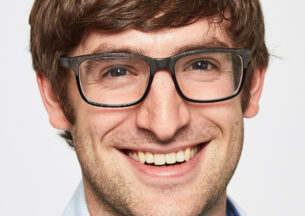
Bohan Chen is a Postdoctoral Scholar Research Associate in the Department of Computing and Mathematical Sciences. Their work focuses on advancing graph-based machine learning techniques and their applications in environmental science, remote sensing, and AI-driven analysis. Research interests include graph neural networks, active learning strategies, hyperspectral image analysis, and knowledge graph integration. Notable contributions include the development of the GLL layer for neural networks, the CUSP permafrost dataset, and hybrid models for multispectral image processing. Key research trends span theoretical advancements in graph-based learning and practical applications such as environmental monitoring, SAR data analysis, and pandemic modeling. Their work bridges computational methodologies with real-world environmental and societal challenges. Advising and grants: No student advisees listed. Contributions include foundational research without explicit grant mentions in provided text. Labs/teams: No specific lab or team affiliations mentioned in the text.
Alex Kale is an Assistant Professor of Computer Science at the University of Chicago and a core member of the Data Science Institute. His research focuses on data visualization and human-computer interaction, emphasizing tools that explicitly represent users' cognitive processes during data analysis. He leads the Data Cognition Lab, exploring software for uncertainty visualization, causal inference, and decision-making support. Kale holds a PhD in Information Science from the University of Washington (2022), an MSc from UW (2020), and a BSc in Psychology with minors in Music and Philosophy (2015). Affiliations: University of Chicago, Data Science Institute, Data Cognition Lab Education: PhD, UW (2022); MSc, UW (2020); BSc, UW (2015) Research interests include human-computer interaction, statistical reasoning interfaces, and systems for managing large-scale data. He has developed tools like MetaExplorer for meta-analysis and EVM for exploratory visual modeling. Key awards include the Best Paper Honorable Mention at CHI 2023 and VIS 2021, and the Best Paper Award at VIS 2020. His work bridges visualization design, decision theory, and cognitive science, with applications in participatory budgeting, causal inference, and reproducible research. Courses taught include Visualization for Data Science and Statistical Rethinking.
Roles & Affiliations: Duen Horng (Polo) Chau is a Professor in the School of Computational Science and Engineering at Georgia Tech. He co-directs the MS Analytics program and leads industry relations for The Institute for Data Engineering and Science (IDEaS) and corporate relations for The Center for Machine Learning. He teaches Data & Visual Analytics (CSE6242/CX4242) to over 1,000 students annually. His affiliations include the GVU Center, Institute for People and Technology (IPaT), and ML@GT. Education: PhD in Machine Learning (Carnegie Mellon University, 2012), MS in Machine Learning (CMU), MA in Human-Computer Interaction (CMU), B.Eng. in Information Engineering (The Chinese University of Hong Kong). Research: Focuses on human-centered AI, interpretable machine learning, adversarial robustness, graph visualization/mining, and social good applications (e.g., healthcare, anti-human trafficking). His lab develops tools like ActiVis (for neural network exploration), Diffusion Explainer (for text-to-image models), and TrafficVis (to combat trafficking). Research is funded by NSF, NIH, DARPA, NASA, and industry partners (Google, Intel, Meta). Awards: 17+ best paper awards, Google/Intel/Meta Faculty Awards, Outstanding Undergraduate Research Mentor (2023), Outstanding Mid-Career Faculty (2022), and the Carnegie Mellon Dissertation Award (2012). Grants & Labs: Leads projects on AI safety, robust speech recognition, and graph vulnerability. Collaborates with Children’s Healthcare of Atlanta on surgical planning via AR. His work influences industry platforms (e.g., Meta’s ML tools used by 25% engineers).
Arash Eshghi is an Assistant Professor in the School of Mathematical & Computer Sciences at Heriot-Watt University, specializing in the Department of Computer Science. His research focuses on multimodal interaction, embodied AI, and dialogue systems, with applications in human-AI collaboration, vision-language models, and incremental processing. He leads projects like the EMMA and AlanaVLM frameworks, which explore embodied agents in 3D environments and egocentric video understanding. His work emphasizes ethical considerations in conversational AI, including dementia-friendly voice assistants and faithfulness in large language models. He collaborates internationally, with contributions to benchmarks like the BURCHAK corpus and the Block World repair framework. Eshghi’s research bridges computational linguistics, cognitive science, and robotics, addressing challenges in ambiguity resolution, spatial reasoning, and incremental dialogue processing. Key collaborations involve institutions like the University of Edinburgh and MIT, focusing on multimodal learning, dynamic syntax, and interactional semantics. His lab develops tools for grounded language learning and real-time interaction, with a focus on systems that adapt to human feedback and contextual dynamics.
Simon Colreavy Donnelly is an Associate Professor in the Department of Computer Science & Information Systems at the University of Limerick. He is a member of the Interaction Design Centre and focuses on interdisciplinary research at the intersection of artificial intelligence, educational technology, and healthcare informatics. His work spans machine learning applications in medical data analysis, virtual reality (VR) and extended reality (XR) for inclusive education, and deep learning techniques in chemical analysis and spectroscopy. Research Interests: His primary areas of investigation include generative AI for education equity, semisupervised learning algorithms, virtual learning environments design, and the ethical deployment of immersive technologies in healthcare and palliative care. He also explores NMR spectroscopy analysis using deep learning and develops tools for nutritional content estimation through image processing. Collaborations: His recent collaborations span international teams addressing challenges in toxicity-free online discourse (PAN 2024), semisupervised learning distribution mismatches, and VR applications for post-pandemic blended learning. His work integrates computational methods with real-world applications in education, healthcare, and chemical analysis. Labs/Teams: Active within the Interaction Design Centre at UL, his research group develops practical solutions for accessibility in digital education and healthcare systems, emphasizing user-centered design principles for extended reality applications.
Kaidi Xu is an Assistant Professor in the Department of Computer Science at Drexel University's College of Computing & Informatics. His research focuses on Trustworthy AI, with expertise in formal verification of neural networks, adversarial attacks (especially in the physical world), and certified defenses. He actively publishes in top-tier conferences including NeurIPS, ICML, ICLR, CVPR, and AAAI, and leads the award-winning research team 'alpha-beta-crown'. PhD in Computer Science, Northeastern University (2021) MS in Computer Science, University of Florida (2017) BS in Computer Science, Sichuan University (2015) Dr. Xu's research spans critical areas in AI security and robustness. He investigates formal methods to verify neural network behavior, develops techniques to defend against real-world adversarial manipulations (such as the famous 'Adversarial T-shirt'), and explores model compression and explainability. His work bridges theoretical guarantees with practical applications in healthcare, material science, and autonomous systems. His recent publications reflect a strong trend toward certified robustness, interdisciplinary applications, and formal verification across vision, language, and multimodal systems. He has consistently published at NeurIPS, ICML, CVPR, and ACL, demonstrating sustained impact in both machine learning and computer vision communities. Winner of VNN-COMP'21 with highest score Three-time VNN-COMP champion (2021–2023) with team alpha-beta-crown Faculty Research Excellence Award, CCI@Drexel (2024) Recipient of multiple Carleone Faculty Awards (2025) NSF grant recipient for projects on transit systems and material synthesis Dr. Xu advises PhD students, including Jinhao, and has secured significant external and internal funding, including multiple NSF grants and Drexel internal awards. He is actively recruiting motivated students with strong machine learning backgrounds. He also contributes to the academic community as an Area Chair for NeurIPS 2025, organizer of workshops like GenAI4Health@AAAI 2025, and frequent program committee member. He leads the 'alpha-beta-crown' research team, known for its leadership in neural network verification and repeated success in the VNN-COMP competitions. The team focuses on developing scalable, sound, and complete verification tools for deep learning models, pushing the frontier of AI safety and reliability.
Michael Krauthammer is a Professor of Medical Informatics and Chair of the Department of Quantitative Biomedicine at the University of Zurich, affiliated with the University Hospital of Zurich. His lab focuses on Clinical Data Science and Translational Bioinformatics, leveraging AI and machine learning to address healthcare challenges. Key areas include cancer genomics, federated learning, and automated medical imaging analysis. Education and affiliations: Krauthammer leads an interdisciplinary team supported by major funding agencies. His research spans bioinformatics, clinical decision support systems, and multimodal data integration. Notable projects include AI-assisted diagnosis in rheumatology and prime editing efficiency prediction. Recent work emphasizes longitudinal cfDNA analysis, drug interaction modeling, and personalized oncology. The lab collaborates across disciplines, with projects funded by Swiss and international grants. Students and postdocs work on topics like machine learning for radiology reports, longitudinal disease trajectories, and protein design. Key projects include the NTCIR-18 RadNLP challenge, prime editing prediction models (Nature Biotechnology 2024), and vision transformers for capillaroscopy analysis. The lab advocates for reproducible data science and ethical AI in healthcare.
Jeremy I. Borjon is an Assistant Professor in the Department of Psychology at the University of Houston, affiliated with the College of Liberal Arts and Social Sciences. He leads the Developing Systems Laboratory, focusing on infant cognitive, sensorimotor, and autonomic development. His research is supported by an NICHD R00 award and integrates multimodal technologies such as eye-tracking, motion capture, and wireless physiological sensors. Education: A.B. in Psychology and Neuroscience, Princeton University Ph.D. in Psychology and Neuroscience, Princeton University Dr. Borjon's research centers on how infants coordinate internal states with emerging cognitive and motor systems during the first two years of life. He investigates how visual, motor, and autonomic processes interact in real time, particularly during naturalistic caregiver interactions. His work emphasizes ecological validity by studying infants in dynamic, real-world contexts. He is particularly interested in sustained attention, language development, and how caregiver behaviors shape infant cognition. His recent publications reflect a strong trend in using dense, naturalistic behavioral sampling to understand developmental processes. The articles highlight interdisciplinary approaches combining developmental psychology, neuroscience, and engineering to study real-time cognitive and physiological dynamics in infants. Topics include physiological synchrony, attention regulation, and sensorimotor integration. Scientific Awards and Honors: R00 Pathway to Independence Award, NICHD K99 Pathway to Independence Award, NICHD NSF Postdoctoral Research Fellowship NICHD T32 Postdoctoral Fellowship 2019 Small Grant for Early Career Scholars, SRCD NSF Graduate Research Fellowship Princeton President’s Fellowship Simons Fellow in Computational Neuroscience Dr. Borjon has been actively involved in mentoring and is currently reviewing graduate applications for the Developmental, Cognitive, & Behavioral Neuroscience Program. His research is supported by federal grants, indicating active funding and research productivity. He previously held postdoctoral fellowships at Indiana University and positions at Yale and Emory. He directs the Developing Systems Laboratory, which employs cutting-edge technology to study infant behavior in naturalistic settings. The lab integrates head-mounted eye-tracking, wireless cardiorespiratory sensors, motion capture, and audiovisual recording to examine how cognitive achievements emerge within the context of a developing body and social environment.
Stephanie Käs is a Researcher at RWTH Aachen University specializing in Human Pose Estimation (HPE) and gesture recognition using CNN-based methods and Video Language Models applied to fisheye imagery. Her interdisciplinary background spans particle physics and railway engineering data science projects, with strong emphasis on science communication and agile project management. Her research focuses on overcoming challenges in 3D human pose estimation from distorted fisheye images, temporal consistency in motion recognition, and gesture-based human-robot interaction. She actively develops novel approaches for monocular 3D pose estimation and foundation model applications in robotics, with contributions to datasets like FISHnCHIPS for fisheye image analysis. Stephanie supervises multiple ongoing theses including motion recognition, visual anonymization, and anatomical realism evaluation in AI-generated imagery. She leads the Stratospheric Balloon Research Project (StratoGI) at JLU Gießen and has extensive teaching experience in machine learning, computer vision, and statistics at RWTH Aachen and JLU Gießen.
Tommy Löfstedt is an Associate Professor at Umeå University , affiliated with the Department of Computing Science and the Department of Mathematics and Mathematical Statistics. His research focuses on machine learning , computer vision , and medical image analysis , with applications in life sciences, radiation therapy, and biomedical imaging. He leads multiple research projects, including AI-driven delineation in radiation therapy, quantitative MRI for radiotherapy, and machine learning for plant nutrient uptake. Current research emphasizes structured regularization methods to improve model interpretability and robustness. Key applications include medical image segmentation , Alzheimer's classification , and uncertainty estimation in MRI . Recent publications highlight his work on morphological regularization , adversarial attack mitigation , and multi-task learning in medical imaging contexts. His projects span 2022–2026 with funding for pediatric oncology automation and gynecological cancer staging. Affiliated with both computing and mathematical departments, he bridges algorithm development with applied mathematical frameworks in medical and life science domains.
Dr. Richard Segall is a Professor in the Department of Information Systems and Business Analytics at Arkansas State University , affiliated with the Beck College of Sciences & Mathematics . He is also affiliated faculty in the Master of Engineering Management (MEM) Program , the Environmental Sciences Program , and serves on thesis committees at the University of Arkansas at Little Rock (UALR) . Education: Ph.D. in Operations Research, University of Massachusetts at Amherst (1984) M.S. in Operations Research and Statistics, Rensselaer Polytechnic Institute (1975) M.S. in Mathematics, Rensselaer Polytechnic Institute (1973) B.S. in Mathematics, Rensselaer Polytechnic Institute (1971) Dr. Segall's research spans data mining, text mining, web mining, big data analytics, bioinformatics, supercomputing applications, and mathematical modeling . His work bridges business analytics and computational biology , with a focus on transdisciplinary applications in agriculture, healthcare, and space systems. His recent publications emphasize genomic data analysis , plant disease diagnostics , AI-driven healthcare solutions , and space technology forecasting . The integration of machine learning , data visualization , and open-source tools is a recurring theme across domains. Scientific Awards & Grants: Three research awards from the National Research Council (NRC) Software grants from Oracle Corporation and SAS Institute, Inc. Dr. Segall has served on the editorial boards of the International Journal of Data Science , International Journal of Data Mining, Modelling and Management , and International Journal of Fog Computing . He previously contributed to the Arkansas Center for Plant-Powered Production (P3) and currently participates in the Center for No-Boundary Thinking (CNBT) .
Bo An is a President's Chair Professor and Head of the Division of Artificial Intelligence at the College of Computing and Data Science , Nanyang Technological University, Singapore . He also holds a courtesy appointment as Professor at the School of Physical & Mathematical Sciences and serves as Director of the Centre of AI-for-X. Previously, he was a Nanyang Assistant Professor (2014-2018), Associate Professor at the Chinese Academy of Sciences (2012-2013), and Postdoctoral Researcher at the University of Southern California (2010-2012). His academic journey began with B.Sc. and M.Sc. degrees from Chongqing University, followed by a Ph.D. in Computer Science from the University of Massachusetts, Amherst (advised by Victor Lesser). Research Interests : Artificial Intelligence Multiagent Systems Computational Game Theory Reinforcement Learning Automated Negotiation Optimization Research Impact : Applications in infrastructure security (deployed by US Coast Guard and Federal Air Marshals), e-commerce, sensor networks, and financial technology. Over 150 publications in top venues like AAMAS, IJCAI, AAAI, ICML, NeurIPS, KDD, and ACM/IEEE Transactions. Scientific Recognition : 2010 IFAAMAS Victor Lesser Distinguished Dissertation Award 2012 INFORMS Wagner Prize 2018 & 2022 Nanyang Research Awards 2017 Microsoft Collaborative AI Challenge IEEE Intelligent Systems 'AI's 10 to Watch' (2018) Leadership Roles : Editor-in-Chief of IEEE Intelligent Systems, Associate Editor for AIJ, JAAMAS, and ACM Transactions. Served as General Co-Chair for AAMAS'23 and Program Chair for IJCAI'27.
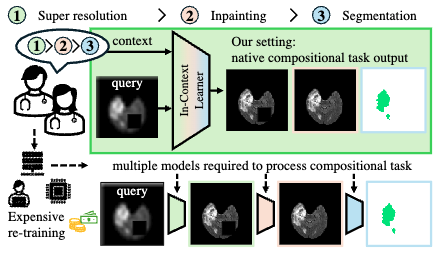
Prof. Dr. Erik Rodner is a faculty member at the University of Applied Sciences Berlin (HTW Berlin), where he serves as a Professor for Machine Learning and Data Science. He also contributes to the School of Engineering Sciences - Technology and Life. His research spans computer vision, machine learning, and biomedical applications, with a focus on learning with limited data, robust visual recognition models, and medical image analysis. He has developed innovative methods for medical diagnostics, industrial classification, and anomaly detection. Recent publications (2025-2016) highlight his expertise in visual in-context learning, semi-weakly segmentation, and active learning frameworks. He has collaborated with institutions such as ZEISS Group, Friedrich Schiller University Jena, and UC Berkeley. Scientific Awards: Award for Excellent Teaching (2023)
Om P. Damani is a Professor in the Department of Computer Science and Engineering at Indian Institute of Technology Bombay. He serves as Faculty In-Charge of the Sustainable Development unit of the Center for Policy Studies and is also associated with the Centre for Technology Alternatives for Rural Areas (CTARA). His work bridges computer science with social development challenges, focusing on practical applications for rural communities. Dr. Damani's research interests span Technology for Development of the bottom 80%, System Dynamics: Modeling and Simulation for Social Development, System Architecture, and Data Science. His work demonstrates how computational approaches can address complex development challenges through projects like GramDrishti (for detecting rural infrastructure in satellite images), JalTantra (for optimizing water distribution networks), and FAI (Farm Assessment Index for holistic farming practice evaluation). His publications reveal a consistent focus on applying computer science to solve real-world problems in water management, agricultural systems, and rural infrastructure. His research has been recognized with significant awards including the IIT Bombay Industrial Impact Award 2010, IIT Bombay Impactful Research Award 2019, and Best Poster Award at Agriculture Science Congress 2017. Dr. Damani has successfully translated theoretical research into practical tools that address development challenges, particularly in water resource management and agricultural systems. As an educator, he has mentored numerous PhD students including Chintan Tundia, Shreenivas Kunte, Nikhil Hooda, Sivamuthu Prakash Murugan, Dipak L. Chaudhari, Prateek Kapadia, and Manoj K. Chinnakotla. His teaching portfolio includes courses on System Dynamics: Modeling and Simulation for Development (CS 752), Program Derivation (CS 420), and ICT for Development. Dr. Damani's educational background includes a Ph.D. in Computer Sciences from the University of Texas at Austin (1994-1999), B.Tech. in Computer Science and Engineering from IIT Kanpur (1990-1994), and prior professional experience at IBM T J Watson Research Lab and Akamai Technologies.
Hao Yang is an Assistant Professor in the Department of Civil and Systems Engineering at Johns Hopkins University, with dual affiliations at the Johns Hopkins Data Science and AI Institute and the Johns Hopkins Institute for Assured Autonomy. His research develops Trustworthy Machine Learning methods to enhance urban mobility systems, focusing on traffic safety, equity, and sustainability through ethical AI and human-machine cooperative systems. Yang earned dual bachelor's degrees in Electrical and Computer Engineering from Beijing University of Posts and Telecommunications and the University of London, followed by a Ph.D. in Civil Engineering (Transportation) from the University of Washington. His educational background bridges telecommunications, electrical engineering, and transportation systems. His research integrates spatio-temporal modeling, assured autonomous systems, and multimodal representation learning to address transportation equity and safety. Key projects include edge-AI-powered traffic surveillance, real-time crash identification, and cooperative signal assistance for vulnerable road users. His work emphasizes ethical AI deployment in cyber-physical infrastructure to create sustainable urban mobility solutions. Recent publications reveal a strategic shift toward large language models and multimodal AI for transportation challenges, with strong emphasis on explainability, reliability, and equity in traffic crash prediction, flow forecasting, and autonomous driving systems. This evolution demonstrates his commitment to adapting cutting-edge AI for real-world transportation problems. Yang's scientific contributions have earned significant recognition: Michael Kyte Outstanding Student of the Year Award (2022) High-Value Research Award from AASHTO (2022) Best Paper Award from TRB Information Systems Committee (2023) Best and Outstanding Dissertation Awards (2024) IEEE DTPI Outstanding Paper Award (2022) TRANSFOR22 Data Competition 2nd place (2022) ASCE Bridges Photo Contest First Place (2021) He actively mentors graduate researchers and seeks 2-3 PhD students for Fall 2025 to advance trustworthy AI in transportation. His research is supported by NSF, USDOT, and AASHTO grants including the Real-Time Truck Parking Information System project that received the High-Value Research Award. Current work focuses on edge-AI for traffic safety and multimodal data integration. Yang leads research within Johns Hopkins' Data Science and AI Institute and Institute for Assured Autonomy, collaborating with Transportation Research Board committees. His lab develops real-time perception systems using edge computing and representation learning, with active projects on non-motorized user safety and equitable traffic management for people with disabilities.