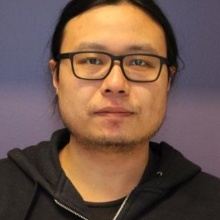
Lei Shi is a Researcher at the Institute for Visualization and Interactive Systems (VIS) within the Collaborative Artificial Intelligence department at the University of Stuttgart, Germany . Their work focuses on integrating machine learning, human-robot interaction, and safety control systems. Research Areas: Human-Robot Interaction, Bayesian Deep Learning, Visual Servoing, Eye Tracking Key Techniques: Graph Convolutional Networks, Predictive Modeling, Feature Descriptors Recent publications highlight their contributions to gaze-based interaction safety, dropout placement in neural networks, and predictive tuning methodologies. They operate from Room 01.029, Pfaffenwaldring 5a, 70569 Stuttgart.
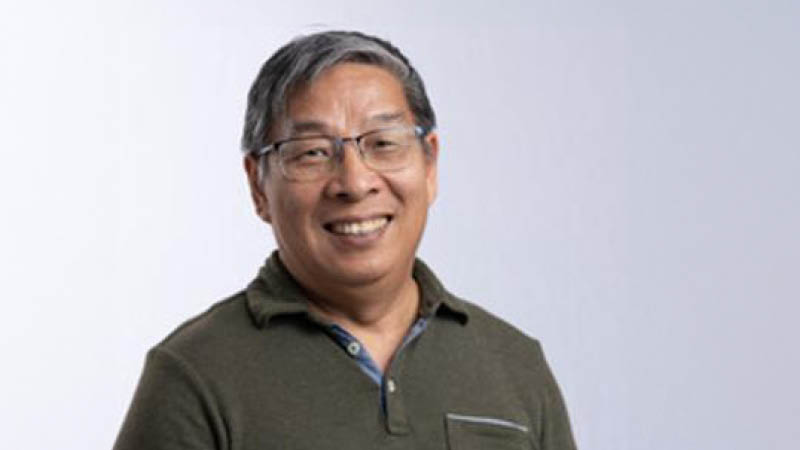
Dr. Hae In Lee is a Lecturer in Autonomous Systems at Cranfield University's Centre for Autonomous and Cyberphysical Systems within the School of Aerospace Transport and Manufacturing. She holds a PhD from Cranfield University (2019) and BSc and MSc degrees in aerospace engineering from the Korea Advanced Institute of Science and Technology (2013, 2015). Prior to her current position, she worked as a Research Fellow in Autonomous Systems and Artificial Intelligence before joining Cranfield as a Lecturer in 2022. Dr. Lee's research focuses on networked control systems, adaptive control, and multi-objective optimization for autonomous systems. Her expertise spans Autonomous Systems, Computing and Simulation, Flight Physics, Mechatronics & Advanced Controls, and Sensor Technologies. She has published extensively in leading journals and conferences, with recent work concentrating on UAV collision avoidance, multi-agent systems, slung-load transportation, and unmanned traffic management. Her publication record shows a clear progression from foundational work in UAV slung-load transportation to more complex multi-agent systems and autonomous control frameworks. The research demonstrates strong theoretical foundations in control theory combined with practical applications in aerospace and robotics. Recent publications (2022-2025) increasingly address real-world implementation challenges in drone traffic management, rail monitoring, and advanced air mobility. Dr. Lee has delivered 7 MSc modules at Cranfield University and has been invited to lecture at other research institutes and industry organizations. Her teaching and research bridge theoretical control systems with practical autonomous vehicle applications.
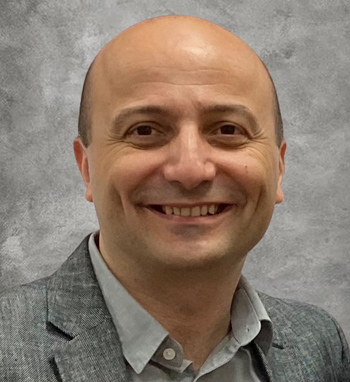
John Evans is an Assistant Professor in Agricultural & Biological Engineering at Purdue University, specializing in Machine Systems and Automation. His research focuses on precision agriculture technologies, autonomous systems design, and digital twin applications. He holds degrees from the University of Kentucky and University of Nebraska-Lincoln. Evans advises Purdue's Quarter Scale Tractor Team and collaborates on projects like autonomous roadside mowing simulators and robotic crop sampling systems. His work integrates robotics, computer vision, and machine learning to optimize agricultural machinery and field operations. Key themes include autonomous vehicle development, sensor fusion for real-time perception, and economic analysis of autonomous farming technologies. Education: PhD Biological Systems Engineering (UNL), MS/BS Biosystems & Agricultural Engineering (UK) Research Labs: Autonomous Systems Lab, Agricultural Robotics Group Recent projects include digital twin environments for testing autonomous mowers and developing physics-based driveline control strategies. His work appears in journals like Transactions of the ASABE and IEEE Robotics. Evans contributes to open-source initiatives like OSCAR rover hardware and LATTICE data frameworks for scalable agriculture.
Jiangyu Zheng is a Professor of Computer Science at Purdue University, affiliated with both West Lafayette and Indianapolis campuses. He holds dual roles within the Department of Computer Science and the College of Science. His career includes tenure at ATR Communication Systems Research Laboratory (1990–1993) and Kyushu Institute of Technology (1993–2001) as an associate professor, before joining Indiana University Purdue University Indianapolis (IUPUI) in 2001, where he advanced to full professorship. He earned a PhD in Control Engineering from Osaka University (1990) and a BS in Computer Science from Fudan University (1983). Dr. Zheng’s research focuses on computer vision, AI, autonomous driving, multimedia, virtual reality, and robotics. His pioneering work includes the world’s first digital panoramic image and motion-based human tracking systems. He has received notable awards such as the 1991 Best Paper Award (IPSJ) and 2000 Excellent Paper Award (Japan Society of Art & Science). His publications emphasize vehicle interaction analysis, semantic segmentation for autonomous systems, and hazard detection using deep learning. Key projects include developing motion profile-based collision alarming systems and weather/illumination-adaptive road profiling. He is a senior IEEE member and maintains active research labs focusing on AI-driven traffic systems and immersive technologies.
Shenglong Wang is an Assistant Professor in the Department of Computer Science at the University of Illinois Urbana-Champaign (UIUC), affiliated with the Computer Vision @ UIUC, Illinois Robotics Group, and Center for Immersive Computing. He holds a PhD from the University of Toronto and previously worked at Uber ATG. His research focuses on 3D computer vision and robotics, particularly in 3D perception for navigation, digital scene replication, and simulation techniques for autonomy and climate change applications. Education: PhD, Computer Science, University of Toronto Research Scientist, Uber Advanced Technologies Group (ATG) Research Interests: 3D Perception and Reconstruction Generative Models for Simulation Autonomous Systems and Robotics Immersive Computing Applications Recent Article Trends: His work emphasizes realistic 3D modeling, physics-informed simulation, and cross-domain applications like agriculture and climate change. Key topics include generative models (e.g., PhysGen3D), LiDAR simulation (LidarDM), and interactive systems (Video2Game). Scientific Awards: Dean's Award for Excellence in Research (2025) NSF CAREER Award (2024) Amazon Research Award (2022) Advising & Grants: Supervises ~20 graduate and undergraduate researchers. Recent grants include Meta-sponsored research on generative models for immersive computing (2024) and Airbrush funding (2025). Labs & Teams: Leads the 3D Vision and Robotics group, collaborating with industry (Intel, Waabi) and academia (UPenn, Tsinghua University).
Stamatia Giannarou is an Associate Professor in Surgical Cancer Technology and Imaging at the Department of Surgery & Cancer, Faculty of Medicine, Imperial College London. She is affiliated with the Hamlyn Centre for Robotic Surgery, CRUK Convergence Science Centre, and other institutes. Her research focuses on artificial intelligence, image processing, computer vision, and surgical robotics. Giannarou holds a Royal Society University Research Fellowship and has contributed to advancements in intraoperative imaging, surgical instrument tracking, and machine learning applications in healthcare. Education: MEng in Electrical and Computer Engineering (Democritus University of Thrace, Greece, 2003) MSc in Communications and Signal Processing (Imperial College London, 2004) PhD in Object Recognition (Imperial College London, 2008) Research Interests: Her work bridges AI and surgical technology, including visual recognition in surgery, robotic navigation, and real-time tissue characterization. Key themes include: Autonomous robotic ultrasound systems for neurosurgery Deep learning for tumor segmentation and image analysis LiDAR and hyperspectral imaging for intraoperative guidance Markerless surgical tool tracking and pose estimation Awards: Royal Society University Research Fellow Grants & Labs: Leads projects on AI-driven surgical data science and collaborates on initiatives like the SurgRIPE challenge for robotic instrument pose estimation. Active in the Hamlyn Centre’s multidisciplinary research teams. Future Work: Expanding real-time surgical imaging modalities and ethical AI integration in surgical training systems.
Dr. Philip Pratt is an Honorary Senior Research Fellow at the Department of Surgery & Cancer within the Faculty of Medicine at Imperial College London. His career transitioned from quantitative finance to biomedical research, focusing on image-guided surgery and robotic surgery innovation. He leads active research in translating advanced technologies like augmented reality (AR) and mixed reality (MR) into clinical practice, particularly in surgical planning and training. Education: B.Sc. in Mathematics and Ph.D. in Neural Systems Engineering from Imperial College London. His research spans surgical navigation systems, mixed reality applications in healthcare, and robotic surgery training tools. Key projects include HoloLens-based solutions for remote teaching during pandemics and AR systems for tumor localization during robot-assisted procedures. Research Interests: Image-guided interventions, surgical robotics, mixed reality in medicine, and medical technology innovation. His work emphasizes practical translation of engineering principles into clinical environments, with a focus on improving surgical precision and accessibility. Labs/Teams: Core member of the Hamlyn Centre for Robotic Surgery, a world-leading facility integrating robotics and AI into surgical practice. His contributions include developing novel imaging techniques for real-time surgical guidance and validating AR systems for clinical use.
Professor Jonathan Paxman is a faculty member in the School of Civil and Mechanical Engineering at Curtin University, affiliated with the Faculty of Science and Engineering and the Office of the Provost. He holds a PhD (Cantab.) and is a Fellow of the Institute of Engineers Australia (FIEAust) and the Society for Higher Education in Australia (SFHEA). His research focuses on space systems engineering, meteor detection, planetary crater analysis, assistive technologies, and autonomous robotics control. Education: PhD in Engineering from the University of Cambridge (Cantab.), MPhil, and professional certifications in engineering and higher education. Teaching: Courses include Microcontroller Project and Linear Systems and Control . His research innovations include the Desert Fireball Network (DFN), a continental-scale meteor tracking system, and the Fireballs in the Sky citizen science app. He has pioneered automatic crater detection algorithms for Mars surface dating and developed control systems for autonomous spacecraft and robots. Key awards include the 2021 Research Team of the Year (Binar Space Program), 2016 Eureka Prize for Innovation in Citizen Science, and multiple teaching excellence citations. His work bridges academia and industry through projects like the Binar lunar mission series and assistive technologies for disability support. Grants and collaborations: Extensive funding for space exploration and planetary science projects. His team’s work has led to meteorite recoveries (e.g., Murrili) and contributed to Mars surface age mapping. Active in STEM outreach and curriculum innovation, including transforming pedagogy in science and engineering education. Labs/Teams: Leads the Desert Fireball Network and collaborates with NASA, ESA, and industry partners on space systems and planetary research initiatives.
Uzma Amin is a Lecturer in the School of Electrical Engineering, Computing and Mathematical Sciences at Curtin University. Her research focuses on peer-to-peer energy trading, smart grid technologies, and renewable energy integration. She investigates blockchain applications for decentralized energy markets and optimization methods for demand response systems. Current research areas include multi-energy trading frameworks, electric vehicle integration in energy markets, and price-based control strategies for building energy management. Her work bridges power systems engineering with computational optimization techniques for sustainable energy solutions. Analysis of publications reveals consistent themes in decentralized energy systems, blockchain applications for P2P trading, and optimization algorithms for smart grids. Recent work explores advanced market mechanisms and diagnostic methods for energy infrastructure.
Tieling Zhang is an Associate Professor at the University of Wollongong's School of Mechanical, Materials, Mechatronic and Biomedical Engineering. He holds a PhD from Tokyo University of Marine Science and Technology. His research focuses on system reliability engineering, machine learning applications, energy storage systems, and pipeline integrity management. He has published over 100 peer-reviewed articles and secured over AUD 7 million in research funding. Research Interests: Statistical Data Modelling, Big Data Analytics, Bayesian Inference, System Reliability Modelling, Degradation Modelling, Wind Turbine Maintenance, Battery Management, Smart Grids. Awards: Recipient of three Best Paper Awards from international conferences. He leads the Engineering Asset Management and Systems Engineering Research Group and serves on editorial boards of journals like Information and Machines . Teaching: Contributes to Master's programs in Engineering Asset Management and Engineering Management. Supervises PhD/Master’s students on topics like battery diagnostics, UAV wildfire management, and human-robot collaboration safety. Funding Highlights: Includes grants for battery health estimation, pipeline integrity, and railway asset management. Collaborates with industry partners like the Australasian Centre for Rail Innovation and Energy Pipeline Cooperative Research Centre.
Nicholas R. Gans is an Associate Professor in Computer Science and Engineering at UT Arlington and Principal Research Scientist leading the Autonomation and Intelligent Systems Division at UTA Research Institute. His research spans robotics, computer vision, and autonomous systems. Research focuses on vision-based control, multi-agent systems, and safe human-robot interaction. Current projects include intelligent UAS detection, robotic terrain classification, and distributed formation control. Education: PhD in Systems Engineering, University of Illinois Urbana-Champaign (2005) MS in Electrical Engineering, University of Illinois Urbana-Champaign (2002) BS in Electrical Engineering, Case Western Reserve University (1999) Awards: Rising STAR Award (UT System) ACM Transactions Best Paper Award (2019) Outstanding Faculty Teaching Award (2018)
Konstantinos Blekas is a Professor at the Department of Computer Engineering and Informatics, University of Ioannina, Greece. He is affiliated with the Polytechnic School and teaches advanced courses such as 'Machine Learning' (MYE002) and 'Probability and Statistics' (MYY304). His research focuses on Machine Learning, Intelligent Agents, Computer Vision, and Bioinformatics, with particular expertise in Reinforcement Learning, Deep Learning, and their applications in autonomous systems, traffic management, and aerospace engineering. Education: Ph.D. in Electrical and Computer Engineering, National Technical University of Athens (1997) Diploma in Electrical Engineering, National Technical University of Athens (1993) Research Interests: Dr. Blekas explores cutting-edge topics in machine learning, including generative adversarial networks (GANs), multi-agent systems, and reinforcement learning for autonomous navigation. His work spans domains such as unmanned surface vehicles, air traffic management, and medical informatics. Notable contributions include advanced frameworks for flight trajectory modeling, urban traffic optimization, and brain functional network analysis. Awards and Recognition: While specific awards are not explicitly listed, his extensive publications and contributions to AI and robotics reflect significant academic impact. Advising and Grants: He supervises research in machine learning applications, though specific student names or grant details are not provided in the texts. His courses emphasize practical implementation, with resources available on e-learning platforms like e-course.uoi.gr. Labs and Teams: Engaged in collaborative projects involving robotics and AI, though no specific lab names are mentioned. His work integrates interdisciplinary approaches across computer science, engineering, and biomedical fields.
Justus Piater is a Professor of Computer Science at the University of Innsbruck, serving as the Head of the Digital Science Center and an ELLIS Fellow. His primary affiliation is the Department of Computer Science within the Faculty of Mathematics, Computer Science and Physics. He has held academic roles since 2002, including Assistant and Associate Professorships at Université de Liège before joining the University of Innsbruck in 2010. His research focuses on robot learning, perception, and manipulation, emphasizing how robots can learn to perceive and act with understanding. Notable projects include the EU-H2020 IMAGINE project and the Euregio International Project Network OLIVER. Education includes a Ph.D. in Computer Science from the University of Massachusetts Amherst (2001), complemented by earlier studies in Germany and Belgium. His service roles include Dean of the Faculty of Mathematics, Computer Science and Physics (2014–2017) and Vice Chair of the Department of Computer Science (2014–present). His research outputs span robotics, AI, and interdisciplinary education, with a strong emphasis on autonomous systems and cognitive development.
Dr. Kemal Akkaya is a Professor at the Department of Electrical & Computer Engineering, Florida International University (FIU), where he leads the Advanced Wireless and Security Lab (ADWISE). He holds a Ph.D. in Computer Science from the University of Maryland Baltimore County and has expertise in Network Security, IoT/CPS Security, Blockchain Applications, and 5G Security. His professional roles include serving as Research Director for FIU’s Emerging Preeminent Program in Cybersecurity and as Program Director for the first BS degree in IoT in the U.S. Education: Ph.D. in Computer Science, University of Maryland Baltimore County M.S. in Computer Engineering, Middle-East Technical University, Turkey B.S. in Computer Science, Bilkent University, Turkey Research Interests: Dr. Akkaya focuses on securing IoT and cyber-physical systems, blockchain for micro-payments, and network defense mechanisms. His work emphasizes privacy-aware protocols, secure key management, and SDN/NFV-based solutions. Awards: FIU Faculty Senate Excellence in Research Award (2020) College of Engineering and Computing Faculty Research Award (2020) Top Cited Article Award from Elsevier (2010) Advisees and Grants: While no student names are listed, his lab (ADWISE) likely supports graduate research in IoT and cybersecurity. His grants include interdisciplinary initiatives at FIU, focusing on securing emerging technologies like 5G and blockchain. Labs/Teams: Leads the ADWISE Lab, collaborating on projects like secure IoT payment systems, drone communication security, and resilient smart grid networks.
Esen Yel is an Assistant Professor in the Electrical, Computer, and Systems Engineering (ECSE) department at Rensselaer Polytechnic Institute (RPI) since January 2024. She leads the Reliable Intelligent Systems Lab (RISL), focusing on enhancing safety in autonomous systems through planning, uncertainty-aware decision-making, and runtime monitoring. Her work integrates reachability analysis, machine learning, and adaptive control to ensure safe operations in unpredictable environments. Educational background: Ph.D. in Systems Engineering, University of Virginia (2021) M.S. and B.S. in Electrical and Electronics Engineering, Bogazici University, Turkey (2016 and 2014) Postdoctoral Scholar in Aeronautics and Astronautics at Stanford University (2021–2023), contributing to the Stanford Intelligent Systems Lab (SISL) and Stanford Center for AI Safety Research interests emphasize safety-critical autonomous systems , including: Uncertainty-aware planning and decision-making Runtime monitoring and recovery mechanisms Machine learning for adaptive control Formal verification of neural networks Robotics and UAV operations under degraded conditions Her publications (2017–2024) explore themes like spatiotemporal prediction, reachability analysis, meta-learning for UAVs, and safety validation in perception systems. She directs the RISL lab, advancing interdisciplinary research in reliable AI and robotics.