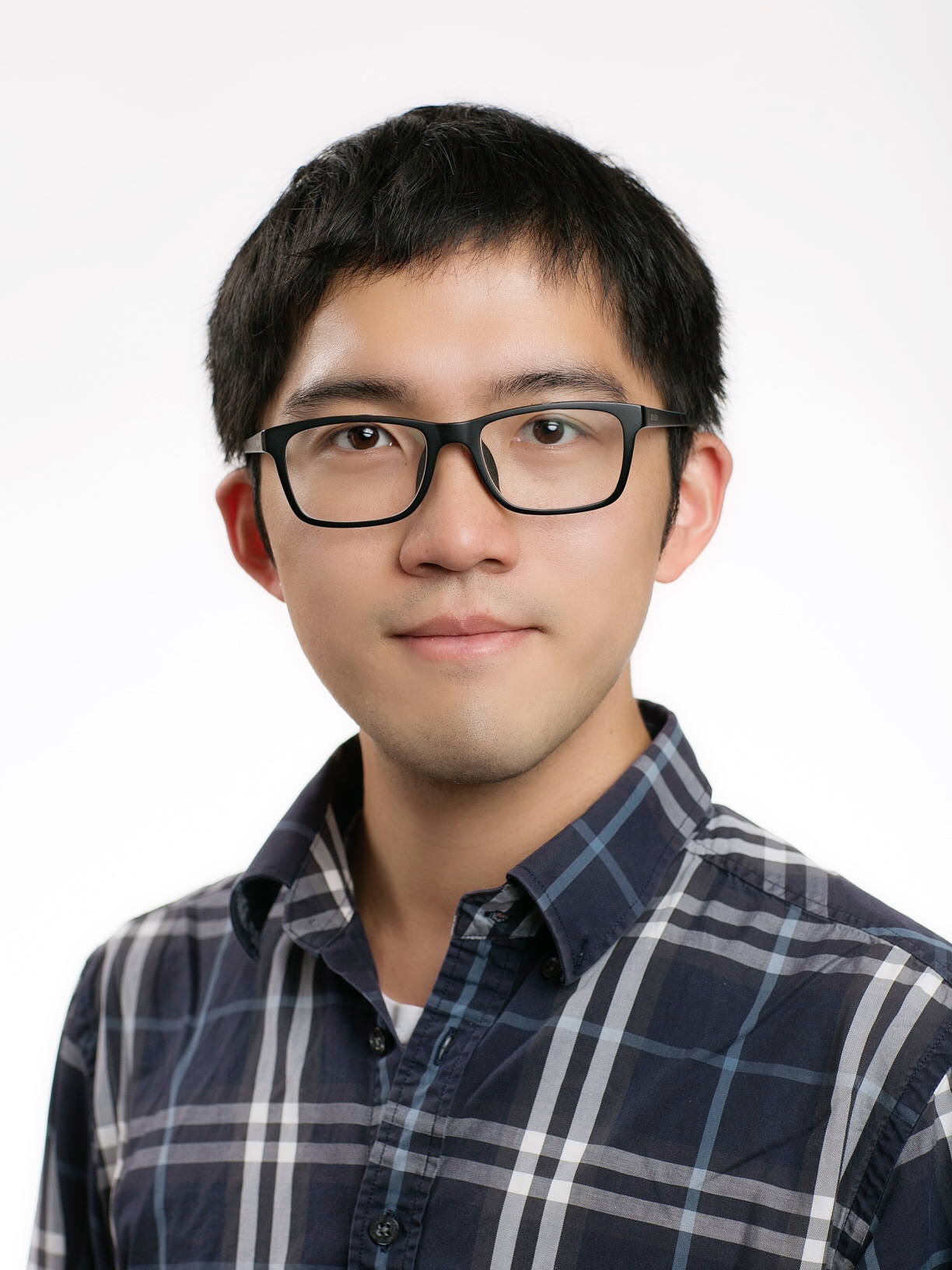
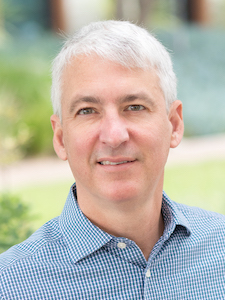
Dongyi Wang is an Assistant Professor in the Department of Biological and Agricultural Engineering at the University of Arkansas, where he directs the Smart Agriculture and Food Engineering (SAFE) Lab. His work bridges advanced technologies like artificial intelligence, robotics, and machine vision with agrifood manufacturing to enhance product quality, safety, and worker welfare. Ph.D. in Bioengineering from the University of Maryland, College Park B.S. in Electrical and Computer Engineering from Fudan University Visiting experience at The Chinese University of Hong Kong Research interests span smart agrifood manufacturing , robotics , machine vision , and artificial intelligence , with applications in crop monitoring, food safety, and healthcare. His lab develops solutions like automated defect detection, pathogen sensing, and sustainable processing systems. Article analysis reveals a focus on AI-driven agricultural automation , hyperspectral imaging , robotic manipulation of bio-products , and food safety innovations . Recent works include YOLO-based tomato defect segmentation, E. coli biosensing, and UAV-based blackberry monitoring. Awards & Memberships College of Engineering Dean’s Award of Excellence Rising Star Research Award (UARK) Outstanding Mentor Award (UARK) Professional memberships in ASABE and IEEE As an educator, he teaches instrumentation and artificial intelligence in agrifood manufacturing . The SAFE Lab, funded by USDA NIFA, NSF, and federal/local agencies (> $7M), prioritizes workforce development in AI/robotics for agrifood industries.
Dr. Elisabeth Hein is a Scientific Assistant and Post-doctoral Fellow at the Evolutionary Cognition Research Group within the Department of Psychology, Faculty of Science, University of Tübingen. She holds a PhD in Psychology (2006, University of Tübingen) and a Master’s in Cognitive and Experimental Psychology (2002, Université Louis Pasteur, Strasbourg). Her research focuses on object cognition , visual perception , and the role of attention and features in resolving motion correspondence in dynamic displays. She has secured multiple competitive grants from the Deutsche Forschungsgemeinschaft (DFG) and the Volkswagen-Stiftung . Education : PhD in Psychology, University of Tübingen (2006) Master’s in Cognitive and Experimental Psychology, Université Louis Pasteur, Strasbourg (2002) Licence in Psychology, Université Louis Pasteur, Strasbourg (2001) Her recent work explores cross-modal correspondence (auditory-visual parallels), scene-based motion processing , and the neural mechanisms of attention in perceptual integration. She has authored peer-reviewed publications in journals like Journal of Experimental Psychology , Attention, Perception & Psychophysics , and Journal of Vision . Scientific Awards : 2020 DFG Continuation Research Grant 2014 DFG Research Grant 2008 Volkswagen-Stiftung Fellowship 2002-2005 DFG Graduate Fellowship Elisabeth Hein serves as a peer reviewer for journals including Acta Psychologica and Psychonomic Bulletin & Review , and has organized conferences and committees such as the Vision Sciences Society and European Conference on Visual Perception . She also contributes to student advisory services and academic governance at the University of Tübingen.
Holger Caesar is a tenured Assistant Professor at Delft University of Technology (TU Delft) in the Intelligent Vehicles Lab . He leads research on scalable approaches for autonomous vehicle perception, prediction, and data annotation, with a focus on sensor fusion, domain adaptation, and minimal supervision. His work has been cited over 15,000 times. Education PhD in Computer Vision, University of Edinburgh Prior studies at KIT Karlsruhe, EPF Lausanne, and ETH Zurich Research Interests span autonomous driving perception, weakly supervised learning, novel view synthesis (NeRFs), diffusion models, and collaborative perception. He emphasizes reducing reliance on manual annotations through active learning and partial labeling techniques. Recent Publications include work on 4D Gaussian Splatting, camera-radar fusion, open-set scene graph generation, and safety benchmarking. These reflect trends toward multi-modal perception, robust sensor fusion, and foundation models for scalable autonomous systems. Scientific Awards ELLIS Europe Scholar (2024) TU Delft Cohesion Grant (100k EUR, 2024) Climate Action Grant (30k EUR, 2024) TKI High Tech Systems Grant (502k EUR, 2022) AiNed XS Grant (80k EUR, 2023) Argoverse Scene Flow Challenge Winner (unsupervised track, 2024) Advising & Grants include EU Horizon funding for the MOSAIC project (1 PhD and 1 Postdoc, 2024), EU KDT Cynergie4MIE grant (450k EUR, 2024), and industrial collaborations with Bosch, Motional, and partners across Europe. Labs & Teams include the Intelligent Vehicles Lab at TU Delft and founding roles in Motional's Data Annotation, Autolabeling, and Data Mining teams. He co-organizes workshops at ICCV, CVPR, and NCCV, and leads the ELLIS Delft Unit seminar series.
Kari B. Henquinet is a Teaching Professor in Social Sciences at Michigan Technological University, where she serves as Undergraduate Studies Director, Peace Corps Prep Program Director, and Sustainability Science and Society Program Advisor. With a PhD in Anthropology from Michigan State University (2007), her academic career focuses on the intersection of gender, development, and humanitarianism, with extensive fieldwork in West Africa and Central America. Her educational background includes: PhD in Anthropology, Michigan State University, 2007 MA in Anthropology, Michigan State University, 2003 BA in Interdisciplinary Studies, Wheaton College, 1996 Dr. Henquinet's research spans four interconnected areas: gender and women's rights in Niger, historical roots of evangelical aid and development, disaster risk reduction in Central America, and intercultural service learning. Her ethnographic work in Niger examines how transnational aid institutions interact with local gender relations and Islamic family law, while her historical research analyzes the Cold War-era foundations of organizations like World Vision. In El Salvador and Jamaica, she collaborates on interdisciplinary projects addressing social vulnerability to natural hazards. Her scholarship consistently bridges theory and practice through experiential learning initiatives. Analysis of her recent publications reveals a strong interdisciplinary trajectory connecting anthropology, religious studies, and development practice. Her work demonstrates growing emphasis on community-based approaches to vulnerability assessment, ethical dimensions of humanitarianism, and the intersection of faith-based and secular development models. Geographically, her research spans West Africa (particularly Niger), Central America (El Salvador, Jamaica), and engages with broader theoretical questions about knowledge production in international development. Dr. Henquinet has secured significant research funding including: Community- and Nature-Led Adaptation in El Salvador (2024, University of Michigan) Understanding Community Connections with Nature (2023, Consortium of Universities for Hydrologic Science) National Science Foundation IRES Track III Collaborative Research (2019) Fulbright-Hays Doctoral Dissertation Research Abroad Grant (2003-2004) As an educator, she has directed the Peace Corps Master's International program for nine years and Peace Corps Prep for six years, coordinating campus-wide efforts to prepare students for international service. She teaches numerous courses including Environmental Anthropology, Cultural Dimensions of International Immersion, and Ethnographic Methods, and advises students in the Pavlis Honors College. Her commitment to experiential learning extends to directing the Community Ambassadors program, building linkages between Michigan Tech and the local community. Dr. Henquinet collaborates extensively with interdisciplinary teams, particularly in her work on disaster risk reduction in El Salvador where she partners with geologists, hydrologists, and local communities. Her recent NSF-funded field school in El Salvador represents a significant collaborative effort with the Consortium of Universities for the Advancement of Hydrologic Science and Lutheran World Relief.
Xu Chen is a doctoral researcher at ETH Zurich specializing in 3D generative models and neural implicit shape animation . His work focuses on creating photo-realistic simulations of human activity for applications in human-centric perception tasks .
Seonwook Park is a Researcher at Lunit Inc. , focusing on advancing eye-tracking technology through deep learning. He earned his PhD in June 2020 from ETH Zurich 's Department of Computer Science under the supervision of Prof. Dr. Otmar Hilliges. His research bridges eye tracking and deep learning , aiming to make eye-tracking accessible in uncontrolled, everyday environments. This includes gaze estimation from monocular RGB images, real-time 3D gaze tracking, and self-learning transformations for gaze redirection. His work often intersects with computer vision and human-computer interaction , as seen in his contributions to UI adaptation via eye movement analysis. His publication record spans top conferences like NeurIPS , ECCV , and ICCV , reflecting expertise in gaze estimation , hand pose estimation , and visual SLAM . Notably, he won the Best Presentation Award at ETRA 2018 . He has supervised multiple theses, including MA and BA projects, and served as a teaching assistant for courses such as Machine Perception and Human-Computer Interaction at ETH Zurich.
Dr. Jan Helge Bøhn is an Associate Professor in the Department of Mechanical Engineering at Virginia Tech's College of Engineering, specializing in rapid prototyping, additive manufacturing, geometric modeling, and international engineering education. His work bridges global collaborative engineering with innovative product development processes. Ph.D., Computer and Systems Engineering, Rensselaer Polytechnic Institute (1993) M.S., Computer and Systems Engineering, Rensselaer Polytechnic Institute (1989) B.S., Computer Science, Rensselaer Polytechnic Institute (1988) His research focuses on additive manufacturing and global engineering design , with applications in transatlantic dual degree programs, automotive PLM, and haptic accessibility solutions. He has pioneered adaptive slicing techniques for 3D printing and developed international curricula frameworks. Dr. Bøhn's publications highlight trends in collaborative engineering education , 3D printing , and human-computer interaction , particularly for low-vision users and automotive sectors. 2018 : PACE Platinum Certification 2015 : Alumni Award for Excellence in International Outreach 2013 : Virginia Tech Scholar of the Week & PACE Silver Certification He has led international initiatives, received multiple teaching excellence awards, and collaborated on global PLM educational labs. His work impacts both engineering pedagogy and industrial practices.
Andrew S. Gordon is a Research Associate Professor of Computer Science at the University of Southern California and Director of Interactive Narrative Research at the Institute for Creative Technologies. His work integrates artificial intelligence, cognitive science, and interactive storytelling to create systems that automatically interpret and generate narrative structures, with a special focus on commonsense reasoning and abductive inference. Education Ph.D. in Computer Science, Northwestern University, 1999 Research Interests Gordon’s research converges on computational narrative intelligence . He develops formal models of commonsense psychology that enable machines to reason about human intentions, beliefs, and emotions. His group designs interactive narrative systems for training and education, builds large-scale story corpora, and pioneers abductive reasoning techniques that combine symbolic logic and statistical learning to interpret temporal data. Recent work explores how large language models can be guided to co-create interactive fiction and how vision–language models can be benchmarked for causal understanding. Publication Trends Across more than two decades, his publications reveal consistent themes: (1) foundational theories of commonsense psychology and strategy representation, (2) narrative technologies that blend AI planning with human creativity, and (3) practical training simulations for defense and education. The 2024-2025 papers highlight a pivot toward evaluating and steering large language models for narrative tasks, while earlier work established abductive reasoning frameworks such as “Etcetera Abduction.” Awards & Honors Best Paper Award, System Lifecycle and Technologies Track, Simulation Interoperability Standards Organization (SIW 2021) Advising & Grants He has successfully mentored three PhD students—Reid Swanson (2010), Christopher Wienberg (2017), and Melissa Roemmele (2018)—whose dissertations span computational narrative, commonsense reasoning, and interactive fiction. His research has been continuously supported by agencies including the U.S. Army, DARPA, and NSF for projects on virtual training environments, narrative-centered learning, and large-scale commonsense knowledge acquisition. Labs & Teams Gordon directs the Interactive Narrative Research Group at USC’s Institute for Creative Technologies, where interdisciplinary teams of computer scientists, cognitive psychologists, and interactive media designers collaborate on systems such as the Rapid Integration & Development Environment (RIDE) for embodied conversational agents and story-driven training simulations.
Wenhua Shi serves as Associate Professor in the Art Department at the University of Massachusetts Boston, where he teaches courses including Intro to Video, Sight and Sound, Time and Motion, and Digital Studio. His practice spans film, video, animation, sound art, and interactive installations, with works exhibited internationally at venues including the International Film Festival Rotterdam, European Media Art Festival, Venice Biennale, and Shenzhen-Hong Kong Bi-City Biennale. His educational background includes an MFA from the University of California, Berkeley (2009) and dual BFA/BA degrees from the University of Colorado, Boulder. His research focuses on poetic approaches to moving image making and conceptual depth in time-based media, exploring themes of temporal perception, sensory experience, and cultural memory through experimental techniques in video, sound, and interactive technologies. Shi's creative output reveals consistent exploration of time perception and sensory embodiment across diverse media formats. His work demonstrates technical mastery in video mapping, generative algorithms, and site-specific installations, often incorporating audience participation and cultural symbolism. The recurring themes of fragmentation, cyclical time, and environmental interaction reflect his conceptual depth in contemporary art practice. Scientific Awards: Mass Cultural Council (2024) New York Foundation for the Arts (2015) New York State Council on the Arts LEF Foundation (2021) Juror’s Award from the Black Maria Film and Video Festival Shi has secured significant research funding including grants from Mass Cultural Council (2024), New York Foundation for the Arts (2015), New York State Council on the Arts, and LEF Foundation (2021). He serves as jury member for prestigious events including the Ann Arbor Film Festival (2024) and National Endowment for the Arts (2017-2021). As founder and curator of RPM Festival (2013-Present), he leads collaborative projects including Revolution Per Minutes: Sound Art China and co-curated exhibitions with artists like Zoe Strauss and Sergio De La Torre. His studio practice integrates teaching, curation, and experimental production across moving image, sound, and interactive media.
Saurabh Gupta is an Associate Professor in the Electrical and Computer Engineering Department at the University of Illinois Urbana-Champaign (UIUC), where he is based at the Coordinated Science Lab (CSL 319). He previously served as a Research Scientist at Facebook AI Research in Pittsburgh working with Prof. Abhinav Gupta. His educational background includes a PhD in Computer Science from UC Berkeley advised by Prof. Jitendra Malik, and an undergraduate degree in Computer Science and Engineering from IIT Delhi, India. Gupta's research focuses on building intelligent agents that can interact with the physical world, with particular emphasis on computer vision, robotics, and machine learning. His work explores representations that enable physical interaction and learning from active engagement with environments. Key research directions include spatio-semantic and topological representations for visual navigation, skill discovery, learning from videos, and active visual learning. His recent publications reveal a strong trend toward practical robotics applications with an emphasis on real-world deployment. The research spans multiple domains including humanoid robotics, egocentric vision, physical reasoning, and wireless sensing. Significant attention is given to bridging the sim-to-real gap and developing systems that work in practical environments rather than controlled laboratory settings. As an educator, Gupta teaches advanced courses including Deep Learning for Computer Vision (CS 444/ECE 494), Computer Vision (ECE 549/CS 543), and Learning-Based Robotics (ECE 598 SG). Gupta advises multiple PhD students including Arjun Gupta, Shaowei Liu, Aditya Prakash, Xiaoyu Zhang, Runpei Dong, and Xialin He, with former student Matthew Chang completing his PhD in 2024 on Robot Learning from Videos. His research group operates within the Coordinated Science Laboratory at UIUC, collaborating with researchers across computer vision, robotics, and machine learning domains. The group maintains strong connections with industry research labs including Meta AI Research, where former students have pursued research scientist positions.
Baybora Temel is an Associate Professor at Trakya University Faculty of Fine Arts , with a PhD in Computer Science from Marmara University (2009). His research merges Artificial Intelligence and Digital Art Analysis , focusing on Art Authentication via wavelet transforms and neural networks. Specializes in Painting Style Classification and Digital Art Forensics Recipient of Nuri Iyem Painting Competition Exhibition (2015) and Australian Embassy Painting Award (2009) Active in International Art Symposia (Odessa, Patras) and National Exhibitions His 15 most recent publications span Art Authentication (2008-2022) and Digital Art Analysis , employing Machine Learning for Cubist Painting Discrimination and Figurative Art Studies . He has curated exhibitions like Art Suites 26th International Art Workshop (2018) and participated in Balkan Exhibitions IV (2023).
Frédéric Dufaux is a CNRS Research Director at Université Paris-Saclay, affiliated with CentraleSupélec and the Laboratoire des Signaux et Systèmes (L2S), where he heads the Telecom and Networking hub. He holds an M.Sc. in Physics (1990) and a Ph.D. in Electrical Engineering (1994) from the Swiss Federal Institute of Technology (EPFL). With over 20 years of research experience, he previously worked at EPFL, MIT, and industry leaders including Compaq and Digital Equipment. His research spans: Fundamental video coding techniques and 3D video systems High dynamic range imaging and perceptual quality assessment Privacy-preserving video surveillance and multimedia content analysis Wireless video transmission and next-generation compression standards Recent publications focus on HDR compression optimization, semantic video coding using seam carving, distributed video coding with machine learning, and 3D video standardization, demonstrating consistent innovation in video processing architectures and perceptual quality enhancement. Awards & Honors: IEEE Fellow Two ISO Awards for contributions to JPEG 2000 wireless (JPWL) and JPSearch standards He leads multiple standardization initiatives in MPEG/JPEG committees and has held editorial leadership roles including Editor-in-Chief of Signal Processing: Image Communication (2010-2019). He chairs the EURASIP Technical Area Committee on Visual Information Processing and has organized major conferences including ICIP and MMSP.
Daphné Bavelier is a prominent Professor in the Department of Psychology at the University of Geneva, Switzerland, with an extensive research portfolio spanning cognitive neuroscience, video game effects on cognition, and neuroplasticity. Her work has established her as a leading authority on how digital experiences, particularly video gaming, reshape brain function and cognitive abilities. Professor Bavelier's primary research interests focus on understanding how action video game play enhances various cognitive functions including attentional control, perceptual learning, and task-switching abilities. Her groundbreaking work demonstrates that video games are not merely entertainment but powerful tools for cognitive enhancement, with implications for education, rehabilitation, and cognitive training across the lifespan. She investigates how gaming experience alters neural processing in visual attention, spatial cognition, and multitasking abilities, challenging traditional assumptions about screen time effects. Analysis of her recent publications reveals a clear trajectory toward translational research, where fundamental discoveries about gaming's cognitive benefits are being applied to clinical populations. Her work now spans amblyopia treatment through video game therapy, anxiety reduction in adolescents, and cognitive interventions for autism spectrum disorder. Notably, her research increasingly examines contextual factors rather than screen time alone, emphasizing that how technology is used matters more than mere exposure duration. Professor Bavelier has supervised 42 academic works throughout her career, mentoring the next generation of cognitive scientists. Her research has garnered significant attention, with many publications accumulating thousands of views and downloads, reflecting the broad impact of her work across multiple disciplines including psychology, neuroscience, education, and clinical practice.
Anna-Carolina Haensch is a Lecturer at the University of Munich in the Chair of Statistics and Data Science in Social Sciences and the Humanities and an Assistant Professor at the University of Maryland in the International Program in Survey and Data Science. Her interdisciplinary work bridges statistics, computational social science, and natural language processing, with a focus on methodological innovation in social research. Education: PhD in Sociology, University of Mannheim (2017-2021) M.Sc. in Survey Statistics, University of Bamberg (2014-2017) B.A. in Political Science/Sociology, Ludwig-Maximilians-Universität München (2011-2014) Dr. Haensch's research centers on missing data, synthetic data, and big data applications in social sciences. She develops advanced statistical methods for survey data harmonization, multiple imputation techniques, and leverages natural language processing to analyze complex social phenomena. Her work consistently addresses methodological challenges in social research with practical applications for data collection and analysis. Her recent publications reveal a significant trend toward integrating large language models with traditional survey methodology, exploring how AI can enhance data collection, analysis, and interpretation in social science research. She has made substantial contributions to understanding missing data patterns, developing synthetic data approaches, and examining the societal implications of AI tools across multiple domains including mental health, political science, and housing policy. Scientific Awards: 2022 AAPOR Burns "Bud" Roper Fellow Award 2022 AAPOR Warren J. Mitofsky Innovators Award (as part of CTIS team) 2022 AAPOR Policy Impact Award (as part of CTIS team) 2011-2017 Max-Weber-Programm (undergraduate and graduate stipend) Dr. Haensch actively mentors the next generation of researchers, currently supervising 3 PhD theses on statistical education, machine learning applications in social sciences, and synthetic data generation with LLMs. She has guided approximately 6 master's theses and 15 bachelor's theses at the University of Munich since 2022, with topics primarily related to synthetic data, multiple imputation, and LLM applications. Her teaching spans statistical methods, data science techniques for survey researchers, and specialized topics in big data analysis. She has secured teaching grants including a €20,000 promotion for the RAINER project (R Assistant IN Error Resolution) for 2024-2025 and a €10,000 LMU-NYU Scholarship in 2023. She serves on several important boards including the Eurostat EMOS Board (2024-2026), the Ethics Commission of Faculty 16 at LMU (2023-2025), and as Women's Representative at the Institute for Statistics, LMU (2024-2026). Her collaborative work with the University of Maryland Social Data Science Center and involvement in the Global COVID-19 Trends and Impact Survey demonstrates her commitment to large-scale data collection initiatives and real-time social research.
Dr. Yulia Sandamirskaya is the Head of Research Center "Cognitive Computing in Life Sciences" at Zurich University of Applied Sciences (ZHAW), focusing on neuromorphic computing applications for embodied artificial intelligence. Her work bridges computational neuroscience and robotics, emphasizing neural-dynamic architectures for real-time decision-making, learning, and sensorimotor integration in autonomous agents. Key Research Areas: Neuromorphic hardware, dynamic neural fields, spiking neural networks, spatial language modeling, and autonomous sequence generation. Projects: Developed controllers for UAVs and robotic arms using event-based vision sensors, explored on-chip unsupervised learning, and designed models for spatial language interpretation in robots. Scientific Contributions: Her publications span robotics conferences and journals like Science Robotics and Frontiers in Neurorobotics , addressing topics such as path integration, obstacle avoidance, and cognitive architectures. Recent work (2024) includes visual odometry with resonator networks and hyperdimensional scene factorization on neuromorphic chips. Advising: Supervised multiple MSc theses at ETH Zurich and NSC/INI programs, mentoring students on neuromorphic navigation, spiking networks, and tactile learning. Collaborated with institutions like ETH Zurich, University of Queensland, and INI Bochum. Labs & Collaborations: Leads the "Neuromorphic Computing Applications: Embodied AI" group at ZHAW, partnering with INIvation (Zurich) and Jörg Conradt (KTH) on neuromorphic hardware implementations. Projects integrate cognitive models with robotic platforms, emphasizing energy efficiency and low-latency interaction.