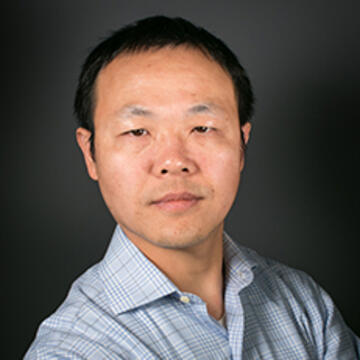
Pingbo Tang is an Associate Professor in the Department of Civil and Environmental Engineering at Carnegie Mellon University, affiliated with the College of Engineering. He leads the Spatiotemporal Workflows and Resilient Management Laboratory (SWARM Lab). Tang holds a Ph.D. from Carnegie Mellon University (2009), a Master’s in Bridge Engineering from Tongji University (2005), and a Bachelor’s in Civil Engineering from Tongji University (2002). His research focuses on civil infrastructure operations, human systems engineering, and AI-driven solutions for predictive management. Key areas include remote sensing, data analytics, and Human-Cyber-Physical-Systems (H-CPS) in construction and infrastructure (e.g., airports, nuclear plants). He has published over 100 peer-reviewed articles and secured funding from NSF, DOE, NASA, and industry partners. Tang is a leader in professional organizations, including ASCE (Computing Division Chair), TRB (Bridge Management Committee), and ASTM International. He has received prestigious awards, including the NSF CAREER Award (2015), ASCE Halpin Award (2020), and multiple best-paper honors. His work integrates AI, digital twins, and safety innovation, with applications in aviation scheduling (e.g., Alaska Airlines collaborations) and nuclear power plant operations. Tang’s research emphasizes sustainable infrastructure, safety, and interdisciplinary solutions for complex systems.
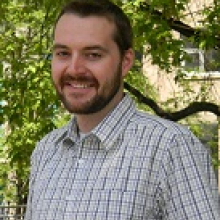
Matthias Heller is a Professor at Technische Universität München (TUM) and holds the title of Honorary Professor for Highly Augmented Aircraft Systems. He is affiliated with the Department of Flight Mechanics & Performance and has been a Rudolf Diesel Industry Fellow at TUM-IAS since 2010. His research focuses on flight dynamics, robust control systems, and handling qualities analysis for advanced aircraft configurations. Heller has extensive industry experience with Airbus Defence & Space, where he contributed to flight control system development and stability analysis of hypersonic vehicles. Education: 1987–1992: Aerospace Engineering, TUM (Diplom Ingenieur) 1999: Dr.-Ing. (summa cum laude) from TUM, Dissertation: “Analysis and Robust Control of the Lateral Dynamics of Hypersonic Vehicles” Research Interests: Flight dynamics modeling & simulation Robust flight control system design Pilot-in-the-loop oscillation (PIO) prevention Handling qualities assessment for autonomous systems Stability analysis of innovative aircraft configurations Key Achievements: Willy Messerschmitt Prize (2001) for contributions to flight dynamics research Founder of the Focus Group “Aircraft Stability and Control” at TUM-IAS Leading work on UAV control systems and hybrid flight control architectures Labs & Collaborations: Active in the Safe Adaptive Dependable Aerospace Systems (SADAS) Focus Group, focusing on dynamics and control of autonomous flight systems. Previously led the Aircraft Stability and Control group.
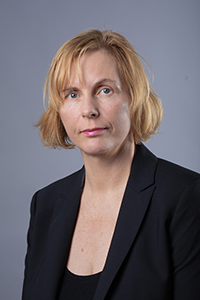
James Forbes is an Associate Professor in the Department of Mechanical Engineering at McGill University. He holds the title of William Dawson Scholar and is affiliated with the Dynamics Estimation & Control of Aerospace & Robotics Systems research group. His primary research focus is on Dynamics and Control, with emphasis on navigation, guidance, and control (GNC) techniques for robotic systems. He teaches courses such as MECH 309 (Numerical Methods), MECH 412 (System Dynamics), and advanced topics in control systems. Forbes earned his Ph.D. in Aerospace Science and Engineering from the University of Toronto, following an M.A.Sc. from the same institution and a B.A.Sc. in Mechanical Engineering from the University of Waterloo. His research interests include nonlinear state estimation (batch methods, filtering), control synthesis via optimization (LQR, LMI approaches), and data-driven modeling using Koopman operator techniques. Applications span unmanned aerial vehicles (UAVs), autonomous underwater vehicles (AUVs), and SLAM systems. He has developed the navlie Python package for state estimation on Lie groups. Notable awards include the William Dawson Scholar distinction. His recent work focuses on multi-UAV localization, robust control algorithms, and sensor fusion techniques. He collaborates on projects involving UWB-based positioning and inertial navigation systems.
Nadia Figueroa is the Shalini and Rajeev Misra Presidential Assistant Professor in the Mechanical Engineering and Applied Mechanics (MEAM) Department at the University of Pennsylvania . She holds secondary appointments in Computer and Information Science (CIS) and Electrical and Systems Engineering (ESE) , and is a core faculty member at the General Robotics, Automation, Sensing & Perception (GRASP) Laboratory . Before joining Penn, she was a Postdoctoral Associate at MIT's CSAIL under Prof. Julie A. Shah and earned her Ph.D. at EPFL with Prof. Aude Billard. Her academic journey includes research roles at DLR and NYU Abu Dhabi , along with degrees from Monterrey Tech (B.Sc.) and TU Dortmund (M.Sc.) . Education: Ph.D. in Robotics, Control and Intelligent Systems, EPFL (2019) M.Sc. in Automation and Robotics, TU Dortmund B.Sc. in Mechatronics, Monterrey Tech Her research focuses on adaptive intelligence for robots to learn from and interact with humans, emphasizing fluid collaboration in safety-critical applications. Key areas include reactive control algorithms , human-robot co-manipulation , and real-time navigation . Techniques integrate machine learning , control theory , and perception to ensure stability, safety, and robustness in dynamic environments. Recent work trends highlight reactive motion policies for imitation learning, dynamical systems modulation with non-convex obstacles, and EEG-based intent detection for assistive robotics. She also explores soft robotics with MORF systems and SE(3) control for end-effector precision. Her publications reflect interdisciplinary approaches at the intersection of robotics, AI, and human biomechanics . She has taught MEAM-520 Introduction to Robotics at Penn and served as Head Teaching Assistant at EPFL for courses like MICRO-401 Machine Learning Programming . Her Figueroa (Human-Centered) Robotics Lab , established in 2022, collaborates with institutions like MIT and EPFL to advance fluid human-robot autonomy.
Dr. J Krishnan is a Reader in Biological & Chemical Information Processing Systems at the Department of Chemical Engineering, Imperial College London, within the Faculty of Engineering. He holds affiliations with multiple interdisciplinary centers including the Centre for Process Systems Engineering, Institute of Systems and Synthetic Biology, and the Industrial Biotechnology Hub. His career includes roles as Lecturer and Senior Lecturer at Imperial College (2006–present), and prior research at Johns Hopkins University (2001–2005). He earned his PhD from Princeton University (2000) and B.Tech from IIT Madras (1994). His research focuses on systems-level analysis of biological and chemical information processing, combining mathematical modeling, computational tools, and collaborations with experimentalists in cell biology, synthetic biology, and biomedical engineering. Key areas include cellular communication networks, gene regulatory systems, and the application of engineering principles to biological systems. He also explores non-biological analogues, such as traffic systems and control engineering. His work on traffic systems emphasizes machine learning applications for anomaly detection, congestion prediction, and autonomous vehicle integration. Recent articles highlight developments in real-time traffic control strategies, CAV impact analysis, and hybrid neural network models for early congestion detection. His contributions span transportation economics, sensor data fusion, and game-theoretic models for public-private collaboration in travel information markets. Collaborative efforts extend to tool development for systems biology and synthetic biology, leveraging interdisciplinary approaches to bridge natural sciences and engineering. His affiliations reflect a commitment to translational research in chemical biology, process systems engineering, and molecular science.
Lynne Grewe serves as a Professor in the Department of Computer Science at California State University, East Bay, where she maintains active research and teaching responsibilities with current office hours and contact information. Her work bridges theoretical computer science with real-world applications across healthcare, education, and emergency response domains. Her research portfolio centers on three interconnected thrusts: Medical Technology : Development of computer vision systems for stroke detection through facial pattern analysis (StrokeChange), infrared-based disease monitoring, and assistive navigation tools for the visually impaired (Seeing Eye Drone) Educational Innovation : Creation of multimodal systems like ULearn that detect student frustration using deep learning, alongside community college partnerships to broaden participation in computing Sensor Fusion Applications : Integration of multi-modal data for disaster response, infrastructure monitoring, and mobile health platforms using advanced machine learning techniques Publication analysis reveals consistent evolution toward real-time, deployable systems—particularly mobile health applications and educational tools—while maintaining foundational work in sensor fusion. Her 2020-2024 output shows increasing emphasis on healthcare applications (40% of recent work) and educational technology (25%), often combining computer vision with mobile platforms. Grewe demonstrates significant commitment to educational equity through the Faculty in Residence program, collaborating with community colleges to prepare underrepresented students for computing careers. Her Google partnership and focus on practical applications indicate strong industry engagement, though specific grant details aren't documented in source materials. Current projects suggest ongoing expansion into in-situ health monitoring and AI-driven educational support systems.
Dr. Yi Wang is an Associate Professor and Department Chairperson of the Electrical and Computer Engineering Graduate Programs at Manhattan College, New York. He also serves as Director of the Electrical & Computer Engineering Graduate Program. His research focuses on machine learning, deep learning, cybersecurity, blockchain, and their applications in cyber-physical systems. Dr. Wang is an IEEE Senior Member (since 2021) and has secured NSF grants totaling over $149,000. Education: Ph.D. Computer Engineering, University of Alabama in Huntsville M.S. Computer Science, Wuhan University of Science and Technology B.S. Information Systems, Wuhan University of Science and Technology Research Interests: Machine learning and deep learning algorithms Cybersecurity for IoT and smart grids Blockchain applications in attribute-based access control Adversarial machine learning defense mechanisms Optical fiber communication systems Recent Publications Trends: His work spans blockchain platform comparisons, adversarial attack mitigation in power systems, and AI-driven smart home solutions. He frequently publishes in IEEE journals and conferences. Awards: Best Paper Award at 2017 IEEE UEMCON Best Paper Award at 2015 ICDIP Grants and Advising: Principal Investigator for NSF-funded UIRiSCS project (2022–2025). Co-Principal on NYC DOT Loading Zone Study. Recipient of Manhattan College Faculty Summer Grants (2021, 2017). Advises graduate students in cybersecurity and IoT research. Labs/Teams: Collaborates with the University of Zaragoza, Spain on smart systems research. Leads projects on plastic optical fiber networks and AI-driven smart home systems.
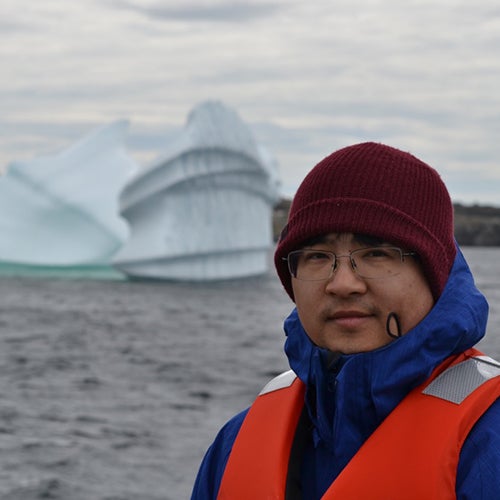
Associate Professor Mingxi Zhou is affiliated with the University of Rhode Island ( URI )'s Graduate School of Oceanography and Department of Oceanography . His research focuses on marine robotics, autonomous underwater vehicles (AUVs), and underwater navigation, with an emphasis on vehicle autonomy and multi-vehicle collaboration. Ph.D., Memorial University of Newfoundland (2017) M.Eng., Memorial University of Newfoundland (2012) B.Eng., Central South University (2009) His work addresses challenges in adaptive formation control, sensor fusion, and accessible unmanned platform development. Recent publications highlight deterministic learning algorithms, underwater pose estimation, and fault isolation in soft robotics. His research trends include advancements in autonomous systems, collaborative AUVs, and robust navigation under dynamic uncertainty, leveraging technologies like sonar, visual-inertial odometry, and distributed learning frameworks. He currently teaches OCG120G: World of Robots and OCE/ELE550: Ocean Systems Engineering . He founded the SOS Lab in 2018 at URI's Narragansett Bay Campus, prioritizing student training on interdisciplinary skills and providing competitive financial support.
Ayush Tewari is an Assistant Professor at the University of Cambridge. Previously, he was a postdoctoral researcher at MIT CSAIL under Bill Freeman, Josh Tenenbaum, and Vincent Sitzmann, and completed his Ph.D. at the Max Planck Institute for Informatics under Christian Theobalt. His research focuses on visual perception, developing methods to infer 3D structured representations from images and videos, aiming to bridge the gap between human perceptual capabilities and machine learning systems. Key research interests include neural rendering, inverse rendering, 3D reconstruction, and generative models. Notable contributions include advancements in Neural Radiance Fields (NeRF), diffusion models for inverse problems, and human-centric perception studies. His work has been published in top venues such as SIGGRAPH, CVPR, ICCV, and NeurIPS. Recent research trends emphasize ambiguity-aware inverse rendering, stochastic inverse problem solving using diffusion models, and integrating forward models for 3D scene inference. His work on Diffusion with Forward Models (NeurIPS 2023) proposes a novel framework for solving inverse problems without direct supervision. Awards: Best Paper Honorable Mention at BMVC 2022 (VoRF: Volumetric Relightable Faces). Labs/Projects: Core contributor to the DFM (Diffusion with Forward Models) project, advancing 3D scene understanding via probabilistic methods.
Hanan Samet is a Distinguished University Professor in the Computer Science Department at the University of Maryland, College Park. He holds affiliations with the Center for Automation Research and the Institute for Advanced Computer Studies (UMIACS). His academic journey includes a PhD from Stanford University (1975) in Computer Science, following degrees in Engineering (UCLA) and Operations Research/Computer Science (Stanford). Affiliations: University of Maryland, College Park (since 1975) Roles: Professor, Founding Editor-in-Chief of ACM Transactions on Spatial Algorithms and Systems, Founder of ACM SIGSPATIAL Samet's research focuses on spatial data structures, spatial databases, GIS, computer vision, and information retrieval. His seminal work includes the Foundations of Multidimensional and Metric Data Structures , an award-winning book addressing spatial indexing and query optimization. He pioneered frameworks like NewsStand for map-based news exploration and Coronaviz for pandemic visualization. Key contributions span spatial synonyms for approximate search, SAND spatial browser for digital government, and trajectory analysis systems for aviation safety and urban mobility. His work bridges theory and practice, influencing databases, graphics, and geographic systems. Education: B.S. Engineering, UCLA M.S. Operations Research, Stanford M.S./Ph.D. Computer Science, Stanford Samet has advised numerous students and led NSF-funded projects on spatio-textual data, similarity search, and spreadsheet analysis. His honors include the ACM Paris Kanellakis Award (2011), IEEE Wallace McDowell Award (2014), and UCGIS Research Award (2009). His labs and teams focus on spatial algorithms, visualization, and GIS applications. Notable projects include VASCO (spatial index demo), MARCO (image databases), and CHOLERA (disease tracking).
Dr. Mike Pake is a Senior Lecturer at Anglia Ruskin University (ARU), affiliated with the Faculty of Science and Engineering and the Department of Psychology, Sport and Sensory Science in Cambridge. He joined ARU in 1996 when the Psychology course was established, and his work focuses on computational models of language acquisition, visual perception, and educational technology. Educations: PhD in Cognitive Science from the University of Edinburgh (Centre for Cognitive Science) MSc in Artificial Intelligence from the University of Edinburgh BSc in Psychology from the University of Stirling Research Interests: Mike’s research combines computational modeling of child language acquisition with visual perception studies using eye-tracking. He investigates how infants infer language syntax from speech and explores how eye-movement patterns influence face recognition and hazard perception. He also develops conversational learning tools via his company Psychonovo Publishing Ltd, creating interactive educational materials for voice/text interfaces. Teaching & Innovation: He teaches research methods and cognitive psychology, and his Psychonovo system is used for smartphone/laptop-based learning modules. He presented this work at ARU’s Digifest 2019. Labs & Collaborations: Member of the ARU Centre for Mind and Behaviour. Co-authored Cognitive Psychology for Dummies (2016) and its translations, and developed software for interactive learning systems.
Marco Maggini is a Full Professor in the Department of Information Engineering and Mathematics at the University of Siena, a position he has held since joining the university in 1996. His academic career spans over 25 years with foundational expertise in computer engineering and artificial intelligence, focusing on theoretical and applied machine learning research. His educational background includes: Laurea degree (cum laude) in Electronics Engineering from the University of Florence (1991) Ph.D. in Computer Engineering and Control Systems from the University of Florence (1995) Prof. Maggini's research encompasses machine learning, neural networks, kernel machines, and the integration of symbolic and sub-symbolic knowledge systems. He extends these foundations into practical applications including web mining, search engine technology, pattern recognition, natural language processing, and computer vision. This interdisciplinary approach bridges theoretical computer science with real-world implementation challenges across multiple domains. Analysis of his 15 most recent publications (2023-2025) reveals a dominant focus on multilingual NLP applications, particularly educational puzzle generation for low-resource languages (Italian, Arabic, Persian, Turkish) using LLMs. His work demonstrates consistent innovation in named entity recognition, commonsense reasoning evaluation, and cross-lingual adaptation techniques. Secondary research threads include medical imaging segmentation, molecular property prediction, and AI security vulnerabilities, reflecting his broad technical mastery across computer vision, bioinformatics, and adversarial machine learning. No specific scientific awards were mentioned in the provided documentation, though his editorial roles indicate peer recognition within the academic community. While student mentoring details are absent from the source material, his position as Full Professor and leadership of SAILab imply active graduate supervision. His extensive publication record (120+ papers) and editorial service suggest significant research grant involvement, though specific funding sources remain undocumented. He directs the Siena Artificial Intelligence Laboratory (SAILab), which serves as an interdisciplinary hub for advancing machine learning theory and applications. The lab's current projects emphasize educational technology, multilingual NLP systems, and the integration of symbolic reasoning with neural architectures, maintaining strong industry and international academic collaborations.
Dr. Maya Aghaei is a Lecturer and Researcher in Computer Vision & Data Science at NHL Stenden University of Applied Sciences, part of the Academy Technology & Innovation. She holds a M.Sc. in Artificial Intelligence and a Ph.D. in Computer Vision from the University of Barcelona. Her academic role includes supervising Minor and Master students while focusing on applying cutting-edge AI techniques to real-world challenges. Prior to her current position, she served as a Postdoctoral Researcher at the Italian Institute of Technology, developing AI solutions for industrial applications. Her research spans Computer Vision, Machine Learning, and General AI with a focus on surveillance systems, autonomous drones, hyper-spectral imaging for environmental analysis, and social signal processing through egocentric data. Notable projects include crime scene classification via trajectory analysis, obstacle detection for BVLOS drones, and psychological trait prediction based on clothing analysis. Dr. Aghaei's work emphasizes real-world applicability, bridging theoretical advancements with practical implementations in industries like agriculture, waste management, and public safety. Her interdisciplinary approach combines technical innovation with societal relevance, addressing challenges from plastic recycling to social distancing compliance through computer vision systems.
Federico Boniardi is a researcher at the Autonomous Intelligent Systems group in the Department of Computer Science at Albert-Ludwigs-Universität Freiburg, Faculty of Engineering. He holds advanced degrees in Mathematics and Artificial Intelligence and has been actively contributing to robotics research since 2014. Bachelor’s in Mathematics, University of Milano (2006–2010) Master’s in Mathematics, University of Milano (2010–2012) MSc in Artificial Intelligence, University of Edinburgh (2013–2014) PhD Research Assistant, University of Freiburg (2014–2019) His research centers on mobile robot navigation, focusing on robust localization and mapping in indoor environments using LiDAR and architectural or hand-drawn floor plans. He explores long-term autonomy and human-robot interfaces, particularly in sketch-based map interpretation and shared control systems. His work integrates sensor calibration, topometric mapping, and deep learning for room layout extraction. The most recent publications reflect a strong trend in leveraging CAD and sketched maps for robot localization, combining probabilistic filtering, graph-based optimization, and semantic understanding. His contributions span key robotics venues such as IEEE/RSJ IROS, IEEE ICRA, and Robotics and Autonomous Systems. Scientific Contributions: Developed pose graph-based localization for long-term navigation Advanced LiDAR-based localization in architectural plans Explored Bayes filters for shared autonomy Enabled robot navigation using hand-drawn sketch interfaces Federico has served as a Teaching Assistant for Theoretical Computer Science and supervised student seminars on robot navigation. He has contributed to EU-funded research projects including RobDREAM and SQUIRREL, focusing on robot performance optimization and clutter management. He is based in Freiburg, Germany, and continues active research in autonomous intelligent systems.
Prof. Dr. Karl R. Gegenfurtner is a full Professor for General Psychology at the Department of Psychology, Faculty of Psychology and Sports Science, Justus-Liebig-University Giessen. He has held this position since 2001 and leads a prominent research group on visual perception. His work bridges low-level sensory processing with higher cognitive functions and motor control. Education: Psychology Student at the University of Regensburg, Diploma in Psychology, 1986 Ph.D. in Experimental Psychology, New York University, 1990 Postdoc at Howard Hughes Medical Institute and Center for Neural Science, NYU, 1990–1993 Research Scientist at Max Planck Institute for Biological Cybernetics, Tübingen, 1993–2000 Habilitation in Medical Psychology and Behavioral Neurobiology, 1998 Professor for Biological Psychology, Otto-von-Guericke University Magdeburg, 2000–2001 His research focuses on the neural and cognitive mechanisms of visual perception, particularly color vision, object recognition, eye movements, and sensorimotor integration. He investigates how humans perceive complex scenes and objects in natural environments, how these are represented in the brain, and how visual information guides motor actions. His recent work explores topics such as color categorization in neural networks, lightness perception, dynamic size recalibration, and the role of eye movements in perceptual decisions. The 15 most recent articles reflect a strong trend toward understanding perception in real-world contexts, integrating computational modeling, psychophysics, and neuroscientific methods. Key themes include color and shape perception, attention, eye movement control, and the interplay between perception and action. Scientific Awards: Member, German National Academy of Sciences Leopoldina (2015) Wilhelm Wundt Medal, German Society for Psychology (2016) Palmer Lecture, Colour Group (UK) (2019) Turrell Lecture Berlin (2019) Russell Devalois Memorial Lecture, UC Berkeley (2024) ICVS Verriest Medal (2024) Pineapple Science Award (2024) Prof. Gegenfurtner has supervised numerous research projects and training networks, including the DFG Collaborative Research Center TRR 135 on 'Cardinal mechanisms of perception' and the International Research Training Group BrainAct. He has received major funding, including an ERC Advanced Grant (2020) for 'Color 3.0'. He has served on editorial boards of top journals such as Journal of Vision , Vision Research , and Psychological Review , and was President of the Vision Science Society (2012–2013). He is actively involved in academic service, including the Alexander von Humboldt Foundation’s fellowship selection committee. He leads the Visual Perception research group at Giessen, which investigates cortical mechanisms of vision, perception of natural scenes, and the integration of sensory and motor information. The lab employs psychophysical experiments, eye tracking, computational modeling, and neuroimaging to study perception in ecologically valid settings.