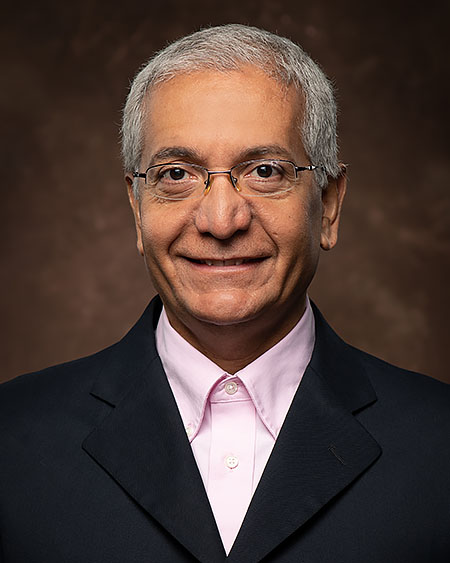
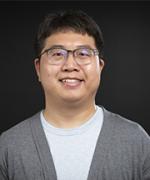
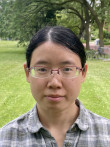
Eric Gamess is an Associate Professor in the Department of Mathematical, Computing, and Information Sciences at Jacksonville State University (JSU), Alabama. He holds a Ph.D. in Computer Science from the Central University of Venezuela (2000), an M.Sc. in Industrial Computing from INSA Toulouse (1989), and an Engineering Degree in Automatics, Computer Science, and Electronics from the same institution (1989). His academic career spans roles at universities in South America and the U.S., including Universidad del Valle (Colombia) and the University of Puerto Rico. Dr. Gamess specializes in network performance evaluation, cybersecurity, vehicular networking, and IoT. He has authored over 80 publications, edited 27 conference proceedings, and directs the Venezuelan Journal of Computing. His leadership roles include Vice-President of the Venezuelan Society of Computing and steering committee member of the ACM Southeast Conference. At JSU, he leads the Center of Academic Excellence in Cyber Defense Education (CAE-CD) and coordinates the Master of Science in Computer Systems and Software Design (CSSD) program. His research emphasizes network simulation, IPv6, and embedded systems performance (e.g., Raspberry Pi). Recent work explores containerization technologies, MQTT resilience, and IoT protocol optimizations. He teaches courses ranging from programming fundamentals to advanced cybersecurity and networking.
Stephen Lee-Urban is a Teaching Associate Professor in the Department of Computer Science & Engineering at Lehigh University, affiliated with the Rossin College of Engineering. He holds a Ph.D., M.S., and B.S. in Computer Science and Engineering from Lehigh University, all completed with summa cum laude distinction. His research focuses on fundamental and applied artificial intelligence, machine learning, game AI, cognitive systems, and automated planning. He has contributed to innovative projects such as HuManIC (human-machine interpretive control), CORA (cognitive systems framework), and crowdsourced narrative generation systems. His academic career includes significant work in cybersecurity through intelligent agent modeling of malware, as well as contributions to game AI for strategy games and military training simulations. Notable awards include summa cum laude honors for all three of his university degrees. Lee-Urban's scholarly output spans over 20 publications since 2000, with recent emphasis on AI applications in collaborative storytelling, adaptive planning systems, and human-computer interaction. His research integrates machine learning techniques with sociocultural analysis, crowd-powered content creation, and hierarchical task networks. Current work explores autonomous systems capable of leveraging crowd intelligence for generating interactive narratives and optimizing military training scenarios. While no specific grants or advising roles are listed, his interdisciplinary approach bridges computer science with game design, cybersecurity, and cognitive modeling.
Sonja Wogrin is a University Professor (Univ.-Prof.) at Graz University of Technology (TU Graz), where she has been heading the Institute for Electricity Economics and Energy Innovation since August 2021. She holds a Dipl.-Ing. in Technical Mathematics from TU Graz (2008), a Master of Science in Computation for Design and Optimization from MIT (2008), and a doctorate in Electricity Systems from Universidad Pontificia Comillas (2013). Her educational background includes: Doctorate in Electricity Systems, Universidad Pontificia de Comillas (June 2013) Dipl.-Ing. in Technical Mathematics, Graz University of Technology (October 2008) Master of Science in Computation for Design and Optimization, MIT (June 2008) Professor Wogrin's research focuses on decision support systems in the energy sector, optimization methodologies, and particularly the problem of generation capacity expansion. Her work spans several key areas including bilevel programming, capacity expansion planning, energy storage systems, and time series aggregation for energy system optimization. She has made significant contributions to understanding how to integrate renewable energy sources into power systems while maintaining economic efficiency and grid stability. Her research often addresses the challenges of decarbonizing electricity systems through advanced mathematical modeling and optimization techniques. Her recent publications demonstrate a strong focus on improving the computational efficiency of energy system models while maintaining accuracy, with particular attention to the integration of renewable energy sources, energy storage systems, and the development of resilient energy communities. She has pioneered work on time series aggregation methods that balance computational tractability with model accuracy, which is crucial for long-term energy planning under uncertainty. Professor Wogrin has received several prestigious awards and fellowships including: 4th EASE Student Award for "Co-Optimisation of energy storage technologies in tactical and strategic planning models" (2019) Beca de movilidad para investigadores "NILS Ciencia y Sostenibilidad" (2015) Beca Erasmus "Personal Docente/Investigador" de formación (2016) Beca Iberdrola de ayuda a la investigación en energía y medio ambiente (2020) She leads multiple significant research projects including EU - NetZero-Opt, RINGs, iKlimET, V2G-QUESTS, and CIDEAL, which focus on optimizing energy systems for net-zero emissions, resilient energy networks, climate and energy system modeling, vehicle-to-grid integration, and industrial decarbonization. Her work has substantial practical implications for energy policy and grid operations in Austria and beyond. Professor Wogrin collaborates extensively with industry partners including Austrian Power Grid AG, KELAG, and Netz Niederösterreich, ensuring her research addresses real-world energy challenges. Professor Wogrin leads the research group at the Institute for Electricity Economics and Energy Innovation, which develops advanced optimization models for energy systems. Her team has created the LEGO (Low-carbon Expansion Generation Optimization) model, an open-source tool for energy system optimization that has gained international recognition. The group's work spans from fundamental optimization methods to practical applications in energy system planning and operation, with a strong emphasis on computational efficiency and model accuracy.
Dr. Olivia G. Stewart is an Assistant Professor in the Department of Education Specialties at St. John's University's School of Education. Her work focuses on multiliteracies, critical digital literacies, and multimodal authoring for academically marginalized students. She holds a PhD from Arizona State University's Learning, Literacies, and Technologies Program, an MEd in Curriculum and Instruction from Arizona State, and a BA in Secondary English Education from the University of Arizona. Her research emphasizes expanding definitions of 'writing' through digital-age practices, particularly for underrepresented learners. Key areas include multimodal composition, social media affordances, and humanizing online education. She teaches courses like Digital Literacies (EDU 3280) and Mixed Method Research & Design (EDU 3820). Recent articles highlight frameworks for analyzing multimodal texts, podcast-based instruction, and strategies for effective online learning communities. Her work consistently bridges theory and practice, advocating for inclusive educational technologies. No notable awards are listed, but she actively contributes to the field through grant-funded research initiatives and doctoral mentorship.
Olivier ALLIX is a Professor at the Laboratoire de Mécanique et Technologie (LMT) at École Normale Supérieure de Cachan (ENS-Cachan). His research focuses on computational mechanics, including multiscale modeling of composite materials, structural failure analysis, and non-intrusive coupling strategies. He has held leadership roles such as Head of LMT-Cachan and Vice-president of the International Association for Computational Mechanics (IACM). Expertise: Computational structural mechanics, material failure, inverse problems, and multiscale approaches. Editorial Roles: Associate editor of multiple journals including Computational Mechanics and Computer Methods in Applied Mechanics and Engineering . Awards: IACM Fellow, Euromech Fellow, and recipient of the Gay-Lussac Humboldt Prize (2019). His work integrates experimental mechanics with computational methods, emphasizing big data applications and model validation. He has organized major conferences like the World Congress on Computational Mechanics and co-led international research initiatives such as the IRTG ‘Virtual Material and Structures’ with Hannover University. Teaching includes advanced courses on structural dynamics, composite materials, and computational mechanics at the Master’s level. His research group collaborates with industries like Safran, IFPEN, and DGA on projects involving fatigue analysis, mooring systems, and composite testing.
Dr. Sjoukje Osinga is an Assistant Professor in the Information Technology group at Wageningen University's Department of Social Sciences. Her research focuses on computational social science, natural language processing (NLP), and big data applications in agriculture. She holds a PhD from Wageningen University on agent-based modelling of knowledge management in the pig sector, with fieldwork in China. She contributed to EU H2020 projects like Cybele (big data in agriculture) and Dragon (knowledge transfer of ABM tools). She is a member of the SiLiCo Centre, specializing in simulating complex systems through agent-based simulations. Education: Artificial Intelligence and Cognitive Science (Groningen and Leuven, 1991) Research interests include agent-based modelling, big data analytics for agriculture, machine learning, and knowledge management. She explores topics like digital twins in health and agriculture, and sentiment analysis in policy-making. Her work bridges technical innovation with societal challenges, such as sustainable farming practices and compliance strategies in regulatory environments. Publications span agent-based models for pork supply chains, machine learning applications in crop forecasting, and digital twin frameworks for agriculture. She actively engages in interdisciplinary projects addressing data integration and policy implications of emerging technologies.
Dr Mary Webb is a Reader in IT in Education at King's College London's School of Education, Communication & Society, affiliated with the Centre for Research in Education in Science, Technology, Engineering & Mathematics (CRESTEM). Her research focuses on AI and machine learning in education, computer science pedagogy, digital technologies in science education, and formative assessment. She has over 150 publications and collaborates internationally through IFIP committees and the Informatics For All Coalition. Key awards include election to IFIP Technical Committee 3 (2001) and Working Group 3.3 (2005). Her teaching includes MA STEM Education and coordinating 'Digital Technologies and Education' modules. Current PhD students research topics like AI in ESL learning, collaborative online learning, and immersive technologies. Webb leads projects such as STEMINO (computational thinking practices) and 3D learning with haptic technologies. Her work emphasizes equitable technology integration, teacher training, and curriculum development in global education contexts.
Pedro Ferreira is a Professor at Iscte Business School, ISCTE - IUL, Lisbon, Portugal. His academic work spans multiple disciplines including business model innovation, cultural management, digital display systems, and consumer behavior. Key research areas: Business Model Innovation, Cultural Management, Digital Display Systems Interdisciplinary work: Healthcare Management, Energy Efficiency, Sensory Marketing Notable collaborations: Rock in Rio, Ferreira's de Castro Cultural Complex His publications demonstrate ecosystem-based approaches to cultural economics, with applications in virtual reality exhibitions and sustainable business practices. Recent work focuses on technology integration in perfume exhibitions and energy efficiency strategies. Earlier research includes pharmacological studies on P2X7 receptors in colitis and foundational financial accounting textbooks. He has analyzed group buying systems in Portugal and explored intersections between management theory and art. Academic contributions span 45 years, with a 2024 patent on digital display systems and a 1979 report on tomato industry economics. Current affiliations include: Iscte Business School ExecED at ISCTE INDEG-ISCTE Edifício INDEG-ISCTE, Lisbon
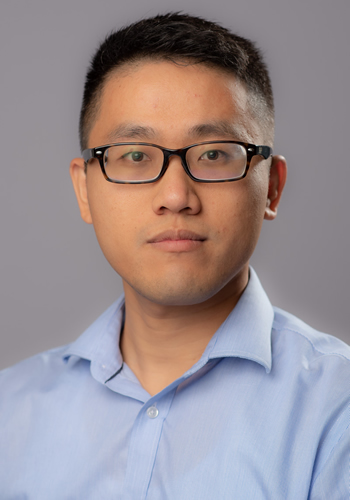
Dr. Xingpeng Li is an Associate Professor in the Department of Electrical & Computer Engineering at the University of Houston (UH), where he has held this position since 2024, following his tenure as Assistant Professor (2018–2024). His research focuses on smart grid technologies, renewable energy integration, and optimization of power systems. He holds a Ph.D. in Electrical Engineering from Arizona State University (2017) and multiple master’s degrees in Computer Science (Georgia Tech, 2023), Industrial Engineering (ASU, 2016), and Electrical Engineering (Zhejiang University, 2013). His work emphasizes machine learning applications in power systems, including battery degradation modeling, microgrid design, and climate-resilient grid planning. He leads the RPG Lab (https://rpglab.github.io), advancing solutions for offshore renewable energy systems, hydrogen transmission, and grid cybersecurity. His research has been funded by the NSF CAREER Award (2024) and the NAS Gulf Research Program (2023). Education : Ph.D., Electrical Engineering, Arizona State University (2017) M.S., Computer Science, Georgia Institute of Technology (2023) M.S., Industrial Engineering, Arizona State University (2016) M.S., Electrical Engineering, Zhejiang University (2013) B.S., Electrical Engineering, Shandong University (2010) Dr. Li’s recent publications highlight advancements in AI-driven grid optimization, battery lifecycle modeling, and offshore microgrid planning. He has received awards such as the Early-Career Research Follow (NAS Gulf, 2023) and the IEEE Phoenix Section Student Scholarship (2016). Awards : NSF CAREER Award (2024) Early-Career Research Follow, NAS Gulf Research Program (2023) Emerging Leader, Offshore Technology Conference (2023) His teaching includes courses like ECE 6327 (Smart Grid Systems) and ECE 6379 (Power System Operations), bridging theoretical research with practical grid challenges. His lab collaborates on projects like 100% renewable offshore platforms and hydrogen energy transmission systems, addressing climate resilience and decarbonization goals.
Professor Jamie Carlson is a Professor of Marketing and Deputy Head of School - Research at the Newcastle Business School, University of Newcastle. His expertise lies at the intersection of marketing, consumer behavior, and technology, with a focus on how organizations can better engage customers in increasingly digital environments. He has held significant leadership roles including Assistant Dean Research and Engagement (2018-2020) and Head of Marketing Discipline (2017-2018). Professor Carlson's educational background includes: PhD (Management) from the University of Newcastle Bachelor of Business (Honours) from the University of Newcastle Bachelor of Business from the University of Newcastle Professor Carlson's research program focuses on customer experience management, particularly at the customer-technology interface. His work spans three core areas: understanding customer engagement with physical and virtual channels, examining service design and consumer behavior in service industries, and investigating consumer adoption of e-health services. He emphasizes how consumers actively shape their consumption journeys, seeking both individualized and communal brand experiences across touchpoints, and how technology both creates value and presents challenges for consumer well-being. An analysis of Professor Carlson's recent publications reveals a strong emphasis on digital transformation in marketing, with particular focus on omnichannel retailing, metaverse applications, social media engagement, and the psychological aspects of consumer behavior in digital environments. His work demonstrates increasing interdisciplinary collaboration, connecting marketing with information systems, psychology, and healthcare domains to address complex consumer behavior questions in our technology-driven world. Professor Carlson has received numerous prestigious awards for his scholarly contributions: 2025 Jay Lindquist Best Conference Paper Award at the Academy of Marketing Science World Marketing Congress 2023 Best paper in Digital and Social Media Marketing Track at Academy of Marketing Multiple Top Cited/Downloaded Article recognitions from International Journal of Information Management (2022) 2022 Best paper award in the Australasian Marketing Journal Multiple best paper awards at Academy of Marketing conferences (2014-2017) 2010 Vice-Chancellor's Citation for Outstanding Contribution to Student Learning As a principal supervisor for PhD, DBA, and Honours students, Professor Carlson has mentored numerous successful researchers who have gone on to academic positions at institutions worldwide including Maastricht University (Netherlands), Dortmund University (Germany), Macquarie University, UTS, and the University of Adelaide. His students have received faculty medals, best paper awards, and the prestigious Arizona State University Center for Service Leadership Research Scholarship. His supervision focuses on customer engagement in digital media, service experience management, relationship quality, emotional appeals in advertising, and drivers of group travel behavior. Professor Carlson's research is conducted through multinational and interdisciplinary collaborations aligned with the Australian government's 'Growth Through Innovation' agenda and the UN Sustainable Development Goals. His work connects marketing with information systems, psychology, and healthcare to develop frameworks for understanding e-service quality, online flow experiences, customer engagement, and value creation in digital environments.
Yalong Yang is an Assistant Professor at the School of Interactive Computing at Georgia Institute of Technology. His research focuses on immersive analytics, virtual reality (VR), and augmented reality (AR) interfaces, with a particular emphasis on spatial interaction, hybrid user interfaces, and data visualization techniques. He explores how embodied interactions and immersive environments enhance understanding in domains like education, sports analytics, and collaborative decision-making. Key research themes include hybrid immersive systems (combining VR/AR with physical devices), asymmetric collaboration in mixed environments, and AI-driven tools for programming education. His work spans both theoretical frameworks and applied systems, such as SPHERE for scalable personalized feedback in coding classrooms and VizGroup for collaborative learning analytics. Yang’s recent publications highlight trends in spatial hybrid interfaces, navigation in immersive environments, and the integration of generative AI in educational technologies. His projects often involve evaluating interaction techniques (e.g., label placement in AR) and comparing performance across desktop and VR platforms. Notable contributions include the SportsXR initiative for immersive analytics in sports, and systems like CompositingVis for creating complex visualizations in 3D spaces. His work addresses challenges in situated analytics, wearable technologies for outdoor activities, and audience analysis in VR exhibitions.
Amir R. Nejad is a Professor in the Department of Marine Technology at NTNU, leading the Marine Energy Systems and Autonomics (MESA) research group. He holds roles such as Chair of the EAWE WindEurope Scientific Track Committee and co-chair of the Drivetrain Technical Committee at the European Academy of Wind Energy (EAWE). His research focuses on stochastic design, reliability-based operation, dynamic modeling, and fault detection in marine and offshore renewable systems. Nejad is an editorial board member for journals like Wind Energy Science and Ocean Engineering , and a member of ISO committees on drivetrain health monitoring. Education: PhD in Marine Technology, NTNU (2015) MSc Subsea Engineering, University of Aberdeen (2012) BSc Mechanical Engineering, Tehran University (2009) His research interests emphasize offshore wind drivetrain reliability, condition monitoring, and digital twin applications. Recent work includes studies on blade bearing fatigue estimation, SCADA-based lifetime extension of drivetrains, and wake steering techniques in floating wind farms. Key awards include multiple 'Best Lecturer' honors at NTNU and international conference recognitions. His research has been supported by grants such as the Nowitech Fellowship and DNV Education Fund. Key Projects: Marine System Dynamics and Vibration Lab (MD Lab) oversees projects on wind turbine drivetrains, floating offshore systems, and digital twin integration. Lab/Teams: MD Lab focuses on advancing marine energy systems through experimental and computational studies.
Colin Conrad is an Associate Professor of Digital Innovation at Dalhousie University’s Faculty of Management. He also serves as Co-Director of the College of Digital Transformation and Principal of the Cognition and Organizations Research Group. His research focuses on interdisciplinary projects spanning information systems, computer science, and cognitive neuroscience, with particular emphasis on human factors in educational technology and artificial intelligence. His work is supported by NSERC, CFI, and Mitacs. Research interests include mind wandering measurement via EEG, AI ethics, human-AI interaction, and neurophysiological impacts of digital technologies. He explores topics such as virtual teacher perception, privacy calculus in AI systems, and cognitive state awareness in human-AI collaboration. His recent studies address challenges in remote work ergonomics, digital transformation during crises, and legal/ethical aspects of brain-computer interfaces. His publications analyze behavioral responses to cybersecurity notifications, virtual influencer trust dynamics, and adaptive online learning systems. Current projects investigate the cognitive effects of AI-generated media and the neurophysiological foundations of attention in digital environments. Colin’s research is funded through grants emphasizing interdisciplinary innovation and societal impact. He collaborates with industry partners to translate neuroscientific insights into practical applications in education and workplace design.
Mohammad Dehghani is an Associate Teaching Professor in the Department of Mechanical and Industrial Engineering at Northeastern University, where he also serves as Program Director of the Galante Engineering Business Program. He holds a Ph.D. in Engineering Management from Western New England University (2016), an M.S. in Industrial Engineering from Tarbiat Modares University (2011), and a B.S. in Industrial Engineering from Yazd University (2008). His research focuses on Reinforcement Learning (RL), Simulation Optimization, and Healthcare Operations, with applications in manufacturing, digital twin systems, and UAV routing. He has developed multiple courses in Industrial Engineering and Data Analytics, receiving the 2020 Fostering Engineering Innovation in Education Award and the 2025 DAIS Data Analytics Teaching Award. Education: Ph.D. in Engineering Management, Western New England University, 2016 M.S. in Industrial Engineering, Tarbiat Modares University, 2011 B.S. in Industrial Engineering, Yazd University, 2008 Dehghani’s research bridges AI and operations research, emphasizing practical applications. His work includes developing RL frameworks for manufacturing scheduling and UAV routing, as well as simulation-optimization models for healthcare and pandemic preparedness. He has collaborated on projects addressing supply chain resilience during the COVID-19 pandemic and multi-objective supplier selection processes. His publications span journals like Simulation and conferences such as Winter Simulation Conference (WSC). His honors include the 2015 Best Ph.D. Paper Award at WSC and recognition from the Institute of Industrial and Systems Engineers (IISE). He actively contributes to professional societies, including the American Society of Engineering Management and Institute of Industrial Engineers. His teaching focuses on integrating data analytics and simulation tools into engineering curricula, with courses emphasizing Python integration, simheuristics, and digital twin technology. Dehghani leads initiatives in the Galante Program to enhance engineering-business synergies, preparing students for industry roles through interdisciplinary training. His work emphasizes practical problem-solving, with grants supporting projects in healthcare logistics and sustainable construction in cold climates.
Liang Xue is an Assistant Professor in the School of Information Technology at York University. She holds a PhD in Electrical and Computer Engineering from the University of Waterloo (2022) and completed a postdoctoral fellowship at the University of Guelph’s School of Computer Science (2022–2024). Her research focuses on applied cryptography, blockchain security, privacy-preserving AI, and cybersecurity in cloud and IoT systems. She has published in top-tier journals like IEEE Transactions on Dependable and Secure Computing, and conferences such as IEEE International Conference on Communications. Her work addresses challenges in data privacy, secure authentication, and regulatory compliance in decentralized systems. Recent projects include privacy-enhancing technologies for access control, blockchain-based data trading frameworks, and federated learning with privacy guarantees. She actively contributes to standards for cybersecurity in smart cities and next-generation wireless networks.