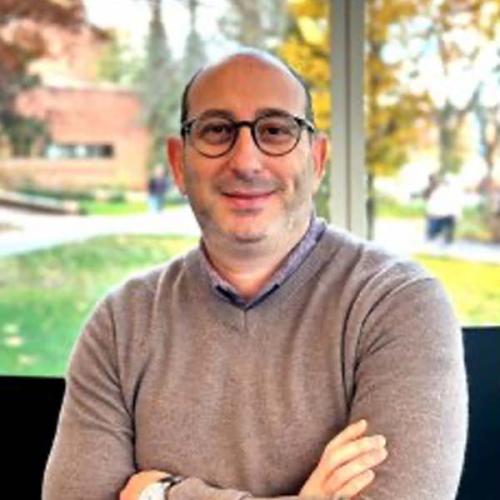
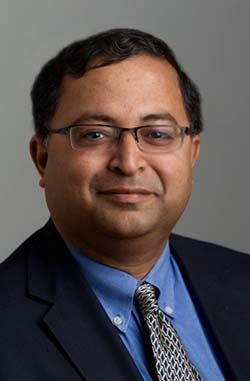
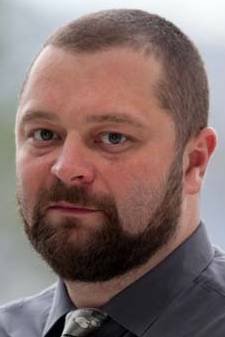
Hazar Dib is an Associate Professor at the School of Construction Management Technology, Purdue Polytechnic Institute, Purdue University. His work bridges Building Information Modeling (BIM) , knowledge management , and interactive learning technologies to advance construction education and process efficiency. Ph.D. in Building Construction (2007, University of Florida) MSc. in Civil Engineering (2002, University of Balamand) BSc. in Civil Engineering (2000, University of Balamand) Research Interests focus on: BIM lifecycle integration AI/knowledge-based systems for construction Digital tools for surveying and steel connection education Collaborative communication frameworks Sustainability metrics in building practices Human factors in technology adoption Scientific Awards include multiple Charles B. Murphy Awards for undergraduate teaching and the Society of Leaders in Construction induction. His NSF-funded projects like VELS (Virtual Environment for Learning Surveying) and Steel Connection Teaching Tool highlight his innovation in STEM education . Articles span serious games , visual learning , and BIM maturity assessments , reflecting his interdisciplinary approach.
Professor Odd Jarl Borch is a prominent academic at Nord University specializing in emergency preparedness, crisis management, and Arctic security. His work bridges theoretical research with practical implementation through international collaborations and policy contributions. Education: Harstad Gymnasium Norwegian School of Economics Umeå University, Sweden Indiana University, USA Bodin Maritime College Professor Borch's research focuses on emergency preparedness systems in high-complexity environments, particularly in the Arctic region. His work examines civil-military cooperation, hybrid threats, and organizational management during crises. He has pioneered research on maritime safety in polar regions and developed frameworks for cross-border emergency response coordination. His approach integrates theoretical organizational models with practical crisis management applications, emphasizing the unique challenges of Arctic operations. His recent publications (2020-2024) reveal a strong trajectory toward hybrid threat analysis and collaborative security frameworks. The research consistently addresses Arctic-specific challenges while developing universally applicable emergency response models. Key themes include virtual network intelligence, civil-military coordination mechanisms, and structural adaptations for high-complexity environments. His work demonstrates increasing emphasis on digital transformation in emergency management and the evolving nature of security threats in polar regions. Professor Borch leads significant research initiatives including the NORDLAB Center for Emergency Preparedness and Cooperation and coordinates a network of 25 European researchers on civil-military preparedness. He has initiated major international collaborations such as the Arctic Safety and Security network with 22 universities and the ARCSAR innovation network. His practical impact extends to public service through membership on the Corona Commission, the Total Emergency Preparedness Commission, and the cruise industry safety investigation committee. He has supervised numerous bachelor's, master's, and PhD students in organization and management subjects related to security and crisis management. His teaching portfolio includes fisheries economics, vessel operations, financial management, and crisis management. Professor Borch's laboratory work centers on the NORDLAB emergency management facility, which conducts advanced simulation training for Arctic emergency response professionals.
Patrick Prax is an Assistant Professor at the Department of Game Design, Uppsala University, specializing in participatory media and critical game studies. His research explores co-creation in digital games as alternative media, focusing on systemic sustainability, cultural heritage preservation, and social justice frameworks within gaming ecosystems. PhD in Media Studies (Uppsala University, 2016) Co-chair, Game Studies Working Group at NordMedia Board member, Cultural Heritage Incubator (Swedish National Heritage Board) Key research areas include: Political economy critiques through game mechanisms (e.g., loot boxes) Reflexive approaches to digital game preservation Esports culture and leadership dynamics Media literacy and civic engagement through gaming Recent publications examine sustainability integration in game education, systemic issues in game monetization, and community-driven adaptations of Warhammer 40k. He actively engages with public discourse through TEDx talks, national media appearances (TV4, UNT24), and policy advisory roles.
Joscha Gedicke is a Professor at the Institute for Numerical Simulation (University of Bonn), specializing in Numerical Analysis , Finite Element Methods , and Scientific Computing . His research focuses on adaptive algorithms, error estimation, and computational methods for partial differential equations (PDEs) and optimal control problems. Contact: gedicke@ins.uni-bonn.de | +49 228 73-69835 Teaching: Lectures on Hybrid High-Order Methods (V5E1), Adaptive Finite Element Methods (S4E1), and Discontinuous Galerkin Methods (V5E5). Research Trends: Gedicke's work spans Numerical Methods for PDEs , Adaptive Finite Element Analysis , Mixed and Discontinuous Galerkin Formulations , and Error Estimation . His recent publications emphasize Virtual Element Methods and Robust Discretizations for magnetostatic and optimal control problems. Collaborative Networks: He collaborates with researchers in computational mathematics, including institutions like TU Munich, University of Milano-Bicocca, and the University of Bonn's research seminar on Mathematics of Computation .
Yuta Sugiura is an Associate Professor in the Department of Information and Computer Science at Keio University's Faculty of Science and Technology. His research focuses on innovative human-computer interaction techniques, particularly in wearable computing, tangible interfaces, and novel input methods. Previously, he worked as a postdoctoral researcher at the National Institute of Advanced Industrial Science. Dr. Sugiura's research interests span Human-Computer Interaction, Wearable Computing, Augmented Reality, Tangible User Interfaces, Gesture Recognition, Ubiquitous Computing, Haptics, and Virtual Reality. His work often explores how everyday objects and environments can become interactive surfaces, with notable projects including the iRing (intelligent ring), SenSkin (skin as interface), and EarHover (mid-air gesture recognition for hearables). He has developed numerous novel interaction techniques that leverage physical properties of materials and human physiology for input and output. His recent publications indicate a strong focus on hearable computing, medical applications of HCI, edible interfaces, and novel authentication methods. The research shows a consistent pattern of exploring unconventional interaction surfaces and leveraging subtle physical phenomena for input sensing. His work has significant implications for healthcare applications, particularly in neurological disorder screening and rehabilitation. Best Paper Award Dr. Sugiura has advised numerous students who have gone on to publish significant work in top-tier HCI venues. His research has been supported by various grants enabling the development of novel interaction techniques and systems. He maintains strong collaborations with researchers across Japan and internationally, particularly in the fields of wearable computing and medical applications of HCI. His laboratory appears to focus on lifestyle computing, developing interfaces that integrate seamlessly into daily activities. Current projects include exploring edible displays, adaptive ear interfaces, and novel authentication methods using wearable devices. Future work seems to be heading toward more medical applications of HCI, particularly in neurological assessment and rehabilitation.
Gaang Lee is an Assistant Professor in the Department of Civil and Environmental Engineering at the University of Alberta's Faculty of Engineering, where he joined in 2022 after earning his Ph.D. from the University of Michigan. His research pioneers 'sympathetic' built environments that enhance safety, health, productivity, and comfort for workers and users through integration of wearable biosensors, AI, extended reality, and robotics with psychophysiological theories. Education: Ph.D in Civil and Environmental Engineering, University of Michigan, Ann Arbor (2022) - Emphasis: Construction Engineering and Management; Graduate Certificate in Computational Discovery and Engineering Graduate Certificate in Computational Discovery and Engineering, University of Michigan, Ann Arbor (2022) M.S. in Architectural Engineering, Yonsei University, South Korea (2012) - Emphasis: Construction Engineering and Management B.S. in Architectural Engineering, Yonsei University, South Korea (2010) Dr. Lee combats technological exclusion for marginalized groups (construction workers, older adults) by developing empathetic technologies for workplaces, buildings, and urban spaces. His work applies human sensing, AI, and digital twins to create environments that adapt to diverse human needs, with key projects spanning psychophysiological safety monitoring, human-robot collaboration, and inclusive urban design. He integrates psychophysiological and socio-cognitive theories to address real-world gaps in construction engineering and computer science. His recent publications (2023-2025) reveal strong trends in AI-driven safety hazard identification, biosensor-based stress/fatigue monitoring, and virtual reality for construction team dynamics. A critical emerging focus is equity-centered technology design, with increasing publications addressing inclusive built environments and technological access for vulnerable populations through graph-based algorithms, domain adaptation, and interpretable AI models. Scientific Awards: No awards mentioned in the provided text. Dr. Lee actively recruits students for his 'Empathetics' research group starting in 2026, prioritizing candidates with empathy, research motivation, and commitment to diversity and inclusion. While specific grants are not detailed, his research program receives institutional support from the University of Alberta and likely external funding given its interdisciplinary scope and industry relevance. He leads the 'Empathetics' research group (part of Attentive Hub) which emphasizes diversity as fundamental to innovation. Current projects include psychophysiological monitoring for occupational safety, trustable human-robot collaboration systems, and extended reality frameworks for empathetic built environments. The group collaborates with IHT LAB (https://www.iht-lab.com/) and focuses on deploying technologies that make daily surroundings safe, healthy, and truly inclusive for all individuals.
Karen D'Souza serves as an Associate Professor in Medical Education at Deakin University's School of Medicine within the Faculty of Health. Based at the Geelong Waurn Ponds Campus, she focuses on education-centered academic work rather than clinical practice. Her contact information includes phone number +61 3 522 72116 and email karen.dsouza@deakin.edu.au. Dr. D'Souza earned her Bachelor of Medicine & Bachelor of Surgery from the University of Melbourne, establishing her medical credentials before transitioning to medical education specialization. Her academic journey shows a clear progression from clinical medicine to educational leadership, with her early publications including echocardiography research before shifting focus to medical education methodologies. Her research interests center on medical education with particular expertise in clinical assessment systems, OSCE development, and curriculum design. She has made significant contributions to understanding assessment methodologies, examiner decision-making processes, and adaptations to clinical education during the pandemic. Her work demonstrates how professional expectations influence clinical assessment outcomes and how to improve assessor judgments in medical student evaluations. Analysis of her publication trends reveals a consistent focus on improving medical education assessment practices, with increasing attention to collaborative approaches across Australian medical schools. Her recent work (2023-2024) continues to refine assessment guidelines for final-year medical students while addressing contemporary challenges in clinical education. Researcher of the year (teaching & learning) award from Smart Geelong Network (2009) Dr. D'Souza's collaborative research approach is evident in her extensive co-authorship patterns, particularly with researchers like Malau-Aduli BS and Hays RB. Her grant activity includes the 2009 Smart Geelong Network award which funded collaborative work with colleagues Ward A, Leeuw ED, Crotty B, and Milnes S. Her research demonstrates strong institutional partnerships across Australian medical education. Her work has significantly influenced OSCE practices across Australian medical schools, contributing to standard setting methods and pandemic adaptations. Dr. D'Souza's research program represents a sustained effort to improve the validity and reliability of clinical assessment in medical education through cross-institutional collaboration and evidence-based practices.
Filiberto Chiabrando is an Associate Professor at the Department of Architecture and Design (DAD) of Politecnico di Torino, with a secondary appointment as Adjunct Associate Professor at Michigan Technological University (USA). He serves as Deputy Coordinator of the Doctoral College for Architectural and Landscape Heritage and is Secretary of the ISPRS Working Group on UAS & Small Multi-sensor Platforms. His work bridges geomatics, photogrammetry, and cultural heritage preservation. Academic Affiliations Politecnico di Torino (Main Institution) Michigan Technological University (Adjunct Appointment) Research Leadership Coordinator of PIC4SeR Interdepartmental Center Principal Investigator for HERITALISE, Common Grounds, POSEIDON, ARCHIM3DES, and ResCult projects Chiabrando's research focuses on 3D modeling , UAV photogrammetry , underwater cultural heritage documentation , and HBIM-GIS integration . He specializes in SLAM systems , laser scanning , and rapid mapping for architectural conservation. His work aligns with SDGs 9 (Innovation), 11 (Sustainability), and 17 (Partnerships). His recent projects emphasize multitemporal marine vegetation mapping (POSEIDON), cloud-based heritage digitization (HERITALISE), and advanced 3D metric surveying in marine environments (ARCHIM3DES). He has developed open-source education platforms like POSER for underwater photogrammetry training. Scientific Awards Licinio Ferretti Award (ASITA, 2009 & 2010) Best Paper Awards: Sensors (2013), CIPA (2013) Editorial Roles Editorial Board: Geomatics Journal (2021-), ISPRS International Journal (2019-) As a PhD advisor, he has mentored 7 doctoral students in architectural heritage, including Alessio Calantropio (2019-2023) on underwater heritage and Alessandra Spreafico (2019-2023) on the Turin 1911 Exposition. He leads commercial contracts with organizations like DJI GmbH, World Food Programme, and UNICEF for UAV and geospatial applications.
Prof. Venkat N. Krovi serves as the Michelin Endowed Chair Professor of Vehicle Automation in the Departments of Automotive Engineering and Mechanical Engineering at Clemson University's College of Engineering, Computing and Applied Sciences (CECAS). He directs the Automation, Robotics and Mechatronics Laboratory (ARMLab) at the International Center for Automotive Research (CU-ICAR), focusing on smart embedded systems for autonomy in challenging environments. He earned his Ph.D. in Mechanical Engineering and Applied Mechanics from the University of Pennsylvania in 1998. His research leverages distributed autonomy and human-robot synergy to extend human capabilities, with applications spanning plant automation, consumer electronics, automobile, defense, and healthcare. The work emphasizes lifecycle treatment (design through verification) of robotic systems under uncertainty. Recent publications (2024-2025) demonstrate strong trends in digital twin frameworks for autonomous vehicle validation, sim2real transfer via reinforcement learning, and integration of large language models for editable simulations. Key themes include scalable cloud-based architectures, Koopman operator theory for robustness, and containerization for reproducible robotics development. His accolades include: National Science Foundation (NSF) CAREER Award Petro-Canada Young Innovator Award Multiple best paper awards at conferences and journals ASME Dedicated Service Award (2024) Prof. Krovi has advised doctoral students including Dr. Srivatsan Srinivasan (2024). His research receives substantial funding from NSF, DARPA, ARO, and industrial partners like Michelin. He leads the NSF I/UCRC RoSeHuB center and the AutoDRIVE ecosystem for autonomous driving education. As ARMLab director, he oversees projects including OpenCAV, the Robotics for AV Systems Bootcamp, and containerized terramechanics simulations. The lab specializes in mechatronic design, verification/validation frameworks, and human-autonomy coexistence studies for next-generation mobility solutions.
Dr. Kirill Zaychik is a Research Professor in the Department of Mechanical Engineering at Binghamton University (SUNY). He holds an M.S. in Aerospace Engineering from the Moscow Institute of Physics and Technology (2001) and a Ph.D. in Mechanical Engineering from Binghamton University (2009). His career includes industry experience at Bombardier Aerospace (Montreal, Canada) focusing on Fly-by-Wire Control Systems before joining academia in 2012. Education: M.S., Aerospace Engineering, Moscow Institute of Physics and Technology (2001) Ph.D., Mechanical Engineering, Binghamton University (2009) His research interests span human perceptual systems, man-machine interaction, control systems design, and machine learning applications. Key areas include flight/vehicle simulation, human-in-the-loop modeling, and parameter estimation using numerical methods. He has contributed to projects for NASA and the U.S. Airforce, authoring 19 technical papers. Dr. Zaychik’s publications (2003–2023) focus on advancing control systems, human operator modeling, and simulation technologies. Recent work explores real-time pilot identification via biometrics and adaptive control algorithms. Earlier studies addressed turbulence simulation, vection phenomena, and simulator sickness mitigation. While no scientific awards are mentioned, his research demonstrates significant industry-academic collaboration. He has advised no listed students but contributes to curricula like ME 212 (Mechanical Engineering Programming). No affiliated labs/teams are explicitly noted, though his work aligns with aerospace and mechanical engineering systems research at Binghamton’s Watson School.
Dr. Jason Franz is an Associate Professor in the Lampe Joint Department of Biomedical Engineering at the University of North Carolina at Chapel Hill and serves as the BME Well-Being Director and Director of the UNC Applied Biomechanics Laboratory. His research focuses on neuromuscular biomechanics, sensorimotor control, and aging-related mobility impairments. He holds a B.S. and M.S. in Engineering Mechanics from Virginia Tech, a Ph.D. in Integrative Physiology from the University of Colorado Boulder, and completed an NIH post-doctoral fellowship at the University of Wisconsin-Madison. His laboratory integrates quantitative motion analysis, electromyography, dynamic ultrasound imaging, computational simulation, and virtual reality to address mobility preservation in aging populations. Key research interests include gait mechanics, muscle-tendon dynamics, and rehabilitation engineering. Recent work emphasizes the metabolic and biomechanical consequences of altered gait patterns, particularly in aging and post-ACL reconstruction populations. Articles highlight adaptations in muscle activation, joint moments, and tendon stiffness under perturbations, with implications for fall prevention and cartilage health. Awards : NIH Clinical Research Loan Repayment Program (2017–2019), ACCLAIM Program (2019–2020), and multiple teaching/research fellowships. Courses Taught : BMME205 (Mechanics) and BMME405/890 (Biomechanics of Movement). Labs/Teams : UNC Applied Biomechanics Lab, focusing on translational technologies for mobility preservation.
Tor Skeie is a Professor at the University of Oslo's Department of Informatics, specializing in networks and distributed systems. His research focuses on high-performance networking, InfiniBand technologies, and adaptive routing systems. Current investigations include automated parameter tuning for reservoir simulations, adaptive routing in InfiniBand hardware, and modeling WiFi quality attenuation. His work develops efficient solutions for virtualized HPC environments and cloud computing infrastructures. Recent publications demonstrate innovations in network modeling, adaptive routing algorithms, and performance analysis of distributed systems. Research collaborations span European projects on high-performance networking infrastructures. Leads the Networks and Distributed Systems (ND) research group investigating fault-tolerant routing, network virtualization, and congestion control mechanisms.
Ingrid Moerman is a part-time Professor at Ghent University and a staff member at the Internet Technology and Data Science Lab (IDLab), a core research group of imec embedded within Ghent University and the University of Antwerp. She coordinates mobile and wireless networking research and leads a team of over 30 researchers at Ghent University, with extensive involvement in European and national funding initiatives. She received her Electrical Engineering degree (1987) and Ph.D. (1992) from Ghent University. Her research spans collaborative networks, cognitive radio, software-defined radio, IoT, LPWAN, and high-density wireless access, emphasizing experimentally-supported development of next-generation wireless systems with practical implementations in spectrum management and real-time control. Recent publications (2024-2025) reveal a strong pivot toward AI-integrated wireless networking, featuring OFDMA scheduling innovations, Wi-Fi 6/7 interference mitigation, and time-sensitive networking for industrial applications. Key trends include 5G/6G convergence, vehicular communication enhancements, and digital twin frameworks for network observability, reflecting her focus on mission-critical industrial use cases. Her accolades include: 9 Best Paper Awards 2 FWO Prizes (Research Foundation - Flanders) IMEC Prize of Excellence 2001 MSc Thesis Award (as promoter) Best Demo/Exhibit Award at ICT 2013 DARPA Spectrum Collaboration Challenge Prize ($750,000) She has coordinated major EU projects (FP7/H2020: CREW, WiSHFUL, eWINE, ORCA) with industry partners, securing substantial funding for experimental wireless research. Her grant portfolio emphasizes collaborative innovation in spectrum sharing and neutral-host architectures for multi-operator environments. At IDLab, she directs advanced wireless testbeds supporting real-world validation of technologies like openwifi and White Rabbit, with active experimentation in time-sensitive networking and spectrum collaboration for industrial IoT deployments.
Raymond T. Albert, Ph.D., is a Professor of Practice in Mathematics and Computer Science and Director of Cybersecurity at Assumption College. He specializes in cybersecurity education, curriculum development, and interdisciplinary security initiatives. His work emphasizes practical applications of cybersecurity through collaborative learning environments and competitive training programs. Serves as Director of Cybersecurity, overseeing academic and operational security initiatives Leads research in SCADA systems security, virtual laboratory development, and K-12 cybersecurity education Active in multi-university collaborations to establish cybersecurity programs Dr. Albert has presented widely on topics including cyber defense competitions, blended learning strategies, and service-learning integration in STEM education. His publications focus on improving cybersecurity education frameworks and practical training methods.
Dr. Benton Jones is Associate Professor of Business and Director of the Doctorate of Business Administration (DBA) program at Bryan College. He brings over a decade of manufacturing operations experience to his role, having progressed from student to faculty member at Bryan. His leadership includes serving as Chair of the Faculty Senate and coordinating multiple business programs. Education D.B.A., Anderson University G.C., Bryan College M.B.A., Bryan College B.S. Business Administration, Bryan College His research bridges business operations, organizational culture, and faith-based education frameworks. Recent publications focus on pedagogical innovations in management education, diversity training efficacy, and biblical organizational models. Jones has presented internationally on topics including faith integration in business curricula and experiential learning methodologies, including lectures at Romania's Emanuel University.