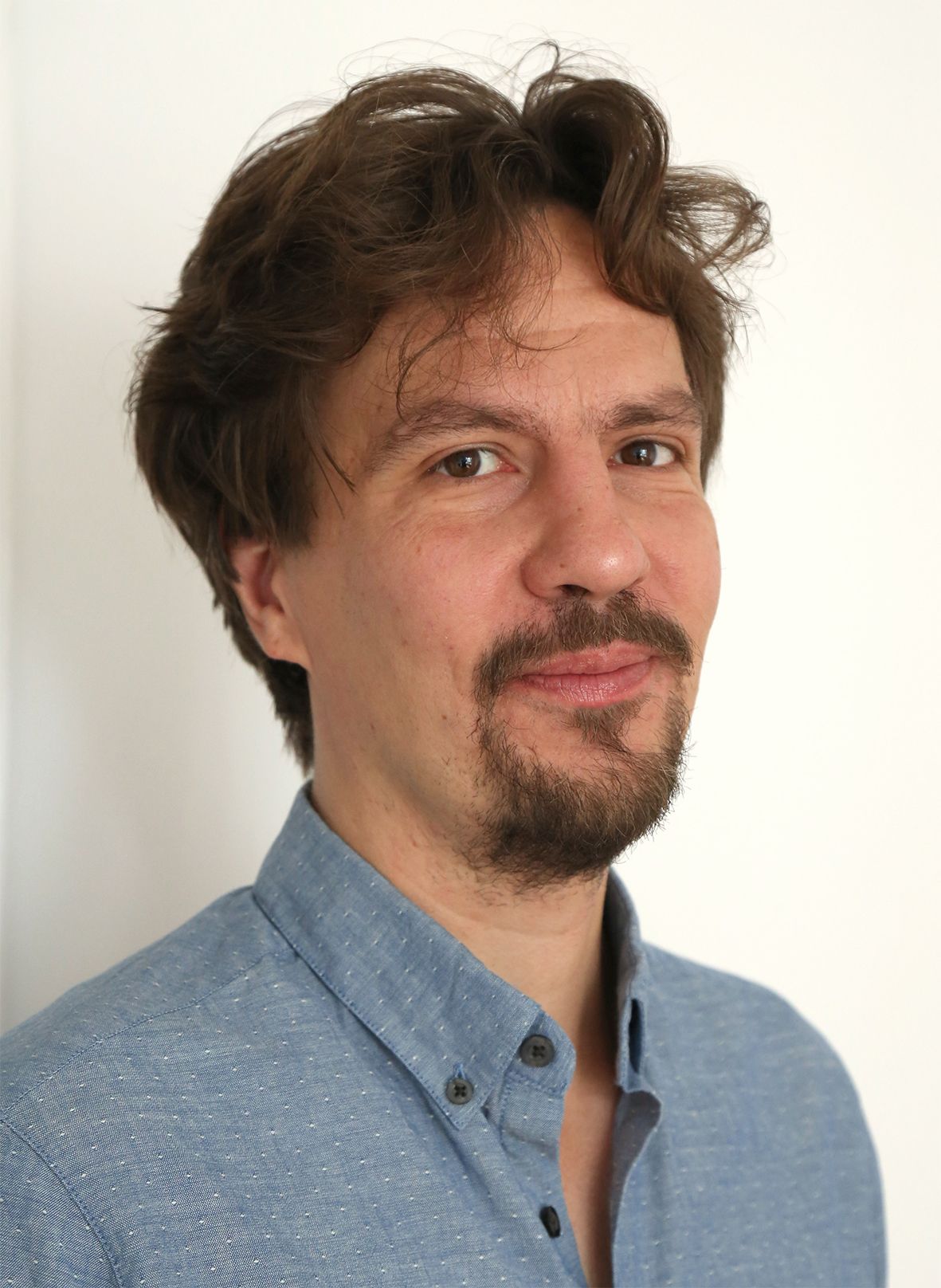
Kjetil Nordby is a Professor at the Oslo School of Architecture and Design (AHO), specializing in interaction design for maritime environments. He leads the Ocean Industries Concept Lab (OICL) and manages the OpenBridge Design System, an open-source framework for standardized ship bridge interfaces. Research focus: Augmented/Virtual Reality in maritime operations Key projects: OpenRemote (remote operation center UI), OpenAR (AR integration) Collaborations with institutions like Royal Institution of Naval Architects His work addresses cross-vendor interface consistency, safety-critical UX, and open innovation in maritime design. Recent publications explore AR/VR applications for navigation, collaborative workstations, and energy-conscious maritime systems. Scientific contributions include: 15+ peer-reviewed articles in journals like Journal of Marine Science and Engineering and Applied Ergonomics Book chapters on sensemaking in safety-critical maritime environments
Jon Andoni Duñabeitia is a Full Professor at the School of Languages and Education of Universidad Nebrija in Madrid. He serves as Director of the Centro de Investigación Nebrija en Cognición (CINC) and the International Chair in Cognitive Health . With an h-index of 43 (Scopus), he has published 170+ articles across psycholinguistics, multilingualism, cognitive training, and virtual reality applications in education. His research examines how language processing interacts with cognitive load, emotional modulation, and technological innovation. Principal Investigator for 8+ projects funded by Spanish Government, Basque Government, BBVA Foundation Associate Editor and Editorial Board Member of high-impact journals Recognized among Spain's top 3% scientists across all disciplines Recent publications span topics including: Second-language reading dynamics in VR environments Multilingual cognitive interactions in neurological conditions Emoji/typographic effects on word processing Computerized cognitive assessment and training systems He actively contributes to scientific meetings as invited speaker across Europe, Asia, and Americas. His work bridges basic research in psycholinguistics with applied technologies for cognitive health.
Norwegian University of Science And TechnologyNorway
Helen Berg is an Associate Professor in the Department of Health Sciences at NTNU Ålesund. Her research focuses on integrating Virtual Reality (VR) and simulation-based training into healthcare education, particularly in clinical observation, preoperative handovers, and healthcare communication. She has led projects developing VR tools for systematic clinical approaches like ABCDE and ISBAR, emphasizing their efficacy for nursing and medical students. Her work bridges technology and education, aiming to enhance clinical skills through innovative methods. Research Interests: Simulation-based training methodologies VR applications in medical education Clinical communication protocols (ISBAR/ABCDE) Healthcare technology adoption Telehealth and rehabilitation technology Key Projects: VRINK: VR for youth inclusion in outdoor activities Development of ISBAR and ABCDE VR training modules Evaluation of video communication in elderly care Teaching: Courses include SYA1000 - Basic Nursing, focusing on practical healthcare skills. Labs/Teams: Collaborates with institutions like VID Stavanger and NTNU’s simulation centers on VR and healthcare innovation.
Norwegian University of Science And TechnologyNorway
Simon McCallum is an Associate Professor at NTNU’s Faculty of Information Technology and Electrical Engineering. Born in New Zealand, he transitioned from commercial game development in Norway to academia in 2009. His research focuses on Serious Games, particularly in healthcare contexts, gamification, and virtual reality applications. He holds a PhD from the University of Otago (2007), where he studied Computer Science, Mathematics, Psychology, and Philosophy. McCallum has contributed to over 30 publications, including works on cognitive health gaming, software engineering education, and AR applications. He teaches courses such as IMT4307 (Serious Games Research) and IMT3603 (Game Programming). His key projects include the Smartkuber AR game for cognitive screening and the Traction Trebuchet historical engineering study. McCallum has collaborated with institutions like the University of Otago and has engaged in outreach through conferences and media appearances, promoting game technology in healthcare and education.
Pasi Väliaho is a Professor in the Department of Philosophy, Classics, History of Art and Ideas at the University of Oslo, Faculty of Humanities. His research sits at the intersection of art history, media theory, and epistemology, exploring how visual media shape knowledge, power, and economic systems across historical periods. He is a key member of the Visual Studies research group and the Screen Cultures research initiative at UiO. His academic background includes a doctorate from the University of Turku, Finland, where he also holds the title of Docent in Media History and Theory. Prior to joining the University of Oslo, he served as Reader in Film and Screen Studies at Goldsmiths, University of London. His educational path reflects a strong foundation in European media and art history. Väliaho’s research focuses on the historical and political dimensions of visual culture, particularly how optical media, cinema, and digital technologies intersect with epistemic shifts, colonialism, and neoliberal capitalism. He examines topics such as camera obscuras, magic lanterns, military drones, video games, and deep-sea visualization, analyzing how images function as instruments of knowledge, governance, and capital. His work is deeply interdisciplinary, drawing from philosophy, science studies, and critical theory. The trends in his recent publications reveal a sustained engagement with the materiality and politics of images—from early modern optical devices to contemporary data-driven visualizations. His scholarship consistently links historical media forms with current digital and neuroscientific developments, emphasizing continuity in how vision is instrumentalized for power and control. Themes of embodiment, affect, biopolitics, and speculative economies recur across his work. 2023 Limina Award for the Best International Book in Film Studies (for Projecting Spirits ) Choice Outstanding Academic Title for 2015 (for Biopolitical Screens ) Väliaho actively supervises doctoral and postdoctoral researchers, including Rasmus Rodineliussen, William Wessel Nore, and Nanna Lenander. He is currently co-leading the Research Council of Norway-funded project 'Visualizing the Deep Sea in the Age of Climate Change' (2023–2027), which explores the political ecology of oceanic imaging. His teaching includes courses such as 'Archaeology of the Moving Image' and 'Philosophies of the Image,' reflecting his broad theoretical and historical expertise. He is embedded in collaborative research environments, notably the Visual Studies group at IFIKK and the international Screen Cultures initiative, fostering interdisciplinary dialogue on media, aesthetics, and epistemology.
Ingvild Bergan is an Assistant Professor at the Department of Education , University of Agder, specializing in guidance pedagogy and digital competence development . She holds a general teacher qualification from UiA/UiO, a master's in religion, ethics and society (UiA), interdisciplinary guidance studies (UiT), and project management (BI). Teaches guidance pedagogy for school and kindergarten teachers Leads R&D work in initial teacher education and mentor education Co-leader of Practice, Teaching, Policy in Teacher Education (PUPIL) research group Her research focuses on technology integration and learning design to enhance mentor professional development , with specific emphasis on 360° video and virtual reality (VR) applications. She investigates how digital tools can improve observational learning and competence assessment in educational settings. Recent publications highlight trends in educational technology for mentorship, game-based learning for cultural inclusivity, and digital competence frameworks in teacher education. Her work spans empirical studies, theoretical analyses, and practice-oriented interventions documented in journals like Nordic Journal of Digital Literacy and NORDVEI: Nordic journal in guidance pedagogy . While no explicit scientific awards were mentioned, her extensive collaborative R&D projects (e.g., ProDiG) demonstrate institutional impact. She has no formal student advisement records listed but contributes to professional development through school partnerships.
Kurt Jonny Johansen is a Senior Lecturer and Study Program Manager for the Radiography BSc program at UiT The Arctic University of Norway . Based in Tromsø, he works in the Department of Radiography within the Institute of Health Sciences (IHO). His research interests span: Medical imaging safety protocols Nuclear medicine education E-learning technologies in healthcare training Emergency radiography Environmental impact assessment on aquatic species Recent publications highlight his work in MRI safety checklists, PET radiopharmaceutical development, and virtual teaching tools for radiography. While no specific awards are listed, his collaborations with researchers like Richard Fjellaksel and Helen Egestad demonstrate his active engagement in both educational and applied research. As a member of the Research Group Acute and Critically Ill , he contributes to healthcare research at UiT's MH East U9.130 facility.
Dag Johansen is a Professor in the Department of Informatics at UiT The Arctic University of Norway, Tromso campus. His work spans multiple research areas at the intersection of computer science, sports science, medicine, health technology, and nutrition science. He leads the interdisciplinary "Corpore Sano" research center and is actively involved in several research groups including the Cyber Security Group (CSG) and Crime Control and Security Law. Professor Johansen's research focuses on developing fundamental software solutions for secure and error-free data processing in heterogeneous distributed systems, ranging from lightweight "Internet of Things" devices and mobile phones to large-scale cloud solutions. His work particularly emphasizes applications in sports technology, edge computing, and compliance technology. His research interests include distributed systems, cybersecurity, sports technology, edge computing, data privacy, AI for sports analytics, multimedia forensics, and compliance technology. His recent publication trends show a strong focus on AI applications for sports video analysis, particularly in soccer and ice hockey, where his team has developed AI-based cropping systems for social media representations. He also has significant work in data privacy and GDPR compliance, especially regarding the "third country problem," as well as applications of AI in sustainable fishing practices. His 2024-2025 publications demonstrate continued work in self-healing microservices, lightweight encryption for video feeds, and virtual reality training environments. Professor Johansen is actively involved in mentoring students and research collaborators, as evidenced by his extensive publication record with numerous co-authors including doctoral students and postdoctoral researchers. His work has received funding through various research projects focused on data analytics, privacy technology, cybersecurity, and sports technology applications. He leads the interdisciplinary "Corpore Sano" center, which brings together researchers from computer science, sports science, medicine, health technology, and nutrition science. His work also involves collaboration with the "Njord" project focused on sustainable fishing through AI applications, and he's involved in developing the "Áika" distributed edge system for AI inference.
Adam Palmquist is a Professor at Nord University, leading the HABIT research group focused on human-centered AI, behavior analytics, and technology design. He holds a PhD in Applied Information Technology for Learning and specializes in gamification, learning analytics, VR games, and organizational learning dynamics. His work bridges academia and industry, addressing real-world challenges through cross-disciplinary collaboration. Education: PhD in Applied Information Technology for Learning. Research Interests: Palmquist’s research explores gamification’s role in lifelong learning, AI integration in education, and VR game development. He investigates how generative AI, learning analytics, and game mechanics enhance engagement and motivation. His studies on group processes in workplace learning highlight frameworks for effective organizational learning systems. Current Projects: GOAL: Uses gamification to train leadership in crisis scenarios, funded by the University of Borås. ETUS: Enhances game research via eye-tracking and analytics, funded by Nord University. BiP: Studies remote-first VR game development methodologies, funded by Erasmus+. Scientific Affiliations: Member of the University of Gothenburg’s research team, steering committee for the Design Society’s Data Informed Design group, and the Swedish Game Researcher Council. Grants & Advising: Active in Nordic and international collaborations, including the Norwegian Centre for Excellence in IT Education (EXCITED). Supervises Izabella Jedel’s PhD on gamification in higher education. Labs/Teams: Heads HABIT, which integrates experts from Journalism, Games, Business, and Social Work to develop innovative tech solutions.
Salman Nazir is Professor at the University of South-Eastern Norway (USN) , Faculty of Technology, Natural Sciences and Maritime Sciences, Department of Maritime Operations. He heads the Training and Assessment Research Group (TARG) and is Scientific Leader of the national Centre of Excellence in Maritime Simulator Training and Assessment (COAST). Since 2019 he has held the rank of Professor, after serving as Associate Professor from 2015 and earlier post-doctoral and lecturer roles in Norway, Italy, South Korea and Pakistan. Education PhD in Industrial Chemistry and Chemical Engineering ( cum laude ), Politecnico di Milano, Italy, 2011–2013 MSc in Chemical Engineering (Process System Engineering), Hanyang University, South Korea, 2007–2009 BSc in Chemical Engineering, Bahauddin Zakariya University, Pakistan, 2002–2006 Research Interests Prof. Nazir’s work sits at the intersection of Human Factors, Safety and Simulation Technology . He investigates how immersive virtual- and augmented-reality simulators, novel training syllabi and evidence-based performance indices can enhance operator competence and safety in complex maritime and process-industry systems. Concepts such as Distributed Situation Awareness , multi-criteria decision making , accident analysis and learning process optimisation are central to his multidisciplinary agenda, which actively involves cognitive scientists, computer scientists, maritime practitioners and industrial stakeholders. Research Trends & Article Overview Across more than 80 peer-reviewed outputs, a clear trajectory emerges: early focus on process-industry training simulators and KPI development evolved into maritime-centric studies on simulator fidelity, VR-based education, and human-automation interaction in autonomous shipping. Recent work (2019–2021) emphasises systematic reviews and comparative European studies, validating VR-headset efficacy, performance-assessment frameworks, and sociotechnical implications of increased automation. Honours & Awards COAST designated one of 12 national Centres of Excellence in Education (SFU) by DIKU, Norway Coordinator/Leader, EU Horizon 2020 project ENHANCE (multi-million NOK) 400 000 NOK MARKOM 2020 Workshop grant PhD cum laude , Politecnico di Milano Young-researcher grants, Politecnico di Milano (2011 & 2013) Merit scholarships, Hanyang University & Korean Government Advising & Grant Portfolio Prof. Nazir currently supervises 6 master students and 1 PhD candidate in “Automated Performance Assessment in Maritime Operations”, while co-supervising additional PhD students at Liverpool John Moores University. He has successfully graduated 3 master and 6 bachelor students . External funding includes EU Horizon 2020, Norwegian SFU scheme, MARKOM 2020, Maritime Technology and Innovation (MTDI) and multiple Italian national grants. Labs & Collaborative Networks He leads TARG at USN, acts as Scientific Leader of COAST , and collaborates with leading international scholars such as Prof. Zaili Yang (Liverpool John Moores), Prof. Annette Kluge (University of Duisburg-Essen), Prof. Davide Manca (Politecnico di Milano) and Prof. Paulo Carvalho (UFRJ, Brazil). These partnerships span computer science, cognitive psychology, maritime logistics and safety engineering, ensuring a truly interdisciplinary research ecosystem.
Norwegian University of Science And TechnologyNorway
Michail Giannakos is a Professor of Interaction Design and Learning Technologies at the Department of Computer Science, Faculty of Information Technology and Electrical Engineering, Norwegian University of Science and Technology (NTNU). He serves as Head of the Learner-Computer Interaction Lab and has held visiting positions including EAISI Visiting Professor at Eindhoven University of Technology (2023-2024) and Honorary Professor at UCL Knowledge Lab (2022-2023). Previously, he was Associate Professor (2017-2020) and Senior Lecturer (2014-2017) at NTNU, and Assistant Professor at Old Dominion University (2013-2014). Dr. Giannakos's research focuses on the design and study of emerging technologies in online and hybrid education settings, with particular emphasis on student and instructor experiences. His work spans Human-Computer Interaction , Learning Analytics , Learning Technologies , and User Experience Research . He has co-authored over 150 peer-reviewed publications in leading journals including Computers & Education, Computers in Human Behavior, IEEE TLT, and ACM TOCE. His recent publications reveal a strong trend toward multimodal learning analytics, embodied interaction in educational contexts, and the application of generative AI in education. The research increasingly integrates physiological and cognitive measurements with traditional learning data to create more comprehensive educational insights. There's also a noticeable focus on STEM education, particularly in mathematics learning through embodied and multimodal approaches. EAISI Visiting Professor, Eindhoven University of Technology (2023) Honorary Professor, UCL Knowledge Lab, University College London (2022) IDC Best Paper Award (2022) ITiCSE Top 5 papers in 25 Years Award (2020) RCN Young Research Talent grant (2016) ERCIM "Alain Bensoussan" Fellow (2013) Outstanding Academic Award, NTNU (2017-2020) Dr. Giannakos actively supervises multiple PhD students and postdocs, including Giulia Cosentino and Andrew Pulsipher as main supervisees. He has successfully mentored numerous PhD candidates to completion, many of whom have gone on to academic positions. His research is supported by substantial grants from diverse sources including the European Commission (Horizon Europe, Horizon 2020), Research Council of Norway, US-NSF, Microsoft Research, and DAAD. Current major projects include STEAM Learning Ecologies (Horizon Europe, 2022-2025) and SURROUNDEDbySCIENCE (Horizon 2020, 2021-2025). As Head of the Learner-Computer Interaction Lab, Dr. Giannakos leads a multidisciplinary team exploring how emerging technologies can enhance learning experiences. The lab focuses on multimodal data collection, embodied interaction design, and the development of intelligent learning environments that adapt to user needs. Current work emphasizes the integration of generative AI with multimodal analytics to create more responsive educational systems.
Gunn Astrid Baugerud is a Professor at OsloMet - Storbyuniversitetet's Faculty of Social Sciences, Department of Social Sciences – Everyday life under different living conditions. Her research focuses on forensic psychology, child abuse investigation techniques, and integrating artificial intelligence into forensic interviewing. She leads projects like the Next Generation Avatar for Information-Gathering Interviews (ARGI) and Barneavhørsprosjektet, aiming to improve investigative practices through technology. Her work emphasizes improving the quality of forensic interviews with children, particularly those exposed to abuse. She has pioneered AI-driven child chatbots and avatar-based training tools for professionals such as police, social workers, and healthcare providers. Key projects include developing digital education programs using AI and cognitive psychology principles to prevent child maltreatment. Research highlights include national studies on preschool-aged abuse victims' disclosures and comparative analyses of 2D/3D virtual environments in interview training. Her dissemination includes workshops at international symposiums on child abuse and presentations to Nordic social work institutions. She collaborates with global institutions like the National Children's Advocacy Centers and the Canterbury Centre for Policing Research.
Hayley Manalang Ko is a PhD Research Fellow affiliated with the Norwegian Dental Service Competence Centre East (TkØ) and OsloMet – Oslo Metropolitan University. Her work focuses on forensic odontology, child protection mechanisms, and healthcare professional training. She is part of the Orchid project investigating forensic examinations involving children exposed to violence/abuse, and the ILMA project developing e-learning tools for forensic interviews. Education: Master's in Forensic Psychology (Royal Holloway, University of London) and ongoing Social Sciences studies at OsloMet. Research interests span forensic psychiatry, healthcare administration, and AI applications in clinical training. Key projects include AI-driven child chatbot avatars for medical professional training and comparative studies on virtual interview environments. Publications emphasize gaps in medical/dental interview techniques, co-occurrence of dental diseases, and secondary traumatization in criminal justice roles. Dissemination activities include workshops at State Children's Homes on communication strategies during forensic examinations. Active in research groups like the Next Generation Avatar for Information-Gathering Interviews (ARGI).
Inger Hjelmeland is an Associate Professor at the University of Southeast Norway (Høgskolen i Østfold), affiliated with the Faculty of Health, Welfare and Organisation. Her research focuses on innovative educational methodologies, particularly simulation-based learning and clinical skills development in healthcare education. She has contributed to projects like the Digiview initiative, exploring digital supervision models and virtual learning environments. Her academic work emphasizes self-efficacy in clinical training, instructional video applications, and metacognitive development in professional education. Notable collaborations include studies on nursing skill performance and client-centeredness assessment instruments. She has been involved in creating pedagogical frameworks for healthcare education and advancing telehealth applications in clinical training. Inger has co-authored over 30 publications since 2007, spanning topics from simulation-based education efficacy to digital health innovation. Her work bridges educational theory and practical healthcare training, with a strong focus on evidence-based practices in health professions education.
Norwegian University of Science And TechnologyNorway
Attila Bekkvik Szentirmai is an Assistant Professor and Ph.D. research fellow at the Department of Design, Norwegian University of Science and Technology (NTNU), focusing on Universal Design of ICT, Human-Computer Interaction, and Augmented Reality (AR) development. With prior academic roles at the University of Agder and Oslo Metropolitan University, his interdisciplinary background bridges Social Science, Art, Software Engineering, and Digital Health. He teaches Web of Things (IDG3006) and leads innovative AR projects like AReader (AR screen reader), ARachnoAID (phobia treatment), and guARdian (daily decision support). Current role: Assistant Professor at NTNU Research focus: Universal Design, AR/VR accessibility, e-Learning/e-Health Teaching: Web of Things (IDG3006) course coordinator Previous roles: Assistant Professor at University of Agder and OsloMet His recent publications emphasize accessible AR/VR design, including humor/ethics in technology, sustainable AR solutions, and critical analysis of accessibility paradoxes. Projects span education (SlidAR classroom presentations), health (CybAR sickness, ARachnoAID), and sustainability (HoloWatch, E-Waste gaming). All work aligns with universal design principles to ensure inclusivity across diverse user needs. Scientific contributions include developing new accessibility heuristics for AR, analyzing AI-AR integration for decision-making, and creating prototypes for banknote recognition and indoor navigation. His publications bridge theoretical research with practical implementations, often using Unity/Vuforia for development and cross-disciplinary collaboration. His XR Research & Development timeline highlights innovations such as Deadliest Animals (2017, first universally designed WebVR), UndARtheSkull (2019, brain anatomy education), and 2023 projects like Jedi fARt Pro (humorous AR), Meta IntARaction (Quest3 AR), and XR Portal (AR-VR integration). Current Ph.D. work focuses on evidence-based accessibility guidelines for AR, aiming to impact social inclusion, academic research, and industry UX practices.