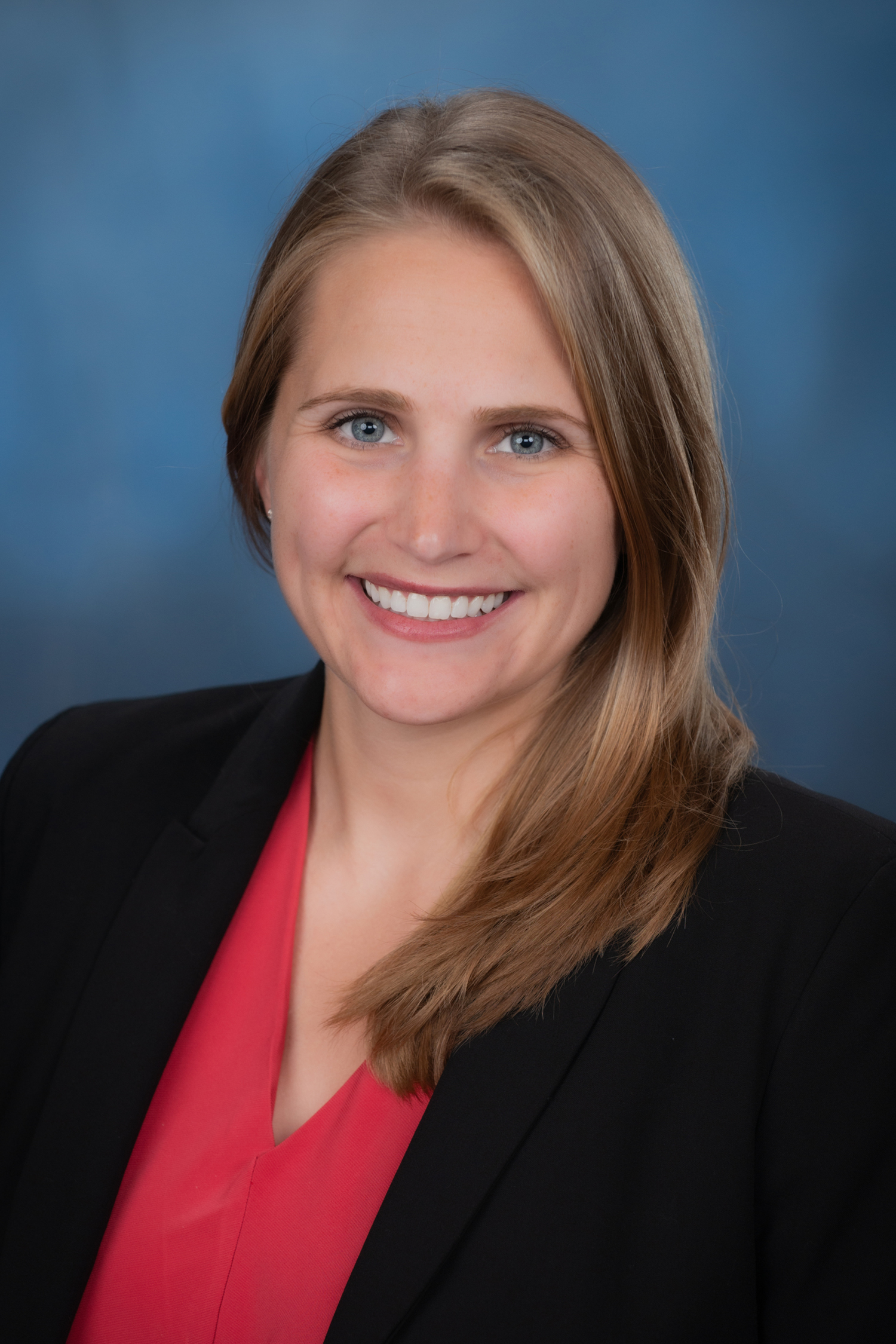
Jana Gonnermann-Müller is a research assistant at the Chair of Business Information Systems, Processes and Systems at the University of Potsdam . Holding an M.Sc. in Psychology from Humboldt University of Berlin, her work focuses on human-machine interaction, particularly examining learning, decision-making, and trust in technological collaborations. Degree: Master of Science (M.Sc.) in Psychology Alumni: Humboldt University of Berlin Current Role: Scientific Associate at University of Potsdam Research explores cognitive factors in augmented reality and AI assistance systems , employing experimental designs and eye tracking methodologies. Key projects include investigating visual guidance in AR, comparing AR display types, and developing frameworks for generative AI in education. Publications (2023-2025) demonstrate expertise in digital education , cognitive load optimization , and technology-enhanced learning . Collaborations span institutions like Hong Kong Polytechnic University , University of California, Davis , and Weizenbaum Institute , with corporate consulting on learning technology implementation. Technical focus areas include: Human-System Design Optimization Eye Tracking & Usability Studies AI Recommender Systems Industry 4.0 Implementation Research applications extend to: Secondary Education Technology Assembly Line AR Integration Change Management Systems Maintenance AR Visualization
Laura Crosswell serves as Associate Professor of Health Communication and Director of the Center for Advanced Media Studies at the University of Nevada, Reno's Reynolds School of Journalism and Media Studies. She holds a joint appointment with the university's School of Medicine, reflecting her interdisciplinary approach to health communication research. Crosswell previously taught at the College of Charleston, Louisiana State University, and Arizona State University before joining UNR. Her research focuses on the intersection of consumerism, persuasive texts, and public health messaging, with particular attention to how commercial interests influence health communication. Crosswell frequently employs advanced eye-tracking technology to examine physiological and psychosocial responses to media content, especially in pharmaceutical advertising and public health campaigns. Her book Politics, Propaganda, and Public Health: A Case Study in Health Communication and Public Trust analyzes Merck's Gardasil vaccination campaign, exploring how corporate interests shape public health messaging. Crosswell's recent publications reveal consistent focus on contemporary health communication challenges, particularly surrounding the COVID-19 pandemic, vaccine hesitancy, and environmental health risks. Her work spans multiple disciplines including communication, public health, psychology, and medical education, often employing innovative methodologies like virtual reality simulations and biometric measurement. Recipient of Organizational Behavior Management (OBM) Innovative Research Award, 2023 Co-author of scholarly book on pharmaceutical marketing and public health trust Regular contributor to journals including Critical Public Health , Public Health Perspectives , and Journal of Environmental Studies and Sciences Crosswell has received recognition for her innovative research approaches that bridge communication theory with practical health applications. Her work examining virtual reality applications in healthcare education demonstrates her commitment to developing new methodologies for training healthcare professionals. With numerous forthcoming publications for 2025, she remains an active contributor to the field of health communication research.
Maurizio Mancini is an Associate Professor in the Department of Computer Science at Sapienza University of Rome. His research focuses on Human-Computer Interaction, Affective Computing, and Multimodal Interaction, with applications in Virtual Reality, Embodied Conversational Agents, and Digital Commensality. He has contributed to understanding expressive movement analysis, social robotics, and adaptive systems in gaming and mindfulness contexts. 2024 : 8 publications on VR mindfulness, reinforcement learning, digital commensality, and multimodal interaction 2023 : 4 studies on human-food interaction, gait recognition, and AI human-likeness 2022 : 5 papers on social robots, collaborative dining, and anomaly detection His work spans topics like nonverbal leadership in full-body improvisation, transactive memory systems in group interactions, and computational models for human-food interaction. Teaching includes courses on Human-Machine Interaction and Programming.
Dr. Heather Petcovic is Chair and Professor in the Department of Geological and Environmental Sciences at Western Michigan University, with a joint appointment in the Mallinson Institute for Science Education. Her research bridges geoscience and education, focusing on field-based learning, cognitive development, and K-12 teacher training. Ph.D., Oregon State University (2004) M.S., Oregon State University (2000) B.A., Smith College (1995) Her research explores how field experiences shape geoscientists' cognition, integrating mixed methods to study spatial reasoning, mental models, and instructional design. She leads NSF-funded initiatives to democratize geoscience education at two-year and minority-serving institutions. Recent publications highlight her expertise in spatial thinking, virtual field experiences, and hydrogeology pedagogy. Awards include the National Association of Geoscience Teachers' Distinguished Lecturer. She mentors graduate students and contributes to geoscience education policy through roles like former associate editor for the Journal of Geoscience Education .
Nadine Bergner is a Professor in the Teaching and Research Area of Learning Technologies (Informatik 9) at the Faculty of Computer Science, Dresden University of Technology (TU Dresden). Her work focuses on innovative approaches to computer science education across various educational levels, from primary schools to university settings. She leads research on learning technologies, VR applications in education, and teacher training in computer science. Prof. Bergner's research spans multiple dimensions of computer science education. She has developed and evaluated numerous educational approaches including VR serious games, physical computing with Arduino, and specialized learning environments like the InfoSphere student lab. Her work emphasizes making computer science accessible and engaging for diverse learners, including young children, senior citizens, and pre-service teachers. She has made significant contributions to understanding how students form mental models of computer science concepts and how these can be effectively developed through targeted educational interventions. Her recent publications reveal a strong focus on emerging technologies in education, particularly virtual reality applications for computer science learning. She has been exploring how different interaction modalities in VR affect learning outcomes, presence, and enjoyment. Another major thread in her recent work involves machine learning education, where she has developed concept inventories and game-based learning approaches to make complex ML concepts accessible to learners. She has also been actively researching how to integrate computer science and AI competencies into teacher education across various disciplines. Prof. Bergner has made substantial contributions to the development of educational materials and frameworks for computer science education. Her work includes creating resources for programming education ("Apps programmieren für Dummies Junior"), designing concept inventories for machine learning assessment, and developing comprehensive approaches to building computational thinking skills from early childhood through higher education. She has been instrumental in shaping computer science education policy through initiatives like the Dagstuhl Declaration on education in the digital networked world. Her research often involves collaborative projects with schools and teachers, focusing on practical implementation and evaluation of computer science education approaches. She has been particularly active in developing teacher training programs and materials to support the integration of digital competencies into school curricula. Her work with the InfoSphere student lab has provided valuable insights into how extracurricular learning environments can shape students' perceptions of computer science.
Dr. Tegwen Malik, a Senior Lecturer at Swansea University's School of Management and Senior Fellow of the Higher Education Academy (SFHEA), bridges artificial intelligence research with biomimetic innovations. Her multifaceted roles include Deputy Programme Director for MSc Management, Director of Education and Content at the i-Lab Research Centre, and leadership in the "Global and Social Challenges" theme. Senior Lecturer, School of Management (since 2022) Deputy Director, MSc Management Programme Director of Education, i-Lab Research Centre UKAT Recognised Practitioner in Advising Her research explores Artificial Intelligence applications across sectors, particularly in higher education, and biomimicry innovations for water management in arid regions. Collaborative work spans engineering (Welsh Centre for Printing and Coating), medicine, and management, with external partnerships at Lifescaped, MIT, and ESPCI. Recent publications analyze agentic AI systems , generative AI impacts , and bioinspired water collection mechanisms. The 2023 I3E Conference awarded her for transformative AI research in education. Best Research Paper Award, I3E 2023 Brazil Co-PI on international projects (Lifescaped, MIT, ESPCI) Supervisor for 4 active PhD students Editorial reviewer for Government Information Quarterly and Information & Organisation Dr. Malik also investigates digital marketing adoption , operations management , and international standards , with practical experience in product commercialization and transnational projects. Her teaching focuses on mathematics and analytics for business , reaching over 600 MSc Management students annually.
Johannes Schöning is a Professor of Human-Computer Interaction at the University of St. Gallen, where he leads a research group focused on developing novel user interfaces that empower individuals and communities with data-driven decision capabilities. His work bridges rapidly advancing technologies with human needs across diverse contexts including geographic information science, public health, medical applications, and extreme environments such as space missions. He publishes extensively at premier HCI venues including ACM CHI, MobileHCI, and DIS, as well as in interdisciplinary journals like NATURE and PLOS ONE. Professor Schöning's research interests center on understanding the interplay between technology and human activities through rigorous methods from AI, computer graphics, and cognitive psychology. His work emphasizes user-centered design methodologies and mixed methods approaches to create interfaces that fit both technological possibilities and human requirements. Key focus areas include virtual and augmented reality applications, accessibility solutions, navigation technologies, and the social implications of digital interfaces in everyday life. His research mission prioritizes theoretical and practice-based inquiry to develop disruptive solutions for real-world problems. Analysis of his recent publications reveals strong trends in virtual reality applications for emotional regulation and accessibility, with increasing emphasis on generative AI integration, environmental awareness, and space-related HCI challenges. His work consistently demonstrates interdisciplinary collaboration across computer science, psychology, geography, and medical fields, with publications showing growing interest in social implications of technology, particularly regarding navigation systems and their externalities. His scientific contributions have been recognized with numerous awards including: Best Presentation Award at IEEE VR 2023 Best Paper Award & Accessibility Award at Interact 2019 10 Year Impact Award 2021 Multiple Honorable Mention Awards at top conferences Professor Schöning actively mentors students across bachelor, master, and PhD levels, with his lab seeking candidates interested in the intersection of HCI, geoinformatics, and ubiquitous computing technologies. He emphasizes creating a 'detox-free academic environment' that focuses on meaningful teaching and research outcomes rather than academic pressures. His group frequently collaborates with international researchers and institutions on projects spanning medical applications, space exploration interfaces, and public health technologies. The research laboratory led by Professor Schöning maintains strong interdisciplinary connections across multiple domains. Current projects include developing AI-powered wearables for blind and low vision users, exploring VR applications for emotional regulation, investigating navigation technologies' social impacts, and creating interfaces for space mission contexts. The lab's work on CubeSat control software and plant visualization for space greenhouses demonstrates their unique focus on extreme environment applications, while their research on citizen participation through generative AI shows engagement with contemporary societal challenges.
Professor BAYRAM ÇETİN is affiliated with Gaziantep University , where he serves in the Faculty of Education within the Department of Educational Sciences , specializing in Measurement and Evaluation in Education . His academic career spans multiple institutions, including Gazi University and Sakarya University. Doctorate in Measurement and Evaluation in Education (2005, Hacettepe University) Master’s in Measurement and Evaluation in Education (2002, Hacettepe University) Licence in Classroom Teaching (1993, Çukurova University) His research focuses on educational measurement , psychometric modeling , statistical analysis in education , and assessment equity . He has developed numerous scales and rubrics for educational evaluation, emphasizing SOLO taxonomy , CHAID analysis , and generalizability theory . Professor Çetin has authored 12 books/chapters, including Research Methods in Education and Measurement and Evaluation in Education , and published over 65 peer-reviewed articles. His recent work explores online formative assessment , ADHD diagnostics , and cross-cultural PISA data . He has supervised 25+ theses, including studies on cyberbullying , metacognition , and test development . He has held administrative roles such as Director of Research and Application Center (2022) and Dean (2020). His projects include international collaborations like Erasmus+ KA201 and national grants on virtual reality in medical education .
Professor Kristian Bankov holds a Doctor of Science (DSc) in Semiotics from New Bulgarian University (2023). He serves as Professor in the Southeast European Center for Semiotic Studies at NBU. Director of Southeast European Center for Semiotic Studies since 2007 General Secretary of International Association for Semiotic Studies (2014-2024) Vice-Rector for International Affairs and Public Relations at NBU (2011-2012) Chief Organizer of the annual Early Fall School of Semiotics since 2006 His research spans multiple dimensions of semiotics: Continental philosophy of language and Bergson's philosophy Sociosemiotics and identity studies Consumer society and digital culture Artificial intelligence and new media Semiotics of economic transactions Digital education and technological transformation Recent publications focus on digital culture, economic sign systems, and digital transformation with particular attention to: Digital semiosphere and platfospheres Monetary semiotics and digital currencies Social media analysis and consumer rituals Trust systems and digital experience economy Identity formation in post-truth environments Audiovisual translation in digital culture
Prof. Dr. Fadi AL-TURJMAN serves as the founding Dean of the Faculty of AI and Informatics at Near East University (NEU), Cyprus. He holds multiple leadership roles including Head of the Software Engineering Department and Director of the AI and Robotics Institute and the International Research Center for AI and IoT. With a PhD in Computer Science from Queen’s University (2011), he specializes in AIoT systems, wireless networks, and blockchain integration. Affiliation: Near East University Leadership: Founding Dean for AI and Informatics, Director of AI & Robotics Institute Research Focus: His work bridges Artificial Intelligence of Things (AIoT) , Blockchain Applications , and Smart Networking . He explores cybersecurity frameworks for smart cities, quantum state optimization techniques, and novel AI-driven solutions for healthcare, agriculture, and energy systems. Key Article Trends: Recent publications emphasize Transformer models for environmental monitoring, blockchain-enabled security protocols , and evolutionary algorithms for resource optimization. His research spans interdisciplinary domains including medical diagnostics, vehicular networks, and sustainable infrastructure. Scientific Awards: Lifetime Golden Award of Dr. Suat Gunsel (2022) Multiple Best Research Awards at International Venues Labs & Teams: Directs the International Research Center for AI and IoT at NEU, leading multidisciplinary teams in developing advanced networking technologies and AI-driven solutions for global value chain applications.
Steven Semken is a President's Professor of Geology and Education in the School of Earth and Space Exploration at Arizona State University. He holds additional affiliations as an Affiliated Faculty member with the Humanities for the Environment Global Network, the Global Drylands Center, the Osher Lifelong Learning Institute, the Global Futures Scientists and Scholars program, and the Division of Teacher Preparation at the Mary Lou Fulton College for Teaching and Learning Innovation. Dr. Semken earned his educational credentials from prestigious institutions: Certificate in Diné (Navajo) Educational Philosophy, Diné College, 1991 Ph.D., Materials Science (Ceramics), Massachusetts Institute of Technology, 1989 M.S., Geochemistry, University of California, Los Angeles, 1984 S.B., Earth and Planetary Science, Massachusetts Institute of Technology, 1980 As an ethnogeologist and geoscience-education researcher , Dr. Semken's work spans multiple interconnected domains that bridge scientific inquiry with cultural understanding. His primary research focuses on place-based and culturally responsive geoscience teaching methods, which he has developed through extensive fieldwork in geologically and culturally diverse regions of southwestern North America and Latin America. His research specifically investigates how sense of place influences geoscience learning, particularly among Indigenous and Latina/o communities, and how teaching approaches can be modified to honor cultural connections to land. This work extends to studying geological heritage and developing virtual field geology education experiences that maintain the pedagogical value of traditional fieldwork while increasing accessibility. His scholarship also encompasses the geological evolution of southwestern North America , which informs both his research and teaching practices. Analysis of Dr. Semken's recent publications reveals several key trends in his scholarly work. His research increasingly focuses on the integration of virtual and immersive technologies in geoscience education, particularly examining how virtual field experiences compare with traditional in-person fieldwork. There is also a strong emphasis on culturally responsive pedagogy , with numerous studies exploring how Indigenous knowledge systems can inform and enhance geoscience teaching. His work consistently bridges cognitive and affective domains of learning, recognizing that emotional connections to place are as important as intellectual understanding in geoscience education. Additionally, his scholarship demonstrates growing attention to issues of accessibility and inclusion in geoscience field education, developing methods to make geological field experiences available to students with diverse abilities. Dr. Semken's scientific achievements have been recognized with numerous prestigious awards: Fellow of the Geological Society of America Past-President and former Distinguished Speaker of the National Association of Geoscience Teachers ASU President's Professor (2025) 2014-2015 Zebulon Pearce Distinguished Teaching Award in Natural Sciences Highest awards for science teaching at Diné College in 1990, 1991, 1992, and 1995 Goodwin Medal (highest award for graduate teaching assistants at MIT) in 1985 Winner of the 2020 JGE Outstanding Paper Award from the National Association of Geoscience Teachers Winner of the 2015 Best Geologic Guidebook Award from the Geoscience Information Society Dr. Semken has been deeply involved in mentoring graduate students and early-career educators through numerous professional development workshops and research collaborations. He has co-organized and led over 20 educator professional-development workshops since 2009, focusing on place-based teaching, cultural context in geoscience education, and virtual field experiences. His grant-funded work includes collaborations with NASA, the American Geosciences Institute, and the EarthScope National Office, particularly supporting teacher leadership academies and workshops for Native American science educators. As a Principal Investigator and Co-PI on multiple NSF-funded projects, he has secured significant resources to advance research on the affective domain in geoscience education, place-based learning methodologies, and culturally responsive teaching approaches. Dr. Semken's research activities are supported by multiple collaborative teams and initiatives. He is associated with the Julie Ann Wrigley Global Futures Laboratory and is a Community Member of the Science Education Resource Center (SERC). His work on the "Trail of Time" at Grand Canyon National Park represents a significant public-facing educational initiative that combines geological time education with place-based interpretation. He has also developed the "Regional Geology of the Southwest" course as a living laboratory for place-based education research. His current research group includes graduate students working on projects related to virtual field experiences, ethnogeological knowledge systems, and cross-cultural science education. Through his leadership in the Earth Educators' Rendezvous and other professional networks, he has helped establish communities of practice focused on innovative geoscience teaching methods.
Eriko Sugimori is an Associate Professor at the School of Human Sciences, Faculty of Human Sciences. She holds a Ph.D. in Education and has established herself as a prominent researcher in experimental psychology with a focus on memory processes and cognitive phenomena. Her research interests span across several key areas of experimental psychology: Memory and source monitoring processes Action and implicit memory Individual differences in cognitive processing Nostalgia and autobiographical memory Schizotypal personality traits and cognitive functioning Dr. Sugimori's work demonstrates a consistent pattern of investigating how cognitive processes interact with emotional states, social contexts, and perceptual experiences. Her research spans from basic cognitive mechanisms to applied settings in clinical, educational, and social contexts. A significant portion of her work examines how memory processes are influenced by emotional states, social interactions, and individual differences in personality traits. Among her notable achievements is the Japanese Psychological Association Excellent Paper Award received in 2006. Her research has been published in numerous high-impact journals across psychology and cognitive science. Dr. Sugimori has mentored numerous students through research projects and has been involved in various research collaborations across different institutions. Her work has received significant attention in the field, as evidenced by her 504 citations and h-index of 12 across 43 publications. She is actively involved in several professional organizations including the Japanese Society of Sport Psychology, Japanese Society of Applied Psychology, Psychonomic Society, Japanese Psychological Association, and Japanese Society of Cognitive Psychology, demonstrating her commitment to advancing psychological science across multiple subdisciplines.
Dr. Shalece Kohnke is an Assistant Professor in the Department of Special Education, Rehabilitation, and Counseling at Auburn University's College of Education. She specializes in improving outcomes for students with disabilities in inclusive secondary and post-secondary STEM settings through evidence-based practices and learning sciences frameworks. B.S. in Interdisciplinary Studies with emphasis on Special Education, Texas A&M-Corpus Christi M.Ed. in Special Education with concentration in Learning Behavior Disorders, University of Louisville Ph.D. in Education with specialization in Exceptional Education, University of Central Florida Her research focuses on technology integration in education, particularly through concrete-representational-abstract sequences , virtual reality , and artificial intelligence to bridge achievement gaps. Recent publications highlight immersive learning environments and universal design for learning in science education. Scientific Awards: 2022 DRK-12 CADRE Fellow Dr. Kohnke supports educators in implementing inclusive pedagogies and has contributed to understanding technology's role in managing complex educational landscapes. Her work addresses STEM accessibility challenges and promotes equitable learning opportunities.
Prof. Dr. Gudrun Oevel serves as an Adjunct Professor and CIO at the University of Paderborn , leading the Center for Information and Media Services (ZIM) . She also acts as an Information Security Officer since 2020. Appointed Adjunct Professor at University of Paderborn (2012) Role as CIO since 2012, advising on digitalization strategy Information Security Officer since 2020 Her research areas focus on: Technical and organizational implementation of E-Science and E-Learning Digital transformation in higher education Design of socio-technical infrastructures Open Educational Resources (OER) and digital editions Notable scientific awards include: DFG Postdoc Scholarship (1991-1993) for developing a graphics module for MuPAD Förderpreis (1987) for diploma thesis She actively contributes to scientific organizations : DFG NFDI Expert Panel (since 2019) Executive Board of ZKI e.V. (since 2015) Advisory Board of Deutsche Nationalbibliothek (since 2018)
Yifeng Hu is a Professor in the Department of Communication Journalism & Film at The College of New Jersey (TCNJ), with a focus on intercultural communication, health communication, and digital media. His work critically examines the intersection of technology, race, and societal stereotypes. Education: Ph.D. in Mass Communications from Pennsylvania State University (2007) His research explores racial stereotyping in healthcare and communication technologies, generative AI literacy, and digital interventions for health equity. Recent publications include analyses of AI-generated stereotypes and ethnographic studies on intercultural learning. Key trends in his scholarship emphasize technology’s role in perpetuating or combating stereotypes, with a focus on Asian American experiences during the pandemic. He integrates game studies into health education through projects like the Fresh Start video game for mindful drinking. Scientific Awards: TCNJ Innovation in Teaching Award ASIANetwork-Mellon Foundation Grant for AAPI Voices and Stories National Communication Association Creative Project/Performance Award TCNJ Diversity, Equity, and Inclusion Faculty Award