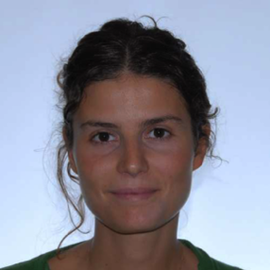
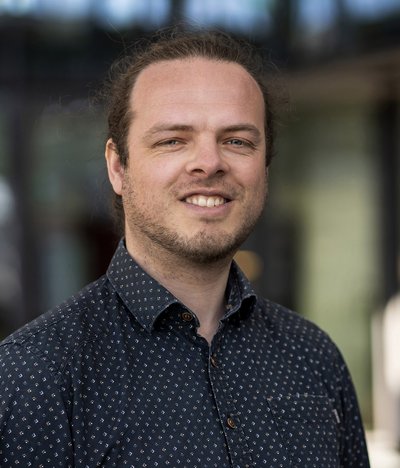
Herman Bruyninckx is a Part-Time Full Professor at Eindhoven University of Technology (TU/e) in the Mechanical Engineering department, specifically within the Control Systems Technology group and EAISI High Tech Systems initiative. He also serves as a professor (Hoogleraar) at KU Leuven in Belgium. Academic focus on robotics, control systems, and multi-agent coordination Active research in model predictive control , semantic mapping , and dynamic constraint algorithms Recent publications address industrial automation , agro-food robotics , and haptic technology Research Highlights : Developed hybrid decision-making frameworks for multi-agent navigation Innovated swing-free control methods for robotic pick-and-place operations Formulated constrained dynamics algorithms with LQR-Gauss principle integration Created ExoTen-Glove for haptic feedback in virtual environments Collaborative Projects : Coordinated with researchers like René van de Molengraft , Elena Torta , and Koen de Vos Contributed to NWO/TTW FlexCRAFT project for cognitive robotics in agro-food technology
Guy G. Drijkoningen is an Associate Professor in Applied Geophysics at Delft University of Technology (TU Delft), Faculty of Civil Engineering and Geosciences. He is actively involved in teaching and research within the Department of Applied Geophysics & Petrophysics. Education: MSc, Delft University of Technology, The Netherlands PhD, Cambridge University, UK Research Focus: His work centers on Seismic Experiments & Modelling , particularly in exploration and shallow-subsurface contexts. Key areas include: Seismic data acquisition on land Continuous seismic monitoring Shallow shear-wave imaging (land and marine) Seismic wave propagation in porous media Current projects leverage advanced sensor networks (e.g., LOFAR), full-waveform inversion for tunnel-boring machines, and novel vibrator technologies. Publications Trend: Recent works (2011–2016) emphasize seismic modeling, inversion techniques, and experimental validation across marine and terrestrial environments. Topics span poroelastic wave theory, ambient-noise interferometry, and innovative seismic source design, reflecting a blend of theoretical and applied geophysics. Scientific Awards: Best-paper award Geophysics 2015 for "A seismic vertical vibrator driven by linear synchronous motors" Professional Memberships & Editorial Roles: Member: Society of Exploration Geophysicists (SEG) Member: European Association of Geoscientists and Engineers (EAGE) Associate Editor: Geophysics Teaching: He teaches undergraduate and graduate courses including Introduction to Geophysics, Reflection Seismology, and specialized PhD-level modules on seismic data analysis.
Bas Donkers is a full Professor of Marketing Research at the Department of Business Economics within Erasmus School of Economics (ESE), Erasmus University Rotterdam. Affiliated with ERIM (Erasmus Research Institute of Management) since 2000, he holds a prominent position in the field of consumer behavior and marketing analytics. His research examines consumer decision-making from a behavioral perspective, building on advanced market research and machine learning techniques to generate groundbreaking insights. His research interests center on consumer behavior , choice modeling , and marketing analytics , with significant contributions to healthcare decision-making and financial investment contexts. Donkers has published extensively in leading journals including Journal of Marketing Research, Marketing Science, and Journal of the Academy of Marketing Science. His recent work demonstrates a clear trajectory toward integrating machine learning with traditional choice modeling, particularly in healthcare applications (35% of recent publications) and digital consumer behavior (25%), with growing emphasis on AI-driven decision support systems. ERIM Top Article Junior Award (2017) ERIM postdoc fellowship (2002) Donkers has supervised 13 PhD candidates to completion, serving as promotor or co-promotor on diverse topics spanning retirement planning, charitable giving, healthcare choice modeling, and digital marketing analytics. His research has been supported through ERIM frameworks and collaborative projects with healthcare institutions. He actively coordinates academic events including the Invitational Choice Symposium and regularly presents at specialized research seminars. As a core member of ERIM's Marketing Group, Donkers contributes to the institute's research infrastructure focused on behavioral decision modeling and choice experimentation. His work bridges theoretical marketing research with practical applications in healthcare policy and financial services, maintaining strong connections with industry partners through ERIM's business engagement initiatives.
Raymond H. Cuijpers is an Associate Professor at Eindhoven University of Technology in the Human Technology Interaction group. His research focuses on Cognitive Robotics , Human-Robot Interaction , and Artificial Intelligence for cognitive agents, with applications in healthcare robotics and aging population support. PhD in Physics of Man from Utrecht University (2000) Postdoctoral research at Erasmus MC Rotterdam and Radboud University Nijmegen Key research areas include: Developing socially intelligent robots with proper social cue interpretation Hybrid AI approaches for real-world complexity handling Visual-haptic perception integration in human motor control Service robots for COPD patient assistance (KSERA project) Rescue robotics and tele-operation applications Recent research output (2025) includes studies on: Personalization in human-robot communication Optimal lighting for elderly visual perception Human-robot bonding mechanisms Interactive sensorized platforms for homecare (GUARDIAN) Audiovisual temporal integration in virtual environments He coordinates large-scale European projects like GUARDIAN and previously KSERA, contributes to sustainable development goals through healthcare robotics, and serves on editorial boards of leading journals including International Journal of Social Robotics . His work spans both technical robotics development and human-centric interaction studies.
Robert Rooderkerk is Associate Professor of Operations Management at the Rotterdam School of Management, Erasmus University Rotterdam, where he is affiliated with the Department of Technology and Operations Management. His research sits at the intersection of marketing and operations, focusing on omnichannel retail, assortment optimization, and fulfillment strategies. He teaches courses on retail operations, empirical research methods, and consumer decision making across undergraduate, MBA, and PhD programs. Research Interests: His research combines empirical and conceptual approaches to understand how data analytics, consumer behavior, and new technologies are transforming retail. He investigates topics such as product line design, dynamic assortment personalization, and the impact of fulfillment failures on customer loyalty. His work integrates methods from econometrics, operations research, and psychology. Publication Trends: His recent publications span journals in marketing, operations, and management, reflecting the interdisciplinary nature of his work. Key themes include the adoption of retail analytics, omnichannel integration, and behavioral aspects of retail operations. There is a strong emphasis on practical relevance and industry applicability. Dutch Marketing Science Award Paul Green Award Finalist, Journal of Marketing Research Advising and Grants: While no direct list of students is provided, he supervises bachelor theses and contributes to PhD training through the ERIM Master of Philosophy program. He has served as coordinator of the Research Training and Bachelor Thesis course. His research has been supported through academic collaborations and has had significant media coverage, indicating public and industry impact. Labs and Teams: He is actively involved in the Marketing-Operations Interface research group at RSM and collaborates with scholars globally. His work contributes to the UN Sustainable Development Goals, particularly through innovations in sustainable retail practices and responsible consumption.
Laura Toni is an Associate Professor in the Department of Electronic & Electrical Engineering at University College London (UCL). She serves as Director of the MSc in Telecommunications and Internet Engineering and the MRes in Telecommunications. Additionally, she is a Turing Fellow at the Alan Turing Institute and a member of ELLIS (European Lab for Learning and Intelligent Systems). Her research focuses on coding, streaming technologies, machine learning for immersive communications, decision-making under uncertainty, and large-scale signal processing. She leads the LASP (Learning And Signal Processing) group at UCL. Education: MSc (2005) and PhD (2009) from the University of Bologna, followed by postdoctoral research at UC San Diego and EPFL under Professors L. Milstein, P. Cosman, and P. Frossard. Key roles include Technical Program Chair at ACM MM 2022, Keynote Co-Chair at ACM MMSys 2022, and leadership in organizing workshops on graph-based machine learning and emerging technologies in performing arts. She is a Senior IEEE Member and holds editorial roles in IEEE Multimedia Magazine and EURASIP Journal on Signal Processing. Her work bridges communication systems and machine learning, with contributions to adaptive streaming, network optimization, and graph signal processing. She actively promotes diversity and inclusion in technical conferences, including roles as Diversity Chair at MMSys 2021 and PIMRC 2020.
Prof. Mehdi Dastani is a Professor and chair of the Intelligent Systems group within the Department of Information and Computing Sciences at Utrecht University's Faculty of Science. He leads the Master's program in Artificial Intelligence and focuses on formal and computational models in AI, particularly multi-agent systems. His research integrates insights from philosophy, psychology, and law to develop autonomous agents that reason about social and cognitive concepts like norms, emotions, and responsibility. Dastani has held academic roles at Utrecht University since 2001, including postdoctoral research and faculty positions. Education: M.Sc. Computer Science (University of Amsterdam, 1991), M.Sc. Philosophy (University of Amsterdam, 1992), Ph.D. in Humanities (University of Amsterdam, 1998). His work spans theoretical and applied projects, including grants for initiatives like Golden Agents (simulating Golden Age creative industries) and traffic control systems using virtual organizations. He is actively involved in academic committees, editorial boards, and organizing international conferences like AAMAS and PRIMA. Research Interests: Multi-Agent Programming, Normative Systems, Autonomous Agents, Cognitive Robotics, and Human-Centered AI. His projects address challenges like norm enforcement, decision-making in complex systems, and ethical AI integration with societal needs. Advising & Grants: Supervised numerous PhD students (e.g., Birna van Riemsdijk, Bas Testerink) and secured grants for projects such as 'Controllable AI: Human-Centered Approach'. His work includes collaborations on urban governance, autonomous driving, and AI tools for literacy support in children. Labs & Teams: Leads the Intelligent Systems group, contributing to agent-based simulations, ethical AI frameworks, and interdisciplinary collaborations with social scientists and urban planners.
Dr. Zhiming Zhao is an Associate Professor and Chair of the Multiscale Networked Systems (MNS) research group at the Informatics Institute (IvI), University of Amsterdam (UvA). He serves as the technical manager of the Virtual Lab and Innovation Center (VLIC) of LifeWatch ERIC, a European research infrastructure for ecology and biodiversity science. Zhao holds an IEEE Senior Member designation and is the Managing Editor of the Journal of Cloud Computing . He earned his Ph.D. in Computer Science from UvA in 2004. His research focuses on quality-critical distributed computing, data-intensive workflows, virtual research environments, and digital twins. He leads projects such as LTER-LIFE (Dutch research infrastructure for digital twins) and coordinates UvA contributions to EU initiatives like ENVRI-HUB Next , EVERSE , and BlueCloud-2026 . Zhao’s work spans technical development in EU projects (e.g., ENVRI-FAIR , ARTICONF , CLARIFY ) and leadership roles in international workshops and conferences. His team develops frameworks like NaaVRE (Jupyter-based collaborative environments) and CloudsStorm (dynamic infrastructure planning). Current research emphasizes trustworthy AI in cloud systems, federated learning, and edge-cloud resource optimization. Key achievements include over 150 peer-reviewed publications, supervision of numerous PhD students, and contributions to open science initiatives. His lab actively explores interdisciplinary applications in environmental science, medical imaging, and blockchain-based decentralized systems.
Laurens Bliek is an Assistant Professor at the Department of Industrial Engineering & Innovation Sciences, Eindhoven University of Technology (TU/e). He specializes in combining artificial intelligence (AI) with optimization techniques for computationally intensive problems, focusing on sustainable applications such as public transport, electric vehicles, and CO 2 reduction. Education: MSc in Applied Mathematics (2014), PhD in Systems & Control (2019) from Delft University of Technology. Prior Role: Postdoctoral researcher at the Algorithmics group, Delft University of Technology. Research Interests: His work addresses AI-driven optimization of expensive cost functions, particularly in logistics, communications, and healthcare. He develops methods to handle computationally intensive simulators and digital twins, emphasizing real-time decision-making and sustainability. Recent Publications: His research spans predictive maintenance using Fourier graph neural networks, real-time container yard allocation, and 5G network optimization. Articles appear in journals like IEEE Transactions on Neural Networks and Learning Systems and Computer Networks . Collaborations: Laurens collaborates with industry partners (LioniX, Dutch Railways) and organizations (European Supply Chain Forum, Logistics Community Brabant). He co-leads the 12-PhD program AI Planner of the Future and participates in AI sustainability working groups. Supervision: Co-promotor of PhD students Ya Song and Abdo Abouelrous, focusing on AI applications in routing and maintenance logistics.
Mitra Nasri is an Assistant Professor at the Eindhoven University of Technology, affiliated with the College of Engineering's Department of Electrical Engineering. She contributes to the High Tech Systems Center and EAISI Foundational, focusing on interconnected resource-aware intelligent systems. Research Focus: Real-Time Systems, Scheduling Algorithms, Embedded Systems, Fault-Tolerant Computing, and Cyber-Physical Systems. Key Contributions: Development of scheduling frameworks for multi-rate task chains, response-time analysis techniques, and containerization strategies for real-time distributed applications. Her recent work includes advancements in weakly-hard timing constraints, parallel global scheduling, and cloud integration for embedded systems. She actively collaborates on projects like SAM-FMS and COMP4DRONES. Scientific Awards: Best Paper Award - RTAS 2022 Best Paper Award - RTNS 2016 Outstanding Paper Awards at RTAS 2017, 2022 and RTSS 2020 She teaches courses in Real-Time Systems, Operating Systems, and Automotive Software, and participates in organizing conferences like Embedded Systems Week and CompSys.
Wouter van Toll is a Lecturer at the Academy for AI, Games & Media, specializing in crowd simulation and real-time systems. His research focuses on path planning, crowd behavior modeling, and fluid dynamics in agent-based simulations. He has contributed to advancing algorithms for microscopic crowd simulation and integrating techniques like Smoothed Particle Hydrodynamics (SPH) to handle extreme crowd densities. Key research interests include sketch-based interaction design for steering behaviors, navigation mesh optimization, and topological strategies for agent coordination. His work bridges computational methods with creative applications in game development and artificial intelligence. Received Best Paper Award Honorable Mention (2022) for his work on sketch-based steering behaviors in crowd simulation. Active collaborations in Europe and North America, particularly in crowd simulation software development. Publications span algorithmic advancements in crowd simulation, navigation systems, and interdisciplinary applications combining physics-based methods with agent-based models. Current research emphasizes real-time simulation efficiency and human-centered design tools for behavior specification.
Dr. Tim Hulsen is a Professor of AI & Data-Supported Healthcare at the Knowledge Center for Healthcare Innovation, Rotterdam University of Applied Sciences, where he leads research on the application of data science and artificial intelligence in healthcare. He is also actively involved in the HR Datalab Healthcare and maintains a dual role as Senior Data & AI Scientist at Philips. His work bridges academic research and industry application, focusing on practical implementations of AI technologies in healthcare settings. Tim completed his Biology studies at Radboud University Nijmegen with a strong medical-biological component. After internships in Molecular Animal Physiology and Bioinformatics, he pursued a PhD and postdoctoral position at Radboud University Nijmegen in collaboration with NV Organon (later Schering-Plough). His academic journey transitioned into industry when he joined Philips Research in Eindhoven in 2009, where he has held various scientific positions focused on data management, big data, and artificial intelligence in healthcare. Dr. Hulsen's research focuses on the practical application of data science and AI in healthcare, emphasizing the importance of good data quality through sound data management practices, adherence to the FAIR Guiding Principles, and the use of ontologies and standards. He places particular emphasis on the explainability and responsible use of AI systems in clinical settings. His recent research interests have expanded to include generative AI (GenAI) applications in healthcare, where he seeks to connect various professorships and departments within the Rotterdam University of Applied Sciences with the broader medical technology sector. An analysis of Dr. Hulsen's recent publications reveals a strong focus on AI applications in healthcare, particularly in oncology and prostate cancer research. His work demonstrates a progression from foundational data management and bioinformatics to cutting-edge AI applications, with increasing emphasis on responsible implementation and practical healthcare solutions. The publications span technical aspects of data science, clinical applications, ethical considerations, and future directions for AI in healthcare. Dr. Hulsen has made significant contributions to the academic community through his editorial work, serving as an Editorial Board Member for BMC Cancer and Frontiers Medicine and Public Health, and regularly reviewing scientific publications. While specific awards aren't detailed in the available information, his extensive publication record (over 50 scientific publications) and leadership roles indicate recognition within his field. Throughout his career, Dr. Hulsen has demonstrated strong leadership in research projects, having led various initiatives, co-authored international project proposals, and managed work packages within grant projects. His collaborative approach is evident in his work connecting academic research with industry applications, particularly through his dual roles at Rotterdam University of Applied Sciences and Philips. His work with the Movember GAP3 consortium and PIONEER big data platform for prostate cancer demonstrates his commitment to large-scale collaborative research that addresses real-world healthcare challenges. Dr. Hulsen is actively involved with the HR Datalab Healthcare and the AI & Data-Supported Healthcare research group. He collaborates extensively with various stakeholders in the healthcare ecosystem, including medical institutions like Erasmus MC, technology companies, and research consortia. His current work focuses on practical applications such as registration burden reduction using generative AI, non-invasive monitoring, and optimization of diagnostics and prevention strategies. Through these initiatives, he aims to develop explainable knowledge that will train future healthcare professionals in the responsible use of AI.
Dr. Raôul Oudejans is an Associate Professor at the Department of Human Movement Sciences, Faculty of Behavioural and Movement Sciences, Vrije Universiteit Amsterdam. He also holds a part-time lector position at Amsterdam University of Applied Sciences (2016–present) and serves as an advisor at Defence, TGTF (2023–present) and Director of the Amsterdam Institute of Sport Science (2024–present). PhD in 1996: Optics and actions of catching fly balls in baseball His research focuses on perceptual-motor skills and performance under pressure in sports (basketball, soccer), police work, and performing arts. He emphasizes psychological factors like stress, anxiety, and gaze behavior, integrating virtual reality (VR) and hormonal stress response frameworks (hormesis). Article trends highlight VR training for police operations, stress adaptation in athletes, and interdisciplinary applications across sports, law enforcement, and ergonomics. Scientific awards include the VSPN Frank Bakker Award (2023). His work aligns with UN Sustainable Development Goals (SDGs) related to health, well-being, and innovation.
Felipe Martins is a Senior Lecturer-Researcher at Hanze University of Applied Sciences, active in both teaching and the Sensors and Smart Systems research group. He holds a PhD in Electrical and Electronic Engineering (2009) and has a background in industrial automation engineering (1999-2003). His work contributes to UN Sustainable Development Goals through educational robotics and automation. PhD: Modeling and Dynamic Compensation of Mobile Robots (Federal University of Espirito Santo) MSc: Control of Induction Generators via Fuzzy Logic BSc: Microcontroller-based Motor Control Research spans mobile robot control , educational robotics , autonomous navigation , and sensor networks . Recent publications focus on LiDAR data processing (2024), reinforcement learning for robotic applications (2022), and machine learning-driven localization (2023). He received Best Paper Awards at OL2A 2023 and WRE 2018. As a part-time teacher at University of Groningen (since 2022) and visiting researcher at CeDRI (2023), he bridges academia and industry. His editorial roles include guest editorships at Automation (MDPI) and Sensors journals. He co-organized RoboCup Junior events (2013-2021) and developed open-source robotics education tools like RoSoS A free simulator (2016).
Nishant Saurabh is a tenured Assistant Professor at the Department of Information and Computing Sciences , Utrecht University , Netherlands. His research focuses on resource and data management , application scheduling , performance modeling , and optimization in large-scale hybrid distributed systems including Cloud, Edge, and Quantum computing. Recently, he has expanded into ML workload scheduling and causal performance attribution across the Cloud-Edge continuum. Research Expertise : Distributed Systems and Cloud Computing Quantum-HPC Middleware Systems Performance Modeling and Optimization ML/AI Workload Scheduling Cloud-Edge Continuum Architectures Observability Frameworks Scientific Leadership : Associate Editor, Springer's Journal of Cloud Computing Editorial Board, Frontiers of AI book series IBM HPC-Quantum Working Committee member Workshop Chair, IEEE IPDPS 2025 Supervision : He has supervised 16+ Master/Bachelor students on projects including container migration, reinforcement learning for serverless computing, and quantum middleware evaluation. Current PhD students include Diogo Landau (Performance Observability), Nathan Keyaerts (LLM Methods), and Negar Alizadeh (Energy Efficiency).