Denys J.C. Matthies is an Associate Professor at Technical University of Applied Sciences Lübeck and affiliated with Fraunhofer IMTE Lübeck . He specializes in Human-Computer Interaction , particularly focusing on Wearable Computing , Tactile Feedback Systems , and Activity Recognition through smart footwear and body-worn sensors. Key Collaborations: Augmented Human Lab (NUS), Fraunhofer IGD, City University of Hong Kong Research Themes: Smart wearables, haptic interfaces, physiological sensing, assistive technologies His recent work explores: PhantomFolds (2025) - Spatial tactile feedback via fingernail-mounted LRAs PAVES (2025) - Pneumatic terrain simulation in VR Cyber-Placebo (2024) - Ethical implications of fake-AI in CPHS He has contributed to smart footwear systems like ShoeTect2.0 (2024) and SurfSole (2024), integrating capacitive sensing with neural networks for real-time activity and surface recognition. His work spans medical applications (e.g., 2025 study on hepatic encephalopathy screening) and novel interaction paradigms (e.g., Kavy conversational AI 2024).
Anushka Stancheva serves as a Lecturer at New Bulgarian University's Faculty of Mathematics, Department of Telecommunications, following her tenure as Associate Professor (2011-2021). Holding a PhD in Electromagnetic Compatibility of Radio Electronic Equipment, she specializes in wireless communication systems and spectrum management. Her educational background includes: Doctorate (1990) in Communication and Computer Engineering from Technical University, Sofia, with thesis on radio interference resistance Master of Engineering (1977) in Radio Engineering from Higher Machine and Electrical Engineering Institute, Varna Dr. Stancheva's research focuses on Electromagnetic Compatibility analysis, mathematical modeling of wireless systems (GSM/UMTS/LTE/5G), radio frequency spectrum management, and biological effects of electromagnetic fields. Her work bridges theoretical EMC frameworks with practical industry applications in mobile communications and regulatory compliance. Her 15 most recent publications (2015-2018) demonstrate concentrated expertise in 5G spectrum allocation, LTE interference mitigation, cognitive radio systems, and regulatory frameworks for radio equipment. These works reveal evolving research trajectories toward next-generation mobile networks and increasingly stringent EMC standards. She has directed significant projects including GSM network digitization for 350,000+ subscribers, mobile fraud management systems, and WHO-collaborated health impact studies of electromagnetic fields. Her administrative leadership includes directing NBU's Telecommunications Master's program (2011-2012) and serving as Program Director (2012-2016). Professionally active, she chairs the Space Communications section at the Bulgarian Astronautical Society, serves on WRC-2019 preparation committees, and contributes to WHO electromagnetic radiation research initiatives.
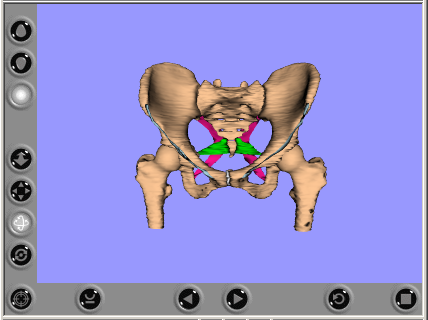
Robert Funnell, PhD is an Investigator at the Research Institute of the McGill University Health Centre (RI-MUHC) and a Professor in the Department of Otolaryngology - Head and Neck Surgery at McGill University's Faculty of Medicine. His research is conducted within the Child Health and Human Development Program at RI-MUHC, where he applies engineering principles to understand auditory mechanics and improve diagnostic tools for hearing assessment. Dr. Funnell's research focuses on the mechanics and acoustics of hearing, with particular emphasis on developing novel measurement techniques in experimental animals and infants, and creating computational models of the ear. His work combines experimental measurements with sophisticated modeling approaches to better understand middle ear function. He has developed specialized software for creating 3D models of complex anatomical structures, including his notable Thrup'ny 3D viewer application. His research has significant clinical applications, particularly in improving newborn hearing screening protocols and developing better diagnostic tests for middle ear conditions. Analysis of Dr. Funnell's recent publications reveals a consistent trajectory in middle ear biomechanics research spanning several decades. His work demonstrates increasing sophistication in computational modeling techniques, with recent publications integrating optical coherence tomography, X-ray microCT data, and finite element analysis to create increasingly accurate representations of middle ear function. A significant portion of his recent work focuses on newborn hearing assessment, reflecting the clinical importance of early hearing detection. His research bridges engineering principles with clinical audiology, creating practical applications for hearing screening and diagnosis. Dr. Funnell has developed several notable software tools including Thrup'ny, a free open-source 3D viewer for VRML models designed for both anatomy teaching and finite-element pre- and post-processing. His website hosts various educational resources including interactive 3D models of the ear, finite-element simulation tools, and teaching materials on middle ear mechanics. These resources have been widely used for both research and educational purposes in the field of otolaryngology and biomedical engineering.
Stanislav Lange is an Associate Professor at the Department of Information Security and Communication Technology at the Norwegian University of Science and Technology (NTNU). His research focuses on network function virtualization, 5G/6G network slicing, quality of service (QoS), quality of experience (QoE), and machine learning applications for network management. His recent publications address decentralized autoscaling, 5G New Radio scheduling impacts, and survivability of network slices during outages. Key trends in his work include network intelligence, in-network computing, and deterministic performance guarantees in virtualized environments. Lange contributes to teaching courses in network programming, cybersecurity, and computer networks for instrumentation. His collaborations span IEEE conferences and journals, addressing challenges in network virtualization, resource optimization, and next-generation communication systems.
Hercules Avramopoulos is a full Professor at the National Technical University of Athens (NTUA) within the School of Electrical and Computer Engineering, where he heads the Photonics Communications Research Laboratory (PCRL). His work bridges academic research and industrial application in photonics, with leadership in European collaborative projects. His educational background includes a BSc and MSc in Physics and Applied Optics from Imperial College London, followed by a PhD in Physics (1989) focusing on nonlinear effects in lasers and optical fibers. Prior to NTUA, he conducted research at AT&T Bell Laboratories. Avramopoulos' research spans photonic integrated circuits , quantum communications , optical interconnects , and biophotonics sensing . Current work emphasizes monolithic/hybrid photonic integration (silicon, InP, polymers), quantum key distribution (QKD) for satellite/terrestrial networks, and photonic sensors for composite manufacturing. His group develops advanced modulation formats, DSP techniques, and all-optical switching systems. Recent publications show strong focus on quantum-classical coexistence in fiber/FSO networks, 6G X-haul architectures combining fiber/mmWave/FSO, and embedded photonic sensors for industrial processes. Key trends include satellite QKD feasibility, SDN-controlled hybrid transport, and machine learning-enhanced optical signal processing. He has supervised 26 completed PhD theses with 12 current doctoral students. Alumni include 10 faculty members at Greek/European universities and professionals at Cisco, Nokia, and the European Patent Office. PCRL has participated in over 60 European projects (coordinating ~30), including current initiatives like POLYNICES and TWILIGHT. PCRL maintains a 30-member team developing photonic solutions across five domains: optical interconnects, DSP, PIC design, biophotonics, and quantum communications. The lab holds 5 patents and has produced 500+ publications (200+ journal articles). Current infrastructure supports quantum communications research for IYQ2025 (International Year of Quantum 2025) initiatives.
Marco Bertoni is a Professor in Mechanical Engineering at Blekinge Institute of Technology , Sweden. He specializes in Product-Service Systems (PSS) , Design Thinking , Systems Engineering , and Knowledge Management , with 15+ years of academic experience. Co-chair of the Design of Product-Service Systems Special Interest Group within The Design Society Teaches courses: MT1556 Innovative and Sustainable Product Development , MT2568 Value Innovation , and others His research focuses on integrating Digital Twins and Simulation for Sustainability and Value Creation in engineering design. Recent publications (2025) explore topics such as System-of-Systems Simulation , Resilient Automated Transport , and Immersive VR for Sustainable Behavior . Collaborative projects include work with researchers like Alessandro Bertoni, Tobias Larsson, and Giulia Wally Scurati. His 15 most recent articles (2025–2024) analyze Digital Servitization , Value-Robust Circular Systems , and Data-Driven PSS Design , often applying Discrete Event Simulation and Extended Realities .
Ludger Schmidt is a Professor of Human-Machine Systems Engineering at the University of Kassel, leading the Human-Machine Systems Technology department. He holds a doctorate in Engineering from RWTH Aachen University (2004) and has held leadership roles at the Fraunhofer/FGAN Research Institute and RWTH Aachen. His academic contributions span multiple institutions and projects. University of Kassel (2008–present): Professor in Mechanical Engineering Fraunhofer/FGAN (2005–2008): Head of Ergonomics and Human-Machine Systems RWTH Aachen (2000–2005): Chief Engineer and Research Group Leader His research focuses on Human-Machine Interaction , Assistive Systems , and Digital Transformation , with specific emphasis on: User modeling and cognitive engineering Augmented/Virtual Reality applications Usability and ergonomic design Smart public transport systems Technology acceptance and trust Adaptive interfaces Recent publications highlight trends in immersive training systems (VR/AR), public transport innovation , and robotic assistance . His work integrates human factors with industrial engineering, particularly in: Work 5.0 and Industry 4.0 Physiological parameter analysis Interactive 3D-360° media Smart city infrastructure Context-sensitive notifications Autonomous mobile robotics Scientific awards include: Best Paper Award (2020) Best Paper Candidate (2024) Outstanding Research Award (2017) He directs the Scientific Center for Information Technology Design and the Institute for Industrial Engineering and Process Management at the University of Kassel, leading projects like U-hoch-3 and RadAR+ (2014–2020). His lab focuses on human-centered technology design for industrial and mobility contexts.
Christoph Kirsch is Professor and Chair of the Department of Computer Science at the University of Salzburg, Austria since January 2022, and Chair of the Computational Systems Group since April 2004. He also serves as Chair of the Programming Research Laboratory at Czech Technical University in Prague since October 2022. Dr. Kirsch earned his Dr.-Ing. from Saarland University in 1999 while at the Max Planck Institute for Computer Science. He worked as Postdoctoral Researcher at UC Berkeley (1999-2004) and later returned as Visiting Scholar (2008-2013) and Visiting Professor (2014). His research focuses on: Principled design of programming languages and runtime systems Server, quantum, embedded, real-time, and mobile systems Symbolic reasoning, memory management, and concurrency Dr. Kirsch co-invented embedded programming languages (Giotto, HTL, Embedded Machine) and has designed high-performance concurrent data structures. His recent work centers on symbolic execution frameworks like Selfie, with publications spanning efficient model checking, program analysis, and memory management systems. Professional recognitions include ACM Distinguished Speaker (2017-present). He co-founded EMSOFT (2001), served as ACM SIGBED chair (2011-2013), and was associate editor for IEEE TCAD and ACM TODAES. He has supervised 5 postdocs, 10 PhD students, and 18 Masters students since 2004, teaching undergraduate and graduate courses in Compiler Construction, Systems Engineering, and Introduction to Computer Science. Dr. Kirsch leads the Computational Systems Group at University of Salzburg, advancing programming language design, runtime systems, and formal verification methods.
Associate Professor Kimberley (Kim) van Schooten is a Senior Research Fellow at Neuroscience Research Australia (NeuRA) and Conjoint Associate Professor in the School of Population Health at UNSW Medicine & Health. With a PhD in Human Movement Sciences from VU University Amsterdam (2015), she has held research positions across the Netherlands, Canada, and Australia before joining NeuRA in 2017. Her research focuses on understanding and preventing mobility impairments and falls in older people through the integration of wearable sensors, neuroscience, and biomechanics. She pioneered work demonstrating that daily-life gait characteristics strongly predict fall risk, leading to the development of digital biomarkers and risk prediction tools that outperform conventional approaches and are now being translated into clinical and aged-care settings. Dr. van Schooten has secured over $6.7M in competitive national and international funding and published more than 80 peer-reviewed articles in leading journals. Her recent work shows a strong trend toward developing practical technology-based solutions for mobility assessment and fall prevention, with increasing focus on pain's impact on mobility, virtual reality training approaches, and sex/gender differences in fall risk. Australian Academy of Health and Medical Sciences Mentorship Program (2025) Human Frontier Science Program support Active involvement with International Society of Posture and Gait Research (ISPGR) Contributions to WHO AI for Health initiatives She supervises a large team of PhD students, postdocs, and research staff, with her trainees consistently advancing to competitive fellowships and international positions. Her research projects include My Personal Rehab, TCC-REHAB, Mindset Balancer program, StandingTall-Rehab, Walking With(out) Pain, Own Your Balance, and several others focused on fall prevention and mobility improvement in older adults. Dr. van Schooten also contributes to research leadership through service on boards and committees and mentors early-career researchers through international mentoring programs.
Vijay Chidambaram is an Associate Professor in the Department of Computer Science at The University of Texas at Austin, where he leads the UT Systems and Storage Lab. His research focuses on building next-generation storage systems with higher performance and stronger reliability, developing both storage systems and testing frameworks to ensure rigorous development. He is also part of the UT Data Systems group and the LASR research group at UT Austin. Ph.D. in Computer Science, University of Wisconsin–Madison M.S. in Computer Science, University of Wisconsin–Madison B.E. in Computer Science, College of Engineering, Guindy Chidambaram's research interests center on computer systems, particularly storage systems, distributed systems, and databases. His work addresses critical challenges in crash consistency, persistent memory file systems, and storage reliability. His group has made significant contributions to understanding and solving crash-consistency bugs, developing innovative testing frameworks, and building open-source storage systems that impact both academia and industry. They focus on innovation at both the data-structure level and systems level, with recent work exploring CXL-based database architectures and verification tools for storage systems. His research group has produced numerous influential publications in top-tier conferences including OSDI, FAST, ATC, and EuroSys, with several best paper awards. Their work spans from theoretical foundations of crash consistency to practical implementations of high-performance storage systems, with a consistent emphasis on open-sourcing their software to maximize impact. Distinguished Artifact Award at OSDI 2025 Best Paper Award at EuroSys 2023 Best Paper Award at ATC 2018 Best Paper Award at FAST 2018 NSF CAREER Award 2018 Microsoft Research Graduate Fellowship 2014 ACM SIGOPS Dennis M. Ritchie Dissertation Award 2016 Chidambaram actively mentors PhD students, with current advisees including Minh Phan, Talia Chen, Nitin Mathai, and Shurang Wu. His former students have gone on to positions at Microsoft Research, HP Labs, Apple, and academia. He has secured significant research funding, including NSF grants and industry collaborations. Beyond research, he serves on program committees for major systems conferences and co-founded the open-access Journal of Systems Research. He also teaches courses including Virtualization, Advanced Operating Systems, and Distributed Systems, and authored the CS Assistant Professor Handbook, a guide for new computer science faculty. His UT Systems and Storage Lab maintains close industry collaborations while pursuing fundamental research questions in storage systems. The lab is known for its rigorous approach to systems research, combining theoretical insights with practical implementations, and has developed multiple open-source systems that have influenced both academic research and industry practice.
Chi Ho Cheung is a Researcher specializing in machine learning, computer vision, and multimedia systems. His career spans both academic research and industry innovation through roles at Tencent Technology (Shenzhen), TCL Corporate Research (Hong Kong), and current position at The Laboratory of Data Discovery for Health. His research interests focus on computer vision and health data analysis, particularly in Virtual view synthesis for free-viewpoint communication Advanced image inpainting and background modeling techniques Multi-sprite and depth-based solutions for video enhancement AI-driven health status classification and risk prediction systems Cheung's publication record demonstrates expertise in multimedia processing and 3D reconstruction , with a focus on disocclusion handling and motion compensation algorithms across three major IEEE Transactions on Multimedia papers (2015-2020). Currently developing AI health products for women's health applications, Cheung applies machine learning and computer vision algorithms to create end-to-end solutions from literature review through product launch. His work emphasizes cross-disciplinary collaboration, providing technical guidance to teammates for implementing AI solutions in health risk prediction and multimodal health data classification.
Jean Pichon-Pharabod is a Tenure Track Assistant Professor at Department of Computer Science, Aarhus University , focusing on bridging programming language theory with industrial systems programming in areas like relaxed memory concurrency and formal verification. His work includes developing robust verification tools for WebAssembly and virtual machine security . Research Interests : Relaxed memory models, separation logic, capability safety, systems programming, and memory-safe execution environments. Scientific Awards : Amazon ARC Award (2024), Google ASPIRE Awards (2021-2023), AUFF Starting Grant. Key Contributions : Verified WebAssembly compilation, mechanised memory models, concurrency in ARM/RISC-V, and separation logic frameworks. Students : Zongyuan Liu, Maxime Legoupil, June Rousseau.
Javier Francisco Gamiz Caro serves as an Associate Professor in the Department of Systems, Automatic Control and Industrial Informatics at the School of Engineering (EEBE) within Universitat Politècnica de Catalunya (UPC). With over 24 documented academic activities spanning two decades, his career demonstrates sustained engagement in both teaching and research within industrial automation and control systems. His research focuses on Automation Project Management , Programmable Logic Controllers , Process Control , and Telemetry , with particular emphasis on water treatment applications. Recent work (2020-2023) centers on advanced control strategies for drinking water chlorination processes, including fuzzy gain scheduling, feed-forward control, and virtual sensor networks for wastewater monitoring. His publications reveal strong collaboration with researchers like Grau, Bolea, and Martinez across multiple projects. Analysis of his 15 most recent publications shows a consistent trajectory in industrial process automation, with water treatment systems as the dominant application domain. His work bridges theoretical control engineering with practical implementation in real-world water treatment facilities, demonstrating both academic rigor and industrial relevance. His academic service includes doctoral thesis supervision, as evidenced by his 2021 doctoral thesis on advanced chlorination control systems. He maintains active research through competitive R&D projects and conference presentations, with recent activities extending into human-robot collaboration for logistics applications. Technical infrastructure supporting his work includes the Unitat de Recerca, Transferència de Tecnologia i Innovació Docent en Automatització i Control de Processos (URT–ACP), which facilitates technology transfer and educational innovation in process automation.
Shintaro Uchiyama serves as a Research Associate at Waseda University's Faculty of Human Sciences since April 2025. Previously, he held positions as a Part-time Lecturer at National Institute of Technology, Toyota College (2021-2024) and teaching assistant roles at Toyohashi University of Technology. His academic foundation includes Bachelor's and Master's degrees in Engineering from Toyohashi University of Technology, completed in 2020 and 2022 respectively. Bachelor of Engineering (2020), Toyohashi University of Technology Master of Engineering (2022), Toyohashi University of Technology Graduate Coursework Completed (2025), Toyohashi University of Technology Uchiyama's research focuses on educational technology innovation, particularly in generative AI applications for learning support systems and flipped classroom methodologies. His work bridges speech recognition technologies with educational applications, developing systems that enhance student engagement through immediate feedback mechanisms and annotation tools. Current projects include STEAM learning environments using XR technology and learning behavior analysis systems for correspondence high schools. His publication record demonstrates consistent output in educational technology conferences and journals, with recent work emphasizing large language models for educational feedback and mixed reality applications. Research trends show progression from foundational VR/Hololens educational tools (2018) toward sophisticated AI-driven learning systems (2023-2025), maintaining focus on practical classroom implementation. 特別研究報告会最優秀特別研究発表賞 (Toyohashi University, 2022) 優秀講演賞 (ATS2020 Symposium, 2021) Rinnai Scholarship Foundation Award (2022) Japan Student Services Organization Half-Repayment Exemption (2022) Multiple student support awards from Toyohashi University (2021-2022) Uchiyama actively contributes to educational research through JSPS-funded projects including 'Establishing STEAM learning environments utilizing generative AI' (2024-2029) and 'Learning behavior analysis for correspondence high schools' (2025-2027). His committee work includes publicity chair roles for International Conferences on Advanced Informatics. Professional memberships span the Japanese Society for Information and Systems in Education and Japan Society for Educational Technology since 2019-2020.
Dr. Guang Deng serves as an Adjunct Associate Professor in the College of Engineering at La Trobe University, where he has maintained academic appointments since 1994. His technical expertise bridges communications engineering, signal processing, and advanced image analysis with practical applications in medical devices and computer vision systems. Academic Background: BSc from Sun Yat-Sen University MEng from Chinese Academy of Sciences PhD from La Trobe University Dr. Deng's research program centers on generalized linear image processing and statistical signal processing , with significant contributions to lossless image compression algorithms and noise reduction techniques specifically engineered for cochlear implant devices. His methodology combines theoretical mathematical frameworks with practical hardware implementation constraints, particularly evident in his recent work on fixed-point acceleration methods for resource-limited systems. His publication trajectory reveals consistent innovation in image filtering techniques, evolving from foundational work on discrete Laplacian operators to contemporary deep learning applications in marine imaging. Key thematic developments include the progression from traditional signal processing to hybrid approaches incorporating machine learning, with growing emphasis on real-world constraints like embedded system limitations and illumination variability in agricultural imaging. Funded Research Initiatives: Virtual Speech Pathologist (National ICT Australia, 2013-2016) ARC Centre of Excellence in Electromaterial Sciences (Australian Research Council, 2009-2013) Dr. Deng maintains active research collaborations across engineering and life sciences domains, particularly evident in his cross-disciplinary work on plant phenotyping systems and medical device signal processing. His current research demonstrates increasing focus on edge computing applications and biometric security systems alongside his longstanding image processing expertise.