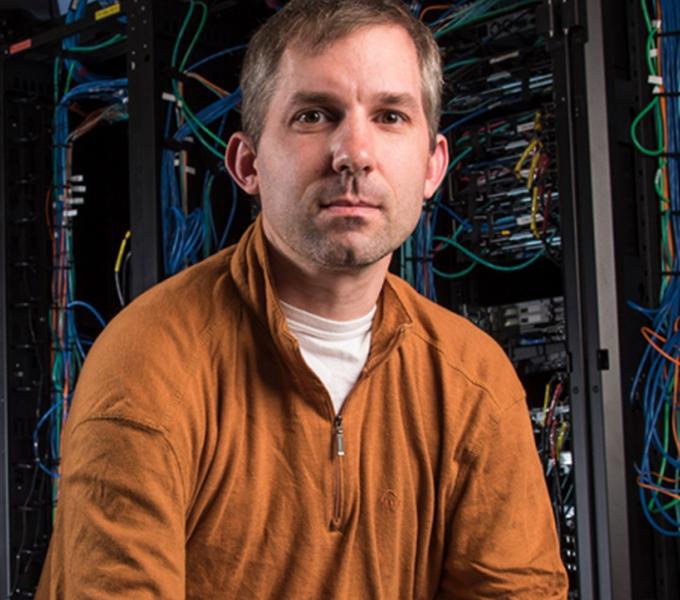
Dr. Heiko Maus is a researcher and department leader at the German Research Center for Artificial Intelligence (DFKI) GmbH in Kaiserslautern, Germany. As (co-)author of over 20 publications since 2005, he specializes in knowledge management, semantic technologies, and context-aware systems. Second Deputy Head of Smart Data & Knowledge Services Department (2022–) Team Leader of Topic Field Knowledge Work (2017–) Key projects: CoMem, EPOS, ForgetIT, myRPA His research focuses on knowledge graph applications for corporate memory systems, combining context modeling with semantic desktop environments . He develops personal knowledge assistants that integrate information silos through evolving knowledge graphs , with recent work exploring LLM-based adaptive relevance prediction for entity recommendation systems. Scientific contributions include the LDK 2019 Best Research Paper Award and multiple ACM/IEEE/ESWC publications . His 2024–2025 articles examine context-aware recommendation systems for knowledge workers, cyber mapping financial systems , and real-life knowledge work datasets .
Dr. Derjung Mimi Tarn, MD, PhD is Professor of Family Medicine at the David Geffen School of Medicine at UCLA and a practicing family physician at the Santa Monica Family Health Center. Board-certified in Family Medicine since 2002, she completed her residency at Presbyterian Intercommunity Hospital, followed by NRSA Primary Care Research and UCLA STAR fellowships in 2005-2006. She is bilingual in English and Mandarin. Education BS & MS in Biological Sciences, Stanford University MD, New York Medical College, 1999 PhD in Health Services, UCLA, 2006 UCLA STAR Fellowship & NRSA Primary Care Research Fellowship, 2005-2006 Residency, Family Practice, Presbyterian Intercommunity Hospital, 2002 Internship, Family Practice, Presbyterian Intercommunity Hospital, 2000 Research Focus Dr. Tarn’s scholarship centers on improving primary-care delivery through rigorous mixed-methods research. She investigates physician-patient communication around prescription medications, determinants of medication adherence, and the role of preventive care in chronic disease management. Her recent work leverages telemedicine, digital health tools, and community-engaged research to reduce disparities among older adults and under-resourced populations. Across 70+ peer-reviewed publications, common themes emerge: pragmatic clinical trials testing scalable interventions (e.g., tailored Medicare Annual Wellness Visits), systematic reviews on telehealth effectiveness for diabetes and hypertension, and qualitative exploration of patient perspectives on opioids, statins, and anticoagulants. Studies frequently integrate patient-reported outcomes and stakeholder engagement to ensure real-world applicability. Honors & Awards Super Doctors Southern California – 2020, 2024, 2025 PhRMA Foundation Value Assessment Challenge Award – 2015 Distinguished Paper Award, STFM Spring Meeting – 2015 Fellow, American Academy of Family Practice – 2013 California Academy of Family Physicians Researcher of the Year – 2010 NIH OBSSR Summer Institute Fellow – 2009 STFM Best Paper Award Honorable Mention – 2008 Clinical & Hospital Affiliations Family Health Center, 1920 Colorado Avenue, Santa Monica, CA UCLA Santa Monica Medical Center Dr. Tarn’s multidisciplinary expertise bridges clinical practice and health-services research, making her a leading voice in advancing equitable, patient-centered primary care.
Dr. Daryoush Daniel Vaziri is a Researcher at the Department of Economics, Bonn-Rhein-Sieg University of Applied Sciences, leading the development of AI-based systems with a focus on generative language models and interactive systems. Based in Saint Augustin, Germany, his work bridges Artificial Intelligence , Human-Computer Interaction , and Active Ageing research. His research explores Large Language Models , Conversational Agents , and Service Robotics , with particular attention to real-world applications in retail, education, and healthcare. Current projects include the Mittelstand 4.0 Competence Center Usability initiative supporting SMEs in digital transformation. Recent publications highlight advancements in Virtual Reality integration with LLMs , systematic reviews of conversational AI barriers , and NLP applications across customer journeys . His 2025 work on AI Competencies for Companies offers frameworks for ethical and regulatory alignment. Summa cum laude dissertation (2018) on technology integration for active aging As a key contributor to European research projects like iStoppFalls and PosiBot, Vaziri continues to shape discourse on accessible information systems and human-robot collaboration environments through extensive peer-reviewed publications and international conference presentations.
Isabel Maria Pinto Ramos is an Associate Professor with Habilitation at the Department of Information Systems, School of Engineering, University of Minho , where she leads the ISTTOS R&D Lab and contributes to the Algoritmi Research Centre . She has held leadership roles including Head of Department of Information Systems and President of the Portuguese Association for Information Systems . Her career spans academic, research, and international collaboration roles, including a Visiting International Professor position at the University of Münster, Germany. Academic Leadership : Doctoral Programme Director (2014-2019), IFIP TC8 Chair (2019-2023), Vice President for Membership Services at Association for Information Systems (2022-2025) Research Themes : Innovation management, knowledge systems, digital transformation, crowdsourcing, organizational memory, gender in STEM, and technology's socio-cultural impacts International Engagement : Collaborations with Carnegie-Mellon, University of Agder, Georgia State, and Federal University of Santa Catarina through research projects and mobilities Scientific Recognition : IFIP Outstanding Service Award (2009) IFIP Silver Core Award (2013) IIAKM Lifetime Academic Achievement (2021) Editorial Contributions : Associate Editor for Communications of the AIS (since 2020), editorial board member for Enterprise Information Systems , International Journal of Knowledge Engineering , and Revista de Administração Mackenzie Project Involvement : ERASMUS+, Horizon 2020, FP7 programs with focus on digital workplaces, knowledge management, and organizational resilience Her scientific output demonstrates consistent exploration at the intersection of Information Systems and Organizational Innovation , with recent works focusing on Digital Transformation (2021-2025), Crowdsourcing Platforms (2009-2016), and Organizational Memory (2005-2014). The 2023-2025 publications particularly emphasize Smart City Resilience , Multigenerational Workforce Challenges , and AI Development Democratization .
Mikiko Shimaoka is a Professor at the Research Innovation Center of Waseda University, with a focus on Business Administration , Nonprofit Organizations , and Entrepreneurship Education . She holds a Ph.D. in Public Management from Waseda University (2013) and has held roles including Associate Professor (2016-2019) and Assistant Professor (2014-2016) at Waseda University's Center for Research Strategy. Her work addresses collaborative governance , stakeholder theory , and environmental policy in Asia, with significant contributions to multistakeholder processes in public participation. Education : Ph.D. (2013) and MA (2008) in Public Management from Waseda University. Key Research Themes : Intermediary Organizations in Environmental Governance, Stakeholder Management in Nonprofits, Digital Leadership Dynamics, and Entrepreneurship Education Frameworks. Her recent peer-reviewed articles (2022-2024) explore machine learning applications in leadership emergence, virtual entrepreneurship programs, and patient trust in rare diseases. She has received the Best Communication, Digital Technology, and Organization Division Paper Award (2024) and has been a national advisor for Japan's Ministry of Environment since 2015. As Deputy General Manager of the WASEDA-EDGE program, she promotes global entrepreneurship and interdisciplinary research in humanities. Committee Memberships : Includes roles in entrepreneurship promotion for MEXT (2024-Now) and advisory positions for environmental programs. Professional Memberships : Japan Society for Research Policy and Innovation Management, Society for Innovation Education, and The International Society for Third-Sector Research.
Primo Zingaretti serves as a Full Professor in the Department of Information Engineering at Marche Polytechnic University's School of Engineering. His academic position focuses on information processing systems within the IINF-05/A scientific sector, maintaining an active research profile with publications extending into 2025. Contact information shows his office is located at via Brecce Bianche in Ancona, Italy, with professional correspondence handled through p.zingaretti@univpm.it. Zingaretti's research spans multiple cutting-edge domains where artificial intelligence intersects with practical applications. His primary focus areas include neural rendering for cultural heritage preservation and fashion technology, augmented reality systems development, and computer vision applications in retail environments. His work demonstrates strong interdisciplinary connections between engineering, cultural studies, and commercial applications. The research portfolio shows particular emphasis on ethical considerations in AI deployment, especially for heritage preservation and creative industries. Analysis of his recent publications reveals a clear trajectory toward practical AI implementations. His 2024-2025 work shows increasing focus on real-time rendering efficiency, ethical frameworks for extended AI, and specialized applications in retail monitoring and cultural heritage protection. The publications demonstrate consistent methodological rigor with strong emphasis on neural network optimization and practical system deployment, particularly in the Italian context including Marche region heritage sites. Zingaretti has developed significant research infrastructure including the open-source DeepReality framework for AI-based AR applications and the SIGNIFICANCE platform for combating cultural heritage trafficking. His work bridges academic research with commercial applications, particularly in retail technology where his shelf monitoring systems and shopper behavior analysis tools show direct industry relevance. Current projects indicate active development in neural rendering systems for fashion design and context-aware generative AI for XR environments.
Manuel Rigger is an Assistant Professor at the National University of Singapore's School of Computing, Department of Computer Science. He leads the Trustworthy Engineering of Software Technologies (TEST) Lab, focusing on improving data-centric systems' reliability. Prior to joining NUS, he was a postdoctoral researcher at ETH Zurich and completed his PhD at Johannes Kepler University Linz. His research centers on database systems reliability, software testing, and program analysis. Rigger's work has uncovered over 1,000 unique bugs in critical systems, significantly enhancing real-world software reliability. His research spans automated testing techniques, logic bug detection, query optimization, and compiler technologies, with strong practical impact through widely adopted tools like SQLancer. Rigger's publication record shows consistent high-impact contributions, with recent work focusing on database isolation levels, cardinality estimation testing, and query plan guidance. His research bridges theoretical foundations with practical applications, addressing fundamental challenges in data management systems. The TEST Lab's approach combines traditional testing methods with innovative learning-based techniques to automate database validation at scale. He has received numerous accolades including the EuroSys 2024 Best Paper Award, ICSE 2023 Distinguished Paper Award, and multiple Distinguished Artifact Awards. His work has been recognized with prestigious awards from Amazon Research, Google, and the Singapore government. EuroSys 2024 Best Paper Award for 'Validating Database System Isolation Level Implementations with Version Certificate Recovery' ICSE 2023 ACM SIGSOFT Distinguished Paper Award ASPLOS 2022, OSDI 2020, and OOPSLA 2020 Distinguished Artifact Awards AWS Database Services Amazon Research Award 2024 Singapore Open Research Award 2024 Rigger actively mentors students at all levels, with numerous Master's and Bachelor's theses supervised. His teaching includes courses on software engineering foundations and advanced software testing. He serves on program committees for major conferences including PLDI, ISSTA, and ASPLOS, and organizes workshops like the Fuzzing and Software Security Summer School. His research has practical industry impact with tools like SQLancer being widely adopted in the database community.
David Heesom is a Professor of Digital Built Environment at the University of Wolverhampton's School of Architecture and Built Environment, Faculty of Science and Engineering. His career spans 20 years in academia, complemented by prior industry experience as an infrastructure engineer at Atkins and a Royal Academy of Engineering Industrial Secondment at Severn Partnership Ltd. Chartered Architectural Technologist (MCIAT) Fellow of the Higher Education Academy David's research focuses on digital technologies for architectural design, construction, and operation , including 4D/5D BIM, VR/AR integration, and HBIM for heritage conservation. He has pioneered methods for heritage building translocation and UAS applications in construction. His recent publications highlight trends in offsite construction , UAS integration , and smart city technologies , with a strong emphasis on practical implementation challenges and policy frameworks in global contexts (UK, Dominican Republic, Brazil). Chartered Member of Institute of Architectural Technologists (CIAT) Fellow Higher Education Academy, York, United Kingdom David has supervised research projects on 4D BIM simulations , safety management , and 5D costing , while securing grants for industry collaboration (KTP projects) and international research (British Council, Innovate UK). He leads courses in Architectural Design Technology and teaches modules like BIM Theory and Application and Visualisation Techniques for BIM.
Natasa Gojgic is a full Professor at the Faculty of Technical Sciences in Čačak , part of the University of Kragujevac. Her academic career spans over two decades with a focus on Computer Engineering and Information Technologies. Born: February 23, 1966 in Čačak PhD: 2010 (Faculty of Technology) Master's: 2004 (Faculty of Technology) Bachelor's: 1990 (Military Technical Faculty Zagreb) Her research interests include: Information Systems Integration Business Intelligence E-learning Platform Development Data Warehousing and OLAP Analysis Quality Management Systems Machine Learning Applications in Healthcare Key publication trends show: 2022 - Two studies on educational information systems 2020 - E-learning impact analysis 2017 - Electronic payment transaction interfaces 2016 - Industrial process OLAP analysis 2012 - QMS data warehouse implementation She teaches core subjects including: Introduction to Information Technology Databases Information Systems Integrated Information Systems Multidimensional Data Warehouse Analysis Currently works at: Faculty of Technical Sciences in Čačak Office: Room 134 Address: Svetog Save 65, Čačak, Serbia Email: natasa.gojgic@ftn.kg.ac.rs
David Lamas is a faculty member at Universidade Lusófona, Portugal, with a Doctor of Philosophy in Computer Science. His research focuses on Human-Computer Interaction, Trust in Technology, Affective Computing, and Digital Libraries. He has contributed extensively to academic literature through journal articles, conference papers, and book chapters. Doctor of Philosophy in Computing Mestrado in Informática (Ciências da Computação) Licenciatura in Informática (Matemáticas Aplicadas) Postgraduate Certificate in Strategic University Management Postgraduate Certificate in Strategic Direction and Community Engagement His research interests lie at the intersection of human behavior and technology, particularly in modeling trust using psychophysiological signals, emotion recognition in dyadic interactions, and designing wearable systems for emotional support. He explores how users perceive and interact with AI systems, especially in high-risk and cross-cultural contexts. His work integrates HCI principles into software development practices, particularly in developing countries. The recent publications reflect a strong trend in affective computing, trust modeling, and wearable technologies. His work spans facial emotion databases, vibrotactile feedback systems, and psychophysiological signal analysis. These contributions highlight a focus on user-centered design, ethical AI, and the application of technology in mental health and public services. David Lamas has not been mentioned with any scientific awards in the provided text. He has advised or collaborated with several researchers, including S. Sousa, V. Tomberg, A. Ogunyemi, I. B. Da Rosa, and others, particularly in studies related to trust, e-learning, and software industry practices. While specific grants are not listed, his extensive publication record suggests active research funding and project leadership. His work often involves international collaboration, especially with researchers in Estonia, Nigeria, and Afghanistan. David Lamas is involved in research projects related to body-centric computing, brain-computer interfaces (e.g., BrainHack project), and digital library infrastructure. His work on vibrotactile displays (e.g., Be Me Vest, Vibmory) indicates active development in wearable technology for emotional and cognitive augmentation. He also contributes to the design of e-government architectures and digital inclusion initiatives in developing regions.
John R. Lange is an Associate Professor in the Computer Science Department at the University of Pittsburgh's School of Computing and Information. Currently on leave at Oak Ridge National Laboratory, he has established himself as a leading researcher in high-performance computing and systems software. His work bridges academic research and practical supercomputing applications, with extensive collaborations across national laboratories and research institutions. PhD in Computer Science from Northwestern University (2006) M.S. in Computer Science from Northwestern University (2010) B.S. in Computer Engineering from Northwestern University (2003) B.S. in Computer Science from Northwestern University (2003) Dr. Lange's research centers on High Performance Computing systems, with particular expertise in operating systems for supercomputing environments, virtualization technologies, and network optimization. His work explores how specialized operating systems can enhance performance in large-scale computing infrastructures, addressing challenges in resource management, fault tolerance, and system composition. He investigates the intersection of traditional HPC architectures with emerging virtualization techniques to create more flexible and efficient computing environments. His publication record demonstrates a consistent focus on advancing the state of the art in high-performance systems, with recent work emphasizing exascale computing challenges, network optimization for leadership-class supercomputers, and innovative approaches to system composition. His research shows an evolution from foundational virtualization techniques toward more sophisticated solutions for next-generation supercomputing architectures, with increasing emphasis on practical implementations in real-world leadership computing facilities. Best Paper Finalist at SC 2024 for network cost optimization research Best Paper Finalist at SC 2023 for Frontier exascale supercomputer architecture Best Paper Nominee at HPDC 2012 for VNET/P overlay networking As an educator, Dr. Lange has taught numerous systems courses including Introduction to Systems Software (CS 0449), Computer and Network Security (CS 1652), and Operating Systems (CS 2510 and CS 3510). His teaching spans both undergraduate and graduate levels, focusing on practical systems knowledge with hands-on projects. His research has been supported by collaborations with Oak Ridge National Laboratory and other national computing facilities, enabling his work to directly impact real-world supercomputing infrastructure. Dr. Lange is actively involved with The Prognostic Lab and maintains strong connections with the Oak Ridge Leadership Computing Facility (OLCF), where his current leave appointment allows him to work at the forefront of exascale computing research and development.
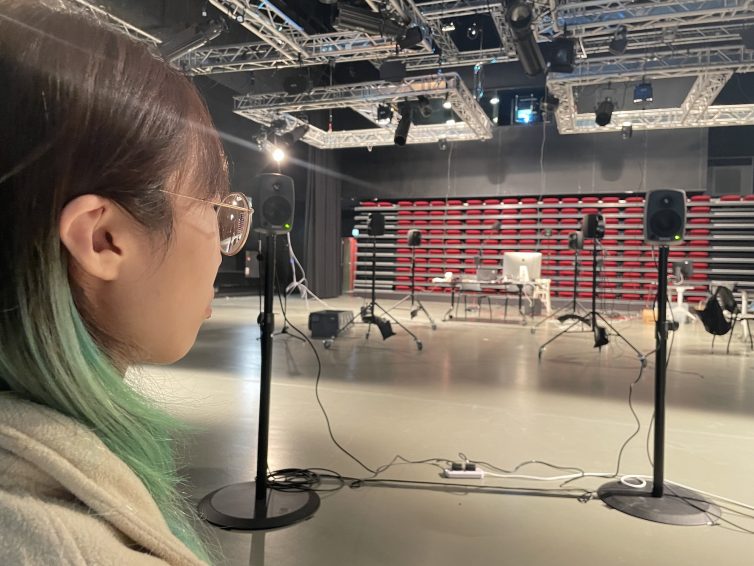
PerMagnus Lindborg is a composer, sound artist, and researcher in sound perception with over 150 scholarly publications, compositions, and media artworks. Currently serving as Associate Professor at City University of Hong Kong's School of Creative Media, he teaches sound, music, research skills, and perception while coordinating research degrees. PhD: KTH Stockholm (2015) DEA: Paris (2003) IRCAM: Paris (1999) BMus: Oslo His research focuses on sound perception , sonification , spatial audio , multi-sensory environments , and data-driven art . He pioneered low-cost spatial audio solutions through the Open Ambisonics Toolkit and explores sensory heritage documentation via soundscapes and smellscape analysis in Hong Kong. Recent publications demonstrate trends in climate data sonification , neural audio processing , and immersive sound design . His work intersects computer music , psychoacoustics , and environmental art . Scientific Awards : Best New Director (World Film Carnival, Cannes Short Film Festival, ISA Awards - 2020) First Prize (Stavanger Symphony Orchestra Prize - 2002) Fellowships: The Arctic Circle (2023), SCM Team Research (2020-25), TBA The Current (2016) As principal investigator for Multi-Modal Hong Kong (GRF 2023-25) and Data Art for Climate Action (2020-23), he supervises PhD students in areas like multi-sensory cultural heritage , deep learning audio processing , and virtual reality sound design . He co-founded the SoundLab and DACA Conference .
Ulrich Neumerkel is an Assistant Professor in the Department of Compilers and Languages at Technische Universität Wien (TU Wien). He holds academic titles of Dipl.-Ing. (FH) and Dr.techn. His primary research focuses on programming languages, logic programming, and constraint programming, with significant contributions to Prolog optimization, garbage collection, and formal methods. He is also actively involved in educational initiatives, developing declarative programming tools and curricula. Neumerkel teaches courses such as Logic Programming and Constraints, Advanced Logic Programming, and Programming 2. He leads research in formal semantics of Prolog, constraint solver design, and memory management techniques. His work includes contributions to ISO/IEC Prolog standards and the development of tools like the Vienna Abstract Machine (VAM) and the GUPU environment for Prolog education. His research interests span compiler design, termination analysis, and program transformation. He has supervised students, including M. Seidl, on diploma theses related to virtual machine comparison and other topics. Neumerkel's affiliations include the Compilers and Languages group within TU Wien's Institute for Information Systems Engineering.
Uwe Gruenefeld is an active researcher at the University of Duisburg-Essen, Germany, with a strong affiliation with OFFIS - Institute for Information Technology in Oldenburg. His primary research focuses on Human-Computer Interaction, particularly in the domains of Augmented Reality, Virtual Reality, and Mixed Reality systems. As a key contributor to the field, he has published extensively in top-tier venues including CHI, UIST, and IEEE Transactions. Dr. Gruenefeld's research primarily investigates visual and haptic techniques for improving user interaction in immersive environments. His work spans across multiple application domains including health technology, educational systems, and robotics. He has made significant contributions to understanding how users interact with cross-reality systems, developing novel interaction techniques for AR/VR, and exploring behavioral biometrics for continuous authentication in immersive environments. His recent publications demonstrate a strong trend toward practical applications of AR/VR technology, with emphasis on user identification through movement patterns, improving physical activity engagement, and developing more intuitive interaction methods for complex tasks. The research consistently shows a human-centered approach with practical implementations that address real-world challenges in immersive computing. Dr. Gruenefeld actively collaborates with numerous researchers and appears to mentor several PhD and Master's students, evidenced by his frequent co-authorship with junior researchers on significant publications. His work is characterized by strong empirical validation through user studies and technical innovation in interaction techniques.
You Fang is a Professor at Tongji University's School of Art and Media, serving as PhD Supervisor in Design and Automotive Engineering. As Director of the Automotive Interaction Design Lab/User Experience Lab, they lead cutting-edge research in intelligent cognitive interaction, smart cockpit design, and embodied cognition applications. Their work bridges academia and industry through collaborations with Huawei, Baidu, and SAIC, while maintaining international partnerships with institutions in Germany, Australia, and Finland. PhD in Computer Software and Theory (Sun Yat-sen University, 2003) Master's in Computer Animation (Bradford University, 2005) Engineering Master's in Fashion Design (Northwest Institute of Textile Technology, 2000) Research focuses on three core areas: 1. Cognitive Interaction Design for autonomous vehicles, 2. Hybrid Spatial Information systems integrating physical and virtual environments, and 3. Art Therapy Applications using traditional movement cognition. Their work spans from theoretical studies in cognitive science to practical implementations in commercial automotive systems. Recent publications reveal a strong emphasis on AR-HUD interface optimization (7/15 papers), human-vehicle collaboration (4/15), and multimodal interaction (5/15). Key themes include driver trust assessment, spatial perception modeling, and non-verbal communication mechanisms in intelligent transportation. Scientific Recognition : 2022 Chinese Cultural and Tourism Government Award 2021 Tongji Yucai Award (2nd Prize) Multiple Ministry of Education Technology Progress Awards 27 invention patents (2017-2022) As educational innovator, they developed the award-winning Interaction Design: Design Thinking and Practice textbook adopted by 10+ Chinese universities, and pioneered digital education sandboxes for interactive design pedagogy.




.jpg)