Michael Riegler is a Researcher at the AI Department, Simula Research Laboratory , focusing on interdisciplinary applications of Artificial Intelligence in healthcare, sports analytics, and multimedia systems. His work bridges Machine Learning , AI Alignment , and Applied AI across clinical and real-world domains. Key Affiliations: Simula Research Laboratory (AI Department Head) Research Themes: Explainable AI in medicine, multimodal data analysis, and AI-driven health monitoring Research Interests include: Developing AI/ML algorithms for medical imaging (e.g., polyp detection, embryo analysis) Addressing missing data challenges in healthcare through novel imputation techniques Creating multimodal virtual avatars for investigative interview training Designing edge AI systems for sports analytics and sustainable fishing Recent Publications highlight collaborations with institutions in Norway and globally, with a focus on: Medical Applications: Polyp segmentation, ECG analysis, and explainable models for disease detection Sports Analytics: Athlete performance prediction and soccer video processing Data Infrastructure: Lifelogging datasets (ScopeSense), semantic representation frameworks Labs & Teams include leadership in Simula’s AI Department and participation in projects like Medico Multimedia Task , ImageCLEF , and MediaEval workshops. His work emphasizes responsible AI innovation in public sectors and privacy-preserving systems for edge environments.
Dr. Jing Li is an Associate Professor and Eduardo D. Glandt Faculty Fellow at the University of Pennsylvania , holding dual appointments in the Electrical and Systems Engineering and Computer and Information Science departments. As co-director of the CyberSavvy nationwide security research center and director of the Penn Computational Intelligence Lab (PennCIL) , she pioneers innovations in non-von Neumann computing paradigms. Her research spans post-CMOS technologies, in-memory computing, and hardware-software co-design for security and AI applications. PhD in Computer Engineering, Purdue University (2009) BSc in Electrical Engineering, Shanghai Jiaotong University (2004) Research Focus: Dr. Li's work addresses fundamental challenges in computer systems across the stack. Key areas include: In-Memory Computing: Liquid Silicon architecture combining RRAM with silicon CMOS through monolithic 3D integration Security Engineering: Transforming computer security from "Art" to formal "Engineering" discipline within CyberSavvy Virtualization: Cloud FPGA abstraction layers decoupling compilation from runtime resource management Graph Analytics: Degree-aware optimization techniques for massive-scale graph processing Deep Learning Systems: Roofline model extensions for FPGA-based CNN acceleration Scientific Impact: Awarded DARPA Young Faculty Award , NSF CAREER Award , and IBM CEO Milestone Award , her team has achieved world records in energy-efficient computing (ENIAD supercomputer). With 46 U.S. patents and over 80 publications, she leads ecosystem development for emerging computing architectures through initiatives like the open-source MEG simulation platform . Community Leadership: Dr. Li serves on program committees for flagship conferences ( ISCA , FPGA Symposium ), chairs the International Memory Workshop , and contributes to the MLsys conference's inaugural committee. She actively mentors through multiple PhD openings and industry collaborations.
Ki-Woong Park is a tenure-track full Professor in the Department of Computer and Information Security at Sejong University. He leads the System Security and Computer Engineering Research (SysCore) Lab, which focuses on system security research with numerous ongoing projects funded by major Korean research institutions including IITP, NRF, and KRIT. Sejong University, Department of Computer and Information Security System Security and Computer Engineering Research (SysCore) Lab Leader Member of IEEE, IEEE Computer Society, and ACM Education: Ph.D. in Electrical Engineering & Computer Science, KAIST (Advisor: Prof. Kyu-Ho Park) M.S. in Electrical Engineering & Computer Science, KAIST (Advisor: Prof. Kyu-Ho Park) B.S. in Computer Science, Yonsei University (Summa Cum Laude) Exchange Student at University of California, Los Angeles (UCLA) Professor Park's research focuses on designing, building, and analyzing secure systems, particularly for cloud computing, networked systems, and embedded systems. His work often involves reevaluating existing security mechanisms and actual system implementations with subsequent evaluation in real computing environments. He has made significant contributions to areas including cloud security, IoT security, ransomware detection, moving target defense, and metaverse security. His research approach emphasizes both theoretical foundations and practical implementation, with numerous publications in top-tier security and systems venues. His recent publications (2023-2024) demonstrate a strong focus on emerging security challenges in modern computing environments, particularly in metaverse platforms, UAV systems, and edge computing. These works span both theoretical security frameworks and practical implementations, with an emphasis on visualization techniques, hardware-based security mechanisms, and AI-enhanced security analysis. His research shows a clear progression from traditional cloud and network security toward next-generation security challenges in immersive virtual environments and cyber-physical systems. Scientific Awards: Microsoft Research Fellowship (2009-2010) Best Poster Gold Award at WISA 2020 Best Paper Award at MobiSec'18 Professor Park actively mentors numerous graduate and undergraduate students through the SysCore Lab, with current members including Ph.D. students, MS students, and undergraduate researchers. His research is supported by multiple significant grants, including the NRF Outstanding Researcher-Mid-career Researcher project, IITP Information Security Core Source Technology Development, and Defense Technology Advancement Research Institute projects. These grants total tens of billions of Korean won and address critical national security challenges in cyber defense, cloud security, and metaverse technologies. The SysCore Lab, under Professor Park's leadership, maintains a strong industry and government collaboration network, with part-time researchers from organizations including Hyundai Duty Free, Astron Security, Korea University, and various military cyber commands. This unique structure enables the lab to address both theoretical security challenges and practical implementation issues in real-world systems.
C. S. George Lee is a Professor of Electrical and Computer Engineering at Purdue University's Elmore Family School of Electrical and Computer Engineering, located in West Lafayette. His research focuses on Robotics, Transfer Learning, Neuro-fuzzy Systems, Automatic Controls, and Computer Engineering. He holds a BSEE (1973), MSEE (1974) from Washington State University, and a PhD (1978) from Purdue University. His work integrates computational intelligence with AI, robotics, and education technology, emphasizing human-machine co-learning models and bilingual systems. His contributions span domains like quantum computing, generative AI, and knowledge graph applications. He leads the Art Lab at Purdue and has published extensively on topics ranging from humanoid robotics to cross-cultural educational platforms. His research areas include developing intelligent agents for edutainment, robotic assistants for student learning, and advanced machine learning techniques. Notable trends in his publications involve computational intelligence applied to bilingual language models (e.g., Taiwanese/English co-learning), quantum-based AI systems, and human-centric robotics. He has explored applications in healthcare (e.g., blood donor analysis), autonomous navigation, and game AI (e.g., Go). His work often bridges theoretical advancements with real-world implementations, such as Java software tools for motor activity assessment (JKinect) and AI-driven platforms for skill evaluation. Lee's research emphasizes interdisciplinary collaboration, with contributions to IEEE conferences and cross-institutional projects. His lab develops tools for adaptive e-learning, robotic task performance evaluation, and human pose estimation using neural networks. Despite prolific publishing, no specific grants or awards are explicitly mentioned in the provided text. His work continues to explore the intersection of human intelligence and smart machines through platforms like Metaverse integration and BCI (Brain-Computer Interface) applications.
Christian Rossow is Faculty at CISPA – Helmholtz Center for Information Security in Dortmund, Germany, where he leads the System Security research group. He holds dual academic appointments as a professor in the Computer Science department at Saarland University and as an honorary professor at TU Dortmund University. His research spans systems, software, and network security, with a focus on cyber attacks, defenses, and privacy. Research Interests: His primary research areas include software and system security (e.g., exploitation techniques, compiler-assisted defenses, AI-assisted (in)security), network security (e.g., DDoS mitigation, attack attribution, traffic analysis), and cybercrime (e.g., malware analysis, data-driven studies). He emphasizes foundational research with practical applications. Publication Trends: His recent work (2023–2025) shows a strong focus on microarchitectural attacks (e.g., cache side-channels, prefetcher analysis), browser and web security (e.g., sandbox escapes, CSS fingerprinting), network protocol vulnerabilities (e.g., TCP spoofing, infinite loops), and applied cryptography (e.g., ISA extensions for key management). His research consistently targets top-tier venues like IEEE S&P, USENIX Security, ACM CCS, and NDSS. Distinguished Paper Award at IEEE EuroS&P 2021 Best Student Paper Award at MIT Spam Conference 2010 Advising and Grants: He actively supervises PhD students and postdoctoral researchers, with alumni placed in industry (NVIDIA, Crowdstrike, Continental) and academia. His research is supported by major grants including EU H2020 SISSDEN, BMBF-funded BOB, DFG-funded anonymous communication, and RAMSES. He regularly serves in leadership roles in the community, including PC Chair for RAID 2022/2023 and USENIX WOOT 2018, and Track Chair for ACM CCS 2026. Labs and Teams: He leads the System Security research group at CISPA, a world-leading institution for security and privacy. The group comprises talented full-time researchers and focuses on cutting-edge research with strong individual supervision and worldwide collaborations.
Jeanna Matthews is a Full Professor of Computer Science at Clarkson University and an affiliate at Data and Society. She holds a PhD from UC Berkeley (1999) and teaches courses ranging from operating systems to cybersecurity. Her research focuses on algorithmic transparency, AI ethics, and societal impacts of automated systems. Matthews is a prominent ACM leader, serving on multiple committees including the Technology Policy Subcommittee on AI Accountability. She has pioneered work on forensic software analysis in criminal justice systems and delivered DEF CON presentations on virtualization security and adversarial testing. Awards include ACM Distinguished Speaker and Fulbright Specialist roles. Her work emphasizes open-source tools and critical thinking in education, extending to global service learning programs in the Dominican Republic and Brazil. Education: PhD in Computer Science (UC Berkeley, 1999), B.S. in Math/Computer Science (Ohio State, 1994), B.A. in Spanish (SUNY Potsdam, 2016). Research Interests: Cybersecurity vulnerabilities, algorithmic accountability frameworks, automated decision systems in justice contexts, and ethical AI design. Recent projects include investigating bias in DNA forensic software through a Brown Institute grant and analyzing political polarization on social platforms. Awards & Recognition: ACM Distinguished Speaker (2018-present) Fulbright Specialist (2018-present) 2018-2019 Brown Institute Magic Grant ACM SIGOPS Chair (2011-2015) ACM Special Interest Group Governing Board Chair (2016-2018) Teaching & Outreach: Designed courses integrating open-source tools and critical inquiry, including abroad programs in Mexico, Brazil, and the Dominican Republic. Advocates for lifelong learning strategies and questioning underlying assumptions in computing systems. Key Projects: Forensic Software Accountability: Examining discrepancies in DNA analysis tools Algorithmic Transparency: Frameworks for auditing automated systems Cybersecurity Education: Adversarial testing methodologies for justice software
Conrad Watt is an Assistant Professor at Nanyang Technological University (NTU), Singapore , specializing in WebAssembly, formal verification, and concurrency. He previously served as a Research Fellow at Peterhouse, University of Cambridge, and earned his PhD under Peter Sewell. Co-chair of the W3C WebAssembly Community Group Active in WebAssembly standards development, including concurrency specifications Developed mechanizations in theorem provers like Isabelle/HOL Collaborator with industry (wasmtime engine) and academic teams on verification tools Research Focus: Formal verification of low-level languages, concurrency models, and security mechanisms for WebAssembly. His work bridges theoretical rigor with practical applications, including WasmRef-Isabelle and threads projects. Recent Trends: 2025 publications explore separation logic automation and concurrency experiments, while 2024-2023 work emphasizes specification toolchains (SpecTec), verified interpreters, and memory-safe execution techniques. Scientific Awards ACM Doctoral Dissertation Award Honorable Mention EAPLS Best Dissertation Award Advising: Supervises PhD students Qiyuan Xu and Antanas Kalkauskas. Collaborates with researchers like Philippa Gardner and Jean Pichon-Pharabod.
Timothy Rogers is an Associate Professor in the Department of Electrical and Computer Engineering at Purdue University, located in West Lafayette. His research focuses on GPU architecture, parallel processing, and simulation frameworks, with particular emphasis on optimizing hardware acceleration, memory systems, and concurrency management. He holds an office at BHEE 326A and can be reached at timrogers@purdue.edu. His work spans GPU performance modeling, SIMT architecture analysis, and energy-efficient computing. Recent contributions include frameworks like ThreadFuser for MIMD program analysis, CRISP for concurrent rendering, and Simr for data center microservices. He has also contributed to hardware ray tracing units and RISC-V core integration studies. Rogers has been active in conference leadership, serving as General Chair for ISPASS 2024 and securing NSF travel grants for student participation. His research bridges theoretical architecture design with practical implementation, addressing challenges in modern massively parallel systems.
Gang (Gary) Tan is a Professor at the Pennsylvania State University's College of Engineering, specializing in computer security, formal methods, and programming languages. He co-directs the Institute for Networking and Security Research (INSR) and leads the Security of Software (SOS) Group, focusing on compiler, programming language, and formal method techniques to enhance computer security. Education: B.E. in Computer Science from Tsinghua University Ph.D. in Computer Science from Princeton University His research integrates formal verification with practical security applications, particularly emphasizing: Compiler-based security enforcement Side-channel mitigation in speculative execution Fairness analysis in machine learning systems Formal grammar approaches for software reliability Key article trends show: Security-focused formal methods (15% of publications) ML fairness verification (20% of recent work) Compiler-based security solutions (30% of output) Side-channel defense mechanisms (25% of research) Parser design and formal grammar synthesis (10% of contributions) Scientific achievements include: NSF CAREER Award Google Research Awards (2x) PLDI 2024 Best Paper James F. Will Career Development Professorship Outstanding Research Award at Penn State Ruth and Joel Spira Excellence in Teaching Award Dr. Tan actively contributes to academic communities through: DARPA ISAT study group membership Program committee roles (CGO 2024, ECOOP 2018, etc) Leadership in security research initiatives
Dr. Mary Lacity is a Distinguished Professor of Information Systems at the Sam M. Walton College of Business, University of Arkansas, and holds the David D. Glass Endowed Chair. She is also a Visiting Professor at the London School of Economics for Spring 2025. Director of Walton College’s Blockchain Center of Excellence (2014-2019) Former Curators’ Distinguished Professor at University of Missouri Holds visiting positions at MIT, Washington University, and Oxford University Senior Editor for MIS Quarterly Executive Contributing Editor for Journal of the British Blockchain Association Her research focuses on enterprise adoption of emerging technologies, particularly blockchain, metaverse, service automation, and ethical technology use. She has conducted extensive case studies and surveys on automation and Web3 implementation across hundreds of organizations globally. Recent publications include books like Human Privacy in Virtual and Physical Worlds (2024) and Blockchain Fundamentals for the Web 3.0 (2022). She has over 30 books and 26,300 Google Scholar citations (h-index: 68). 2014: Inducted into IAOP’s Outsourcing Hall of Fame 2024: Recognized as top 2% scholar in Business and Management (Stanford) 2024: Top 1% scholar in Business and Management (ScholarGPS) Fellow of the Association of Information Systems She actively contributes to blockchain standards via the Global Standards Mapping Initiative (GSMI) of the Global Blockchain Business Council and the Linux Foundation’s Trust over IP (ToIP). Her work bridges academic research and practical applications in enterprise technology adoption.
Professor Albert Cheng is a faculty member in the Department of Computer Science at the University of Houston. His research focuses on real-time systems, cyber-physical systems, smart cities, and embedded systems with societal impacts. He has authored over 270 publications and a textbook on real-time systems. Cheng holds roles as an Associate Editor for the IEEE Transactions on Knowledge and Data Engineering and ACM Computing Surveys. His research interests span real-time scheduling, machine learning applications, and systems optimization. Recent work includes vehicular traffic modeling for epidemiological risk reduction, quantum computing response time analysis, and satellite mission planning. Awards include Fulbright Specialist, Distinguished ACM membership, and IEEE Senior Member status. Cheng’s articles demonstrate expertise in real-time scheduling algorithms, cyber-physical systems development, and smart city infrastructure. His contributions bridge theoretical computer science with practical implementations in transportation, healthcare, and aerospace domains. Ongoing efforts include fault-tolerant systems, energy-efficient scheduling, and CPS education initiatives. Awards: Fulbright Specialist, ACM Distinguished Member, IEEE Senior Member, Institute of Physics Fellow Labs/Teams: Hewlett Packard Enterprise Data Science Institute (HPE DSI), Research Computing Data Core (RCDC)
Wang Jianmin serves as Professor and Doctoral Supervisor at Tongji University's School of Art and Media, concurrently holding the position of Vice Dean since 2014. With a computer science PhD from Sun Yat-sen University, he bridges engineering and media arts through pioneering research in intelligent communication systems and digital media interfaces. His work focuses on human-centered design for emerging technologies, particularly in automotive and virtual environments. His academic foundation includes: PhD in Engineering (Computer Software and Theory), Sun Yat-sen University (2003) Master's in Computational Mathematics, Sun Yat-sen University (1999) Bachelor's in Computational Mathematics, Nankai University (1996) Professor Wang's research centers on intelligent communication systems and digital media art, with significant contributions to automotive human-machine interfaces (HMI), virtual reality applications, and user experience methodologies. His investigations into driver-robot transparency, augmented reality navigation, and mixed-reality educational platforms demonstrate interdisciplinary innovation connecting computer science, cognitive psychology, and design theory. Current projects explore AI-driven media systems for urban environments and safety-critical interaction frameworks. Analysis of his recent publications reveals a cohesive research trajectory focusing on automotive HMI (40% of output), human-robot interaction (30%), and mixed reality applications (30%). His work consistently emphasizes experimental validation through driving simulators and user studies, yielding practical design guidelines for industry implementation. The interdisciplinary nature spans computer science, cognitive ergonomics, and media studies, with increasing emphasis on AI integration in communication systems. His scientific recognition includes national and provincial awards for innovation in human-computer interaction and educational technology: 2019 China Industry-University-Research Innovation Award for automotive HMI systems 2020 China User Experience Alliance Excellence Award 2012 Guangdong Dingying Science and Technology Award Multiple national/provincial science progress awards (2001-2009) 2020 Tongji University Teaching Achievement Award for curriculum development As an educator, Professor Wang mentors graduate students in national design competitions including the 'Core Cup' Future Automotive HMI Challenge and International User Experience Innovation Competition. His research program is supported by substantial funding from diverse sources: National Grants: National Natural Science Foundation projects on driver behavior modeling and cognitive testing Ministry of Education: 15+产学合作 projects for virtual simulation labs and curriculum development Shanghai Municipal: Publicity Department funding for smart city media research Industry Partnerships: Huawei (intelligent vehicle HMI), SAIC Motor (AR-HUD design), and automotive electronics firms He directs Tongji's Media Experiment and Practice Teaching Center and the All-Media Research Institute, leading teams developing virtual simulation platforms for emergency news reporting, intelligent vehicle interaction testing systems, and mixed reality educational tools. Current initiatives focus on AI-enhanced media art for urban applications and next-generation HMI frameworks for autonomous mobility solutions.
Dr. Joyoung Lee is an Associate Professor in the Department of Civil and Environmental Engineering at New Jersey Institute of Technology (NJIT). He previously served as Laboratory Manager at the Federal Highway Administration's Saxton Transportation Operations Laboratory. His research focuses on Connected Vehicle (CV) systems, including applications in traffic management, signal control optimization, and autonomous vehicle infrastructure integration. Dr. Lee holds a Ph.D. (2010) and M.S. (2007) in Transportation Engineering from the University of Virginia, and a B.S. (2000) in Transportation Engineering from Hanyang University. His work emphasizes CV-based solutions for real-time traffic systems, cooperative vehicle-infrastructure systems (CVIS), and autonomous vehicle integration. Notable achievements include the 2019 IEEE CAVS Best Paper Award and multiple best paper recognitions from PTV User Group Meetings. His research also addresses traffic safety through innovations like the Virtual Guide Dog system for visually impaired pedestrians and advanced traffic monitoring frameworks using LiDAR and computer vision. Education: Ph.D., Transportation Engineering, University of Virginia (2010) M.S., Transportation Engineering, University of Virginia (2007) B.S., Transportation Engineering, Hanyang University (2000) Dr. Lee's research interests span smart city infrastructure, edge computing for traffic systems, and sustainable transportation solutions. He has pioneered algorithms for cooperative intersection management, automated platooning systems, and federated learning-based traffic optimization. His work bridges theoretical models with real-world implementation through partnerships with FHWA and industry stakeholders. Key contributions include development of the Cumulative Travel-Time Responsive (CTR) traffic signal control system, smart arrival notification systems for paratransit services, and advanced microsimulation calibration techniques. His lab focuses on translating CV data into actionable strategies for safer, more efficient transportation networks. Awards: IEEE CAVS Best Paper Award (2019) ASCE Grand Challenge Innovation Contest Honorable Mention (2017) PTV VISSIM Best Paper Awards (2012, 2008) Excellence in Research Award (University of Virginia, 2011) Ongoing projects include semi-decentralized graph neural networks for traffic forecasting and low-cost LiDAR-based traffic monitoring systems. His work addresses critical challenges in autonomous vehicle integration, incident management, and infrastructure resilience through interdisciplinary collaborations.
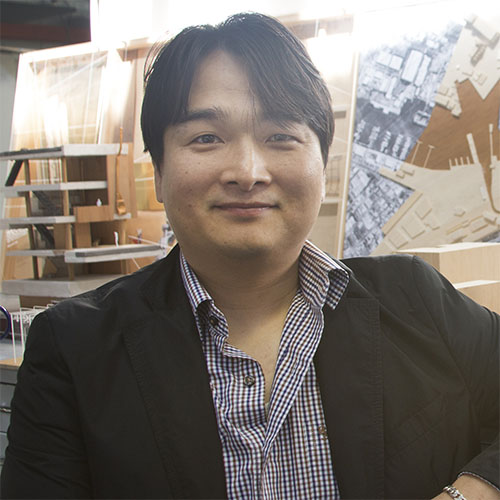
JuHyun Lee is an Associate Professor of Architecture and Computational Design in the School of Built Environment at the Faculty of Arts, Design and Architecture (ADA), University of New South Wales (UNSW) Sydney, where they also hold the prestigious title of Scientia Academic. With a professional background in architecture and construction (1998-2002), they have held academic positions across Australia including a five-year post-doctoral fellowship at the University of Newcastle (2012-2017) and a senior research fellowship at the University of South Australia (2018), following earlier research and teaching roles in South Korea (2003-2011). Lee specializes in architectural design computing, design cognition, and urban complexity, integrating computational methods, cognitive science, and architectural theory to advance architectural intelligence and human-centered design. Their research spans architectural visualization, analysis and design methods, algorithm/protocol design, and data visualization with computational approaches. They have established a strong research program examining the intersection of language, culture, and design cognition, particularly focusing on cross-cultural design communication between Australia and Korea. Lee's recent publications demonstrate a clear trajectory toward increasingly sophisticated integration of computational methods with architectural design theory, particularly in the areas of shape grammar, space syntax, and machine learning applications. Their work shows consistent focus on practical applications of computational design methods to real-world architectural problems, with growing emphasis on cross-cultural collaboration and intelligent design systems. The research portfolio reveals a deepening engagement with AI and machine learning techniques applied to architectural design assessment and generation. Scientia Academic at UNSW Sydney Associate Fellow of the Higher Education Academy (AFHEA, 2020) As an educator, Lee develops cutting-edge courses in computational design and Building Information Modeling (BIM), integrating experiential learning and industry engagement. They have secured over $11 million in research funding, including multiple ARC Discovery Projects and an Australia-Korea Foundation grant. Lee co-directs the Advanced Architectural Analytics Laboratory (A 3 LAB), leading interdisciplinary research on design automation, spatial analysis, and machine learning applications in architecture, while also leading cross-cultural initiatives like the Australia-Korea Architects' Network (AKAN). Lee supervises multiple HDR students working on culturally sustainable urban design, socio-spatial patterns in public housing, and computational layout generation. Their research has significant implications for improving design communication across cultural boundaries and developing more coherent, clear, and accessible built environments through computational design approaches.
Björn Ross is a Lecturer in Computational Social Science at the University of Edinburgh's School of Informatics, where he is affiliated with the Institute for Language, Cognition and Computation. He serves as Director of the SMASH research group and is part of the management team for the Centre for Doctoral Training in Natural Language Processing (CDT in NLP). His educational background includes: PhD (2019) from the University of Duisburg-Essen MSc in Computer Science (2016) from the University of Münster Exchange year (2014-2015) at the University of Strasbourg BSc in Information Systems (2013) from the University of Münster Ross's research focuses on computational social science, particularly using natural language processing, social network analysis, and agent-based modeling to study social media phenomena. His work examines misinformation, hate speech, bot activity, and the ethical implications of computational methods. He also investigates how social media can be leveraged for social good, especially in crisis communication contexts. A significant portion of his recent research addresses bias and fairness issues in AI systems, particularly regarding marginalized communities and LGBTQ+ identities. His work spans both technical development of computational methods and critical examination of their societal impacts. Analysis of his recent publications reveals a strong trend toward examining bias in AI systems, particularly regarding marginalized communities. His work spans multiple methodologies including computational analysis of social media data, development of NLP techniques, and critical examination of AI ethics. He frequently collaborates across disciplines, working with researchers in computer science, social sciences, and healthcare domains. His professional recognition includes: Best Paper Award at the Hawaii International Conference on System Sciences (HICSS) in 2018 Associate Editor for Business & Information Systems Engineering Active membership in professional organizations including AIS, ACL, and ACM Ross currently supervises multiple PhD students including Agostina Calabrese, Eddie Ungless, Sandrine Chausson, Wendy Zheng, Seraphina Goldfarb-Tarrant, and Mahmoud Ibrahim. At the University of Edinburgh, he teaches courses such as 'Text Technologies for Data Science' and 'Evidence, Argument and Persuasion in a Digital Age,' reflecting his expertise at the intersection of computational methods and social implications.