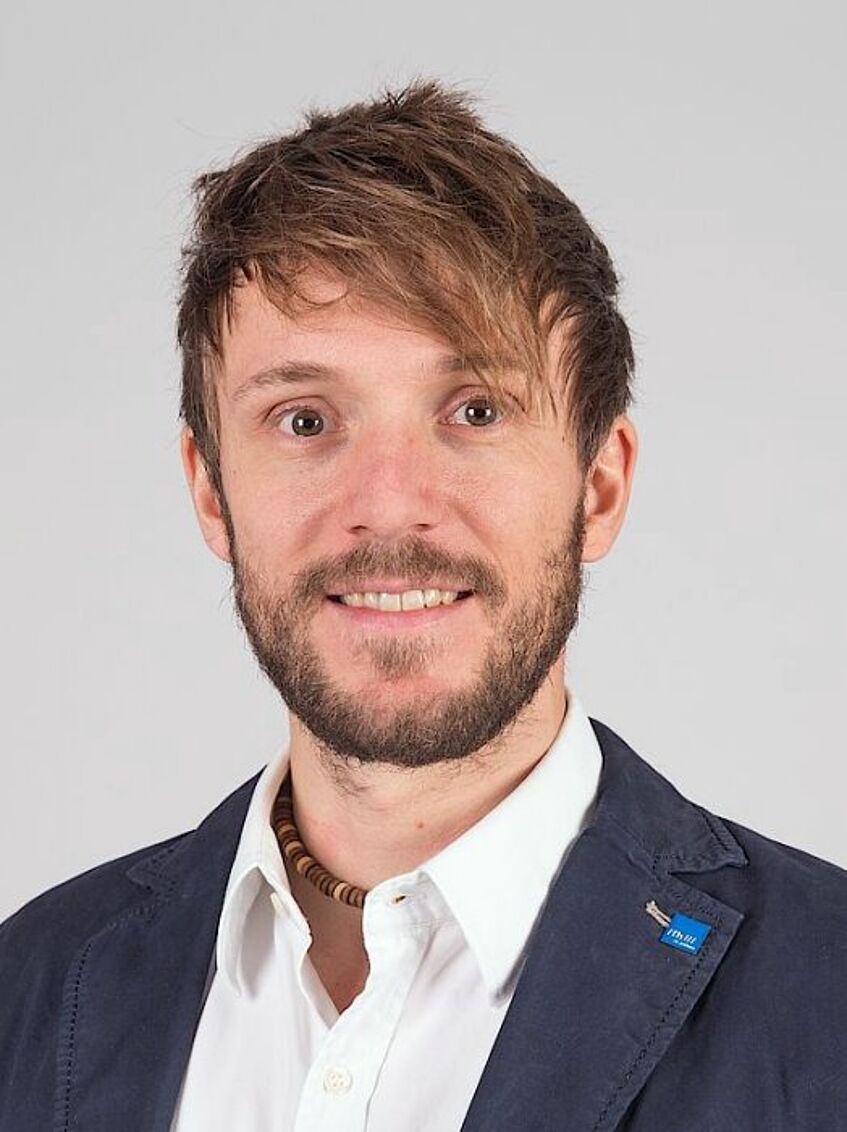
Dr. Tegwen Malik, a Senior Lecturer at Swansea University's School of Management and Senior Fellow of the Higher Education Academy (SFHEA), bridges artificial intelligence research with biomimetic innovations. Her multifaceted roles include Deputy Programme Director for MSc Management, Director of Education and Content at the i-Lab Research Centre, and leadership in the "Global and Social Challenges" theme. Senior Lecturer, School of Management (since 2022) Deputy Director, MSc Management Programme Director of Education, i-Lab Research Centre UKAT Recognised Practitioner in Advising Her research explores Artificial Intelligence applications across sectors, particularly in higher education, and biomimicry innovations for water management in arid regions. Collaborative work spans engineering (Welsh Centre for Printing and Coating), medicine, and management, with external partnerships at Lifescaped, MIT, and ESPCI. Recent publications analyze agentic AI systems , generative AI impacts , and bioinspired water collection mechanisms. The 2023 I3E Conference awarded her for transformative AI research in education. Best Research Paper Award, I3E 2023 Brazil Co-PI on international projects (Lifescaped, MIT, ESPCI) Supervisor for 4 active PhD students Editorial reviewer for Government Information Quarterly and Information & Organisation Dr. Malik also investigates digital marketing adoption , operations management , and international standards , with practical experience in product commercialization and transnational projects. Her teaching focuses on mathematics and analytics for business , reaching over 600 MSc Management students annually.
Diego Fernandez Prado is a Researcher at the Chair of Media Technology, Technical University of Munich (TUM). He earned a B.Sc. in Physics from the University of Santiago de Compostela (2018) and an M.Sc. in Applied and Engineering Physics from TUM (2021). Since March 2021, he has pursued doctoral research in Robotics and Machine Intelligence. His research intersects Machine Learning , Computer Vision , and Teleoperation , with a focus on Reinforcement Learning for virtual fixture estimation Digital Twin environments Haptic data applications in bandwidth-limited systems Time-domain passivity control . Recent publications highlight his work in Robotics and Artificial Intelligence , particularly in teleoperation , virtual fixtures , and human-robot interaction . His articles analyze reinforcement learning integration, haptic codec optimization, and semantic segmentation for robotic tasks.
Johannes Schöning is a Professor of Human-Computer Interaction at the University of St. Gallen, where he leads a research group focused on developing novel user interfaces that empower individuals and communities with data-driven decision capabilities. His work bridges rapidly advancing technologies with human needs across diverse contexts including geographic information science, public health, medical applications, and extreme environments such as space missions. He publishes extensively at premier HCI venues including ACM CHI, MobileHCI, and DIS, as well as in interdisciplinary journals like NATURE and PLOS ONE. Professor Schöning's research interests center on understanding the interplay between technology and human activities through rigorous methods from AI, computer graphics, and cognitive psychology. His work emphasizes user-centered design methodologies and mixed methods approaches to create interfaces that fit both technological possibilities and human requirements. Key focus areas include virtual and augmented reality applications, accessibility solutions, navigation technologies, and the social implications of digital interfaces in everyday life. His research mission prioritizes theoretical and practice-based inquiry to develop disruptive solutions for real-world problems. Analysis of his recent publications reveals strong trends in virtual reality applications for emotional regulation and accessibility, with increasing emphasis on generative AI integration, environmental awareness, and space-related HCI challenges. His work consistently demonstrates interdisciplinary collaboration across computer science, psychology, geography, and medical fields, with publications showing growing interest in social implications of technology, particularly regarding navigation systems and their externalities. His scientific contributions have been recognized with numerous awards including: Best Presentation Award at IEEE VR 2023 Best Paper Award & Accessibility Award at Interact 2019 10 Year Impact Award 2021 Multiple Honorable Mention Awards at top conferences Professor Schöning actively mentors students across bachelor, master, and PhD levels, with his lab seeking candidates interested in the intersection of HCI, geoinformatics, and ubiquitous computing technologies. He emphasizes creating a 'detox-free academic environment' that focuses on meaningful teaching and research outcomes rather than academic pressures. His group frequently collaborates with international researchers and institutions on projects spanning medical applications, space exploration interfaces, and public health technologies. The research laboratory led by Professor Schöning maintains strong interdisciplinary connections across multiple domains. Current projects include developing AI-powered wearables for blind and low vision users, exploring VR applications for emotional regulation, investigating navigation technologies' social impacts, and creating interfaces for space mission contexts. The lab's work on CubeSat control software and plant visualization for space greenhouses demonstrates their unique focus on extreme environment applications, while their research on citizen participation through generative AI shows engagement with contemporary societal challenges.
Dr. Amber Dumford is a Professor at the University of South Florida in the College of Education , specializing in Higher Education and College Student Affairs . She holds a Ph.D. in Higher Education (with a cognate in Sociology) from Pennsylvania State University , a M.P.A. from Indiana University Bloomington , and a B.S. in Mathematics from the same institution. Teaches courses in Student Affairs Assessment, College Teaching, and Globalization in Higher Education Currently serves on doctoral dissertation committees Active in research on student engagement, gender issues, and data quality in higher education Reviews for 20+ peer-reviewed journals and serves on editorial boards of top journals Consultant for National Center for Educational Statistics and institutions in US/Canada Research Interests include: Factors influencing student engagement and learning Gender disparities in higher education Arts and engineering education outcomes Creativity in academic settings Quantitative reasoning and assessment Data quality in educational research Food insecurity among diverse college students Publications reflect trends in student engagement , career readiness , data-driven educational practices , and equity in higher education . Her recent works focus on socioecological factors affecting food pantry usage and validity of survey instruments in measuring student behaviors. Service Contributions : Active member of university committees and councils Board member of Research in Higher Education and Journal of College Student Development Statistical modeling consultant for National Center for Educational Statistics Teaching Experience spans traditional mathematics instruction (2002-2014) to higher education seminars and globalization studies at USF. She plans to develop data analytics and institutional research courses.
Brach Poston, Ph.D., is an Associate Professor in the Department of Kinesiology and Nutrition Sciences at the University of Nevada, Las Vegas. He holds a Ph.D. in Integrative Physiology from the University of Colorado-Boulder, a Master’s in Exercise Physiology from UNLV, and a Bachelor’s in Physical Education from Missouri State University. Certified by the National Strength and Conditioning Association, his work bridges clinical research with practical applications. Ph.D., Integrative Physiology - University of Colorado-Boulder M.S., Exercise Physiology - University of Nevada, Las Vegas B.S., Physical Education - Missouri State University Poston’s research focuses on non-invasive brain stimulation techniques (tDCS, TMS) for motor skill enhancement across populations including Parkinson’s patients, aging adults, and young athletes. His work examines strength training adaptations, muscle fatigue mechanisms, and cognitive-motor interactions in neurodegenerative conditions. Current projects explore neurostimulation’s role in dexterous motor tasks and fatigue resistance. Recent publications highlight tDCS applications for videogame-based motor training, cortical excitability dynamics, and neurocognitive processes in online radicalization. His studies combine electrophysiological measures with behavioral outcomes across multiple populations. NIH and Michael J. Fox Foundation grants support his Parkinson’s research. Postdoctoral research fellowship at the National Institutes of Health Editorial board member: Journal of Functional Morphology and Kinesiology Grant review panelist: NASA Human Performance
Professor Kristian Bankov holds a Doctor of Science (DSc) in Semiotics from New Bulgarian University (2023). He serves as Professor in the Southeast European Center for Semiotic Studies at NBU. Director of Southeast European Center for Semiotic Studies since 2007 General Secretary of International Association for Semiotic Studies (2014-2024) Vice-Rector for International Affairs and Public Relations at NBU (2011-2012) Chief Organizer of the annual Early Fall School of Semiotics since 2006 His research spans multiple dimensions of semiotics: Continental philosophy of language and Bergson's philosophy Sociosemiotics and identity studies Consumer society and digital culture Artificial intelligence and new media Semiotics of economic transactions Digital education and technological transformation Recent publications focus on digital culture, economic sign systems, and digital transformation with particular attention to: Digital semiosphere and platfospheres Monetary semiotics and digital currencies Social media analysis and consumer rituals Trust systems and digital experience economy Identity formation in post-truth environments Audiovisual translation in digital culture
Dr. Servet Altan serves as Assistant Professor in the Department of Guidance and Psychological Counseling at MEF University's Faculty of Education in Istanbul, Turkey. Appointed in July 2022, he concurrently holds administrative roles as IBEC Coordinator and Vice Dean of the Faculty since September 2023. His academic foundation includes Master's and Doctorate degrees from Bilkent University, complemented by 15 years of K-12 international program implementation experience (2007-2022). Dr. Altan's research centers on students' motivation and engagement, Habits of Mind frameworks, diversity and inclusion practices, and international education systems. His scholarship appears in premier journals including the Journal of Teacher Education and Teaching and Teacher Education, reflecting his focus on practical applications in educational settings. As an International Baccalaureate Lead Educator since 2016, he actively trains teachers across national and international schools. Analysis of his 2022-2025 publications reveals three dominant research trajectories: (1) mindfulness applications for reducing test anxiety and enhancing academic achievement, (2) Habits of Mind integration in teacher development and emergency remote teaching contexts, and (3) equity-focused investigations into IB teacher preparation and student psychological needs. His work spans diverse educational environments from Turkish continuum schools to Latina/o/x community college settings, consistently addressing motivation, inclusivity, and international frameworks. Dr. Altan maintains active scholarly engagement through regular presentations at AERA and EARLI conferences. While specific student advisement details and grant information remain unreported in available sources, his leadership roles and publication record indicate significant contributions to educational psychology and international teaching practices.
Deepti Raghavan serves as Assistant Professor in Brown University's Department of Computer Science, specializing in operating systems, networking, and machine learning systems. Her research develops novel networked abstractions to optimize data movement in distributed applications through API redesign. Her educational background includes: PhD in Computer Science from Stanford University (2024) MEng in Computer Science from Massachusetts Institute of Technology (2018) BS in Computer Science from Massachusetts Institute of Technology (2017) Her research integrates systems infrastructure with machine learning workloads , focusing on performance-critical communication patterns. Key innovations include zero-copy serialization techniques and network orchestrators for compound AI systems, bridging theoretical advances with practical deployment in cloud environments. Publication trends (2018-2024) reveal consistent contributions to high-performance networking and ML systems, with increasing focus on AI infrastructure. Her work shows strong collaboration patterns with Stanford/MIT researchers and addresses fundamental challenges in data movement efficiency across distributed systems. Scientific recognition includes: National Science Foundation Graduate Research Fellowship (2019) Stanford School of Engineering Fellowship (2018-2019) Distinguished Artifact Award at SOSP 2023 Best Paper Award at Usenix ATC 2018 She actively recruits PhD students for her research group and teaches advanced systems courses including Cloud and Datacenter Operating Systems. Her research is supported by prestigious fellowships and likely NSF grants, with teaching responsibilities spanning graduate seminars and core undergraduate systems education. Her research group collaborates with Stanford's Systems Lab and MIT's CSAIL Networks group, maintaining strong ties to the Networks and Mobile Systems research community. Current projects focus on next-generation abstractions for AI-driven networked applications.
Ebru Gökdağ is a Professor at Anadolu University’s State Conservatory, Department of Stage Arts, since 2016. She earned her doctorate in Theatre from the University of Nebraska-Lincoln and has held academic positions at Anadolu University since 2002. Doctorate: University of Nebraska-Lincoln (1997-2002) Postgraduate: Texas A&M University-Commerce (1994-2000) Undergraduate: Anadolu University (1989-1993) Her research focuses on Theatre Studies , Gender Dynamics in Performing Arts , and Cultural Representation in Opera . She has explored Sexual Harassment Prevention in theatre environments and Traditional Rituals like Cem Ceremonies. Recent publications examine Opera Cross-Cultural Influence , Gender Equality in Turkish theatre, and Community-Based Performance techniques. She has also presented at conferences in Kazakhstan, Cyprus, and Slovenia. She has advised 8 theses on topics ranging from Augusto Boal’s Methods to Sexual Harassment in Performing Arts and Opera Analysis . She led projects like TÜBİTAK’s Cem Ceremonies Study and multiple Erasmus-funded initiatives. Her career spans roles as Head of Department (2017-2025) and board member in academic councils. She actively participates in international theatre festivals and conferences.
Steven Semken is a President's Professor of Geology and Education in the School of Earth and Space Exploration at Arizona State University. He holds additional affiliations as an Affiliated Faculty member with the Humanities for the Environment Global Network, the Global Drylands Center, the Osher Lifelong Learning Institute, the Global Futures Scientists and Scholars program, and the Division of Teacher Preparation at the Mary Lou Fulton College for Teaching and Learning Innovation. Dr. Semken earned his educational credentials from prestigious institutions: Certificate in Diné (Navajo) Educational Philosophy, Diné College, 1991 Ph.D., Materials Science (Ceramics), Massachusetts Institute of Technology, 1989 M.S., Geochemistry, University of California, Los Angeles, 1984 S.B., Earth and Planetary Science, Massachusetts Institute of Technology, 1980 As an ethnogeologist and geoscience-education researcher , Dr. Semken's work spans multiple interconnected domains that bridge scientific inquiry with cultural understanding. His primary research focuses on place-based and culturally responsive geoscience teaching methods, which he has developed through extensive fieldwork in geologically and culturally diverse regions of southwestern North America and Latin America. His research specifically investigates how sense of place influences geoscience learning, particularly among Indigenous and Latina/o communities, and how teaching approaches can be modified to honor cultural connections to land. This work extends to studying geological heritage and developing virtual field geology education experiences that maintain the pedagogical value of traditional fieldwork while increasing accessibility. His scholarship also encompasses the geological evolution of southwestern North America , which informs both his research and teaching practices. Analysis of Dr. Semken's recent publications reveals several key trends in his scholarly work. His research increasingly focuses on the integration of virtual and immersive technologies in geoscience education, particularly examining how virtual field experiences compare with traditional in-person fieldwork. There is also a strong emphasis on culturally responsive pedagogy , with numerous studies exploring how Indigenous knowledge systems can inform and enhance geoscience teaching. His work consistently bridges cognitive and affective domains of learning, recognizing that emotional connections to place are as important as intellectual understanding in geoscience education. Additionally, his scholarship demonstrates growing attention to issues of accessibility and inclusion in geoscience field education, developing methods to make geological field experiences available to students with diverse abilities. Dr. Semken's scientific achievements have been recognized with numerous prestigious awards: Fellow of the Geological Society of America Past-President and former Distinguished Speaker of the National Association of Geoscience Teachers ASU President's Professor (2025) 2014-2015 Zebulon Pearce Distinguished Teaching Award in Natural Sciences Highest awards for science teaching at Diné College in 1990, 1991, 1992, and 1995 Goodwin Medal (highest award for graduate teaching assistants at MIT) in 1985 Winner of the 2020 JGE Outstanding Paper Award from the National Association of Geoscience Teachers Winner of the 2015 Best Geologic Guidebook Award from the Geoscience Information Society Dr. Semken has been deeply involved in mentoring graduate students and early-career educators through numerous professional development workshops and research collaborations. He has co-organized and led over 20 educator professional-development workshops since 2009, focusing on place-based teaching, cultural context in geoscience education, and virtual field experiences. His grant-funded work includes collaborations with NASA, the American Geosciences Institute, and the EarthScope National Office, particularly supporting teacher leadership academies and workshops for Native American science educators. As a Principal Investigator and Co-PI on multiple NSF-funded projects, he has secured significant resources to advance research on the affective domain in geoscience education, place-based learning methodologies, and culturally responsive teaching approaches. Dr. Semken's research activities are supported by multiple collaborative teams and initiatives. He is associated with the Julie Ann Wrigley Global Futures Laboratory and is a Community Member of the Science Education Resource Center (SERC). His work on the "Trail of Time" at Grand Canyon National Park represents a significant public-facing educational initiative that combines geological time education with place-based interpretation. He has also developed the "Regional Geology of the Southwest" course as a living laboratory for place-based education research. His current research group includes graduate students working on projects related to virtual field experiences, ethnogeological knowledge systems, and cross-cultural science education. Through his leadership in the Earth Educators' Rendezvous and other professional networks, he has helped establish communities of practice focused on innovative geoscience teaching methods.
Shoji Makino is a Professor at Waseda University's Graduate School of Information, Production and Systems. He has held academic and research positions at institutions such as the University of Tsukuba and NTT Communication Science Laboratories. His work spans acoustic signal processing, blind source separation, and adaptive filtering. Education: Ph.D., Tohoku University (1993.03) Mechanical Engineering, Tohoku University Graduate School of Engineering (1979.04–1981.03) Engineering, Tohoku University Faculty of Engineering (1975.04–1979.03) Research Interests: His research focuses on acoustic signal processing for speech and audio, including blind source separation (BSS) , beamforming , and adaptive filtering . He pioneered methods for solving permutation alignment in frequency-domain BSS and developed geometrically constrained ICA techniques. Scientific Awards: Hoko Award (2018.10, Hattori Hokokai Foundation) Outstanding Contribution Award of the Institute of Electronics, Information, and Communication Engineers (2018.06) IEEE Signal Processing Society Best Paper Award (2014.01) IEEE Fellow (2004.01) IEICE Achievement Award (1997.05) Committee Memberships: He has served as Chair of the IEEE CAS Society's Blind Signal Processing TC, General Chair of IEEE WASPAA2007, and Associate Editor of IEEE Trans. SAP. He is actively involved in EURASIP, APSIPA, and the Acoustical Society of Japan.
Professor Jin Kusaka is a distinguished faculty member at Waseda University's Faculty of Science and Engineering and Graduate School of Environment and Energy Engineering. With a Doctor of Engineering degree from Waseda University, he has established himself as a leading researcher in thermal engineering, particularly in the fields of internal combustion engines, fuel cells, batteries, and catalysts. His research interests span across several critical areas of modern energy systems: Internal Combustion Engine technologies for improved efficiency and reduced emissions Fuel cell development and optimization Battery thermal management systems for electric vehicles Catalyst design and performance enhancement for emission control Waste heat recovery systems using thermoelectric generators Alternative and synthetic fuels for decarbonization of transportation Professor Kusaka's extensive publication record (179 papers with 2,548 Google Scholar citations and an h-index of 23) demonstrates his significant contributions to the field. His recent research focuses on cutting-edge topics including battery thermal management under various driving conditions, thermoelectric waste heat recovery systems for natural gas engines, machine learning applications for engine control systems, and advanced combustion strategies for alternative fuels. His work bridges fundamental research with practical automotive applications, addressing critical challenges in energy efficiency and emission reduction. His notable scientific achievements have been recognized through several prestigious awards: JSAE Oral Presentation Award (October 2005) SAE SETC 2003 Paper Award (October 2003) JSAE Asahara Memorial Award (2001.05) Professor Kusaka is an active member of several professional societies including The Japan Society of Mechanical Engineering, Combustion Society of Japan, and The Society of Automotive Engineers, reflecting his commitment to advancing engineering knowledge and practice. His research group appears to be highly productive, with numerous publications featuring collaborations with researchers like Ratnak Sok, who frequently appears as first author on papers with Professor Kusaka as corresponding author.
Erica McGreevy serves as a Teaching Professor in the Department of Biological Sciences and Assistant Dean for Undergraduate Studies at the University of Pittsburgh's Dietrich School of Arts and Sciences, where she has held faculty positions since 2014 following completion of her doctoral studies at the same institution. Her dual administrative-academic role positions her at the intersection of educational leadership and pedagogical innovation within undergraduate STEM education. Her educational background includes: Ph.D. in Molecular, Cell, and Developmental Biology with Minor in Teaching, University of Pittsburgh Dr. McGreevy's research program investigates how classroom climate, community dynamics, and students' sense of belonging influence learning outcomes and persistence in large gateway STEM courses, with particular focus on structural and psychological barriers affecting women and underrepresented minority students. She develops ecological belonging interventions that reshape classroom norms and student perceptions of scientific identity, integrating evidence-based strategies to foster inclusive environments where all learners can thrive. Her work emphasizes practical implementation of interventions that address equity gaps while building students' critical thinking and scientific competencies. Analysis of her publication trajectory reveals consistent focus on scaling belonging interventions across engineering and occupational therapy education, examining virtual learning impacts, and measuring intervention fidelity in diverse institutional contexts. Recent work demonstrates increasing emphasis on cross-disciplinary adaptation of interventions and longitudinal assessment of their effects on student retention and identity formation in STEM fields. No scientific awards or honors were documented in the available information. While Dr. McGreevy's research involves collaborative program development and institutional partnerships, specific details regarding graduate student advising or external grant funding were not provided. Her administrative role as Assistant Dean suggests leadership in curriculum development and undergraduate policy, though operational details of research teams or laboratory facilities remain unspecified in the source materials.
Dr. Shalece Kohnke is an Assistant Professor in the Department of Special Education, Rehabilitation, and Counseling at Auburn University's College of Education. She specializes in improving outcomes for students with disabilities in inclusive secondary and post-secondary STEM settings through evidence-based practices and learning sciences frameworks. B.S. in Interdisciplinary Studies with emphasis on Special Education, Texas A&M-Corpus Christi M.Ed. in Special Education with concentration in Learning Behavior Disorders, University of Louisville Ph.D. in Education with specialization in Exceptional Education, University of Central Florida Her research focuses on technology integration in education, particularly through concrete-representational-abstract sequences , virtual reality , and artificial intelligence to bridge achievement gaps. Recent publications highlight immersive learning environments and universal design for learning in science education. Scientific Awards: 2022 DRK-12 CADRE Fellow Dr. Kohnke supports educators in implementing inclusive pedagogies and has contributed to understanding technology's role in managing complex educational landscapes. Her work addresses STEM accessibility challenges and promotes equitable learning opportunities.
Brian Horsak is a Privatdozent (equivalent to Associate Professor) at the University of Vienna, affiliated with the Department of Sport and Human Movement Science within the Faculty of Sports Sciences. He serves as a member of the PI Panel/Supervisors for the Sport Science program at the Vienna Doctoral School of Pharmaceutical, Nutritional and Sport Sciences (VDS PhaNuSpo). His research group is located at the St. Pölten University of Applied Sciences with strong collaboration to the Centre for Sport Science and University Sports at the University of Vienna. Dr. Horsak's primary research interests focus on clinical (gait) biomechanics and interdisciplinary approaches between therapy and technology. His work is dedicated to understanding musculoskeletal loading of the lower extremities during locomotion and exercise, and developing assistive technologies such as machine learning algorithms and virtual reality applications to support patients and therapists during rehabilitation. Specific areas include: Clinical gait analysis and biomechanics Musculoskeletal loading in lower extremities Patellofemoral instability and joint biomechanics Machine learning applications for gait classification Virtual reality for rehabilitation Biomechanics of obesity and pediatric movement disorders 3D motion capture and markerless technology His recent publications demonstrate a strong trend toward integrating advanced computational methods with clinical biomechanics. Over the past five years, his work has increasingly focused on smartphone-based motion capture systems, deep learning applications for gait analysis, and virtual reality environments. His research bridges engineering technology and clinical rehabilitation, with particular attention to knee biomechanics, patellofemoral disorders, and movement analysis in pediatric obesity. Dr. Horsak teaches courses including 'Methods and Concepts of Biomechanics and Sports Informatics' and serves as supervisor for PhD students Bernhard Dumphart and Mark Simonlehner. His research group maintains strong collaborations with the St. Pölten University of Applied Sciences and appears to be involved in multiple interdisciplinary projects combining sports science, engineering, and clinical rehabilitation.