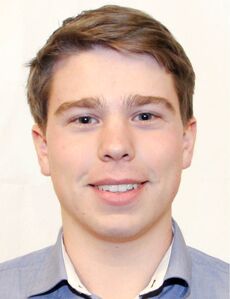
Junius Brown is a Visiting Assistant Professor of Political Economy at Duke Kunshan University , where he teaches courses on East Asian politics , authoritarian politics , comparative politics , international relations , and political economy of development . He completed his Ph.D. in Political Science at the University of California, Berkeley in May 2024. Research interests include: State-society interactions in China Explanatory responsiveness and performative governance Legitimacy in authoritarian regimes Law as a tool for government accountability Citizenship performances in low-information environments Scientific awards : Outstanding Graduate Student Instructor (2021) Learning Innovation Fellowship (2024) Teaching contributions span undergraduate courses on Russian Politics , Dictatorship and Its Discontents , and Japanese Politics , with a focus on improving gender equity in classroom participation and virtual learning adaptation.
Dr. Gözde Damla Turhan is a Researcher at the Department of Architecture within the Faculty of Fine Arts and Design at İzmir University of Economics, a position she has held since September 2017. She holds a B.Sc. in Architecture from İzmir Ekonomi Üniversitesi (2014), followed by dual Master's degrees: M.Arch in Advanced Architectural Design (2016) and M.Sc. in Architecture (2016). Her Ph.D. in Design Studies (2022) focused on biobased materials, computational design, and digital fabrication. Current research interests include AI applications in design (machine learning, diffusion models, LLMs), and sustainable material innovation. Her work bridges architecture and computational technologies, emphasizing bio-based materials (e.g., bacterial cellulose), digital fabrication methods, and AI-driven design processes. She has explored topics like urban rehabilitation via GANs, NFT art hybrid experiences, and life cycle assessments of unconventional construction materials. Publications (2016–2023) span computational form-finding, material science, and digital tools in architecture. She actively contributes to design pedagogy, investigating how AI tools like diffusion models can reshape educational frameworks.
Johan Eker is an Adjunct Professor at Lund University and Principal Researcher at Ericsson. He works at the intersection of computer science and control theory, focusing on control of large-scale compute systems, machine learning, and networked control systems. His research includes optimizing cloud deployments, virtualized network functions, and edge computing for industrial applications. He collaborates closely with Ericsson to leverage real-world data and infrastructure. Education & Affiliations: Affiliated with the Department of Automatic Control at Lund University and Ericsson Research. Active in teaching and supervising projects related to systems engineering, machine learning, and control theory. Research Interests: Large-scale systems, control of interconnected systems, distributed control, and applications in industrial IoT and autonomous systems. His work emphasizes scalability and real-time adaptation in complex computing environments. Grants & Collaborations: Involved in projects like WASP (Wallenberg AI, Autonomous Systems Program) and ELLIIT (Excellence Center in Information Technology). Collaborates with Ericsson on cloud computing resource management and network dynamics. Labs & Teams: Engaged with the RobotLab LTH and initiatives like the Nordic University Hub on Industrial Internet of Things (HI2OT). His research bridges academic theory with industrial applications in autonomous systems and cloud optimization.
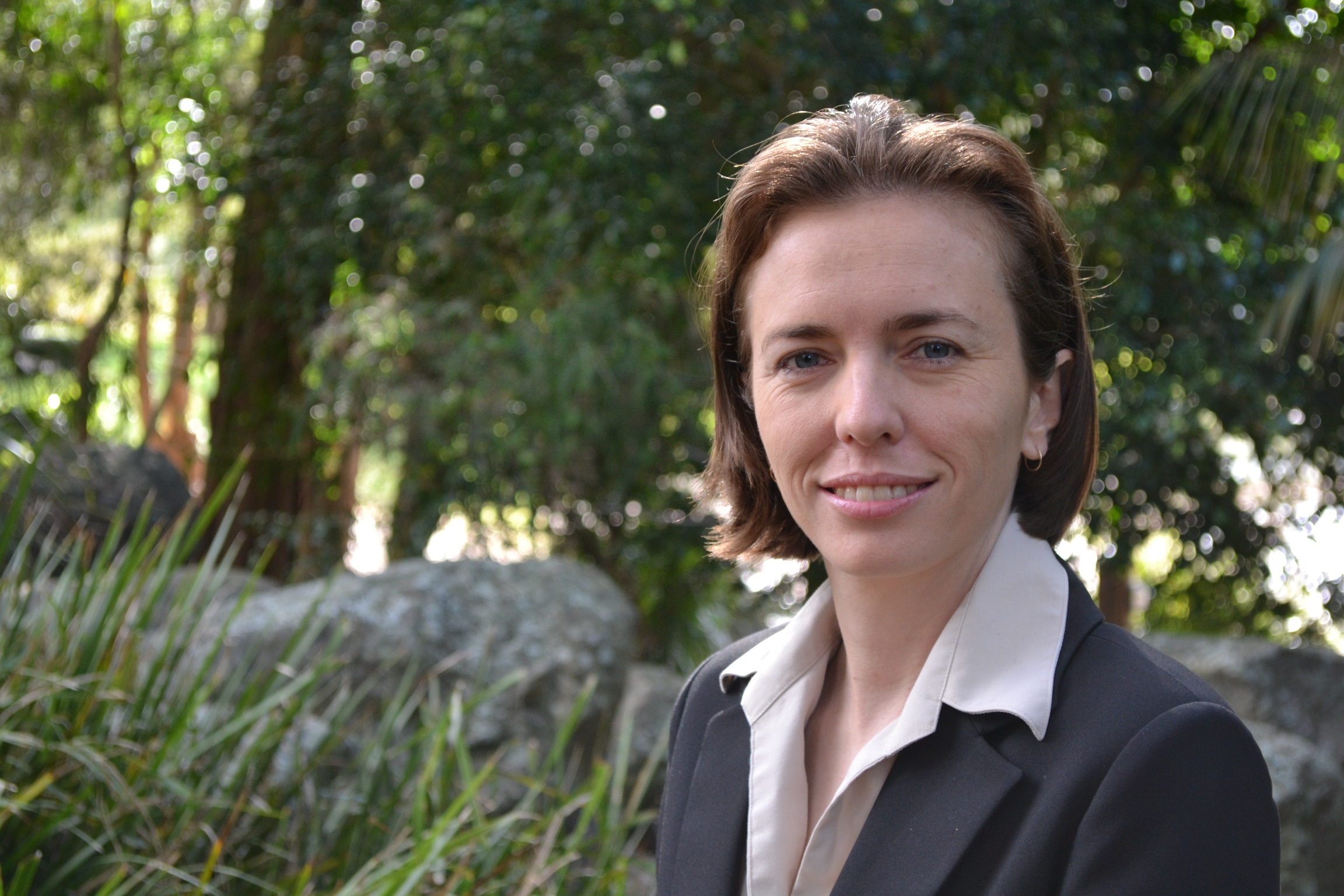
Montserrat Ros is an Associate Professor and Associate Dean (Education) at the School of Electrical, Computer and Telecommunications Engineering within the Faculty of Engineering and Information Sciences at the University of Wollongong, Australia. She has been with the university since 2006, initially joining as a Lecturer in Computer Engineering and progressing to her current senior academic and leadership roles. Her educational background includes: B.E.(Hons1)/B.Sc. double degree majoring in Computer Systems Engineering and Mathematics from the University of Queensland (2000) Ph.D. degree in Computer Engineering from the University of Queensland (2007) Professor Ros's research focuses on the intersection of embedded computing systems and practical engineering applications. Her work spans several key areas including embedded systems design, sensor network data fusion, cyber-physical systems development, and innovative approaches to engineering education. She has particular expertise in sensor-based localization techniques, computer architecture optimization, and code compression methodologies for resource-constrained environments. More recently, her research has expanded into machine learning applications for constrained systems and Internet of Things implementations. Analysis of her recent publication record reveals a strong emphasis on Internet of Things networks, UAV-based systems, and applications of artificial intelligence in both engineering education and manufacturing processes. Her work demonstrates a consistent pattern of bridging theoretical computer engineering concepts with practical real-world applications across diverse domains including healthcare, environmental monitoring, and industrial automation. Her significant contributions to academia have been recognized through numerous prestigious awards: 2019: AAUT Citation for Outstanding Contribution to Student Learning 2018: IEEE TALE 2018 Meritorious Service Award 2018: Featured in UOW Leadership in Education Booklet 2017: UOW Vice Chancellor's Award for Outstanding Contribution to Teaching and Learning 2016: UOW Women of Impact for inspiring young women in STEM 2015: UOW Vice Chancellor's Interdisciplinary Research Excellence Award 2012 & 2007: UOW Vice Chancellor's Awards for Teaching Excellence 2011: UOW Vice Chancellor's Award for Community Engagement Senior Fellow of WATTLE (Wollongong Academy for Tertiary Teaching & Learning Excellence) Professor Ros has secured substantial research funding across multiple projects spanning from 2006 to the present. Her grant portfolio demonstrates a consistent focus on engineering education innovation, sensor network development, and practical applications of embedded systems. Notable projects include "The AI Tutor: Enabling 24x7 student support across engineering" (2024), "AI/IoT-powered Airborne System for Monitoring Water Level and Tidal Floods" (2023), and "Smart Eye: Airborne and AI-Driven Assessment Solution of Sugarcane" (2022). She actively supervises HDR students and has completed multiple successful candidatures. Her leadership extends beyond research and teaching, as evidenced by her role as Associate Dean (Education) for the Faculty of Engineering and Information Sciences. She is also actively involved in community engagement through volunteering with the State Emergency Service (Wollongong SES) and Athletics Wollongong Club.
Dr. Janice C. Palaganas is a Professor in the Health Professions Education Department and Founding Director of the Center of Excellence in Healthcare Simulation Research at the MGH Institute of Health Professions (IHP). She also leads the REBEL Lab, focusing on cognitive neuroscience in healthcare simulation, feedback conversations, and generative AI for assessment. Her background includes roles as an emergency nurse, trauma nurse practitioner, and hospital administrator, driving her passion for interprofessional education through simulation. Dr. Palaganas holds a BSN and MSN from the University of Pennsylvania, a PhD from Loma Linda University, and a Research Fellowship from Harvard Medical School. She has shaped the field through leadership in the Society for Simulation’s Accreditation and Certification Program and co-founded the Healthcare Distance Simulation Collaboration. She has received numerous awards, including the American Journal of Nursing’s Book of the Year Award (2021) and the Presidential Citation Award from the Society for Simulation in Healthcare (2017). Her research emphasizes healthcare simulation methodologies, cultural considerations in debriefing, and online engagement strategies. Dr. Palaganas has advised on interprofessional education initiatives, led global simulation training programs, and authored influential textbooks such as Defining Excellence in Simulation Programs and Mastering Simulation . She actively collaborates internationally, presenting at over 30 countries and contributing to the Society for Simulation’s foundational resources. Key contributions include pioneering distance simulation research and advocating for standardized telesimulation practices. Her work bridges clinical practice, education, and technology to enhance healthcare training outcomes.
Matthew Reason is a Professor of Theatre and founding Director of the Institute for Social Justice at York St John University. He leads the AHRC-funded 'I’m Me' project, exploring identity and representation in learning disability arts. His research focuses on participatory methodologies, audience experience, and the intersection of performance with social justice issues. His work spans theatre for children, liveness in performance, and creative approaches to documenting live art. He has published widely on topics including audience research, dance spectatorship, and the ethics of inclusive research practices. Key projects include studies on prison and military audiences, and the role of drawing as a research tool. Matthew actively engages with communities through collaborative projects, emphasizing co-productive research that fosters societal change. His leadership at the Institute for Social Justice drives interdisciplinary initiatives to advance equity across multiple sectors.
Jason C. Woodworth is a researcher affiliated with the University of Louisiana at Lafayette, LA, USA. His work primarily focuses on Virtual Reality (VR) and Secure Data Search technologies. Through extensive collaborations, he has explored innovative applications of VR in education, emotion tracking, and cross-reality interfaces, while contributing to methods for secure semantic search over encrypted cloud data. Research Interests: VR for attention guidance, emotion recognition in immersive environments, collaborative VR tools, and secure search architectures. Publication Trends: His recent studies emphasize Visual Cues in VR for attention management, Transformer-based Emotion Recognition , and Time-Continuous Emotion Rating systems. Collaborations: Frequent co-authorship with Christoph W. Borst and Mohsen Amini Salehi, indicating strong partnerships in VR and cybersecurity domains. Contributions: Pioneering work in Teacher-Guided Educational VR , Avatar Redirection for cross-reality communication, and privacy-preserving Secure Semantic Search frameworks.
Francisco R. Ortega is a researcher at Colorado State University specializing in Virtual Reality (VR) , Augmented Reality (AR) , and Human-Computer Interaction (HCI) . His work focuses on improving user experience through multimodal interaction, cognitive load theory, and immersive analytics. Recent publications explore diverse applications including: Stress reduction via VR forest bathing Instruction methods for AR-based autism support systems Annotation design in extended reality AR notifications in cooking environments Gender-swapping VR for stereotype threat mitigation Comparative studies between AR and VR for data-driven storytelling His research integrates principles from: Computer Science Psychology Human Factors Education Technology Collaborations span institutions such as University of Florida, University of Seville, and technical teams across North America. While specific educational details remain undisclosed, his 20+ peer-reviewed publications since 2018 demonstrate deep contributions to VR/AR methodology, particularly in: Unconstrained gesture elicitation Spatial transformation challenges Immersive training systems Hybrid display environments Imperfect machine learning integration
Christian Eichhorn is an Assistant Professor in the Department of Computer Science at Technical University of Munich, specializing in Human-Computer Interaction, Virtual Reality, and Augmented Reality applications. His research primarily focuses on developing serious games and immersive technologies for healthcare, education, and older adults. He has established a strong collaborative network, particularly with David A. Plecher and Gudrun Klinker, resulting in numerous publications in top HCI and VR venues. Dr. Eichhorn's research interests center around creating accessible and engaging technology applications. His work demonstrates particular expertise in developing serious games for various educational purposes (language learning, history education), healthcare applications (rehabilitation, dementia care), and technologies specifically designed for older adults. His research combines technical innovation in AR/VR systems with practical applications addressing real-world challenges in healthcare and education. Analysis of his recent publications (2022-2025) reveals a consistent focus on practical applications of immersive technologies. His work spans educational tools for programming and language learning, healthcare applications for rehabilitation and clinical training, and specialized technologies for older adults. The research demonstrates a strong interdisciplinary approach, bridging computer science with healthcare, education, and gerontology. His technical contributions include innovations in AR/VR system design, collaborative environments, and novel interaction techniques. Dr. Eichhorn has been actively involved in organizing workshops and contributing to major conferences in the VR/AR field, including IEEE VR and ISMAR. His collaborative approach is evident in his extensive co-authorship network spanning multiple institutions. His laboratory work focuses on developing practical AR/VR applications, with particular emphasis on creating systems that bridge virtual and physical experiences. Current projects include serious games for health behavior change, rehabilitation assessment tools using wearable sensors, and social VR environments for older adults.
Paul Siebert is a Reader in Computing Science at the University of Glasgow, specializing in computer vision and robotics. He leads the Computer Vision and Graphics research group and teaches Digital Image Processing and Computer Systems. His research focuses on 3D vision systems, biologically inspired vision, and cognitive robot vision, with applications in clinical and media domains. He has pioneered commercial 3D surface scanning technology and collaborated with clinical groups such as Glasgow Dental School. Affiliations: University of Glasgow (Computing Science Department) Roles: Reader, Group Leader (Computer Vision and Graphics) Research interests include active binocular robot vision, 2D/3D sensing, and visual perception for robotics. Notable projects include work on driver attention monitoring, virtual character creation, and clinical anatomical imaging. Siebert previously directed the 3D-MATIC Faraday Partnership and served as Chief Executive of the Turing Institute, developing commercial vision systems. Publications span over 140 works, emphasizing applications like rain removal algorithms, continual learning in robotics, and foveated imaging. His work integrates deep learning, biological vision models, and real-world robotics challenges. Awards and recognitions are not explicitly listed, but his contributions to 3D vision commercialization and robotics research highlight significant impact in the field.
Dr. Hayden J. R. Woodley is an Assistant Professor of Organizational Behaviour at the Ivey Business School, Western University, and a contributing member of the Ian O. Ihnatowycz Institute for Leadership. Previously, he served as an Assistant Professor at the University of Prince Edward Island (UPEI), where he held roles as academic director for Business Co-op and Chair of the UPEI Research Ethics Board. He holds a PhD and M.Sc. in Industrial/Organizational Psychology from Western University and a B.A. (Hons.) in Psychology from York University. His certifications include the Chartered Professional in Human Resources (CPHR) designation. His research focuses on leadership and followership dynamics, human resource management in team environments, and the impact of organizational structures on team performance. His work has been published in journals like the Journal of Management and Academy of Management Learning & Education , supported by grants from SSHRC and Mitacs. He also contributes to practitioner journals such as the Canadian HR Reporter . Dr. Woodley has secured grants including "The Future of Work is Hybrid: Engineering Team Success Through Leadership" (SSHRC, 2024) and "Don’t Tell Me How to Lead! The Effects of Personality on the Transfer of a Leadership Development" (SSHRC, 2024). His awards include the President’s New Researcher Award (2022) and Case Centre Competitions (2022, 2025). Professional Activities: Editorial Board Member of the Journal of Business and Psychology (since 2020). Education: PhD (2017), MSc (2012), BA (2008) from Western University and York University. Labs/Teams: Active in leadership and HRM research initiatives at Ivey Business School.
Niko Siltala is a University Instructor at Tampere University's Department of Automation Technology and Mechanical Engineering. He holds a Doctor of Science (Technology) in Mechanical Engineering (2016) and a Master of Science (Technology) in Automation Engineering (2001). His research focuses on production system design, reconfiguration, robotics, and virtual reality applications in safety training. He has contributed to the development of semantic rules for capability matchmaking, which supports rapid system design and reconfiguration. Key research areas include: Manufacturing automation and system adaptability Human-robot collaboration and safety protocols Virtual reality-based training solutions Formal resource descriptions for modular systems His work aligns with UN Sustainable Development Goals, particularly in advancing quality education (SDG 4) through innovative robotics education tools. He has received the Distinguished Committee Service Award (2004) and contributed to grants such as the K.F. ja Maria Dunderbergin testamenttisäätiö (2014). He has collaborated on projects like the D-BEST methodology for pilot lines and the ODIN project for scalable production systems. His activities include organizing conferences, presenting at international forums, and developing web-based tools for manufacturing system planning.
Dr. Jordan Shropshire is the Lawrence Minto Sylvestre Endowed Chair in Computing and a Professor in the Information Systems and Technology Department at the University of South Alabama's School of Computing. His academic journey includes a Ph.D. in Management Information Systems from Mississippi State University (2008) and a B.S. in Business Administration from the University of Florida (2004). Dr. Shropshire's research focuses on cybersecurity, data center management, cloud computing, IoT ecosystems, and systems architecture. His work addresses critical challenges such as post-quantum cryptography, embedded system vulnerabilities, and compliance frameworks for autonomous systems. He has also contributed to studies on developer platform risks, real-time operating system security, and AI-driven systems hardening. Education: Ph.D. – Management Information Systems, Mississippi State University, 2008 B.S. – Business Administration, University of Florida, 2004 His teaching career spans roles at the University of South Alabama (2008–present) and Georgia Southern University, where he held tenure (2008–2014). His publications emphasize practical cybersecurity solutions, including tools for drone compliance and frameworks for secure cloud infrastructure. He has also explored behavioral aspects of security policy adherence and IT professional retention. Dr. Shropshire's work often bridges theoretical research and real-world implementation, with a focus on mitigating emerging threats in cloud systems, IoT, and embedded devices. His research has been supported by grants such as the NSF TWC Small Grant for hypervisor security detection techniques.
Salvatore Livatino is an Associate Professor in Virtual Reality and Robotics at the University of Hertfordshire, UK. He holds a MSc in Computer Science from the University of Pisa (1993) and a PhD in Computer Science and Engineering from Aalborg University, Denmark (2003). His academic journey includes roles as Research Fellow and Associate Professor at Aalborg University, as well as visiting positions at institutions like INRIA Grenoble and the University of Edinburgh. He leads the Communications and Intelligent Systems research group and directs the Virtual Reality and Robotics Laboratory. His research focuses on immersive technologies (VR/AR/XR), stereoscopic 3D visualization, and teleoperation systems for applications in robotics, healthcare, and command-and-control interfaces. He has contributed to over 30 peer-reviewed publications and secured funding for projects such as the Innovate UK-backed 'iDOC: AI Empowered Document Authoring' (2023–2025) and 'Immersion for Care: Using Extended Reality in Healthcare Training' (2025–2027). Teaching expertise includes problem-based learning, 3D visualization, and immersive game design. His work spans interdisciplinary collaborations in robotics, AI, and healthcare, emphasizing practical applications of virtual environments.
Dr. Lesley Friend is a Lecturer in the School of Education within the Faculty of Creative Industries, Education & Social Justice at Queensland University of Technology. With a PhD completed in 2020 from Australian Catholic University, Friend has established a robust research profile focused on early childhood literacy development, multimodal learning environments, and oral language practices in educational contexts. Friend's research interests center on Early Childhood Education , Literacy Development , and Multimodal Learning , with particular attention to how disruption affects educational practices. The work explores innovative approaches to teaching phonics through children's literature, examines social communication through gaming for children with autism, and investigates the impact of globalization on classroom practices in diverse cultural contexts. Friend's research demonstrates a strong commitment to practical applications in educational settings, particularly in developing substantive oral language skills for young learners. Analysis of Friend's recent publications reveals a clear trajectory toward understanding how multimodal communication, digital technologies, and sociocultural factors intersect in educational environments. The work spans from foundational classroom discourse analysis to cutting-edge research on virtual reality and multisensory makerspaces, showing both depth and breadth in educational research. While specific awards are not documented in the available materials, Friend's consistent publication record in reputable journals demonstrates scholarly impact. The research has been published in journals including International Journal of Science and Mathematics Education , Journal of Language, Identity and Education , and Learning, Media and Technology , reflecting interdisciplinary reach across education, linguistics, and technology fields. Friend has collaborated extensively with colleagues at QUT, particularly with Kathy Mills and Lynn Downes, suggesting active participation in research teams focused on language and literacy education. The work addresses critical contemporary issues in education, including how to maintain quality learning experiences during periods of disruption and how to leverage technology for enhanced educational outcomes.



/prod01/yorksjacuk/media/content-assets/staff-profile-images/MATTHEW-REASON-4.jpg)