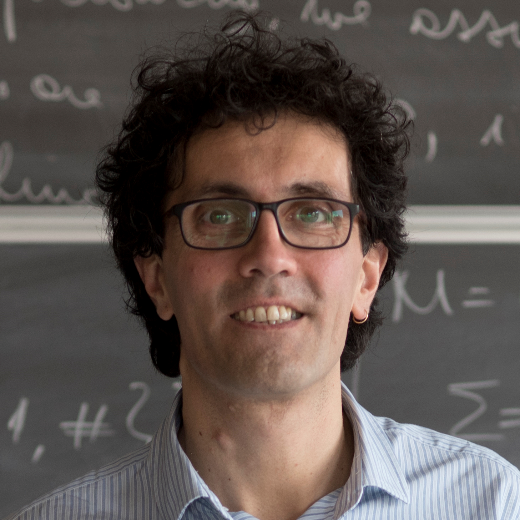
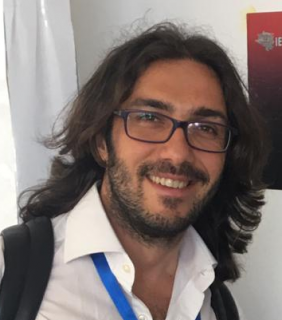
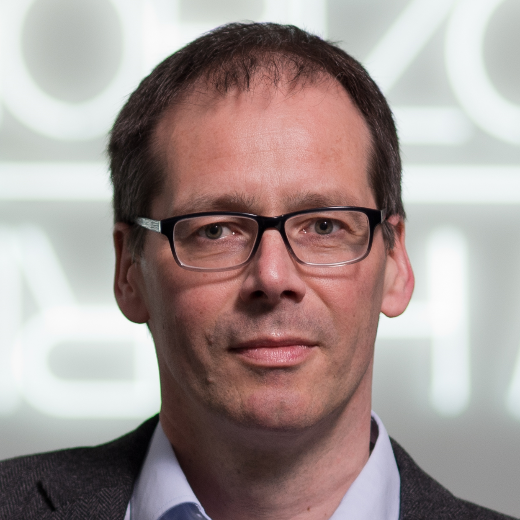
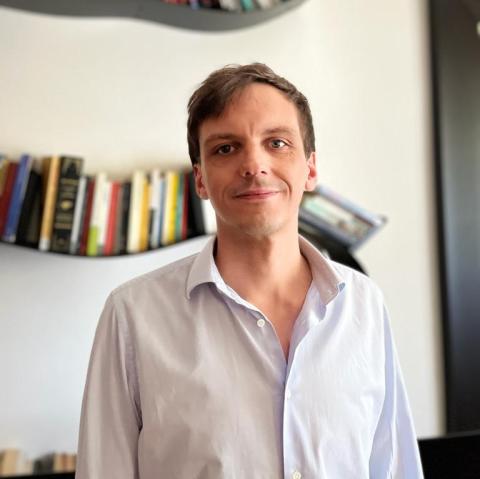
Aldo Gangemi is a Full Professor in the Department of Philosophy at the University of Bologna, specializing in Informatics (INFO-01/A). His research integrates Semantic Technologies, Natural Language Processing, Data Science, and Cognitive Science to address challenges in knowledge representation, ontology engineering, and cultural heritage informatics. He co-founded the STLab at ISTC-CNR and DHARC at the University of Bologna, and is on leave from Sorbonne Paris Nord University (Computer Science Lab - LIPN). Scientific roles include serving as area chair for Web Semantics , editorial board member for Semantic Web and Applied Ontology , and conference chairs for major events like WWW2015 and ESWC2018. He has led European projects such as GALEN, WonderWeb, NeOn, and MARIO, and developed software tools like FRED, Aemoo, and Framester. Research interests focus on semantic technologies, knowledge patterns, and applications in humanities, medicine, law, and fisheries. Over 250 peer-reviewed publications span these areas, with emphasis on ontology-based knowledge integration, multimodal reasoning, and ethical AI. His work bridges cognitive science and technological innovation, particularly in virtual reality's societal applications and cultural heritage preservation. Notable contributions include the PRIVAFRAME knowledge graph for sensitive data, the ImageSchemaNet ontology for embodied cognition, and the Sandra neuro-symbolic reasoner. His interdisciplinary approach addresses challenges in AI ethics, creative systems, and citizen-driven data curation.
Diego Calvanese is a Full Professor in Computer Engineering at the Faculty of Engineering of the Free University of Bozen-Bolzano, Italy. He serves as Spokesperson of the Institute of Computer Science and Artificial Intelligence and Director of the Smart Data Factory technology transfer lab at NOI Techpark. As Coordinator of the Intelligent Integration and Access to Data (In2Data) research group, part of the Research Centre for Knowledge and Data (KRDB), he leads significant research initiatives in knowledge representation and data management. Calvanese's research focuses on virtual knowledge graphs for data access and integration, ontology-based data access, description logics, semantic web technologies, graph data management, and verification of data-aware processes. His work bridges theoretical foundations with practical applications through the Ontop framework, which enables SPARQL query answering over OWL 2 QL ontologies connected to external data sources. His research has substantial practical impact, powering the South Tyrol Open Data Hub Knowledge Graph and supporting numerous European and national research projects. With more than 400 refereed publications and over 39,000 citations (h-index 80), Calvanese's recent work demonstrates continued leadership in virtual knowledge graphs, ontology-based data federation, explainable AI through knowledge representation, and integration of complex data types including 3D city models and raster data. His publications show a clear trajectory from theoretical foundations toward increasingly practical and applied research addressing real-world data integration challenges across multiple domains. ACM Fellow (2019) EurAI Fellow (2015) AAIA Fellow Program Chair of PODS 2015 and KR 2020 General Chair of ESSLLI 2016 Calvanese has secured significant research funding through numerous competitive projects including EU H2020 INFRAEOS Project (INODE), Italian PRIN Project (HOPE), FESR Project (IDEE), and EU FP7 IP Project (Optique), totaling close to 6.4M Euro. As an originator and co-founder of Ontopic, the first spin-off of the Free University of Bozen-Bolzano, he has successfully translated research into commercial applications. He serves as Associate Editor of Artificial Intelligence (AIJ) and has participated in over 200 program committee roles for international conferences. As Director of the Smart Data Factory technology transfer lab and coordinator of the In2Data research group, Calvanese bridges academic research with industry applications, focusing on practical implementations of knowledge graph technologies. His work with the KRDB Research Center has established Bozen-Bolzano as a significant hub for knowledge representation and data management research in Europe.
Fabrizio Falchi is a researcher at the Artificial Intelligence for Media and Humanities (AIMH) Lab of the Institute of Information Science and Technologies (ISTI) within Italy's National Research Council (CNR). He also maintains an associate position at the Biorobotics Institute of Scuola Superiore Sant'Anna. His work focuses on developing advanced multimedia retrieval systems, with the VISIONE platform being his most notable contribution, which has won international competitions including the Video Browser Showdown in 2024 and placed second in 2023. Falchi's educational background includes: Ph.D. in Information Engineering from University of Pisa (Italy) Ph.D. in Informatics from Faculty of Informatics of Masaryk University of Brno (Czech Republic) M.B.A. from Scuola Superiore Sant'Anna in Pisa His research spans deep learning, convolutional neural networks, deep features extraction, similarity search algorithms, distributed indexing systems, multimedia information retrieval, computer vision applications, and peer-to-peer systems. Falchi has made significant contributions to fine-grained visual understanding, cross-modal retrieval (particularly image-text matching), and robustness of deep learning systems against adversarial attacks. His work demonstrates a strong focus on practical applications of these technologies, particularly in video retrieval systems and safety monitoring solutions. Analysis of Falchi's recent publications reveals a strong focus on video and image retrieval systems, with the VISIONE platform being central to his work. His research shows increasing emphasis on fine-grained understanding in computer vision, cross-modal retrieval, and addressing practical challenges like cross-resolution face recognition. Recent work demonstrates innovation in making these systems more efficient through techniques like knowledge distillation (ALADIN) and leveraging virtual worlds for training data. His publications consistently bridge theoretical advances with practical applications in surveillance, safety monitoring, and multimedia search. Falchi's work has received significant recognition: Best paper award at CBMI 2024 for 'Is ClLIP the main roadblock for fine-grained open-world perception?' VISIONE 2024 won the Video Browser Showdown competition in Amsterdam VISIONE obtained second place at Video Browser Showdown 2023 in Bergen Best Paper Award for 'Learning Safety Equipment Detection using Virtual Worlds' at CBMI 2019 Falchi collaborates extensively with researchers at ISTI-CNR, particularly within the AIMH Lab. His work on VISIONE involves collaboration with Giuseppe Amato, Paolo Bolettieri, Fabio Carrara, Claudio Gennaro, Nicola Messina, Lucia Vadicamo, and Claudio Vairo. As co-chair of Ital-IA 2023, the 3rd National Conference on Artificial Intelligence, he plays an active role in the academic community. He is a member of ACM (since 2012), the Computer Vision Foundation, the Italian Association for Computer Vision Pattern Recognition and Machine Learning (CVPL), and the CINI Lab on Artificial Intelligence and Intelligent Systems. Falchi is a key member of the Artificial Intelligence for Media and Humanities (AIMH) Lab at ISTI-CNR, where he leads research on video retrieval systems. The lab has developed the award-winning VISIONE platform, which combines multiple scientific results in content-based video retrieval. His team focuses on developing systems that enable users to search for target videos using textual prompts, drawing objects and colors, or images as query examples. The lab's work demonstrates strong interdisciplinary collaboration, bridging computer science with practical applications in media, safety monitoring, and urban environments.
Laura Emilia Maria Ricci is a Full Professor at the University of Pisa's Department of Computer Science, leading the Pisa Distributed Ledger Laboratory (Pisa DLT Lab). Her research focuses on blockchain technology, layer-2 solutions, cryptographic techniques, and self-sovereign identity frameworks. She coordinates the National PhD program in Blockchain and Distributed Ledger Technologies and leads the PRIN research project 'AWESOME' (2023-2025). Ricci serves as an associate editor for the ACM Distributed Ledger Technologies: Research and Practice journal and the Springer Nature SN Computer Science section on blockchain innovations. Her research emphasizes blockchain scalability, transaction analysis, and social network dynamics. Recent work includes studies on NFT architectures, post-quantum cryptography in Ethereum, and query authentication protocols. She co-organized the 7th IEEE International Conference on Blockchain and Cryptocurrencies (2025) and actively participates in global blockchain initiatives. Ricci has been awarded Best Paper Awards for her contributions to decentralized cloud scheduling, hybrid architectures for online games, and distributed virtual environments. She advises numerous PhD students and oversees grants like the H2020 'HELIOS' project. Ricci's academic roles include teaching blockchain, peer-to-peer systems, and web scraping at the University of Pisa. Her lab collaborates on projects such as the AQuSDIT grant (2024-2025) and the Ethereum Foundation's 'Cross Chain Authenticated Queries.' She also chairs conferences like IEEE Blockchain and co-edits special issues on blockchain-based pervasive systems and social media analysis.
Corrado Loglisci is an Assistant Professor at the Department of Computer Science, University of Bari Aldo Moro, Italy. His research focuses on Temporal Data Mining , Machine Learning , and Quantum Computing , with applications in bioinformatics, medical informatics, and cybersecurity. He earned his Ph.D. in Computer Science with a thesis on temporal projection in longitudinal data. Research Highlights : Temporal Learning, Textual Data Mining, Quantum-Classical Hybrid Systems Collaborations : IRSTEA Research Institute (France), Aristotle University of Thessaloniki (Greece) His publications address dynamic network analysis , emotion detection in social media , and quantum-enhanced classification . He contributes to program committees and journal editorial work, including a special issue on Mining Complex Patterns in the Journal of Intelligent Information Systems . Notable contributions include the jKarma framework for change detection and studies on concept drift robustness in intrusion detection systems. His work spans European/National research projects, leveraging machine learning for tasks like mobile crowd sensing trustworthiness prediction (2020) and investor behavior analysis (2023-2025).
Francesco Leotta is a Tenure Track Assistant Professor in the Department of Computer, Control and Management Engineering at Sapienza University of Rome, specializing in ubiquitous computing, human-computer interaction, and digital humanities with applications in smart spaces, smart manufacturing, and cultural heritage. His educational background includes a PhD in Engineering in Computer Science (2014), Master Degree in Computer Science Engineering (2010), and Bachelor Degree in Computer Science Engineering (2006), all with honors from Sapienza University of Rome. He has been qualified to practice as a Computer Science Engineer since 2010. Leotta's research pioneers 'habit mining' for learning human behaviors from unlabeled sensor data, focusing on usability for technicians through readable process models and for end users via accessible interfaces including chatbots and solutions for people with disabilities. His recent work centers on Industry 4.0, developing AI-driven digital twin architectures for industrial automation. Key projects include privately funded Rotalaser Fustella 4.0 and publicly funded initiatives FIRST and ElectroSpindle 4.0. Analysis of his 2024-2025 publications reveals strong interdisciplinary trends bridging business process management with IoT and AI, particularly in smart manufacturing maturity models, digital twin composition, and multimodal human-robot interaction. His work consistently integrates theoretical frameworks with practical industrial applications. Scientific recognition includes: Best Paper Award at IEEE International Conference on Web Services (ICWS 2019) Leotta actively contributes to research groups in Human-Computer Interaction, Data Management, and Semantic Technologies, with current projects focusing on adaptive smart manufacturing systems. His grant portfolio demonstrates successful collaboration between academic research and industrial applications in the manufacturing sector. He maintains active involvement in the computing continuum ecosystem through projects like DataCloud, addressing big data pipelines and dark data utilization in industrial contexts.
Giovanna Castellano is a Full Professor at the University of Bari Aldo Moro, Italy, where she serves in the Department of Computer Science. She coordinates the Computational Intelligence Laboratory (CILab) and has been active in academia since at least May 2015. Her extensive publication record with 354 publications demonstrates her significant contributions to the fields of Computational Intelligence, Computer Vision, and Explainable AI. Dr. Castellano earned her PhD in Computer Science from the University of Bari Aldo Moro between September 1988 and March 1993. Her academic journey has led her to become a prominent researcher in artificial intelligence applications across various domains including healthcare, education, and digital art analysis. Her research interests span a wide range of computational intelligence topics, with current focus on Computer Vision, Deep Learning, Explainable AI (XAI), and Fuzzy Systems. Dr. Castellano's work demonstrates a strong interdisciplinary approach, applying AI techniques to solve real-world problems in healthcare diagnostics, precision agriculture, educational analytics, and cultural heritage preservation. Her research consistently emphasizes model interpretability, recognizing the importance of transparent AI systems, particularly in critical domains like healthcare where trust in AI decisions is paramount. Analysis of her recent publications reveals a consistent trajectory toward more interpretable and explainable AI systems across multiple application domains. Her work spans medical imaging analysis, stress prediction in educational contexts, art analysis, and precision agriculture. A notable trend is the integration of large language models with computer vision techniques to enhance both performance and explainability of AI systems, particularly in medical and artistic contexts. Excellent Presentation Award at 1st International Conference on Soft Computing and Intelligent Systems 2002 Dr. Castellano leads the Computational Intelligence Laboratory (CILab) at the University of Bari, where she supervises research projects and collaborates with numerous researchers including Gabriella Casalino, Gennaro Vessio, and Gianluca Zaza. Her research group has secured various grants for projects in healthcare AI, educational data mining, and digital art analysis. The CILab research team works on diverse projects including medical diagnostics using AI, analysis of digital art collections, educational data mining, and precision agriculture applications. Their work often involves collaboration with healthcare institutions, cultural organizations, and agricultural technology companies, demonstrating the practical impact of their theoretical research.
Diego Reforgiato Recupero is a Full Professor at the Department of Mathematics and Computer Science of the University of Cagliari, Italy, since December 2015. He is the director and creator of the Human-Robot-Interaction Laboratory (http://hri.unica.it) and co-director of the Artificial Intelligence and Big Data Laboratory (http://aibd.unica.it). His roles include quality responsible for the department and membership in the Commission for start-up and spin-off at the University. He teaches multiple courses across disciplines: Computers Architecture for Computer Science bachelor's, Big Data for Computer Science master's, and Web Design and Digital Storytelling for the Master's in Philosophy and Theories of Communication. His research spans interdisciplinary domains including Artificial Intelligence Big Data Analytics Knowledge Graphs Human-Robot Interaction Digital Transformation His scholarly output demonstrates significant focus on AI applications in energy systems (smart grids, district heating), knowledge graph engineering (ontology generation, semantic conversion), and human-centric AI (conversational agents, digital coaching). Publications frequently address data augmentation techniques and transformer architectures across finance, tourism, and mental health domains. He leads the Human-Robot Interaction Laboratory and co-founded the Artificial Intelligence and Big Data Laboratory. His work integrates Apache Spark for big data processing, Unity for synthetic data generation, and RDF/OWL standards for knowledge representation.
Claus Pahl is a Full Professor of Software Engineering at the Free University of Bozen-Bolzano , Italy, affiliated with the Faculty of Computer Science . He leads the CECL Cloud and Edge Computing Lab and is a member of the SEAS Software Engineering and Autonomous Systems research group. Ph.D. from the University of Dortmund Academic positions in Germany, Denmark, Ireland, and Italy since 2016 Principal Investigator at Irish Centre for Cloud Computing and Commerce (IC4) and Lero Software Research Centre Over 5 million Euro in research funding 440+ publications with 364,714 reads and 9,736 citations His research focuses on Software Architecture for Cloud and Edge Computing , Autonomous and Adaptive Systems , and Blockchain-based architectures . He explores Model-driven development and AI-driven controllers for self-adaptive systems, emphasizing dependability and quality management . Recent publications highlight trends in blockchain scalability , zero-knowledge proofs , container orchestration , and AI quality engineering for edge environments. He has served as PC Chair for ECOWS 2007 and ICSOC 2018, and General Chair for CLOSER 2017-2018. His work appears in 7 editorial boards, and he leads educational initiatives in software engineering principles.
Antonio Vetro is an Associate Professor at the Department of Control and Computer Engineering (DAUIN) of Polytechnic University of Turin. He specializes in experimental methodologies for software engineering with focus on software and data quality improvement, algorithmic fairness, and socially sustainable technology design. His research interests span Responsible AI: From principles to industrial practices Data quality measurement and improvement Fairness in automated decision systems Public interest technology Technical debt management Generative AI applications His recent publications focus on bias detection in datasets, GDPR compliance tools, and technical debt analysis in industrial projects. Key trends include Algorithmic fairness in healthcare applications Automated compliance assessment Data quality for ethical AI Quantum computing research Scientific recognitions include BEST PAPER AWARD - IEEE AICT 2024 Best Paper Award EGOV-2020 Siebel Energy Institute - Smart Energy 2016 Best paper award at IDOESE 2010 He advises PhD students in responsible AI and data ethics, while also serving on editorial boards like ACM Journal of Data and Information Quality and International Journal of Technoethics. Current roles include membership in ISO/IEC JTC1 SC7/WG6 and UNINFO committees for software engineering standards.
Erwin Rauch is a Full Professor for Smart and Sustainable Production at the Faculty of Engineering, Free University of Bozen-Bolzano, where he leads the Smart Mini Factory (SMF) Laboratory for Industry 4.0 and the Sustainable Manufacturing Laboratory (SML). His academic journey includes a B.Sc. in Logistics and Production Engineering from the Free University of Bozen-Bolzano, M.Sc. degrees in Mechanical Engineering and Industrial Engineering from the Technical University of Munich, and a Ph.D. in Mechanical Engineering from the University of Stuttgart with summa cum laude distinction. Professor Rauch's research spans sustainable manufacturing, Industry 4.0/5.0, digital twins, human-robot collaboration, and axiomatic design. His work addresses critical challenges in decarbonization, circular economy, and resilience in manufacturing systems. He has developed numerous educational demonstrators and learning factories to bridge theoretical concepts with practical applications in engineering education. His publications reveal a strong focus on practical implementations of digital technologies in manufacturing, with particular emphasis on SME adoption. The research shows consistent integration of sustainability metrics with digital transformation, highlighting how Industry 5.0 principles can be operationalized through cyber-physical systems, worker assistance technologies, and resilient production design. Scientific Recognition: Best Track Paper Award (Sustainable Supply Chain) at IEOM 2018 Best Track Paper Award (Engineering Education) at IEOM 2018 Best Track Paper Award at IEOM 2015 Overall Best Paper Award at ICAD 2013 Professor Rauch actively contributes to editorial boards of several renowned journals and serves as Editor-in-Chief of Production & Manufacturing Research (Taylor & Francis Publishing). He is an Associate Member of EuroScience, World Manufacturing Forum, AITEM, and serves on the IAAD Executive Board and EPIEM Steering Board. His teaching portfolio includes courses on digital production planning, innovation management, sustainable production, and production systems. His laboratories (Smart Mini Factory and Sustainable Manufacturing Lab) serve as critical hubs for developing and testing Industry 4.0/5.0 technologies, with a particular focus on creating practical implementations for SMEs. These labs facilitate research on human-centered production systems, digital twin applications, and sustainable manufacturing practices.
Lorenzo Rossi is an Assistant Professor specializing in the intersection of process mining, robotics, and business process management (BPM). His research focuses on advancing methodologies for analyzing robotic systems, IoT environments, and collaborative processes through formal models like BPMN. Key areas include process discovery, digital twins, and system resilience in smart environments. Expertise: Process Mining, Multi-Robot Systems, BPMN Semantics, Cyber-Physical Systems Key Tools: BEAR (BPMN animator), MIDA (multi-instance animator), UBBA (Unity-based BPMN animator) His work emphasizes reproducibility and practical frameworks for rapid prototyping. Recent trends in his articles highlight the integration of process mining with robotics for data-driven decision-making, as well as formal verification of BPMN collaborations to ensure system correctness. Awards: None explicitly mentioned in the provided texts. Advising & Grants: No student/advisor relationships or grant details documented here. Labs/Teams: Collaboration with Unity-based simulation tools (UBBA, MIDA) and serious game platforms (PlayWithUnicam).
Mariapaola Vozzola is a fixed-term researcher at the Department of Structural, Building and Geotechnical Engineering (DISEG) at the Polytechnic University of Turin. She is a member of the Interdepartmental Center R3C - Responsible Risk Resilience Center and actively contributes to research and teaching in architectural and urban drawing, digital modeling, and sustainable urban regeneration. Research Interests: Drawing for construction and environmental engineering Urban, territorial, and architectural surveying Geodatabases and urban information systems BIM and CIM for sustainable design Graphic representation of urban resilience and environmental comfort Digital modeling for cultural heritage Research Trends from Publications: Her recent publications (2023–2025) reflect a strong focus on the intersection of digital modeling (especially BIM), urban resilience, and cultural heritage. She explores graphical tools for measuring urban resilience, digital twins for academic heritage, adaptive reuse in housing, and the role of drawing in post-war urban reconstruction. Her work bridges technical engineering with cultural and social dimensions of urban design. Scientific Awards and Recognitions: RIMINI SCHOOL 2025 “SUCCESSFULLY PARTICIPATE IN CALLS FOR RESEARCH FUNDING” Effective communication with businesses Learning to Teach (L2T) Didattica Advising and Grants: Mariapaola Vozzola is the course leader for several Master's level courses in Building Engineering, including 'Survey and drawing design for urban refurbishment at sustainable transition' and 'Il disegno per il rilievo e progettazione della resilienza urbana'. She is a member of the research group for the MAINCODE project (2025–2027), funded under the EU’s Driving Urban Transitions initiative, which focuses on co-designing urban climate shelters in schoolyards. She collaborates extensively with peers such as Maurizio Marco Bocconcino and Giorgio Garzino. Labs and Research Centers: She is affiliated with the Interdepartmental Center R3C (Responsible Risk Resilience Center), which supports interdisciplinary research on urban risk, resilience, and sustainable development.
Claudia Scorolli is an Associate Professor at the University of Bologna's Department of Philosophy and Communication Studies, specializing in General Psychology. She leads the XR-GRACE research group focused on Extended Reality applications for creativity and sustainability. As coordinator of post-graduate professional internships in Cognitive Psychology and Experimental Neuropsychology, she bridges academic training with professional practice. Her interdisciplinary work spans cognitive science, embodied cognition, and human-AI interaction, with notable contributions to affordance theory, creative ontology development, and VR applications in social sensitivity. Education includes a Ph.D. in Cognitive Science (2009), PsyD in Psychotherapy (2014), and advanced training in psychodrama. She has held senior roles in EU projects like MEETINGDEM (dementia care support programs) and ROSSI (robotic communication). Her research explores how materials, language, and technology shape perception and creativity, with a focus on sustainability and cultural factors. She maintains active collaborations in AI ethics, XR aesthetics, and embodied language processing. Awarded Full Professor qualification (2021-2030), she advises on Erasmus+ mobility and teaches research methods in cognitive science. Her work appears in venues like Frontiers in Psychology and IEEE VR, with recent emphases on VR-induced empathy, AI creativity attribution, and sustainable material perception.
Giovanna Guerrini is an Associate Professor in the Department of Informatics, Bioengineering, Robotics, and Systems Engineering (DIBRIS) at the University of Genoa, Italy. She is actively involved in research, teaching, and academic service, with leadership roles in major conferences such as EDBT (Executive Board Member and Treasurer), SOFSEM (Track Chair), and UMAP (Workshop Chair). Her research interests include: Data Management Large Scale and Semantic Data Management Approximate and Adaptive Query Processing Linked Data and Ontology Matching Graph Matching and Geospatial Ontologies Spatio-Temporal Data and Location Inference Computer Science Education and Computational Thinking Her recent publications show a growing focus on computer science education, particularly in using gamified and extended reality environments, Sonic Pi for teaching concurrency, and AI-driven tools for enhancing computational thinking. This reflects a shift toward pedagogical innovation and student-centered learning methodologies. She has been recognized through active participation in top-tier program committees (SIGMOD, ISWC, ICDE) and organizing key workshops and schools (EDBT School 2017, APCSE at UMAP). No formal scientific awards are listed in the provided text. She advises multiple PhD students, both current and past, and contributes to academic grants and collaborative projects, particularly in database education and data science initiatives. She is affiliated with research groups including the DaMA Research Group, Data Science and Engineering Research Program, Big Data Interest Group UniGe, and CINI Big Data Research Lab.