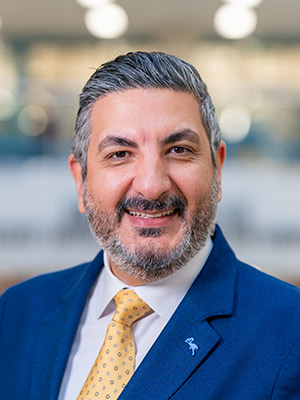
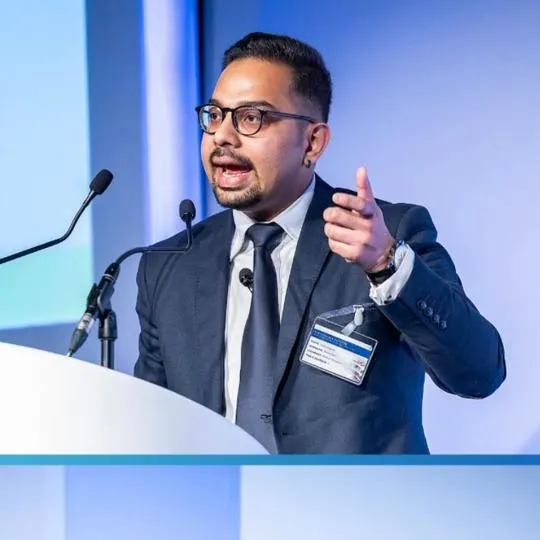
Dr. Lionel Jayaraj is a Lecturer in Games (Visual Effects and Animation) at the University of Bedfordshire's School of Computer Science and Technology. An independent Oculus Game developer with industry experience (2011-2014) and engineering background, he holds a PhD and MRes in Virtual Reality Games from University of Bedfordshire, PGCHPE from Staffordshire University, and a Bachelors of Engineering and Technology from Pondicherry University. His research focuses on Serious Games using Extended Reality (AR, VR, MR), aiming to inspire the next generation of game developers and advance VR through innovative pedagogy. His work bridges gaming technology with practical applications in training and education. Dr. Jayaraj's recent publications explore immersive sports simulations, AI in game development, and performance capture technologies, demonstrating a consistent focus on enhancing user experience through technological innovation.
David Mangan is an Assistant Professor at Maynooth University's School of Law & Criminology , with adjunct professorships at Osgoode Hall Law School and Université Catholique Lyon. He holds a Ph.D. and has served as Associate Professor and Deputy Associate Dean (International) in Canada and the UK. His research spans labour/employment law , contract law , and privacy law , focusing on information technology's impact on workplaces. Degree : BA(Hons), B.Ed., J.D., LL.M., Ph.D. Editorial Roles : Associate Editor of the European Labour Law Journal; Co-Editor of Global Workplace Law & Policy. Consultancy : Legal expert for the Israel Public Policy Institute, Portuguese Confederation of Employers, and Law Commission Ontario. His labour law research examines digitalization of work, platform economy challenges, and privacy in employment relationships. Current projects include the Privacy@Work study (2021-2023) and a Land Steiermark Fellowship (2025) in digital law. He supervises Ph.D. students through Advance CRT and chairs a dual degree program with Université Catholique Lyon. Recent article trends highlight his work on GDPR implications in employment, remote work regulation , and platform worker rights . Notable contributions include comparative analyses of European and transatlantic labour law frameworks, focusing on technological disruptions. Awards & Grants : Land Steiermark Fellowship in Digital Law (2025) ERC Grant (€1.5M) for ResPecTMe project (2022-2025)
Karen Stock is an Associate Professor of Business at Walsh University, where she has been since 2010. She holds a Doctor of Management (D.M.) from Case Western Reserve University, a Master of Arts in Management from Walsh University, and a Bachelor of Science from Miami University. Her primary research focuses on experiential learning, cross-cultural management, and ethical leadership, emphasizing practical application in both academic and workplace settings. Dr. Stock teaches courses in sustainability, cross-cultural management, and ethical leadership. She is also a Research Fellow at the Weatherhead School of Management at Case Western Reserve University. Her work explores innovative pedagogical methods, including equine-assisted learning and design thinking, to deepen student engagement and real-world relevance. She frequently presents at conferences such as the Academy of Management and the Management and Organizational Behavior Teaching Conferences. Her publications span journals like OD Practitioner and Journal of Education for Business , focusing on experiential learning metrics, global virtual teams, and sustainable construction practices. She actively contributes to the Experiential Learning Community of Practice, advocating for immersive educational strategies. Dr. Stock’s career combines academia with industry experience in multinational marketing and product development, enriching her teaching with practical insights. She is committed to fostering ethical leadership and sustainable business practices through innovative curricula and collaborative research initiatives.
Jimmy Jaldemark is a Professor at the Department of Education, Mid Sweden University, Sundsvall, Sweden. He serves as Research Leader of HEEL (Higher Education and E-Learning) and Head of Subject for the Discipline of Education. His roles include membership in the Faculty Board of Humanities and representation in the university-wide Education Council. He co-founded GRADE, a national graduate school in digital education, and leads the EARLI Centre for Excellence in AI in Learning and Instruction (AILI). His research focuses on AI, digitalization, lifelong learning, and networked learning. He co-edited *Networked Professional Learning* (2019) and guest-edited special issues in the *British Journal of Educational Technology*. He is an editor for that journal and serves on editorial boards for *Educational Research Review*, *Postdigital Science and Education*, and others. He supervises doctoral students and teaches in Behavioral Science and Education programs. Current projects include HEaD (Higher Education and Digitization) and BLAD (Need-based Learning through Adapted Participation). He collaborates internationally, notably in the AILI network exploring AI's educational impacts. His work spans educational development, organizational learning, and policy frameworks for lifelong learning in the digital era.
Margherita Pagani is a Full Professor and Director of the SKEMA Centre for Artificial Intelligence at SKEMA Business School in Paris. She holds a Ph.D. in Management and an HDR (Habilitation à Diriger des Recherches). Her roles include Research Affiliate at UC Berkeley’s APEC Study Center and Advisor to the European Economic Social Committee (EESC) on virtual worlds and the Metaverse. Previously, she founded and led the MSc in Digital Marketing & Data Science and the AIM Research Center at emlyon business school. She has held visiting roles at MIT, UCLA, Georgetown, NUS, and Redlands University. Education: Ph.D. (2015, Lyon), HDR (2016, Évry), MSc (1995, Bocconi), MIT Certifications (2005-2006). Research: Focuses on AI in consumer engagement, digital ecosystems, robotics in services, and metaverse applications. Over 130 publications in journals like MIS Quarterly, MIT Sloan Management Review, and Harvard Business Review. Awards: 2023 International Marketing Trends Award, 2022/2023 Top 2% Cited Scientist (Elsevier), 2009 Mobile Marketing Academic of the Year. Her work bridges AI and marketing creativity, emphasizing human-centric systems. She leads initiatives like the SKEMA AI School and organizes conferences on ethics, AI in education, and service recovery. Active in editorial roles for journals like Micro & Macro Marketing and Industrial Marketing Management . Key affiliations include the Association Française de Marketing and involvement in policy initiatives. Supervised over a dozen PhD students, focusing on AI applications in marketing and entrepreneurship.
Ivan Viola is an Associate Professor at the Institute of Computer Graphics and Algorithms, part of the Faculty of Informatics at TU Wien, Austria. He holds a leave of absence until December 2024 while also being affiliated with King Abdullah University of Science and Technology (KAUST) as an Associate Professor funded by the Vienna Research Groups program. His research focuses on visualization techniques in medicine, biological sciences, and earth sciences, with a specialty in illustrative visualization and DNA-nanotechnology applications. Viola has contributed over 100 scientific works and serves as a reviewer and panelist for major conferences in computer graphics and visualization. Education: M.Sc. (2002) and Ph.D. (2005) in Computer Graphics from TU Wien. Postdoctoral research at the University of Bergen (2006-2011), where he became Full Professor before returning to TU Wien. Research Interests: Whole-cell visualization Molecular modeling Interactive 3D environments Biomedical visualization Data-driven colormap techniques Awards: IEEE VIS 2017 Best Paper Honorable Mention, 'Best Overall Concept' for CellView, and multiple visualization awards. Active in EuroVis and IEEE VIS organizing roles. Grants & Supervision: Leads the Visualization Group at TU Wien, supervising student projects and master’s theses. Involved in grants like the Vienna Research Groups program. Labs/Teams: Visualization Group at TU Wien, collaborating on projects like CellView and Molecumentary.
Simon Colreavy Donnelly is an Associate Professor in the Department of Computer Science & Information Systems at the University of Limerick. He is a member of the Interaction Design Centre and focuses on interdisciplinary research at the intersection of artificial intelligence, educational technology, and healthcare informatics. His work spans machine learning applications in medical data analysis, virtual reality (VR) and extended reality (XR) for inclusive education, and deep learning techniques in chemical analysis and spectroscopy. Research Interests: His primary areas of investigation include generative AI for education equity, semisupervised learning algorithms, virtual learning environments design, and the ethical deployment of immersive technologies in healthcare and palliative care. He also explores NMR spectroscopy analysis using deep learning and develops tools for nutritional content estimation through image processing. Collaborations: His recent collaborations span international teams addressing challenges in toxicity-free online discourse (PAN 2024), semisupervised learning distribution mismatches, and VR applications for post-pandemic blended learning. His work integrates computational methods with real-world applications in education, healthcare, and chemical analysis. Labs/Teams: Active within the Interaction Design Centre at UL, his research group develops practical solutions for accessibility in digital education and healthcare systems, emphasizing user-centered design principles for extended reality applications.
Dr. Farzan Sasangohar is an Associate Professor in the Department of Industrial & Systems Engineering at Texas A&M University, holding the Mike and Sugar Barnes Faculty Fellowship. He also serves as an Assistant Professor at Houston Methodist Hospital's Center for Outcomes Research and Department of Surgery. His academic roles include affiliations with the Environmental and Occupational Health, Biomedical Engineering, and multiple centers focused on health technologies and systems design. Education: PhD in Industrial Engineering (Human Factors Engineering), University of Toronto (2015) Research Interests: Human factors in healthcare delivery and telehealth systems Wearable technology for stress/health monitoring Crisis management team cognition and decision-making Remote patient monitoring systems Mental health self-management interventions Awards: Jack A. Kraft Innovator Award (HFES, 2023) Dr. Hamed K. Eldin Early Career Award (2022) William C. Howell Young Investigator Award (2021) TEES Young Faculty Fellow (2021) Nominated for Ergonomics Journal Best Paper (2021) Advising & Grants: Mentored over 15 graduate students including Dr. Mahnoosh Sadeghi (PhD 2023) Recipient of NSF PATHS-UP Engineering Research Center funding Active grants in offshore worker fatigue management and telehealth integration Labs/Teams: Director of the Applied Cognitive Ergonomics Lab (ACE-lab) , focusing on human-system interactions in healthcare, aviation, and disaster management. Current projects include: - Wearable stress monitoring systems - Telehealth integration frameworks - Crisis team cognition analysis
Prof Peter Holland is a Professor of Human Resource Management at Swinburne University of Technology , where he also serves as Director of the Executive MBA program. His research explores employee voice , workplace surveillance , extended working hours , and well-being in extreme work environments . Universities: Swinburne University of Technology, Monash University Key Collaborations: Australian Consortium for Research on Employment and Work (ACREW), Ambulance Victoria His work spans both theoretical and applied domains, including: Impact of industrial revolutions on workforce health and safety Role of anti-violence HRM practices in frontline professions Challenges in sustainable HRM and organizational performance Stress management for paramedics and airline pilots Current projects examine smart technology applications for real-time well-being monitoring and post-pandemic workforce transitions . Grants: Recipient of Australian Research Council funding for parliamentary careers research and Swinburne’s Visiting Fellowships Scheme. Labs & Teams: Collaborates with international scholars on workforce resilience and digital HRM, and leads executive education initiatives at Swinburne.
Overview Lindsay Larson is an Assistant Professor of Organizational Behavior at Carnegie Mellon University's Heinz College. She focuses on how advanced technologies reshape teamwork dynamics, particularly in human-AI collaborations and geographically distributed science teams. Her work integrates organizational behavior, psychology, communication, and human-computer interaction. Education & Career PhD and MA in Media, Technology, and Society (Northwestern University) BS in Psychology (University of Florida) Postdoctoral Research Associate at UNC Chapel Hill's Kenan-Flagler Business School Prior faculty position at Florida International University's College of Business Research Focus Her research explores interpersonal dynamics in technologically-advanced teams, emphasizing leadership challenges and collaboration in digital environments. Key themes include: Ethical implications of AI in team decision-making Virtual team coordination across global time zones Psychological impacts of automation on workplace roles Awards & Recognition Psych of Tech Institute Dissertation Honorable Mention INGRoup J. Richard Hackman Award Finalist Professional Contributions Publications appear in top journals like Academy of Management Discoveries , Leadership Quarterly , and Small Group Research . Active in interdisciplinary academic communities bridging tech and organizational studies.
Professor Sabine Pahl is an Honorary Professor of Applied Social Psychology at the Faculty of Psychology, University of Vienna , with ongoing affiliation to the University of Plymouth for collaborative projects. Her research bridges environmental psychology and human behavior, focusing on marine conservation and sustainable practices. Current address: Waechtergasse 1, 1010 Vienna, Austria Former roles include Honorary Associate Professor at University of Exeter (since 2015) Key research themes: Ocean connectedness and behavioral responses Environmental communication strategies Plastic pollution reduction Virtual reality applications for sustainability Intergenerational knowledge transfer mechanisms Energy-saving behavior psychology Recent collaborative projects span 18 countries, with notable scientific awards including: Fellow of the Pacific Institute for Climate Change (2011) Advising roles include: Director of Studies for 8+ PhD candidates External examiner for 6 PhD theses Current supervision across UK, EU, and international institutions
Roberta Spallone is a Full Professor in the Department of Architecture and Design (DAD) at Politecnico di Torino, where she conducts research and teaches in architectural representation, digital modeling, and cultural heritage. Her work bridges historical architectural theory with cutting-edge digital technologies like AR, VR, and AI. Research Interests: Her research focuses on 3D and reconstructive modeling, augmented and virtual reality (AR/VR) for cultural heritage, descriptive geometry, history of architectural representation, and the study of architectural treatises—especially those on military engineering. She explores digital technologies for the survey, representation, and communication of cultural heritage, with a strong emphasis on geometric analysis and historical accuracy. The trends in her recent publications reflect a consistent focus on the digital interpretation of early modern military architecture, particularly through parametric modeling and geometric analysis of treatises by figures like Guarini. She applies AR and VR to enhance accessibility and storytelling in museum and urban heritage contexts, emphasizing inclusive and sustainable cultural tourism. Scientific Awards: Best paper award, Italian Union for Drawing - UID (2021) Best Paper, 40th International Conference of Teachers of Representation Disciplines UID (2018) Best paper, FORTMED Conference 2015 (Historical Research) UID Silver Plaque (1997) PhD 1st prize ex aequo, Italian Design Union (1997) Advising and Grants: She supervises PhD students including Enrico Pupi and Fabrizio Natta. She leads the national PRIN research project INFORTREAT and multiple applied research contracts involving AR/VR for heritage sites like Palazzo Carignano and Mirafiori Castle. She is the Scientific Responsible for collaborative agreements with Fondazione Torino Musei and the Regional Directorate of Museums in Piedmont. Labs, Teams, and Collaborations: She is a key member of the scientific committees of FORTMED, UID, and Nexus Architecture and Mathematics. She serves on editorial boards for journals such as Nexus Network Journal and Diseñar Con... , and has guest-edited special issues. She frequently collaborates with researchers across Europe on projects linking architecture, mathematics, and digital heritage.
Steffi Colyer is a Senior Lecturer in Biomechanics at the Department for Health, University of Bath. She is affiliated with the Centre for Health and Injury and Illness Prevention in Sport and the Bath Institute for the Augmented Human. Her research is supported by major grants from EPSRC and ESA, focusing on elite athletic performance, rehabilitation, and motion analysis technologies. Her research interests center on biomechanics of athletic performance, particularly in sports such as skeleton, badminton, and sprinting. She investigates the kinetic and kinematic determinants of elite performance, develops markerless motion capture systems for real-world analysis, and applies musculoskeletal modelling to understand internal loading and adaptation in normal and simulated gravity environments. Her work bridges sports science, engineering, and rehabilitation. The recent trend in her publications shows a strong focus on markerless motion analysis, pose estimation, musculoskeletal modelling, and the biomechanics of sprinting and racket sports. She leverages advanced computational methods, including deep learning and in silico simulations, to improve performance analysis and injury prevention. Her scientific awards include: ISBS New Investigator Award finalist (oral) (co-author), 2022 Departmental Staff Award for Innovation in Learning and Teaching, 2025 She has supervised multiple research students and projects, including PhD and postdoctoral work, and is actively involved in peer review for journals such as Journal of Sports Sciences , Scientific Reports , and Journal of Biomechanics . She leads the IAA project on markerless motion capture for skeleton push-start analysis and contributes to the CAMERA initiative, a major interdisciplinary research center focused on motion analysis and virtual reality applications. Her research is conducted within the Centre for the Analysis of Motion, Entertainment Research and Applications (CAMERA), where she collaborates with computer scientists, engineers, and sports scientists to develop and apply cutting-edge motion capture technologies in real-world settings.
Sanchayan Banerjee is an Associate Professor of Economics & Public Policy at King’s College London’s Policy Institute, with a dual appointment as Visiting Professor at Grenoble-IAE (Université Grenoble Alpes). He previously held a tenured position as Assistant Professor of Environmental and Behavioral Economics at Vrije Universiteit Amsterdam (2022-2024). His research focuses on citizen-oriented, participatory behavioral public policies, tested through experiments in food, energy, health, and charitable policy domains. He co-developed the NUDGE+ framework emphasizing citizen agency in policy design. Affiliations: Visiting Fellow, London School of Economics Affiliate, Amsterdam Sustainability Institute & Institute for Environmental Studies Academic Lead for Professional Education, Policy Institute Research Interests: Behavioral economics, environmental economics, experimental methods, and policy effectiveness. His work bridges behavioral insights with real-world policy challenges, emphasizing participatory approaches and ethical considerations. Recent Article Trends: Recent work analyzes public support for pandemic policies, vaccine uptake drivers across G7 nations, and the ethical implications of behavioral nudges. He explores how experimental methods (field, lab, online) validate policy impacts while addressing equity concerns. Awards: Three consecutive LSE Teaching Awards Teaching Innovation Grants (VU Amsterdam) FHEA (UK Higher Education Academy Fellow) Grants & Leadership: Co-leads NWO ALIGN4energy (€5.7M), a Netherlands-based energy sustainability project. Serves on editorial boards for Scientific Reports , PLOS One , and Humanities & Social Sciences Communications . Previously co-edited Behavioral Public Policy ’s New Voices section. Labs/Teams: Leads King’s Policy Institute’s behavioral policy research group and collaborates across institutions on interdisciplinary projects like the NUDGE+ toolkit development.
Dr. Yen-Ting (Allen) Yeh is an Assistant Professor in the Department of Computer Science at the University of Saskatchewan, where he leads research in Human-Computer Interaction focusing on mobile interaction techniques, collaborative tools, and creative technologies. PhD, Cheriton School of Computer Science, University of Waterloo MS, Graduate Institute of Networking and Multimedia, National Taiwan University His research explores physical and cognitive human capabilities through: Innovative phone interaction methods (folding, dexterous gestures, side-touch expansion) Collaborative writing environments with privacy controls Creativity augmentation systems for 3D modeling Augmented reality and interactive fabrication tools Recent publications demonstrate strong focus on: Acoustic input techniques using finger snapping Motion-based creative reflection tools Dynamic gesture recognition systems Collaborative editing comfort optimization Scientific recognition includes: ACM Creativity and Cognition 2021 Honorable Mention The research group at the University of Saskatchewan's HCI Lab actively seeks students interested in phone interactions, human factors, AR/VR, collaborative tools, and creative arts applications.