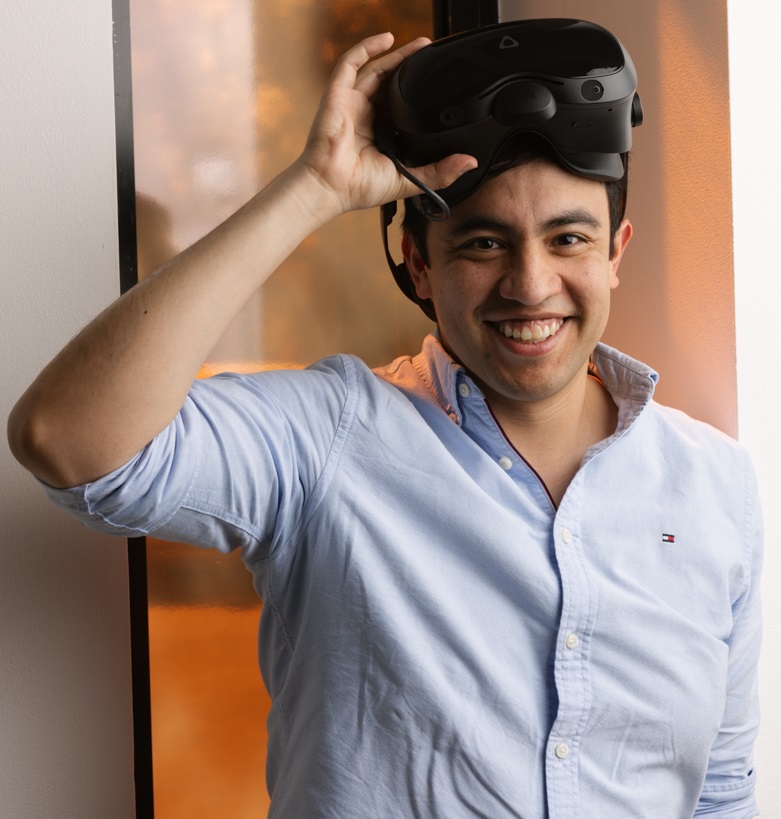
Ali AdjorluView profile
Assistant Professor
Ali Adjorlu is an Assistant Professor at Aalborg University's Department of Architecture, Design and Media Technology. His research focuses on innovative applications of Virtual Reality (VR) to support marginalized populations, particularly children with Autism Spectrum Disorder (ASD), hearing impairments, and social anxiety. He leads the Multisensory Experience Laboratory and collaborates on interdisciplinary projects such as the GAMESS initiative, which develops game-based learning tools for social skills training in ASD education. His work bridges technology, education, and healthcare, emphasizing accessibility and user-centric design. Key collaborations include: Co-supervision of the Haptic Feedback for Hearing Impaired PhD project (2022–2025) Leadership in the GAMESS project (2022–2024), addressing ASD social skills through gamified VR Partnerships with Cirkus Summarum and Danish National Children’s Choir for inclusive VR applications Research interests include: VR interventions for ASD life skill training (e.g., public transportation, communication) Music therapy in immersive environments Hearing conservation and auditory training for cochlear implant users Accessibility frameworks for neurodiverse and disabled populations His publications highlight VR's potential in education, healthcare, and social inclusion, with notable contributions to conferences like IEEE VR and SMC. He actively engages with public media to disseminate research outcomes, appearing in articles about VR therapy for autism and hearing impairment interventions. Adjorlu’s work also explores: VR-based empathy training for parents of hearing-impaired children Collaborative music interfaces for ALS patients Remote UX evaluation methodologies for assistive technologies His research has led to practical tools like Earnormous (a hearing health VR game) and DecibelDefender (concert safety training), demonstrating real-world impact. He emphasizes iterative design processes involving end-users to ensure interventions are both effective and accessible.