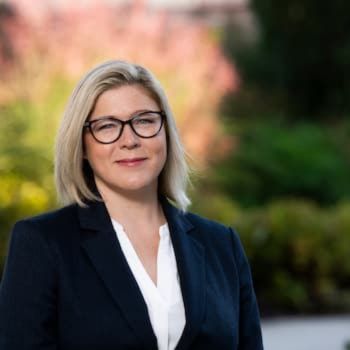
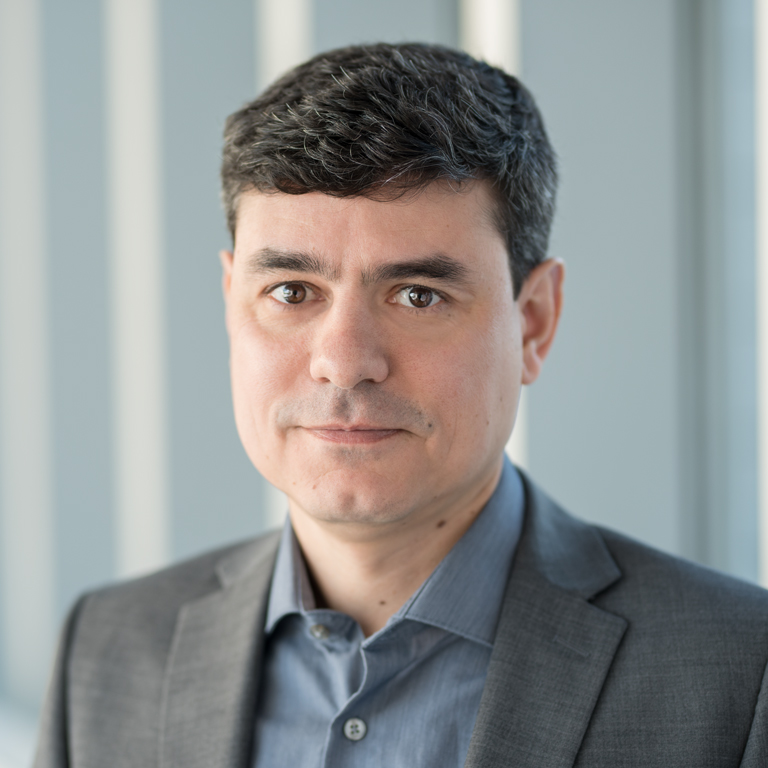
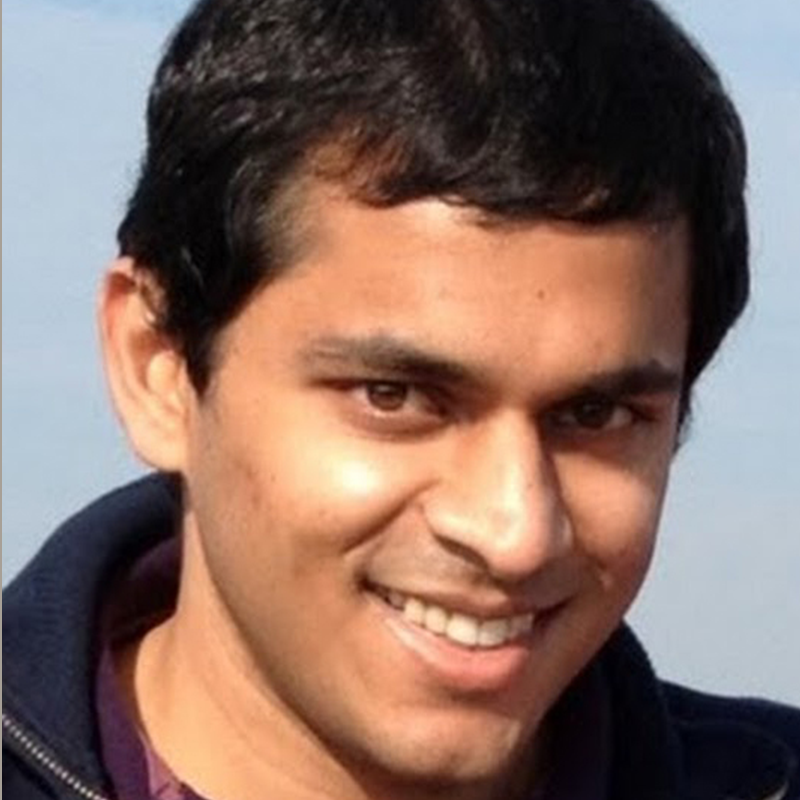
Olga Sorkine-Hornung is a Professor of Computer Science at ETH Zurich and head of the Institute of Visual Computing. She leads the Interactive Geometry Lab, focusing on theoretical and practical advancements in digital content creation, geometry processing, and shape modeling. Current position: ETH Zurich, Department of Computer Science Previous roles: Courant Institute (NYU), Technical University of Berlin Education: BSc and PhD from Tel Aviv University, postdoc at TU Berlin Her research spans shape representation, digital fabrication, computer animation, and fundamental geometry processing. Key contributions include Laplacian surface editing, as-rigid-as-possible deformation, and generalized winding numbers. She works on applications in VR, AR, and autonomous systems. Awards include Test of Time Awards (2024), ACM Fellow (2020), ERC Consolidator Grant (2020), and EUROGRAPHICS Young Researcher Award (2008). She has supervised numerous students and co-developed software libraries like libigl and Instant Meshes . Co-chair roles for SIGGRAPH, Eurographics, and Pacific Graphics Editorial board member for ACM Transactions on Graphics and other journals Keynote speaker at VMV, CVPR, and SIAM conferences Her work bridges mathematical rigor with practical implementation, advancing computer graphics and geometry processing through intuitive algorithms that maintain surface detail while enabling efficient computation.
Amy Bruckman is a Regents’ Professor and Senior Associate Chair in the School of Interactive Computing at Georgia Institute of Technology. As a Fellow of The ACM and member of the SIGCHI Academy , she contributes to social computing research focusing on online collaboration, cross-cultural understanding, and content moderation. Her 2022 book "Should You Believe Wikipedia? Online Communities and the Construction of Knowledge" explores digital knowledge creation. Education: Ph.D. from MIT Media Lab (1997), B.A. in Physics from Harvard (1987) Research Affiliations: GVU Center, IRI People and Technology Her work addresses social computing challenges including: AI ethics in human-AI interaction Algorithmic bias in content moderation Epistemic justice in online communities Comparative platform analysis (Reddit, Discord, TikTok) Grassroots technology movements Recent publications examine: AI support tools for online counseling Community-driven research frameworks Racial bias mitigation in toxic language detection Designing teachable social media experiences Human trafficking intervention ethics Scientific recognition includes: ACM Fellowship SIGCHI Academy membership She has contributed to: Georgia Tech's Computing Education initiatives Research ethics frameworks for Human-Computer Interaction
Professor Winston Hsu is a distinguished faculty member in the Department of Computer Science and Information Engineering at National Taiwan University, where he has served as a full professor since 2015. He is the co-director of the Communications and Multimedia Laboratory (CMLab) and founder of the MiRA (Multimedia indexing, Retrieval, and Analysis) research group. Additionally, he serves as the Founding Director for NVIDIA AI Lab at NTU, the first such lab in Asia. Professor Hsu received his Ph.D. in Electrical Engineering from Columbia University in 2007 under the supervision of Professor Shih-Fu Chang. Prior to his academic career, he was a founding engineer and research manager at CyberLink Corp., now a public image/video software company. National Taiwan University (2007-Present): Professor (2015-Present), Assistant/Associate Professor (2007-2015) MobileDrive (2021-2024): CTO and Vice President (Joint Venture between Foxconn and Stellantis) IBM TJ Watson Research Center (2016-2017): Visiting Scientist Microsoft Research Redmond (2014): Visiting Researcher Columbia University (2007): Ph.D. in Electrical Engineering Professor Hsu's research focuses on machine learning, computer vision, large-scale image and video search and recognition, and embedded AI. His work spans from fundamental research in visual recognition to practical applications in automotive systems, medical imaging, and e-commerce. He has pioneered work in disguised face recognition, low-resolution face hallucination, 3D model search, and virtual try-on systems. His current research emphasizes Embodied AI, integrating perception, action, and learning technologies for applications in automotive and robotics domains. His research group has produced numerous influential publications, particularly in top computer vision and multimedia conferences like CVPR, where they won first place in the Disguised Face Recognition competition in 2018. Their work spans diverse application areas including security, medical diagnostics, automotive systems, and e-commerce solutions, demonstrating strong translation from academic research to real-world impact. IBM Research Pat Goldberg Memorial Best Paper Award (2018) First Place, IARPA Disguised Faces in the Wild Competition (CVPR 2018) Best Brave New Idea Paper Award, ACM Multimedia 2017 NVIDIA AI LAB Award (First in Asia, 2016) First Place, MSR-Bing Image Retrieval Challenge (2013) World's Top 2% Scientists (2023) Professor Hsu actively mentors students and researchers, with his group consistently recruiting PhD students, postdocs, and research assistants. He has successfully bridged academia and industry through multiple collaborations, including his role as CTO at MobileDrive (a joint venture between Foxconn and Stellantis) from 2021-2024. His research has been supported by significant industry partnerships with Microsoft, IBM, and NVIDIA, as well as government grants from Taiwan's Ministry of Science and Technology. His laboratory, the Communications and Multimedia Laboratory (CMLab), maintains strong industry connections and focuses on cutting-edge research in visual AI. The lab has produced numerous award-winning projects and maintains active collaborations with global technology companies, particularly in the automotive and consumer electronics sectors.
Giulio Jacucci is a Professor in the Department of Computer Science at the University of Helsinki, affiliated with the Helsinki Information Technology Research Institute. He serves as a Supervisor in the Doctoral Programme in Computer Science, mentoring PhD candidates in human-computer interaction and related fields. His academic career spans over two decades with continuous research productivity from 2006 through 2025. Professor Jacucci's research interests center on Human-Computer Interaction , particularly focusing on Virtual Reality , Brain-Computer Interfaces , and Neuroadaptive Systems . His work explores how technology can adapt to users' cognitive and physiological states, with significant contributions to social virtual reality environments, embodied agents, and information retrieval systems. He investigates how virtual representations affect social behavior, time perception, and communication in digital spaces. His publication record shows a clear evolution from foundational work in information retrieval toward increasingly sophisticated neuroadaptive systems. Recent publications (2024-2025) demonstrate his leadership in examining social dynamics within virtual reality platforms, including votekicking mechanisms, mirror watching behaviors, and communication tools like mutes. His work bridges technical innovation with deep understanding of human social behavior in digital environments. Professor Jacucci currently leads multiple research projects funded by the Academy of Finland, including DataLit: Datalukutaito ja vastuullinen päätöksenteko (2023-2026) and MyModel: Selitettävyys suositusten hallinnassa (2023-2027). These projects focus on data literacy, responsible decision-making, and explainability in recommendation systems, reflecting his commitment to ethical and user-centered technology development. His research has received media attention, particularly around brain-computer interfaces and virtual reality applications, with coverage in outlets discussing how deep learning transforms mobile applications and sensor landscapes. He has presented his work at major conferences including CHI 2017 and continues to be an active contributor to the international research community.
Rita Cucchiara is a Full Professor at the Department of Engineering 'Enzo Ferrari' of the University of Modena and Reggio Emilia. She leads the AImageLab research laboratory, part of the Artificial Intelligence Research and Innovation Center (AIRI) in Modena. Her research focuses on Computer Vision, Pattern Recognition, Machine Learning, and Multimedia, with applications in video surveillance, medical imaging, human-centered AI, and generative models. She is actively involved in interdisciplinary projects like ELIAS (European Lighthouse for AI Sustainability) and ELSA (European Lighthouse on Secure AI). Her recent roles include being elected Rector of the University of Modena and Reggio Emilia in 2025. She has organized and participated in major AI events, including workshops at NeurIPS, CVPR, and ECCV, and has contributed to advancements in multimodal models, deepfake detection, and trustworthy AI. Education details are not explicitly provided, but her extensive academic and research experience at the University of Modena underscores her expertise. She collaborates with institutions like NVIDIA, CINECA, and industry partners such as Digital Design and NVIDIA's AI Technology Center. AImageLab's projects include developing systems for medical imaging, ethical AI, and generative adversarial networks (GANs) for design surfaces. She co-organizes initiatives like the ELLIS Summer School on Large-Scale AI and contributes to policy discussions on AI ethics and societal impact. Her work spans from foundational research (e.g., vision transformers, continual learning) to applied projects (e.g., DDGan system for surface printing). Key grants and collaborations include the FAIR project and PNRR-M4C2 initiatives. She advises students and researchers in AI, with 7 PhD positions funded under national programs. Her leadership roles in AIRI and AImageLab highlight her commitment to bridging academia and industry, fostering innovation in AI-driven solutions for sustainability and healthcare.
Prof. Dr. Nicole Ondrusch is a Professor at Heilbronn University (HHN) within the Faculty of Computer Science. She specializes in teaching methodological fundamentals of software engineering, including ERP systems, Design Thinking, Change Management, and digital transformation. Her research focuses on educational concepts for computer science technologies and future-relevant skills. Key Roles and Projects: Member of BW-CAR doctoral center Organizer of Barcamp Heilbronn, an unconference teaching project fostering student teamwork Principal investigator in funded projects like DigiTrans (digital transformation education) and DEV:GAMES (educational game development) SAP Academic Board DACH spokesperson since 2021 Research Interests: Her work emphasizes innovative teaching methods such as Design Thinking, agile project implementation, and digital experimentation. She explores ethical AI education, interdisciplinary collaboration, and the societal impact of digital transformation. Nicole also develops practical teaching tools like virtual escape rooms and game-based learning frameworks. Grants & Partnerships: Funded by DAAD (DigiTrans), Stiftung Innovation, and others Collaborates with industry partners like SAP and local IT organizations (ConnectIT) Labs & Teams: She leads the Lab:D initiative, developing digital teaching platforms, and co-organizes the Barcamp, a student-led event integrating real-world project management and community building.
Franziska Mueller is a Research Scientist at Google Zurich , specializing in Augmented Perception . Prior to joining Google, she earned her Ph.D. in Computer Science at Saarland University under the supervision of Prof. Dr. Christian Theobalt, focusing on real-time hand reconstruction from RGB and depth images. Ph.D. in Computer Science (2016-2020) at Saarland University Master’s and Bachelor’s in Computer Science at Saarland University Research visits at Stanford University (2018) and Reality Labs Research (2019) Her research emphasizes the integration of model-based techniques and machine learning components for real-time 3D hand pose estimation, occlusion handling, and hand-object interaction tracking. Key contributions include methods for single-camera reconstruction and datasets like HandSeg. Scientific Awards : Dr. Eduard Martin Award (2021) Google PhD Fellowship (2017) Günter-Hotz-Medal (2016) Bachelor Award (2015) Völklinger Abiturpreis (2012)
Dr. Andrew Hines is a Researcher at the School of Computer Science, University College Dublin, specializing in machine learning applications for signal processing in speech, audio, and video domains. His work focuses on Quality of Experience (QoE) modeling, speech quality assessment, and immersive media analysis. He has held leadership roles in European COST Actions like Qualinet and CryptoAction, and previously worked in industry as a Director of Engineering. University: University College Dublin Role: Director of Research, Innovation and Impact Key Collaborations: IEEE (Senior Member), Audio Engineering Society (Ireland) Research interests center on machine learning for QoE optimization, audio-visual integration, and healthcare applications like heart sound classification and stroke rehabilitation. His recent publications explore self-supervised learning, neural speech codecs, and contextual factors in speech/audio quality assessment. Scientific contributions include awards like IEEE Senior Membership, and his work spans both academic research and industrial engineering in finance and aviation sectors. He leads the QxLab research team at UCD and develops open-source platforms such as WARP-Q and AQP for quality metrics.
Dr. James Gilmore is an Associate Professor and Graduate Coordinator in the Department of Communication at Clemson University's College of Behavioral, Social and Health Sciences. He joined Clemson in 2018 after earning his Ph.D. in Communication and Culture from Indiana University. His academic foundation includes an M.A. in Film and Television from UCLA and a B.A. in Film and Media Studies from the University of South Carolina. Research Focus Dr. Gilmore's research examines the cultural politics of media and communication technologies, with emphasis on datafication (how human behavior is converted into data), wearable technologies (e.g., smartwatches, fitness trackers), and infrastructural systems . His work critiques surveillance norms, accessibility design, and solutionist approaches in tech. He authored Bringers of Order: Wearable Technologies and the Manufacturing of Everyday Life (UC Press, 2025) and co-edited anthologies on Orson Welles and superhero digital convergence. Publication Trends His recent articles (2020-2025) cluster around three themes: wearable tech ethics (e.g., forensic uses of Fitbit/GoPro data), streaming/platform infrastructures (e.g., Disney’s data reflexivity, Capitol Riot documentation), and surveillance politics (e.g., geofencing, CAD systems). Methodologically, he blends critical-cultural analysis with industry ethnography, often highlighting tensions between technological promise and social consequence. Awards and Honors Top Paper Award, Southern States Communication Association (2024) Outstanding Teaching Award, Clemson University (2022-2023) Outstanding Research Publication, Clemson University (2022) Ray Camp Research Award, Carolinas Communication Association (2018) Graduate Writing Prizes, Indiana University (2016) Advising and Service Dr. Gilmore mentors graduate/undergraduate researchers, co-authoring with 17+ students on topics like VR accessibility, mental health platforms, and AI negotiations. As Graduate Coordinator, he oversees program development and student progression. He serves as an expert source for media outlets (Wired, The Verge) on technology culture and maintains an active public scholarship profile.
Jennifer Lavoie is an Associate Professor at Wilfrid Laurier University's Faculty of Human and Social Sciences, affiliated with the Department of Psychology and Criminology. She specializes in mental health crisis response, policing strategies, de-escalation techniques, and scenario-based training. Wilfrid Laurier University: Faculty of Human and Social Sciences, Psychology and Criminology Departments Research Interests : Her work focuses on integrating virtual reality and scenario-based training to improve police de-escalation skills. She examines violence risk assessment , correctional systems , and housing first programs for homeless individuals with mental illness. Recent studies address big data governance , cyberstalking victimization , and community-driven policing approaches . Publication Trends : Her research spans mental health policy , police training efficacy , and technological integration in crisis management . She explores virtual reality applications and community co-designed interventions , alongside longitudinal studies on stress and coping mechanisms in correctional and psychiatric settings. Scientific Awards : No scientific awards listed in available data. Advising : Actively supervises students in psychology and criminology, with unlisted advisees. Her work bridges academic research and practical policing applications .
**Danilo Dantas** is a **Professor** in the **Department of Marketing** at **HEC Montréal**, a leading business school in Canada. He holds additional roles as the **Pedagogical Coordinator of the Specialized Graduate Diploma (D.E.S.S.) in Arts Management** (in French) and a **Regular Member** of the **Observatoire Interdisciplinaire de Création et de Recherche en Musique (OICRM)**. His expertise spans **Music Marketing**, **Database Marketing**, and **Electronic Commerce**, with a focus on cultural branding, consumer engagement, and digital strategies in creative industries. **Education**: He earned his **Doctorat ès sciences de gestion (marketing)** from Université de Grenoble II, along with advanced degrees including a **D.E.A. in Sciences de Gestion (marketing)**, **D.E.S.S. in Commerce International**, and a **B.A.A. in Administration** from UFRGS, Brazil. **Research & Teaching**: Professor Dantas teaches courses such as *Marketing des arts et de la culture* and *Analyse des bases de données en marketing*. His research investigates topics like cultural branding (e.g., leveraging live music for city brands), music industry strategies, and consumer behavior in digital ecosystems. Recent work explores the interplay between brand fit and new product performance, social media impact on online communities, and e-Government service quality metrics. **Advising**: He has supervised **2 PhD dissertations**, **7 Master’s theses**, and **21+ supervised projects**, covering areas such as VR consumer experiences, vinyl store dynamics, and festival attendee motivations. His projects often address practical challenges in arts management, digital transformation, and cultural policy. **Labs/Teams**: His affiliation with OICRM integrates music creation and research, while his work with the Chaire de gestion des arts Carmelle et Rémi-Marcoux emphasizes arts management education and data-driven decision-making.
Minh Hue Nguyen is a Senior Lecturer in EAL/TESOL Teacher Education at Monash University's School of Curriculum, Teaching and Inclusive Education within the Faculty of Education. She holds a PhD in Education (TESOL focused) from Monash University and has taught at Vietnam National University, Deakin University, and the University of Melbourne. Her educational background includes: PhD in Education (TESOL focused), Monash University (2015) MA in Applied Linguistics, Victoria University of Wellington (2008) BA in English Language Teaching, Vietnam National University (2003) Nguyen's research centers on teachers' professional learning, curriculum, and pedagogy in TESOL and EAL contexts, with specific focus on emotional experiences, identity development, mentoring, agency, and collaboration. She explores sociocultural contexts of teacher development through activity theory and sociocultural perspectives, examining how institutions support teachers' learning journeys from preservice to in-service stages. Recent work investigates professional learning for teacher educators and implementation of the Victorian EAL Curriculum. Her 15 most recent publications (2024-2025) reveal a strong thematic focus on language teacher agency, identity negotiation, and multilingual pedagogies. The research increasingly examines emotional dimensions of teaching, cross-cultural identity tensions, and collaborative models between EAL and content teachers, with significant contributions to understanding how teachers navigate complex educational contexts while developing professional identities. Her scientific recognition includes: Penny McKay Award Special Commendation Monash Education Research Community's Publication Award ATEA/Kay Martinez Award for Best Paper Monash Dean of Education’s ECR Project Award Advancing Women's Research Success Grant Vietnamese Government Merit-based Scholarships Nguyen actively supervises PhD research in TESOL teacher professional learning, teacher identity, and curriculum development, though is currently unavailable for new PhD students until 2027. She contributes to editorial boards for Teaching and Teacher Education, Second Language Teacher Education, and System journals, and serves on the Australian Teacher Education Association. Her work supports UN Sustainable Development Goal 4 (Quality Education) through inclusive pedagogical frameworks. She leads research projects including 'Elucidating practices to assist EAL learners to acquire specialised science vocabulary' and 'Establishing an online community-of-practice model for learner agency during work placements,' demonstrating commitment to practical educational innovations.
Dr. Tan Kim Lim is a Senior Lecturer at the James Cook University (Singapore Campus), specializing in organizational psychology and consumer behavior. He holds a PhD from Curtin University (2016–2019), an MBA from the University of Melbourne (2004–2006), and a Bachelor of Business from Monash University (1999–2002). His research focuses on the future of work, employee attitudes, technology adoption in hospitality/tourism, and consumer behavior analysis. He employs advanced methodologies like PLS-SEM and has published over 47 articles in top journals like the European Business Review and Asia Pacific Journal of Marketing and Logistics . Dr. Lim has held roles including Assistant Professor at BNU-HKBU United International College (2020–2022) and Post-doctoral researcher at the Human Capital Leadership Institute (2019–2021). He currently serves on editorial boards of the Journal of Responsible Tourism Management and Journal of Global Responsibilities , and is a member of the Singapore Human Resource Institute and Society of Industrial-Organizational Psychology. His applied research spans commissioned projects for governments and private entities, including studies on waste classification behavior, country music festivals, and AI adoption in social services. Awards include the JCUS Early Career Researcher Award (2023) and Emerald Literati Reviewer Award (2022). Dr. Lim also actively speaks at regional conferences on topics like AI in networking and post-pandemic workplace trends. His current research interests include STARA (Smart Technologies, AI, Robotics, Algorithms) impacts on work, meaningful work dynamics, and tourism behavior analysis. He supervises PhD students exploring AI in social services, indigenous tourism, and workplace technology adoption.
Aldo Gangemi is a Full Professor in the Department of Philosophy at the University of Bologna, specializing in Informatics (INFO-01/A). His research integrates Semantic Technologies, Natural Language Processing, Data Science, and Cognitive Science to address challenges in knowledge representation, ontology engineering, and cultural heritage informatics. He co-founded the STLab at ISTC-CNR and DHARC at the University of Bologna, and is on leave from Sorbonne Paris Nord University (Computer Science Lab - LIPN). Scientific roles include serving as area chair for Web Semantics , editorial board member for Semantic Web and Applied Ontology , and conference chairs for major events like WWW2015 and ESWC2018. He has led European projects such as GALEN, WonderWeb, NeOn, and MARIO, and developed software tools like FRED, Aemoo, and Framester. Research interests focus on semantic technologies, knowledge patterns, and applications in humanities, medicine, law, and fisheries. Over 250 peer-reviewed publications span these areas, with emphasis on ontology-based knowledge integration, multimodal reasoning, and ethical AI. His work bridges cognitive science and technological innovation, particularly in virtual reality's societal applications and cultural heritage preservation. Notable contributions include the PRIVAFRAME knowledge graph for sensitive data, the ImageSchemaNet ontology for embodied cognition, and the Sandra neuro-symbolic reasoner. His interdisciplinary approach addresses challenges in AI ethics, creative systems, and citizen-driven data curation.
Vyas Sekar is the Tan Family Professor of Electrical and Computer Engineering at Carnegie Mellon University (CMU), with a courtesy appointment in the Computer Science Department. He is affiliated with CyLab and co-directs the Future of Enterprise Security initiative. His research focuses on networking, cybersecurity, distributed systems, and IoT security, with an emphasis on data-driven approaches and network verification. Education: Ph.D. in Computer Science (2010) from CMU; B.Tech. from IIT Madras (President of India Gold Medal recipient). Professional roles include Chief Scientist at Conviva and co-founder of Rockfish Data. Research Interests: Cybersecurity, network security, software-defined networking (SDN), IoT security, DDoS defense, privacy-preserving data sharing, and network performance optimization. Recent work includes developing tools like Pigasus (FPGA-accelerated intrusion detection), Nomad (cloud side-channel mitigation), and frameworks for anomaly detection in IoT networks. Articles Trends: Recent publications address advanced threats like LLM-driven network attacks, stealthy automotive network exploits (CANDid), and optical-layer DDoS defenses. Emphasis on practical solutions (e.g., SketchPlan for telemetry, Pryde for firewall evasion detection). Awards: ACM SIGCOMM Test of Time Award (2022), IIT Madras Young Alumni Achiever Award (2022), Intel Outstanding Researcher Award (2021), and NSF CAREER Award (2016). Recognized for contributions to intrusion prevention, network security, and IoT resilience. Grants & Projects: Led NSF-funded ONSET project (optical-layer DDoS defense), CyLab's Secure IoT Initiative, and collaborations with industry partners like Intel, Facebook, and Nokia Bell Labs. Advises graduate students in cybersecurity and networking. Labs & Teams: Active contributor to CyLab, co-developer of frameworks like Lumos (hidden IoT device detection) and KalKi (IoT security platform). Engages in interdisciplinary research across CMU’s Robotics Institute and Software Engineering Institute.