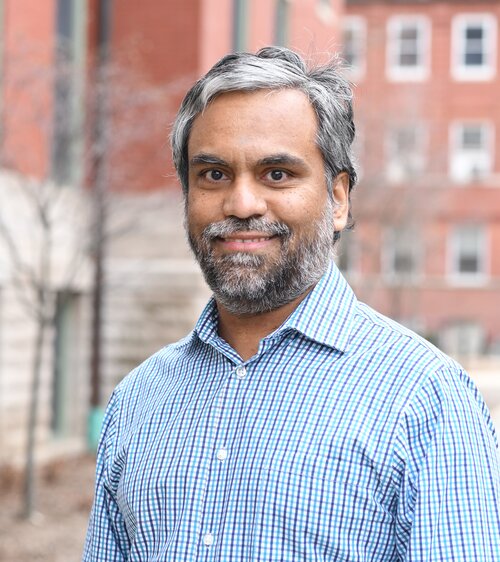
Anand Padmanabhan is a Research Associate Professor in the Department of Geography & Geographic Information Science at the University of Illinois at Urbana-Champaign (UIUC), affiliated with the School of Earth, Society & Environment within the College of Liberal Arts & Sciences. He holds a Ph.D. in Computer Science from the University of Iowa, alongside an MS in Computer Science (University of Iowa) and a BE in Computer Engineering (University of Mumbai). His research focuses on advanced cyberinfrastructure, cyberGIS, geospatial data science, and high-performance computing. He leads the spatial algorithms and systems team at the CyberGIS Center for Advanced Digital and Spatial Studies, developing cyberGIS capabilities to leverage advanced computing for geospatial innovation. His work emphasizes scalable geocomputation, cloud-based frameworks, and reproducible research environments, with contributions to tools like CyberGIS-Compute and EasyScienceGateway. Recent publications highlight advancements in science gateway frameworks, middleware systems, and geospatial education platforms. He serves as Online MS Program Adviser and has secured NSF and EPA grants for interdisciplinary projects. His work spans transdisciplinary training programs, urban sensing analytics, and integration of social media with geospatial data.
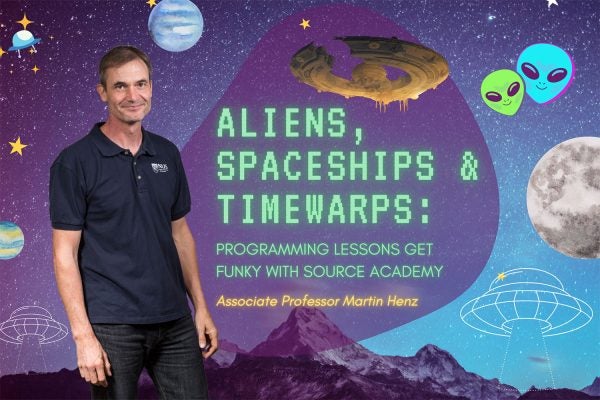
Martin Henz is an Associate Professor at the National University of Singapore , affiliated with the School of Computing and its Department of Computer Science . His academic journey includes an M.Sc. in Computer Science from Stony Brook University (1993) and a Dr.rer.nat. in Computer Science from Saarland University (1997). He has also worked as a Research Scientist at the German Research Centre for Artificial Intelligence. Research Focus : Scalable Experiential Learning, Systems for Teaching/Learning, AI in Education, Programming Languages, Algorithms, and Constraint Programming. Key Projects : Source Academy (immersive programming environment), Deep Teaching (LMS enhancements), and NUS Seafarers (maritime experiential learning). Publications span education technology, programming languages, and sustainable engineering, with recent works focusing on JavaScript-based pedagogy, automated question generation, and electric vehicle conversions. He supervised Rahul Singhal 's PhD, leading to the educational startup Cerebry, and co-founded Workforce Optimizer Pte Ltd with Alan Sevugan. Awards : NUS Annual Digital Education Award (2021) NUS Annual Teaching Excellence Award (2016/17) Fulbright Scholarship (1990) Startup @ Singapore Champion (2001)
Dr. Gavin McArdle is an Associate Professor at the University College Dublin (UCD) School of Computer Science, specializing in spatial data analysis and smart cities. He holds academic affiliations with the National Centre for Geocomputation (Maynooth University) and CeADAR (Data Analytics Centre). His research focuses on urban dynamics, geovisual analytics, smart transportation, and remote sensing applications. He has received a College of Science Teaching Excellence Award for his contributions to education. McArdle earned his BSc, PhD, and a Prof Dip in University Teaching & Learning from UCD. His work bridges academia and industry through collaborative grants, including those from Science Foundation Ireland and EU funding. Notable projects include the Dublin Dashboard (urban analytics platform) and DubSim (traffic simulation using digital footprints). His research outputs span over 147 publications, with recent work addressing Airbnb's impact on urban gentrification, sustainable mobility, and environmental monitoring via satellite data. He actively contributes to professional committees, including roles in the UCD Data Protection Impact Assessment Committee and international conferences like Web and Wireless GIS. McArdle coordinates courses such as Research Practicum and Computer Programming II, emphasizing practical research and technical skills. His interdisciplinary approach integrates machine learning, spatial statistics, and urban informatics to address real-world challenges in smart cities and environmental sustainability.
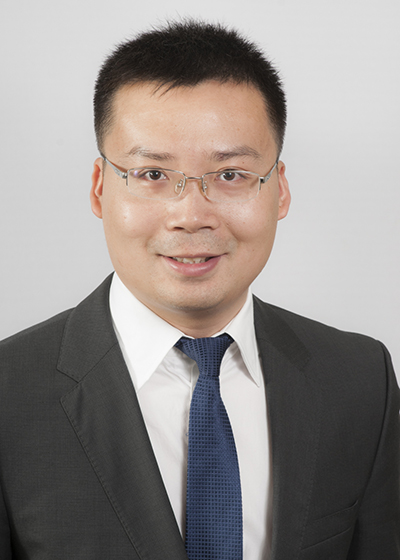
Dr. Zichun Zhong is an Associate Professor and Graduate Program Director in the Department of Computer Science at Wayne State University's James and Patricia Anderson College of Engineering. He earned his Ph.D. from the University of Texas at Dallas and completed postdoctoral training at UT Southwestern Medical Center. His research focuses on geometric modeling, computer graphics, medical image processing, and visualization technologies. Research encompasses: Geometric modeling of surfaces and volumes 3D computer vision and reconstruction Medical image segmentation and visualization Virtual/augmented reality applications GPU-accelerated algorithms Awards and honors include NSF CAREER and CRII awards, Faculty Research Excellence Award, and Excellence in Teaching recognition. He serves as Technical Paper Chair for Shape Modeling International conferences and associate editor for multiple journals. Current doctoral advisees: Shiman Zhou, Hongbo Li, Haikuan Zhu, and Sikai Zhong. Notable alumni include researchers at Samsung NEON, Skoltech, and General Motors.
Kerri McBee-Black is Assistant Professor and Helen Allen Faculty Fellow in the Department of Textile and Apparel Management at the University of Missouri, affiliated with the College of Arts & Science. She holds a PhD, MS, and BS from Missouri institutions and is a CLO3D Accredited Instructor. Her research focuses on adaptive apparel design addressing needs of people with disabilities. Education includes: PhD, University of Missouri MS, University of Missouri BS, Columbia College McBee-Black's work pioneers inclusive design innovations through user-centered approaches, examining functional challenges like independent dressing mechanisms and wheelchair-adaptive clothing. She investigates industry certification standards and digital commerce accessibility while integrating historical costume features into contemporary adaptive solutions. Her research employs mixed methodologies including systematic reviews, case studies, and participatory design. Recognitions include: Innovative Excellence Award (University of Missouri System) Multiple Langsam Family Faculty Appreciation Awards Over $74,000 in funded research grants She mentors undergraduate/graduate design projects and integrates industry partnerships into curriculum development.
Kyle B. Reed serves as an Associate Professor in the Department of Mechanical Engineering at the University of South Florida's College of Engineering. His academic career at USF has progressed from Assistant Professor (2009-2016) to his current position as Associate Professor (2016-present), following postdoctoral research at Johns Hopkins University. He teaches specialized courses including Haptics (EML 4593/6594), Mechanical Controls, and Advanced Engineering Mathematics. Dr. Reed earned his Ph.D. (2007) and M.S. (2004) in Mechanical Engineering from Northwestern University, and his B.S. in Mechanical Engineering from the University of Tennessee-Knoxville (2001). Prior to his faculty position, he completed postdoctoral research at Johns Hopkins University's Laboratory for Computational Sensing and Robotics (2007-2009) and worked as a researcher at Los Alamos National Laboratory (1998-2001). His research focuses on rehabilitation engineering, haptics, human-robot interaction, and medical robotics, with applications in medical devices and rehabilitation technologies. The REED Lab (Rehabilitation Engineering and Electromechanical Design Lab), which he directs, develops innovative solutions for human motion analysis and assistive technologies. His work bridges fundamental engineering principles with clinical applications, particularly in stroke rehabilitation and assistive device development. Analysis of his publication record shows consistent contributions to haptics research, human-robot interaction, and rehabilitation engineering. His work spans theoretical investigations of human motor control to practical applications in medical devices, with publications appearing in venues like IEEE Transactions on Haptics, EMBC, and Haptics Symposium. Recent work emphasizes wearable haptic devices, rehabilitation robotics, and human factors in medical technology. Developed the Gait Enhancing Mobile Shoe (GEMS) prototype during postdoctoral work Created minimally invasive steerable needle system for biopsies at Johns Hopkins Established REED Lab focusing on rehabilitation engineering and haptic technologies Developed innovative haptic devices for communication, rehabilitation, and education Dr. Reed actively mentors students through the REED Lab, supervising both graduate and undergraduate researchers. His teaching philosophy emphasizes building intuition while providing frameworks for logical problem-solving. He incorporates substantial project components into his courses, with students regularly developing haptic devices and robotics applications that sometimes lead to publications. The lab maintains strong outreach connections, working with K-12 students to promote engineering education. The REED Lab, located in the Interdisciplinary Research Building Room 114 on USF's Tampa campus, serves as the hub for his research activities. Current projects include wearable haptic devices for communication, diagnostic tools for Parkinson's disease, and rehabilitation technologies for gait analysis. The lab maintains strong connections with both clinical partners and industry, facilitating translational research from concept to application.
Dr. Michael Decker is the Maroulis Professor of Byzantine History and Orthodox Religion at the University of South Florida, serving in the Department of History within the College of Arts and Sciences. He holds an Associate Professor rank and has been affiliated with USF since August 2004. His academic career includes a postdoctoral fellowship at Rice University (2002-2004) and a Mellon Fellowship. Educated at the University of Oxford, he earned a Ph.D. (2001) and M.St. (1995) in Modern History, focusing on late antiquity and the Byzantine era. His research interests span Byzantine history, Mediterranean archaeology, agricultural technology in antiquity, and trade networks. Notable projects include the Cambridge Handbook to Byzantine Archaeology (under contract) and studies on Sicily’s history (535-1061 AD) and Sasanian warfare. Dr. Decker also explores overland trade in the Levant and the Oxford Archaeological Survey in Syria. Education: Ph.D., Modern History, Oxford University, 2001 M.St., Oxford University, 1995 Dr. Decker’s publications reflect his interdisciplinary approach, blending history, archaeology, and digital humanities. Recent works include The Byzantine Art of War (2012) and Tilling the Hateful Earth (2010). He actively contributes to academic journals like Ancient West & East and serves as a referee for Cambridge University Press and other publishers. Awards and Fellowships: Fulbright Scholarship (2007) Center for the Defense of Democracies Fellow (2008) Craven Committee Award (1998-2000) He has held leadership roles in university committees, including the USF Department of History Executive Council and the Center for 21st Century Teaching Excellence. His teaching innovations include integrating digital archives of Middle Eastern travel narratives into curricula.
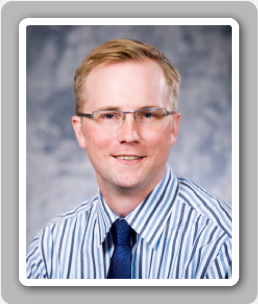
Ali Ghanbari is an Assistant Professor in the Department of Computer Science and Software Engineering at Auburn University's College of Engineering. His research focuses on software engineering, programming languages, and data science, with an emphasis on automated program repair, deep learning, and mutation analysis. He received his Ph.D. in Software Engineering from the University of Texas at Dallas and his M.Sc. and B.Sc. from Amirkabir University of Technology in Tehran, Iran. Education: Ph.D. Software Engineering, University of Texas at Dallas M.Sc. Software Engineering, Amirkabir University of Technology B.Sc. Software Engineering, Amirkabir University of Technology Research Interests: Dr. Ghanbari's work spans automated program repair, deep neural network analysis, and mutation-based fault localization. He explores techniques to enhance software quality through methods like patch correctness assessment, object similarity-based prioritization, and optimization of mutation testing frameworks. His contributions include frameworks such as PRF and tools like Shibboleth for hybrid patch evaluation. Publications Trends: His recent work highlights advancements in accelerating mutation analysis, improving deep learning models via modular decomposition, and refining automated repair techniques. Notable contributions include Rocq for goal clone detection and MeMu for faster mutation analysis. Awards & Grants: No specific awards or grants mentioned in the provided materials. Advising & Labs: While no advisees are listed, his research group likely focuses on program repair and deep learning applications. His work is supported by datasets like Defexts, which provides reproducible real-world bugs for JVM languages.
Suryadipta Majumdar is an Associate Professor at the Concordia Institute for Information Systems Engineering (CIISE), part of Concordia University. His primary research interests focus on Cloud Computing Security and Privacy, Internet of Things (IoT) Security and Privacy, and Software-Defined Network (SDN) Security. He has contributed extensively to proactive security measures in containerized systems and Kubernetes environments, alongside developing tools like ACE-WARP and PerfSPEC to address real-time threats. In terms of education, he holds a PhD in a relevant field, though specific details about his academic background (e.g., institutions, thesis topics) are not explicitly mentioned in the provided text. His work bridges theoretical cybersecurity frameworks with practical implementations, emphasizing automated translation, differential privacy, and compliance auditing across cloud and IoT ecosystems. Majumdar’s research trends highlight a focus on layered security analysis, anomaly detection in IoT networks, and mitigating vulnerabilities in network functions virtualization (NFV). He has explored topics such as resilient in-band OpenFlow networks, runtime security policy enforcement in OpenStack, and privacy-preserving network data anonymization via tools like SegGuard. His recent publications reflect collaboration with international conferences and workshops, including contributions to Digital Forensics and Applied Cryptography. No scientific awards are explicitly mentioned in the text. His advising activities and grant history remain unlisted, though he has developed notable security frameworks and tools. He is affiliated with CIISE and likely contributes to its research initiatives in emerging technologies like 5G and edge-core environments.
Fernando Lopez-Lezcano is a Lecturer at Stanford University's Center for Computer Research in Music and Acoustics (CCRMA) where he has been working since 1993. His work combines music composition, electronic engineering, and programming with a focus on spatial audio and sound diffusion technologies. He was the Edgar Varese Guest Professor at TU Berlin during the Summer of 2008 and is the 2014 winner of Stanford's Marsh O'Neill Award for Exceptional and Enduring Support of Stanford University's Research Enterprise. Lopez-Lezcano's research interests center on computer music, spatial audio technologies, and sound diffusion systems. He has pioneered work in High Order Ambisonics (HOA), developing novel decoders and reverberation architectures for immersive sound environments. His work on the SpHEAR Project has created innovative 3D-printed soundfield microphone arrays, while his development of the GRAIL (Giant Radial Array for Immersive Listening) has revolutionized concert speaker arrays for HDLAs (High Density Loudspeaker Arrays). He has also created numerous open-source tools and software environments for spatial sound composition and diffusion. His recent creative output demonstrates a consistent exploration of 3D sound spatialization, modular synthesis, and interdisciplinary collaborations. Across his compositions, he frequently integrates custom-built hardware like his modular synthesizers (including the famous 'El Dinosaurio' built in 1980-81) with sophisticated software environments written in SuperCollider. His work often bridges acoustic and electronic sound sources, creating rich spatial experiences that explore the relationship between technology and artistic expression. Among his notable achievements is the 2014 Marsh O'Neill Award, recognizing his exceptional support of Stanford's research enterprise. This prestigious award was inspired by Marsh O'Neill, Associate Director of the W.W. Hansen Laboratories, and honors outstanding staff members who support faculty research activities. Lopez-Lezcano has mentored numerous students in the development of musical instruments and performance systems, most notably the 'Ensemble AnaLocos' (Analógicos Locos or 'Crazy Analogs') which created the 'Noise Toaster' synthesizers. He has also developed important infrastructure for CCRMA including 'Planet CCRMA,' a collection of open-source audio software for Linux. His teaching includes the 'Sound in Space' course (Music 222), which covers historical background, techniques, and theory on the use of space in music composition and diffusion. He directs the CCRMA Stage concerts and has been instrumental in developing CCRMA's spatial audio infrastructure, including the GRAIL system used in Bing Concert Hall. His work with the SpHEAR Project has advanced 3D sound recording techniques, while his collaborations with performers like Michiko Theurer (violin) and Chris Chafe (celletto) have produced innovative interdisciplinary performances.
Kannan Srinivasan is the H.J. Heinz II Professor of Management, Marketing and Business Technology at Carnegie Mellon University's Tepper School of Business, a position he has held since 1999. Prior to joining CMU, he taught at the business schools of the University of Chicago and Stanford University. His academic career spans over three decades with significant contributions to marketing science and data analytics. His educational background includes: Ph.D. in Management from University of California Los Angeles (1986) MBA in Marketing/Finance from Xavier School of Management, Jamshedpur, India (1980) BA in Engineering from University of Madras, Chennai, India (1978) Srinivasan's research focuses on advanced data analytics models applied to marketing problems, with particular expertise in internet-generated large-scale data analysis. His work bridges the gap between theoretical marketing models and practical business applications, especially in the areas of algorithmic pricing, consumer behavior analysis, and AI-driven marketing strategies. He has pioneered research in dynamic pricing systems, location-aware marketing technologies, and the economic implications of AI in consumer markets. Analysis of his recent publications reveals a strong trend toward examining the intersection of artificial intelligence, consumer welfare, and market dynamics. His work increasingly focuses on ethical implications of AI in marketing, algorithmic bias, and the socioeconomic impacts of digital platforms across various sectors including real estate, social media, and e-commerce. His scientific achievements include: Elected Fellow of the Informs Society of Marketing Science (2013) for lifetime contribution to the field Served as President of the Informs Society of Marketing Science Holds multiple patents related to time and location aware dynamic push content, dynamic pricing, and online advertising Srinivasan has advised numerous doctoral students whose careers have led them to faculty positions at top institutions including Duke, Harvard, Columbia, Yale, University of Chicago, Wharton, University of Michigan, and Indian Institute of Management Bangalore. He has extensive consulting experience with large firms and startups, translating academic research into practical business applications. His professional service includes editorial roles at prestigious journals including Management Science, Marketing Science, and Quantitative Marketing and Economics, as well as significant committee service within CMU including the Elliott D. Smith Award Committee and various Dean's Advisory committees. His research is organized around several key initiatives focused on applying advanced analytics to solve complex marketing problems, with particular emphasis on developing interpretable AI models that balance business objectives with consumer welfare considerations.
Akshay Narayan is a Senior Lecturer (Educator Track) at the School of Computing, National University of Singapore (NUS), where he teaches senior undergraduate and graduate-level courses in AI Planning and Decision Making, as well as introductory and intermediate-level Software Engineering courses. Education: Ph.D. in Computer Science from National University of Singapore (completed in 2020) M.Tech. in Information Technology from International Institute of Information Technology Bangalore, India B.E. in Computer Science & Engineering from Visveswaraya Technological University, India Research Interests: Dr. Narayan's research spans multiple domains within computer science with a primary focus on artificial intelligence and its applications. His current research centers on transfer learning in reinforcement learning, multi-agent decision making, and AI planning. He has also made significant contributions to cloud computing research, particularly in areas such as smart metering, chargeback systems, power-aware cloud metering, and workload analysis for virtual machine sizing. His work bridges theoretical foundations with practical applications, addressing real-world challenges in computing systems. He has recently expanded his research to include technology in education, exploring how AI can be integrated into teaching and learning processes. Publication Trends: Dr. Narayan's publication record demonstrates a clear evolution from foundational work in cloud computing to more recent explorations in reinforcement learning and AI education. His early work focused on practical applications in cloud systems, including smart metering and QoS monitoring. More recently, his research has shifted toward AI planning, decision making, and the educational applications of AI. This progression shows his ability to adapt to emerging fields while maintaining a strong foundation in systems research. Awards and Recognition: Teaching and Mentoring: Dr. Narayan teaches a variety of courses at NUS including CS2113 Software Engineering & Object-Oriented Programming, CS3219 Software Engineering Principles and Patterns, CS3268 Responsible AI: From Algorithms to Impact, and IT5100F Industry Readiness: Data Analytics and AI in Practice. He has also taught CS4246/CS5446 AI Planning and Decision Making. His teaching approach integrates his research expertise with practical applications, providing students with both theoretical foundations and hands-on experience. He has taught these courses across multiple academic years from AY-2013/14 through AY-2020/21. Research Groups and Collaborations: Dr. Narayan has collaborated with researchers across multiple institutions, including work with Prof. Tze Yun Leong at NUS (his PhD advisor), Shrisha Rao, Zhuoru Li, and others. His research has often involved interdisciplinary collaborations that bridge theoretical computer science with practical system implementations.
Dr. Jiaojiao Jiang is a Senior Lecturer in the School of Computer Science and Engineering at the University of New South Wales (UNSW). She holds a Ph.D. from Deakin University (Melbourne, Australia) and has published over 45 articles with 1,100+ citations. Her research focuses on AI-driven cybersecurity solutions, particularly misinformation detection and modeling information propagation dynamics. She is affiliated with UNSW's Sydney campus and can be contacted at jiaojiao.jiang@unsw.edu.au . Education: Ph.D., Deakin University, 2010s Research Interests: Artificial Intelligence applications in cybersecurity Misinformation detection and network analysis Machine learning for network security Data privacy in IoT systems Publications span topics like fake news detection via graph neural networks, multiplex network robustness, and cyber threat intelligence frameworks. Her work bridges theoretical network science with practical cybersecurity challenges.
Professor Adrian Hilton is a distinguished faculty member at the University of Surrey, serving as Director of the Centre for Vision, Speech and Signal Processing (CVSSP) and Director of the Surrey Institute for People-Centred AI. He is affiliated with the School of Computer Science and Electronic Engineering and leads the Visual Media Research Lab (V-Lab). His research focuses on pioneering next-generation 4D computer vision technologies that enable machines to understand and model dynamic real-world scenes. Key areas include 3D/4D shape capture, computer vision, machine learning, graphics, and animation for applications in sports analysis, film/TV production, virtual reality, and medical imaging. His work bridges the gap between real and computer-generated imagery, with notable contributions in volumetric capture, motion capture, and free-viewpoint video. Hilton's recent publications demonstrate a strong trend toward multimodal integration, particularly combining audio and visual processing for spatial audio applications, while advancing 4D reconstruction techniques for human performance capture. His work increasingly incorporates transformer architectures and neural rendering techniques for improved illumination estimation, shadow modeling, and multi-view consistency. Scientific Awards and Recognition Two EU IST Innovation Prizes Manufacturing Industry Achievement Award Royal Society Industry Fellowship (2008-2011) Royal Society Wolfson Research Merit Award in 4D Vision (2013-2018) Fellow of the Royal Academy of Engineering (FREng) Fellow of the International Association for Pattern Recognition (FIAPR) Fellow of the Institution of Engineering and Technology (FIET) Hilton actively mentors PhD and post-doctoral researchers through his leadership of CVSSP, which has a grant portfolio exceeding £31M and comprises 170 researchers. He has successfully commercialized several technologies, including systems used by the BBC for sports commentary visualization. His research collaborations span major industry partners including BBC, BT, Sony, Framestore, and The Foundry. He co-founded the G3 Games forum and the CVMP Conference on Visual Media Production, demonstrating strong engagement with the creative industries. Current research projects include the S3A Programme Grant in Future Spatial Audio and InnovateUK's ALIVE project for 360 video reconstruction.
Dr Caroline Roney is a UKRI Future Leaders Fellow and Lecturer in Computational Medicine at Queen Mary University of London's School of Engineering and Materials Science. Her research focuses on developing engineering methodologies to personalize treatment for cardiac arrhythmias, combining signal processing, machine learning, and computational modeling to predict optimal patient-specific therapies. She holds a MMath from the University of Oxford, MRes and PhD from Imperial College London, and has held fellowships at Liryc Institute and King's College London. Her work integrates clinical imaging and electrophysiological data to advance atrial fibrillation treatment strategies. Education: MMath in Mathematics, University of Oxford MRes in Biomedical Research, Imperial College London PhD in Cardiac Signal Processing, Imperial College London Research Interests: Development of patient-specific digital twins for atrial fibrillation, computational modeling of fibrosis, and integration of machine learning with clinical data. Awards: UKRI Future Leaders Fellowship, Fondation Lefoulon Delalande Fellowship (2015–2017), MRC Research Fellowship (2017–2021). Affiliations: Digital Environment Research Institute (DERI), Visiting Lecturer at King's College London. Her research group has secured £9.3M in grants, including EPSRC and MRC funding, to advance virtual atrial modeling and AI-driven healthcare tools. Key collaborations include industry partners like Acutus Medical and RHYTHM AI, focusing on clinical translation of computational models.