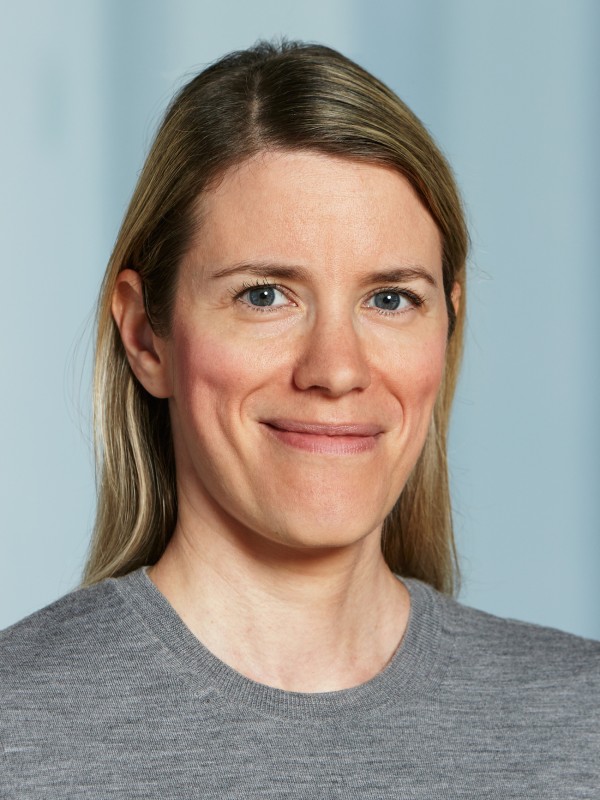
Prof. Olga Sorkine Hornung is a Full Professor of Computer Science at ETH Zürich, leading the Interactive Geometry Lab. She holds a BSc and PhD from Tel Aviv University (2000 and 2006) and conducted postdoctoral research at Technical University Berlin. Her research focuses on computer graphics, geometric modeling, and geometry processing, with applications in shape editing, digital fabrication, and animation. She has received numerous accolades, including the ACM Fellowship (2020), ERC Consolidator Grant (2020), and the Golden Owl Teaching Award (2021). Her work bridges theoretical foundations and practical algorithms, addressing challenges in parameterization, surface compression, and interactive design tools. Her research interests span: Computer Graphics & Visualization Geometric Modeling & Processing 3D Content Creation & Digital Fabrication Garment Design & Simulation Human Motion Analysis & Animation Awards and grants include: 2024: Best Paper Honorable Mention (EUROGRAPHICS) 2023: Member of Swiss Academy of Engineering Sciences (SATW) 2020: ERC Consolidator Grant 2017: Rössler Prize (ETH Zurich) Her lab focuses on developing novel methods for interactive geometry processing, with recent advancements in garment modeling (e.g., AIpparel, Rags2Riches) and motion retargeting systems like WalkTheDog. She actively collaborates on interdisciplinary projects, including biomedical applications and sustainable fashion technology.
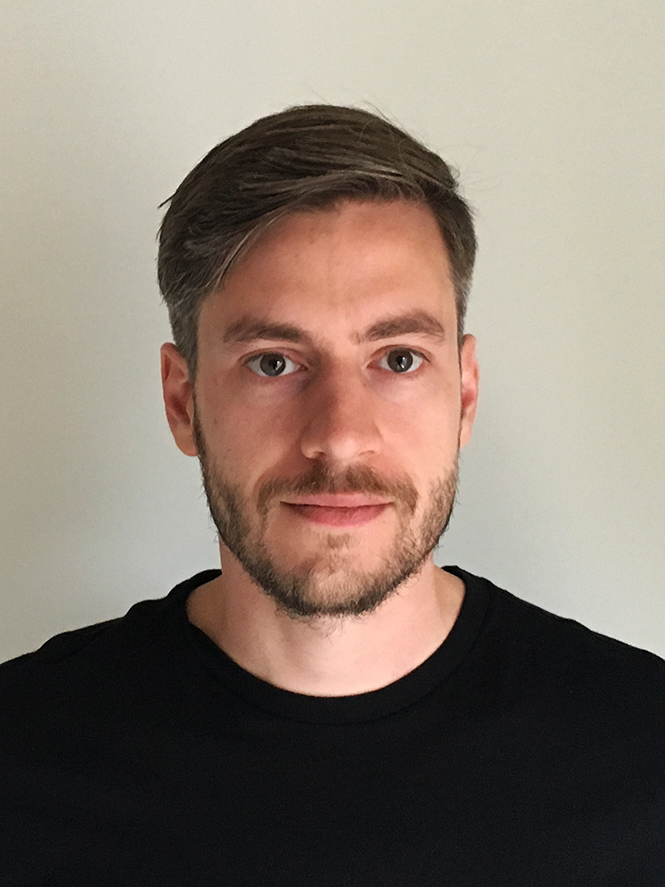
David Lindlbauer is an Assistant Professor at the Human-Computer Interaction Institute (HCII) of Carnegie Mellon University, where he leads the Augmented Perception Lab and co-directs the CMU Extended Reality Technology Center. His research bridges human perception, extended reality (AR/VR), and computational interaction techniques, focusing on developing systems that dynamically adapt interface elements based on environmental context, user cognition, and task requirements. He completed his PhD at TU Berlin under Prof. Marc Alexa and held a postdoctoral position at ETH Zurich's Advanced Interactive Technologies lab. His work has been published extensively at top venues including ACM CHI, UIST, and IEEE VR, with research themes spanning gaze tracking, spatial audio optimization, haptic feedback, and multimodal notification systems. Media outlets like MIT Technology Review and Fast Company Design have featured his innovations. Dr. Lindlbauer has received prestigious grants from Meta, NSF, and ETH Zurich, and serves on program committees for CHI, UIST, and ISMAR. He has been recognized with Best Paper awards at ISS 2023 and CHI 2016, and his lab develops tools like MineXR for personalized XR interfaces and RealityReplay for temporal change visualization in mixed reality environments.
Mine Uysal is a Researcher at Yıldız Technical University, Faculty of Mechanical Engineering, Department of Mechanical Engineering. Her academic journey includes a BSc (2005), MSc (2010), and PhD (2015) in Mechanical Engineering from Pamukkale University and Yıldız Technical University, respectively. She began postdoctoral research at the University of Kentucky (College of Engineering) in 2017. PhD, Mechanical Engineering (2015, Yıldız Technical University) MSc, Mechanical Engineering (2010, Pamukkale University) BSc, Mechanical Engineering (2005, Pamukkale University) Her research focuses on advanced materials behaviors, including functionally graded materials, polymers, adhesively bonded joints, and finite element modeling for engineering systems. Key areas include composite structures, thermal/mechanical loading effects, and sustainable manufacturing techniques like nanofluid-assisted machining. Scientific contributions include 15 recent articles spanning topics such as delamination analysis in bonded beams, sustainable machining optimization, buckling behavior of graded polymers, and fracture mechanics in composite materials. Her work integrates finite element methods with experimental validation for adhesive joints and sandwich structures. Collaborative projects include research funded by The Scientific and Technological Research Council of Turkey (TUBITAK) and international postdoctoral work at the University of Kentucky.
Dr. Christopher M. Wolverton is a Professor of Materials Science and Engineering at Northwestern University , where he leads the Wolverton Research Group . His work focuses on computational materials science with applications in energy sustainability , particularly in batteries , hydrogen storage , and thermoelectrics . PhD in Physics from University of California, Berkeley BS in Physics (summa cum laude) from University of Texas, Austin His research leverages first-principles quantum mechanical simulations and machine learning to enable virtual materials synthesis before laboratory testing. The group specializes in hybrid computational methods integrating Density Functional Theory (DFT) , Monte Carlo simulations , and phase-field microstructural models . The article portfolio shows leadership in energy storage materials , with recent work on data-driven nanoparticle facet control , mixed-anion semiconductors , and machine learning-accelerated discovery . Publications span top journals including Nature Energy , Nature Materials , and Science . 2006 Ford Motor Company Technical Achievement Award 2005 Ford Patent & Publication Awards 2003 Ford Environmental/Physical Sciences Recognition As advisor to PhD candidates Zhenpeng Yao , Shiqiang Hao , and Shane Patel , he fosters interdisciplinary research connecting materials informatics with experimental validation . The group maintains active collaborations with Argonne National Lab and MIT/Harvard teams.
Dr. Zara Ersozlu is a Senior Lecturer in Mathematics Education within the School of Education at the University of Newcastle, Australia. With a distinguished international career spanning multiple continents, she has held academic positions at prestigious institutions including North Carolina State University (USA), Gazi and Gaziosmanpasa Universities (Turkey), National Taiwan Normal University (Taiwan), The University of Western Australia, Murdoch University, and Deakin University. Her academic journey includes tenured positions as an Associate Professor and leadership roles as Department Head and Chair in teacher education disciplines. Currently, she teaches undergraduate and postgraduate courses in mathematics education, including Effective Pedagogies in Primary Mathematics, K-6 Mathematics, K-6 Numeracy, and Digitally Supported Learning. Dr. Ersozlu earned her Doctor of Philosophy from Firat University in Turkey and her Master of Art from Sakarya University. Her extensive academic preparation is complemented by five years of practical teaching experience in public schools prior to entering academia. This blend of theoretical knowledge and practical classroom experience informs her approach to teacher education and educational research. At the broadest level, Dr. Ersozlu's research investigates solutions to real-life problems impacting people's well-being, success, and capacity to achieve. Her scholarly work spans primary and secondary mathematics education, the psychology of mathematics (including metacognition, self-regulation, and anxiety), cross-cultural educational studies, teacher education, virtual simulated learning environments, and educational assessment. She has increasingly focused on the transformative potential of AI and machine learning in education, exploring how these technologies alter teaching, learning, and research processes. Her methodological expertise encompasses both quantitative and qualitative approaches, allowing her to effectively analyze both small and large educational datasets. Analysis of Dr. Ersozlu's recent publications reveals a strong emphasis on mathematics anxiety, teacher education, and the integration of technology in learning environments. Her work demonstrates a consistent focus on practical applications of educational research to address real-world challenges in mathematics education. The interdisciplinary nature of her research connects educational psychology, technology integration, and cross-cultural perspectives, with particular attention to how these elements intersect in teacher preparation and student learning outcomes. 2023 ATEA Research Recognition Award from the Australian Teacher Education Association 2021 Fellow of the Higher Education Academy (Advance HE, UK) 2010 Fellowship Program for Postdoctoral Researchers from the Council of Higher Education of Turkey Dr. Ersozlu is deeply committed to mentoring the next generation of scholars, currently supervising four PhD students and having successfully guided ten students to completion. Her grant portfolio includes significant funding for projects such as Best Practice Guidelines for RPL in Initial Teacher Education Programs ($60,000), Exploring the Reciprocal Relationship Between Mathematics Anxiety and Mathematical Resilience ($2,599), and multiple conference travel awards. She serves as an Associate Editor for several prominent journals including the International Electronic Journal of Mathematics Education and as Editor for Interdisciplinary STEM Education. Her editorial work reflects her standing as a respected voice in mathematics education research. Dr. Ersozlu's academic leadership extends to her role in developing innovative teaching approaches that integrate virtual simulation technology and learning analytics. Her work with TeachLivE™, a mixed-reality classroom simulation platform, demonstrates her commitment to creating authentic learning experiences for teacher education students. Through these initiatives, she bridges the gap between educational theory and classroom practice, preparing future educators to effectively implement evidence-based teaching strategies in diverse learning environments.
Assoc. Prof. Dr. Sema Alaçam Doğan has been affiliated with Istanbul Technical University since 2014, serving as an Associate Professor in the Department of Architecture . She has held administrative roles including Deputy Head of Department and Erasmus Coordinator. Education : PhD in Informatics in Architectural Design (2008-2014), MS in Informatics in Architectural Design (2005-2008), and BS in Architecture (1999-2005) from Istanbul Technical University. Her research explores Computational Design , Artificial Intelligence in Architecture , and Sustainable Material Innovation . She investigates digital tools for heritage preservation, daylight optimization in BIM, and cognitive development in architecture students. Recent publications analyze AI-assisted design literacy , machine learning for Sinan mosques , and environmental comfort in Harran houses . Her work integrates algorithmic frameworks with sustainable practices. Scientific awards include multiple ITU Publication and Performance Awards (2021-2024), FABFEST Prizes , and the 2024 Artemis Educator Award from NASA. Active projects like "Physical Computation in Architectural Drawing" and "Robotic Fabrication with Recycled Wind Turbine Blades" demonstrate her leadership in computational and sustainable research.
Dr. Kim Yong-Joe is an Associate Professor in the J. Mike Walker ’66 Department of Mechanical Engineering at Texas A&M University. He serves as the Director of the Acoustics and Signal Processing Laboratory (ASPL), founded in 2009. His research focuses on acoustics, applied signal processing, nonlinear acoustics, biomedical acoustics, noise and vibration control, and structural dynamics. He has received notable awards including the 2014 Department of Mechanical Engineering Graduate Teaching Award and the 2014 Pioneer Natural Resources Faculty Fellow II. His lab specializes in wave propagation analysis, ultrasonic structural health monitoring, and acoustophoresis in microfluidic systems. He has collaborated with sponsors like the National Science Foundation, Qatar National Research Fund, and Samsung Techwin. His research has led to advancements in noise reduction technologies, biomedical diagnostics, and nondestructive evaluation methods.
David Lindlbauer is an Assistant Professor at Carnegie Mellon University's Human-Computer Interaction Institute (HCII), where he leads the Augmented Perception Lab and co-directs the CMU Extended Reality Technology Center. His research focuses on advancing Mixed Reality (MR) and Extended Reality (XR) interfaces through computational interaction methods that optimize spatial, temporal, and multimodal feedback.
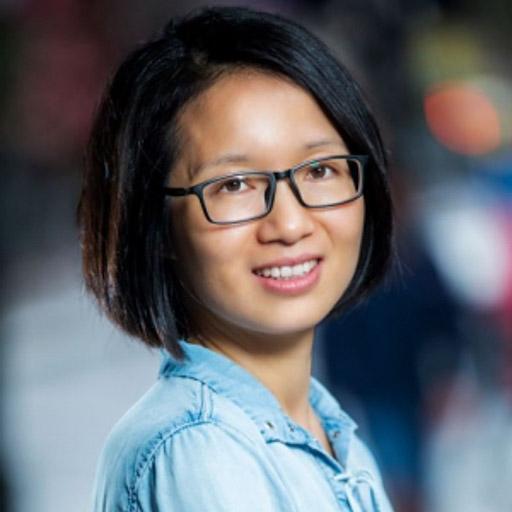
Dr. Chunyan Lai is an Associate Professor at the Department of Electrical and Computer Engineering, Concordia University. Her research focuses on electric drives, motor control, power electronics, electrified vehicles, and vehicle-to-grid solutions. She contributes to both graduate and undergraduate education through courses such as Controlled Electric Drives and Hybrid Electric Vehicle Power Systems . Research Emphasis : Electric motor drives and control systems, electrified transportation, power electronics innovations, and energy management strategies. Publications : Specializes in sensorless control techniques for Permanent Magnet Synchronous Motors (PMSM), thermal management in electric machines, and advanced energy trading frameworks for smart grids. PhD Opportunities : The Power Electronics and Energy Research (PEER) Group under Dr. Lai offers positions for developing efficient motor drives for EVs and grid-connected power converters. Collaboration : Industry-adjacent research with requirements for professional communication, patent development, and technical dissemination.
James Scoates is a Professor in the Department of Earth, Ocean & Atmospheric Sciences at the University of British Columbia (UBC), affiliated with the Faculty of Science. His research focuses on magmatic processes, including the origin and evolution of silicate magmas, geochemical and isotopic studies of layered intrusions and anorthosite suites, and the formation of magmatic ore deposits. He has held positions at UBC since 2002, following roles at Université Libre de Bruxelles (1995-2001). Education: B.Sc. (Honours), 1987, Queen's University at Kingston, Canada Ph.D., 1994, University of Wyoming, USA Research Interests: His work spans igneous petrology, geochronology, and mineral deposit geology. Key areas include physical volcanology of Large Igneous Provinces (LIPs), the geochemical evolution of magma plumbing systems in layered intrusions like the Skaergaard and Bushveld Complexes, and the application of isotopic techniques to trace mantle sources. He also investigates convergent margin Ni-Cu-PGE deposits and their tectonic contexts. Awards: Faculty Teaching Award, 2021 (EOAS-UBC) Killam Teaching Award, 2018 (UBC) Young Scientist Award, 2001 (Mineralogical Association of Canada) Teaching & Leadership: Dr. Scoates teaches courses in mineralogy, geochemistry, mineral deposits, and field geology. He has led initiatives to innovate geoscience education through virtual field experiences and peer-learning strategies. He chairs the MAGNET NSERC CREATE program and serves on the Pacific Centre for Isotopic and Geochemical Research (PCIGR) steering committee. Key Projects: Investigating the geochemical evolution of Hawaiian plumes and mantle heterogeneity. Studying magma storage and differentiation in the Muskox intrusion (Mackenzie LIP). Developing geochronological frameworks for layered intrusions like the Stillwater Complex.
Dr Dongbin Wei is an Associate Professor at the School of Mechanical and Mechatronic Engineering , University of Technology Sydney (UTS), with a career spanning academia and industry. He holds a PhD in Materials Processing Engineering from the University of Science and Technology Beijing (2001) and academic appointments from 2005–2012 at the University of Wollongong (Research Fellow to Lecturer) and 2013–2017 at UTS (Senior Lecturer) before his promotion to Associate Professor in 2018. His research lies at the intersection of Mechanical Engineering , Manufacturing Engineering , and Materials Processing , focusing on: Ultrasonic Additive Manufacturing (UAM) Micro Metal Forming and Size Effects Tribology and Lubrication Numerical Simulations of Material Processing Composite Material Fabrication Key contributions include: Development of the Springback Path–Displacement Adjustment (SP-DA) method for stamping accuracy Advancements in femtosecond laser texturing for silicon wettability control Studies on nanolubrication in hot rolling Optimization of micro-deep drawing parameters He has secured competitive grants from the Australian Research Council (ARC) and industry partners like Weir Minerals Australia Ltd , including projects on: Revolutionizing mineral separation via additive manufacturing Super high-speed grinding technologies Mechanics of micro composite drill fabrication As a lead supervisor, he guided the 2022 thesis 'Creation and Validation of 3D Printable Mineral Separation Spiral' . His work bridges theoretical analysis, computational modeling (FEM/FEA), and practical validation in advanced manufacturing systems.
Linda Onnasch is an Assistant Professor at Humboldt Universität zu Berlin in the Department of Engineering Psychology since 2017. She specializes in human-automation and human-robot interaction, focusing on function allocation, automation reliability, anthropomorphism, and RoboEthics. She holds a PhD in Psychology from Technische Universität Berlin (2014) and a Diplom in Psychology from the same institution (2009). PhD in Psychology (2009-2014), Technische Universität Berlin Diplom in Psychology (2002-2009), Technische Universität Berlin Her research explores the impact of anthropomorphic robot design on trust and attention, flexible automation concepts, and ethical implications of human-robot collaboration. Recent work examines social loafing with robots, taxonomy development for interaction models, and the role of system transparency in trust recovery. Linda’s publications emphasize automation bias, human error identification, and empirical validation of human-robot interaction paradigms. She has contributed to journals like ACM Transactions on Human-Robot Interaction and Science Robotics , with a 2021 meta-analysis on anthropomorphism in robotics. HFES Europe Chapter Best Paper Award She has served as an ad-hoc reviewer for journals like IEEE Transactions on Human-Machine Systems and is a member of organizations including the Human Factors and Ergonomics Society Europe Chapter and the German Association of University Professors and Lecturers (DHV).
Stephane Cotin is a Research Director at Inria and leader of the MIMESIS team, specializing in real-time physics-based medical simulations. His work focuses on surgical training, planning, and image-guided therapy, with over 200 scientific articles and the development of the open-source SOFA framework. He co-founded InSimo, Twinical, and EVE, and previously held roles at Harvard Medical School and Mitsubishi Electric Research Lab. Cotin’s research bridges imaging, robotics, and medicine to improve healthcare outcomes, emphasizing patient-specific biophysical modeling and real-time computation. His awards include the Academy of Sciences Award (2018) and Dirk Bartz Medical Prize (2015). He has advised numerous PhD students and led projects like MediTwin and PREMYOM, advancing digital twin technologies for precision medicine.
Professor Awadhesh N. Jha is a Professor in Genetic Toxicology and Ecotoxicology at the School of Biological and Marine Sciences , University of Plymouth, UK. He has been a leading figure in environmental toxicology since joining the university in 1996, rising to full professorship in 2010. He leads the Environmental and Applied Biology Research Group and the Genetic Toxicology and Ecotoxicology Research Group, and served as REF UoA6 Coordinator (2014–2022). His educational background includes a PhD in Radiation Cytogenetics from Banaras Hindu University, India (1989), followed by post-doctoral work at Leiden University, Netherlands, and a role at ICI/Zeneca’s marine toxicology lab before transitioning to academia. Professor Jha’s research focuses on the genotoxic and ecotoxic impacts of environmental stressors such as radionuclides, engineered nanoparticles, PAHs, and emerging contaminants on aquatic organisms. He employs multidisciplinary and innovative methodologies, including in vitro models like fish cell spheroids (‘Virtual Fish’ project), to assess DNA damage, develop biomarkers, and reduce reliance on live animal testing. His work integrates molecular biology, chemistry, and environmental science to evaluate risks to marine ecosystems and human health. The recent research articles reflect a strong trend in marine pollution, radiation biology, and environmental risk assessment , with increasing emphasis on emerging issues like tritium release from nuclear facilities, AI-assisted landfill risk modeling, and sunscreen toxicity. His studies often involve international collaborations and real-world policy implications. Scientific Awards and Recognitions: Jim Parry Award, UKEMS (2021) Fellow of the Royal Society of Biology (FRSB, 2015) VC’s World Class Researcher Award Finalist (2010, 2012) Plymouth Pioneers Recognition UK Nominated Expert, UN WOA III (2023) Supervision and Grants: Professor Jha has supervised 26 PhD students to completion and mentored over 10 post-doctoral researchers. He has led major funded projects including TRANSAT (€5M, Horizon 2020), SPHERTOX , and TITANS , funded by EU, NERC, BBSRC, IAEA, and industry partners like AstraZeneca and Unilever. His work directly informs environmental policy and nuclear safety regulations. Laboratories and Teams: He leads the Genetic Toxicology and Ecotoxicology Research Group and is central to the Environmental and Applied Biology Research Group at Plymouth. His team collaborates internationally with institutions in France, Italy, Spain, Brazil, and India, and contributes to the South West Nuclear Hub. The lab specializes in advanced analytical methods, comet assays, and 3D cell culture models.
Rika Hanamitsu is a Professor at the School of Social Sciences, Waseda University, where she teaches courses related to intercultural communication studies. She holds a Doctor of Philosophy degree from Waseda University and is also affiliated with the Center for International Education and the Global Education Center at the university. Education: Doctor of Philosophy from Waseda University Affiliations: Center for International Education, Global Education Center Her research focuses on intercultural communication and applied linguistics, particularly examining how cultural stereotypes, identities, and communication styles are represented in media and literature. She has conducted extensive research on Allen Say's works and their cultural implications, analyzing how they depict multicultural experiences and identity formation. Professor Hanamitsu's educational activities include teaching various courses including 'Seminar III (Intercultural Communication Studies)', 'Exploring Cultures through Film', 'Inter-Cultural Communication', 'Freshman Seminar', and 'Intercultural Communication' in both fall and spring semesters of 2025. Her teaching emphasizes the use of films as educational tools for intercultural understanding and literacy development. She has participated in overseas activities such as attending the Summer Institute of Intercultural Communication at Hope College, University of Michigan in 2002. Her social activities include intercultural communication training using games to develop communication skills, which she has conducted since 2011. International Presentations: 35th IBBY World Congress (2016), Summer Institute of Intercultural Communication (2002) Domestic Conferences: Japan Association for Language Education & Technology, Japan Association of College English Teachers, Japan Society of English Usage and Style Research Projects: Cultural Comparison of Conflict Scenes in Movies and Their Treatment (2005)