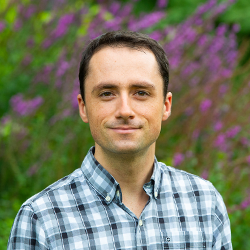
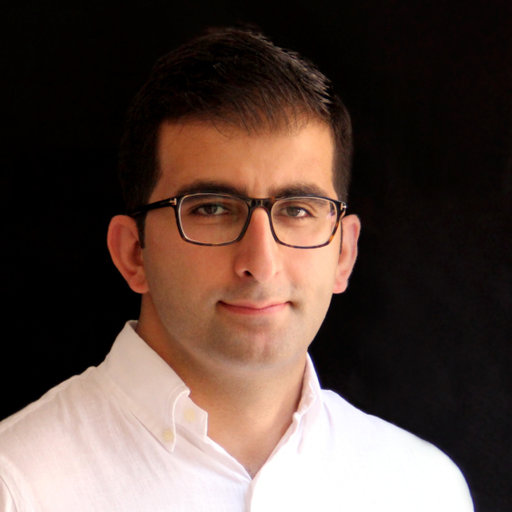
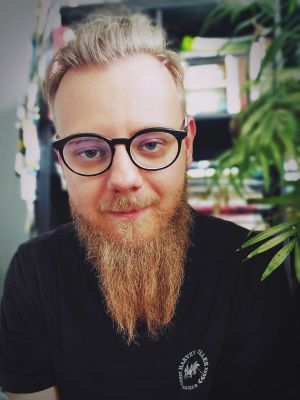
Ziad Al-Halah is an Assistant Professor in the Kahlert School of Computing at The University of Utah, where he has worked since January 2023. His academic journey includes a postdoctoral fellowship at the University of Texas at Austin, research roles at NAVER (South Korea), Twitter (UK), and Disney Research (Pittsburgh), and a PhD from Karlsruhe Institute of Technology (summa cum laude) in Germany. Current: Assistant Professor, University of Utah Education: PhD in Computer Science, Karlsruhe Institute of Technology Previous: Postdoc at UT Austin, researcher at NAVER, visiting researcher at Twitter and Disney Research His research focuses on computer vision , artificial intelligence , and multimodal learning , with emphasis on transfer learning , zero-shot learning , and embodied AI . His work addresses problems like audio-visual navigation , view selection in instructional videos , and material-aware acoustic modeling . Recent publications highlight his contributions to environment acoustic modeling (ICCV 2025, CVPR 2025), egocentric video analysis (CVPR 2024, CVPR 2023), and lifelong learning frameworks (Neural Networks 2023). He serves as Area Chair for CVPR 2025 and NeurIPS 2025. Scientific Awards: Outstanding Reviewer (NeurIPS 2024, CVPR 2023), Winner of 2020 Habitat Challenge Workshops: Organizer of CVFAD and EC3V at CVPR 2024
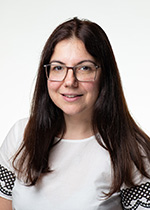
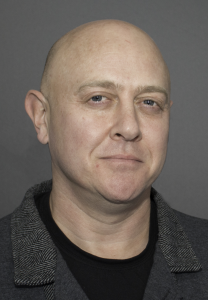
Dr. Charles Malleson is a Research Fellow in Computer Vision at the Centre for Vision, Speech and Signal Processing (CVSSP) at the University of Surrey, UK. His work focuses on computer vision, 3D reconstruction, and motion capture technologies using RGB-D sensors and multi-view video systems. Malleson's educational background includes a PhD, MSc, and BEng (Hons), though specific institutions are not mentioned in the provided text. His research interests span computer vision, 3D reconstruction, motion capture, RGB-D data processing, visual alignment, human pose estimation, graphics, and more recently, animal pose estimation with a focus on canine subjects. His recent publications reveal a strong research trajectory focused on practical applications of computer vision. Beginning with foundational work in 3D reconstruction and motion capture using RGB-D sensors and multi-view video systems, his research has evolved toward increasingly specialized applications including wearable visual correction devices, animal pose estimation, and neural network-based image processing. A notable trend is his expansion from human motion capture to animal pose estimation, developing synthetic datasets like SyDog for training deep learning models. His work often combines multiple sensor modalities and emphasizes real-time processing capabilities for practical deployment. Scientific Awards: Leverhulme Trust Early Career Fellowship Malleson has been instrumental in developing the TotalCapture dataset, which combines multi-viewpoint video, IMU sensor data, and accurate 3D skeletal joint ground truth. His research has received significant funding, including the prestigious Leverhulme Trust Early Career Fellowship. His work bridges academic research and practical applications, particularly in medical devices (visual alignment correction) and animal pose estimation technologies. As a member of CVSSP, Malleson contributes to one of the world's leading vision, speech, and signal processing research centers. His work on hybrid modeling of non-rigid scenes, real-time motion capture, and volumetric graphics demonstrates the center's commitment to pushing the boundaries of visual computing technology. His recent focus on animal pose estimation represents an innovative expansion of traditional human-centered computer vision research.
Dr. Julius Späte serves as an Academic Assistant (Research Fellow) in the Department of Social and Educational Sciences at Potsdam University of Applied Sciences since 2021, contributing to the dual-digital Social Work (B.A.) program. His work bridges research and practical application in digital social work, with office hours held Mondays 11:45-12:15 on-site and flexible digital appointments by email. Education: BA in Social Work, Hochschule Merseburg (2010-2013) MA in Applied Media and Cultural Studies, Hochschule Merseburg (2013-2015) Doctorate in Education, Christian-Albrecht University of Kiel (2016-2024) Advanced training as systemic consultant, German Society for Systemic Therapy (2020-2022) Research Focus: Späte's work centers on digital transformation in social services, examining socio-technical integration, professional competency development, and residential care privacy. He investigates how digital tools reshape practice through qualitative and mixed-methods approaches, emphasizing framework conditions and practical facilitations for effective implementation in institutional settings. Publication Trends: His 2021-2024 output reveals escalating specialization in digital social work, progressing from foundational transformation frameworks to targeted analyses of AI applications (e.g., ChatGPT) and privacy dynamics. The research consistently advocates for cross-institutional initiatives while documenting evolving professional requirements in socio-technical environments through both theoretical and empirical lenses. Projects & Teaching: He leads the #EducatingSociety in the Digital Age network establishing university collaborations for digital social work research, and contributes to BASA Dual-Digital's methodological-constructive studies. His teaching focuses on academic writing, thesis development, and digital literacy, with frequent invited lectures at national conferences addressing technology integration challenges. Research Ecosystem: Späte operates within the BASA Dual-Digital research collective and #EducatingSociety network, facilitating collaborative knowledge production across institutional boundaries. His work connects academic research with practitioner perspectives through projects examining digital transformation from students' and service providers' viewpoints.
Dr. Mintao Zhao is a Lecturer in Psychology at the University of East Anglia's School of Psychology. His research focuses on face perception/recognition and spatial cognition/navigation, employing methods like virtual reality, eye-tracking, and fMRI. He holds a PhD from the Chinese Academy of Sciences and completed postdoctoral work at the University of Hong Kong, Brown University, and the Max Planck Institute for Biological Cybernetics. Education: BSc from Henan University, PhD from Institute of Psychology, Chinese Academy of Sciences. Postdoctoral training included face processing and spatial navigation research. Key research areas include how humans interact with physical/social environments, with projects funded by the British Academy and Royal Society. Teaching modules include Cognitive Neuroscience, Environmental Psychology, and Brain and Cognition courses. He supervises students at both undergraduate and postgraduate levels, and his work explores holistic face processing, spatial memory, and neural mechanisms of person/space perception. Collaborations span global institutions, reflecting his multidisciplinary approach.
David Richmond is a Senior Lecturer in Drama and Theatre at York St John University's School of the Arts, serving as Learning and Teaching Lead and Senior Teaching Fellow. His career spans 30+ years in experimental performance, collaboration, and pedagogy. He co-founded Pants Performance Association and has collaborated extensively with Jules Dorey Richmond on works addressing memory, trauma, and cultural heritage. Key projects include the 'Theatre of Witness' series engaging WWII veterans and survivors, and the module Artist as Witness , which explores the Shoah’s impact through performance. Richmond’s research focuses on testimony, memory, and collaborative creation, including annual student-led performances post-Auschwitz study visits. His works like Terrorists of the Heart and Slipping Away Education and Collaboration: - Collaborative partner with Jules Dorey Richmond (25+ years) - Former member of Pants Performance Association (1989–2000s) - Worked with Theatre of Public Works, Collectif Organum, and Daniel Reeves (Emmy-winning filmmaker) - Conducted workshops for the European Council on youth violence prevention Research & Teaching: - Artist as Witness module (Level 2) - Annual Auschwitz study visits for students - Developed Devised Theatre: a Beginner’s Guide for educational use - Keynote speaker at international conferences (e.g., TAPRA, Caos Terni) Notable Projects: Burnt Offering (1998): Site-specific installation at Auschwitz Terrorists of the Heart : Dual narrative of personal/familial history and political critique Perdu (film project with Daniel Reeves exploring post-war trauma) Labs/Teams: - Co-leads interdisciplinary collaborations between drama, dance, and critical studies at York St John - Member of York St John’s Holocaust Education Network
Maria Liu Porter is Professor of Theatre and Director of Undergraduate Theatre Studies at Long Island University’s School of Performing Arts. With over 30 years of experience in theatre education and performance, she has established an international reputation for her innovative pedagogy and creative work. Her research focuses on actor training, particularly the integration of the Suzuki method with Viewpoints and Stanislavsky techniques. She has developed a hybrid approach that emphasizes physicality, presence, and emotional truth in performance. Her work has been presented at institutions and festivals worldwide, including MIT, Brown University, Odin Teatret (Denmark), and Teatro delle Radici (Switzerland). Maria's publications and presentations, such as 'Ennobling Nonna/Enabling Maria' and 'Writing with the Body,' explore the intersection of embodiment, identity, and pedagogy. Her performances, including Ennobling Nonna and The Space Inside , reflect a deep commitment to devised and solo theatre. She has directed award-winning productions like Re-Membering Antigone and Conditions of Love , featured at the Kennedy Center and Edinburgh Fringe Festival. David Newton Award for Excellence in Teaching Best Director, 2012 Kennedy Center American College Theater Festival Best Devised Work, 2012 Kennedy Center American College Theater Festival Maria actively mentors students through ensemble creation and solo performance development. Her leadership in international theatre networks, including the Magdalena Project and IUTA, supports collaborative research and cross-cultural exchange. She is currently completing her book Re-Purposing Suzuki: A Hybrid Approach to Actor Training , to be published by Routledge in 2021. She is affiliated with several professional organizations: Actor’s Equity Association, American Theater in Higher Education (ATHE), International University Theater Association (IUTA), and the Magdalena Project. As an Associate Artist of Teatro delle Radici in Lugano, Switzerland, she continues to perform and create internationally.
Dr. Luana Colloca, MD, PhD, MS is an MPower Distinguished Professor at the University of Maryland, Baltimore with dual appointments in the School of Nursing and School of Medicine. She serves as Director of the Placebo Beyond Opinions Center and holds expertise in Pain and Translational Symptom Science. As an NIH-funded principal investigator, Dr. Colloca leads research on human pain modulation from both mechanistic and translational viewpoints. Dr. Colloca's educational background includes: MD from University Magna Graecia of Catanzaro School of Medicine, Italy PhD in Neuroscience from University of Turin Medical School, Italy MS in Bioethics from University of Turin, Italy Post-doctoral training in Brain Imaging at Karolinska Institute, Stockholm, Sweden Senior Fellowship in Ethics/Placebo research at NIH Clinical Center, Bethesda Her research focuses on the psychoneurobiological bases of endogenous systems for pain modulation, primarily in healthy controls and participants suffering from acute and clinical pain conditions. Dr. Colloca has developed an international reputation as a leading scientist advancing knowledge of the neurobiological mechanisms of placebo and nocebo effects using multifaceted approaches including psychopharmacological, neurobiological and behavioral methods. Her work spans acute experimental pain, brain mapping, chronic pain, placebo responders, pain modulation mechanisms, temporomandibular disorders, and virtual reality mechanisms. Dr. Colloca's publication trends reveal a growing emphasis on virtual reality applications for chronic pain management, neural correlates of hypoalgesia, and the translation of placebo research into clinical practice. Her recent work increasingly integrates digital health technologies with traditional pain research methodologies, reflecting a shift toward innovative, non-pharmacological pain interventions that reduce reliance on opioids. Her scientific recognition includes: Patrick Wall International Award (2016) Dubner International Research Prize (2008) UMB Named Inaugural MPower Professorship award Multiple international awards from IASP and other professional organizations As a mentor and research leader, Dr. Colloca has secured multiple NIH grants including R01AT010333 on neural correlates of hypoalgesia and R01AT011347 on neural mechanisms of immersive virtual reality in chronic pain. She serves in leadership roles internationally as Chair of the PAIN and PLACEBO SIG at IASP, treasurer of the Society for Interdisciplinary Placebo Studies, and as associate editor for Journal of Pain and European Pain journals. Her research has been featured in major media outlets including National Geographic, The New York Times, and The Wall Street Journal. Dr. Colloca directs the Colloca Lab, which focuses on translational neuroscience research related to chronic pain and placebo mechanisms. The lab actively investigates how virtual reality can reduce pain and potentially replace opioid medications for some patients, with current projects examining expectancy-induced analgesia in patients suffering from chronic pain conditions.
Justus Thies is a Professor at the Technical University Darmstadt (since September 2023), leading research at the intersection of computer graphics , computer vision , and machine learning . His work focuses on real-time 3D reconstruction, tracking, and photorealistic rendering of humans and environments using commodity hardware, with applications in AR/VR , movie production , and 3D telepresence for collaborative virtual environments. Current faculty member at Technical University Darmstadt Research themes: 3D reconstruction, neural rendering, hybrid machine learning/Graphics methods Applications: AR/VR, telepresence, human-environment modeling His research emphasizes neural rendering and deep learning approaches for facial and body modeling, including projects like GEM (Gaussian Eigen Models), SynShot (synthetic prior inversion), and TeCH (text-guided clothed human reconstruction). Collaborations include institutions like Max Planck Institute for Intelligent Systems and Google . Key trends in his recent publications include: neural Gaussian splatting for real-time avatars, diffusion models for speech/audio-driven animation, and hybrid approaches that combine classical computer graphics principles with modern machine learning techniques. These methods address challenges in generalizability , controllability , and editability of 3D representations. Notable research contributions since 2014 include advancements in monocular facial reconstruction , real-time expression transfer , and neural rendering techniques that enable 3D scene synthesis from unpaired or sparse data. His work has received significant recognition, including Face2Face featured in Communications of the ACM (2019) and multiple publications at top venues like CVPR , ECCV , and SIGGRAPH .
Stephen Jeffares is an Associate Professor in the School of Government at the University of Birmingham, based in the Institute for Local Government Studies (INLOGOV). He serves as Director of Postgraduate Research and Postgraduate Research (PGR) Lead for INLOGOV. His academic career is deeply rooted in the Department of Public Administration and Policy, where he contributes to teaching and research in public policy and administration. Dr. Jeffares earned his PhD and BSc (Hons, First class) in Public Policy, Government and Management from the University of Birmingham. His educational background has informed his research trajectory focusing on policy ideas, governance structures, and methodological innovations in public policy analysis. His research interests span policy analysis, Q methodology, interpretive policy approaches, political science, public administration, and the intersection of social media with policy processes. Jeffares is particularly known for his work on how policy ideas emerge, spread, and evolve in the digital age, as evidenced by his book Interpreting Hashtag Politics: Policy Ideas in an Era of Social Media (2014). His work often examines hybrid governance models in European cities and the democratic implications of networked governance structures. Analysis of his recent publications reveals a consistent focus on methodological innovation, particularly the application of Q methodology to understand diverse viewpoints in policy processes. His work bridges theoretical frameworks from political discourse theory with practical applications in local governance, healthcare commissioning, and social policy. The trend across his articles shows increasing attention to digital methods for capturing policy discussions and understanding how social media reshapes policy dynamics. Host of the 27th Annual Q methodology Conference (2011) Coproducer of POETQ, software for online Q sorting Co-Convener of Public Policy Research Methods for INLOGOV PG programme (2011-) Convener of Advanced Training Course in MA Social Research Programme for Q methodology (2009-) Jeffares has supervised numerous PhD and Master's students, with research topics spanning joint commissioning, community capacity, frontline adaptation to change, and readiness for change in middle management. His research projects include 'Sentiment Analysis of Policy Controversies' (2013-2014), 'Shape of Ideas to Come' (British Academy funded, 2012-2013), and an NHS-funded study on health and social care commissioning (2009-2012). He is actively involved in the Q methodology community and has contributed significantly to advancing this methodological approach in public policy research.
Saleh Kalantari is the Lois and Mel Tukman Assistant Professor in Cornell University’s Department of Human Centered Design, with graduate field faculty appointments in the Department of Information Science. He directs the Design and Augmented Intelligence Lab (DAIL), focusing on human-technology partnerships in design to enhance design practice and spatial understanding. Previously, he taught at the University of Houston and Washington State University, and worked at Parkin Architects Ltd., where his team earned an International Academy for Design and Health Award for forensic mental health center design. Dr. Kalantari holds a Ph.D. in Architecture from Texas A&M University. His research integrates behavioral and neurological methods to study human interactions with designed environments, particularly through virtual reality (VR) and augmented reality (AR) technologies. Key areas include spatial navigation for aging populations, lighting design impacts on well-being, and AI-driven tools for healthcare decision-making. He has secured grants from the NSF, NIH, and NIDILRR. His lab develops solutions like NavMarkAR (AR wayfinding for older adults) and the i-SDM framework for AI-augmented clinical decision-making. Research emphasizes biometric data (EEG, physiological measurements) to evaluate design outcomes, such as stress recovery in virtual environments or lighting preferences. Scientific awards include the Center for Health Design’s Touchstone Award. His work spans interdisciplinary collaborations in architecture, computer science, and health sciences, aiming to bridge technological innovation with human-centered design principles.
Tony Perucci is an Associate Professor of Performance Studies in the Department of Communication at the University of North Carolina at Chapel Hill. He holds a Ph.D. from New York University's Tisch School of the Arts, an M.A. from UNC-Chapel Hill, and a B.S. from Northwestern University. His work bridges scholarship and artistic practice, focusing on experimental theater, political intervention aesthetics, and the legacy of Mary Overlie's Viewpoints theory. Education: Ph.D. in Performance Studies, Tisch School of the Arts, New York University M.A. in Communication Studies, University of North Carolina at Chapel Hill B.S. in Performance Studies, Northwestern University Research Interests: Dr. Perucci explores experimentalism in performance, the aesthetics of political activism, and Mary Overlie's Viewpoints methodology. He is co-director of the Mary Overlie Legacy Project and is preparing a book on Overlie's contributions to theater pedagogy. His current projects include Reality Frictions: Ruptural Performance and Indecidable Theatre , analyzing contemporary art's engagement with post-truth politics. Awards & Grants: 2021 Short-term Research Fellowship, New York Public Library 2020 Adobe Course Development Grant 2018 Ken Lowe Fund for Faculty Excellence 2016-17 Mellon Curatorial Fellowship Teaching & Projects: Perucci teaches courses integrating theory and practice, emphasizing collaborative creation and risk-taking. His performance projects include In an Interrogative Mood (2016), Eating Animals (2011), and Double Indemnity (2008). He co-leads workshops on Viewpoints training globally and is affiliated with the Six Viewpoints Institute. Labs/Teams: Co-director of the Mary Overlie Legacy Project & Six Viewpoints Institute, advancing Overlie's actor training methodology.
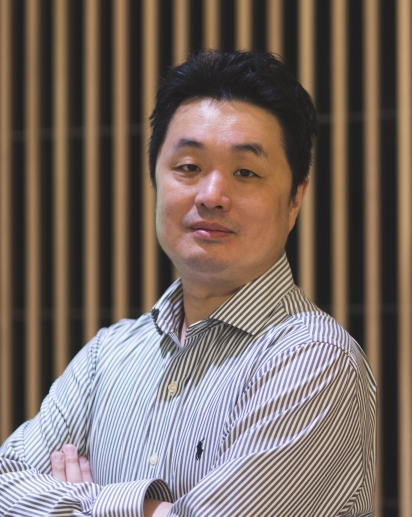
Yu-Wing Tai is an Associate Professor of Computer Science at Dartmouth College, one of the Ivy League institutions. His research focuses on Computer Vision, Deep Learning, and Multimodalities Generative AI. He holds a PhD from the National University of Singapore and has served as an Associate Editor for IEEE TPAMI and as an Area Chair for major conferences like CVPR, ICCV, and NeurIPS. He is a Senior Member of the IEEE. Previously, he held roles as a Senior Research Director at Kuaishou Technology (2020-2023), Adjunct Professor at HKUST (2017-2023), and Research Director at Tencent (2017-2020). His work spans low-level vision, image/video editing, 3D reconstruction, and applications of large generative models. His research highlights include Motion-Agent for human motion generation, ChatCam for camera control, and Gear-NeRF for 3D reconstruction. He advises a team of PhD students and has mentored alumni now in academia and industry worldwide. His teaching includes courses on Multi-modalities Generative AI and Computer Graphics.
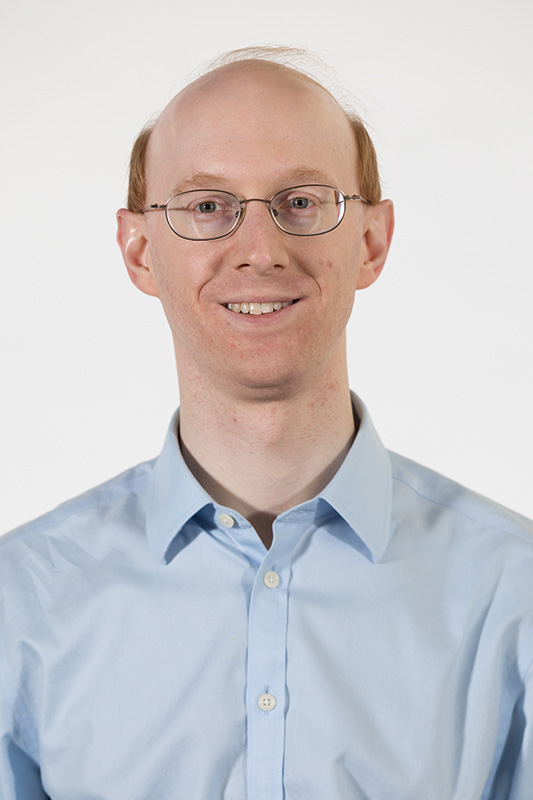
Dr. Luke Reisner is an Adjunct Professor in the Department of Electrical and Computer Engineering at Wayne State University's College of Engineering. His research focuses on surgical robotics, Raman spectroscopy, and medical visualization, with applications in autonomous camera control for medical, military, and space domains. Education: Ph.D. in Computer Engineering (Wayne State University, 2012), M.S.E. in Computer Engineering (University of Michigan–Dearborn, 2005), B.S.E. in Computer and Electrical Engineering (University of Michigan–Dearborn, 2003) Research Interests: Surgical robotics: Developing autonomous camera systems for the da Vinci Surgical System, focusing on task analysis, remote presence interfaces, and recording/playback platforms for surgical training. Key innovations include entropy-based bleeding detection algorithms and sensor-integrated robotic systems. Raman Spectroscopy: Applications in medical diagnostics for ulcerative colitis and pediatric brain tumors, combined with biosensor integration for optimized port placement and real-time analysis in vivo. Medical Visualization: Advancing surgical imaging techniques, including bleeding assessment visualization and sensor-integrated virtual reality for surgical training. Patents: U.S. Patent 9,439,556 (2016): "Intelligent Autonomous Camera Control for Robotics with Medical, Military, and Space Applications" U.S. Application 14/913,793 (2016): "Camera Control System and Method" Labs & Teams: Collaborated with surgical robotics teams to implement autonomous camera control and biosensor-integrated systems. His work bridges engineering principles with clinical applications, emphasizing real-time data processing and human-in-the-loop robotic systems.
Dr. Tomasz Dyrmo serves as an Assistant Professor at the Faculty of English, Adam Mickiewicz University in Poznań, specializing in multimodal communication and cognitive approaches to linguistic identity. His research bridges theoretical linguistics with real-world applications in LGBT+ discourse and gesture studies, while his teaching spans Academic Writing, TEFL, and Cognitive Media Analysis for diverse student cohorts. His academic credentials include: Ph.D. in Linguistics, Adam Mickiewicz University, Poznań (2024) M.A. in English (Applied Cognitive Linguistics), Adam Mickiewicz University, Poznań (2019) B.A. in English (Translation Studies), Olsztyn (2017) Dyrmo's research interrogates how conceptual metaphors manifest in gesture during identity narratives, particularly coming out experiences. He pioneers queer cognitive linguistics by examining LGBT+ linguistic practices through Conceptual Metaphor Theory and psycholinguistic frameworks. His work reveals how valence influences orientational metaphors in bilingual contexts and documents how gestures objectify abstract concepts like secrets in self-disclosure. This research intersects cognitive discourse analysis with embodied cognition, challenging heteronormative assumptions in linguistic theory. Analysis of his 15 most recent publications (2020-2024) shows consistent focus on gesture-speech alignment in identity narratives, with increasing sophistication in multimodal metaphor analysis. His work demonstrates methodological innovation through EEG integration and Kinect motion capture, while establishing clear connections between metaphor comprehension, valence processing, and sociolinguistic identity. Key recognitions include: WA Dean's award for best M.A. thesis in linguistics (2018/2019) Tutor of the Year award (2024/2025, 1BA cohort) Though no formal PhD students are documented, Dyrmo actively mentors through WA GradTalks and received institutional recognition for teaching excellence. His research portfolio includes the completed PhD project 'Coming out as a multimodal metaphor' (2019-2024), the ongoing 'Comprehension of Valenced Orientational Metaphors in Polish-English Bilingual Speakers' study, and contributions to the National Science Center Beethoven Grant on linguistic landscape ideology. He serves on doctoral committees and conference organizing bodies including YLMP 2025. Dyrmo collaborates extensively with the Neuroscience of Language Laboratory and 'Researching and Applying Metaphor' group, evidenced by his EEG workshops for primary schools and corpus linguistics training. His partnerships with Dr. Anna Jelec and Prof. Małgorzata Fabiszak drive interdisciplinary work connecting gesture studies with sociopolitical discourse analysis.
Kean Wah Lee is a Professor at the School of Education, University of Nottingham Malaysia, with over 35 years of teaching experience across primary, secondary, and higher education levels in Malaysia. His academic appointments include Faculty of Social Sciences, where he maintains an active research and teaching profile. Lee holds a PhD in Applied Linguistics from University of Lancaster, UK, complemented by B Ed TESL and M Ed TESL degrees from Lancaster University and Universiti Teknologi Malaysia respectively. His additional qualifications include Certificate in Education (Primary English), Diploma in ESL, and Certificate in IT. Teacher Development (CPD/TPD) Computer-Assisted Language Learning (CALL) Language Program Evaluation Educational Assessment & Evaluation TESOL methodology TPACK and 21st Century teacher development Materials development and TELL, CALL, MALL STEM/STEAM Education/Makers His recent publications demonstrate consistent focus on technology integration in language education, particularly examining TPACK development, flipped classroom models, and ICT implementation challenges across Southeast Asian contexts. His research shows strong regional impact with numerous studies conducted in Vietnam and Malaysia. Vice-Chancellor's Medal 2021 Tri-Campus Awards for UNM Outstanding Research Supervisor Awards 2022 Lord Dearing Award 2022 for Innovative Teaching Silver Medal IUCEL2022 - E-Learning Innovation - Gene Detector E-Capsule Lee currently serves as Vice-President and Treasurer of PaCCALL (Pacific Association of Computer-Assisted Language Learning), demonstrating his leadership in the international CALL community. His teaching responsibilities span undergraduate modules including TESOL Methodology and Practical Teaching in TESOL, as well as master's level courses focusing on Material and Technology in Language Education and English for Specific Purposes. His research projects frequently involve cross-border collaborations with institutions across Vietnam and Malaysia, focusing on practical implementations of technology in language classrooms and teacher development programs.