Xin (Eric) Wang is an Assistant Professor in the Computer Science Department at the University of California, Santa Barbara (UCSB) , and serves as Head of Research at Simular AI. His research focuses on Multimodal and Embodied AI Agents , blending methodologies from machine learning, computer vision, natural language processing, and robotics. Education: Ph.D. in Computer Science, UC Santa Barbara B.Eng. in Computer Science, Zhejiang University Research Interests: Natural Language Processing Computer Vision Multimodal AI Embodied AI Trustworthy AI Systems His work emphasizes agents that collaborate with humans in complex environments, addressing ethical design and generalizable reasoning. Awards: Best Paper Awards at CVPR 2019 and ICLR 2025 Google Faculty Research Award, 2022 eBay & Cisco Faculty Awards (2022–2024) Amazon Alexa Prize Awards (multiple years) Advising & Grants: Supervised students Dr. Xuehai He and Dr. Jing Gu. Secured grants from Microsoft, Adobe, eBay, and Snap. Organized workshops on vision-language research and embodied AI. Labs/Teams: Leads the ERIC Lab at UCSB, focusing on multimodal agent systems and ethical AI design.
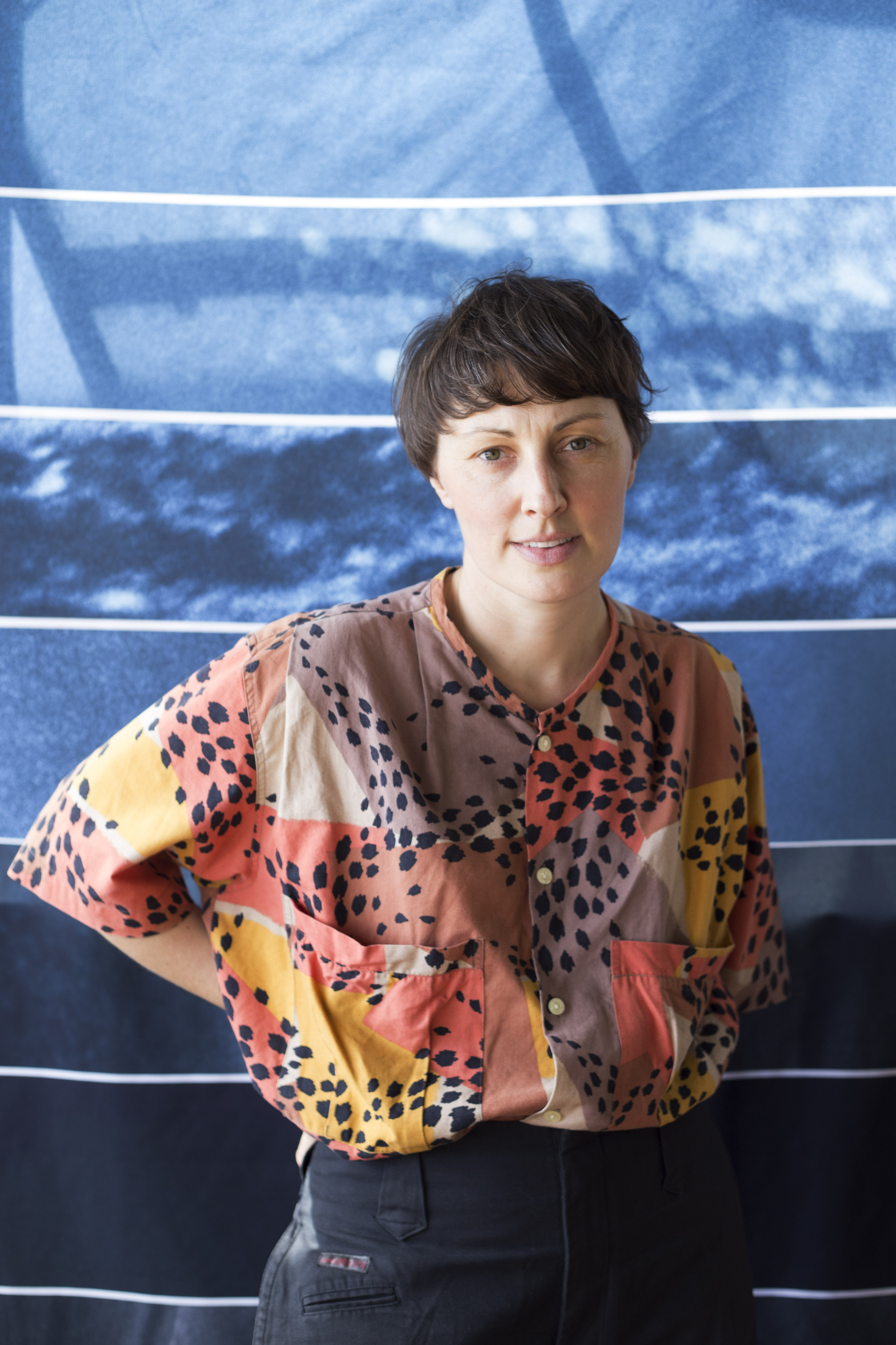
Dr. Izabela Pluta is an accomplished artist and academic at the University of New South Wales, Faculty of Arts, Design & Architecture, School of Art & Design. With a PhD from the University of Wollongong (2017), an MFA from UNSW Art & Design (2009), and undergraduate studies in Fine Art from the University of Newcastle (2002), she has established herself as a significant voice in contemporary photographic practice. Her research interests focus on expanded photographic practices that explore concepts of place, theories central to photography's role in society, and photographic modes of production that challenge the materiality of images. She investigates the effects of globalization and diasporas through migration, drawing from personal experience as a migrant to Australia. Her work spans collage, film-based photography, sculpture, installation, and video, characterized by processes of fragmentation, dislocation, and reconfiguration. Pluta's creative output has been featured in numerous significant exhibitions including the Museum of Warsaw (2024), Art Gallery of New South Wales (2019), University of Queensland Art Museum (2022), and Artspace Sydney (2018). Her work explores the intersection of photography with time, memory, and place, utilizing unstable materials like light-sensitive photo paper to reflect on impermanence. Creative Australia grants Qantas Foundation Contemporary Art Award Freedman Foundation Traveling Scholarship Ian Potter Cultural Grant As a dedicated educator, Pluta supervises practice-led MFA and PhD candidates, guiding students through projects that explore diverse themes from geology in contemporary art to coloniality in material practices. Her fieldwork-based approach has taken her to underwater sites like the Dwejra Azure Window in Malta and the Yonaguni Island structures in Japan, informing her sustained meditations on the embodied experience of place.
Mona Holmqvist is a Professor of Educational Sciences specializing in school and the teaching profession at Lund University's Department of Educational Sciences within the Faculty of Humanities and Theology. She serves as Director of Doctoral Studies in Educational Sciences and has held professorships since 2017, returning to Lund University in 2023 after positions at HKr, GU, and MAU. Her academic journey began with teacher certification for grades 4-6, subject teaching credentials for 7-9, and secondary teaching in pedagogy/psychology, culminating in her 1995 PhD in pedagogy from Lund University focused on teaching students with autism. Her research spans learning theories, particularly variation theory development, and practice-based educational research from early childhood to higher education. Holmqvist has special expertise in subject didactics and special didactics for individuals with ADHD and autism. She has served as principal investigator for ten externally funded research projects and coordinated three research schools, including the National Research School for Pedagogical Work (2001-2010) and SET—Research School in Special Education for Teacher Educators (2018-2022). Her recent publications demonstrate a strong focus on inclusive education, special didactics, and early mathematics development, with particular attention to students with autism and ADHD. Current projects include a VR-funded study on number sense in 5-6 year-olds and an Erasmus project for higher education course development in Bhutan. Professional leadership roles include Vice Chair of the Academic Merit Review Board in Higher Education Pedagogy at Lund University, membership on the Swedish Research Council's Committee for Educational Sciences, and editorial board positions for three academic journals. Director of Doctoral Studies in Educational Sciences at Lund University Principal Investigator for 10+ externally funded research projects Supervisor for 14 doctoral students and 9 licentiates Member of Swedish Research Council's Educational Science Committee Editorial board member for 3 academic journals Her work consistently bridges theoretical frameworks with practical classroom applications, particularly in inclusive educational settings and teacher professional development. Current research emphasizes content-inclusive teaching approaches that provide equitable learning opportunities for diverse student populations.
Prof. Dr. Annette Upmeier zu Belzen is a Professor at the Institute of Biology at Humboldt University of Berlin, where she has been serving since October 2005. She leads the working group on Biology Didactics and Teaching/Learning Research within the Department of Biology Didactics. Her academic work is situated in the Faculty of Mathematics and Natural Sciences at one of Germany's most prestigious research universities. Her educational background includes: Promotion Dr. paed. from the Institute for Biology Education at Westfälische Wilhelms-University Münster (1997) Master of Arts in School Management from Technical University of Kaiserslautern (2005) Studies in biology, education and psychology at the University of Münster, culminating in the First State Examination (1992) Prof. Upmeier zu Belzen's research primarily focuses on biology education, with special emphasis on models and modeling in science education. Her work explores how students develop scientific reasoning skills through model-based learning approaches. She investigates the cognitive processes involved in understanding biological phenomena through modeling activities and examines how these processes can be effectively supported in classroom settings. Her research has significant implications for science teacher education, as she develops frameworks for assessing and fostering model competence among pre-service teachers. Through her work, she bridges theoretical perspectives on scientific modeling with practical classroom applications, contributing to both educational theory and practice in science education. Her recent publications reveal a strong focus on model-based learning, scientific reasoning, and teacher education. She has been increasingly investigating the role of abductive reasoning in modeling biological phenomena as complex systems. Her work spans formal classroom settings, museum education environments, and teacher professional development contexts. A notable trend in her recent work is the integration of cognitive science perspectives with educational research to better understand how students and teachers engage with scientific models and practices. Prof. Upmeier zu Belzen holds several significant professional roles: Deputy spokesperson of the Interdisciplinary Center ProMINT-Kolleg Scientific Director of Humboldt Explorers Editor of Science Education Review Letters (SERL) Member of the Council of the Humboldt University of Berlin She is actively involved in educational policy and standards development, serving as a consultant for various national and international organizations including the Organisation for Economic Co-operation and Development (OECD) for the PISA Science Framework 2025. Her expertise is sought after for developing educational standards and frameworks across multiple German educational institutions. Prof. Upmeier zu Belzen leads and participates in several research teams and laboratories focused on science education. Her work with the Humboldt Explorers program creates innovative learning environments, while her involvement with the Interdisciplinary Center ProMINT-Kolleg supports STEM education initiatives across Berlin and Brandenburg.
Aleksandra Sarcevic is a Professor of Information Science at Drexel University's College of Computing & Informatics (CCI), where she directs the Interactive Systems for Healthcare (IS4H) Research Lab. She earned her PhD (2009) and MLIS (2005) from Rutgers University's School of Communication and Information, and holds a BA in Film and TV Production from the University of Arts, Belgrade. PhD, Communication, Information and Library Studies MLIS, Library and Information Science BA, Film and TV Production Her research focuses on computer-supported cooperative work (CSCW) , human-computer interaction (HCI) , and healthcare informatics , with specializations in: Collaboration in high-risk environments Medical team coordination Context-aware systems for critical care Crisis informatics Socio-technical system design Recent publications examine AI-enabled decision support , PPE compliance monitoring , and real-time clinical alert systems , with funding from NIH , NSF , and AHRQ . She received the NSF CAREER award in 2013 and mentors both current and graduated PhD students in interdisciplinary research. The IS4H lab develops interactive healthcare systems for trauma resuscitation and infection control, employing ethnographic methods and sensor-based activity recognition to improve medical team performance.
Patricia Martinkova is an Associate Professor at the Faculty of Education, Charles University , a Senior Researcher leading the Department of Statistical Modelling at the Institute of Computer Science, Czech Academy of Sciences , and an Affiliate Associate Professor at the University of Washington (Statistics and Social Sciences). She is also the founder of the Computational Psychometrics Group and the Center for Educational Measurement and Psychometrics at Charles University. Her research focuses on advanced psychometric models and estimators for granular insights in education, psychology, and health, with emphasis on inter-rater reliability , differential item functioning (DIF) , and reproducible research via tools like ShinyItemAnalysis . She has developed software packages ( difNLR , SIAmodules , SIAtools ) and authored the book Computational Aspects of Psychometric Methods. With R (2023). Recent projects include the 2025–2027 EduCoDe (Czech Science Foundation) and 2024–2028 Digital Technologies and Wellbeing (EU-funded). She has received recognition as a Fulbright Alumna (2013–2015) and organized the IMPS 2024 conference (570+ participants). Teaching includes courses on Statistical Methods in Psychometrics and Item Response Theory , incorporating active learning and R-based tools.
Vinkle Srivastav is a Research Scientist (Chargé de recherche R&D) at the CAMMA group, a collaborative research team between IHU Strasbourg and the University of Strasbourg, where he focuses on advancing surgical data science through novel computer vision and machine learning approaches. His work bridges the gap between clinical practice and artificial intelligence, developing methods for surgical video analysis, 3D medical imaging, and surgical workflow understanding. Education PhD in Computer Science (2018-2021) from University of Strasbourg, France. Thesis: "Unsupervised Domain Adaptation Approaches for Person Localization in the Operating Rooms." Master of Science in Computer Science (2014-2017) from Indian Institute of Technology, Delhi, India. Thesis: "Computerized evaluation of neurosurgery skills using image processing and computer vision techniques." Bachelor of Technology in Electronics and Communication (2007-2011) from Punjab Technical University, Jalandhar, India. Research Interests Vinkle's research spans surgical data science, with particular focus on multi-modal learning approaches for surgical computer vision. His work addresses fundamental challenges in medical AI including domain adaptation, self-supervised learning, and privacy preservation in clinical environments. He develops methods for 3D medical image analysis, multi-view human pose estimation in operating rooms, and surgical activity recognition. His recent work emphasizes multi-modal pretraining frameworks that leverage both visual and textual information to improve surgical workflow understanding. He also investigates scientific simulation techniques, particularly for therapeutic ultrasound applications, where physics-aware deep learning models can accelerate computational processes while maintaining accuracy. Publication Trends Vinkle's recent publications demonstrate a strong trajectory toward multi-modal surgical AI systems that integrate vision, language, and physics-based modeling. His work increasingly focuses on few-shot and zero-shot adaptation techniques to address the data scarcity problem in surgical AI. The publications reveal a progression from basic pose estimation to holistic surgical scene understanding, incorporating team communication analysis and surgical safety protocols. Scientific Awards IPCAI 2024 Best paper award (co-author) IPCAI 2019 Runner-up award in the bench-to-bedside category (co-author) Joint winner for the best paper award in the machine learning for CAI track, IPCAI 2025 Advising and Grants Vinkle actively mentors multiple PhD students and research interns at various levels, supervising thesis work on topics including large-scale multi-modality learning, holistic surgical scene analysis, and self-supervised video representation learning. He serves as Co-PI on two ITI-HealthTech projects: one focused on multi-modality learning for 3D medical imaging (2023), and another on physics-aware deep-learning approaches for therapeutic ultrasound simulation (2024). Laboratories and Teams Vinkle is a key member of the CAMMA research group at IHU Strasbourg, a collaborative team focused on computer-assisted medical modeling and analytics. He co-organizes the Surgical Data Science Summer School, an interdisciplinary program that brings together clinicians and computer scientists to develop AI-driven solutions with clinical impact. His work involves close collaboration with surgical teams at University Hospitals of Strasbourg and international partners including Johns Hopkins University and Technical University of Munich.
Dr. Christopher Kellermann serves as a Researcher at the Department of Education and Psychology, School Pedagogy and School Improvement Research group, Free University of Berlin since March 2020. His work centers on evidence-based school governance and leadership interventions to enhance teaching quality through structured feedback mechanisms. Education: Doctorate (Dr. phil.) in Education, Free University of Berlin (April 2023) M.A. in Education, TU Berlin (2012-2016) including exchange semester at Stockholm University (2013-2014) B.A. in Education, University of Münster (2008-2012) Research Focus: Kellermann's scholarship investigates how school principals' observational feedback impacts teacher development and student-perceived teaching quality. His methodology combines intervention studies with psychometric validation of assessment instruments, particularly examining goal orientation effects in feedback reception. Current projects include FEED-UB (funded by DFG) developing principal feedback protocols, and SteBis analyzing evidence-based educational governance in Germany. Publication Trends: His 2021-2024 output reveals concentrated expertise in feedback intervention design, with 70% of publications co-authored with Gärtner and Thiel. The research trajectory shows progression from instrument development (2021-2022) to efficacy testing (2022-2023), culminating in 2024's BERU observation manual. Cross-cutting themes include classroom observation standardization, leadership-practice connections, and student perspective integration in evaluation. Project Involvement: As core researcher in DFG-funded FEED-UB, he contributed to developing the BERU observation instrument and conducting randomized trials across Berlin schools. Additional engagements include K2teach (video-based learning facilities), SteBis (evidence-based governance), and Berlin-Brandenburg school quality initiatives through ISQ. His work bridges empirical research with practical school improvement frameworks.
Teresa Cristina de Freitas Gonçalves is an Associate Professor at the Department of Informatics, School of Sciences and Technology, University of Évora, where she has been employed since 1999. She serves as an integrated researcher at the ALGORITMI research centre and is the Director of the VISTA Lab (Video, Image, Speech and text Analysis Lab), the unit of the ALGORITMI research centre at University of Évora. Her leadership roles include Director of the Master programme in Informatics Engineering and deputy Director of both the Master programme in Artificial Intelligence and Data Science and the Doctoral program in Computer Science. She earned her PhD in Computer Science from University of Évora and a MSc degree in Informatics Engineering from New University of Lisbon. Her academic journey at University of Évora has included significant leadership positions including Head of the Computer Science Department (2011-2015), Director of the Bachelor programme in Informatics Engineering (2016-2021), and Deputy Director roles for various undergraduate and graduate programs. Dr. Gonçalves' research focuses on intelligent systems, particularly Machine Learning approaches, with substantial contributions in evolutionary algorithms, information extraction and retrieval, and supervised learning across multiple data modalities including tabular data, text (in both Portuguese and English), and images (medical and satellite). Her work bridges theoretical advances with practical applications in healthcare, remote sensing, and natural language processing. She has successfully supervised 6 doctoral theses, 19 master theses, and 3 postdocs, and currently mentors 5 doctoral and 6 master students from diverse international backgrounds including Bangladesh, Cabo Verde, Nepal, Philippines, India, Sri Lanka, China, Mongolia, and Portugal. Her publication record includes over 100 scientific articles indexed by Scopus with 640 citations and an h-index of 12, demonstrating significant international impact with 56% of her work involving international collaboration. Her recent research shows a strong trend toward applying advanced machine learning techniques to healthcare applications, information retrieval systems, and remote sensing analysis, with particular emphasis on transformer networks, learning-to-rank methodologies, and multimodal data analysis. Dr. Gonçalves has made substantial contributions to the academic community through her service as a reviewer for over 50 articles in prestigious international journals and conferences, and as chair for major international conferences including IDEAL 2023, PROPOR 2020, SKIMA 2017 and 2018, and CLEF 2016. She serves on the board of APRP (Associação Portuguesa de reconhecimento de Padrões) and as a jury member for APRP prizes for best MSc and PhD theses. Her current research portfolio includes coordination of the Horizon Europe MSCA Staff Exchange HarmonicAI project and local coordination of WP6 in the NewSpace Portugal mobilising agenda. She is also actively involved in numerous other international research initiatives including Interreg VI-B Sudoe SenforFire, PRR CANTE, La Caixa INCOME, Erasmus+ KA220-HED REDINEST, Interreg POCTEP TID4AGRO, and ATTRACT DIH projects. Previously, she led the FCT AI in the Public Administration SNS24.Scout.IA project and coordinated the FEDER R&D NIIAA project. As Director of the VISTA Lab, Dr. Gonçalves leads a dynamic research team focused on video, image, speech, and text analysis. The lab serves as the Évora hub of the ALGORITMI research centre and has established strong international collaborations. Under her leadership, the VISTA Lab has developed innovative approaches in medical image analysis, natural language processing for Portuguese, and satellite image classification, with applications spanning healthcare, environmental monitoring, and public administration.
Or Patashnik is a Senior Lecturer at the School of Computer Science , Tel Aviv University . His research lies at the intersection of Computer Graphics , Computer Vision , and Machine Learning , focusing on Generative Models for Image/Video Generation , Semantic Editing , and Personalization with controllable user intent. PhD in Computer Science from Tel Aviv University under Daniel Cohen-Or His work addresses challenges in localizing shape variations in text-to-image diffusion models, developing prompt-mixing techniques and attention-based localization methods. Recent projects include Sharp-It for 3D synthesis, Stable Flow for training-free editing, and LCM-Lookahead for encoder-based personalization. Key publication trends span Diffusion Models , Generative Adversarial Networks (GANs) , Attention Mechanisms , and Text-to-Image Manipulation . Collaborations include researchers like Daniel Cohen-Or, Rinon Gal, and Dani Lischinski across institutions such as Stanford and Carnegie Mellon.
Shinji Kimura is a Professor at Waseda University's Faculty of Science and Engineering, specializing in VLSI design and electronic systems. He holds a Doctor of Engineering from Kyoto University and has been with Waseda since 2002, previously serving as Associate Professor at Nara Institute of Science and Technology (1993–2002) and Assistant Professor at Kobe University (1985–1993). Kimura's research spans low-power circuit design , approximate computing , FPGA optimization , video coding (HEVC) , and hardware acceleration for AI . His work focuses on energy-efficient architectures for applications like neural networks, computer vision, and ultra-high-definition video processing. Recent publications emphasize hardware-efficient multipliers, neural network compression, and 3D-stacked memory systems. Awards include the LSI IP Design Award (2000, 1999) and the Information Processing Society of Japan Encouragement Award (1993). He leads projects on HEVC encoding/decoding, non-volatile memory optimization, and 3D integrated circuits, with VLSI implementations achieving real-time 8K video processing.
Chris Whidden is an Assistant Professor in the Faculty of Computer Science at Dalhousie University, where he leads research in algorithms and bioinformatics. His work bridges theoretical computer science with practical applications in computational biology and ocean data analytics. Whidden's research interests include approximation and fixed-parameter algorithms, computational biology, evolutionary trees and networks, graph theory, hybridization and lateral gene transfer, NP-hardness, and ocean data analytics. He develops efficient algorithms and software to solve NP-hard problems, particularly in the context of phylogenetics and large-scale biological data. His work applies both theoretical algorithm design and practical software engineering to create novel solutions for understanding biodiversity, bacterial and viral evolution, and oceanographic systems. His recent publications reflect a strong trend toward interdisciplinary research, combining deep learning and machine learning with oceanographic data analysis, fish detection and classification, echosounder data processing, and environmental monitoring. Many of his algorithmic contributions focus on phylogenetic tree comparison, including SPR distances, maximum agreement forests, and supertree construction. He has developed several widely used software tools such as rspr, SPR Supertrees, uspr, and phylogenetic topographer. NSERC Killam Trusts Tula Foundation NSF Simons Foundation (via Life Sciences Research Foundation) DeepSense (industry-academic collaboration) He is actively involved in mentoring and has funding available for PhD and MCS students in computer science, particularly in algorithms, bioinformatics, and data analytics. He teaches courses such as Algorithm Engineering (CSCI 4118/6105), Software Development (CSCI 2134), and Design and Analysis of Algorithms (CSCI 3110). Whidden has collaborated extensively with industry through DeepSense, working on projects that apply data analytics and machine learning to the ocean sector, including predictive modeling for ocean buoys, automated fish detection, and tidal energy monitoring.
Oliver Karras is a researcher, data scientist, and lecturer at the Data Science and Digital Libraries research group at TIB – Leibniz Information Centre for Science and Technology. He holds a BSc, MSc, and PhD in Computer Science from Leibniz University Hannover. His research focuses on FAIR scientific knowledge, Open Research Knowledge Graph (ORKG), and national research infrastructure projects like NFDI-4Ing and FAIR-DS. He is a member of the German Informatics Society (GI) and spokesperson of the Requirements Engineering (RE) group, contributing to conferences and journals as a reviewer. Previously, he was a research associate and PhD student in the Software Engineering group at Leibniz University, leading the DFG project ViViReq on video integration in requirements engineering. His research interests include Data Science, AI, Knowledge Representation, Software Engineering, Requirements Engineering, Empirical Research, and Open Science. He has published over 60 papers in these areas, with notable contributions to knowledge graphs, FAIR data, and reproducibility frameworks. His work emphasizes organizing scientific knowledge for accessibility and collaboration across disciplines. He is actively involved in initiatives like the ORKG, promoting sustainable literature reviews and open science practices. His professional contributions extend to tool development, such as OntoAligner for ontology alignment and SciKGTeX for semantic annotation in LaTeX. Oliver Karras collaborates with institutions like Leibniz University, contributing to the NFDI consortium and energy research projects. His expertise bridges technical innovation and academic rigor, addressing challenges in knowledge management and reproducibility. His current roles include advancing TIB’s research infrastructure and fostering interdisciplinary collaboration through knowledge graph applications.
Prof. Dr. Igor S. Pandžić is a Full Professor at the Department of Telecommunications , Faculty of Electrical Engineering and Computing (FER) , University of Zagreb . He is also affiliated with the Center of Excellence for Computer Vision , actively contributing to research in computer graphics, virtual humans, and interactive systems. Education: While specific degrees are not listed in the provided text, his title "prof. dr. sc." (Croatian for Full Professor with a Doctor of Science degree) indicates he has completed doctoral studies and achieved the highest academic rank. Research Interests: Virtual Humans & Avatars: Creation, animation, and behavioral modeling of lifelike virtual characters for interactive applications. Facial Animation & Biometrics: Real-time speech-driven facial animation, facial expression recognition, age/gender estimation, and biometric data filtering. 3D Graphics & Virtual Environments: Real-time rendering, networked collaborative virtual environments (e.g., VLNET), and 3D visualization on mobile/web platforms. Human-Computer Interaction: Multimodal interfaces combining speech, gesture, and facial cues for embodied conversational agents (ECAs). Computer Vision: Face alignment, landmark detection, pattern recognition with decision trees, and efficient algorithms for mobile deployment. Research Trends from Publications: His recent work (2022-2023) emphasizes efficiency in computer vision (e.g., fast face alignment, memory-efficient models), unsupervised learning for biometric data quality improvement, and real-time applications on mobile devices. Earlier foundational work spans MPEG-4 facial animation standards, networked virtual environments, and virtual human frameworks. Scientific Awards: No specific awards are mentioned in the provided text. Advising & Grants: While individual students are not named, his extensive publication record and leadership in research centers imply active supervision of PhD and Master's students. Grant details are not specified. Labs & Teams: He leads or heavily contributes to the Center of Excellence for Computer Vision at FER, fostering interdisciplinary collaboration in visual computing and AI.
Carmel O’Shannessy is a Senior Lecturer at the Australian National University’s School of Literature, Languages and Linguistics and an affiliate of the ARC Centre of Excellence for the Dynamics of Language (CoEDL) . Her work focuses on language contact, mixed languages, and child language acquisition, particularly in Indigenous Australian communities. Education: PhD in Linguistics (University of Sydney, Australia; Max Planck Institute for Psycholinguistics, The Netherlands, 2007) She has documented the development of Light Warlpiri , a new mixed language, since its emergence. Her research explores how children and adults contribute to contact-induced language change, with fieldwork in Central Australia since 1996. Key projects include her ARC Future Fellowship grant for tracking Indigenous children’s language development. Recent publications span topics like typology of Australian contact languages, child-directed speech modifications in Warlpiri, and sociolinguistic dynamics of youth language varieties. Her work appears in journals such as Journal of Pidgin and Creole Languages and Languages , as well as edited volumes like The Oxford Guide to Australian Languages . Scientific Awards: ARC Future Fellowship She has mentored students including Francois-Xavier Faucounau , Annie Kwai , and Zobule . Her interdisciplinary approach combines linguistic analysis, digital tools (e.g., the Little Kids Learning Languages app), and community collaboration. Labs/Teams: ARC Centre of Excellence for the Dynamics of Language (CoEDL)