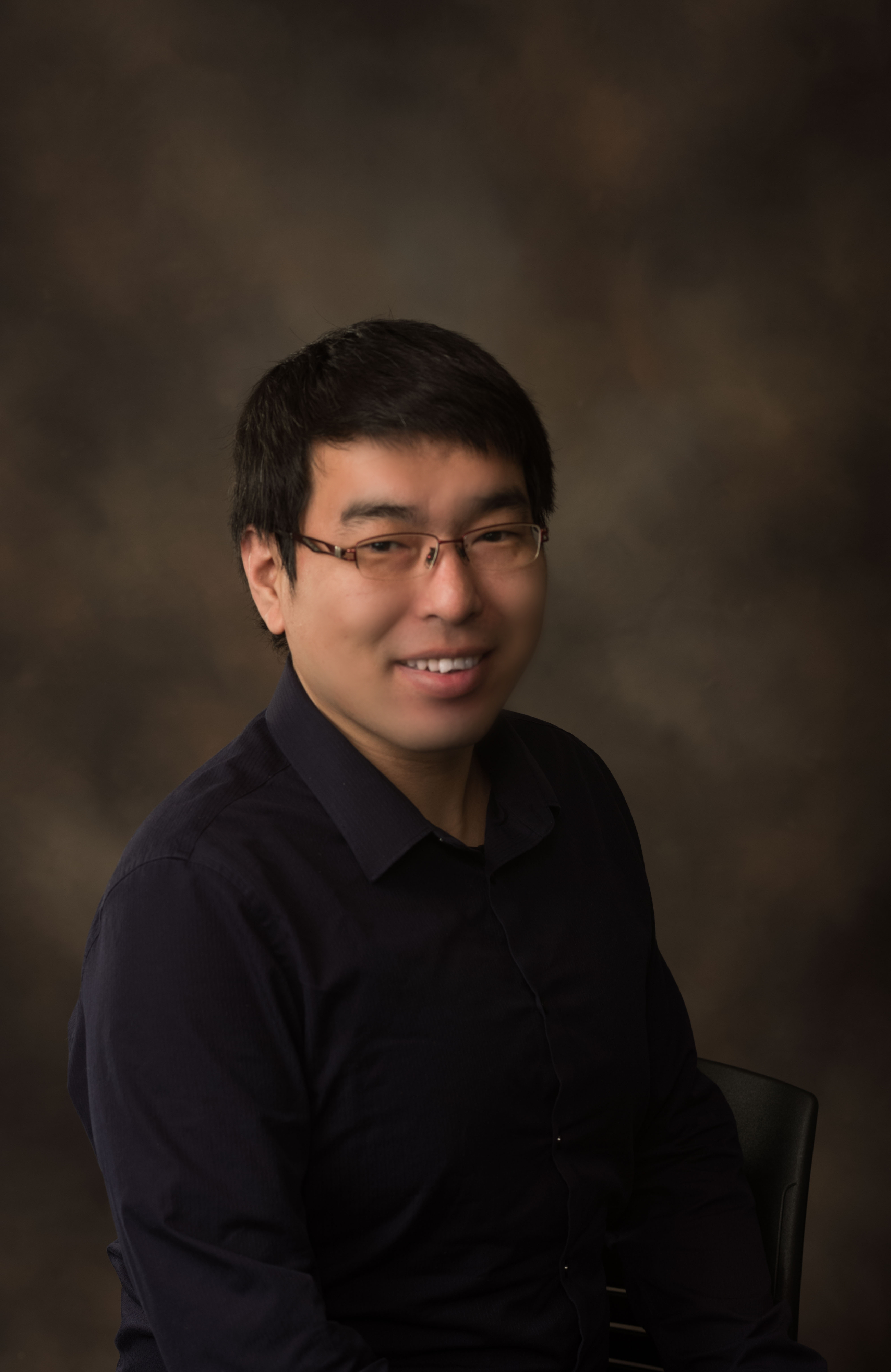
Hu Cao is a postdoctoral research associate at the Chair of Robotics, Artificial Intelligence and Real-Time Systems (Prof. Alois Knoll) at the Technical University of Munich (TUM) . Holding a Ph.D. from TUM, his research bridges autonomous driving , robotic grasping , medical image analysis , and dense prediction (classification, detection, segmentation). Education : Ph.D. from TUM Hu's work explores: Autonomous Driving : Perception under adverse conditions, multi-sensor fusion, and risk-based safety models Robotic Grasping : Vision-language integration for 6D pose estimation Medical Imaging : Transformer-based segmentation techniques (e.g., Swin-Unet) His recent publications include 15+ works at top venues like CVPR , ICCV , IEEE TPAMI , and IEEE TIV , with 6052+ Google Scholar citations . Notably, Swin-Unet ranks among the top 3 most cited ECCV papers in 5 years, and his work on event-based autonomous driving perception was featured in IEEE Xplore Innovation Spotlight . Editorial roles include: Associate Editor for Visual Intelligence and Frontiers in Neurorobotics Editorial Board member of Artificial Intelligence and Autonomous Systems (AIAS) Topic Editor for Frontiers in Robotics and AI and Frontiers in Neuroscience He has reviewed for 20+ top journals (e.g., Nature Computational Science , IEEE TRO ) and served on program committees for NeurIPS , CVPR , ICCV , and MICCAI .
Paula Winke is the Inaugural Arts & Letters Professor in the College of Arts & Letters at Michigan State University, where she teaches in the Second Language Studies Ph.D. Program and the MA TESOL & Applied Linguistics Programs within the Department of Linguistics, Languages, and Cultures. Currently on sabbatical at the Universität Innsbruck in Austria, she serves as Director of the Second Language Studies Program and holds a distinguished position as Co-Editor of the journal Language Testing. Her professional appointments include significant recognition through the prestigious Arts and Letters Professorship awarded in 2022. Dr. Winke's research centers on foreign and second language assessment, with particular focus on individual differences that affect assessment processes and outcomes. She has made significant contributions to understanding captioning as 'glasses for your ears,' the hardest questions on the U.S. citizenship test, and technology applications in less commonly taught language programs. Her work bridges theoretical language assessment with practical applications in educational settings, immigrant integration, and accessibility. Her recent publications reveal strong trends in language assessment validity, individual differences in language learning, and technology-enhanced language instruction. Winke frequently investigates self-assessment methodologies, proficiency trajectories, and the cognitive aspects of language testing. A notable pattern shows her increasing focus on less commonly taught languages and the application of multimodal learning approaches, particularly through captioning technology. International Language Testing Association (ILTA) Best Article Award (2025) Leopold-Franzens-University of Innsbruck Guest Professorship (2024-2025) Arts and Letters Professorship (2022) Fulbright Scholar (2022) ACTFL-NFMLTA/MLJ Paul Pimsleur Award (2021) AAAL Research Article of the Year Award (2020) TESOL Award for Distinguished Research (2012) Professor Winke has advised numerous doctoral students including Dylan Burton, Xiaowan Zhang, and Magdalyne Oguti Akiding, with research often supported by Fulbright Scholarships and institutional grants. Her work with the National Academies of Sciences, Engineering, and Medicine demonstrates significant impact on language assessment policy. She has led major projects on language proficiency in higher education and the effects of captioning on language learning. Winke collaborates extensively with the Language Testing Research Group Innsbruck (LTRGI) during her sabbatical and maintains active partnerships with researchers globally. Her work at the Herder Institut in Leipzig and with the European Association of Language Testing and Assessment (EALTA) demonstrates her international research network and influence in the field of language assessment.
Rebecca Hinze-Pifer is an Assistant Professor in the Department of Education Policy, Organization and Leadership at the University of Illinois at Urbana-Champaign's College of Education. Her work focuses on school-based approaches to reducing social inequality with particular emphasis on adolescent socioemotional development. Dr. Hinze-Pifer earned her Ph.D. in public policy from the University of Chicago, a Master's of Public Policy from George Washington University, and a B.S. in astrophysics and computer science from the University of Wisconsin - Madison. Her educational background bridges quantitative analysis with social science perspectives. Her research examines school-based interventions through randomized field experiments and quasi-experimental studies using school administrative data. She investigates how school policies impact student outcomes, with specific attention to school discipline, teacher classroom management practices, and student responses to community violence. Her work demonstrates how educational structures can either perpetuate or mitigate social inequalities. Analysis of her publications reveals consistent focus on educational equity issues, particularly examining how school policies affect marginalized student populations. Her research spans multiple methodological approaches including large-scale quantitative analysis of school administrative data, field experiments, and qualitative stakeholder perspectives. Dr. Hinze-Pifer teaches graduate courses including EPOL 550: Methods of Educational Inquiry, EPOL 586: General Field Research Seminar, and ERAM 565: Quantitative Methods for Education Policy 1. Her teaching emphasizes research methodology and policy analysis skills for future education researchers and practitioners. Her scholarly work demonstrates significant contributions to understanding how school policies can be designed to promote equity while maintaining academic rigor and school safety. Her research on suspension policies and de-tracking initiatives has provided evidence-based insights for school reform efforts focused on equitable access to quality education.
Professor Ingvars Birznieks is a Senior Research Fellow at the Department of Physiology, School of Medical Sciences, UNSW Medicine in Sydney, where he leads the Tactile Research Group at Neuroscience Research Australia (NeuRA). Previously, he held an academic position as Senior Lecturer (Physiology) at the School of Science and Health, Western Sydney University from 2011 to 2014. Dr. Birznieks is a sensory neurophysiologist specializing in sensory information encoding mechanisms, with research spanning tactile perception, neural coding, and bionic applications. His work integrates neuroscience, biomedical engineering, and clinical rehabilitation to understand how touch receptors encode information and how this knowledge can be applied to develop advanced prosthetics and rehabilitation technologies. His research program covers tactile receptors and sensorimotor control of the human hand, with applications in stroke rehabilitation, diabetic neuropathy, and bionic hand development. His recent publications reveal a strong focus on neural coding mechanisms in tactile perception, particularly the burst gap code for frequency perception, friction sensing mechanisms, and intensity coding. These studies consistently bridge fundamental neuroscience with practical applications in bionics and rehabilitation. His interdisciplinary approach connects neurophysiological findings with engineering solutions for artificial touch. Dr. Birznieks has secured significant grant funding, including ARC Discovery Projects and NHMRC Ideas Grants totaling over $2.5 million, supporting research on neural coding, sensorimotor control, stroke rehabilitation, and bionic technologies. His current major project 'The secret of tiny hand movements to feel and manipulate objects' (ARC DP230100048) investigates how humans use micro-movements to extract tactile information during object manipulation. He actively supervises students across neuroscience, biomedical engineering, and computer science disciplines, with recent publications featuring undergraduate and graduate students as first authors. His research group maintains collaborations with institutions in France and Sweden, providing international research opportunities for students. Dr. Birznieks' laboratory has developed unique non-invasive mechanical stimulation technology that allows precise control of neural communication at the single neuron level, enabling unprecedented investigation of how spiking activity influences perceptual experience.
Kristian Skedsmo is an Associate Professor at Oslo Metropolitan University (OsloMet) within the Faculty of Education and International Studies. He is affiliated with the Department of International Studies and Interpreting, specifically in Interpreting Studies. His work bridges sign language research, conversational analysis, and intercultural communication. Field of expertise: Discourse analysis, sign language interpreting, conversational repair Research focus: Norwegian Sign Language, deaf community interactions, linguistic boundary work His research explores conversational repair mechanisms in signed multiperson interactions, emphasizing nonverbal communication strategies and discourse dynamics. He has contributed to understanding how repair initiatives are structured in both pure sign language and interpreted settings, with implications for interpreting practices and intercultural communication theories. Key trends in his scientific publications include: 1) Analysis of conversational repair in Norwegian Sign Language; 2) Visual representation techniques for signed interactions; 3) Interdisciplinary approaches combining linguistics, communication theories, and deaf studies; 4) Examination of interpreting practices for the deafblind community. Skedsmo actively engages in academic dissemination through conferences, workshops, and publications. His recent activities include presentations on interactional competence in sign language interpreting at events hosted by HVL and NTNU, and participation in research stay programs focusing on conversational analysis.
Hiromichi Hosoma is a Professor at Waseda University's Faculty of Letters, Arts and Sciences, where he has been teaching since 2019. Previously, he was affiliated with The University of Shiga Prefecture's School of Human Cultures from 1995 to 2019. He holds a Doctor of Science degree from Kyoto University Graduate School and specializes in the study of human interaction through bodily movements, gestures, and multimodal communication. Professor Hosoma's research focuses on how multiple people coordinate their bodily movements and spatial awareness in various settings including daily conversations, traditional performing arts, and caregiving situations. His work spans cognitive science, social psychology, linguistics, and social welfare, with particular attention to interaction analysis, conversation analysis, gesture studies, onomatopoeia, and elderly care. He investigates how speech and gesture work together to create shared understanding in social contexts, examining phenomena from mundane activities like card games and page-turning to specialized settings like tap dance instruction and dementia care. His scholarly output reveals a consistent focus on multimodal interaction across diverse contexts, with recent work examining latency in telecommunication, weight representation through touch, and deaf-hearing interaction in dance instruction. His publications demonstrate an interdisciplinary approach that bridges cognitive science with practical applications in healthcare and cultural analysis. Professor Hosoma has secured multiple research grants from the Japan Society for the Promotion of Science, including his current project on home care for elderly people with dementia (2025-2028). He is an active member of the Japanese Cognitive Science Society, Qualitative Research in Psychology, and the Japanese Association of the Sociolinguistic Sciences, contributing to both academic discourse and public understanding through book reviews and media commentary on manga, animation, and visual culture.
Bruce Draper is a Professor and Chair of the Department of Computer Science in the College of Natural Sciences at Colorado State University. His work bridges artificial intelligence, machine learning, and computer vision, with a strong emphasis on real-world applications involving visual data and intelligent systems. Research Interests: Draper's research centers on machine learning with a focus on visual learning, adversarial AI, and visual agents. He investigates how AI systems can perceive, interpret, and interact with visual environments through technologies like facial recognition, object tracking, augmented reality, and automated visual communication. His work addresses both the capabilities and vulnerabilities of modern AI, particularly in defending systems against adversarial attacks. Publication Trends: His recent scholarly output reflects a consistent trajectory in advancing computer vision and AI robustness. The articles span topics from adversarial defense mechanisms and visual agent autonomy to scalable learning frameworks and real-time video analysis. Collectively, they emphasize secure, efficient, and context-aware visual intelligence systems grounded in deep learning and representation learning. Scientific Awards: No specific awards mentioned in the provided text. Advising and Grants: While no students or grants are explicitly listed, his leadership role as department chair and prior experience as a DARPA program manager suggest extensive involvement in research funding, mentorship, and high-impact project direction. His background indicates likely supervision of graduate students and management of federally funded research initiatives in AI and computer vision. Labs and Teams: Although no specific lab or research group is named, his research scope implies leadership or affiliation with interdisciplinary teams working on AI security, computer vision, and augmented reality systems within the Department of Computer Science at CSU.
Tony F. Chan is currently President and Professor of Mathematics and Computer Science and Engineering at the Hong Kong University of Science and Technology (HKUST). He holds the title of Professor Emeritus in the Department of Mathematics at the University of California, Los Angeles (UCLA), where he previously served as Professor with joint appointments in Computer Science and Bioengineering. He was Dean of the Division of Physical Sciences at UCLA (2001–2006) and Assistant Director at the National Science Foundation (NSF) for Mathematics and Physical Sciences (2006–2009). President, HKUST Professor, Mathematics & Computer Science and Engineering, HKUST Professor Emeritus, Mathematics, UCLA Assistant Director, NSF (2006–2009) Dean, Division of Physical Sciences, UCLA (2001–2006) His research interests are centered around mathematical image processing, computer vision, computational brain mapping, and numerical algorithms. He has made seminal contributions to variational methods, total variation regularization, level set methods, and multiscale computational techniques. His work bridges pure mathematics with applications in biomedical imaging, VLSI design, and scientific computing. His recent publications focus on image segmentation, inpainting, brain surface mapping, and nonlocal filtering. These works demonstrate a strong trend toward geometric and variational models for image analysis, with increasing emphasis on medical and biological applications such as neuron tracking and cortical mapping. One of the most cited mathematicians (ISI Highly Cited) Chan has mentored over 25 PhD students and 15 postdoctoral fellows, contributing significantly to the training of next-generation researchers in applied mathematics and computational science. He has led major research initiatives including the Institute for Pure & Applied Mathematics (IPAM) and has been involved in numerous professional services at national and international levels. His work has been supported by major funding agencies including the NSF. He leads the Image Processing Group at UCLA and has been instrumental in advancing interdisciplinary research at the intersection of mathematics, engineering, and neuroscience.
Evi Zouganeli is a Professor at the Department of Mechanical, Electrical and Chemical Engineering, Faculty of Technology, Art and Design, Oslo Metropolitan University (OsloMet). She leads the Automation, Robotics, and Intelligent Systems (ARIS) research group and serves as a board member of the Norwegian Artificial Intelligence Society (NAIS). Her work bridges academic research and industrial applications in intelligent systems. Research Focus: Zouganeli specializes in Machine Learning and Computer Vision applications for Cognitive Robotics, with emphasis on assistive technologies, smart cities, and smart industry. Her research explores neuromorphic computing, sensor network optimization, and multi-modal AI integration. Publications Trends: Recent works focus on AI-enabled robotics, sensor placement optimization in smart homes, and neuromorphic reservoir networks. Earlier contributions include European collaborative research in photonic technologies and broadband networks. Additional Contributions: She actively participates in public discourse about AI implementation challenges and Norway’s AI development potential, engaging with industry leaders and policymakers.
Matthias Springstein is a researcher at the Technical Information Library (TIB), which is affiliated with Leibniz University Hannover. He is part of the Visual Analytics research group within TIB's Research & Development department, focusing on advanced computer vision and multimedia information retrieval techniques. His research interests span multiple areas of artificial intelligence with emphasis on computer vision applications. Springstein specializes in web-supervised learning for visual concepts, incremental learning approaches, and methods to minimize manual labeling efforts for training data. His work bridges theoretical machine learning with practical applications in digital humanities, particularly in art-historical image analysis and film/video studies. His publication record shows a consistent focus on multimodal analysis, with recent work exploring knowledge graphs for image classification, large-scale hierarchical classification of art-historical images, and computational tools for film analysis. The research demonstrates progression from foundational work in image-text relations and depth estimation toward increasingly sophisticated applications in cultural heritage and scholarly media analysis. Notable achievements include receiving the Best Paper Award at the International Conference on Multimedia Retrieval (ICMR) in 2019 for his work on semantic image-text relations. Springstein has developed TIB AV-Analytics, a computational platform for scholarly video analysis that has been presented at multiple major conferences (SIGIR 2023, SCSMI 2024), indicating significant impact in both the information retrieval and film studies communities.
Haohan Wang is an Assistant Professor at the University of Illinois Urbana-Champaign's School of Information Sciences, with affiliations to the Carl R. Woese Institute for Genomic Biology and the National Center for Supercomputing Applications. His research focuses on developing trustworthy machine learning methods for computational biology and healthcare applications , emphasizing robustness , causality , and interpretability in vision-based models. Recent research trends in his work include: Large Language Model interactions with biomedical challenges (GenoAgent, GenoTex) Adversarial security in language and vision models (Guard, Jailbreakzoo) Genomic data analysis through robust machine learning frameworks (Precision Lasso, Kernel Mixed Models) Interactive toolkits like Robustar for data annotation and model training Scientific awards include recognition as Baidu's Top 50 AI+X Rising Young Scholars (2022), Best Paper Honorable Mention at WSDM 2023, and Broad Institute's Next Generation status (2019). Current projects explore AI-made scientists for biomedical discovery and Robustar development for GUI-based robust vision learning.
Hussein Rashid is an Adjunct Assistant Professor in the Department of Religion at Harvard University, specifically affiliated with Harvard Divinity School. He has taught at multiple institutions including Hofstra University, Fordham University, Iona College, and Columbia University, demonstrating a broad academic presence across the Northeastern United States. His educational background is deeply rooted in elite institutions: he earned a PhD and MA in Near Eastern Languages and Cultures from Harvard University, an MTS from Harvard Divinity School, and a BA in Middle Eastern Studies from Columbia University. His academic journey reflects a strong interdisciplinary foundation in Islamic studies, theology, and cultural analysis. Hussein Rashid’s research focuses on Muslims in America, especially their interactions with popular culture—such as music, comics, film, and digital media. He explores themes like Muslim identity, Shi’i justice theology, interfaith dialogue, and the racialization of Muslims. His work bridges academic scholarship and public engagement, often addressing contemporary social issues like Islamophobia, #BlackLivesMatter, and religious literacy. His recent publications reveal a consistent engagement with religion in modern media and cultural expression. Trends include the use of superheroes as metaphors for Islamic ethics, the role of music (like qawwali) in American Muslim identity, and the complexities of interfaith and intra-Muslim relations. His co-edited volume Islam in North America (2024) represents a major contribution to the field, synthesizing diverse perspectives on race, gender, and sexuality in Muslim communities. Ariane de Rothschild Fellowship in Social Entrepreneurship Fellow, American Muslim Civic Leadership Institute Term Member, Council on Foreign Relations Fellow, Institute for Social Policy and Understanding Hussein Rashid has been actively involved in public scholarship and advisory roles. He has served on editorial boards for Religion Dispatches , The Islamic Monthly , and CyberOrient , and is currently on advisory boards for the Doris Duke Foundation for Islamic Art, Sacred Matters, Anikaya Dance Theater, and the Tanenbaum Center. He has received grants and fellowships supporting civic leadership and interfaith work. He mentors emerging scholars and collaborates with students on publications, though specific advisees are not named. He is also involved in media projects, including podcasts and videos, often focusing on religion and pop culture. He is associated with several intellectual and creative collectives, including Anikaya (which he chairs), the Interfaith Center of New York, and the Graymalkin Lane podcast. His current work includes exploring the role of technology in teaching religion and contributing to public understanding of Islam through accessible platforms.
Dr. Kevin Lu is a Reader at Brunel Business School, Brunel University London, specializing in digital transformation and business analytics. His research focuses on leveraging Generative Artificial Intelligence (GAI) technology for digital business strategy development. He has published over 30 research articles in leading journals, 3 book chapters, and more than 30 conference papers. His work has been supported by organizations such as SAMS, GCRF, Innovate UK, EPSRC, and the EU. Dr. Lu holds a BSc (Hons) in Mathematics, a PhD in Management, and a Postgraduate Certificate in Teaching and Learning in Higher Education. Before joining academia, he worked in industry as a computer software engineer, bringing practical experience to his research and teaching. His research interests span digital marketing and marketing analytics, understanding business development through data analysis, and Generative AI applications in marketing. Dr. Lu adopts a computer science perspective in his work, encompassing topics such as social networks, trust, web science, artificial intelligence, and fair and accountable interactions. His studies utilize methods including mathematical modeling, optimization, and econometrics. His recent publications demonstrate a strong focus on the intersection of AI and consumer behavior, particularly in e-commerce contexts, with increasing emphasis on Generative AI applications. Dr. Lu has successfully supervised ten PhD students to completion and currently supervises research on developing business strategies for digital products using Generative AI techniques. His research has attracted significant funding from prestigious organizations including SAMS, GCRF, Innovate UK, EPSRC, and the EU. Fellow of the Higher Education Academy (FHEA) Member of the SAS Academy Programme Chair for Business Analytics track at IEEE Conference on Business Informatics He teaches courses in Business Intelligence, Marketing Analytics, and Business Statistics, maintaining regular office hours and dedicated time for dissertation supervision. His work provides valuable insights for businesses seeking to leverage digital technologies for competitive advantage, particularly in understanding how AI applications can transform customer interactions and business processes.
Ian Owens is a Senior Lecturer in Information Systems at Cranfield University's Centre for Defence Engineering and Physical Science within Cranfield Defence and Security. With over 25 years of academic experience, he serves as Course Director for the MSc in Cyber Defence and Information Assurance (CDIA) and manages multiple modules across various MSc programmes at Cranfield. He also acts as an external examiner at Staffordshire University and the University of Bedfordshire. Current Position: Senior Lecturer in Information Systems Institution: Cranfield University Department: Centre for Defence Engineering and Physical Science Previous Academic Appointments: Sheffield University, Oxford University, Edinburgh Napier University, Swansea University External Examiner Roles: Bolton University, Edinburgh Napier University, Staffordshire University, Bedfordshire University Dr. Owens specializes in emerging technologies, information systems development methodologies, digital business strategy, and networking and communications technologies. His research spans strategic management, tactical communications, service-based architecture, cyber defence, and agile project management. He has extensive experience in research and consultancy, including writing successful bids for funding, representing UK interests on NATO research task groups, and working with diverse stakeholders including NATO, IBM, DSTL, QinetiQ, and UK MOD. His recent publications demonstrate a strong focus on tactical communications, cyber security, and military applications of networking technologies, with particular emphasis on software-defined networks, wireless aware networks, and the military application of the Internet of Things. The publications show a progression from earlier work on e-government and e-commerce to current defense-focused research. Fellow of the Higher Education Academy Dr. Owens currently leads a MOD-funded research project under the CSIIIS framework investigating wireless aware networks and serves as the UK member of the NATO Science and Technology Organisation Technical Team for IST-147 on the Military Application of the Internet of Things. He is actively recruiting doctoral research students in the area of software defined networks and continues to direct the leading MOD educational course in Cyber Defence (CDIA).
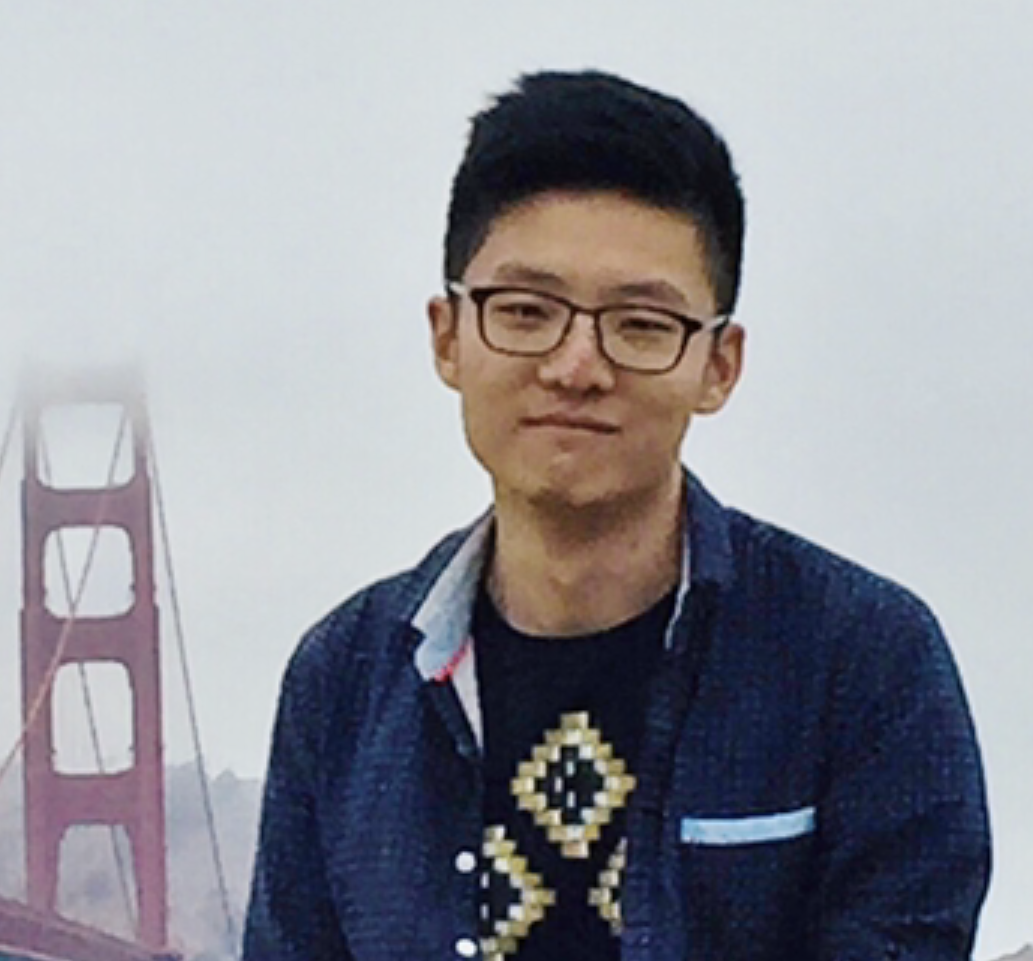
Cheng Lin is an Assistant Professor at the Department of Computer Science and Engineering, Macau University of Science and Technology (MUST). He earned his Ph.D. in Computer Science from the University of Hong Kong (HKU) under Prof. Wenping Wang and completed a visiting research period at the Visual Computing Group, Technical University of Munich (TUM), advised by Prof. Matthias Nießner. His B.Eng. degree from Shandong University focused on geometry and graphics. His research focuses on geometric modeling , 3D vision , shape analysis , and computer graphics , with recent contributions in diffusion models for 3D reconstruction, neural surface modeling , and material-aware generation . He has published extensively in top venues like SIGGRAPH, CVPR, and ECCV. Key trends in his publications include advancing single-view 3D generation , multiview consistency , and neural diffusion techniques for geometric and material reconstruction. Notable works include PDT: Point Distribution Transformation with Diffusion Models (SIGGRAPH 2025) and Wonder3D (CVPR 2024). Scientific Awards : CVPR 2024 Most Influential Papers (Corresponding Author) ICLR 2024 Most Influential Papers (First Author) CGF Top Cited Article 2022-2023 Tencent Excellent Contributor [2022] National Scholarship of China [2013-2015] Cheng Lin co-founded the non-profit research group AnySyn3D and has served as a reviewer for journals like TPAMI, TOG, and TVCG, as well as conferences including SIGGRAPH and CVPR.