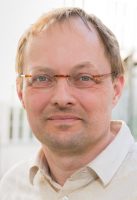
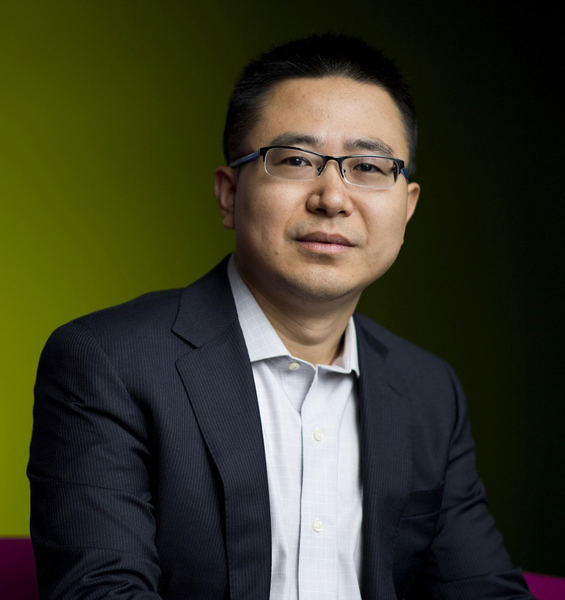
Dominik Schörkhuber is a PreDoc Researcher at the Vienna University of Technology (TU Wien) in the Computer Vision department. With a background in Informatics (BSc, Dipl.-Ing.), he focuses on computer vision applications for autonomous driving, robotics, and human-machine interaction. His work spans driver action recognition, pedestrian prediction, and adaptive lighting systems. Current projects: Empathic Vehicle (2024–2026), SyntheticCabin (2021–2025), SmartProtect (2020–2025) Research themes: Video transformers, synthetic data transfer learning, multi-task learning, and sensor-lighting integration Specializes in 3D sensing, nighttime driving analysis, and mobile video creation tools
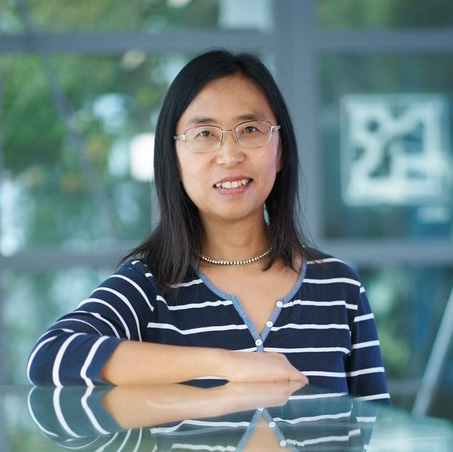
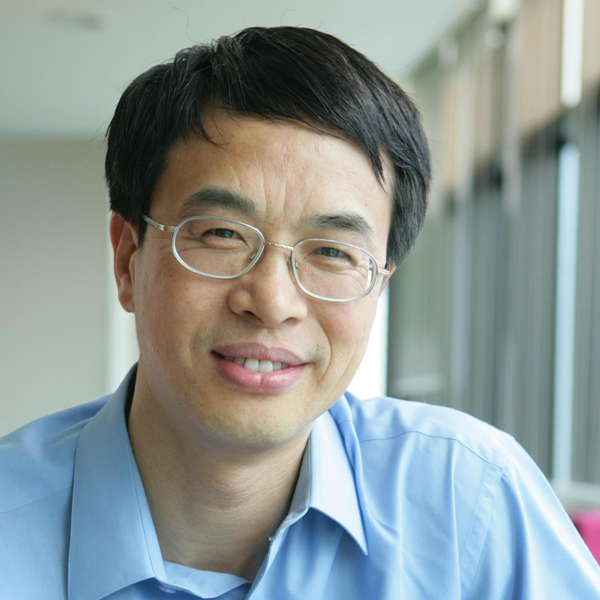
Zhao Guoying is an Academy Professor at the Academy of Finland and holds a tenured Full Professorship at the University of Oulu, Finland. His research focuses on human behavior understanding, emotion AI, and computer vision. He has held visiting positions at institutions including Stanford University and Aalto University. He earned his PhD (2005) in Computer Science from the Chinese Academy of Sciences. His work has led to pioneering contributions in facial expression analysis, micro-expression recognition, and remote physiological signal measurement. Zhao has secured over €19.8 million in research grants as PI, including the prestigious Academy Professor Grant (2021-2026) and Profi-7 Hybrid Intelligence funding. He has supervised 22+ PhD students and 16+ postdocs, many of whom hold academic and industry leadership roles. His awards include IEEE Fellow (2022), IAPR Fellow (2020), and Finland’s Most Publishing AI Researcher (2017). His research interests span machine learning, affective computing, and feature representation. Notable contributions include the first systems for spontaneous micro-expression analysis, novel methods for face anti-spoofing, and remote health monitoring via video. He actively organizes conferences (e.g., Arctic AI Days) and chairs committees such as the Finnish AI Society board.
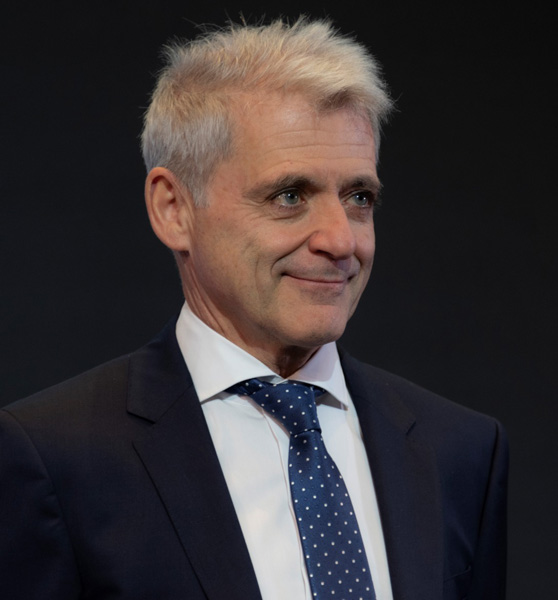
Markus Vincze is an Associate Professor at the Institute of Automation and Control Engineering (ACIN) at Vienna University of Technology (TU Wien). He founded the Vision for Robotics (V4R) group in 1996 to advance robotic perception, particularly in real-world environments and homes. His work focuses on cognitive computer vision techniques for robotics. Education: Diplom in Mechanical Engineering (1988) and PhD (1993) from TU Wien; M.Sc. (1990) from Rensselaer Polytechnic Institute. V4R coordinates EU projects like ActIPret, robots@home, HOBBIT, and national initiatives like vision@home. Markus has edited a book on Robust Vision with Gregory Hager and authored 62 peer-reviewed journal articles and over 400 reviewed publications. His recent research explores zero-shot 6D pose estimation, sim-to-real transfer, and transparent object detection. Markus has served as program chair for ICRA 2013 and organized HRI 2017 in Vienna. He has advised numerous students and secured grants from the Austrian Academy of Sciences for work at HelpMate Robotics and Yale's Vision Laboratory. The V4R group leads innovations in robotic vision, including frameworks for synthetic data generation (Unrealgensyn), depth completion (CAGT), and educational robotics applications for sustainability. Their work spans household robotics (RH3), agricultural robotics (EdgeSoil), and human-robot collaboration.
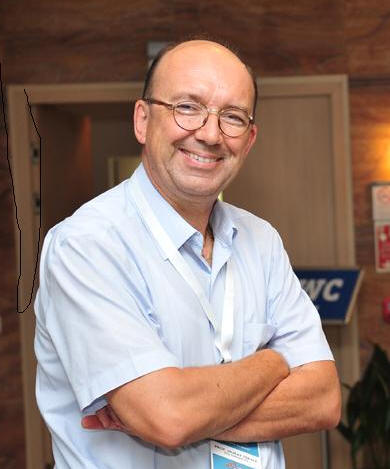
Assoc. Prof. Dr. Klaus Schöffmann is an Associate Professor at the Institute of Information Technology (ITEC) at Klagenfurt University, Austria. He holds a PhD and MSc in Computer Science, and received his habilitation (venia docendi) in 2015. His research focuses on video content understanding (including medical/surgery videos), deep learning, multimedia retrieval, and interactive multimedia. He has secured over €2M in research funding and mentored 6 PhD candidates. He chairs the Video Browser Showdown (VBS) and Lifelog Search Challenge (LSC), and is a member of IEEE/ACM. He has served as program co-chair for MMM 2021, CBMI 2021, ACM ICMR 2020, and others. Affiliations: Deputy Head of the Institute of Information Technology, Chairman of the Curricular Commission for Computer Science. Grants & Impact: €2M+ funding from FWF, KWF, and industry; Google H-index 36 (4,000+ citations). Teaching: Courses in computer vision, multimedia technologies, and app development. He actively organizes conferences including general co-chair roles for ACM ICMR 2024, CBMI2025, and ACMMM2025, and contributes as a reviewer for top journals/conferences in multimedia and medical imaging.
Prof. Sara Merino Aceituno is a Professor at the Faculty of Mathematics, University of Vienna, leading research in kinetic theory and its applications to biology, medicine, and social sciences. She holds roles as Vice-Dean of the Faculty and Head of the Institute of Mathematics. Her work bridges mathematical models with experimental data, focusing on emergent phenomena in collective dynamics, opinion formation, and cell behavior. She teaches advanced courses on kinetic theory, biomathematics, and mathematical strategies for learning. Her contributions include modeling cell delamination, nematic alignment, and swarm dynamics through PDEs and probabilistic methods. Collaborations with experimentalists drive her interdisciplinary research. She actively engages in education, advising, and public outreach, including a video series explaining mathematical patterns in nature. Her research emphasizes understanding macroscopic patterns arising from microscopic interactions in complex systems. Education: Holds a PhD in Mathematics, with expertise in kinetic theory and applied partial differential equations. Teaching and leadership roles reflect her commitment to academic excellence and student support. Her work integrates experimental and computational models to study clonal dynamics in tissues and mechanical constraints in epithelial layers. She has authored over 20 papers on topics ranging from active matter to opinion formation networks, contributing to both theoretical advancements and practical applications in biology and social sciences. Research focuses on deriving hydrodynamic and continuum models from particle systems, analyzing stability and bifurcations in collective behavior. Grants and collaborations include the Vienna Biocenter PhD Program and experimental groups in cell biology. Her lab explores how environmental factors influence particle swarms and how mechanical forces shape cell cycles in pseudostratified epithelia.
Jean Ponce is a Professor of Computer Science at Ecole Normale Superieure (ENS) in Paris and a Part-Time Global Distinguished Professor at New York University's Courant Institute of Mathematical Sciences and Center for Data Science (CDS). He previously served as Director of the ENS Computer Science Department (2011-2017) and held positions at Inria (2017-2022), University of Illinois at Urbana-Champaign (1998-2006), MIT, Stanford, and Inria (1982-1985). Academic Leadership: Scientific Director of PRAIRIE Interdisciplinary AI Research Institute in Paris Startup Involvement: Co-founder and CEO of Enhance Lab (2022) Editorial Roles: Senior Editor-in-Chief of International Journal of Computer Vision (2019-2022) Conference Leadership: Chair of IEEE CVPR (1997,2000), ECCV (2008), and upcoming ICCV (2023) Research Focus: Computer vision, machine learning, robotics, and AI with applications in exoplanet imaging, 3D reconstruction, and image quality assessment. His work bridges statistical learning and deep learning approaches. Awards: IEEE Fellow (2003) ELLIS Fellow (2019) ERC Advanced Grant (2011) IEEE CVPR Longuet-Higgins Prizes (2016,2020) ICML Test-of-Time Award (2019) Patents & Publications: Co-author of influential textbook Computer Vision: A Modern Approach (translated into Chinese, Japanese, Russian). Holds two US patents and one pending French patent. Google Scholar h-index of 78 with over 55,000 citations.
Ahmet Tekalp is a Professor in the Department of Electrical and Computer Engineering at Koc University's College of Engineering since 2001. He holds dual citizenship in Turkey and the USA, with prior academic roles at the University of Rochester (1986-2005) and research positions at Eastman Kodak (1984-1987) and Rensselaer Polytechnic Institute (1981-1984). He chairs the Electronics and Informatics Group at TUBITAK since 2004 as a part-time position. B.S. (1980) in Electrical Engineering & Mathematics, Bogaziçi University M.S. (1982) and Ph.D. (1984) in Electrical, Computer, and Systems Engineering, Rensselaer Polytechnic Institute His research focuses on digital image and video processing, including video compression, motion-compensated filtering for high-resolution applications, video segmentation, object tracking, content-based video analysis, multi-camera surveillance processing, and digital content protection. He has led numerous European and U.S. grants, including FP7 STREP projects and NSF awards, emphasizing applications in sensor networks, visual databases, and medical imaging. His scholarly work spans diverse areas such as superresolution reconstruction, head gesture animation, 3DTV streaming, and reversible data hiding. He has played pivotal roles in editorial boards, including serving as Editor-in-Chief of Signal Processing: Image Communication, and has contributed to major standards bodies like ISO MPEG and ANSI NCITS. Member, Turkish Academy of Sciences (TUBA) Fellow, IEEE Fulbright Senior Scholarship (1999) TUBITAK Science Award (2004) IEEE Signal Processing Society Distinguished Lecturer (1998) He has led multiple international research collaborations and projects, including European FP6/FP7 networks and NATO programs, with substantial grant funding from NSF, NYSTAR, and industry partners like Eastman Kodak, Xerox, and Siemens.
Klaus Schönberger is a University Professor in Cultural Anthropology at the Institute for Cultural Analysis, Alpen-Adria-Universität Klagenfurt / Celovec. His work focuses on the Alps-Adriatic region, with interests spanning cultural studies, ethnography, cultural heritage, and digital communication. He has held leadership roles such as 1st Chairman of the Austrian Society for Empirical Cultural Studies and Folklore (2018–2024) and board member of the Institute for Cultural Analysis (2016–2023). Doctorate in Empirical Cultural Studies (1994), University of Tübingen Habilitation in Cultural Anthropology (2010), University of Hamburg His research explores societal aesthetics through audiovisual media, including amateur film practices, digital communication, and the interplay between art and ethnography. Recent publications examine memory politics, cultural heritages, and agonistic perspectives in the Carinthia/Koroška region. A 2008 scholarship from the Isa Lohmann Siems Foundation highlights his academic recognition. Key themes in his work include the societal implications of self-representation (e.g., selfie practices), the historical evolution of media (Super 8 to smartphone videos), and the cultural analysis of the Alps-Adriatic region. His interdisciplinary approach bridges cultural theory, digital communication, and ethnographic methodology. Scientific Awards: 2008 scholarship from the Isa Lohmann Siems Foundation, Hamburg Notable projects include the analysis of transversal practices in the Schillerverein in Trieste and the cultural implications of digital communication's persistence and recombination. He has contributed to understanding the aestheticization of work and the dissolution of traditional boundaries in labor and leisure.
Yun Fu is a tenured Professor in the Department of Electrical and Computer Engineering at Northeastern University, with a joint appointment in the Khoury College of Computer Science. He has established himself as a leading researcher in Artificial Intelligence, with over 500 publications in top-tier venues including IEEE/ACM transactions and major AI conferences. His work spans both theoretical foundations and practical applications, with significant impact in computer vision and machine learning. Professor Fu earned his Ph.D. in Electrical and Computer Engineering from the University of Illinois at Urbana-Champaign. His academic career progressed from Assistant Professor at SUNY Buffalo to his current position as tenured Professor at Northeastern University, where he has held appointments since 2012. His educational background includes a Beckman Graduate Fellowship at UIUC (2007-2008). His research focuses on advancing Artificial Intelligence with particular emphasis on Computer Vision, Pattern Recognition, and Machine Learning. His seminal work includes the "Residual Dense Network for Image Super-Resolution" presented at CVPR 2018, which was ranked among the Top 10 Most Influential CVPR papers. His research interests span image processing, anomaly detection, multimodal learning, and trajectory prediction, with applications ranging from healthcare to consumer technology. Analysis of his recent publications reveals a strong trend toward developing efficient and robust AI systems that bridge computer vision with language understanding. His work increasingly focuses on multimodal learning, trajectory prediction for multi-agent systems, anomaly detection in complex environments, and model validation techniques for black-box systems, while maintaining practical applications in real-world scenarios. Professor Fu's extensive recognition includes: Fellow of IEEE (2018), OSA (2019), SPIE (2018), IAPR (2016), AAIA (2021), and AAAI (2025) Member of Academia Europaea (2022) and European Academy of Sciences and Arts (2023) Fellow of National Academy of Inventors (2023) Multiple Young Investigator Awards from NAE, ONR, ARO, IEEE, ACM, and INNS 12 Best Paper Awards from major conferences Industrial Research Awards from Google, Amazon, Samsung, JPMorgan, and others Professor Fu has successfully mentored numerous Ph.D. students who now hold prominent positions in academia and industry at institutions including Amazon, Microsoft, Meta, Adobe, and major universities. His entrepreneurial ventures include founding Giaran (acquired by Shiseido in 2017) and co-founding TVision Insights, demonstrating his commitment to translating research into real-world impact. He has secured significant research funding from both government agencies and industry partners. As the PI and Founding Director of the SmiLe Lab at Northeastern University, Professor Fu leads a dynamic research group focused on advancing the state-of-the-art in AI and Computer Vision. The lab fosters interdisciplinary collaboration across computer science, electrical engineering, and applied mathematics, with ongoing projects in efficient deep learning, multimodal understanding, and practical AI applications.
Wenwu Zhu is a Professor and Vice Chair of the Department of Computer Science and Technology at Tsinghua University. He has held prominent positions at Microsoft Research Asia, Intel Research China, and Bell Labs, establishing himself as a leading figure in multimedia computing and networking with international recognition as a FOREIGN member of the Academy of Europe (elected 2018). His educational background includes: Ph.D. in Electrical and Computer Engineering from New York University (1996) Professor Zhu's research focuses on the intersection of multimedia systems, networking, and big data. His work has pioneered advancements in internet video streaming, multimedia cloud computing, and social-aware content distribution. He has made significant contributions to understanding how multimedia content can be efficiently delivered across diverse network environments, from traditional wired networks to modern mobile and social platforms. His research bridges theoretical computer science with practical applications, with his work on social-aware video content distribution being transferred to Tencent company. His publication record shows a clear evolution from foundational work on internet video streaming in the early 2000s, through multimedia cloud computing in the early 2010s, to more recent work on social-aware multimedia and network embedding using deep learning approaches. This progression reflects the changing landscape of multimedia computing from infrastructure-focused to socially-aware and AI-driven systems. Professor Zhu has received numerous prestigious honors: AAAS Fellow (2016) SPIE Fellow (2013) IEEE Fellow (2010) Minister of Education's Natural Science Award, 1st prize (2017) Chinese Institution of Electronics's Natural Science Award, 1st prize (2015, 2012) National Natural Science Award, 2nd prize (2012) Chief Scientist for NSFC Major Project (2016) Chief Scientist for Ministry of Science and Technology's 973 Project (2014) Multiple Best Paper Awards including ACM Multimedia 2012 As Editor-in-Chief of IEEE Transactions on Multimedia since 2017 and through leadership roles as General Co-Chair for ACM CIKM 2019 and ACM Multimedia 2018, Professor Zhu has significantly shaped the multimedia research community. His research has been supported by major grants including NSFC Major Projects and Ministry of Science and Technology's 973 Projects, demonstrating both academic and national strategic importance. He has published over 300 referred papers with an H-Index of 55, including 6 Best Paper Awards and 7 books or book chapters. Professor Zhu leads a research group at Tsinghua University focused on multimedia big data computing, with strong industry connections. His team has made pioneering contributions to structural network embedding using deep learning and social contextual recommendation systems, bridging theoretical advances with practical applications in social media platforms.
Timo Fleischer is an Associate Professor in the Chemistry Didactics Working Group at the University of Salzburg, affiliated with both the Faculty of Natural and Life Sciences and the School of Education. He leads key educational innovation projects including EXBOX-Digital, ChemGerLab-VR, and RECC Salzburg, and plays a significant role in digital science education development. Education: Bachelor of Science in Geography and Chemistry, University of Kiel (2011) Master of Education in Geography and Chemistry, University of Kiel (2013) PhD in Science Education, TUM School of Education (2017) Habilitation in Chemistry Didactics, University of Salzburg (2024) His research focuses on the effectiveness of digital media in teacher education and chemistry classrooms, the development of digital teaching and learning materials, and the integration of experimentation and modeling in science education. He is particularly interested in how digital tools support the learning of chemical language and representations. His work bridges educational theory and practical classroom innovation. His recent publications demonstrate a strong emphasis on digital scaffolding, augmented and virtual reality in chemistry labs, eye-tracking during experiments, and the use of fiction as an anchor in science teaching. These works reflect a trend toward immersive, technology-enhanced, and student-centered learning environments in science education. Scientific Awards: Ehrenurkunde Polytechnik-Preis 2022 – Projekt EXBOX-Digital Kulturfondspreis 2020 für das Projekt MINT:labs Science City Itzling Comenius-EduMedia-Siegel für EXBOX-Digital (2020) Qualitätslabel „Regional Educational Competence Centre“ (RECC) (2018–2021) Junior-Fellowship, Kolleg Didaktik:digital (2016–2017) Timo Fleischer has supervised various research projects and collaborated with numerous colleagues and students, though specific advisees are not listed. He has secured recognition and funding for initiatives such as EXBOX-Digital and MINT:labs, indicating successful grant acquisition. He is actively involved in teacher training, curriculum development, and science communication. He leads several innovative labs and teams, including ChemGerLab-VR (a virtual reality chemistry lab), EdTechAll, and the development of MINT:labs Science City Itzling. These initiatives focus on creating digital, hands-on, and inclusive science learning environments for both students and teachers.
Dirk Rupnow is a Professor at the Institute for Contemporary History, University of Innsbruck, and has served as Dean of the Faculty of Humanities since March 2018. He previously held roles as Associate Professor and Assistant Professor at the same institute. His academic career includes visiting professorships at Stanford University and the Hebrew University of Jerusalem, as well as fellowships at leading research centers such as the United States Holocaust Memorial Museum and the Institute for Human Sciences in Vienna. Research Interests: Dirk Rupnow's work spans Austrian, German, and European contemporary history, with a focus on the Nazi era, Holocaust, Jewish history, migration, memory studies, and museology. His research integrates cultural, transnational, and methodological perspectives, often bridging academic and public history. His recent publications reflect a strong engagement with digital memory, forced sterilization under National Socialism, Holocaust narratives, and migration history. These works demonstrate a commitment to interdisciplinary and socially relevant scholarship, particularly in confronting difficult pasts and shaping public memory. Scientific Awards: Fraenkel Prize in Contemporary History, Wiener Library, London (2009) Charles H. Revson Fellowship, US Holocaust Memorial Museum (2004, 2010) APART-Stipendium, Austrian Academy of Sciences (2004–2007) Förderpreis des Landes Tirol für Wissenschaft (2010) Geisteswissenschaften International-Preis (2011) Junior Fellowship, IFK Vienna (2000–2001) Advising and Grants: Dirk Rupnow has led and co-led numerous research projects funded by the FWF, BMWF, and Sparkling Science programs. He founded the Doctoral Program on 'Dynamics of Inequality and Difference in the Age of Globalization' and coordinated the Research Center 'Migration & Globalization' at the University of Innsbruck. His leadership roles include directing the Institute for Contemporary History (2010–2018) and serving on multiple national and international advisory boards. Labs and Teams: He leads the 'Arbeitskreis Migration' at the Haus der Geschichte Österreich and chairs scientific advisory boards for the Documentation Archive of Migration Tyrol and the Vielfaltenarchiv Vorarlberg. He is actively involved in collaborative networks such as the Austrian Network for Migration History and international institutions like Yad Vashem and the Simon Dubnow Institute.
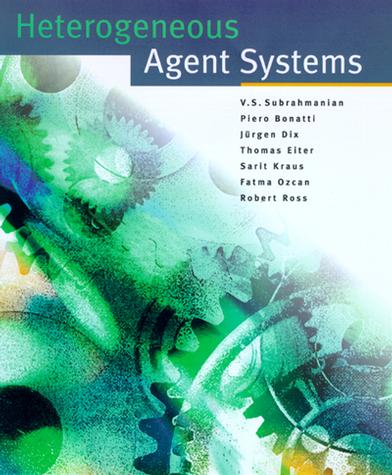
Thomas Eiter is a Full Professor at the Institute of Logic and Computation, Technical University of Vienna (TU Wien), where he serves as Head of Research Unit. He is a Full Member of the Division of Mathematics and Natural Sciences since 2022 and holds leadership roles within the university. His research focuses on knowledge representation and reasoning, computational logic, algorithms and complexity in AI, declarative problem solving, nonmonotonic logic programming and databases, and reasoning about actions and change. His work bridges theoretical foundations with practical applications in artificial intelligence, particularly in logic programming and knowledge-based systems. He has made significant contributions to Answer Set Programming (ASP), developing frameworks like DLV and HEX programs that enable sophisticated reasoning capabilities. His recent publications demonstrate a strong focus on stream reasoning (LARS framework), knowledge forgetting, modular reasoning systems, and the integration of logic programming with ontologies. His research shows consistent contributions to both theoretical foundations and practical implementations of AI systems over several decades. ACM Fellow (2020) Fellow of the European Association for AI (2006) Distinguished Paper Award of the 17th International Joint Conference on Artificial Intelligence (IJCAI, 2001) Prominent Paper Award of the Artificial Intelligence Journal (2013) Test of Time Award (10 years) of the International Conference on Logic Programming (2013) Eiter has led and participated in numerous research projects, both internationally funded (such as LogiCS@TUWien, Humane AI, AI4EU) and nationally funded (including projects like BILAI, TAIGER, and several FWF-funded initiatives). His research unit has received substantial support from European Commission programs (H2020) and Austrian funding agencies (FWF, FFG, WWTF). He is actively involved in the academic community as a member of the Austrian Academy of Sciences (ÖAW), Academia Europaea, and has served on the Executive Council of AAAI. His research unit maintains strong connections with international collaborators and has developed influential systems like the DLV answer set programming system.
Dr. Denis Kalkofen serves as an Associate Professor at the Institute of Computer Graphics and Vision (ICG) at Graz University of Technology, Austria. His academic journey began with a Dipl.-Ing. (2004) from the University of Magdeburg, followed by a Dr. techn. (2009) from Graz University of Technology. University of Magdeburg - Dipl.-Ing. (2004) Graz University of Technology - Dr. techn. (2009) University of Michigan, Ann Arbor - Virtual Reality Laboratory member Stanford University - Visiting Assistant Professor at Computational Imaging Laboratory (2019) University of South Australia - Visiting Researcher at Wearable Computer Laboratory (2019) Dr. Kalkofen's research centers on developing visualization, interaction, authoring, and display technologies for Virtual and Mixed Reality environments, with particular emphasis on combining computer graphics and computer vision techniques to create comprehensible and accessible VR/MR experiences. His work spans situated visualization (addressing label placement and X-ray visualization), photometric rendering (recovering lighting properties for realistic AR), and content creation automation (leveraging existing data sources for AR content). His publication trends over the past 15+ years demonstrate consistent leadership in AR/MR research, evolving from foundational work on visualization techniques to current cutting-edge research in neural rendering, neuroadaptive systems, and industrial AR applications. Recent work shows increased focus on practical industrial implementations, error management in AR assembly, and multimodal learning applications. Best paper award for 'enRoute: Dynamic path extraction from biological pathway maps' (2012) Best short paper for 'TutAR: Augmented Reality Tutorials for Hands-only Procedures' (2018) Best paper for 'Tools for Teaching Mining Students in Virtual Reality' (2020) Honorable Mention for Best Paper for 'Adaptive User-Perspective Rendering' (2017) Dr. Kalkofen leads Team Kalkofen at ICG, supervising researchers including Peter Mohr, Shohei Mori, David Mandl, and Ana Stanescu. His team has secured significant funding for projects related to AR/VR content creation, visualization techniques, and industrial applications. They maintain strong collaborations with institutions including Stanford University, University of South Australia, and University of Michigan. Team Kalkofen operates within the Institute of Computer Graphics and Vision at TU Graz, focusing on three main research thrusts: situated visualization for AR, photometric rendering for realistic MR, and automated content creation for professional AR applications. The team maintains active partnerships with industry and academic institutions worldwide, contributing to the advancement of practical AR/MR technologies.
Ingrid Krumphals is a Professor of Physics Education at the University of Education Styria, leading the NATech research center. She specializes in curriculum development, teacher training, and the integration of technology in STEM education. Her work focuses on designing remote laboratories, fostering diagnostic skills in educators, and improving physics teaching methodologies. She actively engages in national and international projects such as ProQ-STEAM and OnLabEdu, aiming to enhance educational quality through innovative practices. Her research addresses students' conceptual understanding in physics, teacher professional development, and bridging theory with classroom practice. Position: Full Professor of Physics Education Research Center: Director of NATech (Natural Science and Technical Education Research) Key Projects: ProQ-STEAM (Teacher Professionalization), OnLabEdu (Remote Labs) Her research interests span learning processes, design-based research, and professionalization of educators. Recent work includes remote lab implementations for schools, studies on cognitive load in physics learning, and global surveys on fluid dynamics perceptions. She emphasizes context-based teaching, such as using weather phenomena and wind mechanics to illustrate physics principles. Her contributions bridge academic research with practical educational tools, benefiting both teachers and students.