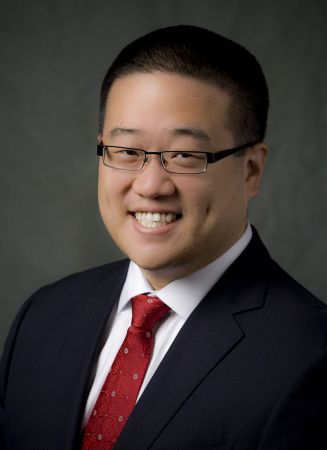
Dr. Jason J. Corso is a Professor in the Department of Electrical Engineering and Computer Science at the University of Michigan . His research focuses on high-level computer vision , video understanding , and the intersection with human language and robotics . His work emphasizes Bayesian approaches to segmentation and recognition, with applications spanning biomedicine and recreational video analysis . He is particularly known for contributions to video object segmentation , activity recognition , and vision-language frameworks . Scientific awards include: NSF CAREER award (2009) ARO Young Investigator award (2010) Google Faculty Research Award (2015) DARPA CSSG grant He also leads major projects like YouCook2 dataset , Video2Text.net , and LIBSVX framework.
Yong-Bin Kang is a Senior Data Science Research Fellow at the ARC Centre of Excellence for Automated Decision Making and Society (ADM+S) at Swinburne University of Technology, affiliated with the School of Social Sciences, Media, Film and Education. He holds a PhD in AI from Monash University and leads numerous transdisciplinary research projects applying artificial intelligence to address complex societal challenges. Education: PhD in Faculty of IT, Monash University, Australia Dr. Kang's research focuses on Responsible AI and Society, with specific interests in developing Societal-AI platforms that integrate social data with ethical principles. His work spans healthcare, humanitech, education, financial planning, environmental health, and justice domains. He investigates how AI can enhance decision-making processes while promoting societal well-being, with particular attention to ethical implementation and human-centered approaches. His expertise encompasses AI, natural language processing, machine learning, and decision-making optimization. Analysis of Dr. Kang's recent publications reveals a strong trajectory toward socially responsible AI applications across diverse domains. His work consistently bridges technical AI capabilities with social implications, particularly focusing on ethical frameworks, community-centered design, and addressing societal inequalities through technology. The publications demonstrate increasing collaboration across disciplines including criminology, environmental science, mental health, and education. Dr. Kang is actively involved in significant research funding initiatives, with multiple ongoing projects that address critical societal challenges through AI. His supervision availability includes Doctorate (PhD) candidates, indicating his commitment to mentoring the next generation of researchers in AI and data science fields. Current Flagship Areas: Digital Capability Innovative Society Manufacturing Futures Sustainable Development Goals: Good Health and Well Being (SDG 3) Industry, Innovation and Infrastructure (SDG 9) Affordable and Clean Energy (SDG 7)
Gül Varol is a permanent researcher at École des Ponts ParisTech's IMAGINE group, an ELLIS Scholar, and Guest Scientist at Max Planck Institute. She holds a PhD from Inria Paris/ENS with awards from ELLIS and AFRIF. Her academic service includes Program Chair at ECCV'24 and Area Chair roles at major conferences. Current affiliations: IMAGINE group (École des Ponts ParisTech), Max Planck Institute Previous roles: Postdoctoral researcher at University of Oxford Her research focuses on vision-language applications, particularly in 3D human motion synthesis, sign language technology, and audio description generation. Key techniques include text-conditioned diffusion models, temporal context modeling, and synthetic data utilization. Scientific contributions recognized through: Google Research Scholar award (2023) ELLIS PhD Award (2020) AFRIF PhD thesis award (2020) Best application paper at ACCV'20 Recent publications demonstrate expertise in: Text-driven 3D motion editing (MotionFix, 2024) Cross-dataset generalization studies (TMR++, 2024) Temporal action composition frameworks (TEACH, 2022) Sign language dense annotation methods (BOBSL, 2022) Zero-shot audio description generation (AutoAD-Zero, 2024) She actively contributes to dataset development including BOBSL (British Sign Language corpus) and SURREACT synthetic action dataset, while pioneering new evaluation metrics for audio description quality and motion retrieval benchmarks.
Abhinav Shrivastava is an Associate Professor in the Department of Computer Science at University of Maryland, College Park, with a joint appointment in the Institute of Advanced Computer Studies (UMIACS). Previously, he served as an Assistant Professor at the same institution from August 2018 to June 2024, and spent one year as a Visiting Research Scientist at Google Research from September 2017 to August 2018. His educational background includes: PhD in Robotics and Artificial Intelligence from Carnegie Mellon University (2017), advised by Abhinav Gupta, with thesis titled 'Discovering and Leveraging Visual Structure for Large-scale Recognition' MS in Artificial Intelligence from Carnegie Mellon University (2011), supervised by Alyosha Efros and Martial Hebert BTech in Computer Science and Engineering from Jaypee Institute of Information Technology (2010) Professor Shrivastava's research focuses on computer vision and machine learning, with particular expertise in object detection, image recognition, and neural representations. His work bridges theoretical advances with practical applications, exploring how visual systems can discover and leverage structure in large-scale recognition problems. He has made significant contributions to understanding the role of supervision in vision transformers, developing novel approaches for object-state composition recognition, and creating efficient neural representations for videos and 3D scenes. His research often addresses fundamental challenges in visual recognition, including handling novelty in open-world environments and improving the efficiency of visual systems. An analysis of his recent publications reveals a strong emphasis on neural representations, particularly for dynamic content like videos and 3D scenes. His work demonstrates increasing sophistication in handling open-world vision problems, with research spanning object discovery, localization, and representation learning. The publications show a clear progression toward more efficient and scalable models, with recent work focusing on model compression, sparse representations, and addressing the challenges of working with limited annotations. His scientific contributions have been recognized with several prestigious awards: Best Paper Award (Applications) at IEEE Winter Conference on Applications of Computer Vision (2020) Microsoft Research PhD Fellowship (2014-2016) Best Student Paper Award at IEEE Winter Conference on Applications of Computer Vision (2014) Outstanding Reviewer Award at IEEE CVPR (2015) Professor Shrivastava has successfully mentored numerous graduate students, many of whom have become prominent researchers in computer vision. His Amazon Research Awards (2020 and 2023) have supported innovative projects including 'The pursuit of knowledge: discovering and localizing new concepts using dual memory' and 'Audio-conditioned Diffusion Models for Generating Lip-synchronized Videos.' He has served as Area Chair for major conferences including ICCV, CVPR, and AAAI, demonstrating his leadership in the computer vision community. His research has attracted significant funding from both academic and industry sources, supporting his exploration of fundamental questions in visual recognition and representation learning.
Gedas Bertasius is an Assistant Professor in the Department of Computer Science at the University of North Carolina at Chapel Hill. Previously, he served as a postdoctoral researcher at Meta AI (Facebook AI) and earned his PhD in Computer Science from the University of Pennsylvania. His academic journey began with a bachelor’s degree in Computer Science from Dartmouth College. Dr. Bertasius specializes in computer vision and machine learning with specific interests in: Video understanding First-person vision (egocentric vision) Human behavior modeling Multimodal deep learning Transfer learning Computer vision for sports analytics Video+robotics integration His research produces practical frameworks like Video ReCap for hierarchical captioning of long videos, SiLVR for language-based video reasoning, and BASKET for fine-grained skill estimation. He focuses on developing models that can process videos across multiple temporal granularities while maintaining computational efficiency. Key research themes in his work include: Recursive video processing architectures Space-time attention mechanisms Generative video modeling LLM integration with vision systems 3D-aware representation learning Continual learning for video QA He has received notable recognition, including: CVPR 2024 Egocentric Vision (EgoVis) Distinguished Paper Award CVPR 2020 Best Paper Award Nomination First Place at CVPR 2025 Multi-Discipline Lecture Understanding Workshop Dr. Bertasius collaborates with prominent researchers like Mohit Bansal and Lorenzo Torresani . His recent publications demonstrate expertise in advancing video-language models, with applications in semantic alignment, temporal grounding, and cross-modal reasoning. For detailed information about his research, publications, and ongoing projects, please visit his official website .
Felix Xiaozhu Lin serves as Associate Professor and William Wulf Faculty Fellow in the Department of Computer Science at the University of Virginia's School of Engineering and Applied Science, where he directs the Computer Science Ph.D. Program and MCS/MS Program. Previously a tenured Associate Professor at Purdue University's School of Electrical and Computer Engineering, Lin joined UVA Engineering in August 2020 after completing his doctoral research at Rice University. His educational credentials include: Ph.D. in Computer Science, Rice University (2014) M.S. in Computer Science, Tsinghua University (2008) B.S. in Automation, Tsinghua University (2006) Lin's research centers on systems software at the intersection of operating systems, compilers, and computer architecture, with emphasis on accelerating and safeguarding software systems. His current projects target on-device large language models and speech processing for low-cost hardware ( Analysis of his recent publications reveals a strong trajectory in edge computing and efficient AI systems. His research demonstrates increasing focus on hardware-software co-design for autonomous devices, with significant contributions in video analytics for energy-constrained cameras, kernel virtualization for heterogeneous architectures, and stream processing frameworks leveraging emerging memory technologies. The work consistently addresses real-world constraints like power limitations and network intermittency while maintaining rigorous academic standards. His scientific recognition includes: National Science Foundation CAREER Award (2019) Google Faculty Research Award (2016) NSF CISE Research Initiation Initiative Award (2015) ACM ASPLOS Best Paper Award (2014) Lin leads the XSEL research group mentoring graduate and undergraduate students in systems software development. His educational initiatives include CS4414/CS6456, a modern operating systems course featuring Arm64 baremetal kernel development, multicore systems, trusted execution environments, and filesystem forensics. The course's experiential approach has received strong student feedback for its modern content and practical relevance. His group actively recruits for projects spanning on-device AI, hardware-accelerated speech processing, and next-generation OS development. Based in Charlottesville, Virginia, Lin's research benefits from UVA's proximity to Shenandoah National Park and collaborative opportunities within the university's vibrant computing ecosystem, including the 2024 LLM Workshop he co-organized with Professor Yangfeng Ji.
Prof. Maosong Sun is a Professor at the Department of Computer Science and Technology, Tsinghua University, China. He holds additional leadership roles including Executive Vice Dean of the Institute for Artificial Intelligence and Deputy Director of the National Engineering Laboratory for Cyberlearning and Intelligent Technology. His research focuses on natural language processing (NLP), artificial intelligence, machine learning, and computational education. He leads interdisciplinary projects in computational humanities, knowledge graphs, and MOOC platforms like XuetangX, which has over 58.8 million registered learners. Key contributions include pioneering work in Chinese NLP tools, poetry generation systems like Jiuge, and large-scale research initiatives funded by Chinese and Singaporean programs. Awards include the Tsinghua University Education Award (2019) and the National Outstanding Practitioner Award (2007). Established NLP and Computational Humanities & Social Sciences Lab (2008) Co-director of the Joint Research Center for Extreme Search (2011-present) Over 200 publications with 11,000+ citations (h-index 47)
Sarah Ebling is a Full Professor of Language, Technology and Accessibility at the University of Zurich's Faculty of Arts and Social Sciences. She leads the Language, Technology and Accessibility research group within the Institute for Computational Linguistics. Her work focuses on computational linguistics applications for assistive technologies targeting disabilities such as hearing impairments, visual impairments, and cognitive disorders. Key areas include sign language technologies, automatic text simplification, and audio description systems. She directs the large-scale Swiss innovation project 'Inclusive Information and Communication Technologies' (2022-2026, CHF12 million budget) and collaborates on EU H2020 and SNSF Sinergia projects. Education: Holds a doctoral degree (summa cum laude, 2016) from the University of Zurich with research on automatic translation to Swiss German Sign Language. Completed studies in German Linguistics, Computational Linguistics, and English Linguistics at Universities of Zurich and Heidelberg, with research stays in Dublin, Chicago, and Rochester. Research emphasizes multimodal accessibility solutions, including sign language fluency assessment, gesture-based interaction, and AI-driven text adaptation. Current projects explore audio description translation systems (SwissADT), sign language corpus development (SwissSLi), and digital tools for comprehensibility assessment in simplified texts. Her work bridges computational linguistics with ethical considerations in assistive technology deployment. Grants and Leadership: Principal Investigator on major accessibility-focused grants, including the CHF12M Swiss innovation project. Supervises PhD candidates in areas like sign language assessment tools and text simplification algorithms. Active in international collaborations, publishing extensively in computational linguistics and accessibility journals/conferences. Technology Development: Created the 'DigiSpon' benchmark for language sample analysis and developed open-source tools for sign language translation baselines. Her team's innovations include the SignCLIP model connecting text and sign language via contrastive learning, and pose estimation frameworks for sign language recognition.
Mirella Lapata is a Professor of Computer Science at the University of Edinburgh , affiliated with the School of Informatics and the EdinburghNLP group. Her research focuses on developing AI systems that reason, generalize, and handle long contexts, with specific interests in compositional generalization, cross-lingual transfer, and verifiable generation. She leads projects funded by UKRI and ERC , including the UKRI AI Centre for Doctoral Training in Responsible NLP and Turing AI Fellowship for human-like reasoning in models. Research Emphasis : Coarse-to-fine decoding in semantic parsing, parameter-efficient LLMs, collaborative writing frameworks, and multimodal summarization. Advising : Supervises current PhD students and has mentored 23 PhD graduates since 2007, including notable alumni like Li Dong and Siva Reddy. Labs & Teams : Co-leads the Generative AI Laboratory (GAIL) and contributes to the Edinburgh Laboratory for Integrated Artificial Intelligence (ELIAI). Her recent work addresses hallucinations in generative models, cross-lingual semantic parsing, and structured reasoning in text-to-SQL tasks. She has co-authored 15+ publications in 2024 alone, spanning journals like TACL , NeurIPS , and ACL .
Wenzhong Li is a Professor at the School of Computer Science, Nanjing University, where he leads research at the State Key Laboratory for Novel Software and Technology. His academic career spans over 15 years with significant contributions to AI-empowered distributed systems, big data mining, and networking applications. He teaches Computer Networks and guides graduate students in Distributed Computing Research. Professor Li's research focuses on cutting-edge areas including AI-Empowered Distributed Systems and Applications (MultiModal Large Models, Embodied Intelligence, Edge Computing), Big Data Mining (Time Series Analysis, Graph Computing, Social Networks Analysis), and AI-Based Distributed Resource Scheduling. His work bridges theoretical foundations with practical implementations in real-world systems. His recent publications demonstrate a strong trend toward integrating deep learning with graph theory and time series analysis, with applications in human activity recognition, network optimization, and multimodal systems. The research spans multiple disciplines including artificial intelligence, computer vision, networking, and data mining, with a particular emphasis on practical implementations for real-world problems. Best Paper Runner Up at KSEM 2023 for 'Learning-based Dichotomy Graph Sketch for Summarizing Graph Streams with High Accuracy' Best Paper Award at APNet 2018 for 'Toward Effective and Fair RDMA Resource Sharing' Professor Li has advised numerous PhD and Master's students who have gone on to prominent positions at institutions like Nanjing University, Huawei, Alibaba, Microsoft, and various international universities. His research is supported by substantial grants from the National Natural Science Foundation of China, Natural Science Foundation of Jiangsu Province, National Power Grid, and other major funding bodies, totaling multiple multi-year projects with significant budgets. He leads the AINet Group and is affiliated with the Sino-German Institute of Social Computing and MobileCloud research initiatives. His DISLAB provides the organizational framework for his research team, which includes dozens of graduate students and collaborators working on cutting-edge problems in AI, networking, and distributed systems.
Xinya Du is an Assistant Professor in the Department of Computer Science at the University of Texas at Dallas (UT Dallas), affiliated with the Erik Jonsson School of Engineering and Computer Science. She holds a Ph.D. in Computer Science from Cornell University and completed a postdoctoral fellowship at the University of Illinois at Urbana-Champaign. Her research focuses on advancing trustworthy and impactful AI systems, particularly in Natural Language Processing (NLP), Large Language Models (LLMs), and Vision-Language Models (VLMs). Key research areas include Document understanding and knowledge acquisition Trustworthy reasoning and hallucination detection in LLMs Applications of NLP in scientific research and multimodal systems Alignment of AI systems with human values Dr. Du has received notable awards such as the NSF CAREER Award (2024), Amazon Research Award (2023), and recognition as a Spotlight Rising Star in Data Science. She has authored over 30 papers in top venues like ACL, EMNLP, NeurIPS, and CVPR, contributing to foundational work in multimodal reasoning, LLM evaluation, and automated scientific hypothesis generation. She teaches advanced courses including CS 6301: Special Topics in Computer Science - Deep Learning for NLP and actively mentors students in research projects. Her work has been highlighted in major media and led to impactful open-source contributions, including repositories for event extraction and LLM benchmarking.
Jiebo Luo is the Albert Arendt Hopeman Professor of Engineering and Professor of Computer Science at the Hajim School of Engineering & Applied Sciences, University of Rochester. He holds a PhD and has been affiliated with the Department of Computer Science since 2011, following a 15-year career at Kodak Research. His research spans computer vision, natural language processing, machine learning, data mining, computational social science, and digital health. Luo is an ACM Fellow, AAAI Fellow, IEEE Fellow, SPIE Fellow, and IAPR Fellow. Education: PhD (specific discipline not explicitly stated in text). Research interests include computer vision, machine learning, data mining, social media analysis, biomedical informatics, human-computer interaction, and ubiquitous computing. He co-authored the book Deep Neural Network for Medical Image Computing: Principles and Applications (Elsevier, 2022). His work has led to nearly 600 technical papers and 90+ U.S. patents. Research Trends: Recent work focuses on large language models (LLMs), multimodal systems, AI-driven social media analysis, and healthcare applications. Key areas include bias analysis in political simulations, video understanding, and benchmark development for AI-generated content evaluation. His research bridges theoretical advancements with practical applications in healthcare, social sciences, and multimedia systems. Awards: ACM SIGMM Technical Achievement Award (2021), IEEE Region 1 Technological Innovation Award (2018), Eastman Innovation Award (2004), and multiple best-paper recognitions at top conferences. Service & Leadership: Served as program co-chair for ACM Multimedia 2010, IEEE CVPR 2012, ACM ICMR 2016, and IEEE ICIP 2017. Currently Editor-in-Chief of IEEE Transactions on Multimedia (2020–2022). Editorial board roles include several IEEE Transactions journals and conferences. Labs & Teams: Leads research groups in computer vision and multimodal computing at the University of Rochester, collaborating on projects like UroSAM (kidney stone classification) and computational social science initiatives.
Dr. Brian Y. Chen is an Associate Professor and Doctoral Program Director in the Department of Computer Science & Engineering at Lehigh University. His research focuses on bioinformatics, structural biology, and machine learning applications in computational biology. He holds a Ph.D. in Computer Science from Rice University and B.A. degrees in Mathematics and Computer Science from Rutgers University. Dr. Chen's work emphasizes developing algorithms to analyze protein structures, protein-protein interactions, and ligand binding mechanisms. He has contributed to tools like DeepVASP-S and MechPPI, which explain molecular interactions and predict binding specificity. His recent projects include Alzheimer’s disease diagnosis using multimodal data and containerization frameworks for bioinformatics software. He previously served as a postdoctoral researcher in Barry Honig's Lab at Columbia University, where he contributed to the Center for Computational Biology and Bioinformatics. His research spans structural bioinformatics, computational methods for protein function prediction, and interdisciplinary applications in medicine and materials science. Key achievements include a nomination for Outstanding Mentorship (2017) and collaborative projects funded by the Army Research Lab and Lehigh University. His lab explores cutting-edge AI techniques for biomedical problems, including interpretable machine learning models and scalable bioinformatics pipelines.
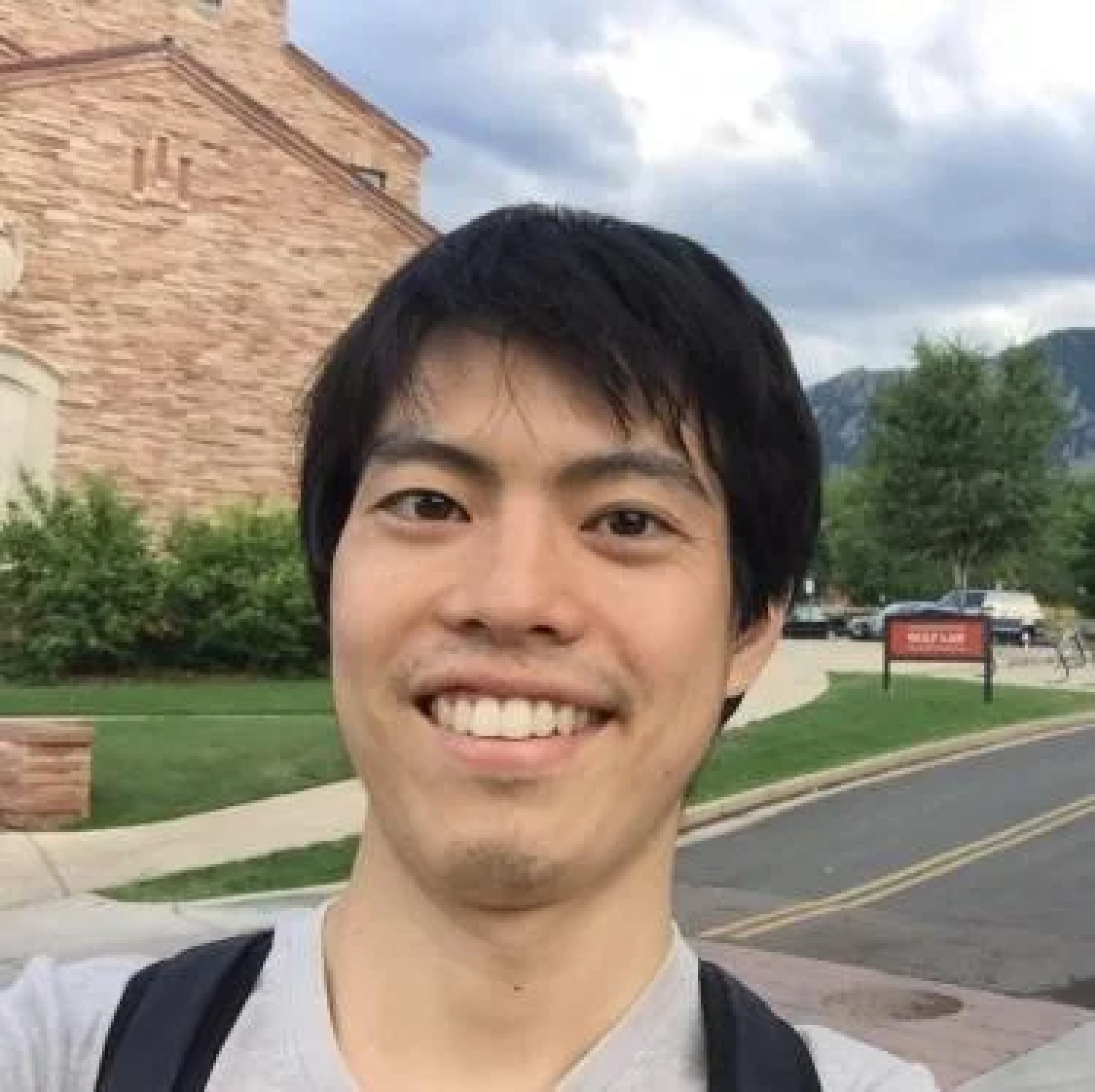
Ryo Suzuki is an Assistant Professor at the ATLAS Institute within the University of Colorado Boulder's Computer Science department. His research focuses on innovative intersections of Human-Computer Interaction (HCI), Augmented Reality (AR), and robotics. He explores systems that blend AI, haptics, and shape-changing interfaces to create enriched user experiences. Key areas of investigation include embedding interactivity into static educational materials (e.g., textbooks), developing AI-driven AR tools for procedural instruction, and creating shape-changing robotics for tactile feedback. His work often emphasizes practical applications in education, remote collaboration, and creative industries. Recent projects include MapStory (LLM-driven map animation), RealityEffects (3D volumetric video augmentation), and HoloDevice (holographic cross-device collaboration).
Prof. Dr. Mehmet Reşit Tolun is a full-time Professor in the Department of Software Engineering at Çankaya University (Turkey) since 2022. Previously held full-time professor positions at Konya Food and Agriculture University (2020-2022), Aksaray University (2013-2017), and TED University (2011-2013), along with a part-time professorship at Başkent University (2017-2020). Specializes in Artificial Intelligence , Machine Learning , and Data Mining , with a focus on deep learning applications in aerospace, biomedical data analysis, and software process improvement. PhD in Computer Science (University of Kent, 1985) MSc in Computer Science (University of Kent, 1982) BSc in Physics and Computer Science (University of Kent, 1981) Research Interests span deep learning frameworks, hybrid expert systems, software engineering methodologies, and biomedical signal processing. Publications emphasize practical implementations in medical diagnostics, robotics, and agricultural pest detection. Scientific Awards include the IEEE Third Millenium Medal (2000). Supervised over 55 graduate students, including Burak Çetin, Uğur Özotuk, and Mahinur Doğan. Collaborated with researchers from Orta Doğu Teknik Üniversitesi , Çankaya University , and Aksaray University .