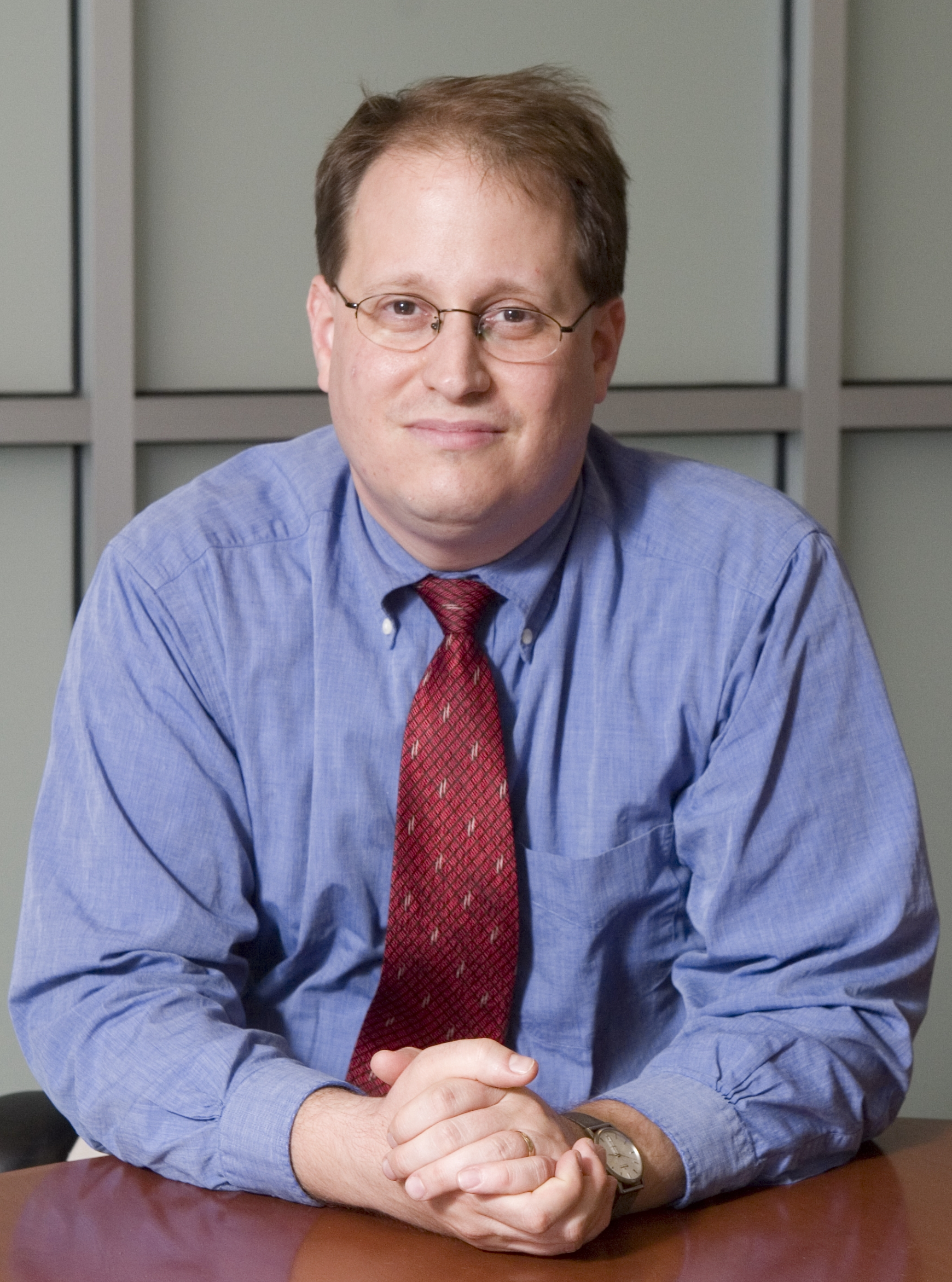
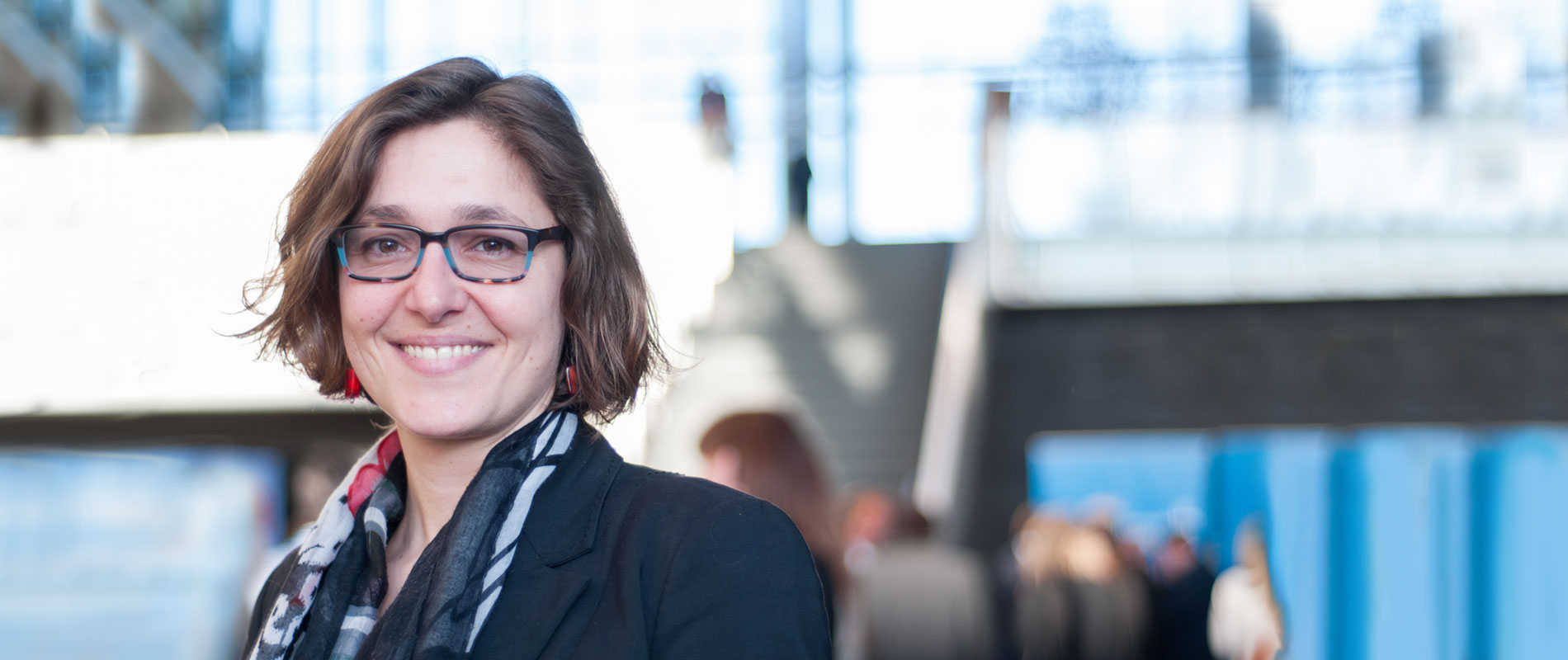
Eric Miller is a Professor of Electrical and Computer Engineering at Tufts University's School of Engineering. He also holds adjunct professorships in Computer Science, Biomedical Engineering, and Mathematics. His academic roles include serving as Chair of the Electrical and Computer Engineering department and leading the Lab for Imaging Science Research (LaISR). Miller earned his SB, SM, and PhD in Electrical Engineering from MIT (1990–1994). His research focuses on signal and image processing, particularly inverse problems, tomographic imaging, and applications in medical imaging, environmental monitoring, and security screening. He has pioneered methods like the parametric level-sets (PaLEnTIR) for reconstruction and shape-based inversion algorithms. His work integrates physics-based modeling with computational techniques, addressing challenges in subsurface sensing, biomedical diagnostics, and materials science. Miller is a Fellow of IEEE and a member of honor societies like Tau Beta Pi and Phi Beta Kappa. Over 489 publications reflect his contributions to imaging science, with recent advancements in AI-driven pedestrian behavior analysis and X-ray anomaly detection.
Bernd Zimmermann has been a Lecturer in Audio at the University of Art and Design Offenbach since 2004, where he also serves as Technical Manager in Film/Video. His expertise bridges audio engineering, film technology, and digital signal processing. Born 1964 in Offenbach am Main Trained as radio and television technician Over 35 years of professional experience in audio/visual technology and music Research & Teaching Focus: AudioLab, film technology, sound design, and multimedia systems. His work integrates technical innovation with artistic practice. Professional Background: Prior experience in CAD systems development and extensive stage/studio music production. Based in Offenbach's Main building, Room 12a/12b.
Luis A. Leiva is an Assistant Professor in the Department of Computer Science at the University of Luxembourg’s Faculty of Science, Technology and Medicine. He leads the Computational Interaction research group and serves as director of the Interdisciplinary Lab for Intelligent and Adaptive Systems (ILIAS). His academic background includes a PhD in Computer Science (with honors), an MAS in Pattern Recognition and Artificial Intelligence, an MSc in Electrical Engineering, and dual BSc degrees in Industrial Design and Industrial Engineering, all from the Universitat Politècnica de València (UPV). His research lies at the intersection of Human-Computer Interaction (HCI) and Machine Learning , with a focus on computational interaction . He investigates methods to enable, explain, and support user interaction through computational models and data-driven techniques. His key areas include implicit interaction —leveraging behavioral signals such as mouse movements and gaze—and synthetic data generation , particularly using kinematic models to simulate human-like gestures. His work has contributed to usability evaluation, user engagement prediction, adaptive interfaces, and stroke gesture modeling. His recent publications span top-tier journals and conferences such as ACM Transactions on Computer-Human Interaction (TOCHI) , IEEE Transactions , CHI , IUI , and SIGIR . The research trends reflect a strong emphasis on multimodal interaction, affective computing, brain-computer interfaces, and deep learning applications in user interface modeling and personalization. Best paper award at IUI'25 Marie Skłodowska-Curie Actions (MSCA) Seal of Excellence (2019) Extraordinary PhD thesis award (2014) Outstanding Reviewer Recognition at CHI, ICMI, MobileHCI, and UIST Quality Teaching Awards finalist at Aalto University (2020) Luis A. Leiva has advised numerous MSc and BSc students at the University of Luxembourg and Aalto University and has secured significant research funding as PI or co-PI for projects such as SYMBIOTIK (EIC), SCRIPTOR (FNR), BANANA (CHIST-ERA), and SAMUSE (Audacity). He is an Associate Editor for the International Journal of Human-Computer Studies and Machine Learning with Applications , and actively serves on the program committees of major HCI and AI conferences. He is also a co-founder and former CTO of Sciling, an SME specializing in machine learning solutions, and has held postdoctoral positions at Aalto University and the PRHLT Research Center (UPV). He leads the Computational Interaction research group and the ILIAS lab, both dedicated to advancing intelligent, adaptive, and user-centered computing systems through interdisciplinary research combining machine learning, cognitive science, and interactive technologies.
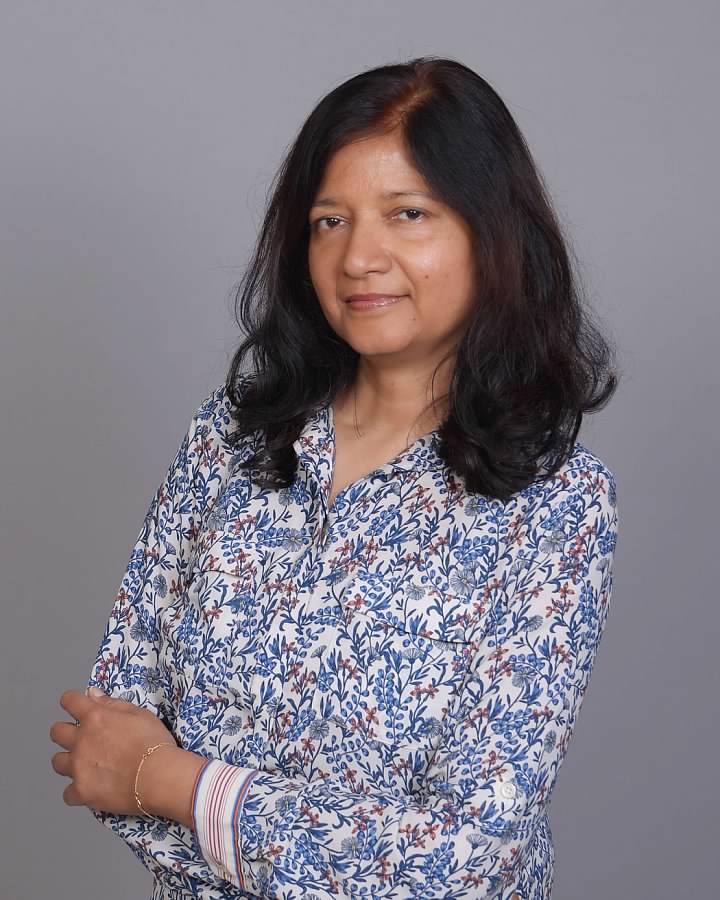
Radhika Grover is a Lecturer in the Electrical and Computer Engineering Department at Santa Clara University's School of Engineering. With over 15 years of teaching experience since 2004, she specializes in hardware and software domains. Education B.S. in Electrical Engineering, Indian Institute of Technology-Roorkee (1991) M.S. in Electrical Engineering, Birla Institute of Technology (1992) Ph.D. in Computer Engineering, Santa Clara University (2003) Her research focuses on Human-Computer Interaction and Accessible Design , exemplified by her work on a digital book for learning Python programming for students with blindness. She has also contributed to Embedded Systems , Machine Learning , and Computer Architecture . Her publications highlight expertise in FPGA Design , Quality of Service in Multimedia Systems , and Educational Technology . She has taught courses on Verilog HDL , Secure Coding , and Java Programming at institutions like Santa Clara University and UC Santa Cruz SV Extension. She authored a Java programming textbook and holds a U.S. Patent 10222870 for a wearable reminder device.
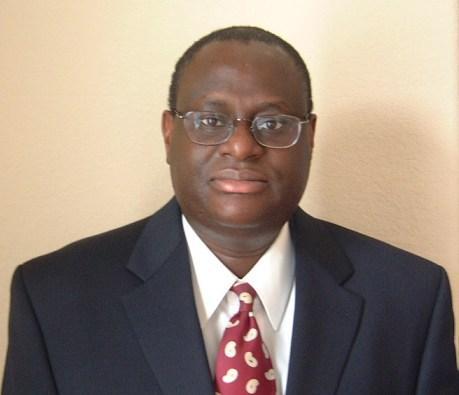
Tokunbo Ogunfunmi is a Professor of Electrical and Computer Engineering and Director of the Information Processing and Machine Learning (IPML) Research Lab at Santa Clara University's School of Engineering. He served as Associate Dean for Research and Faculty Development from 2010-2014 and as Associate Dean for Mission, Culture and Inclusion from 2021-2024. Dr. Ogunfunmi holds a Ph.D. and M.S. from Stanford University (1990, 1984) and a B.S. from the University of Ife, Nigeria (1980). His research interests span deep learning, artificial neural networks, adaptive/nonlinear signal processing, digital signal processing, and multimedia signal processing with VLSI/DSP/FPGA implementations. Dr. Ogunfunmi has published 4 books and over 200 refereed journal and conference papers in these areas. His recent publications demonstrate strong focus on deep learning applications, hardware acceleration for neural networks, quaternion-based adaptive algorithms, and efficient video/speech processing techniques. Dr. Ogunfunmi has received numerous awards including the SCU Presidential Special Recognition Award (2020), IEEE Meritorious Service Awards (2021, 2013), Carnegie Foundation Visiting Professorships (2019, 2015), and multiple Best Paper Awards. He has served in significant editorial roles including Senior Associate Editor for IEEE Signal Processing Letters and Associate Editor for several IEEE Transactions. As an active member of the professional community, he is a Senior Member of IEEE, Member of Sigma Xi, and Member of AAAS. His industrial experience includes consulting for major companies such as Broadcom, AMD, NEC, AT&T Bell Labs, and NIKON Precision Research & Development. Dr. Ogunfunmi is also a registered professional engineer in California.
Lei Jiao is a Professor in the Department of Information and Communication Technology at the University of Agder's Faculty of Engineering and Science. Previously serving as an Associate Professor from May 2014 to October 2022, Dr. Jiao has established himself as a leading researcher in artificial intelligence, with particular expertise in Tsetlin Machines and their applications across diverse domains. PhD in Information and Communication Technology, University of Agder (2008-2012) Master of Engineering in Communication and Information System, Shandong University (2005-2008) Bachelor of Engineering in Telecommunication Engineering, Hunan University (2001-2005) Dr. Jiao's research spans multiple cutting-edge areas including interpretable artificial intelligence, wireless communication protocols, network resource allocation, and signal processing. His work on Tsetlin Machines has pioneered new approaches to machine learning that emphasize interpretability while maintaining high performance. The research group he contributes to at the University of Agder focuses on Autonomous and Cyber-Physical Systems (ACPS), Battery recycling, and the Centre for Artificial Intelligence Research (CAIR). Analysis of Dr. Jiao's recent publications reveals a strong emphasis on interpretable AI systems, particularly through Tsetlin Machines. His work spans applications in GNSS jammer detection, crowd anomaly detection, DNA sequence classification, and hardware acceleration of machine learning models. The research consistently demonstrates how logical, rule-based approaches can provide transparent alternatives to traditional neural networks while maintaining competitive performance. Supervised numerous PhD students including Vojtech Halenka, Ahmed K. Kadhim, and Sindhusha Jeeru Mentored over 30 Master's thesis projects covering topics from Tsetlin Machines to signal processing and computer vision Collaborates extensively with Ole-Christoffer Granmo and other leading researchers in the AI field Dr. Jiao actively contributes to advancing the field through supervision of doctoral candidates, collaboration on major research projects, and development of novel machine learning approaches that balance performance with interpretability. His work bridges theoretical foundations with practical applications across telecommunications, computer vision, and natural language processing domains.
Rocco Oliveto is a prominent researcher in software engineering with extensive contributions across multiple domains including code quality assessment, smart contracts, Docker configuration analysis, and healthcare applications of AI. His collaborative work spans numerous institutions, with frequent co-authorship with researchers such as Simone Scalabrino, Gabriele Bavota, and Emanuela Guglielmi. Dr. Oliveto's research interests focus on practical software engineering challenges with emphasis on code readability, API compatibility, bug prediction, and smart contract maintenance. His work bridges theoretical research with practical applications, particularly evident in recent projects applying machine learning to healthcare diagnostics and video game quality analysis. His research demonstrates a consistent trajectory toward addressing real-world software engineering problems with innovative methodological approaches. Analysis of his recent publications reveals a strong trend toward interdisciplinary research, particularly at the intersection of software engineering and healthcare applications. His work shows increasing focus on practical applications of AI in medical diagnostics, rehabilitation technology, and patient monitoring systems, while maintaining strong contributions to core software engineering topics like code quality and developer productivity. The diversity of publication venues—from top software engineering journals like Empirical Software Engineering and ACM TOSEM to healthcare conferences like BIOSTEC—demonstrates the breadth of his research impact. Dr. Oliveto has demonstrated significant research leadership through numerous collaborative projects, particularly evident in his participation in the QualAI project focused on continuous quality improvement of AI-based systems. His work shows consistent funding support through collaborative research initiatives that bridge academic and practical software engineering concerns.
Heinz Hofbauer is a Senior Scientist at the University of Salzburg specializing in Artificial Intelligence and Human Interfaces, with research concentrated in computer vision, biometrics, and multimedia forensics. His work focuses on face detection systems, anti-spoofing for biometric security, and image/video encryption techniques, demonstrated through extensive publication and project leadership. His research spans computer vision, biometrics, artificial intelligence, and image processing, with notable contributions to cultural heritage analysis (e.g., face detection in the Wenceslas Bible), biometric sensor forensics, and visual security assessment. Recent work increasingly addresses cross-disciplinary applications in biomedical imaging and material science. Analysis of his 2023-2025 publications reveals three dominant trajectories: (1) AI-driven cultural heritage preservation through manuscript analysis, (2) biomedical image processing for single-cell segmentation, and (3) practical security/quality assessment for smartphone-based material classification and video encryption systems. Hofbauer has secured funding for six major research projects including: IDENTITY: Computer Vision Enabled Multimedia Forensics (2016-2019) Biometric Sensor Forensics (2014-2018) Visual Security Metrics for Image/Video Encryption (2015-2018) Traceability of Roundwood via Digital Imaging (2012-2017) Anti-Spoofing Software Evaluation for Facial Recognition (2018) Unspecified 2011 research project He actively participates in the academic community through peer review for the Journal of Visual Communication and Image Representation and conference presentations at IEEE ICIP, while collaborating closely with Andreas Uhl's research group on biometric security applications.
Caroline Traube is a Professor at the Faculty of Music, Université de Montréal. She leads the Laboratoire de recherche sur le geste musicien (LRGM) and collaborates with interdisciplinary research groups including OICRM, CIRMMT, BRAMS, and LFO. Her work bridges musicology, acoustics, and digital music through empirical and creative approaches. Ph.D. in Music Technology, McGill University (2004) Engineer Degree in Electrical Engineering, Stanford University (2000) Civil Engineer (Telecommunications), Faculté Polytechnique de Mons (1996) Her research focuses on instrumental timbre , performance studies , and musician well-being , integrating acoustics , biomécanics , and digital music methodologies. Current projects include: 2025-2031: Music, Humanities, and Sciences in France (SSHRC-funded) 2025-2030: Analytical Approaches to Orchestration (FRQSC) 2024-2026: PianOptim - Optimal Piano Gestures (FRQSC) She supervises doctoral and master's students in topics ranging from virtual orchestration to Buddhist mantra performance . Her recent publications address digital performance tools and timbre analysis in piano, flute, and video game music contexts.
Angelina Njegus is a Full Professor at Singidunum University , where she has worked since 2005. She holds a Ph.D. in Business Studies and has extensive experience in both academia and industry, including consulting for IBM. Her research focuses on machine learning algorithms , deep learning , and Big Data Analytics , with applications in pattern recognition , tourism technology , and blockchain systems . Bachelor's: Faculty of Organizational Sciences, Information Systems (1994) Master's: Faculty of Organizational Sciences, Industrial Engineering (1999) Doctoral: Faculty of Business Studies (2003) Her recent publications (2023-2025) demonstrate expertise in metaheuristic optimization for machine learning, audio-visual emotion recognition , and cryptocurrency applications in tourism . She pioneered the Virtual University platform (MTVU) and contributes to agile methodologies in software development. Collaborations include projects with researchers from IEEE, Springer, and international institutions. Research interests span AI ethics in human resources , IoT integration in tourism , and security risks in cloud computing . Her work appears in journals like Complex & Intelligent Systems and conferences including ICPR and FG 2017 . She has authored books on software design patterns and information systems in tourism .
Torun Lindholm Öjmyr is Professor of Psychology (with emphasis on social psychology) at Stockholm University’s Department of Psychology. She has previously held positions at Mälardalen University, Karolinska Institutet/Stress Research Institute, and Uppsala University. Research Interests Her work integrates social and cognitive psychology to study how people form judgments, remember events, and navigate intergroup relations. Current themes include: Strategic self-presentation using warmth and competence dimensions Verbal and para-verbal markers of eyewitness reliability Memory distortions following decision-making (own vs others’ decisions) Knowledge resistance—causes, consequences, and countermeasures Body-odour disgust sensitivity and its link to xenophobia and ideology Digital-media use, identity formation, and societal fragmentation (DigiPatch) Publication Trends Between 2020 and 2025, Lindholm Öjmyr has co-authored more than 40 peer-reviewed articles, chapters, and conference presentations. These span experimental studies on eyewitness memory accuracy, large-scale cross-cultural surveys on love, touch, and conservatism, and interdisciplinary work on knowledge resistance and COVID-19 risk perception. The research is characterised by multi-national collaborations and triangulation of behavioural, semantic, and survey methodologies. Scientific Awards & Distinctions Working member, Royal Swedish Academy of Literature, History and Antiquities (since 2012) Chair and vice-chair, Swedish Research Council review panel HS-F (2021-2023) Member and chair, Wallenberg Academy Fellows committee in social sciences (2017-2023) Deputy head, Department of Psychology, Stockholm University (2015-2023) Board member, European Association of Social Psychology (2014-2020) Member, Swedish National Committee for Psychology (2011-2020) Teaching & Mentoring She teaches undergraduate and advanced courses in social and cognitive psychology and currently leads an advanced course on evolutionary perspectives on social behaviour. At the doctoral level she supervises six PhD candidates, five as primary supervisor. Projects & Collaborations Lindholm Öjmyr coordinates or co-leads several funded projects including: DigiPatch – a pan-European study on digital media and societal change Kunskapsresistens – an interdisciplinary programme with philosophy and political science scholars Body Odour Disgust Sensitivity (BODS) – international validation and attitude correlates Eyewitness memory and investigative interviewing – funded collaborations with police authorities
Jona Ballé is an Associate Professor in the Electrical and Computer Engineering department at New York University's Tandon School of Engineering. His research focuses on developing efficient representations of visual media through machine learning and end-to-end optimization techniques. Dr. Ballé's research interests center on visual media compression, spanning still images, video, augmented reality, virtual reality, plenoptic imaging, and holographic imaging. His work bridges information theory, computer vision, and machine learning to develop perceptually optimized compression algorithms. He has made significant contributions to understanding the relationship between human visual perception and image statistics, which has led to improved compression results and ultimately contributed to the JPEG AI standard finalized in 2025. His recent publications demonstrate a strong trend toward Wasserstein distortion metrics, neural compression architectures, and rate-distortion optimization. These works span computer vision, information theory, and signal processing domains, with applications in both traditional and emerging visual media formats. His research shows consistent innovation in developing perceptually relevant metrics that balance fidelity and realism in compressed media. Contributed to JPEG AI standard (2025) Co-organizer of Challenge on Learned Image Compression (CLIC) since 2018 Program committee member of Data Compression Conference (DCC) since 2022 Reviewer for top-tier publications including NeurIPS, ICLR, ICML, and IEEE Transactions journals Dr. Ballé has advised numerous graduate students who have co-authored significant publications with him, particularly in the areas of neural compression and perceptual metrics. His research has been supported by institutions including the Simons Foundation. He maintains active collaborations across academia and industry, with his work at Google (2017-2024) directly informing his current academic research. His laboratory focuses on developing open-source implementations of advanced compression techniques, with notable GitHub repositories including Wasserstein Distortion implementation in PyTorch and CoDeX (Learned data compression in JAX), demonstrating his commitment to reproducible research and community engagement.
Decky Aspandi is a Researcher at Universitat Stuttgart in the Analytic Computing department. He holds a Ph.D. in Information and Communication Technologies from Universitat Pompeu Fabra, Barcelona, an M.Sc. in Computer Engineering from King Mongkuts University of Technology Thonburi, and a Bachelor in Computer Science from University of Mulawarman. Research Focus: Machine Learning, Deep Learning, Computer Vision, Affective Computing, Temporal Modeling, and Human-Computer Interaction. Teaching Experience: Teaching Fellow at Universitat Stuttgart (2022-2023, 2021-2022), Universitat Pompeu Fabra (2017-2020), and University of Mulawarman (2009-2013). Key Publications: 14 recent works on topics including eye-gaze prediction, facial alignment, lie detection, and affective computing applications.
Prof. Dr. Numan CELEBİ serves as a Professor at Sakarya University's Faculty of Computer and Information Sciences, Department of Information Systems Engineering, where he has held academic positions since 2007. His career progression includes promotion to Associate Professor in 2013 and subsequent advancement to full Professor. His educational foundation comprises a Doctorate in Industrial Engineering from Sakarya University (1998-2004) with thesis Inductive-rough clustering approach to part family generation , a Master's in Electrical and Electronics Engineering (1995-1997) with thesis Development of computer program for the implementation of Adapazari medium voltage distribution network (SCADA) system , and a Licence from Istanbul Technical University's Electrical-Electronic Engineering program (1985-1989). CELEBİ's research spans Artificial Intelligence , Machine Learning , and Computer Vision , with significant contributions to optimization algorithms (Polar Bear Algorithm, Tug of War Optimization), intelligent transportation systems (traffic congestion detection, vehicle rerouting), and computer vision applications (object tracking, saliency detection, UAV-based plant recognition). His methodology frequently integrates Rough Set Theory and fuzzy systems for data analysis and decision support. Analysis of his 15 most recent publications (2007-2023) reveals a clear research trajectory toward applying metaheuristic optimization and deep learning to real-world problems. His work demonstrates increasing focus on transportation systems (40% of recent publications), agricultural technology via UAVs (15%), and novel optimization frameworks (25%), with consistent methodological emphasis on hybrid algorithm design and real-time implementation. As an educator, CELEBİ supervises graduate research through courses like ENF 524 Project and teaches specialized subjects including Meta Heuristic Optimization Methods , Intelligent Techniques in Data Analysis , and Data Science across undergraduate and graduate programs. His teaching portfolio spans discrete mathematics, computer networks, and cloud computing, reflecting interdisciplinary expertise.
Prof. Noel E. O’Connor is a Full Professor at the School of Electronic Engineering , Dublin City University, and the CEO of the Insight SFI Research Centre for Data Analytics , Ireland’s largest SFI-funded research center. His research spans multimedia content analysis, computer vision, machine learning, and multi-modal analysis with applications in security, autonomous vehicles, IoT, smart cities, and environmental monitoring. Area Editor for Signal Processing: Image Communication (Elsevier) Associate Editor for the Journal of Image and Video Processing (Springer) Member of ACM and IEEE