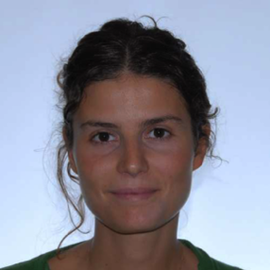
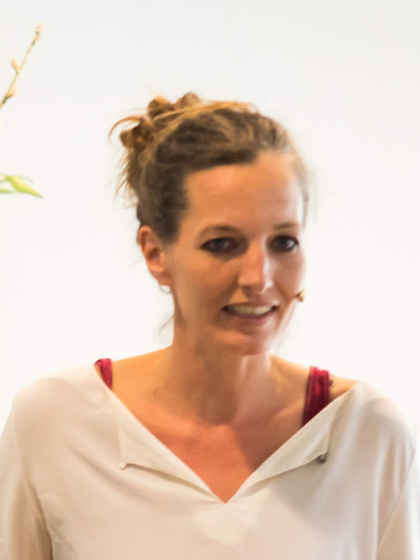
Sveta Zinger is a Full Professor in context-informed dynamic image analysis for clinical decision support at Eindhoven University of Technology (TU/e). She holds affiliations with the Biomedical Diagnostics Lab, NeuroPlatform, and EAISI Health. Her research focuses on medical image/video analysis, temporal data analysis, and machine learning for clinical applications. She has led projects funded by ZonMw, NWO, Philips, and others. She is also Co-Editor-in-Chief of Computer Methods and Programs in Biomedicine and serves on the Vidi committee for NWO. Education: MSc (2000) from Dnepropetrovsk State University; PhD (2004) from École Nationale Supérieure des Télécommunications, France. Postdoctoral roles at the French Atomic Agency and University of Groningen. Research Projects: Includes FORSEE (video monitoring for adverse events in healthcare) and NEUROTREND (fMRI biomarkers for depression). Awards: Second place in the CAMELYON17 challenge for metastases detection. Her teaching includes courses on DSP fundamentals, medical image processing, and cognitive neuroscience. She collaborates with clinical and industrial partners to advance biomedical diagnostics and healthcare technology.
Peter H.N. de With is a Full Professor at the Video Coding & Architectures group within the Department of Electrical Engineering at Eindhoven University of Technology (TU/e). He is an international expert in video compression and image analysis for health, surveillance, and automotive applications, with over 35 years of R&D experience. He leads the Video Coding & Architectures Group (SPS-VCA) and contributes to initiatives like the Center for Care & Cure Technology Eindhoven and Eindhoven MedTech Innovation Center. De With's research focuses on video/image signal processing, machine learning, and their applications in healthcare (e.g., esophageal cancer detection), security, and automotive systems. His work includes collaborations with hospitals, EU projects, and industry leaders like Bosch Security Systems and ASML. His recent publications emphasize real-time 3D processing, assembly state recognition, driver action analysis, and medical imaging advancements, reflecting his expertise in computer vision and AI. Notable scientific awards include IEEE Fellowship and multiple paper awards (CE Chester Sall, SPIE, Elsevier). Scientific Awards IEEE Fellow CE Chester Sall Award SPIE Paper Award Elsevier Journal Award Best Paper Award (2017) Second Place in CAMELYON17 Challenge De With has supervised numerous research projects and contributed to datasets in noise reduction, augmented reality, and medical imaging. He actively collaborates on AI-driven innovations for healthcare and industrial applications.
Virginia Pallante is a Postdoctoral Researcher at the Netherlands Institute for the Study of Crime and Law Enforcement (NSCR) since 2020, specializing in ethological analysis of human behavior within criminological contexts. Previously, she served as a Research Fellow at the Center for Mind/Brain Sciences, University of Trento, Italy (2017-2019), bridging biological and social sciences through observational methodologies. Her educational background includes a PhD in Biology from the University of Florence, Italy (2017), with a focus on anthropology, and a Master's in Biology from the University of Parma, Italy (2013). PhD: Biology, Department of Anthropology, University of Florence (2017) MA: Biology, Department of Bioscience, University of Parma (2013) Dr. Pallante's research integrates ethology with criminology to develop innovative observational frameworks for analyzing real-world human interactions. Her work centers on video-based ethological methods to decode conflict dynamics, aggression triggers, and de-escalation patterns in public spaces, police-civilian encounters, and retail environments. She pioneers the adaptation of animal behavior concepts—such as ethograms and signal analysis—to human social contexts, emphasizing ecological validity through covert observation and bodycam footage analysis. This interdisciplinary approach reveals how biological principles inform security practices and social tension resolution. Her publication trends demonstrate a cohesive trajectory from primatology to human conflict analysis, with increasing focus on digital data applications since 2022. Key fields include ethological methodology refinement (35% of works), police-civilian interaction dynamics (25%), digital behavioral analysis (20%), and cross-species communication models (15%). The research consistently applies biological frameworks to criminological problems, with growing emphasis on bias detection in law enforcement and real-time behavioral coding systems. Dr. Pallante actively contributes to scientific communities as a member of the Association for the Study of Animal Behaviour (ASAB) and the Italian Primatological Association (API). Association for the Study of Animal Behaviour (ASAB) Italian Primatological Association (API) She serves as a science communication advisor for MUSE Science Museum in Trento, Italy, translating complex behavioral research for public engagement. Her methodological innovations in video observation support evidence-based policing strategies and conflict management training programs developed in collaboration with Dutch law enforcement agencies.
Laura Toni is an Associate Professor in the Department of Electronic & Electrical Engineering at University College London (UCL). She serves as Director of the MSc in Telecommunications and Internet Engineering and the MRes in Telecommunications. Additionally, she is a Turing Fellow at the Alan Turing Institute and a member of ELLIS (European Lab for Learning and Intelligent Systems). Her research focuses on coding, streaming technologies, machine learning for immersive communications, decision-making under uncertainty, and large-scale signal processing. She leads the LASP (Learning And Signal Processing) group at UCL. Education: MSc (2005) and PhD (2009) from the University of Bologna, followed by postdoctoral research at UC San Diego and EPFL under Professors L. Milstein, P. Cosman, and P. Frossard. Key roles include Technical Program Chair at ACM MM 2022, Keynote Co-Chair at ACM MMSys 2022, and leadership in organizing workshops on graph-based machine learning and emerging technologies in performing arts. She is a Senior IEEE Member and holds editorial roles in IEEE Multimedia Magazine and EURASIP Journal on Signal Processing. Her work bridges communication systems and machine learning, with contributions to adaptive streaming, network optimization, and graph signal processing. She actively promotes diversity and inclusion in technical conferences, including roles as Diversity Chair at MMSys 2021 and PIMRC 2020.
Prof.dr. R. Arthur Bouwman is a Full Professor at the Electrical Engineering department of the Eindhoven University of Technology and affiliated with the Eindhoven MedTech Innovation Center . His work bridges biomedical engineering and clinical medicine , focusing on physiological monitoring , medical imaging , and biomarker validation for real-time patient care. Education : Not explicitly detailed in the text His research emphasizes non-invasive diagnostics and AI-driven health monitoring , including video-based cardiac arrhythmia detection , sweat-based renal function analysis , and Doppler ultrasound optimization . Recent work explores causal inference in observational studies and automated early warning systems in surgical wards. Key article trends highlight biomedical signal processing , medical device innovation , and integration of wearables in perioperative care . Collaborations span institutions like Catharina Hospital and research centers across cardiovascular and renal domains.
Dr. Almila Akdag is an Assistant Professor in Human-Centered Computing at Utrecht University's Faculty of Science, Department of Information and Computing Sciences. As a Digital Humanities scholar with expertise spanning new media analysis, bibliometrics, and information visualization, she combines qualitative and quantitative methods to study humanities and social data. Research Focus Her interdisciplinary research bridges: Digital Humanities : Computational analysis of cultural artifacts including paintings, poetry, and oral histories Human-Centered AI : Developing empathetic and accessible AI systems Trauma Informatics : Analyzing breathing patterns in oral histories of trauma survivors Cultural Analytics : Studying art communities and online creative platforms Following the 2023 Turkey/Syria earthquake, she is creating an oral history archive to document collective memory of the disaster, with particular focus on Turkish, Kurdish and Syrian diaspora experiences. Awards and Recognition NWO VENI laureate for 'deviantArt: Mapping the Alternative Art World' project Co-initiator of Mellon Grant: 'Tools for Analysis and Visualization of Large Image/Video Collections for Humanities' Leadership and Service Workgroup leader of 'Visual Media and Interactivity' for DARIAH-EU Founding member of International Society for Knowledge Organization (ISKO LC Low Countries Chapter)
Gwenn Englebienne is an Assistant Professor at the Digital Society Institute and Human Media Interaction group of Utrecht University. Their research focuses on Artificial Intelligence, Computer Vision, and Human-AI Interaction, with applications in robotics, health, and social computing. They have contributed to over 80 research outputs since 2007, emphasizing embodied AI, social robotics, and explainable machine learning. Research interests span activity recognition, teleoperation systems, and ethical AI design. Notable work includes developing GNN-based group detection algorithms and evaluating chatbot reliability through automated question-answering frameworks. Their studies often bridge technical innovation with human-centered design, such as measuring embodiment via pupil dilation or addressing asymmetry in video-conferencing interactions. Key collaborations include work on social robotics, telepresence systems, and health monitoring using ambient sensors. Publications span conferences like IDA, CogMI, and LREC-COLING, reflecting interdisciplinary impact. A dataset on robot social positioning behavior is publicly accessible via 4TU.Centre for Research Data. Current work explores semi-supervised domain adaptation, spiking neural networks, and the psychological dimensions of AI trustworthiness. They lead initiatives in the Digital Society Institute to align technological advancements with societal needs.
Dr. Maya Aghaei is a Lecturer and Researcher in Computer Vision & Data Science at NHL Stenden University of Applied Sciences, part of the Academy Technology & Innovation. She holds a M.Sc. in Artificial Intelligence and a Ph.D. in Computer Vision from the University of Barcelona. Her academic role includes supervising Minor and Master students while focusing on applying cutting-edge AI techniques to real-world challenges. Prior to her current position, she served as a Postdoctoral Researcher at the Italian Institute of Technology, developing AI solutions for industrial applications. Her research spans Computer Vision, Machine Learning, and General AI with a focus on surveillance systems, autonomous drones, hyper-spectral imaging for environmental analysis, and social signal processing through egocentric data. Notable projects include crime scene classification via trajectory analysis, obstacle detection for BVLOS drones, and psychological trait prediction based on clothing analysis. Dr. Aghaei's work emphasizes real-world applicability, bridging theoretical advancements with practical implementations in industries like agriculture, waste management, and public safety. Her interdisciplinary approach combines technical innovation with societal relevance, addressing challenges from plastic recycling to social distancing compliance through computer vision systems.
Gerard de Haan is a Professor of Electronic Systems at the Department of Electrical Engineering , Eindhoven University of Technology (TU/e). His research focuses on video signal processing, particularly in multimedia systems and video health monitoring , aiming to enhance image quality and enable accurate sensing of vital signals amidst motion artifacts. He has documented his research in 4 books, 3 book chapters, approximately 200 papers, and over 200 patent applications, leading to commercially available ICs. De Haan has served on program committees of international conferences and as a guest editor for journals including Elsevier, IEEE, and Springer. Education : BSc, MSc, PhD in Electrical Engineering from Delft University of Technology (1977, 1979, 1992) Professional Roles : Lead researcher at Philips Research (1979–present), Full Professor at TU/e (2000–present) His research interests span noise and artifact reduction , video format conversion , display-specific processing , and enabling technologies like motion estimation and object detection . Articles highlight advancements in rPPG motion robustness , blood volume pulse signature analysis , and remote SpO2 monitoring . Scientific awards include his appointment as Fellow at Philips Research Eindhoven in 2000.
Fons van der Sommen is an Associate Professor in Electrical Engineering at Eindhoven University of Technology, specializing in Video Coding & Architectures. He leads research on computer-aided detection systems for early cancer diagnosis, particularly focusing on esophageal and colorectal neoplasia through advanced AI and computer vision techniques. His research interests span medical image analysis, AI-assisted diagnostics, and developing robust systems for clinical deployment. Recent publications focus on overcoming real-world implementation challenges of AI in endoscopy and enhancing the trustworthiness of diagnostic systems. Recent research trends show strong emphasis on surgical AI applications (robot-assisted procedures), generative models for medical data augmentation, and quality assurance frameworks for clinical AI deployment. His work integrates deep learning with clinical validation across gastrointestinal and pulmonary oncology. TU/e Best PhD Thesis Award (2018) Best Poster Presentation (2017, 2013) He coordinates multiple research projects including TASTI-XECS221002 (Advanced AR for AI-based Servitization) and XL-ARGOS (extended reality solutions). Manages collaborations with medical centers on AI implementation for cancer screening.
Cindy C.A.G. Verstappen is a University Researcher at the Department of Electrical Engineering, Eindhoven University of Technology, and an active member of the Eindhoven MedTech Innovation Center. Her work focuses on non-contact physiological monitoring technologies and their clinical applications. Primary Affiliation: Eindhoven University of Technology Department: Electrical Engineering Research Focus: Signal Processing Systems for Medical Applications Her research interests center on biomedical signal processing, particularly video-based detection of cardiac arrhythmias and vital signs. Key areas include: Remote cardiac monitoring using RGB camera data Machine learning for arrhythmia classification Optic flow analysis in medical imaging Telemedicine applications for heart failure patients Non-contact respiration rate monitoring ICU patient safety systems Recent publications highlight advancements in camera-based vital sign monitoring (2025) and telemedicine protocols for heart failure rehabilitation (2023). Collaborations span multiple institutions including Maxima Medical Centre and SPIE conference participants. Research outputs demonstrate a clear trajectory toward integrating computer vision and clinical practice, with specific emphasis on: Detection of supraventricular tachycardia Continuous heart/respiration rate monitoring Optimizing cardiorespiratory diagnostics Validation of non-contact monitoring systems Tele-rehabilitation frameworks Clinical implementation challenges
Ingrid Heynderickx is a Full Professor in Applied Visual Perception at the Human-Technology Interaction group within the Industrial Engineering and Innovation Sciences department at Eindhoven University of Technology. She serves as Dean of her department and holds a Visiting Research Professor position at Southeast University of Nanjing (China). Her career spans academic and industrial research, focusing on display optimization, lighting systems, and individual visual differences. PhD in Physics (University of Antwerp, 1986) Philips Research Laboratories (1987-2005, promoted to Research Fellow in 2005) Part-time Full Professor at Delft University of Technology (2005-2013) Full Professor at Eindhoven University of Technology (2013-present) Dean of Industrial Engineering and Innovation Sciences (2023-present) Her research examines rendering fidelity vs. preference in lighting and displays, with emphasis on age and cultural differences in visual perception. She investigates applications in: Office and residential lighting optimization 3D display technology Temporal light artifacts (Phantom Array Effect, stroboscopic effects) Age-related vision and adaptive lighting Cross-cultural lighting preferences Recent publications focus on: Visibility metrics for lighting artifacts Color temperature effects on reading tasks Road lighting contrast thresholds Biological potency in LED sources Scientific awards include: Otto Shade Prize (SID, 2015) Fellow of the Society for Information Displays (SID) She supervises research projects like Chips JU LoLiPoP-IoT and Brainbridge, and collaborates with institutions in China, The Netherlands, and internationally.
Syed Muhammad Anwar serves as an Associate Professor in Software Engineering at the University of Engineering and Technology (UET) Taxila, Pakistan. He maintains a significant dual affiliation with the Sheikh Zayed Institute at Children's National Hospital in Washington, DC, USA. Additionally, he holds leadership roles as Co-founder and CTO of Sense Digital PVT. Ltd. and Director of both the Virtual Reality and Machine Learning Lab and the Signal Image Multimedia Processing and Learning (SIMPLE) Group at UET Taxila. Dr. Anwar's research spans multiple cutting-edge domains at the intersection of signal processing, machine learning, and medical applications. His primary research interests include: Multimedia Communication and Signal Processing Image and Video Coding and Quality Assessment Biomedical Signal Processing and Brain-Computer Interfaces Medical Imaging including Segmentation, Detection, and Diagnosis Deep Learning applications in healthcare diagnostics Emotion Classification and Human Behavior Modeling His recent scholarly output demonstrates a strong emphasis on applying deep learning techniques to medical image analysis challenges, particularly in brain tumor segmentation, liver tumor detection, and Alzheimer's disease classification. There's also significant work in EEG-based applications including emotion recognition, stress quantification, and game expertise classification. His research effectively bridges theoretical machine learning advances with practical healthcare applications, showing particular strength in adapting deep learning architectures to medical imaging challenges across multiple organ systems. Dr. Anwar actively mentors the next generation of researchers through his leadership of the SIMPLE research group. His current advisees include: PhD Students: Sanay Muhammad Umar Saeed (Quantification of human stress), Romana Farhan (Security in body area networks), Nosheen Sohail (Medical Image Analysis), Amin Ullah (Knowledge extraction), and Saqib Mehboob (Structural health monitoring) MS Students: Haseeb Iftikhar (Doctor recommender system), Faizah Malik (Sentiment analysis), Samreena Aslam (Fashion image retrieval), Huma Shabbir (Fashion image tagging), Khola Rafiq (Ischemic stroke detection), and Saba Naseem (Blood vessel segmentation) As Director of the Virtual Reality and Machine Learning Lab and the SIMPLE research group, Dr. Anwar oversees a dynamic research environment focused on advancing signal processing, multimedia analysis, and machine learning applications, particularly in healthcare contexts. His lab maintains strong collaborations between UET Taxila and international institutions, including Children's National Hospital in Washington DC, facilitating technology transfer between academic research and clinical practice.
Anna Lichtwarck-Aschoff is a Professor and Chair of the Child and Family Welfare unit at the University of Groningen's Faculty of Behavioural and Social Sciences. She holds a PhD in Developmental Psychology (University of Groningen, 2008) and previously worked as an assistant professor at Radboud University (2008–2020). Her research focuses on complex dynamic systems theory applied to clinical change mechanisms, early warning signals in psychotherapy, and personalized mental health interventions. She leads the Small Data Institute (iamYu) and collaborates with clinical teams like Autisme Team Noord-Nederland. Key achievements include a Vidi Grant (2020) for studying treatment trajectory tipping points, the Medische Inpiratorprijs (2019) for client-scientist collaboration, and an investment grant for iamYu. Her work bridges clinical practice with cutting-edge methodologies like idiographic network analysis and real-time process monitoring. Research interests span psychotherapy process dynamics, mental health game efficacy, and transdisciplinary education. She advises on clinical interventions and policy, emphasizing individualized treatment through system modeling.
Dr. Liangliang Cheng is a Tenure Track Assistant Professor in Dynamics and Vibration at the University of Groningen. His research develops physically interpretable machine learning methods for structural health monitoring and non-destructive testing applications. Research innovations include: Novel computer vision techniques for vibration measurement Advanced signal processing for damage detection Machine learning frameworks for structural diagnostics