Matteo PoggiView profile
Assistant Professor
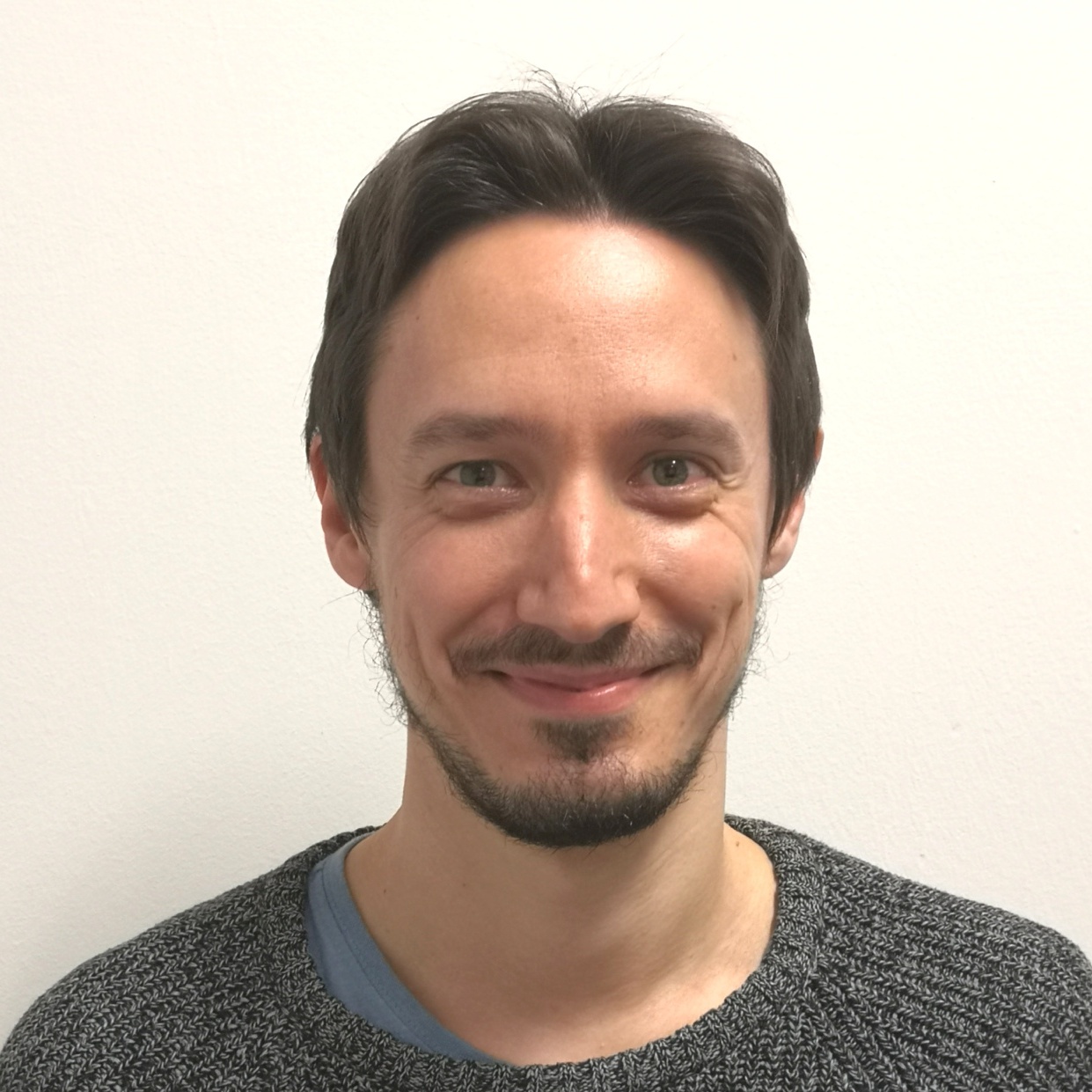
Matteo Poggi is a Tenure-Track Assistant Professor at the University of Bologna, where he teaches courses on Logic Circuits and Computer Architectures. His academic career is deeply rooted in computer vision and 3D perception, with a focus on stereo vision, depth estimation, and SLAM systems. Dr. Poggi earned his MSc and PhD degrees from the University of Bologna in 2014 and 2018 respectively, working on stereo vision under the supervision of Prof. Stefano Mattoccia. His educational background has provided a strong foundation for his current research endeavors in computer vision and 3D scene understanding. Dr. Poggi's research primarily focuses on stereo matching, multi-view stereo, optical flow, single-image depth estimation, online adaptation, federated learning, and neural SLAM. His work bridges the gap between theoretical computer vision and practical applications, with particular emphasis on robustness in real-world scenarios. His recent publications demonstrate a growing interest in 3D Gaussian splatting, neural radiance fields, and environmental monitoring applications like river plastic detection. His scholarly output shows a consistent trajectory of high-impact publications at top computer vision conferences including CVPR, ICCV, and ECCV. The trend in his work reveals an evolution from traditional stereo vision techniques toward more advanced neural representations and applications in environmental monitoring. His research has significant implications for autonomous systems, robotics, and environmental science. Area Chair for CVPR 2026 Associate Editor for IJCV Outstanding Reviewer at CVPR 2025 Dr. Poggi actively collaborates with researchers across the globe, as evidenced by his extensive publication record. His GitHub profile shows active engagement with the research community through open-source implementations of his work. While specific grant information isn't provided in the available texts, his numerous publications in top venues suggest successful funding for his research endeavors. His work appears to be conducted within a vibrant research group at the University of Bologna, with connections to other researchers in the computer vision community as seen through his GitHub followers and collaborators. His research has practical applications in autonomous driving, robotics, and environmental monitoring.