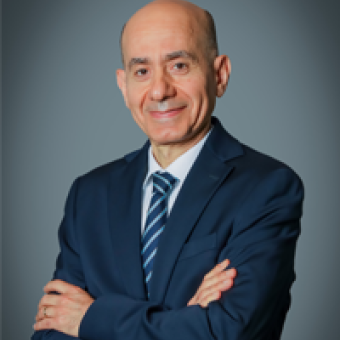
Andreas UhlView profile
Professor
Andreas Uhl is a University Professor in Artificial Intelligence and Human Interfaces at the Department of Computer Science, University of Salzburg. With a prolific research career spanning from 1996 to present, he has authored or co-authored 534 publications and led or participated in 59 research projects. His work demonstrates sustained academic productivity with recent publications and projects extending through 2025. Professor Uhl's research interests span multiple domains at the intersection of artificial intelligence and practical applications. His primary focus areas include computer vision, biometrics, biomedical imaging, and digital forensics, with significant contributions to pattern recognition and image analysis. His work bridges theoretical computer science with practical applications in cultural heritage preservation, medical diagnostics, and security systems, demonstrating a versatile research portfolio that addresses both fundamental challenges and real-world problems. His recent publications reveal a strong emphasis on temporal image forensics, biomedical image analysis, and biometric security. The research shows a clear trajectory toward increasingly sophisticated applications of AI in specialized domains, with particular attention to validation methodologies and limitations of current approaches. His work on cultural heritage applications demonstrates an innovative application of computer vision techniques to historical artifacts. Best paper award @ 25th ACM Symposium on Applied Computing (Applications Track), 2010 Best Paper award @ 2nd European Workshop on Visual Information Processing (EUVIP'10), 2010 IEEE Biometrics Council Best Paper Award (TBIOM), 2022 Kurt Zopf Preis, 2023 Professor Uhl actively leads multiple significant research initiatives, including the CDL-POSA project on People and Object Surface Authentication (2025-2032), Artificial Intelligence driven Biomedical Imaging Innovation (2025-2029), and the AIBIA Research and Transfer Junior Lab (2023-2025). His research group maintains active collaborations with institutions like Carnegie Mellon University, as evidenced by his recent research stay there in September 2024. The scope and duration of his current projects indicate substantial grant funding and institutional support for his research agenda. His laboratory activities focus on AI applications in biomedical imaging, border security through vehicle-integrated technologies (AutoBorder project), and cultural heritage analysis. The research environment appears to integrate academic inquiry with practical transfer through initiatives like the FFG Student Internships program, suggesting a strong commitment to both fundamental research and real-world implementation.